Archive for ‘monkeys’

02/05/2020

How a llama could hold the key to beating the coronavirus

  • An antibody engineered from the animal’s immune system was found to neutralise the virus that causes Covid-19
  • American and Belgian researchers hope the discovery may help protect humans from the deadly illness
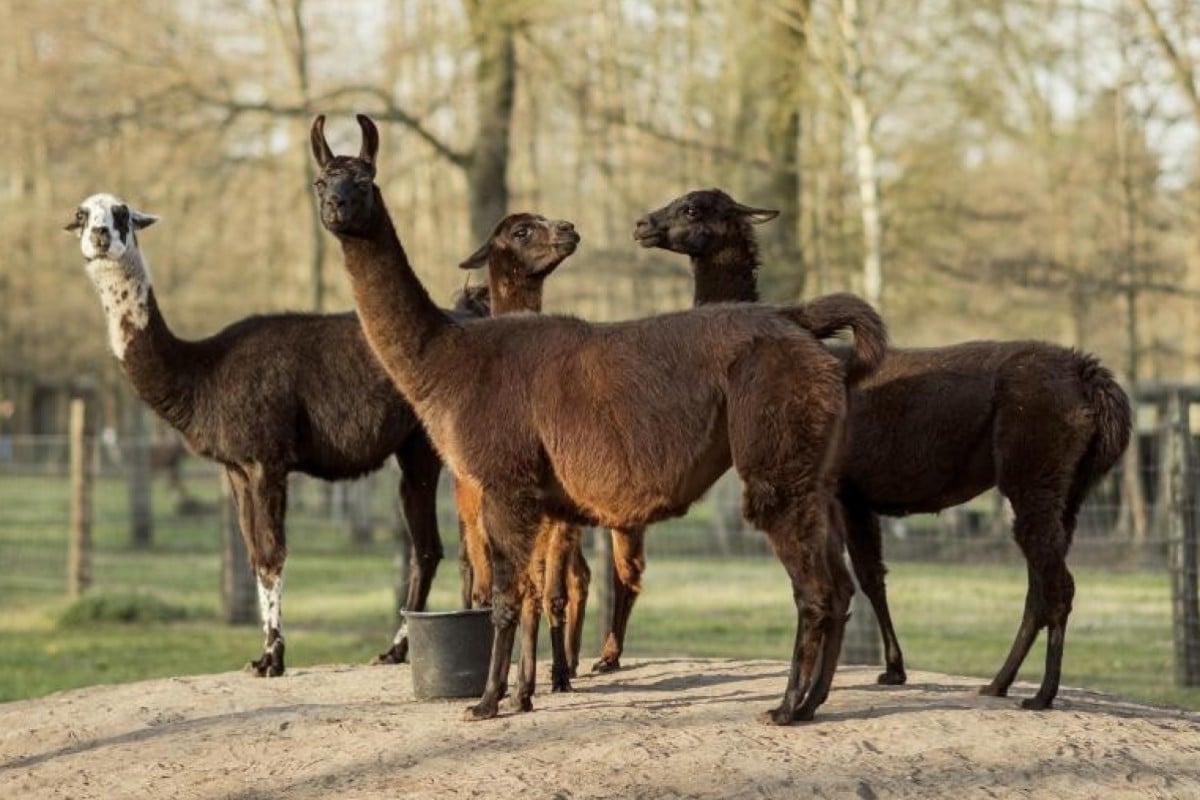
Winter the lama (front) lives on a farm operated by Ghent University's Vlaams Institute for Biotechnology. Photo: Tim Coppens
Winter the llama (front) lives on a farm operated by Ghent University’s Vlaams Institute for Biotechnology. Photo: Tim Coppens

A Belgian llama could hold the key to producing an antibody that neutralises the coronavirus that causes Covid-19.

More studies and clinical trials are needed to see if it can be used in humans to treat Covid-19, but the team of American and Belgian scientists who engineered the antibody said they were encouraged by their preliminary findings, which will be published in the journal Cell next week.

Jason McLellan, from the University of Texas at Austin and co-author of the study, described it as one of the “first antibodies known to neutralise Sars-CoV-2”, the official name for the virus.

“With antibody therapies, you’re directly giving somebody the protective antibodies and so, immediately after treatment, they should be protected,” he wrote in a press release.
“The antibodies could also be used to treat somebody who is already sick to lessen the severity of the disease.”
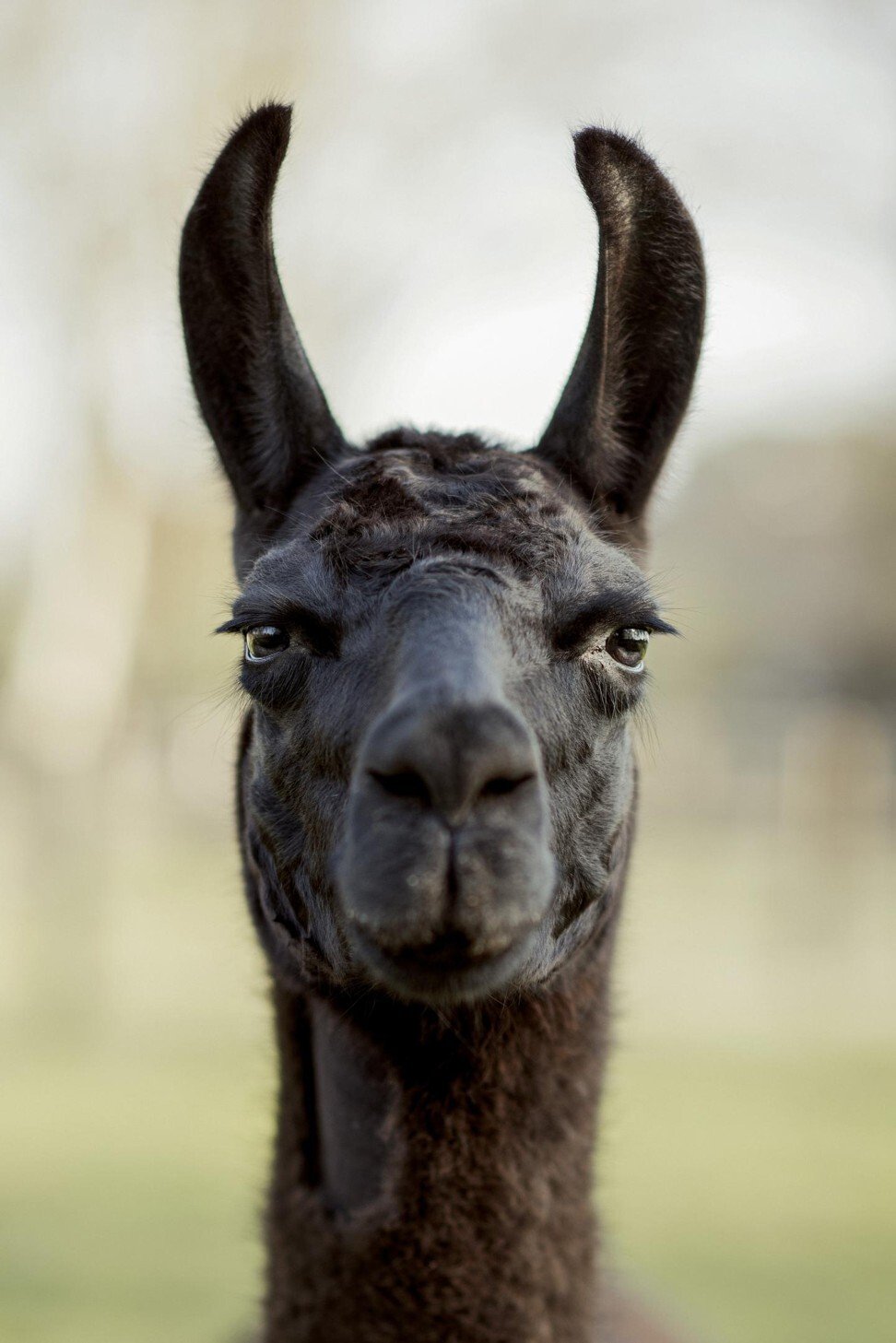
Winter the llama produced antibodies that proved effective against the Sars-CoV-2 virus. Photo: Tim Coppens
The scientists have been working on coronaviruses – including severe acute respiratory syndrome (Sars) and Middle East respiratory syndrome (Mers) – for years.

In 2016 they injected the llama, named Winter, with Sars and Mers in the hope of developing a treatment for the diseases.

“I thought this would be a small side project,” said Dorien De Vlieger from Ghent University in Belgium, who helped to isolate antibodies against coronaviruses from the llamas.

China’s race for a Covid-19 vaccine hits a hurdle – no outbreak at home

1 May 2020

“Now the scientific impact of this project became bigger than I could ever expect. It’s amazing how unpredictable viruses can be.”

A llama’s immune system produces two types of antibodies when it detects pathogens, one similar to human antibodies and one that is about a quarter of the size.

The antibodies produced by Winter were found to be effective in targeting the Sars virus’s spike protein, which allows it to bind to human cells.

Chinese firm ready to make 100 million Coronavirus vaccine doses if trials are successful
This year they decided to test the antibodies Winter had produced during the Sars experiment to see if it could prove effective against Covid-19.

Although it did bind itself to the Sars-CoV-2 virus it did so “weakly”, so the team then linked two copies of the antibody together to make it bind more effectively.

Oxford vaccine effective in monkeys, heading for mass production in India

30 Apr 2020

“That was exciting to me because I’d been working on this for years. But there wasn’t a big need for a coronavirus treatment then. This was just basic research,” said Daniel Wrapp from the University of Texas, a co-author of the study.

The smaller type of antibodies produced by llamas, called single-domain antibodies or nanobodies, can be used in an inhaler, according to Wrapp.

“That makes them potentially really interesting as a drug for a respiratory pathogen because you’re delivering it right to the site of infection,” said Wrapp.
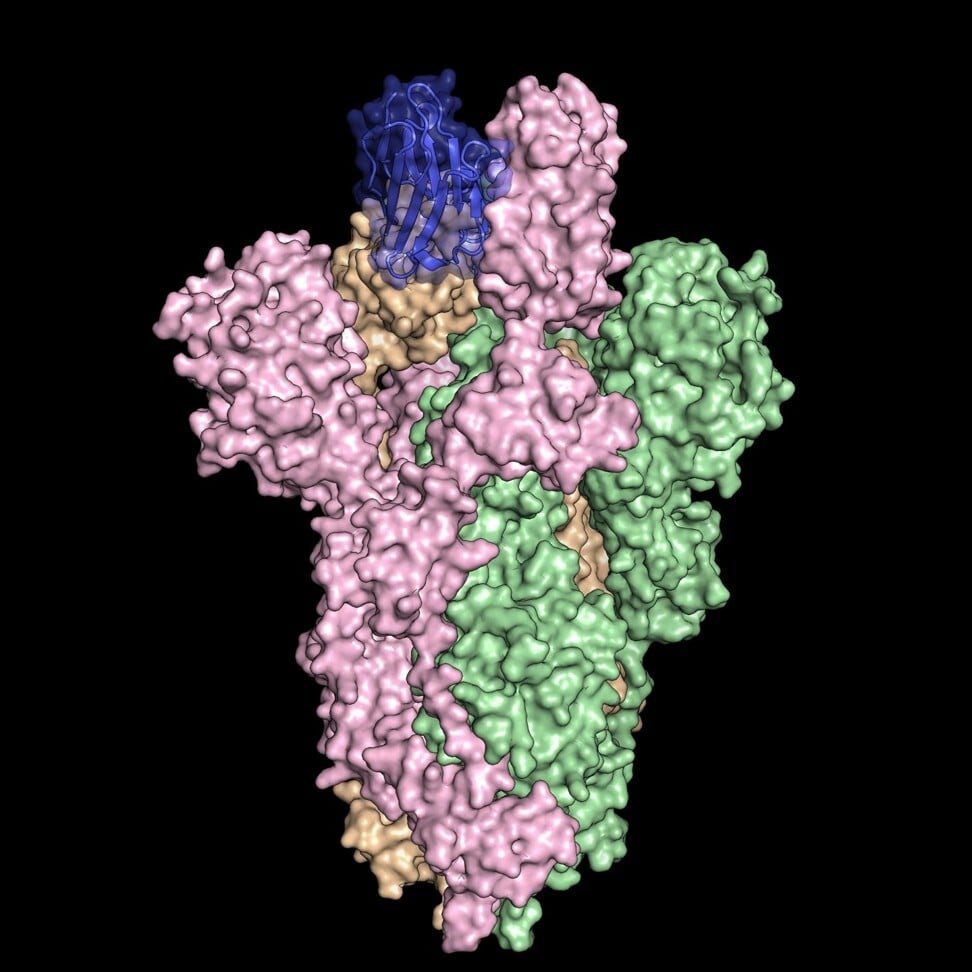
Researchers created an antibody dubbed VHH-72Fc (blue) that binds tightly to the Sars-CoV-2 spike protein (pink, green and orange), blocking the virus from infecting cells. Photo: University of Texas at Austin
The researchers are preparing for more trials with hamsters or primates to further test the antibody, before taking it to human trials.
The main subject of the study, Winter the llama, is now four years old and lives on a farm operated by Ghent University’s Vlaams Institute for Biotechnologym which said it has around 130 other llamas and alpacas at the facility.
Source: SCMP
29/04/2020

Coronavirus: Oxford vaccine effective in monkeys, heading for mass production in India

  • Six animals inoculated with vaccine candidate then exposed to virus did not catch Covid-19 after 28 days
  • Up to 60 million doses could be produced by Serum Institute of India this year
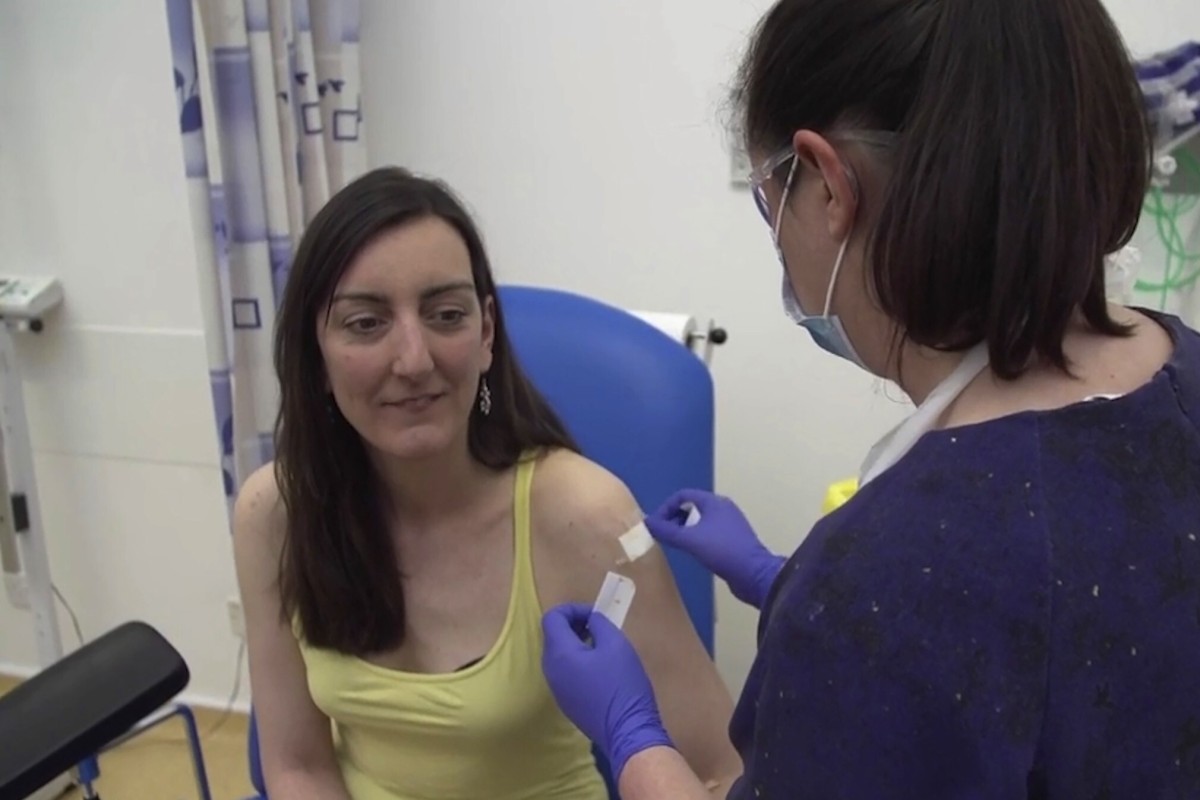
Microbiologist Elisa Granato gets an injection on Thursday as part of the first human trials in Britain for a potential coronavirus vaccine. Photo: University of Oxford via AP

A leading candidate for a Covid-19 vaccine has shown promising results in animal trials, and is expected to see mass production in India within months.

The Serum Institute of India, the world’s largest maker of vaccines by volume, said on Tuesday that it plans this year to produce up to 60 million doses of a potential vaccine developed by the University of Oxford, which is under clinical trial in Britain.

While the vaccine candidate, called “ChAdOx1 nCoV-19”, is yet to be proven to work against Covid-19, Serum decided to start manufacturing it as it had shown success in animal trials and had progressed to tests on humans, Serum Chief Executive Adar Poonawalla said.

Six rhesus macaque monkeys were inoculated with the vaccine candidate at the National Institutes of Health’s Rocky Mountain Laboratory in Montana last month, according to The New York Times.

Covid-19 vaccine trial starts in Oxford, but remdesivir treatment reportedly flops in China tests
The subjects were exposed afterwards to large quantities of the novel coronavirus, but all six remained healthy after more than 28 days, the newspaper reported, citing researcher Vincent Munster, who conducted the test.

More than 3 million people have been reported to be infected globally and over 210,000 have died from Covid-19, the respiratory disease caused by the coronavirus.

“They are a bunch of very qualified, great scientists [at Oxford] … That’s why we said we will go with this and that’s why we are confident,” Poonawalla told Reuters in a phone interview.

“Being a private limited company, not accountable to public investors or bankers, I can take a little risk and sideline some of the other commercial products and projects that I had planned in my existing facility,” Poonawalla said.

Bill Gates hopes his virus vaccine ‘manufacturing within a year’

27 Apr 2020

As many as 100 potential Covid-19 candidate vaccines are now under development by biotech and research teams around the world, and at least five of these are in preliminary testing in people in what are known as phase one clinical trials.

Poonawalla said he hoped trials of the Oxford vaccine, due to finish in about September, would be successful. Oxford scientists said last week the main focus of initial tests was to ascertain not only whether the vaccine worked but that it induced good immune responses and no unacceptable side effects.

Serum, owned by the Indian billionaire Cyrus Poonawalla, plans to make the vaccine at its two manufacturing plants in the western city of Pune, aiming to produce up to 400 million doses next year if all goes well, Poonawalla said.

“A majority of the vaccine, at least initially, would have to go to our countrymen before it goes abroad,” he said, adding that Serum would leave it to the Indian government to decide which countries would get how much of the vaccine and when.

Rhesus macaque monkeys are often used in animal testing because of their similarity to humans. Photo: AFP
Serum envisages a price of 1,000 rupees (US$14.70) per vaccine, but governments would give it to people without charge, he said.

He said Prime Minister Narendra Modi’s office was “very closely” involved in the vaccine production and the company is hoping the government will help foot the cost of making it.

Over roughly the next five months, Serum will spend some 300 million to 400 million rupees (US$4.4 million to US$5.9 million) on making around 3-5 million doses per month, he said. “[The government] are very happy to share some risk and fund something with us, but we haven’t really pencilled anything down yet,” Poonawalla said.

Coronavirus: clinical trial begins on third vaccine candidate in China

22 Apr 2020

Serum has also partnered with the US biotech firm Codagenix and Austria’s Themis on two other Covid-19 vaccine candidates and plans to announce a fourth alliance in a couple of weeks, he said.

Serum’s board last week also agreed to invest roughly 6 billion rupees (US$8.8 billion) on making a new manufacturing unit to solely produce coronavirus vaccines, Poonawalla said.

Source: SCMP

24/01/2019

China clones gene-edited monkeys

CHINA-SHANGHAI-GENE-EDITED MONKEYS (CN)

Photo taken on Nov. 26, 2018 shows the five cloned monkeys with circadian rhythm disorders. China has cloned five monkeys from a gene-edited macaque with circadian rhythm disorders, the first time multiple monkeys have been cloned from a gene-edited monkey for biomedical research. Scientists made the announcement Thursday, with two articles published in National Science Review, a top Chinese journal in English. The cloned monkeys were born in Shanghai at Institute of Neuroscience of Chinese Academy of Sciences. (Xinhua/Institute of Neuroscience of Chinese Academy of Sciences)

SHANGHAI, Jan. 24 (Xinhua) — China has cloned five monkeys from a gene-edited macaque with circadian rhythm disorders, the first time multiple monkeys have been cloned from a gene-edited monkey for biomedical research.

Scientists made the announcement Thursday, with two articles published in National Science Review, a top Chinese journal in English. The cloned monkeys were born in Shanghai at Institute of Neuroscience of Chinese Academy of Sciences.

Researchers said that the advance means that a population of customized gene-edited monkey models with uniform genetic background will be available for biomedical research.

Disorders of circadian rhythm are associated with many human diseases, including sleep disorders, depression, diabetic mellitus, cancer and neurodegenerative diseases, such as Alzheimer’s disease.

Previously, mice and flies were widely used for the research of such diseases, but these animal models differ greatly from human beings in terms of activity routines, brain structure and metabolic rate.

The cloned monkeys, closer to human in physiology, make better models for research on disease pathogenesis and potential therapeutic treatments.

In order to create an ideal donor monkey, researchers knocked out BMAL1, a core circadian regulatory transcription factor, using gene editing at the embryo stage.

They selected one of the gene-edited monkeys with the most severe disease phenotypes as the donor. The fibroblasts of the donor were then used to clone five monkeys by somatic cell nuclear transfer, the same method used to generate Zhong Zhong and Hua Hua, the first cloned monkeys born in China at the end of 2017.

Different from Zhong Zhong and Hua Hua, generated by using fibroblasts from an aborted fetus, the new clones were made using a gene-edited young adult male monkey.

“It shows that besides using fetus, batch cloning of gene-edited male monkeys with diseases is also feasible,” said Qiang Sun of the institute.

Sun said the research program was reviewed and supervised by the institute’s ethic committee in accordance with international ethical standards of animal research.

He said that the research signified the maturing of China’s somatic cell cloning.

Muming Poo, the director of the institute, said that the research team would focus on cloning monkey models with different brain diseases in the future.

Besides being used to study human brain diseases, the models will be used to test medicine effectiveness, which can help reduce the number of animal models used in experiments and lower the cost of medicine development, he said.

Source: Xinhua

11/12/2018

India’s government faces a tough re-election battle next year but first it must deal with an opponent as wily as any political rival, troops of monkeys that have become a big threat around its offices in New Delhi.

Red-faced rhesus macaques have spread havoc, snatching food and mobile telephones, breaking into homes and terrorising people in and around the Indian capital.

They have colonised areas around parliament and the sites of key ministries, from the prime minister’s office to the finance and defence ministries, frightening both civil servants and the public.

“Very often they snatch food from people as they are walking, and sometimes they even tear files and documents by climbing in through the windows,” said Ragini Sharma, a home ministry employee.

Ahead of Tuesday’s start of parliament’s winter session, an advisory to members of parliament last month detailed ways they could keep simian attacks at bay. Don’t tease or make direct eye contact with a monkey, the advisory said, and definitely don’t get between a mother and her infant.

The rapid growth of cities has displaced macaques, geographically the most widely distributed primates in the world after humans, driving them into human habitats to hunt for food.

A monkey sits on a pavement outside India’s Parliament building in New Delhi, India, November 15, 2018. Picture taken November 15, 2018. REUTERS/Anushree Fadnavis

Many in Hindu-majority India revere and feed the animals they consider to be connected to the demigod Hanuman, who takes the form of a monkey.

“This socio-religious tradition of feeding has created a vicious cycle,” said ecology researcher Asmita Sengupta.

“They become used to being fed by humans and lose their sense of fear,” said Sengupta, of the Ashoka Trust for Research in Ecology and the Environment.

“They start actively seeking supplementary food and if we don’t feed them, they turn aggressive.”

‘APE REPELLERS’

The monkeys have hardly proved an ally for Prime Minister Narendra Modi.

Hundreds of macaques feasting on optic fibre cables strung along the banks of the river Ganges derailed his plan to roll out wifi in his constituency, the crowded 3,000-year-old holy city of Varanasi, in 2015.

Men were hired to swat the monkeys away with broomsticks and slingshots, when then U.S. President Barack Obama toured New Delhi that year, media said.

In 2007, monkeys pushed the deputy mayor of Delhi, S.S. Bajwa, off his balcony to his death. Last month, one of the animals snatched a 12-day-old boy from his mother and killed him in Agra, home to the famed monument to love, the Taj Mahal.

Monkeys have bred rapidly in Delhi and neighbouring states as they have protected status, but there is no official estimate of their numbers.

India has tried several strategies to fight the menace.

Authorities stumbled on a partially successful solution four years ago, after hiring 40 men to disguise themselves as langurs and squeal monkey-like to try and terrify the macaques away.

“We call them ‘ape repellers’ and they are contract employees,” said a government official, who asked not to be identified. The stratagem works temporarily as the monkeys flee on hearing the calls, but they return once the men depart.

Primatologist S.M. Mohnot recommends sterilisation and moving the animals to forests, as well as lifting a ban on their capture for biomedical research and resuming exports of the macaques, as components of a solution.

“The monkey menace can be checked only by a multi-pronged approach,” said Mohnot, the chairman of the Primate Research Centre, a federal institute in the western city of Jodhpur.

Law of Unintended Consequences

continuously updated blog about China & India

ChiaHou's Book Reviews

continuously updated blog about China & India

What's wrong with the world; and its economy

continuously updated blog about China & India