Archive for ‘Moon mission’

22/07/2019

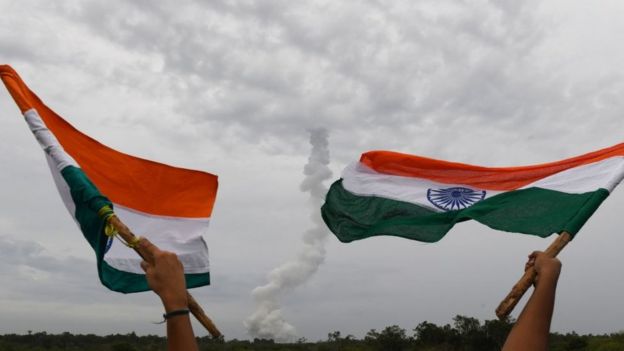
Chandrayaan-2: India set to re-attempt Moon mission launch

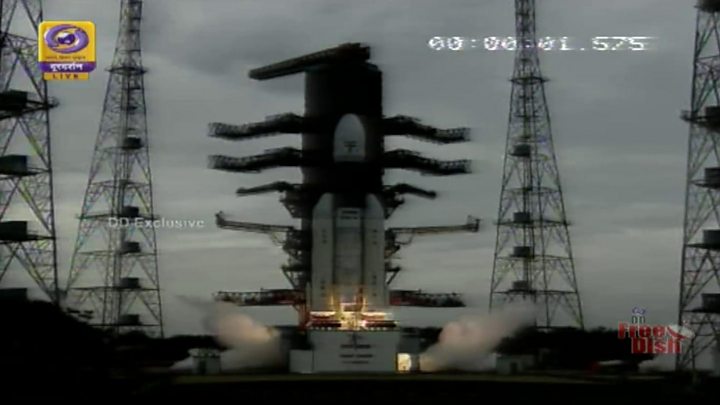
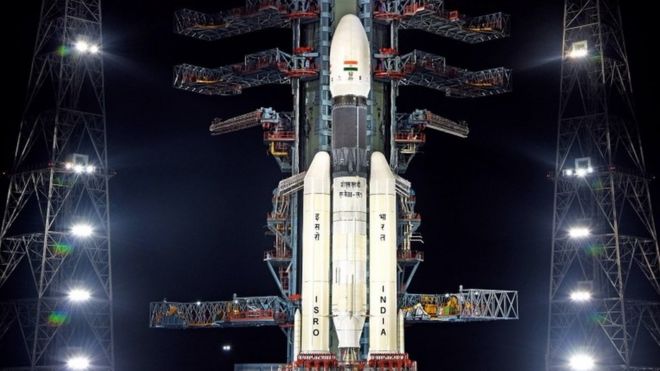
The rocket that will carry the Chandrayaan-2 satelliteImage copyright EPA
Image caption The rocket weighs as much as a fully-loaded jumbo jet

India is set to re-attempt the launch of its second lunar mission a week after it halted the scheduled blast-off due to a technical snag.

Chandrayaan-2 will be launched at 14:43 local time (09:13 GMT) on Monday, space agency Isro said.

It added the spacecraft was ready “to take a billion dreams to the Moon – now stronger than ever before”.

The space agency hopes the $150m (£120m) mission will be the first to land on the Moon’s south pole.

The countdown on 15 July was stopped 56 minutes before launch after a “technical snag was observed in [the] launch vehicle system”, according to Isro. Indian media have reported that a leak from a helium gas bottle in the cryogenic engine of the rocket was to blame.

The fuel from the rocket was drained and the scientists resolved the glitch.

“It was a simple to fix [but it was] a serious problem that could have resulted in total failure,” says a source at Isro.

Isro thanked people for supporting the mission despite the delay.

What is this mission all about?

India’s first lunar mission in 2008 – Chandrayaan-1 – did not land on the lunar surface, but it carried out the first and most detailed search for water on the Moon using radars.

Chandrayaan-2 (Moon vehicle 2) will try to land near the little-explored south pole of the Moon.

The mission will focus on the lunar surface, searching for water and minerals and measuring moonquakes, among other things.

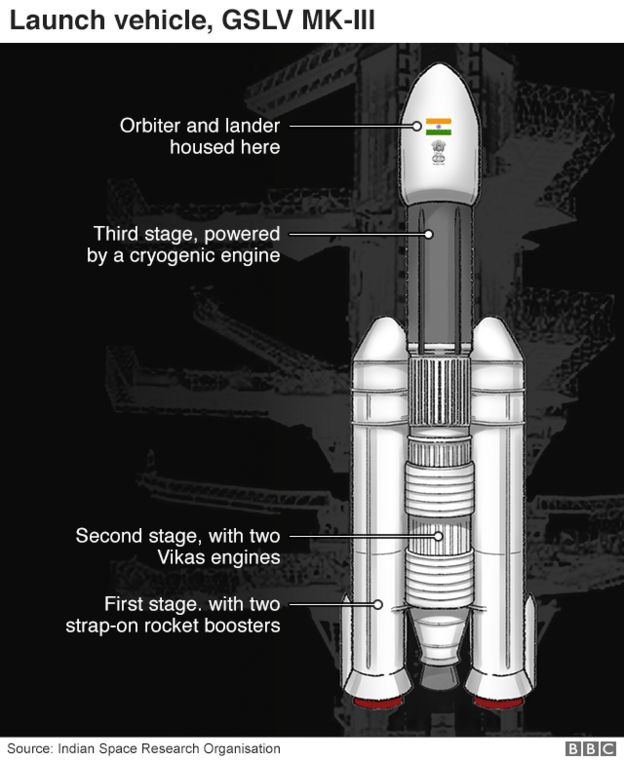
India is using its most powerful rocket, the Geosynchronous Satellite Launch Vehicle Mark III (GSLV Mk-III), in this mission. It weighs 640 tonnes (almost 1.5 times the weight of a fully-loaded 747 jumbo jet) and at 44 metres (144ft) is as high as a 14-storey building.

Graphic showing the launch vehicle with different parts labelled
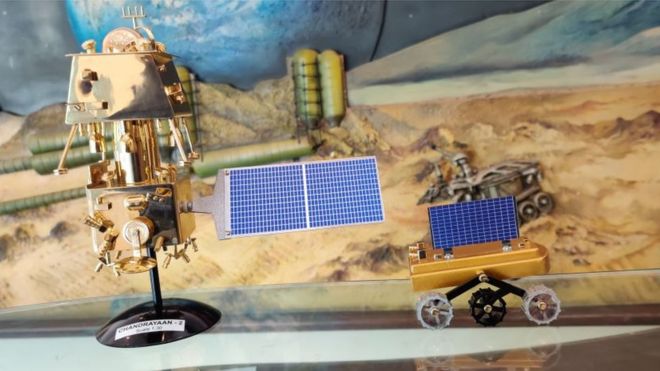
The spacecraft weighs 2.379kg (5.244lb) and has three distinct parts: an orbiter, a lander and a rover.

The orbiter, which has a mission life of a year, will take images of the lunar surface, and “sniff” the tenuous atmosphere.

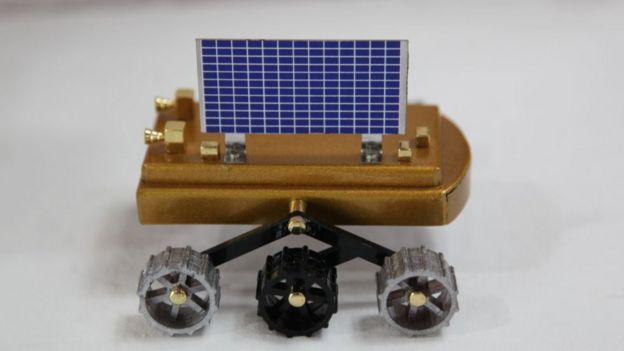
The lander (named Vikram, after the founder of Isro) weighs about half as much, and carries within its belly a 27kg Moon rover with instruments to analyse the lunar soil. In its 14-day life, the rover (called Pragyan – wisdom in Sanskrit) can travel up to a half a kilometre from the lander and will send data and images back to Earth for analysis.

“India can hope to get the first selfies from the lunar surface once the rover gets on its job,” Dr K Sivan, the Isro chief, said before the first launch attempt.

Media caption Is India a space superpower?

How long is the journey to the Moon?

The launch is only the beginning of a 384,000km (239,000-mile) journey – Isro is still hoping the lander will touch down on the Moon on 6 or 7 September as planned, despite the week-long delay of the launch.

The journey of more than six weeks is a lot longer than the four days the Apollo 11 mission 50 years ago took to reach the Moon- and land humans on the lunar surface for the first time.

In order to save fuel, India’s space agency has chosen a circuitous route to take advantage of the Earth’s gravity, which will help slingshot the satellite towards the Moon. India does not have a rocket powerful enough to hurl Chandrayaan-2 on a direct path. In comparison, the Saturn V rocket used by the Apollo programme remains the largest and most powerful rocket ever built.

“There will be 15 terrifying minutes for scientists once the lander is released and is hurled towards the south pole of the Moon,” Dr Sivan said.

Graphic: How India's Chandrayaan-2 will reach the moon
He explained that those who had been controlling the spacecraft until then would have no role to play in those crucial moments. The actual landing, he added, was an autonomous operation dependent on all systems performing as they should. Otherwise, the lander could crash into the lunar surface.

Earlier this year, Israel’s first Moon mission crash-landed while attempting to touch down.

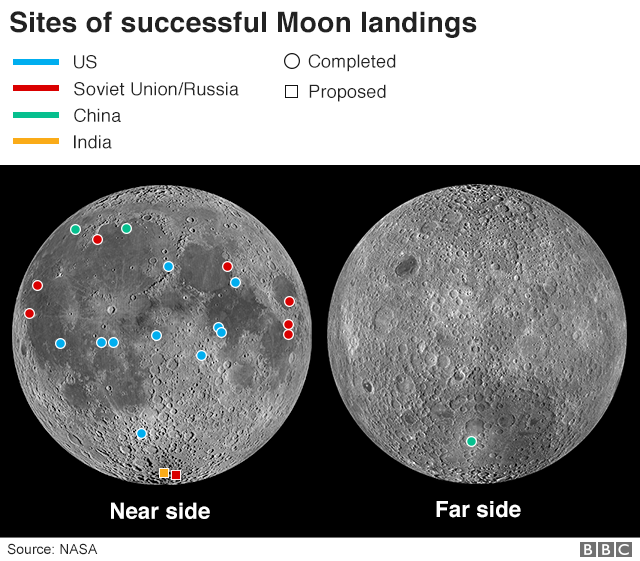
Site of successful moon landings graphic showing where other countries have landed on the moon
Who is on the team?

Nearly 1,000 engineers and scientists have worked on this mission. But for the first time, Isro has chosen women to lead an interplanetary expedition.

Two women are steering India’s journey to the Moon. While programme director Muthaya Vanitha has nurtured Chandrayaan-2 over the years, it will be navigated by Ritu Karidhal.

Source: The BBC

12/06/2019

Chandrayaan-2: India unveils spacecraft for second Moon mission

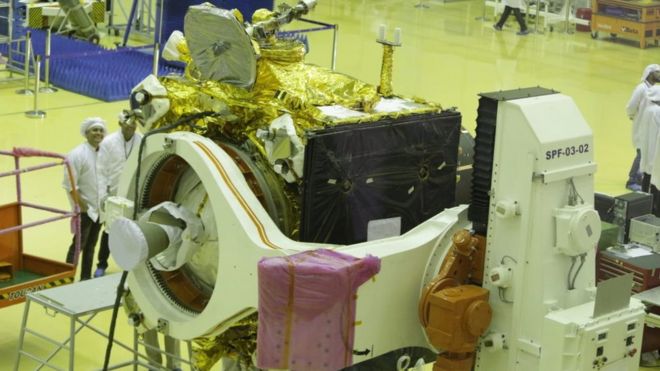
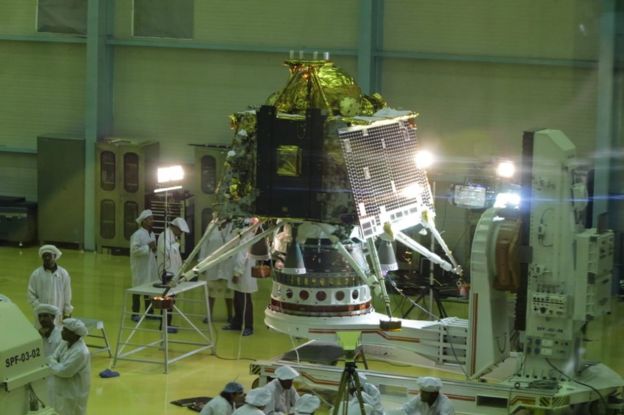
Lander of Chandrayaan-2Image copyright PRESS INFORMATION BUREAU, INDIA

India’s space agency has unveiled its spacecraft that it hopes to land on the Moon by September.

If successful, India will be the fourth country to achieve a soft landing on the Moon, following the US, the former Soviet Union and China.

Chandrayaan-2 will be the country’s second lunar mission.

Its first mission, Chandrayaan-1 which launched in 2008, was an orbiter and did not actually land on the surface of the Moon.

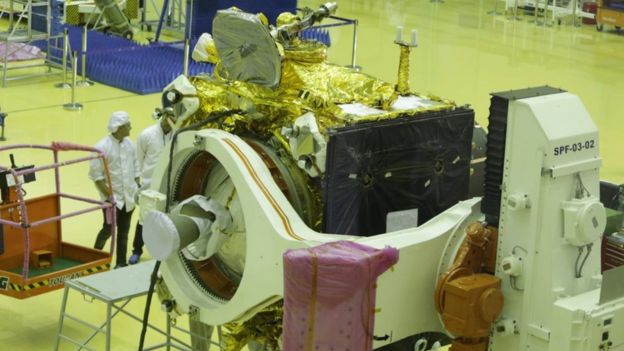
Rover of Chandrayaan-2Image copyright PRESS INFORMATION BUREAU, INDIA

This mission will focus on the lunar’s surface and gather data on water, minerals and rock formations.

The new spacecraft will have a lander, an orbiter and rover.

These are photos of the craft in the Indian Space and Research Organisation’s (ISRO) lab, where scientists have been busy getting the spacecraft ready:

Lander of Chandrayaan-2Image copyright PRESS INFORMATION BUREAU, INDIA

Media caption Is India’s prime minister right when he calls his country a space superpower?

If all goes according to plan, the lander and rover will touch down near the lunar south pole in September. If successful, it would be the first ever spacecraft to land in that region.

The rover is expected to operate for 14 days on the Moon, ISRO chairperson K Sivan told the Times of India newspaper. “The rover will analyse the content of the lunar surface and send data and images back to the earth,” he said.

Source: The BBC

04/01/2019

What does China want to do on the Moon’s far side?

Von Karman craterImage copyrightCNSA/AFP
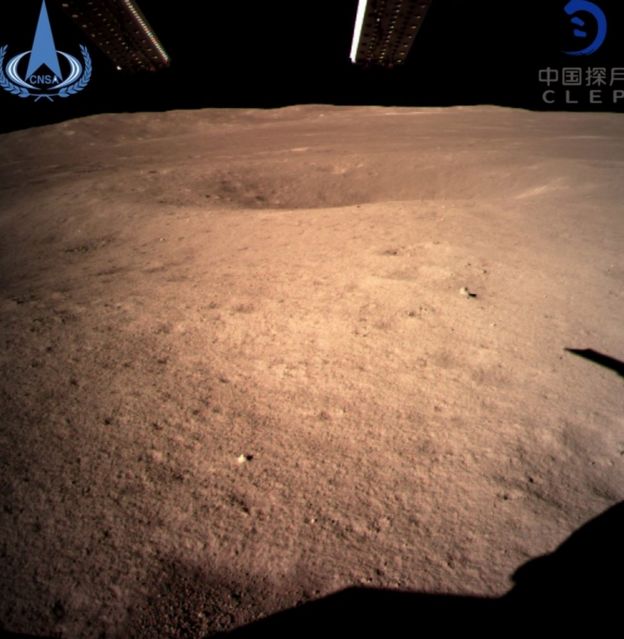
Image captionThe first close up pictures of the far side of the Moon

What will China’s Chang’e-4 mission learn about the far side of the Moon? Here are a few things the mission is designed to do.

Learn about the Moon’s history

No space mission has ever explored the far side from the surface. As such, it’s the first chance to explore a mysterious region of Earth’s natural satellite.

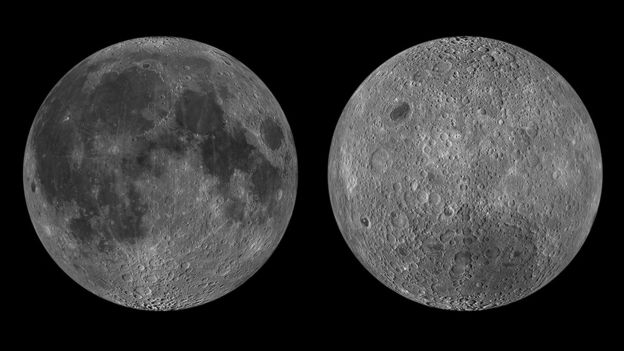
The “face” that’s never seen from Earth has some key differences to the more familiar “near side”. The far side has a thicker, older crust that is pocked with more craters. There are also very few of the “maria” (dark basaltic “seas” created by lava flows) that are evident on the near side.

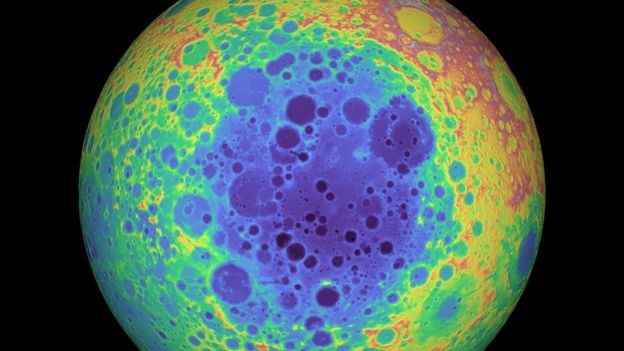
Chang’e-4 has reportedly landed at a site known as Von Kármán crater, a 180km depression located in the far side’s southern hemisphere. But Von Kármán lies within a much bigger hole punched in the Moon – the South Pole-Aitken basin.

It’s the oldest, largest and deepest such basin on the Moon and formed when an asteroid – perhaps 500km across, or more – collided with it billions of years ago.

This event was so powerful that it is thought to have ploughed through the Moon’s outer crust layer and through into the zone known as the mantle.

One of the mission’s objectives is to study any exposed material from the mantle present at the landing site. This would provide insights into the internal structure and history of the Moon.

SPA basinImage copyrightNASA
Image captionThe South Pole-Aitken basin was formed by a giant impact billions of years ago

Indeed, data from orbiting spacecraft show that the composition of the basin is different from the surrounding lunar highlands. But exposed mantle material on the surface is just one possibility among several to explain this observation.

The rover will use its panoramic camera to identify interesting locations and its Visible and Near-Infrared Imaging Spectrometer (VNIS) to study minerals in the floor of the crater (as well as of ejecta – rocks thrown out by nearby space impacts).

Additionally, the Lunar Penetrating Radar (LPR) instrument will be able to look into the shallow subsurface of the Moon, down to a depth of about 100m. It could probe the thickness of the lunar regolith – the broken up rocks and dust that make up the surface – and shed light on the structure of the upper lunar crust.

After the huge impact that created the South Pole-Aitken basin, a large amount of melted rock would have filled the depression. The science team wants to use Chang’e-4 to identify and study variations in its composition.

Filling an astronomy gap

The far side of the Moon has long been regarded as an ideal spot for conducting a particular kind of radio astronomy – in the low-frequency band – because it’s shielded from the radio noise of Earth.

There’s a frequency band (below about 10MHz) where radio astronomy observations can’t be conducted from Earth, because of manmade radio interference and other, natural factors.

Chang’e-4’s lander is carrying an instrument called the Low Frequency Spectrometer (LFS) which can make low frequency radio observations. It will be used in concert with a similar experiment on the Queqiao orbiting satellite.

The objectives include making a map of the radio sky at low frequencies and studying the behaviour of the Sun.

Speaking in 2016, Liu Tongjie, from the Chinese space agency (CNSA), said: “Since the far side of the Moon is shielded from electromagnetic interference from the Earth, it’s an ideal place to research the space environment and solar bursts, and the probe can ‘listen’ to the deeper reaches of the cosmos.”

Thus, the mission will fill a gap in astronomical observation, allowing scientists to study cosmic phenomena in a way that has never been possible from our planet.

Radiation on the Moon

Human exploration of MoonImage copyrightSCIENCE PHOTO LIBRARY
Image captionUnderstanding the radiation environment will be vital for future human exploration

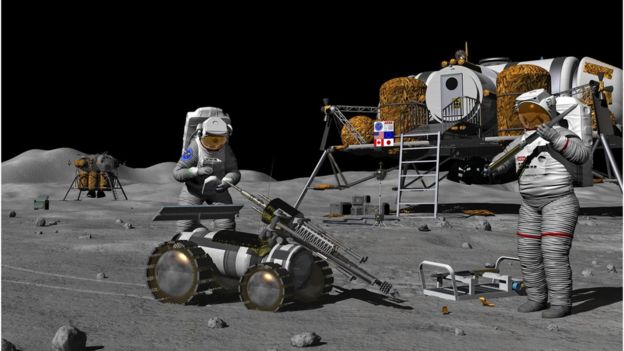
Several space agencies want to land humans on the Moon in the not-too-distant future, and might send astronauts there for longer than we’ve ever stayed before. So understanding the potential risks from radiation are vital.

Earth’s thick atmosphere and strong magnetic field provide adequate shielding against galactic cosmic rays and energetic charged particles travelling from the Sun.

But astronauts on the Moon will be outside this protective bubble and exposed to particles travelling through open space at near the speed of light – with potentially damaging consequences for their health.

The Lunar Lander Neutrons and Dosimetry (LND) experiment, supplied by researchers in Germany, will aim to fill in some gaps in our understanding about the lunar radiation environment.

It will provide dosimetry (measure the ionising radiation dose that could be absorbed by the human body) with a view to future exploration, and contribute to understanding of particles originating from the Sun.

03/01/2019

China Moon mission lands Chang’e-4 spacecraft on far side

China says it has successfully landed a robotic spacecraft on the far side of the Moon, the first ever such attempt and landing.

At 10:26 Beijing time (02:26 GMT), the un-crewed Chang’e-4 probe touched down in the South Pole-Aitken Basin, state media said.

It is carrying instruments to analyse the unexplored region’s geology, as well to conduct biological experiments.

The landing is being seen as a major milestone in space exploration.

There have been numerous missions to the Moon in recent years, but the vast majority have been to orbit, fly by or impact. The last crewed landing was Apollo 17 in 1972.

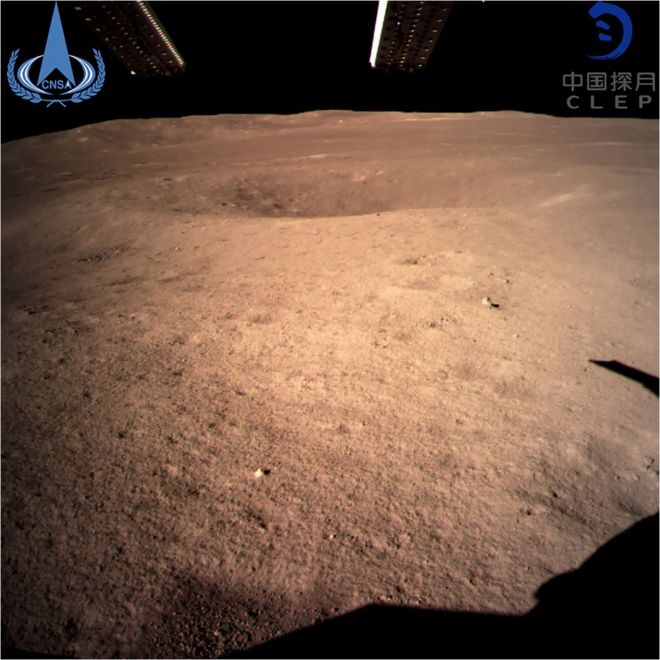
First pictures from the surfaceImage copyrightEPA/CNSA
Image captionAll pictures and data have to be bounced off a separate satellite
Presentational white space

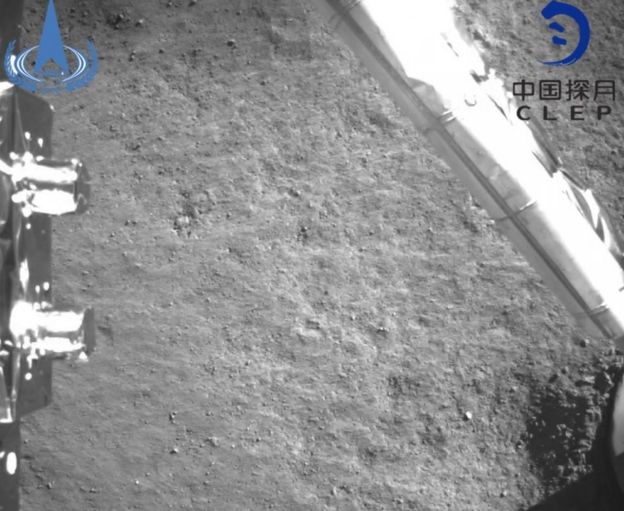
The Chang’e-4 probe has already sent back its first pictures from the surface, which were shared by state media.

With no direct communication link possible, all pictures and data have to be bounced off a separate satellite before being relayed to Earth.

Why is this Moon landing so significant?

Previous Moon missions have landed on the Earth-facing side, but this is the first time any craft has landed on the unexplored and rugged far side.

Ye Quanzhi, an astronomer at Caltech, told the BBC this was the first time China had “attempted something that other space powers have not attempted before”.

First pictures from the surfaceImage copyrightEPA/CNSA
Image captionThe far side is not visible from the Earth due to “tidal locking”
Presentational white space

The Chang’e-4 was launched from Xichang Satellite Launch Centre in China on 7 December; it arrived in lunar orbit on 12 December.

The Chang’e-4 probe is aiming to explore a place called the Von Kármán crater, located within the much larger South Pole-Aitken (SPA) Basin – thought to have been formed by a giant impact early in the Moon’s history.

“This huge structure is over 2,500km (1,550 miles) in diameter and 13km deep, one of the largest impact craters in the Solar System and the largest, deepest and oldest basin on the Moon,” Andrew Coates, professor of physics at UCL’s Mullard Space Science Laboratory in Surrey, told the BBC.

The event responsible for carving out the SPA basin is thought to have been so powerful, it punched through the Moon’s crust and down into the zone called the mantle. Researchers will want to train the instruments on any mantle rocks exposed by the calamity.

Near side and far side of MoonImage copyrightNASA
Image captionThe near side (L) and far side (R) of the Moon have some key differences

The science team also hopes to study parts of the sheet of melted rock that would have filled the newly formed South Pole-Aitken Basin, allowing them to identify variations in its composition.

A third objective is to study the far side regolith, the broken up rocks and dust that make up the surface, which will help us understand the formation of the Moon.

What else might we learn from this mission?

Chang’e-4’s static lander is carrying two cameras; a German-built radiation experiment called LND; and a spectrometer that will perform low-frequency radio astronomy observations.

Scientists believe the far side could be an excellent place to perform radio astronomy, because it is shielded from the radio noise of Earth. The spectrometer work will aim to test this idea.

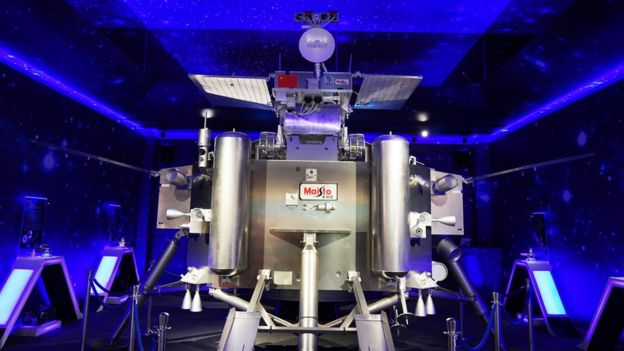
A mock-up of the Chang'e-4 lander and rover, on display in Dongguan, ChinaImage copyrightGETTY IMAGES
Image captionA mock-up of the Chang’e-4 lander and rover, on display in Dongguan, China

The lander carries a 3kg (6.6lb) container with potato and arabidopsis plant seeds – as well as silkworm eggs – to perform biological studies. The “lunar mini biosphere” experiment was designed by 28 Chinese universities.

Other equipment/experiments include:

  • A panoramic camera
  • A radar to probe beneath the lunar surface
  • An imaging spectrometer to identify minerals
  • An experiment to examine the interaction of the solar wind (a stream of energised particles from the Sun) with the lunar surface

The mission is part of a larger Chinese programme of lunar exploration. The first and second Chang’e missions were designed to gather data from orbit, while the third and fourth were built for surface operations.

Chang’e-5 and 6 are sample return missions, delivering lunar rock and soil to laboratories on Earth.

Is there a ‘dark side of the Moon’?

The lunar far side is often referred to as the “dark side”, though “dark” in this case means “unseen” rather than “lacking light”. In fact, both the near and far sides of the Moon experience daytime and night-time.

But because of a phenomenon called “tidal locking”, we see only one face of the Moon from Earth. This is because the Moon takes just as long to rotate on its own axis as it takes to complete one orbit of Earth.

The far side has a thicker, older crust that is pocked with more craters. There are also very few of the “mare” – dark basaltic “seas” created by lava flows – that are evident on the near side.

How will scientists keep track of the rover?

In an article for the US-based Planetary Society in September, Dr Long Xiao from the China University of Geosciences (Wuhan), said: “The challenge faced by a far side mission is communications. With no view of Earth, there is no way to establish a direct radio link.”

So the landers must communicate with Earth using a relay satellite named Queqiao – or Magpie Bridge – launched by China last May.

Queqiao orbits 65,000km beyond the Moon, around a Lagrange point – a kind of gravitational parking spot in space where it will remain visible to ground stations in China and other countries such as Argentina.

What are China’s plans in space?

China wants to become a leading power in space exploration, alongside the United States and Russia.

In 2017 it announced it was planning to send astronauts to the Moon.

It will also begin building its own space station next year, with the hope it will be operating by 2022.

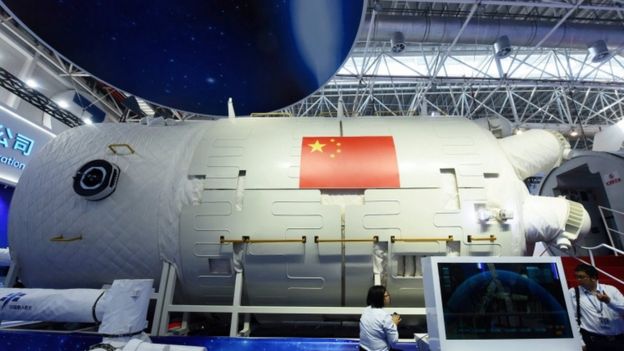
A full-size model of the Tianhe core module of China's space stationImage copyrightREUTERS
Image captionA full-size model of the Tianhe core module of China’s space station

The BBC’s John Sudworth in Beijing says the propaganda value of China’s leaps forward in its space programme has been tempered by careful media management. There was very little news of the Chang’e 4 landing attempt before the official announcement it had been a success.

But Fred Watson, who promotes Australia’s astronomy endeavours as its astronomer-at-large, says the secrecy could simply be down to caution, similar to that shown by the Soviet Union in the early days of its competition with Nasa.

“The Chinese space agency is a young organisation, but perhaps in years to come, it will catch up,” he told the BBC.

Ye Quanzhi says China has made efforts to be more open.

“They live-streamed the launch of Chang’e 2 and 3, as well as the landing of Chang’e 3. PR skills take time to develop but I think China will get there,” he said.

China has been a late starter when it comes to space exploration. Only in 2003, it sent its first astronaut into orbit, making it the third country to do so, after the Soviet Union and the US.

The far side landing has already been heralded by experts at Nasa as “a first for humanity and an impressive accomplishment”.

Media captionFar side of Moon captured by Chinese spacecraft

China says it has successfully landed a robotic spacecraft on the far side of the Moon, the first ever such attempt and landing.

At 10:26 Beijing time (02:26 GMT), the un-crewed Chang’e-4 probe touched down in the South Pole-Aitken Basin, state media said.

It is carrying instruments to analyse the unexplored region’s geology, as well to conduct biological experiments.

The landing is being seen as a major milestone in space exploration.

There have been numerous missions to the Moon in recent years, but the vast majority have been to orbit, fly by or impact. The last crewed landing was Apollo 17 in 1972.

First pictures from the surfaceImage copyrightEPA/CNSA
Image captionAll pictures and data have to be bounced off a separate satellite
Presentational white space

The Chang’e-4 probe has already sent back its first pictures from the surface, which were shared by state media.

With no direct communication link possible, all pictures and data have to be bounced off a separate satellite before being relayed to Earth.

Why is this Moon landing so significant?

Previous Moon missions have landed on the Earth-facing side, but this is the first time any craft has landed on the unexplored and rugged far side.

Ye Quanzhi, an astronomer at Caltech, told the BBC this was the first time China had “attempted something that other space powers have not attempted before”.

First pictures from the surfaceImage copyrightEPA/CNSA
Image captionThe far side is not visible from the Earth due to “tidal locking”

The Chang’e-4 was launched from Xichang Satellite Launch Centre in China on 7 December; it arrived in lunar orbit on 12 December.

The Chang’e-4 probe is aiming to explore a place called the Von Kármán crater, located within the much larger South Pole-Aitken (SPA) Basin – thought to have been formed by a giant impact early in the Moon’s history.

“This huge structure is over 2,500km (1,550 miles) in diameter and 13km deep, one of the largest impact craters in the Solar System and the largest, deepest and oldest basin on the Moon,” Andrew Coates, professor of physics at UCL’s Mullard Space Science Laboratory in Surrey, told the BBC.

The event responsible for carving out the SPA basin is thought to have been so powerful, it punched through the Moon’s crust and down into the zone called the mantle. Researchers will want to train the instruments on any mantle rocks exposed by the calamity.

Near side and far side of MoonImage copyrightNASA
Image captionThe near side (L) and far side (R) of the Moon have some key differences

The science team also hopes to study parts of the sheet of melted rock that would have filled the newly formed South Pole-Aitken Basin, allowing them to identify variations in its composition.

A third objective is to study the far side regolith, the broken up rocks and dust that make up the surface, which will help us understand the formation of the Moon.

What else might we learn from this mission?

Chang’e-4’s static lander is carrying two cameras; a German-built radiation experiment called LND; and a spectrometer that will perform low-frequency radio astronomy observations.

Scientists believe the far side could be an excellent place to perform radio astronomy, because it is shielded from the radio noise of Earth. The spectrometer work will aim to test this idea.

A mock-up of the Chang'e-4 lander and rover, on display in Dongguan, ChinaImage copyrightGETTY IMAGES
Image captionA mock-up of the Chang’e-4 lander and rover, on display in Dongguan, China

The lander carries a 3kg (6.6lb) container with potato and arabidopsis plant seeds – as well as silkworm eggs – to perform biological studies. The “lunar mini biosphere” experiment was designed by 28 Chinese universities.

Other equipment/experiments include:

  • A panoramic camera
  • A radar to probe beneath the lunar surface
  • An imaging spectrometer to identify minerals
  • An experiment to examine the interaction of the solar wind (a stream of energised particles from the Sun) with the lunar surface

The mission is part of a larger Chinese programme of lunar exploration. The first and second Chang’e missions were designed to gather data from orbit, while the third and fourth were built for surface operations.

Chang’e-5 and 6 are sample return missions, delivering lunar rock and soil to laboratories on Earth.

Is there a ‘dark side of the Moon’?

The lunar far side is often referred to as the “dark side”, though “dark” in this case means “unseen” rather than “lacking light”. In fact, both the near and far sides of the Moon experience daytime and night-time.

But because of a phenomenon called “tidal locking”, we see only one face of the Moon from Earth. This is because the Moon takes just as long to rotate on its own axis as it takes to complete one orbit of Earth.

The far side has a thicker, older crust that is pocked with more craters. There are also very few of the “mare” – dark basaltic “seas” created by lava flows – that are evident on the near side.

How will scientists keep track of the rover?

In an article for the US-based Planetary Society in September, Dr Long Xiao from the China University of Geosciences (Wuhan), said: “The challenge faced by a far side mission is communications. With no view of Earth, there is no way to establish a direct radio link.”

So the landers must communicate with Earth using a relay satellite named Queqiao – or Magpie Bridge – launched by China last May.

Queqiao orbits 65,000km beyond the Moon, around a Lagrange point – a kind of gravitational parking spot in space where it will remain visible to ground stations in China and other countries such as Argentina.

What are China’s plans in space?

China wants to become a leading power in space exploration, alongside the United States and Russia.

In 2017 it announced it was planning to send astronauts to the Moon.

It will also begin building its own space station next year, with the hope it will be operating by 2022.

A full-size model of the Tianhe core module of China's space stationImage copyrightREUTERS
Image captionA full-size model of the Tianhe core module of China’s space station

The BBC’s John Sudworth in Beijing says the propaganda value of China’s leaps forward in its space programme has been tempered by careful media management. There was very little news of the Chang’e 4 landing attempt before the official announcement it had been a success.

But Fred Watson, who promotes Australia’s astronomy endeavours as its astronomer-at-large, says the secrecy could simply be down to caution, similar to that shown by the Soviet Union in the early days of its competition with Nasa.

“The Chinese space agency is a young organisation, but perhaps in years to come, it will catch up,” he told the BBC.

Ye Quanzhi says China has made efforts to be more open.

“They live-streamed the launch of Chang’e 2 and 3, as well as the landing of Chang’e 3. PR skills take time to develop but I think China will get there,” he said.

China has been a late starter when it comes to space exploration. Only in 2003, it sent its first astronaut into orbit, making it the third country to do so, after the Soviet Union and the US.

The far side landing has already been heralded by experts at Nasa as “a first for humanity and an impressive accomplishment”.

Law of Unintended Consequences

continuously updated blog about China & India

ChiaHou's Book Reviews

continuously updated blog about China & India

What's wrong with the world; and its economy

continuously updated blog about China & India