Archive for ‘mystery’

16/04/2020

Trump says U.S. investigating whether virus came from Wuhan lab

WASHINGTON (Reuters) – U.S. President Donald Trump said on Wednesday his government is trying to determine whether the coronavirus emanated from a lab in Wuhan, China, and Secretary of State Mike Pompeo said Beijing “needs to come clean” on what they know.

The source of the virus remains a mystery. General Mark Milley, chairman of the Joint Chiefs of Staff, said on Tuesday that U.S. intelligence indicates that the coronavirus likely occurred naturally, as opposed to being created in a laboratory in China, but there is no certainty either way.

Fox News reported on Wednesday that the virus originated in a Wuhan laboratory not as a bioweapon, but as part of China’s effort to demonstrate that its efforts to identify and combat viruses are equal to or greater than the capabilities of the United States.

This report and others have suggested the Wuhan lab where virology experiments take place and lax safety standards there led to someone getting infected and appearing at a nearby “wet” market, where the virus began to spread.

At a White House news conference Trump was asked about the reports of the virus escaping from the Wuhan lab, and he said he was aware of them.

“We are doing a very thorough examination of this horrible situation that happened,” he said.

Asked if he had raised the subject in his conversations with Chinese President Xi Jinping, Trump said: “I don’t want to discuss what I talked to him about the laboratory, I just don’t want to discuss, it’s inappropriate right now.”

Trump has sought to stress strong U.S. ties with China during the pandemic as the United States has relied on China for personal protection equipment desperately needed by American medical workers.

As far back as February, the Chinese state-backed Wuhan Institute of Virology dismissed rumors that the virus may have been artificially synthesized at one of its laboratories or perhaps escaped from such a facility.

Pompeo, in a Fox News Channel interview after Trump’s news conference, said “we know this virus originated in Wuhan, China,” and that the Institute of Virology is only a handful of miles away from the wet market.

“We really need the Chinese government to open up” and help explain “exactly how this virus spread,” said Pompeo.

“The Chinese government needs to come clean,” he said.

The broad scientific consensus holds that SARS-CoV-2, the virus’ official name, originated in bats.

Trump and other officials have expressed deep skepticism of China’s officially declared death toll from the virus of around 3,000 people, when the United States has a death toll of more than 20,000 and rising.

He returned to the subject on Wednesday, saying the United States has more cases “because we do more reporting.”

“Do you really believe those numbers in this vast country called China, and that they have a certain number of cases and a certain number of deaths; does anybody really believe that?” he said.

Source: Reuters
16/03/2019

India election 2019: The mystery of 21 million ‘missing’ women voters

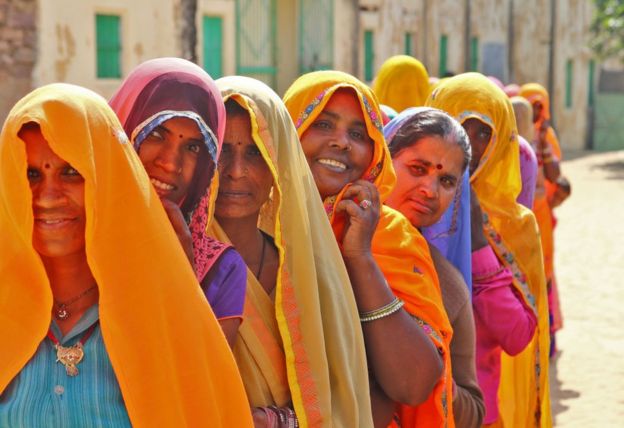
Indians, including a woman, at a polling boothImage copyrightAFP
Image captionMore than half of India’s “missing” women voters are from three northern states

Indian women got the right to vote the year their country was born. It was, as a historian said, a “staggering achievement for a post-colonial nation”. But more than 70 years later, why are 21 million women in India apparently being denied the right to vote?

It is one of India’s many social riddles.

Women have been enthusiastic voters in India: voter turnout among women will be higher in this year’s general election than that of men. Most women say they are voting independently, without consulting their spouses and families.

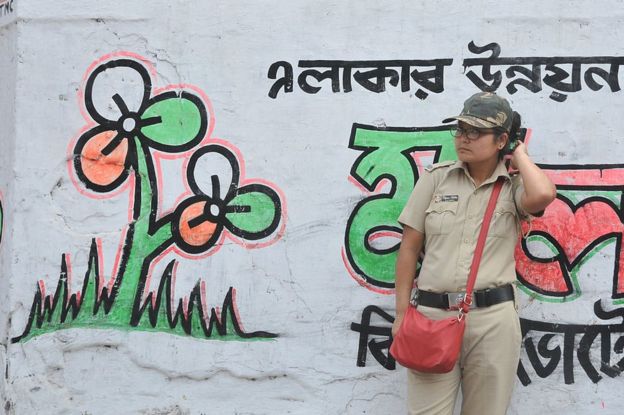
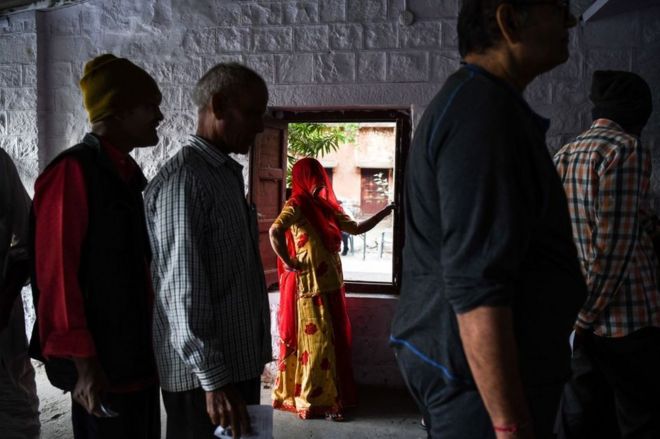
To make them secure, there are separate queues for women at polling stations and female police officers guarding them. Polling stations contain at least one female officer.

More than 660 women candidates contested the 2014 elections, up from 24 in the first election in 1951. And political parties now target women as a separate constituency, offering them cheap cooking gas, scholarships for studies and bicycles to go to college.

‘Major problem’

Yet, a truly astonishing number of women – equal to the population of Sri Lanka – appear to be “missing” from India’s voters lists.

In their upcoming book, The Verdict: Decoding India’s Elections, poll experts Prannoy Roy and Dorab Sopariwala find that the available data on women points to this.

They looked at the number of women above the age of 18 in the census, extrapolated it, and compared it to the number of women in the latest list of voters. And they found a sizeable “shortfall” – 21 million to be exact – in the number of female voters.

Three states – Uttar Pradesh, Maharashtra and Rajasthan – accounted for more than half of the missing female voters. Southern states such as Andhra Pradesh and Tamil Nadu fare better.

India women votersImage copyrightAFP
Image captionMore women are expected to vote than men in the 2019 elections

What does this mean?

More than 20 million missing women, analysts say, translates into 38,000 missing women voters on average in every constituency in India. In places like Uttar Pradesh, India’s most populous and a key bellwether state, the figure swells to 80,000 missing women in every seat.

Given that more than one in every five seats are won or lost by a margin of fewer than 38,000 votes, the missing women could swing the results in many seats. The absence of a large number of women also means that India’s electorate would be higher than the 900 million people who are eligible to vote in the summer elections. If the sex ratio in a constituency is skewed against women and the average voter is male, the preferences of female voters are likely to be ignored.

“Women want to vote, but they are not allowed to vote. This is deeply worrying. It also raises a lot of questions. We know that there are some social reasons behind this problem. But we also know that by controlling turnouts you can control results. Is that one of the reasons? We really need to investigate further to get to the truth,” Prannoy Roy told me.

Presentational grey line

Read more from Soutik Biswas

Presentational grey line

With a sex ratio that is skewed in favour of men, India has had a problem of missing women for a long time.

Last year, a government report found that 63 million women were “missing” from India’s population because the preference for sons led to sex-selective abortions and more care was given to boys. Separately, economists Shamika Ravi and Mudit Kapoor estimated that more than 65 million women – some 20% of the female electorate – were missing. This included women who were not registered to vote and women “who were not in the population because of gross neglect” (worsening sex ratio, which reflected the gross neglect). So elections, they said, were “revealing the preferences or the will of a population that is artificially skewed against women”.

It’s not that election authorities haven’t worked hard to get more women to vote.

The Election Commission adopts a rigorous statistical method – gender ratios, elector-population ratios and ages of voters – to make sure that eligible voters are not left out. There is doorstep verification of voters and a substantial number of officials involved in this exercise are women. In villages, child welfare workers and women’s self-help groups are roped in. State-run TV and radio programmes motivate women to register. There are even polling stations dedicated exclusively to women.

An Indian policewoman on election dutyImage copyrightAFP
Image captionPolicewomen are deployed at polling stations during elections

So why are so many women still missing from the rolls? Is it because many women shift residence after marriage and fail to register anew? (Less than 3% of Indian women aged 30-34 are single.) Is it because families still refuse to provide photographs of women to officials to publish in voters lists? Or does this exclusion have something to do with the “dark arts of voter suppression”?

“There is some social resistance, but it doesn’t explain such large scale exclusion,” says Dr Roy.

People who have helped organise elections in India say there is no reason to panic. Former election commissioner SY Quraishi told me that the enrolment of women had gone up steadily over the years. “There is social resistance to enrolling women still,” he says.

“I have heard of parents not registering their daughter because they don’t want to reveal her age, because they feel it will end up hurting their prospects for marriage. We have also been sometimes indifferent in our outreach to rope in more women voters,” he said.

With the 2019 elections barely a month away, there’s no time to fix this problem. Dr Roy believes there’s only one way out – to let women vote even if they are not registered.

“Any woman who comes to a polling station and wants to cast her vote, and can prove she is 18 years old, must be allowed to vote,” he says.

Source: The BBC

Law of Unintended Consequences

continuously updated blog about China & India

ChiaHou's Book Reviews

continuously updated blog about China & India

What's wrong with the world; and its economy

continuously updated blog about China & India