05/09/2019
- Researchers will conduct tests at site in Gansu to see whether it will make a viable facility to store highly radioactive waste safely
- Scientists say China has the chance to become a world leader in this field but has to find a way to ensure it does not leak
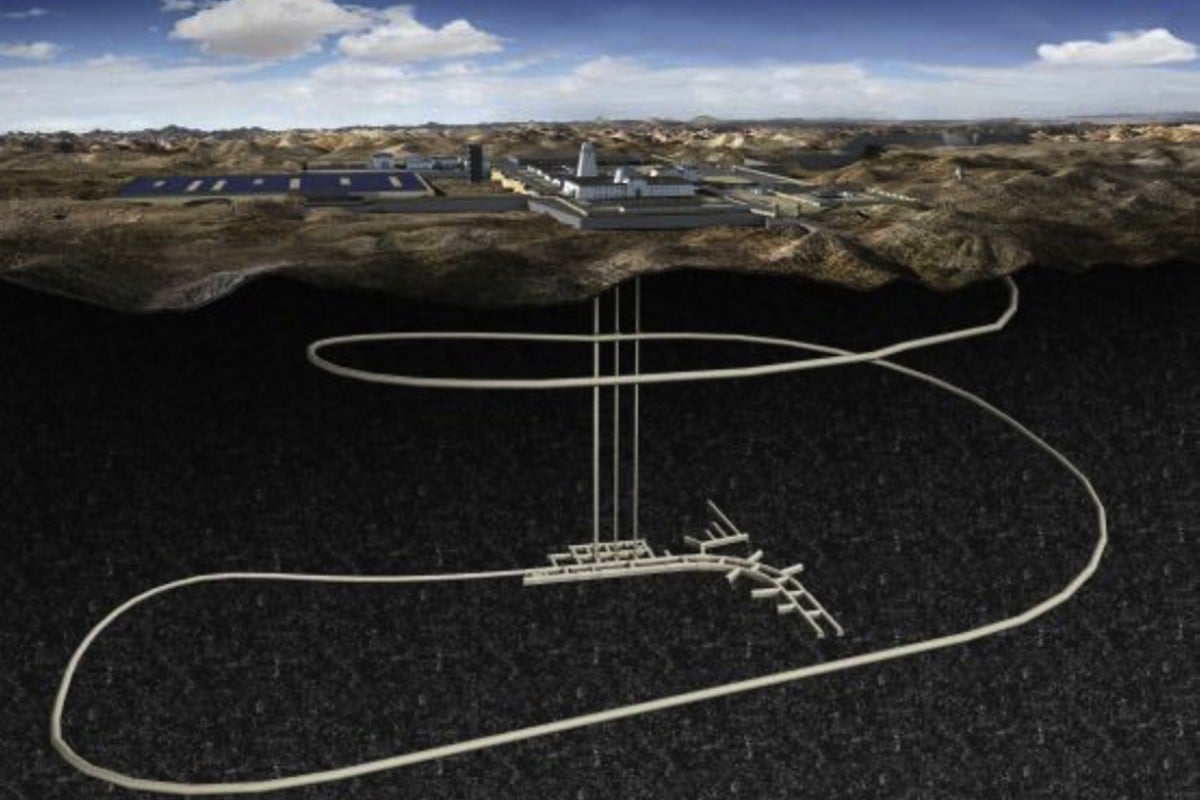
A preliminary design for the Beishan Underground Research Laboratory. Photo: Handout
China has chosen a site for an underground laboratory to research the disposal of highly radioactive waste, the country’s nuclear safety watchdog said on Wednesday.
Officials said work will soon begin on building the Beishan Underground Research Laboratory 400 metres underground in the northwestern province of Gansu.
Liu Hua, the head of the Chinese National Nuclear Safety Administration, said work would be carried out to determine whether it would be possible to build a repository for high-level nuclear waste deep underground.
“China sees radioactive waste disposal as a very important part [of the development nuclear energy],” said Liu. “To develop nuclear energy, we must have safe storage and disposal of nuclear waste.”
China condemns US blacklisting of nuclear firms and says American companies could be hurt as a result
The Chinese authorities see nuclear power an important source of energy that will help to curb carbon emissions and pollution as well as reducing its dependence on fuel imports.
But while the country has made great strides in the development of nuclear power, it needs to find a safe and reliable way of dealing with its growing stockpiles of nuclear waste.
Liu said the Gansu site had been identified as a possible location for a deep nuclear waste store after years of searching.
Once the laboratory is built, scientists and engineers will start experiments to confirm whether it will make a viable underground storage facility.
“Based on the data of the experiments, we can then decide if we are going to pick this as the final site,” he added.
China ‘actively promoting’ nuclear fuel processing plant with French Areva
Chinese officials usually stay tight-lipped about how nuclear waste is disposed of mainly because of fears that any discussion of the topic would trigger safety fears, although in recent years more efforts have been made to inform the public to win support.
Scientists say that nuclear waste can be divided into three categories depending on the level of radioactivity.
Low-level waste consists of minimally radioactive materials such as mop heads, rags, or protective clothing used in nuclear plants, while intermediate-level waste covers things such as filters and used reactor components.
High-level waste, however, is generated by the reprocessing of spent nuclear fuel and scientists generally agree that the safest way to dispose of it is to bury it deep underground in areas where the geology means it will have a minimal impact on the environment while it decays over thousands of years.
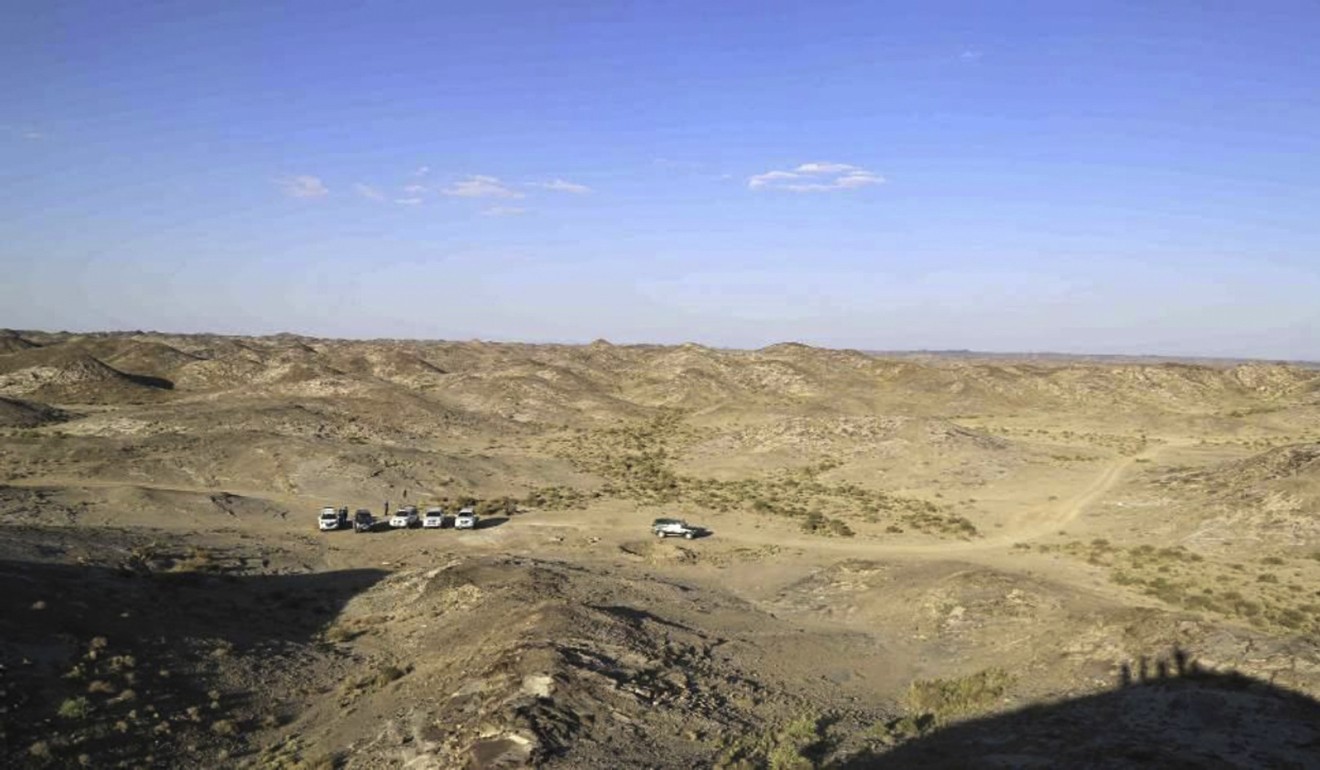
The facility will be built in a remote part of Gansu province. Photo: Handout
Some Chinese scientists said the country had the chance to lead the world in this area of research but others have expressed concerns about safety.
Jiang Kejun, a senior researcher at the Energy Research Institute of China’s National Development and Reform Commission, said that very few countries in the world are studying this form of nuclear waste disposal.
“It gives China an opportunity to be a leader in research in this area, plus China has the technology and financial means,” he said.
About a dozen countries including France, Switzerland, Japan, and the United States have carried out research in this area, but in recent years most have abandoned or scaled back their programmes.
At present there are storage sites operating in Finland and the US, but other countries such as Germany have abandoned plans to build similar facilities.
Washington blacklists Chinese nuclear firms for ‘helping military acquire US technology’
But despite broad scientific support for underground disposal, some analysts and many members of the public remain sceptical about whether it is really safe.
Lei Yian, an associate professor at the School of Physics at Peking University, said there was no absolute guarantee that the repositories would be safe when they are come into operation.
“Leakage has happened in [repositories] in the US and the former Soviet Union … it’s a difficult problem worldwide,” he said. “If China can solve it, then it will have solved a global problem.”
China is also building more facilities to dispose of low and intermediate level waste. Officials said new plants were being built in Zhenjiang, Fujian and Shandong, three coastal provinces that currently lack disposal facilities.
At present, two disposal sites for low and intermediate-level waste are in operation in Gansu and Guangdong provinces.
Source: SCMP
Posted in American companies, Beishan Underground Research Laboratory, blacklists, bury it deep, carbon emissions, China alert, chinese authorities, Chinese National Nuclear Safety Administration, Chinese nuclear firms, Chinese officials, coastal provinces, condemns, conduct, Country, deep underground, difficult problem, disposal facilities, earmarks, Energy Research Institute, Environment, filters, Finland, France, French Areva, fuel imports, Fujian, Gansu Province, geology, Germany, global problem, great strides, helping military acquire, High-level waste, highly radioactive waste, hurt, intermediate-level waste, Japan, lack, Leakage, Low-level waste, mop heads, National Development and Reform Commission, National Development and Reform Commission (NDRC), nuclear energy, nuclear firms, nuclear fuel processing plant, Nuclear power, nuclear safety watchdog, nuclear waste, Peking University, Pollution, protective clothing, rags, repositories, repository, reprocessing of spent nuclear fuel, researchers, result, safely, School of Physics, scientists, shandong province, site, source of energy, Soviet Union, stockpiles, store, Switzerland, tests, Uncategorized, underground, underground disposal, United States, US, US blacklisting, US technology, used reactor components, viable facility, Washington, world leader, worldwide, Zhenjiang |
Leave a Comment »
16/08/2019
Photo taken on April 20, 2017 shows Chengdu railway container center station in the Qingbaijiang railway port of China (Sichuan) pilot free trade zone in Chengdu, southwest China’s Sichuan Province. China has released an overall plan about the country’s new western sea-land transportation channel to deepen the sea-land two-way opening-up and the development of western China, according to the National Development and Reform Commission. The plan covers the period from 2019 to 2025 with an outlook extended to 2035. (Xinhua/Xue Yubin)
BEIJING, Aug. 15 (Xinhua) — China has released an overall plan about the country’s new western sea-land transportation channel to deepen the sea-land two-way opening-up and the development of western China, according to the National Development and Reform Commission.
The plan covers the period from 2019 to 2025 with an outlook extended to 2035.
The new western sea-land transportation channel is located in the hinterlands of the western regions, connecting the Silk Road Economic Belt from the north, the 21st Century Maritime Silk Road from the south and the Yangtze River economic belt.
According to the plan, the new western sea-land transportation channel is strategically positioned to support the country’s western regions in participating in international economic cooperation and promote the deep integration of transportation, logistics and the economy.
Source: Xinhua
Posted in 21st Century Maritime Silk Road,, channel, China alert, economy, hinterlands, international economic cooperation, logistics, National Development and Reform Commission, new, North, overall plan, releases, sea-land, Silk Road Economic Belt, South, transportation, Uncategorized, Western, Western China, Yangtze River Economic Belt |
Leave a Comment »
12/06/2019
BEIJING, June 12 (Xinhua) — Chinese President Xi Jinping left Beijing on Wednesday afternoon for Kyrgyzstan and Tajikistan.
At the invitation of Kyrgyz President Sooronbay Jeenbekov, Xi will pay a state visit to Kyrgyzstan and attend the 19th meeting of the Council of Heads of State of the Shanghai Cooperation Organization (SCO) in Bishkek, capital of Kyrgyzstan.
At the invitation of Tajik President Emomali Rahmon, Xi will attend the fifth summit of the Conference on Interaction and Confidence Building Measures in Asia (CICA) in Dushanbe, capital of Tajikistan, and pay a state visit to the country.
Xi’s entourage includes Ding Xuexiang, member of the Political Bureau of the Communist Party of China (CPC) Central Committee, member of the Secretariat of the CPC Central Committee, and director of the General Office of the CPC Central Committee; Yang Jiechi, member of the Political Bureau of the CPC Central Committee and director of the Office of the Foreign Affairs Commission of the CPC Central Committee; State Councilor and Foreign Minister Wang Yi; and He Lifeng, vice chairman of the National Committee of the Chinese People’s Political Consultative Conference and head of the National Development and Reform Commission.
Source: Xinhua
Posted in Beijing, Bishkek, Chinese President Xi Jinping, Conference on Interaction and Confidence Building Measures in Asia (CICA), Council of Heads of State of the Shanghai Cooperation Organization (SCO), Dushanbe, Emomali Rahmon, Foreign Minister Wang Yi, General Office of the CPC Central Committee, He Lifeng, Kyrgyz President, Kyrgyzstan, member of the Political Bureau of the Communist Party of China (CPC) Central Committee, National Committee of the Chinese People's Political Consultative Conference (CPPCC), National Development and Reform Commission, Office of the Foreign Affairs Commission of the CPC Central Committee, Secretariat of the CPC Central Committee, Sooronbay Jeenbekov, State Councilor, Tajik President, Tajikistan, Uncategorized, vice chairman |
Leave a Comment »
11/05/2019
SHANGHAI, May 10 (Xinhua) — Nearly 200 domestic exhibitors are showcasing their products Friday at the 2019 China Brand Day series held in Shanghai, which focuses on the exposition of indigenous brands.
Quality goods including the latest hydrogen FCVs, smart pianos with a recording function, and gel pens made of a degradable material are showcased in 13 experience zones of consumer goods at the Shanghai Exhibition Center.
The booth area for businesses covers more than 20,000 square meters, where visitors can participate in online and offline interactive activities such as live demonstrations, virtual images, live streaming, online shopping, and interacting with celebrities.
An official with the National Development and Reform Commission, one of the hosts of the event, said this year’s China Brand Day plays an important role in the building of more brands and the forming of a strong domestic market.
The 2019 International Forum on China Brand Development and seven sub-forums will be held during the three-day event.
Established in 2017, the China Brand Day is marked on May 10 every year. The theme of this year is “China Brand, World Sharing.”
Source: Xinhua
Posted in China Brand Day, China Brand, World Sharing, domestic exhibitors, International Forum on China Brand Development, National Development and Reform Commission, Shanghai, Shanghai Exhibition Center, Uncategorized |
Leave a Comment »




 CHINDIA ALERT: You'll be living in their world, very soon