31/05/2020
BEIJING (Reuters) – China announced on Sunday two new confirmed cases of coronavirus and four new asymptomatic cases, including one person without symptoms of COVID-19 on a chartered flight from Germany.
The two confirmed cases in Shandong province on Saturday compared with four cases the day before, data from the country’s health authority showed.
The National Health Commission (NHC) confirmed three new asymptomatic cases on Saturday.
On Sunday, the Chinese city of Tianjin confirmed one asymptomatic person, a passenger arriving from Frankfurt on a chartered Lufthansa flight, LH342, to Tianjin. This case was discovered between midnight and 6 a.m. local time on Sunday, the city’s daily statements show.
These charter flights are part of an accelerated entry procedure offered by Beijing as China and Germany seek to reignite their economies after months of lockdown. The flight to Tianjin carried about 200 passengers, mostly German business executives.
Lufthansa has another charter flight scheduled for Shanghai on Wednesday.
A 34-year-old German engineer tested positive for the coronavirus after arriving in Tianjin but he does not have any symptoms, the Tianjin government said on its official social media platform Weibo.
The asymptomatic patient has been transferred to a local hospital to be placed under medical observation, the Tianjin government said, adding that the whole process was a “closed loop”, meaning posing no great risk to the Chinese public.
Source: Reuters
Posted in accelerated, announced, arriving, asymptomatic case, ASYMPTOMATIC CASES, “closed loop”, Beijing, business executives, charter, charter flights, chartered, chartered flight, China, Chinese city, Chinese public, confirmed, confirmed cases, coronavirus, coronavirus cases, COVID-19, daily statements, discovered, economies, engineer, entry procedure, flight, Frankfurt, German, Germany, Government, great risk, health authority, local hospital, local time, lockdown, Lufthansa, medical observation, midnight, months, National Health Commission (NHC), offered, Official, passenger, passengers, placed, posing, reignite, scheduled, shandong province, Shanghai, social media platform, tested positive, Tianjin, transferred, Uncategorized, Weibo, whole process |
Leave a Comment »
08/03/2020
BEIJING (Reuters) – Shanghai increased airport screening on Saturday as imported coronavirus infections from countries such as Italy and Iran emerge as the biggest source of new cases in China outside Hubei, the province where the outbreak originated.
Mainland China had 99 new confirmed cases on Friday, according to official data. Of the 25 that were outside Hubei, 24 came from outside China.
Shanghai, which had three new cases that originated from abroad on Friday, said it would step up control measures at the border, which had become “the main battlefield”.
At a news conference, Shanghai Customs officials said they city would check all passengers from seriously affected countries for the virus, among other airport measures.
Shanghai already requires passengers flying in from such countries, regardless of nationality, to be quarantined for 14 days. They will now be escorted home in vehicles provided by the government.
Tighter screening has greatly lengthened waiting times at Shanghai’s Pudong International Airport – some passengers say they have had to wait as long as seven hours.
The Shanghai government vowed on Saturday to severely punish passengers who concealed infections.
Beijing police said on Saturday they would work with other departments to prevent imported infections. They said some members of a Chinese family flying in from Italy on March 4 had failed to fill in health declarations accurately, and later tested positive for the virus.
MIGRANT WORKERS
In addition to the growing risk of imported infections, China faces a challenge in trying to get migrant workers back to work by early April.
So far, 78 million migrant workers, or 60% of those who left for the Lunar New Year holiday in January, have returned to work.
Yang Wenzhuang of the National Health Commission (NHC) said that the “risk of contagion from increased population flows and gathering is increasing … We must not relax or lower the bar for virus control”.
But new cases in mainland China continued to decline, with just 99 new cases on Friday, the lowest number the NHC started publishing nationwide figures on Jan. 20, against 143 on Thursday.
Most of these cases, which include infections of Chinese nationals who caught the virus abroad, were in the northwesterly Gansu province, among quarantined passengers who flew into the provincial capital Lanzhou from Iran between March 2 and 5.
For the second day in a row, there were no new infections in Hubei outside the provincial capital Wuhan, where new cases fell to the lowest level since Jan. 25.
The total number of confirmed cases in mainland China so far is 80,651, with 3,070 deaths, up by 28 from Thursday.
Hubei reported 28 deaths, 21 of them in Wuhan.
Source: reuters
Posted in Airport, Beijing, checks, China, confirmed cases, coronavirus infections, countries, customs officials, Gansu Province, hubei province, imported, infections, iran, Italy, jump, Lanzhou, Lunar New Year holiday, Mainland China, National Health Commission (NHC), news conferenc, News conference, originated, outbreak, passengers, province, provincial capital, Pudong International Airport, SCREENING, Shanghai, tightens, Uncategorized, Virus, Wuhan |
Leave a Comment »
07/03/2020
BEIJING (Reuters) – About a quarter of China’s new confirmed cases and almost all of those outside the epidemic’s epicentre in Wuhan originated outside the country on Friday, according to official data.
Most of these cases, which include infections of Chinese nationals who caught the virus abroad, were in China’s northwestern Gansu province, among quarantined passengers who entered the provincial capital of Lanzhou on commercial flights from Iran between March 2 and March 5.
Mainland China had 99 new confirmed cases of coronavirus infections on Friday, the country’s National Health Commission (NHC) said on Saturday, down from 143 cases a day earlier and marking the lowest number since Jan. 20, when the NHC started to publish nationwide figures.
Outside of central China’s Hubei province, there were 25 new confirmed cases reported on March 6, of which 24 came from outside China.
The capital Beijing reported four new cases on Friday, of which three came from Italy, according to a notice from the Beijing health commission posted on its official Weibo account on Saturday.
There were also three cases in Shanghai that originated abroad, and one in Guangdong province on Friday, according to the National Health Commission.
The total nationwide number of cases that originated outside China reached 60 as of the end of Friday.
For the second day in a row, there were no new infections in Hubei outside of the provincial capital of Wuhan, where new cases fell to the lowest level since Jan. 25.
Special institutions like prisons, detention centres and nursing homes in Wuhan, which have seen nearly 1,800 confirmed cases as of March 5, still have potential risks in virus control and prevention, the Communist Party’s Politics and Law Commission said on Saturday.
The total number of confirmed cases in mainland China so far is 80,651.
Source: Reuters
Posted in abroad, Beijing, Beijing health commission, China, Chinese nationals, Communist Party’s Politics and Law Commission, detention centres, Gansu Province, hubei province, Lanzhou, National Health Commission (NHC), new infections, originated, outside, passengers, prisons, quarantined, reports, Shanghai, Special institutions, Uncategorized, Virus, Wuhan |
Leave a Comment »
17/02/2020
- Experts to visit Beijing, Guangdong and Sichuan but no word on whether Hubei is on the itinerary
- Specialists say visit must include a trip to the outbreak’s epicentre to get a full picture
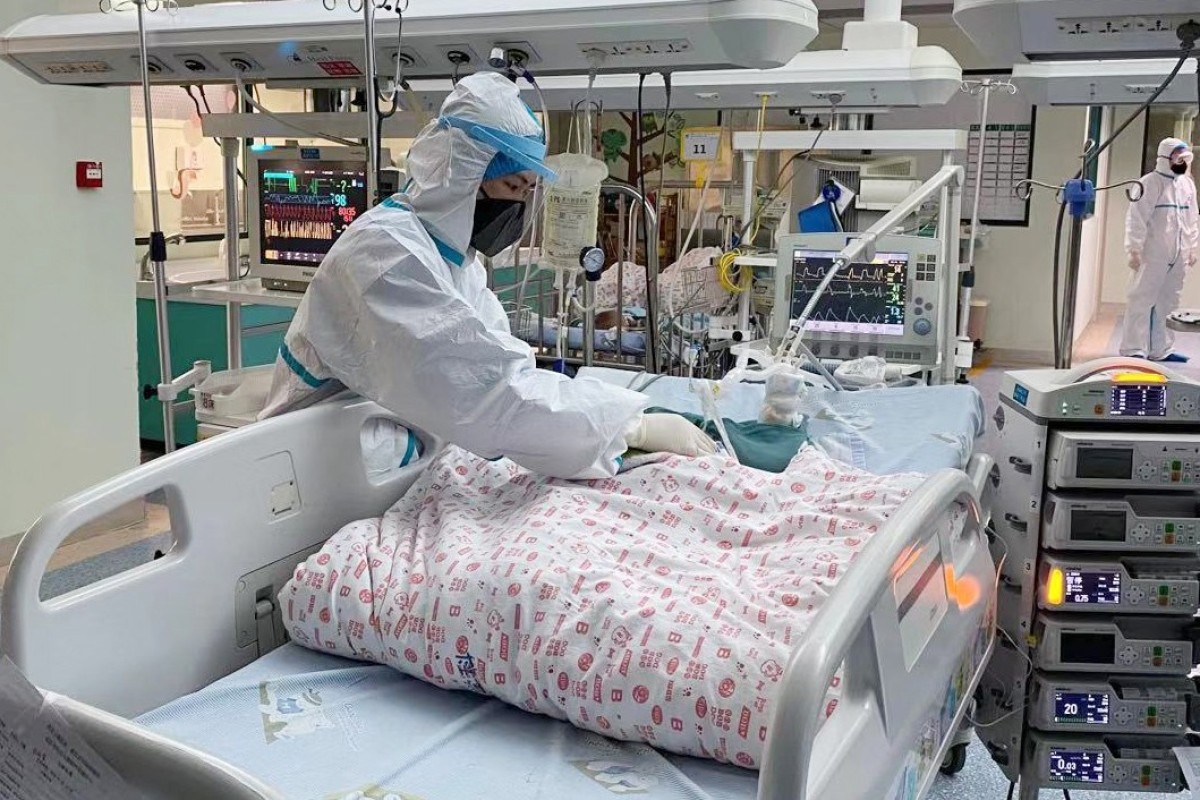
A nurse cares for a 14-month-old baby infected with the novel coronavirus in an ICU isolation ward of Wuhan Children’s Hospital in Wuhan, at the epicentre of the outbreak. Photo: Xinhua
A team of medical experts from the World Health Organisation (WHO), including specialists from the US, will visit Beijing and the Chinese provinces of Guangdong and Sichuan from Monday to assess the country’s efforts to contain the spread of
a deadly coronavirus, according to the Chinese foreign ministry.
But the ministry did not say whether the team would go to Wuhan or any other parts of Hubei, the central Chinese province at the epicentre of the outbreak, raising concerns among medical experts about the transparency of the mission.
The death toll from the coronavirus had risen to 1,770 on mainland China as of Sunday, infecting 70,548 people, including more than 1,700 medical workers. Most of those confirmed with the disease, now known as Covid-19, are in Wuhan.
China has repeatedly said it welcomes international cooperation to contain the outbreak, but the US Centres for Disease Control and Prevention said last week that it had not yet received an invitation to send experts to the country.
On Monday, the Ministry of Foreign Affairs said the WHO delegation would include Americans, but gave no further details.
The announcement came as a commentary in Communist Party mouthpiece People’s Daily accused Washington of dragging its feet on a funding pledge to help with the epidemic, saying it had a “dark mentality and taken dangerous action” during the outbreak.
WHO director general Tedros Adhanom Ghebreyesus said on Friday that the mission to China included 12 international medical specialists, and they would, with 12 Chinese experts, learn more about the transmission of the virus and the effectiveness of the measures in a bid to work out the next containment steps for China and the world.
An advance team of WHO medical experts arrived in Beijing last Monday, led by Canadian emergency expert Bruce Aylward, Tedros said.
China’s National Health Commission (NHC) said all of the delegation’s members arrived in Beijing over the weekend, and held talks with Chinese medical experts, public health officials and other government departments.
They exchanged views on virus containment, wildlife management and vaccine development, the NHC said.
Experts said the international team would be left with an “incomplete picture” of the outbreak if it did not go to Wuhan or Hubei.
“Unfortunately, this feeds into a narrative that China is trying to hide the true nature of the outbreak, so it would seem to be shortsighted and counterproductive to China’s efforts to say to the world that it is doing everything it can to contain this outbreak,” said Adam Kamradt-Scott, a specialist in global health security and international relations at the University of Sydney.
“We have seen in the past when we have external teams, they are often able to identify areas for improvement or to make recommendations for measures that national authorities may not have thought of – we’ve seen that through other examples where external expertise can be valuable in times of crisis.”
He said any impression of a cover-up would likely further strengthen the resolve of countries that had taken strict measures, including travel bans, to keep them in place or tighten them further.
“China has got a public relations campaign that it also needs to be mindful of in engaging with the international community, so there are the actual measures that the government needs to take in order to control the outbreak, but the government also needs to be seen to be doing everything that it can,” he said.
Source: SCMP
Posted in Americans, assess, Beijing, China, Chinese foreign ministry, Communist Party mouthpiece, coronavirus crisis, COVID-19, dragging its feet, epicentre, epidemic, experts, funding pledge, Guangdong, hubei province, ICU isolation ward, international medical specialists, Ministry of Foreign Affairs, National Health Commission (NHC), outbreak, outbreak’s epicentre, People’s Daily, public relations campaign, sichuan province, Specialists, Uncategorized, vaccine development, visit, Washington, WHO team, wildlife management, World Health Organisation (WHO), Wuhan Children’s Hospital |
Leave a Comment »
13/02/2020
BEIJING, Feb. 13 (Xinhua) — The rise in the number of recovered patients infected with the novel coronavirus is a positive signal that the current treatments are getting results, said Guo Yanhong, an official with the National Health Commission (NHC).
A total of 5,911 infected people had been discharged from hospital after recovery by the end of Wednesday, the NHC said in a daily report.
Each day since Feb. 7 has seen some 500 patients walk out of hospital after recovery, Guo said at a press conference held in Beijing Thursday afternoon.
A preliminary analysis of 597 discharged cases found that about 90 percent of the cured patients had mild symptoms while 10 percent were those in severe or critically ill condition, she noted.
“Even severe and critically ill patients can be cured and discharged from hospital after careful treatment,” Guo said.
Citing the analysis, Guo said that the 597 infected were hospitalized for an average of some 10 days before being discharged.
Source: Xinhua
Posted in Anti-virus treatment, Beijing, effective, Hospital, National Health Commission (NHC), proved, recovered patients, surge, Uncategorized |
Leave a Comment »
12/02/2020
BEIJING, Feb. 12 (Xinhua) — The number of daily new confirmed cases of the novel coronavirus infection fell from a peak of 3,887 on Feb. 4 to 2,015 on Tuesday, with a decrease of 48.2 percent, according to the National Health Commission (NHC).
Noting that the epidemic situation remains grave at the moment, NHC spokesperson Mi Feng identified some positive changes in the statistics as a result of a series of effective measures.
For example, the number of newly reported suspected cases dropped by 37.3 percent from 5,328 on Feb. 5 to Tuesday’s 3,342.
He also highlighted the rapid increase in the number of people cured and discharged from hospitals, bringing the recovery rate to 10.6 percent by Tuesday from the lowest level of 1.3 percent on Jan. 27.
The overall confirmed cases on the Chinese mainland reached 44,653 by the end of Tuesday, and 16,067 people remain suspected of being infected with the virus.
A total of 4,740 people had been discharged from hospitals after recovery.
Source: Xinhua
Posted in China, Chinese mainland, drop, hospitals, National Health Commission (NHC), nearly half, New confirmed coronavirus infections, recovery, Uncategorized |
Leave a Comment »
25/01/2020
- Teams from Shanghai, Guangdong – including experts who helped tackle Sars – arrive in Wuhan to lend their support
- Tencent, JD.com, Lenovo among raft of private firms offering financial aid to those battling deadly outbreak
Doctors and nurses from across China are being dispatched to help tackle the coronavirus epidemic in Hubei province. Photo: Xinhua
Chinese authorities and private enterprises are stepping up their support for embattled medical teams in Hubei province as they continue to fight the
coronavirus epidemic, while neighbouring governments ramp up their efforts to prevent its further spread.
Hospitals across Wuhan – the city at the centre of the outbreak – have been overwhelmed by the flood of patients and doctors are becoming increasingly frustrated at the lack of support, both in terms of supplies and personnel, they have received.
But national bodies say they are responding to the crisis.
On Saturday, China’s National Health Commission (NHC) said that six medical teams comprising 1,230 staff had been set up and dispatched to help fight the deadly virus in Hubei.
Three medical units from Shanghai, Guangdong and the armed forces had already arrived in the province, it said, though did not make clear if they were in addition to or part of the six teams.
Chen Dechang, a doctor from Ruijin Hospital in Shanghai who is among those sent to Hubei, said it was important there were more medical staff on the scene.
“We can help save more patients in the intensive care unit if we are on the front line,” he said.
Authorities in Shanghai have also sent 81 ECMO (extracorporeal membrane oxygenation) life-support machines to Jinyintan Hospital, which is one of the designated facilities treating patients in Wuhan.
The ECMO technique – which involves removing blood from a person’s body, removing the carbon dioxide and oxygenating red blood cells before pumping them back into the patient – has already been used on one critically ill patient at Wuhan University’s Zhongnan Hospital, according to Shanghai-based news outlet Thepaper.cn.
Though the report did not say how effective the treatment had been.
Medical teams in Wuhan have been under huge pressure since the outbreak began. Photo: Xinhua
The team from Guangdong comprised 42 doctors and 93 nurses, the NHC said. The deployment came after a group of current and former medical staff from Southern Medical University in Guangzhou – who had helped tackle the Sars (severe acute respiratory syndrome) outbreak in 2002-03 – signed a petition saying they were willing to help in Wuhan.
“We are a team of experienced practitioners who fought Sars,” they said in the petition, a copy of which was posted on the social media accounts of Communist Party mouthpiece People’s Daily.
“We cannot back away from our responsibility to help 17 years later as people are facing the outbreak of a new coronavirus. We are willing to be deployed to the front line to make our contributions.”
A team of 135 doctors from Chongqing arrived in Wuhan on Friday evening, the NHC said, without elaborating.
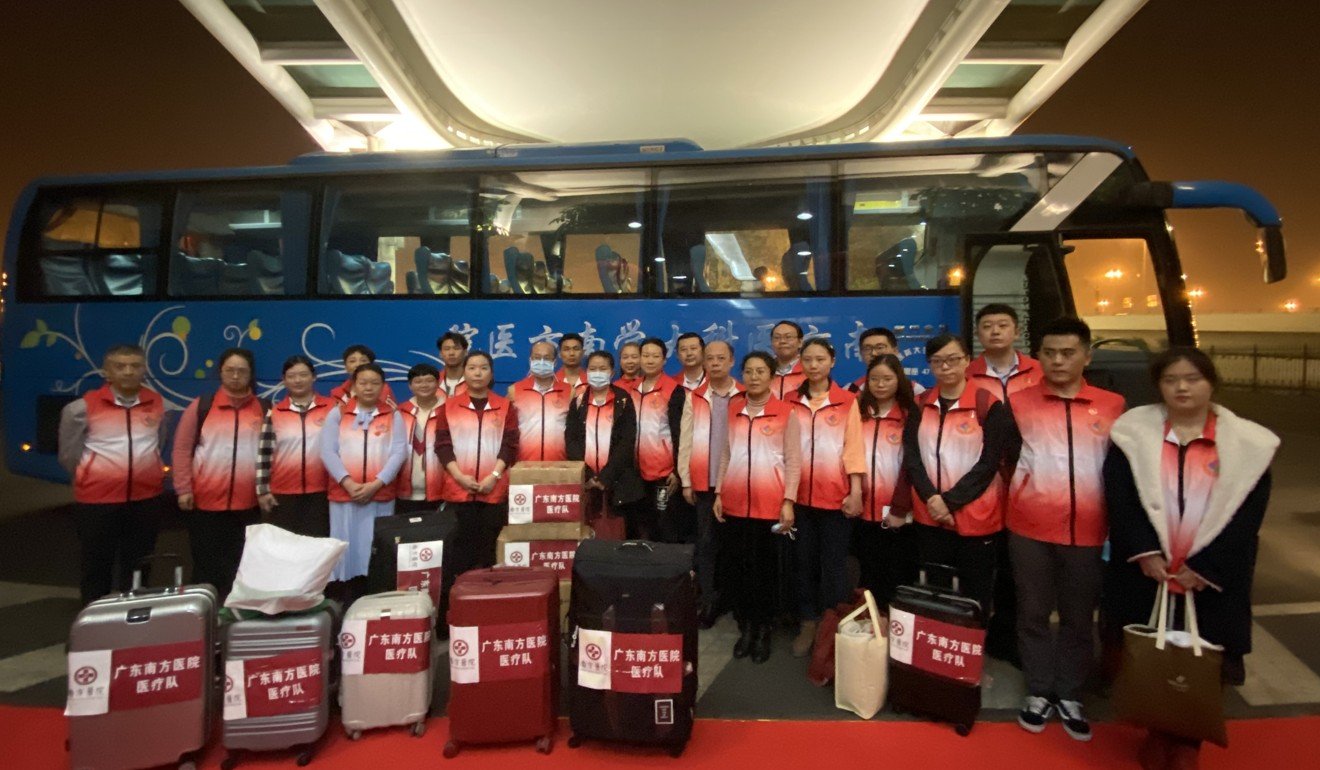
A medical team from Guangdong province prepares to travel to Wuhan. Photo: Xinhua
As well as the wave of medical support, several private companies said they had provided financial support to help fight the epidemic.
According to Chinese media reports, Shanghai Ocean Forest Assets has donated 10 million yuan (US$1.4 million) to the cause, while Shanghai-based asset management firm, Jinglin Assets is coordinating efforts to buy urgently needed medical supplies from South Korea and Japan.
Shenzhen’s Fantasia Holdings said it would donate 6 million yuan and send medical supplies, including surgical masks, to Wuhan, while tech giant Tencent said it would donate 300 million yuan from its charity. E-commerce platform JD.com said it had donated 1 million surgical masks and 60,000 other medical items.
Chinese smartphone manufacturer Xiaomi said on Friday it had sent a first batch of medical equipment – masks and thermometers worth more than 300,000 yuan – to Wuhan, while tech firm Lenovo said on Saturday it would donate all of the IT equipment required by the new specialist treatment centre being built in the city.
Authorities set a target to have the 1,000-bed facility up and running within six days of starting construction.
Aside from the support from the private sector, state lender China Development Bank on Friday issued a 2 billion yuan emergency loan to Wuhan, while a day earlier, China’s finance ministry said it had allocated 1 billion yuan to authorities in Hubei to help tackle the epidemic.
Across the country, authorities have introduced a number of measures to help prevent the further spread of the coronavirus, including the closure of all cinemas in Shanghai.
Wuhan residents stockpile food, medical supplies
25 Jan 2020
Also on Saturday it was reported that Liang Wudong, a doctor at Xinhua Hospital in Wuhan, had become the first medical professional to die after treating people infected with the virus.
Liang, 62, was suspected of having contracted the virus last week and had been transferred to Jinyintan Hospital for treatment. He died at 7am on Saturday, Thepaper.cn reported.
According to official figures, 41 people have been killed by the coronavirus and there have been more than 1,280 confirmed cases. The vast majority are in the Chinese mainland, but there have also been confirmed cases in Hong Kong, Macau, Taiwan and eight other countries, including the United States and Europe.
Tens of millions of people in cities across Hubei are effectively on lockdown after the introduction of travel bans to help control the spread of the virus.
Source: SCMP
Posted in China, China Development Bank, chinese authorities, Chongqing, coronavirus, coronavirus epidemic, deploys, doctors and nurses, ECMO (extracorporeal membrane oxygenation) life-support machines, ECMO technique, Europe, Guangdong, help fight, Hong Kong, Hubei, hubei province, Japan, JD.com, Jinglin Assets, Jinyintan Hospital, Lenovo, Macau, money, National Health Commission (NHC), People’s Daily, pledge, private enterprises, private firms, Ruijin Hospital, SARs, Shanghai, Shanghai Ocean Forest Assets, Shenzhen’s Fantasia Holdings, smartphone manufacturer, South Korea, Southern Medical University, supplies, Taiwan, Teams, TENCENT, Uncategorized, United States, Wuhan, Wuhan University, Xinhua Hospital, Zhongnan Hospital |
Leave a Comment »
19/05/2019
BEIJING, May 19 (Xinhua) — China has allocated 47 billion yuan (6.8 billion U.S. dollars) for building 1,390 county-level hospitals since 2016, in a bid to ensure that every county and urban district has at least one county-level hospital, Health News reported.
This is part of the country’s efforts to narrow the gap in health services between urban and rural areas.
Traditional Chinese service centers have been set up in more than 30,000 health centers in towns, townships and communities, according to the newspaper.
The standard for the per capita basic public health service subsidy has raised from 25 yuan in 2011 to 55 yuan in 2018, and the number of free services provided by the national basic public health service program has been increasing over the period.
The health inequality index rated by urban and rural residents dropped by 32.5 percent from 2006 to 2016, according to the newspaper.
“The achievement is attributed to the national reforms in the medical and health care system aiming to ensure every citizen has the access to basic health services,” Miao Yanqing, a researcher with the health development research center under the National Health Commission, was quoted as saying.
Source: Xinhua
Posted in China alert, health development research center, Health News, healthcare services, Miao Yanqing, narrows, National Health Commission (NHC), researcher, Uncategorized, urban-rural gap |
Leave a Comment »
07/03/2019
BEIJING, March 6 (Xinhua) — China has created a special committee to implement the country’s national nutrition plan, according to the National Health Commission (NHC).
Jointly established by NHC and 17 other government departments to coordinate and advance nutrition and health related work, the national nutrition and health committee held its inaugural meeting on Feb. 28 in Beijing, said a source of the NHC.
During the meeting, the committee adopted the regulation on its work and the main tasks for 2019 on the national nutrition plan.
Among the key jobs are improving food nutrition and health standards that build upon food safety, and establishing subcommittees at local levels to organize nutrition education and training, to conduct pilot programs and spread scientific knowledge in this regard.
Innovation will also be encouraged in the efforts, while nutrition intervention will be introduced in the campaign to battle poverty.
The national nutrition plan (2017-2030) was released by the General Office of the State Council in July 2017, with the goal of raising awareness of nutrition among the Chinese people, reducing obesity and anemia among students.
Source: Xinhua
Posted in China alert, Chinese people, food nutrition, General Office of the State Council, health standards, innovation, National Health Commission (NHC), national nutrition plan, nutrition education and training, obesity and anemia, pilot programs, scientific knowledge, special committee, students, Uncategorized |
Leave a Comment »



 CHINDIA ALERT: You'll be living in their world, very soon