Archive for ‘Nationals’

01/04/2020

Chinese province bars citizens from leaving the country to stop coronavirus spread

  • Authorities in Yunnan limit land and river ports to cargo traffic, locking down border communities
  • Province on alert for imported cases of Covid-19
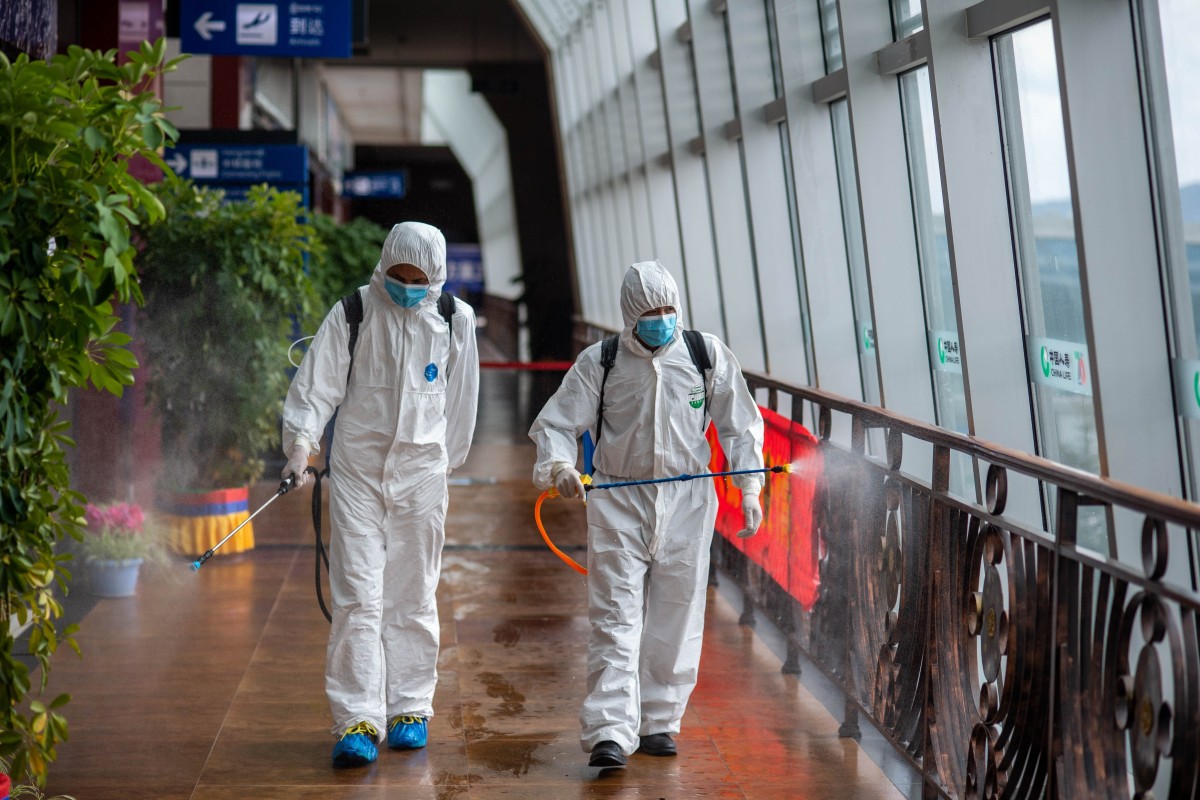
Yunnan is on alert for imported cases of the coronavirus. Photo: Xinhua
The southwestern province of Yunnan has banned Chinese citizens from leaving the country via its more than 30 land and river ports to stop the spread of the coronavirus epidemic through returning nationals.
Yunnan, which borders Vietnam, Laos and Myanmar, had restricted its 19 land ports and 14 river ports to cargo, the provincial government said on Tuesday.
The authorities said that from Tuesday night, all departures by Chinese citizens via the checkpoints would be suspended, with exemptions granted for approved foreign aid, technical support or emergency medical workers.
China closed its borders to foreign travellers and residency holders

on Saturday. But non-Chinese residents of border areas who have permits to cross into Yunnan could still enter the province, according to a previous report by China News Service.

Those permit holders can still cross into Yunnan but will be discouraged from doing so. Under the new restrictions, they will need to test negative for two nucleic acid tests and one antibody test before being put in seven days of centralised isolation and another seven days of home isolation, all at their own expense.

Coronavirus: Decoding Covid-19
Residents in border cities and counties will be restricted to the village and community level to prevent entry and exit of outsiders. They would also be encouraged to report illegal immigrants, the government said.
Yunnan, which recorded 174 local coronavirus cases including two deaths, said all patients in its initial wave were discharged by March 14. The province is now on alert for imported cases, with eight patients who travelled to the province from overseas being treated as of Tuesday.

Xiao Xian, a professor of international relations from Yunnan University, said some permit holders could be deterred from crossing into Yunnan by the cost of tests and quarantine.

Xiao also said that banning Chinese citizens from crossing the border would affect border trade and tourism, but it was necessary to stop transmission of the coronavirus.

“The need to prevent the spread of an infectious disease outweighs trade and tourism. It is understandable since it is the country’s top priority now,” Xiao said.

Source: SCMP

30/01/2020

Coronavirus: turbulent times ahead for air travellers as carriers cancel China flights

  • Lufthansa, British Airways, Air Canada among several big name airlines to halt flights, while others reduce services
  • Travel agents expecting slump in sales amid rising uncertainty over how epidemic will play out
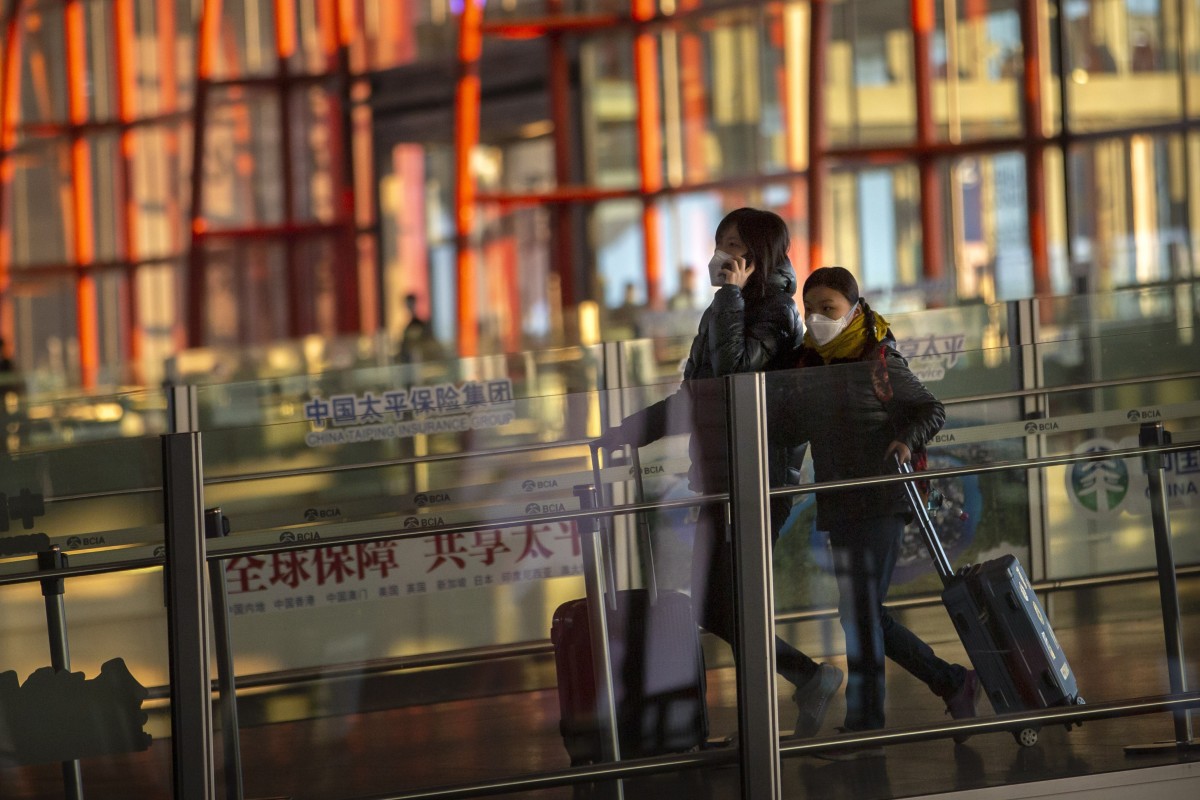
Many airlines have cancelled flights into mainland China because of the coronavirus outbreak. Photo: AP
International air travellers and ticketing agents are in for a turbulent time in the weeks ahead as airlines around the world react to the coronavirus epidemic by cancelling or limiting flights to and from the Chinese mainland.
Lufthansa, British Airways, Air Canada and Indonesia’s Lion Air have 
cancelled all of their flights

, while United Airlines, American Airlines, IndiGo, Finnair, Delta Air Lines and Jetstar Asia have significantly reduced their services.

“It’s going to be pretty bad for travel agencies. We’ve had a lot of cancellations. Everyone is afraid of coming to China,” said Annabelle Auger from Travel Stone in Beijing.
“Many of our European clients are very worried because of the media coverage they’ve seen. Still, people are willing to wait and see for a few weeks to see how things go,” she said.
For foreigners looking to leave China, Auger said they should contact their embassy to find out about repatriation flights.

“The situation is very unclear, so it’s difficult to give any general recommendations,” she said.

Already this week, the embassies of the United States, Japan, South Korea and Britain have cleared flights to evacuate their nationals from Hubei, the central China province at the heart of the outbreak.

Auger said she and her colleagues had been busy rearranging flights for China-based foreigners who had gone away for the holidays.

“The schools are closed, so families with children abroad are thinking, ‘OK, let’s extend our stay for another week’,” she said.

Politics may have stalled information in coronavirus crisis, scientist says

30 Jan 2020
The Beijing government said on Monday it would extend the Lunar New Year
holiday until Sunday to help stop the spread of the disease, while school breaks have also been extended.

Another travel agent in Beijing, who asked not to be named, said the virus outbreak had yet to have a significant impact on business but concerns were growing.

“We are a bit worried that things may get difficult in the coming months,” she said. “But we trust that the government is doing all it can and will take the appropriate measures to solve the problems.”

Zhu Tao, director of the flight standards department at the Civil Aviation Administration of China (CAAC), said at a press conference in Beijing on Thursday that the relevant authorities were working closely with airlines to help Chinese nationals trapped overseas to get home.

The government had already chartered flights from Japan, Myanmar and South Korea to bring Chinese nationals back to Hubei, he said.

While all flights out of Hubei have been suspended since last week, Zhu said air transport was playing its part in fighting the disease.

As of Wednesday, the CAAC had sent 86 flights carrying 5,129 medical workers and 115,000 items of equipment and other supplies into Wuhan, he said.

Wu Zunyou, the chief epidemiologist at the China Centre for Disease Control and Prevention, said that efforts to prevent the coronavirus spreading outside the country had been successful, as only about 1 per cent of the confirmed infections were outside China.

Despite the flight cancellations, Beijing’s Capital International Airport was operating as normal on Thursday.

Andre Muchanga, a student from Abu Dhabi at the Beijing Institute of Technology, said he made a late decision to fly home.

“I decided to buy my ticket last night,” he said. “At school, our dormitory is almost completely empty. I knocked on a friend’s door last night and found there was no one there, so I decided I better just go home and spend some time with my family.”

He said he decided not to buy a return flight as it he did not know when his classes would resume.

Signs at check-in counters reminded passengers who had travelled to Hubei or had a Hubei address to put themselves in isolation for 14 days.

While flights out of Hubei have been stopped, there was still plenty of inbound traffic.

“The number of domestic inbound travellers seems pretty normal for this time of year,” a man working on an information desk at Capital airport said.

“It’s the sixth day of the Lunar New Year. Lots of people have to return to work.”

An Air China employee, surnamed Hu, said that the airport had stepped up its disinfecting and general cleaning work. Body temperature checks had been installed at all access points and employees had been told to wear masks, he said.

“I don’t mind working during the Lunar New Year holiday,” he said. “I’m not afraid of the virus, I’m here to serve the people.”

SOurce: SCMP

Law of Unintended Consequences

continuously updated blog about China & India

ChiaHou's Book Reviews

continuously updated blog about China & India

What's wrong with the world; and its economy

continuously updated blog about China & India