31/03/2020
- Volume of fuel extracted from gas hydrates is a new world record, natural resources ministry says
- Month-long trial also sets a ‘solid technical foundation for commercial exploitation’, it says
China conducted its first operation to extract natural gas from gas hydrates in the South China Sea in 2017. Photo: Reuters
China said on Thursday it extracted 861,400 cubic metres of natural gas from gas hydrates found in the
South China Sea during a month-long trial that ended last week.
The production process, which ran from February 17 to March 18, also set two world records: one for the largest total volume extracted and another for the most produced – 287,000 cubic metres – on a single day, the Ministry of Natural Resources said on its website.
The gas was extracted from an area in the north of the disputed waterway, and from a depth of about 1,225 metres, it said.
The success of the latest trial set a “solid technical foundation for commercial exploitation”, the ministry said, adding that China was the first country in the world to exploit gas hydrates using a horizontal well-drilling technique.
Also known as flammable ice, gas hydrates are icelike solids composed mostly of methane. According to figures from the US Department of Energy, one cubic metre of gas hydrate releases 164 cubic metres of conventional natural gas once extracted.
The South China Sea test coincided with sharp movements in global
oil and gas prices. China, which is the world’s largest oil and gas importer, has been keen to identify alternative fuel sources, including gas hydrates, to strengthen its energy security.
The official Economic Daily reported in 2017 that China’s reserves of flammable ice were equivalent to about 100 billion tonnes of oil, of which 80 billion tonnes were in the South China Sea.
Yang Fuqiang, a senior energy adviser at the Beijing office of the National Resources Defence Council, an international environmental advocacy group, said that natural gas consumption in China was relatively low compared with that of other countries.
“The demand for natural gas is large and the prospect is promising, but it’s hard to say when China will have commercial development of flammable ice,” he said.
While the government has set a target for natural gas to account for 10 per cent of China’s annual energy consumption by the end of this year, in 2019, the figure was just 8.3 per cent.
China’s teapot oil refineries could become ‘money-printing machines’ amid crude price crash
Fan Xiao, chief engineer with the Sichuan Geology and Mineral Bureau, said that compared to conventional fuels like oil and gas, flammable ice was still too costly to extract to make its widespread use commercially viable.
“It is an important resource, but exploiting it in a sustainable, economically viable way is still some way off,” he said.
There were also environmental concerns, such as methane leaking during the exploitation process, which increased greenhouse gas emissions, he said.
Yang agreed, saying there would be leakage of methane during both mining and transport.
“If the leakage exceeds 5 per cent of the total, it will offset its contribution to carbon reduction,” he said.
Source: SCMP
Posted in ‘flammable ice’, ‘money-printing machines’, Beijing, carbon reduction, China, commercial exploitation, conventional natural gas, disputed waterway, environmental concerns, extracts, gas hydrates, global, horizontal well-drilling technique, icelike solids, Methane, National Resources Defence Council, Natural gas, natural resources ministry, new world record, oil and gas prices, oil refineries, Sichuan Geology and Mineral Bureau, South China Sea, teapot, Uncategorized, US Department of Energy |
Leave a Comment »
03/12/2019
A staff member walks past pipelines in the gas-distributing and compressing station of the China-Russia east-route natural gas pipeline in the city of Heihe, the first stop after the Russia-supplied natural gas enters China, northeast China’s Heilongjiang Province, Nov. 19, 2019. The China-Russia east-route natural gas pipeline was put into operation on Monday. The pipeline is scheduled to provide China with 5 billion cubic meters of Russian gas in 2020 and the amount is expected to increase to 38 billion cubic meters annually from 2024, under a 30-year contract worth 400 billion U.S. dollars signed between the China National Petroleum Corp (CNPC) and Russian gas giant Gazprom in May 2014. The cross-border gas pipeline has a 3,000-km section in Russia and a 5,111-km stretch in China. (Xinhua/Wang Jianwei)
HARBIN, Dec. 2 (Xinhua) — The China-Russia east-route natural gas pipeline was put into operation on Monday.
At the gas-distributing and compressing station in the city of Heihe, northeast China’s Heilongjiang Province, the data screen was switched on, indicating parameter variations of the gas passage. The station is the first stop after the Russia-supplied natural gas enters China.
The pipeline is scheduled to provide China with 5 billion cubic meters of Russian gas in 2020 and the amount is expected to increase to 38 billion cubic meters annually from 2024, under a 30-year contract worth 400 billion U.S. dollars signed between the China National Petroleum Corp (CNPC) and Russian gas giant Gazprom in May 2014.
The cross-border gas pipeline has a 3,000-km section in Russia and a 5,111-km stretch in China.
Shao Hua, general manager of Heihe City Natural Gas Development Co., Ltd. of China Gas, said that the border city of Heihe still largely relies on coal for heat. With the Sino-Russian natural gas pipeline’s operation, the city now has access to a stable supply of clean energy.
Heihe has registered 30,000 households for switching to natural gas for heating. It will take one year to complete full coverage of the gas network in the city, according to the company.
China’s natural gas consumption reached 280.3 billion cubic meters in 2018. The country’s demand for natural gas will continue to soar toward 2040, outstripping domestic output by around 43 percent, according to an International Energy Agency report.
China aims to raise the use of natural gas to 10 percent of the country’s energy mix by 2020 and 15 percent by 2030, said the National Development and Reform Commission.
Source: Xinhua
Posted in China Gas, China National Petroleum Corp (CNPC), China-Russia, east-route, Gazprom, Heihe, Heihe City Natural Gas Development Co., Ltd, Heilongjiang province, International Energy Agency, National Development and Reform Commission, Natural gas, operation, pipeline, Uncategorized |
Leave a Comment »
04/09/2019
- Prototype tested last month transports high-voltage power and liquefied natural gas side by side
- It could cut the high cost and waste involved in sending energy from the far west to the east coast
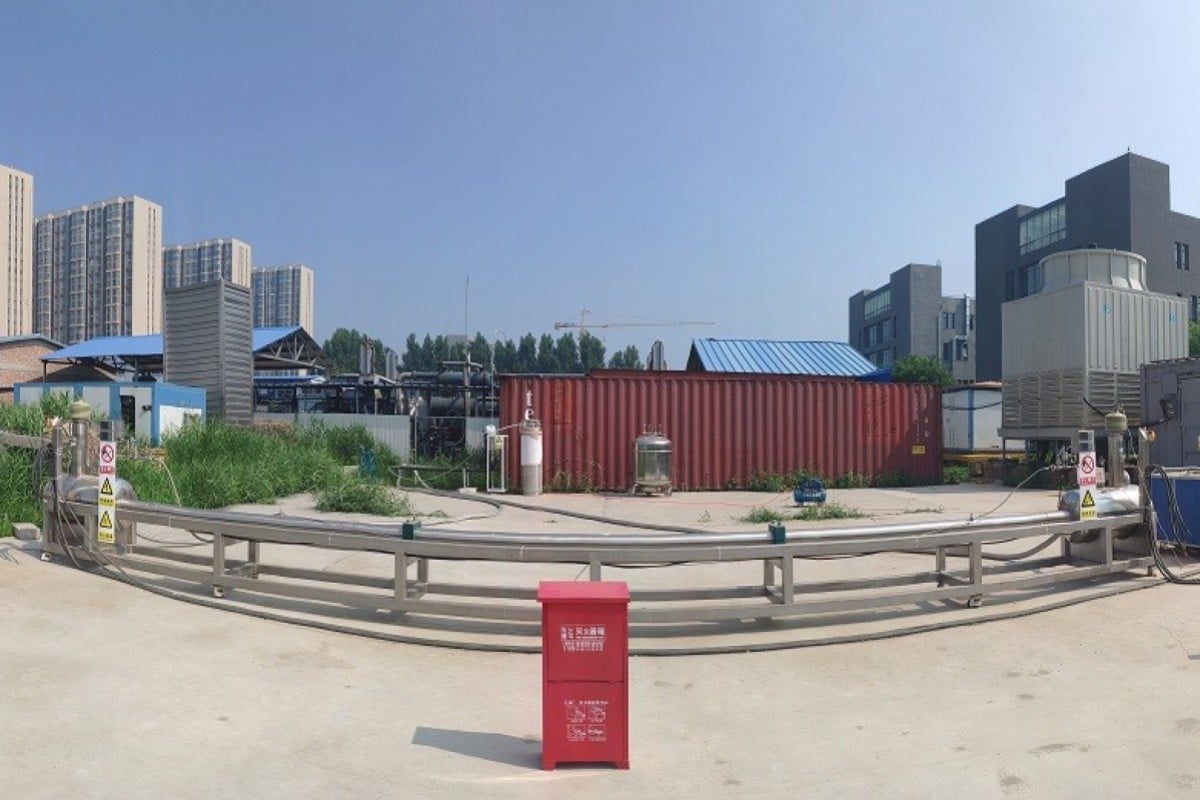
The 10-metre prototype line, combining high-voltage electricity and liquefied natural gas. Photo: Chinese Academy of Sciences
Chinese scientists have developed the world’s first prototype of a superconducting hybrid power line, paving the way for construction of a 2,000km (1,243-mile) line from energy-rich Xinjiang in the country’s far west to its eastern provinces.
The 10-metre, proof-of-concept wire and liquid natural gas hybrid transmission line was up and running at the Chinese Academy of Sciences’ Institute of Electrical Engineering in Beijing last month to show the feasibility of the technology.
The line contains a superconducting wire which can transmit nearly 1,000 amps of electric current at more than 18,000 volts with zero resistance.
In a further difference from a traditional power line, the gap between the superconducting wire and the power line’s outer shell is filled by a flow of slowly moving natural gas liquefied at low temperatures – between minus 183 and minus 173 degrees Celsius (minus 279 to minus 297 Fahrenheit). This allows the line to transfer electricity and fossil fuel at the same time.
Professor Zhang Guomin, the government research project’s lead scientist, told the South China Morning Post that the voltage and current could be much higher in its real-world applications.
“This technology can take the overall efficiency of long-distance energy transport to new heights,” he said.
Existing infrastructure to transfer energy from Xinjiang Uygur autonomous region to the developed eastern areas such as Shanghai has high operational costs because almost 10 per cent of the energy is lost in transmission, according to some studies.
That infrastructure includes the world’s most advanced high-voltage power line and four natural gas pipes, each thousands of kilometres long. One of the natural gas pipelines, from Xinjiang to Shanghai, cost 300 billion yuan (US$42 billion).
The superconductor and natural gas hybrid line offered a possible solution, Zhang said.
Loss of electricity over the superconducting wire would be almost zero because of the elimination of resistance to the movement of electrons, he said.
The transport of liquefied natural gas would also be efficient, because one cubic metre (1,000 litres) of it would be equivalent to 600 cubic metres of the same fuel in gas form.
The temperature needed for liquefaction of natural gas is almost identical to that required for occurrence of superconductivity, at about minus 163 degrees.
Wang Gengchao, professor of physics at East China University of Science and Technology in Shanghai, said the combination was a “smart idea”.
Superconducting materials are not new but their applications have been limited by the difficulty and cost of creating and maintaining the low-temperature environment.
“They are trying to kill two birds with one stone,” Wang, who was not involved in the study, said.
China is preparing to buy US liquefied gas and soybeans again
“But whether the technology can find a use in large-scale infrastructure depends on other things, such as safety. Not everyone will feel comfortable with the idea of putting a high-voltage electric line and flammable natural gas side by side.”
Zhang said another new prototype line, about 30 metres long, was being developed and the 2,000km project was awaiting government approval.
He said the team had solved some major technical obstacles, including reducing the risk of accidents from electrical sparks and gas leakage.
“Many problems remain to be solved, but we are confident this technology will work,” he said. “It will protect the environment. It will save a lot of land from being used for power and gas lines.”
Xinjiang has more energy resources than any other Chinese province or region. It has nearly half of the nation’s coal reserves, a third of its oil and gas, and some of the largest wind and solar farms, according to government statistics.
Source: SCMP
Posted in China alert, Chinese Academy of Sciences, coal reserves, Country, develops, East China University of Science and Technology, east coast, far west, high-voltage power, hybrid power line, Institute of Electrical Engineering, Natural gas, oil and gas, prototype, Shanghai, south china morning post, soybeans, span, superconducting, superconducting wire, transports, two birds with one stone, Uncategorized, US liquefied gas, wind and solar farms, Xinjiang, Xinjiang Uygur Autonomous Region, zero resistance |
Leave a Comment »
27/06/2019
- First Qatar, and now Saudi Arabia, are competing to dominate China’s fast-growing natural gas market, already the third largest in the world, as Beijing encourages the switch from coal to cleaner, greener energy
-
A PetroChina LNG tank at Rudong port in Nantong, Jiangsu province. China’s massive and rapidly growing appetite for natural gas is sparking off a scramble in the Middle East, as energy producers compete to become the biggest player in the market. Photo: Reuters
As more countries turn towards clean energy, the geoeconomic impact of natural gas as a fuel has become second only to that of oil. Over the past decade, the global demand for this carbon-free energy source has risen considerably and one major buyer is China.
The third largest global market for natural gas, China has implemented government policies to replace the use of coal as fuel and millions of households are switching over to clean energy. Consequently, China’s market for gas expanded by a record 43 billion cubic metres last year to reach 280 billion cubic metres at the end of 2018.
With the recent
, China’s gas consumption should continue to grow in the year ahead. As the demand spirals further, natural gas consumption in China is estimated to grow to around 620 billion cubic metres in 2030.
Prioritising its energy security, Beijing last year approved a 22-year gas supply deal between QatarGas and PetroChina International Co. The agreement is PetroChina’s largest LNG supply deal by volume, and will provide 3.4 million tonnes of liquefied natural gas annually.
With this deal, which QatarGas initiated with Total and ExxonMobil Corp as partners, Qatar achieved regional dominance and filled a vacuum left by major gas producer Iran, currently the target of US sanctions. Interestingly, Beijing has also unwittingly sparked off a competition between Qatar and Saudi Arabia, the kingpins of the Middle Eastern energy industry.
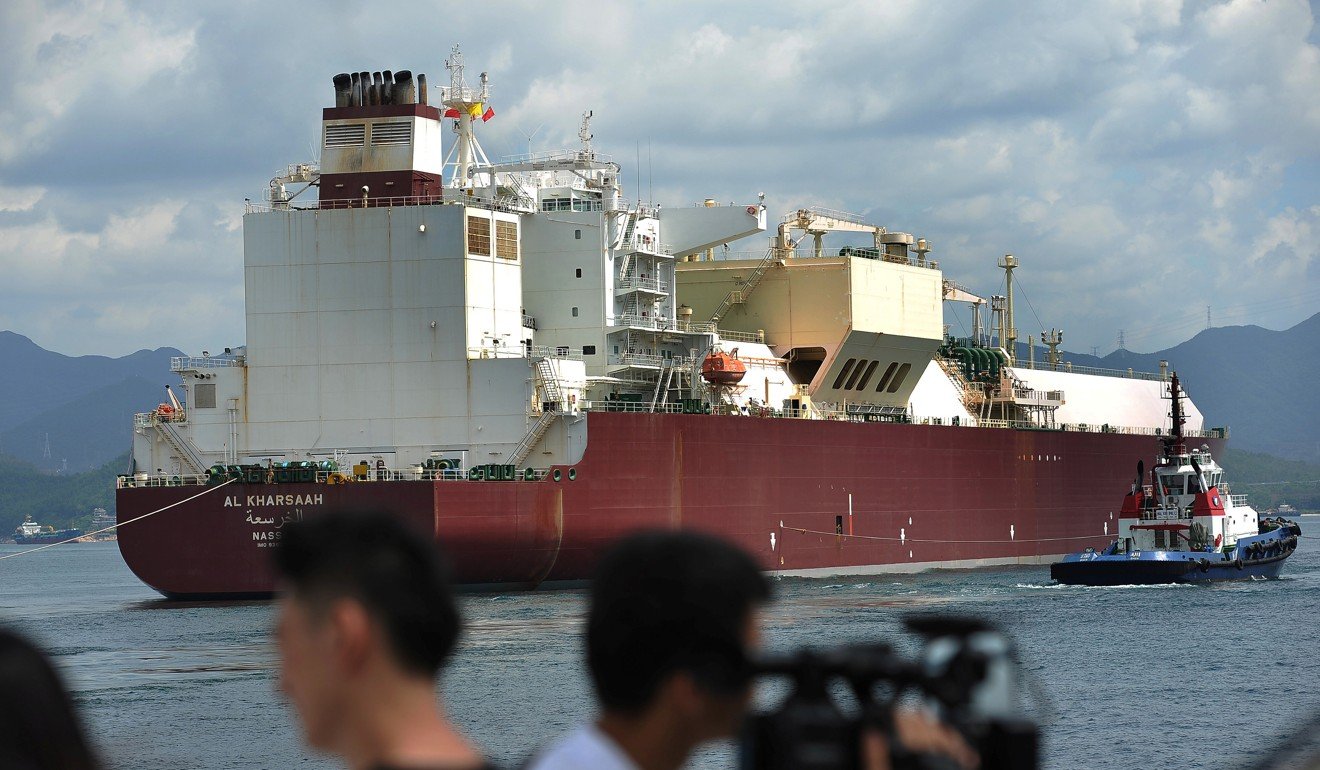
A vessel carrying Qatar LNG looking to berth in Shenzhen, China last August. Qatar’s recent deal highlighted the massive and growing Chinese appetite for natural gas. Photo: Reuters
China to become world’s top natural gas importer in 2019: report
By exporting gas, as well as oil, Qatar sail unruffled through the
imposed by Saudi Arabia, the United Arab Emirates, Bahrain and Egypt in June 2017, over allegations that Qatar supports terrorism and is friendly with Iran, which the region sees as an enemy. Qatar denies this. Meantime, Qatar plans to further increase its gas output. To attract more buyers, it is offering attractive long-term supply contracts to other countries in the region.
Inspired by the success of Qatar Gas, Saudi Arabia has stepped up its efforts to capture this new market. The Saudi state-owned oil giant Aramco plans to build an “energy bridge” between Saudi Arabia and China to better meet Beijing’s growing requirements for oil, gas, including LNG, said Aramco’s chief executive Amin Nasser at an industry event in Beijing in March.
Aramco, already a major supplier of crude oil to China, would need to invest US$150 billion over the next decade to realise its plans to convert crude oil into chemicals, and eventually become a gas producer. “We need to help our stakeholders – including here in China and the wider Asia region – realise that oil and gas will remain vital to world energy for decades to come,” said Nasser.
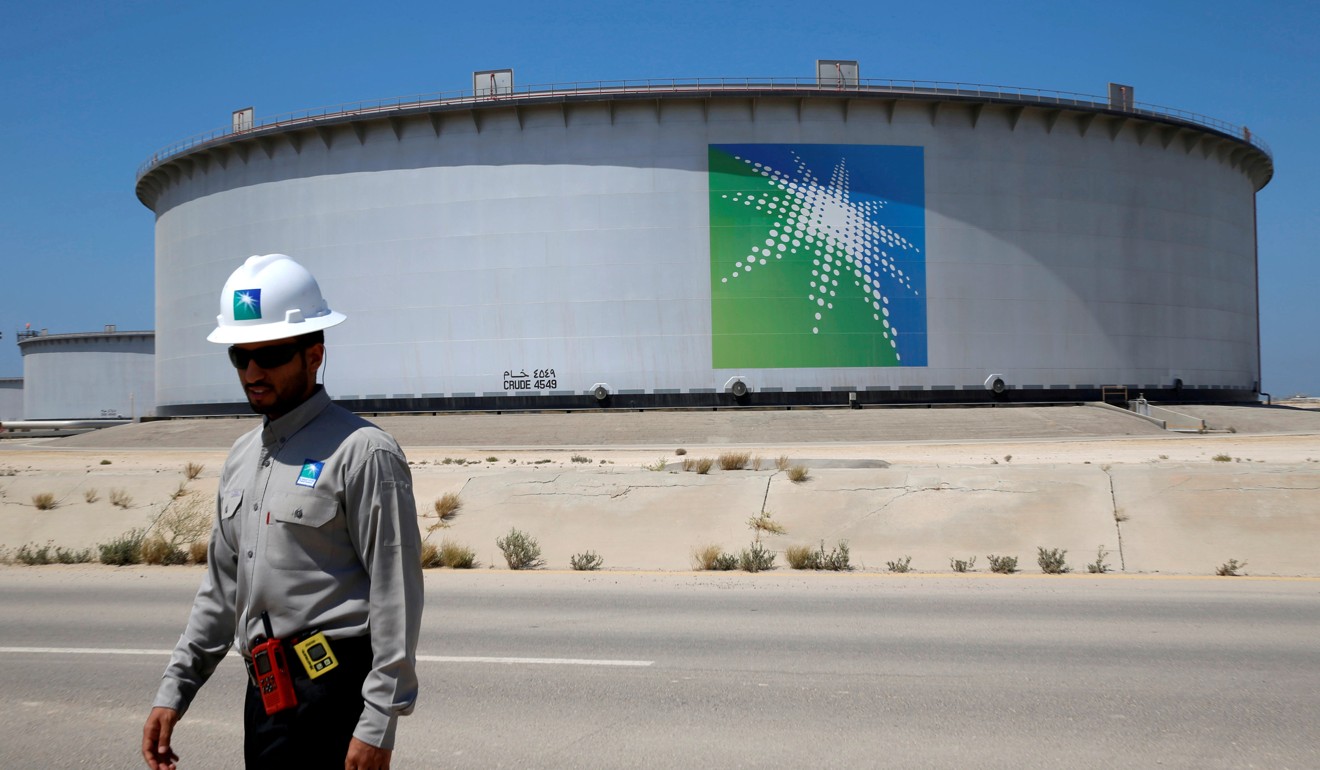
An Aramco employee near an oil tank in Saudi Arabia. Aramco has grand ambitions to become a major producer of natural gas. Photo: Reuters
The vision of Saudi Arabia as a major natural gas producer is in in line with Saudi Crown Prince Mohammed bin Salman’s economic plan Vision 2030. Riyadh has only Qatar to beat, with Iran on the back foot. Under sanctions pressure, Tehran, despite plans to increase gas exports, has clung on to just 1 per cent of the natural gas market, exporting 36.24 million cubic metres daily. Yet Iran was once part of the so-called regional gas troika along with Russia and Qatar, and is located at the cusp of several energy transit corridors. China, defying sanctions, continues to buy oil from Iran.
In around five years, Riyadh could become a major gas exporter. Saudi Arabia has already replaced Iran as the main energy provider in countries such as China, Pakistan and India, and has made huge investments in energy projects in these countries.
However, Qatar is also playing smart, sharply lowering its prices to clinch deals and make the right business connections. The competition for the growing natural gas market is a long game. The main possible setback for Riyadh is that its gas reserves do not match those in Qatar and Iran.
Source: SCMP
Posted in Aramco, Bahrain, Beijing, China’s growing demand, clean energy, Egypt, ExxonMobil Corp, India alert, iran, jiangsu province, LNG tank, Middle East, Nantong, Natural gas, Pakistan, PetroChina, Qatar, QatarGas, Riyadh, Rudong port, Russia, Saudi Arabia, Shenzhen, sparks contest, Total, Uncategorized, United Arab Emirates (UAE) |
Leave a Comment »





 CHINDIA ALERT: You'll be living in their world, very soon