Archive for ‘new energy vehicles (NEVs)’

11/05/2020

Coronavirus: China car sales mark first gain in almost two years after restrictions are eased

  • Sales in April hit 2.07 million units in the world’s biggest car market, up 4.4 per cent from a year earlier, according to the country’s largest industry association
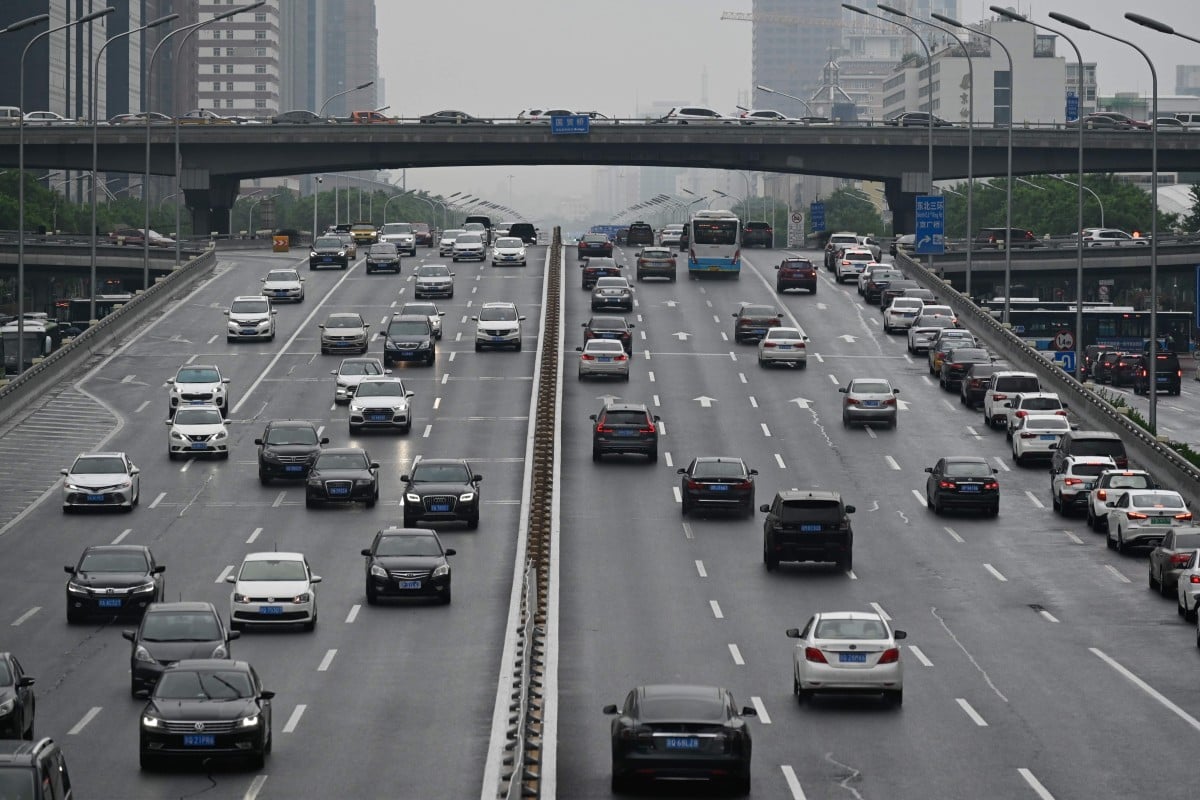
  • The number of new energy vehicles (NEVs) sold fell for a tenth straight month to The global industry has been hit hard by the health crisis, but there is growing optimism of improvement in business in China as the country has largely contained the outbreak and started easing lockdown measures. Photo: AFP
The global industry has been hit hard by the health crisis, but there is growing optimism of improvement in business in China as the country has largely contained the outbreak and started easing lockdown measures. Photo: AFP

China’s monthly car sales rose for the first time in almost two years in April, industry data showed, as more customers visited showrooms after the economy began to open up and authorities loosened coronavirus-related travel restrictions.

Sales in April hit 2.07 million units in the world’s biggest car market, up 4.4 per cent from a year earlier, according to data from the China Association of Automobile Manufacturers, the country’s largest industry association.

This follows a 43 per cent drop in March and a sharper 79 per cent plunge in February

 as the pandemic pummelled demand. Monthly sales in China last rose in June 2018.

The number of new energy vehicles (NEVs) sold fell for a tenth straight month to 72,000 units, the data showed. NEVs include battery-powered electric, plug-in hybrid and hydrogen fuel-cell vehicles.

The global industry has been hit hard by the health crisis, but there is growing optimism of improvement in business in China as the country has largely contained the outbreak and started easing lockdown measures.

Volkswagen reported positive China sales in April, while General Motors’ China ventures saw double-digit year-on-year growth last month.

Source: SCMP

13/02/2020

Coronavirus: dim sum off the menu as Guangzhou bans eating in restaurants

  • Elderly resident says he can’t recall this happening in his city before, not even during the Cultural Revolution
  • Outbreak is expected to deal a heavy blow to businesses, especially smaller eateries, with some already forced to close
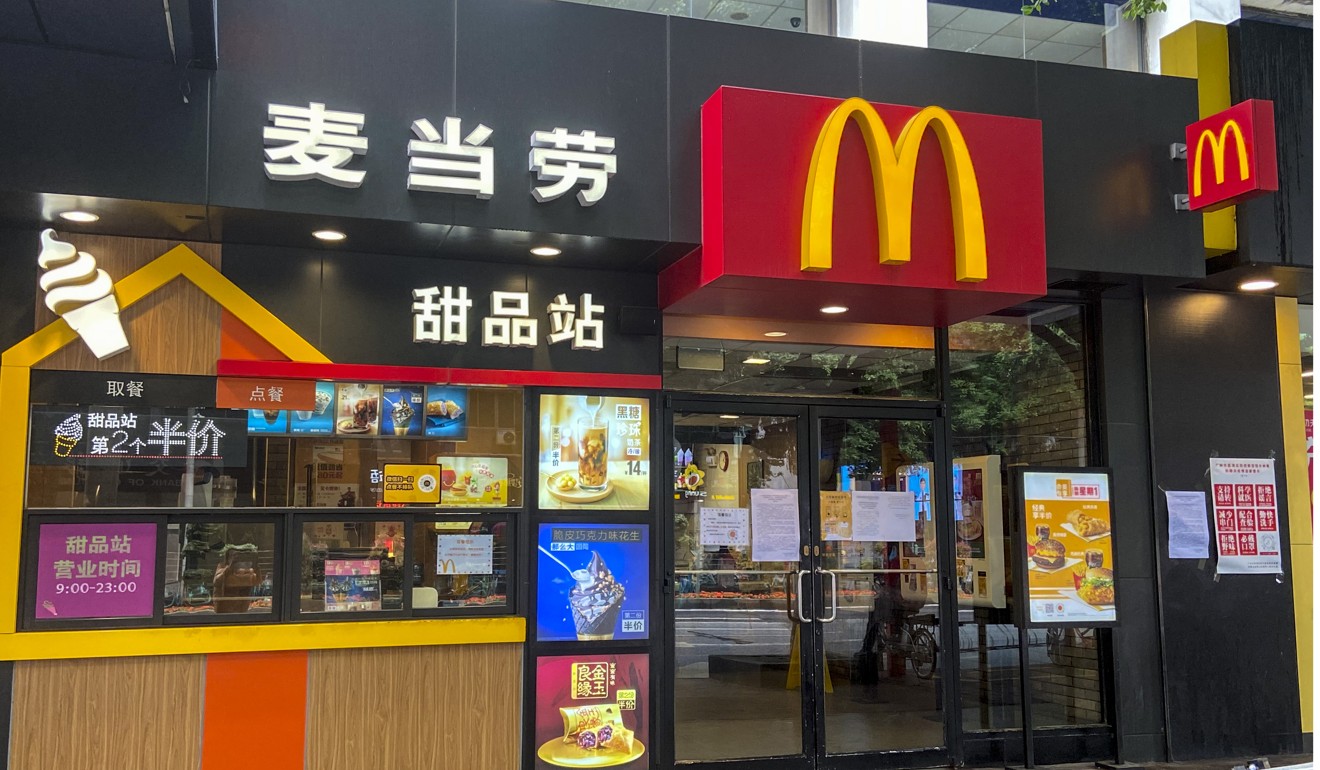
Residents can still get takeaway meals in Guangzhou, but they have been encouraged to order online and have them delivered. Photo: He Huifeng
Guangzhou is home to more than 15 million people and a busy trading port, and has been known as China’s most open city since the 1600s. For locals, going to restaurants for yum cha, or “drinking tea”, and dining on dim sum is an important part of the city’s history and culture – a tradition that has been carried through many generations.

“Even in the ‘three years of natural disasters’ [from 1959 to 1961, when China was in the grip of a famine] I remember there were still restaurants open,” He said. “I was really shocked [by the ban]. I guess the epidemic situation must be severe, otherwise Guangzhou definitely wouldn’t introduce this measure.”

China’s Hubei province reports huge spike in coronavirus cases, rising 10-fold from previous day
Many people in Guangzhou and across the country went back to work on Monday after an extended Lunar New Year break – another measure to try to stop the virus from spreading – with the government keen for businesses to return to normal operations.

The ban on dining in applies to restaurants, but employees can continue to have meals at their company canteens. And while residents can still get takeaways from restaurants, they have been encouraged to do this online, and have their meals delivered, rather than collecting their orders.

Group gatherings have also been banned in the city, and according to Nanfang Daily, some 126 banquets that would have involved more than 90,000 people have been cancelled by authorities already. The authorities did not say how long the measures would be in place.

Guangzhou is not the only city in Guangdong province to bring in a ban on dining in restaurants – Futian district in Shenzhen, Xiangzhou in Zhuhai, Foshan and Zhongshan have all taken the same step.

Beijingers gradually return to work as China’s fight against deadly coronavirus continues
In Guangzhou, while residents try to adapt, businesses are expecting to take a hit. One of the city’s top hotels said the virus outbreak could have a severe impact on the industry.

“Now we will focus on promoting takeaways for local customers. They can order our meals through apps providing online takeaway ordering services,” said Fion Liang, director of sales and marketing at The Garden Hotel. “As for guests staying in the hotel we will deliver meals to their rooms.”

To work or not to work: the difficult coronavirus question facing China

13 Feb 2020

She said the outbreak did not have a big impact on the hotel’s business in January, because the situation only became severe at the end of the month.

“The impact was definitely much bigger in February. If the epidemic continues to be severe throughout February, the occupancy rate of our rooms will be in the single digits this month,” Liang said. “[Most] hotels in Guangzhou are in the same situation.”

The outbreak is expected to deal a heavy blow to restaurants in the city, especially smaller eateries, and some have already been forced to close. June Zhao, the owner of dumpling restaurant Xi Xi, decided to shut down on Wednesday – the day the eat-in ban was announced.

Prospects had been good for the restaurant – it also sold books and alcohol in the evenings, and its trendy decor drew a young crowd.

“We had just started making money last winter and we were looking forward to earning more over the Lunar New Year holiday. But then the coronavirus came, our turnover fell to several hundred yuan a day, and we lost hope,” she said. “The new ban makes this situation worse – takeaway is not a good choice for dumplings, especially in winter. The losses will continue if we stay open.”

Coronavirus: major cities given power to seize private property

13 Feb 2020

The ban has also interrupted daily routines. Freelance cameraman Cony Yu, 28, usually spends some of his working day at cafes, but that is no longer possible. “[Now] I don’t have a comfortable place to sit aside from my home – even the parks have all been closed,” Yu said.

China disinfects entire cities to fight coronavirus outbreak, some twice a day
In the southern tech hub of Shenzhen, dining in has also been banned in central Futian district. Zhu Hao, a financial analyst based in the district, has been working from home for a week and ordering takeaway food every day. But he has to collect it from the gate at his residential compound, where security staff check the temperature of anyone entering or leaving.
He is losing patience with the restrictions. “I want to eat out. I want beef hotpot, coconut chicken, Korean barbecue and seafood,” he said.
In other Shenzhen districts, many restaurants and shopping centres have been temporarily closed or can only provide takeaway meals – including fast food chains such as McDonald’s and Starbucks.
Other places have strict rules for customers. At a bread shop, customers must register their ID and phone numbers and have their temperatures checked before they can enter. And for now, all hotpot restaurants have been closed.
Source: SCMP
02/07/2019

China Focus: China starts implementing tougher vehicle emission standards

BEIJING, July 1 (Xinhua) — Several provincial-level regions on Monday started implementing the “China VI” vehicle emission standards ahead of schedule to ramp up efforts against a major source of air pollution.

Sales and registrations of new vehicles in regions including Beijing, Shanghai, Tianjin, Hebei Province and Guangdong Province now have to comply with what is believed to be one of the world’s strictest rules on automobile pollutants.

In Beijing, all new buses and other heavy-duty diesel vehicles shall follow the new emission rules, while all new vehicles are expected to follow suit starting Jan. 1, 2020.

All existing vehicles on the roads are obliged to meet the previous “China V” emission standards.

According to official data, emissions from some 6.2 million vehicles were responsible for 45 percent of Beijing’s concentration of small, breathable particles known as PM2.5, a key indicator of air pollution.

Compared with the “National V” standards, the new rules demand substantially fewer pollutants such as nitrogen oxides and particulate matters and introduce limits on particulate number and ammonia.

The new emission standards were initially set to take effect nationwide from July 1, 2020. A three-year action plan on air pollution control released last July urged early implementation in major heavily-polluted areas, the Pearl River Delta region, Sichuan Province and Chongqing Municipality.

Automakers and the market have been preparing for the tougher rules.

Manufacturers have completed the development of most “China VI” models and have entered the stage of mass production and sales, said Liu Youbin, a spokesperson with the Ministry of Ecology and Environment.

By June 20, 99 light vehicle makers had unveiled environmental protection information of 2,144 new models and 60 heavy-duty vehicle manufacturers unveiled information on 896 green models, Liu said.

“The market has basically accomplished a smooth transition,” Liu said.

Li Hong, an official with the China Association of Automobile Manufacturers (CAAM), said roll-outs of “China VI” vehicles as well as preferential tax and fee policies would boost China’s auto market.

“The production and sales of new energy vehicles (NEVs) will continue its relatively fast growth,” Li said.

Car sales in China continued to drop in May, with about 1.913 million vehicles sold, down by 16.4 percent year on year, CAAM showed. Bucking the trend, sales of NEVs kept growing that month, edging up 1.8 percent year on year.

China saw robust sales growth of NEVs in the first four months this year with 360,000 NEVs sold, surging by 59.8 percent from the same period a year earlier.

Chinese authorities have announced that the tax exemptions on NEV purchases will continue through 2020 to boost the country’s green development and retain a strong domestic market.

Source: Xinhua

Law of Unintended Consequences

continuously updated blog about China & India

ChiaHou's Book Reviews

continuously updated blog about China & India

What's wrong with the world; and its economy

continuously updated blog about China & India