Archive for ‘Nuclear power’

05/09/2019

China earmarks site to store nuclear waste deep underground

  • Researchers will conduct tests at site in Gansu to see whether it will make a viable facility to store highly radioactive waste safely
  • Scientists say China has the chance to become a world leader in this field but has to find a way to ensure it does not leak
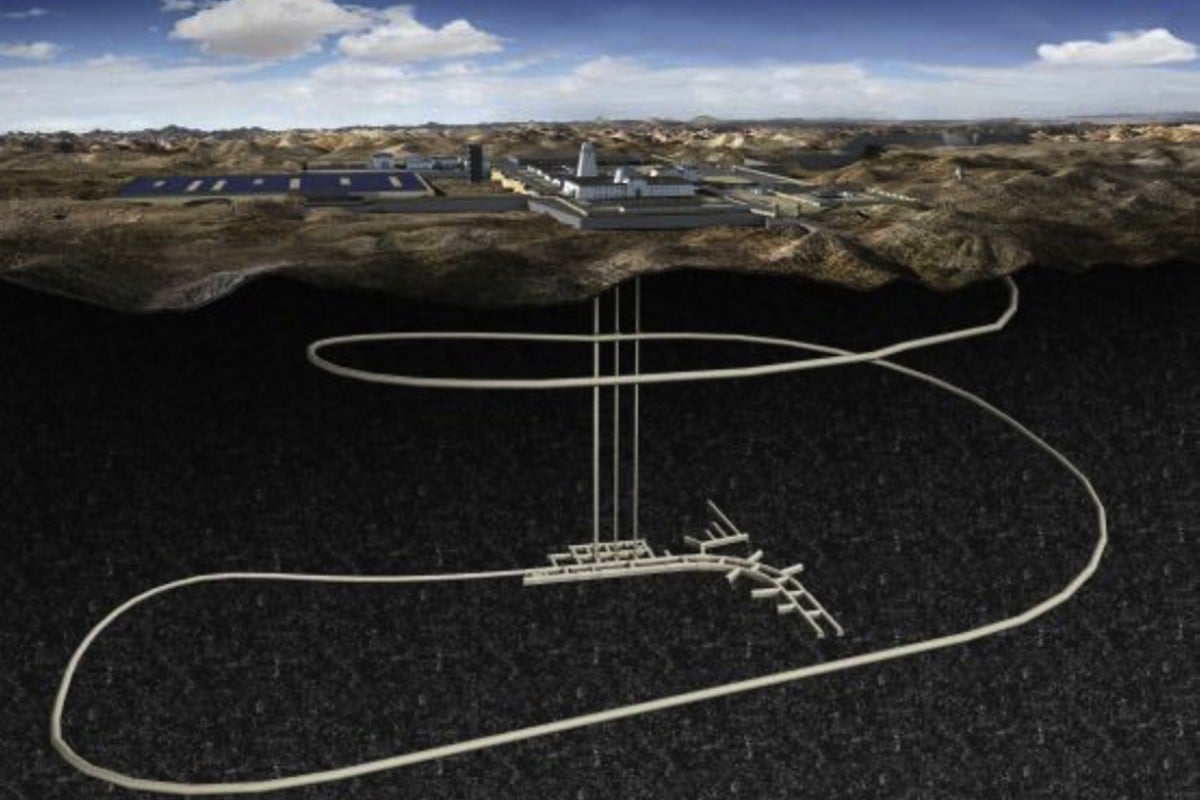
A preliminary design for the Beishan Underground Research Laboratory. Photo: Handout

China has chosen a site for an underground laboratory to research the disposal of highly radioactive waste, the country’s nuclear safety watchdog said on Wednesday.

Officials said work will soon begin on building the Beishan Underground Research Laboratory 400 metres underground in the northwestern province of Gansu.

Liu Hua, the head of the Chinese National Nuclear Safety Administration, said work would be carried out to determine whether it would be possible to build a repository for high-level nuclear waste deep underground.

“China sees radioactive waste disposal as a very important part [of the development nuclear energy],” said Liu. “To develop nuclear energy, we must have safe storage and disposal of nuclear waste.”

China condemns US blacklisting of nuclear firms and says American companies could be hurt as a result
The Chinese authorities see nuclear power an important source of energy that will help to curb carbon emissions and pollution as well as reducing its dependence on fuel imports.

But while the country has made great strides in the development of nuclear power, it needs to find a safe and reliable way of dealing with its growing stockpiles of nuclear waste.

Liu said the Gansu site had been identified as a possible location for a deep nuclear waste store after years of searching.

Once the laboratory is built, scientists and engineers will start experiments to confirm whether it will make a viable underground storage facility.

“Based on the data of the experiments, we can then decide if we are going to pick this as the final site,” he added.
China ‘actively promoting’ nuclear fuel processing plant with French Areva
Chinese officials usually stay tight-lipped about how nuclear waste is disposed of mainly because of fears that any discussion of the topic would trigger safety fears, although in recent years more efforts have been made to inform the public to win support.
Scientists say that nuclear waste can be divided into three categories depending on the level of radioactivity.
Low-level waste consists of minimally radioactive materials such as mop heads, rags, or protective clothing used in nuclear plants, while intermediate-level waste covers things such as filters and used reactor components.
High-level waste, however, is generated by the reprocessing of spent nuclear fuel and scientists generally agree that the safest way to dispose of it is to bury it deep underground in areas where the geology means it will have a minimal impact on the environment while it decays over thousands of years.
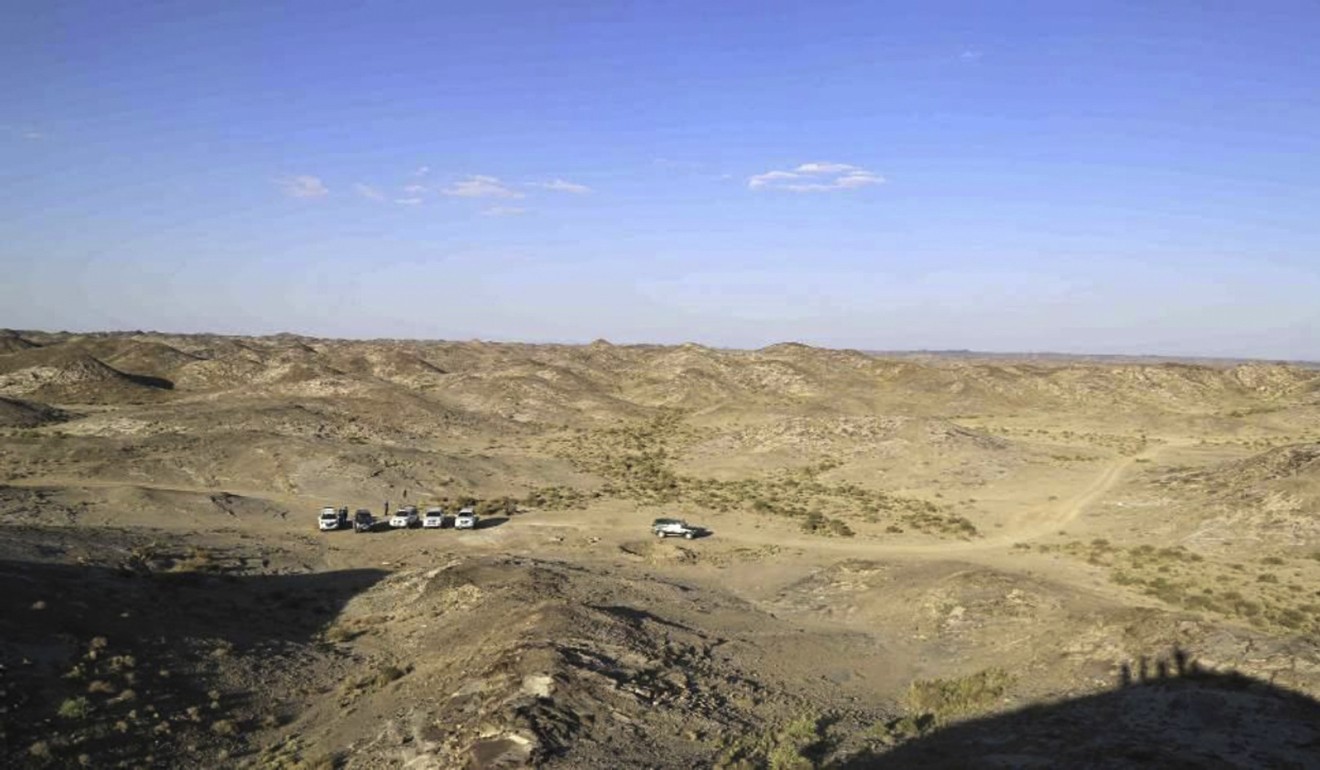
The facility will be built in a remote part of Gansu province. Photo: Handout

Some Chinese scientists said the country had the chance to lead the world in this area of research but others have expressed concerns about safety.

Jiang Kejun, a senior researcher at the Energy Research Institute of China’s National Development and Reform Commission, said that very few countries in the world are studying this form of nuclear waste disposal.

“It gives China an opportunity to be a leader in research in this area, plus China has the technology and financial means,” he said.

About a dozen countries including France, Switzerland, Japan, and the United States have carried out research in this area, but in recent years most have abandoned or scaled back their programmes.

At present there are storage sites operating in Finland and the US, but other countries such as Germany have abandoned plans to build similar facilities.

Washington blacklists Chinese nuclear firms for ‘helping military acquire US technology’

But despite broad scientific support for underground disposal, some analysts and many members of the public remain sceptical about whether it is really safe.

Lei Yian, an associate professor at the School of Physics at Peking University, said there was no absolute guarantee that the repositories would be safe when they are come into operation.

“Leakage has happened in [repositories] in the US and the former Soviet Union … it’s a difficult problem worldwide,” he said. “If China can solve it, then it will have solved a global problem.”

China is also building more facilities to dispose of low and intermediate level waste. Officials said new plants were being built in Zhenjiang, Fujian and Shandong, three coastal provinces that currently lack disposal facilities.

At present, two disposal sites for low and intermediate-level waste are in operation in Gansu and Guangdong provinces.

Source: SCMP

19/08/2019

Schools deserted in Indian Kashmir as parents fear more unrest

SRINAGAR, India (Reuters) – Schools reopened in Indian Kashmir’s main city on Monday but most classrooms were empty as parents kept their children home, fearing unrest over the government’s decision two weeks ago to revoke the region’s autonomy.

Some 190 primary schools were set open in Srinagar as a sign of normalcy returning to Muslim majority Jammu and Kashmir as authorities ease a clampdown aimed at preventing mass protests.

Parents said their children would stay home until cellular networks are restored and they can be in contact with them.

“How can we risk the lives of our children?” said Gulzar Ahmad, a father of two who are enrolled in a school in the city’s Batamallo district where protests have occurred.

“Troops have arrested minor children in the last two weeks and several children were injured in clashes,” he said. “Our children are safe inside their homes. If they go to school who can guarantee their safety?”

Authorities were not immediately available for comment, but have previously denied reports of mass arrests.

Protests began after the Aug. 5 decision by Prime Minister Narendra Modi’s government to withdraw Kashmir’s special status and integrate it fully into India, with equal rights for all Indians to buy property there and compete for government jobs.

Critics said the decision will alienate many Kashmiris and add fuel to a 30-year armed revolt in the Himalayan territory that Pakistan also lays claim to.

On the weekend, residents of Srinagar – the hotbed of the separatist revolt – threw stones and clashed with police. Dozens of people were injured, two senior officials and witnesses said.

Reuters journalists visited two dozen schools in Srinagar on Monday. Some schools were lightly staffed and classrooms deserted. Gates at other schools were locked.

Only one student showed up at Presentation Convent Higher Secondary School, which has an enrolment of 1,000 pupils, and went home, said a school official.

A handful of teachers but no students turned up at the barricaded Burn Hall school in one of the city’s high security zones.

“How can students come to classes in such a volatile situation? The government is turning these little children into cannon fodder,” a teacher said, adding that schools should stay closed until the situation is normal.

CROSS BORDER FIRING

New Delhi’s decision on Kashmir has heightened tensions with its neighbour and rival nuclear power, Pakistan, and triggered cross-border exchanges of fire.

In the latest incident, two civilians were killed in Pakistan-controlled Kashmir by Indian soldiers firing across the disputed border, Pakistan’s foreign ministry said, adding that it had summoned India’s deputy commissioner in Islamabad to protest.

“The ceasefire violations by India are a threat to regional peace and security and may lead to a strategic miscalculation,” the foreign ministry said.

There was no immediate comment from India which has previously accused Pakistan of trying to whip up tensions to draw global attention.

More than 50,000 people have died in the revolt that erupted against Indian rule in Kashmir in 1989. India blames Pakistan for giving material support to the militants and helping them cross into its part of the mountainous region.

Pakistan denies the allegation and says it only gives moral and diplomatic support to the Kashmiri people in their struggle for self determination.

Source: Reuters
27/06/2019

Tough choices lie ahead on global warming

  • Both individuals and businesses need to play their part in lowering carbon emissions, and increasing the city’s proportion of clean energy seems inevitable
  • With two-thirds of Hong Kong’s carbon emissions coming from power generation, increasing the proportion of clean energy seems inevitable.
    With two-thirds of Hong Kong’s carbon emissions coming from power generation, increasing the proportion of clean energy seems inevitable.
    Switching off all air conditioning to achieve zero carbon emissions may sound a little extreme. But it underlines the challenges in fighting global warming, a common goal that involves behavioural and institutional changes from all stakeholders.
    As the threats loom larger and the clock for action ticks faster, it is time we made tough choices. The options for Hong Kong have been mapped out in the public consultation on the long-term decarbonisation strategy, with the focus being drawn to importing more nuclear energy from across the border.
    The idea strikes a raw nerve, not just because it touches on the issue of nuclear safety, but also resistance arising from the perceived higher reliance on the mainland. The lack of information about the actual impact on electricity tariffs also makes discussion difficult.
    With two-thirds of the city’s carbon emissions coming from power generation, increasing the proportion of clean energy seems inevitable.
    Currently, nuclear power from the mainland accounts for about a quarter of our energy supply. As long as safety is not an issue, there is no reason why we cannot develop on that basis, along with more use of solar and other renewable energies.
    In addition to other institutional options such as phasing out polluting fuels for vehicles and introducing more incentives for green buildings, a great deal can be achieved at both individual and corporate levels.

    For example, air conditioning will be just as comfortable when set at 24 degrees Celsius instead of 21. Cutting down on fashion and plastic consumption helps, as can replacing business trips by video conferencing.

    How far are you willing to go to save planet from climate change?
    These changes are simple and easy to do, but they go a long way in saving our planet.
    To combat climate change, the Paris Agreement has set a carbon reduction target to keep the increase in the global average temperature to well below 2 degrees Celsius.
    A small city like ours may seem too little to make an impact on climate change. But as a responsible global citizen and a heavily developed world city, we have a duty to help mitigate the impact.
    The consultation has put the relevant issues into perspective in a timely manner. For the sake of sustainable development and the well-being of future generations, tough choices will have to be made.
    Source: SCMP
Law of Unintended Consequences

continuously updated blog about China & India

ChiaHou's Book Reviews

continuously updated blog about China & India

What's wrong with the world; and its economy

continuously updated blog about China & India