Archive for ‘on board’

07/10/2019

Chinese celebrate National Day with birthday noodles, films

BEIJING, Oct. 6 (Xinhua) — While fireworks and festivities drew the largest crowds during this year’s National Day holiday, many Chinese chose to celebrate the occasion with a bowl of patriotic noodles and homegrown films.

This year marks the 70th anniversary of the People’s Republic of China which was founded on Oct. 1, 1949. The weeklong National Day holiday, introduced in 1999 by the State Council, or China’s cabinet, saw “National Day noodles” become a popular choice among some Chinese this year.

Birthday noodles are to Chinese people what birthday cakes are to Westerners. In accordance with the Chinese custom, people enjoy a bowl of noodles on their birthday as a symbol of longevity. Many restaurants will prepare a bowl of birthday noodles for free if there is a diner celebrating their birthday.

Beijing Huatian Catering Group, a leading catering company in Beijing that has more than 20 time-honored brands, sold more than 25,000 bowls of National Day noodles and gave away more than 120 bowls of birthday noodles, according to a Saturday report by Beijing Daily.

Beijing Honghua Dahaiwan Catering Group said that it has sold 3,800 bowls of noodles during the first three days of the National Day holiday, up 25 percent compared to the same period of last year.

Moviegoers meanwhile got their fill of National Day celebrations in an entirely different manner.

“My People, My Country,” “The Climbers” and “The Captain” were all set for theatrical release on the Chinese mainland on Sept. 30, a day ahead of the weeklong National Day holiday, according to the China Film Distribution and Exhibition Association.

Featuring seven short stories from seven directors, “My People, My Country” draws on important historical moments since the founding of the PRC, aiming to awaken the shared memories of Chinese around the world.

“The Climbers” dramatizes the real-life expedition of Chinese mountaineers to ascend Mount Qomolangma in 1960 and 1975.

“The Captain” is a cinematic portrayal of a real-life event that occurred on May 14, 2018, when a captain of Sichuan Airlines managed a successful emergency landing after the windshield of his plane broke in the air, safely bringing home the 119 passengers and nine crew members on board.

According to the real-time statistics of MaoYan Movie, the leading online movie ticketing platform in China, the three movies ranked as the top three films at the box office over the holiday. “My People, My Country” has raked in more than 2 billion yuan (around 279.8 million U.S. dollars) as of Sunday, “The Captain,” 1.7 billion yuan, and “The Climbers,” 743 million yuan.

Source: Xinhua
27/09/2019

Japan Airlines offers passengers a seat map to avoid babies on board – will others follow suit?

  • AirAsia X sells a quiet zone where children under 10 are not allowed, and Singapore-based Scoot has an ‘exclusive and silent’ section on its Boeing 787 Dreamliners barring kids under 12
  • Japan Airlines’ move, however, appears to be new and the first example of an airline showing where a child will be sitting on a map
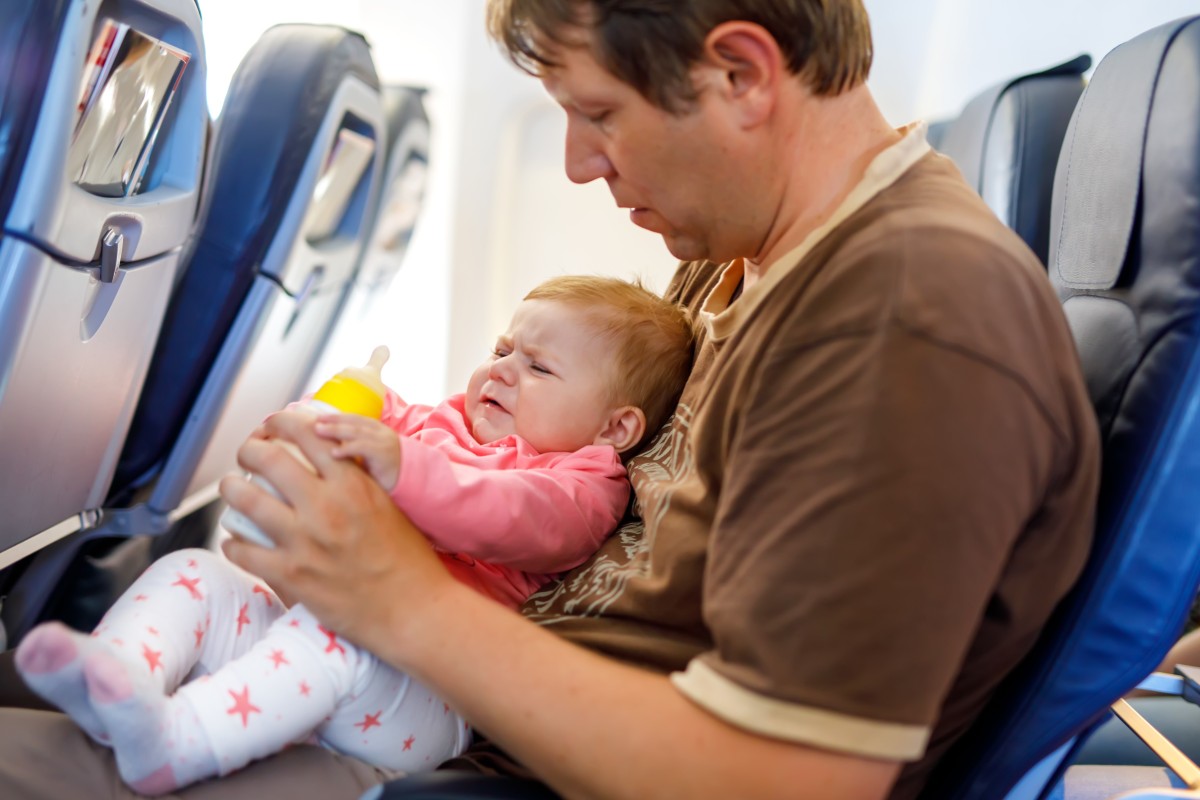
A father holds his daughter during a flight. Photo: Handout

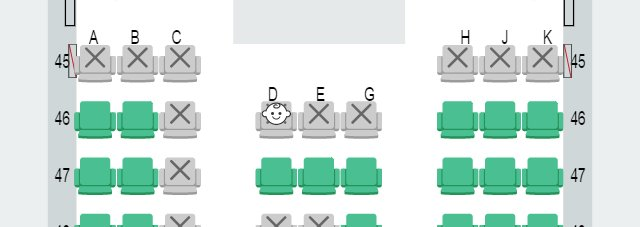
Some travellers would prefer to avoid sitting near a baby when they fly. Now, Japan Airlines has introduced a baby map to help.

The airline notes on its website that when passengers who travel with young children – those between the age of eight days and two years – choose on the site where they want to sit, a “child icon” will be displayed on those spots on the seat selection screen.

“This lets other passengers know a child may be sitting there,” the website says on its “baby travel support service” section.

The feature came to light when traveller Rahat Ahmed took an image of the baby map and thanked the airline on Twitter. “This really ought to be mandatory across the board,” he wrote.

It’s unclear when the carrier introduced the feature. Japan Airlines has not responded to questions about the origin of the child icon or which flights it is used on. It is listed under domestic flights on the website, along with information about child seats, strollers, changing tables and blanket rentals.

The airline also warns that the icon will not be shown if seats are booked as part of a tour, using award tickets or by some method other than the airline’s website.

It remains to be seen whether any other airlines offer the same type of guidance: “It’s a new one for us, that’s for sure,” says Natalie Arney, spokeswoman for the online travel agency Alternative Airlines. “To have that when you’re booking just, like, blows you away, really.”

Her site offers a list of airlines that boast child-free zones, all of which are in Asia. They include the budget carriers AirAsia X, which sells a quiet zone where children under 10 are not allowed to sit, and Scoot, which advertises a “ScootinSilence” zone on its Boeing 787 Dreamliners. The Singapore-based carrier promises an “exclusive and silent cabin (no kids under 12 allowed here)” in the section.

This lets other passengers know a child may be sitting there … This really ought to be mandatory Rahat Ahmed

“It’s just being able to have somewhere quiet where you can sleep or where you can get on with your work and stay away from children,” Arney says.
Tracy Stewart, content editor of TripAdvisor’s family travel site Family Vacation Critic, said in an email that Japan Airlines’ move was new and the first example he’d seen of an airline showing where a child would be sitting on a map. He said quiet zones were not likely to become a global trend.
“You’ll likely never see something similar in the US for fear of backlash,” he said.
Source: SCMP
Law of Unintended Consequences

continuously updated blog about China & India

ChiaHou's Book Reviews

continuously updated blog about China & India

What's wrong with the world; and its economy

continuously updated blog about China & India