Archive for ‘online travel agency Ctrip’

28/10/2019

Economic Watch: China’s international aviation market set to take off

BEIJING, Oct. 27 (Xinhua) — Beijing Daxing International Airport, a new aviation hub in the Chinese capital, started international flight operation Sunday, joining the country’s expanding airport network to serve outbound and inbound travelers.

During winter and spring, a total of 570,000 passenger trips are expected to be made via 15 overseas flight routes at the airport, which boasts fast customs clearance services thanks to smart technologies.

Airports across China are seeing flights to and from a growing number of overseas destinations, as domestic and international airlines race to tap the booming international aviation market.

China’s international aviation market is small compared with some countries, but enjoys fast growth and huge potential, said Zhao Wei, a professor with the Civil Aviation Management Institute of China, at the 2019 China Aviation and Tourism Forum.

The steady expansion of the outbound tourism market and the large number of individuals who are yet to enjoy air travel will drive the sector’s rise, Zhao said.

China is the world’s largest outbound tourism market. About 81.29 million overseas trips were made during the first half of this year, up 14 percent year on year. The total for the whole year might grow 12 percent year on year to reach about 168 million trips, the China Tourism Academy predicted.

The country’s airports saw 126 million cross-border passenger trips made in 2018, up 13 percent over 2017. The McKinsey Global Institute foresaw threefold growth in the number of people in China able to afford airline travel in the next 10 years, with the upper strata of China’s fast-growing middle class poised to become the principal engine of air-travel spending.

With the outbound travel market booming, the number of overseas airlines and destinations entering the Chinese market continues to increase, observed Brenda He, managing director with tourism marketing and sales services provider Travel Link Group, which saw growing market demand from overseas airlines and tourism authorities.

To improve international air travelers’ experience, aviation services should be developed in coordination with tourism development and destinations promotion, He said.

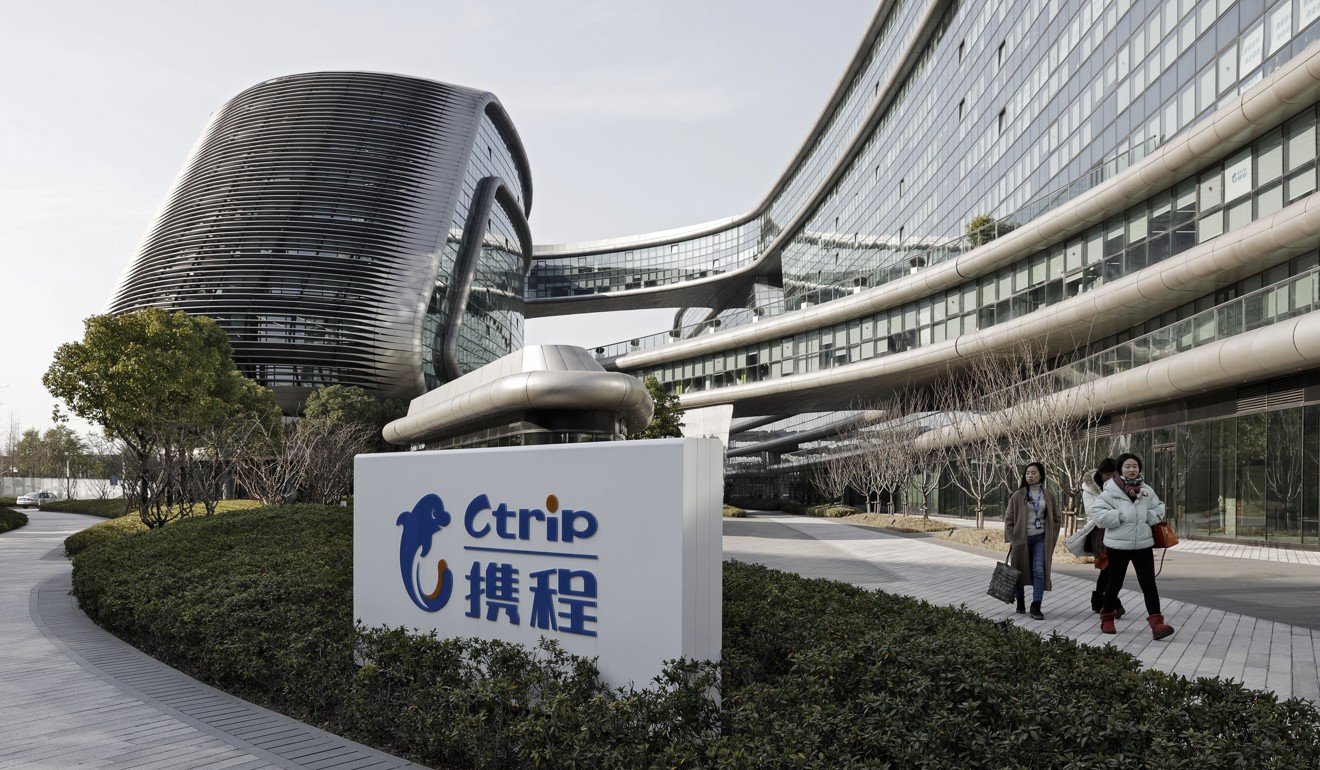
Li Xiaoping, senior vice president with China’s largest online travel agency Ctrip, said airports need to upgrade their infrastructure and services to improve travelers’ experience by meeting their diversifying consumption and entertainment demands.

Future airports will become social-networking and cultural venues, Li said. “An airport can become a sightseeing spot in its own right.”

Source: Xinhua
21/09/2019

China’s scenic spots join garbage pickup campaign to mark World Cleanup Day

BEIJING, Sept. 21 (Xinhua) — A total of 73 popular domestic scenic spots have joined a campaign to collect garbage as China marked the World Cleanup Day Saturday.

Stalls will be set up in these scenic spots to encourage tourists to pick up garbage, take them away and sort them.

Spearheaded by China’s largest online travel agency Ctrip and charity program Pickup China, the campaign will last through the National Day holiday and is expected to attract about 1 million travelers and reduce 1,000 tonnes of tourism-related waste.

A mobile game was also launched on Ctrip’s app to raise awareness of trash collection and sorting among its users.

Sustainability will contribute to improved travel experiences and the sector’s development, said Fang Hongfeng, general manager of the activities business unit at Ctrip, adding that they are willing to seek broader cooperation with scenic areas in this field.

The World Cleanup Day, which falls on Sept. 21 each year, is a global social action program designed to address the global solid waste problem.

Source: Xinhua

29/07/2019

How a wave of Chinese money is powering Indian start-ups

  • China last year poured US$2.5 billion into firms in India, which is a healthy breeding ground for up-and-coming tech outfits
  • Active cooperation between these investors and entrepreneurs holds a multitude of benefits for both sides, according to industry pundits
Chinese venture capitalists are injecting funds into a variety of cash-hungry Indian businesses. Photo: Shutterstock
Chinese President Xi Jinping and

Indian Prime Minister Narendra Modi

look set for another informal summit in October, and a key item on the agenda will be

the flow of money between their nations

.

Indian start-ups have become a major target for

deep-pocketed Chinese investors

, who have been looking to emulate their United States counterparts such as Tiger Global and Sequoia Capital that dominate the sector.

On top of this, a slowdown in start-up deals in China has nudged the country’s investors to look beyond their borders, and

India

’s affordable labour market and strong economic growth provide a healthy breeding ground for young tech outfits.

Can Bollywood be the bridge that binds India and China?
Led by heavyweights such as Shunwei Capital, Fosun International, Tencent Holdings, Xiaomi and Alibaba Group Holding – which owns the South China Morning Post –

Chinese venture capitalists

have been injecting funds into a variety of cash-hungry Indian businesses.

For many of these start-ups, the knowledge and technology of Chinese investors act as the backbone of their business Ntasha B, Venture Gurukool

Beneficiaries have included advertising firm Media.net, e-commerce operator Snapdeal, digital payment provider Paytm, online travel firm MakeMyTrip, messaging platform Hike, health tech start-up Practo and news aggregator Dailyhunt.

“For many of these

start-ups

, the knowledge and technology of Chinese investors act as the backbone of their business, along with the operational expertise of Indians in the domestic market,” said Ntasha B, co-founder of Venture Gurukool, a mentoring platform for start-ups which works closely with Indian diplomatic missions in China.

Chinese President Xi Jinping and Indian Prime Minister Narendra Modi are set to meet again in October. Photo: Xinhua

She added that Chinese investors usually had a hands-on approach and were a bit inflexible, unlike their American counterparts, who gave some elbow room in hiring local teams.

A senior executive with an Indian start-up, who did not wish to be identified, said it was sometimes straightforward to convince Chinese investors as they could relate to Indian business models and requirements that were dissimilar to those from the Western world.

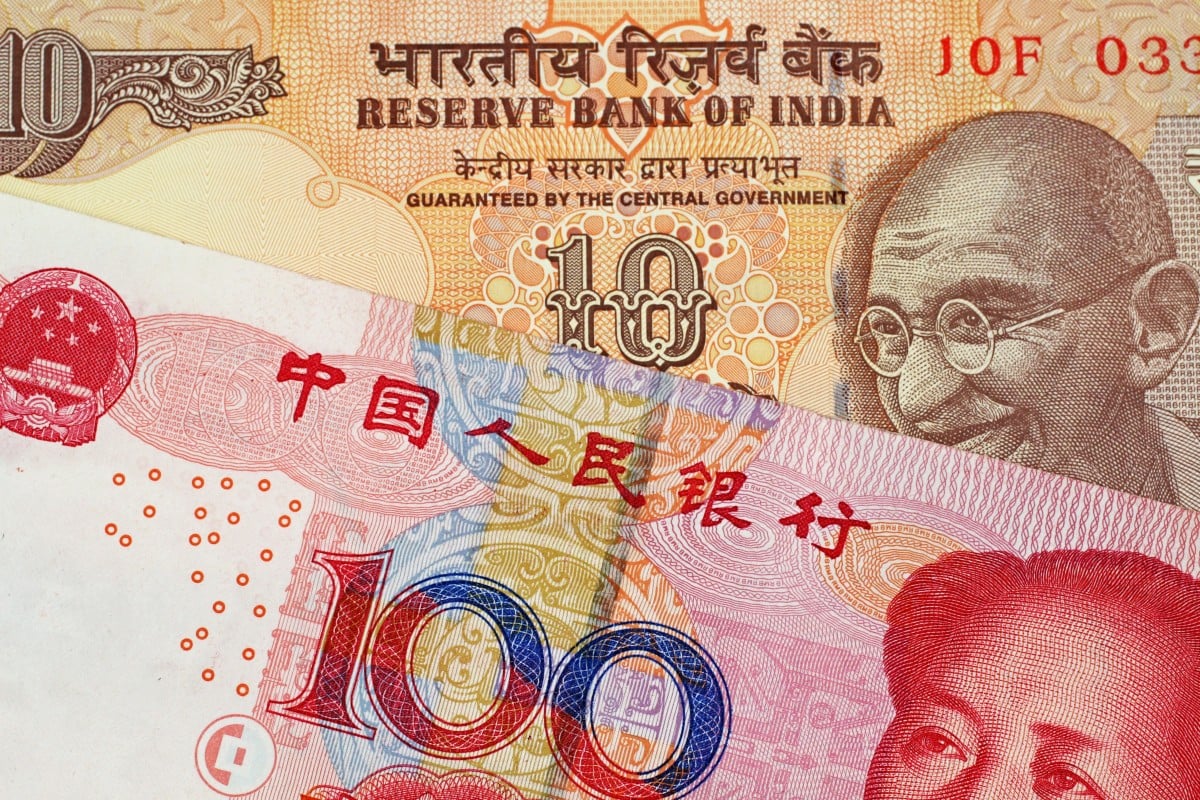
The world’s second-largest economy invested nearly US$2.5 billion in Indian start-ups last year, a figure that has touched almost US$1 billion so far this year, according to finance research firm Venture Intelligence. The number of such deals jumped from just one in 2013 to 27 last year.

What does Amazon’s China departure mean for its Indian e-commerce battle?

Indian start-ups are estimated to have raised US$3.9 billion from around the globe in the first six months of this year, and the inflow from Chinese behemoths played a key role in pushing them to turn east to source funding.

“What’s more interesting about [Chinese investors’] strategy is that they’re paying more attention to rural India. If you look at the companies they’ve invested in, a fair amount of their businesses target the rural segment,” said Sandeep Murthy, managing partner at venture capital firm Lightbox Ventures, which keeps a close watch on Chinese investments. He said the brisk economic activities in India’s tier two and tier three towns are more attractive to Chinese investors than India’s urban centres.

Ctrip, China’s largest online travel agency, is drawn to the size and rapid advancement of the Indian market. Photo: Bloomberg

WHY INDIA?

For Ctrip – China’s largest online travel agency, which in April took a 49 per cent stake in MakeMyTrip – the appeal of India was its whirlwind technological advancement and the disposable income of its massive young population.

“[MakeMyTrip has] achieved fast growth in the online travel market and is becoming well recognised in the Indian market. Their comprehensive products and services, management team and the opportunities in India result in our confidence that they will continue to succeed,” said Wei Yuan Min, a member of Ctrip’s global team. Behind the US and China, India houses the world’s third-largest start-up ecosystem in terms of the number of companies. As for the number of unicorns – start-ups valued at over US$1 billion – India ranks third, offering a vibrant habitat for entrepreneurial ventures. The country is home to 32 such firms, with the addition of nearly half a dozen so far this year and 15 last year.

In India, one man took on Chinese firm ByteDance to shut down TikTok – and he wants to do it again

New Delhi expects there to be 12,000 tech start-ups in the country by next year, up from 7,200 last year. There were 1,200 new tech firms in the sector last year, according to industry body Nasscom.

One of those capitalising on this opportunity is the Beijing-headquartered technology company Xiaomi, which last year promised to pump US$1 billion into 100 Indian start-ups over the next five years. Most of these Indian firms are involved in businesses that are ancillary to Xiaomi’s key operations.

Chinese firm Xiaomi is banking on Indian start-ups to strengthen its own products. Photo: Reuters

“These start-ups help us in building a stronger product offering,” a Xiaomi spokesperson said. “The idea is to invest in start-ups which can further boost the mobile ecosystem in India. They could be into mobile gaming, service providers, value-added services or servicing the mobile industry.”

Xiaomi has been rapidly expanding its businesses in India, selling smartphones, television sets, security cameras, speakers, power banks, and more. India was the first market outside China where Xiaomi introduced its television sets.

Asked which sector would be Xiaomi’s focus for investment in the coming years, the spokesperson said the company was looking to focus on hardware-related start-ups in the ecosystem which could offer “robust solutions” to its Indian requirements.

Amazon, Uber and Google struggled in China, but Indian hotel chain Oyo is succeeding.

Here’s why

While hopes for India’s start-up sector are high, there have been some disappointments. There were reports this month that Alibaba, a major shareholder in Paytm, was unhappy with the Indian firm’s performance, pressuring it to realign its strategies and looking unlikely to provide fresh capital.

Paytm, a digital-payment-system unicorn, launched its own e-commerce Paytm Mall in 2016 when Walmart-backed Flipkart and Amazon were dominating the market.

However, the venture has yet to take off and is burning through cash.

Paytm refused to comment on the matter.

Paytm has attracted investment from Alibaba, but its Paytm Mall venture is struggling. Photo: Bloomberg

NEW REVENUE STREAMS

Chinese firms’ coordinated effort to enter the Indian start-up scene has made it easy for Indian ventures to access new sources of revenue. For instance, the state-run Industrial and Commercial Bank of China (ICBC), the country’s largest lender, launched an India-specific investment fund for Chinese investors in May last year.

Several Chinese venture capitalists are also providing platforms for entrepreneurs through fellowship schemes. Four Indian ventures – Zefo, Healthy Buddha, NowFloats and Grozip – took part in one such fellowship initiative run by Alibaba last year.

Gold, jewels, ‘Islamic’ finance: how India’s I Monetary Advisory built a US$365 million Ponzi scheme

India has warmly welcomed these initiatives. Amitabh Kant, chief executive of state-backed policy think tank Niti Aayog and a close aide of Modi, has publicly said China should become the topmost investor in its neighbour.

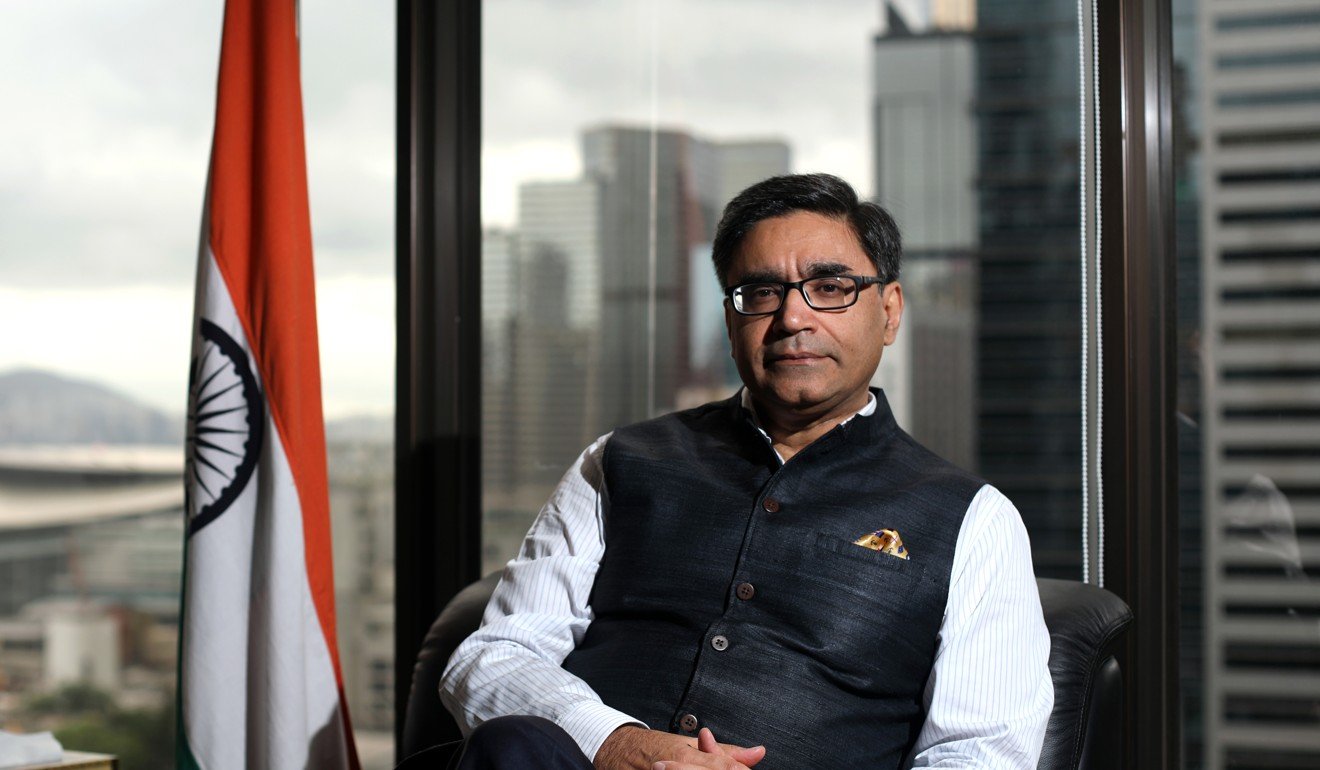
Vikram Misri, India’s ambassador to China, has also been pushing for increased economic cooperation and Chinese investment since he took charge in January, despite expressing concerns over New Delhi’s widening trade deficit with Beijing.

Vikram Misri, India’s ambassador to China, is looking for more economic cooperation between the two countries. Photo: Xiaomei Chen

The increased Chinese investment in Indian ventures has coincided with the Modi administration’s 2015 launch of the Startup India initiative, an umbrella scheme aimed at easing related activities through measures such as tax exemptions and simplified paperwork.

Industry pundits say active cooperation between Chinese investors and Indian entrepreneurs holds a multitude of benefits for both sides.

“The cooperation gives Chinese investors global scale and opportunity to diversify their investments,” said Neil Shah, partner and research director at the technology market research firm Counterpoint.

The cooperation gives Chinese investors global scale and opportunity to diversify their investmentsNeil Shah, Counterpoint

“For Indian start-ups, this gives cross-border learning, guidance from their global investors on dos and don’ts, tactical and long-term strategy, how to create value, run operations efficiently as well as expand beyond India.”
Nilaya Varma, partner and leader of markets enablement at KPMG India, said there was a cultural shift happening in the country where young Indians brimming with ideas wanted to pursue their dreams rather than work for someone else. This brought out the entrepreneurial spirit of this generation, he said.
“The knowledge, concepts, ideas and innovations of the small start-ups in India will have a global appeal. So it makes a lot of sense for Chinese big players to invest here,” he said. 
Source: SCMP
16/05/2019

Israel enhances tourism cooperation with China

SHANGHAI, May 16 (Xinhua) — Israel’s Ministry of Tourism of signed an agreement with China’s online travel operator Ctrip during an ongoing tourism exhibition (ITB China) to strengthen tourism in the Chinese market.

More cooperation will be carried out between the two sides, mainly in terms of itineraries, big data and marketing to attract Chinese travelers, particularly young people to Israel, according to the agreement.

Some 55,000 Chinese visited Israel during the first four months of 2019, marking a 70 percent increase year on year, according to the data released by the Ministry of Tourism of Israel.

In 2018, 105,000 Chinese visited Israel, which is over a 100 percent increase from 2015.

Israel has launched a series of measures to promote tourism in China, including developing travel products with diversified themes, increasing direct flights between the two countries and providing more convenient visa policies.

Israel has also upgraded Chinese cuisine in local restaurants and hotels, set up Chinese signs in its main sites and resorts, provided Chinese-language maps, and trained more Chinese-speaking guides.

ITB China, a professional exhibition focusing on travel and tourism industry, is annually held in Shanghai. This year, 800 exhibitors from 84 countries and regions attended the exhibition lasting from May 15 to 17.

Source: Xinhua

07/04/2019

China-EU tourism cooperation receives boost, official says

BRUSSELS, April 6 (Xinhua) — China-European Union (EU) relations in tourism get a boost as the 2018 EU-China Tourism Year has scored a success, an official recently said.

During the tourism year, China and the EU held more than 100 promotional activities. It “has been extremely successful,” said Eduardo Santander, executive director of the European Travel Commission (ETC).

There was a 5.1-percent year-on-year increase in Chinese arrivals in EU destinations in 2018, and among the top ones in terms of the volume of Chinese arrivals were Britain, Germany and France, according to the latest figures from the ETC and the air travel analysis agency ForwardKeys.

“We continue to see the benefits in 2019,” Santander added. “The growth in Chinese travellers has been solid, and the near future, judging by current bookings, will see the EU continuing to increase its share of this valuable market, not just to traditional destinations, but lesser-known and emerging ones as well.”

Chinese bookings to the EU for the first four months of 2019 are 16.9 percent ahead of where they were at the end of 2017, said the ETC, adding that this compares very favorably to the global trend, which is 9.3 percent ahead.

According to a recent report by China Tourism Academy and China’s online travel agency Ctrip, 70 percent of Chinese tourists in 2018 chose “package tours” when traveling in Europe, due to language, visa, culture and other factors.

Nevertheless, the proportion of independent and customized travel continues to rise. In 2018, the demand for customized European tours booked by the travel website increased by 127 percent over the past year, far higher than the growth rate of the overall market, said the report.

In addition, a number of new routes were launched between China and Europe in 2018, including direct flights from Fuzhou to Moscow, Changsha to London, Jinan to Paris, and Shenzhen to Brussels. In 2018, there were more than 600 flights a week between China and Europe, according to the report.

Ctrip in 2018 forecast that consumption of each tourist in Europe will exceed 25,000 yuan (about 3,721 U.S. dollars) in two years, with the total annual consumption to reach 150 billion yuan (about 22.3 billion dollars).

“Our findings confirm what a concerted effort to boost tourism can achieve. It also appears to have lasting effects, as we can see in the forward booking figures,” said Olivier Jager, CEO of ForwardKeys.

China’s domestic travel agencies are also deepening the cooperation with Europe. For example, the SkyScanner, Ctrip’s online travel search platform, set up its first overseas calling service center in Edinburgh in April 2018.

Source: Xinhua

Law of Unintended Consequences

continuously updated blog about China & India

ChiaHou's Book Reviews

continuously updated blog about China & India

What's wrong with the world; and its economy

continuously updated blog about China & India