Archive for ‘Osaka’

13/05/2019

China’s top diplomat Yang Jiechi to visit Japan ahead of possible Xi Jinping trip

  • Three-day visit comes ahead of Chinese President’s planned attendance at G20 summit in Osaka next month
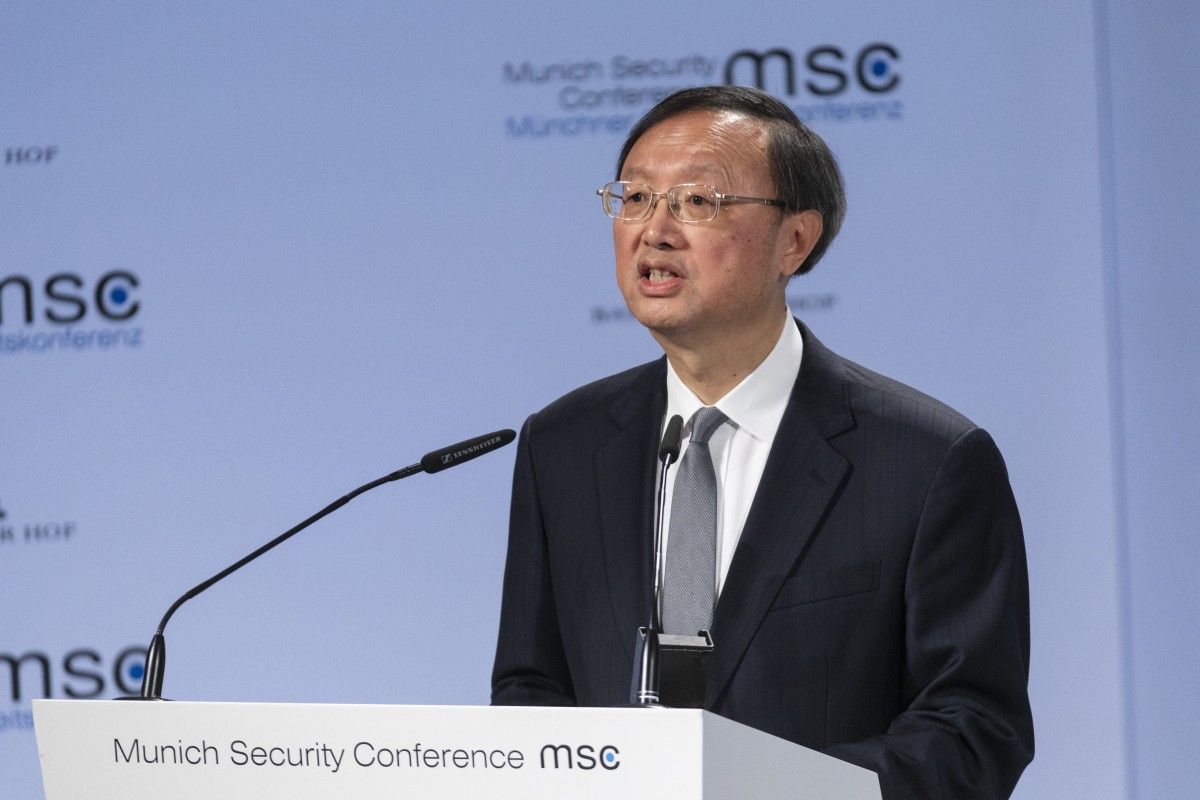
Yang Jiechi’s three-day visit to Japan starts on Thursday. Photo: Bloomberg
China’s top diplomat Yang Jiechi will visit Japan for three days from Thursday, the Chinese Foreign Ministry said on Monday.
The visit is likely to work out details of President Xi Jinping’s planned visit to Japan for this year’s summit of the Group of 20 major economies in Osaka in late June, sources familiar with bilateral relations had said last week.
Yang, a member of the Political Bureau of the Chinese Communist Party’s Central Committee, is likely to meet the country’s national security adviser Shotaro Yachi on Thursday and Prime Minister Shinzo Abe the following day, according to the sources.
Xi’s visit, if it goes ahead, would be his first since he came to power in 2013 and the first by a Chinese head of state since Hu Jintao in November 2010.
Yang and Yachi will also hold the sixth China-Japan high-level political dialogue.
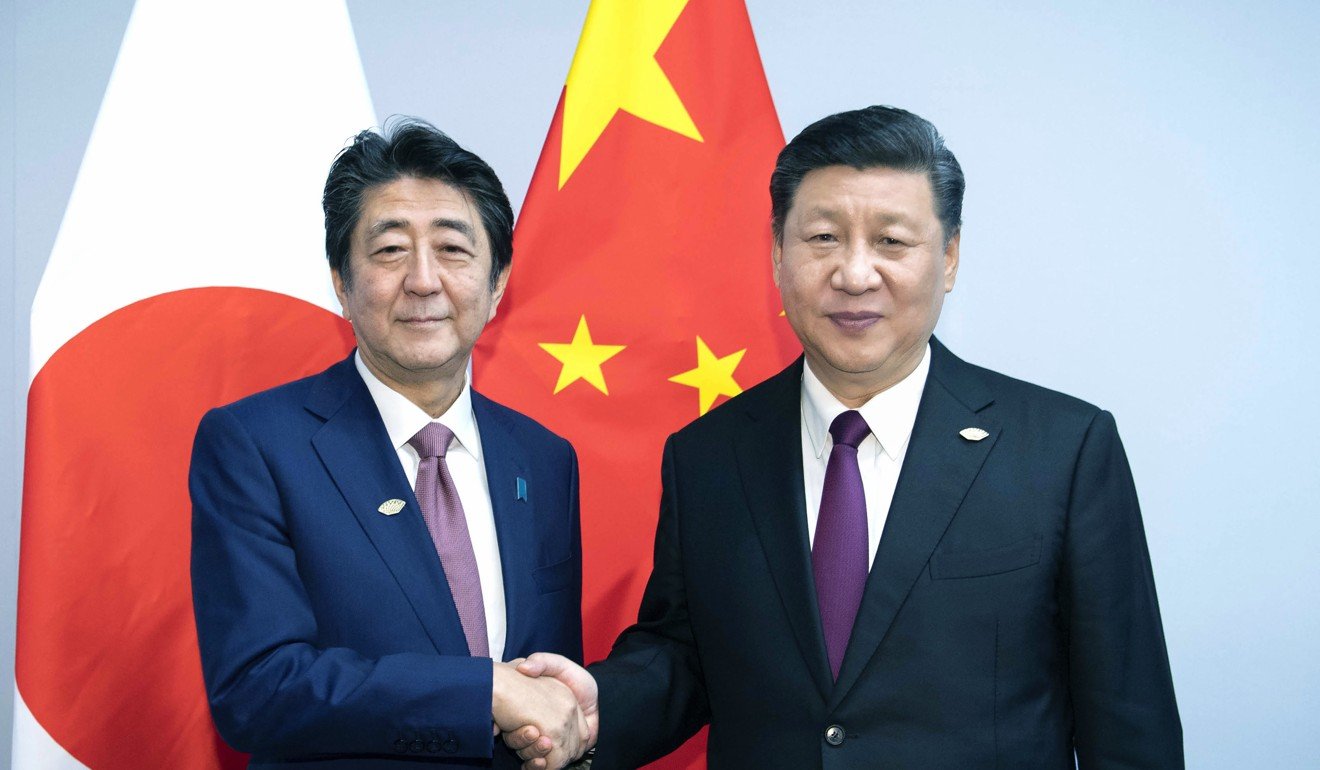
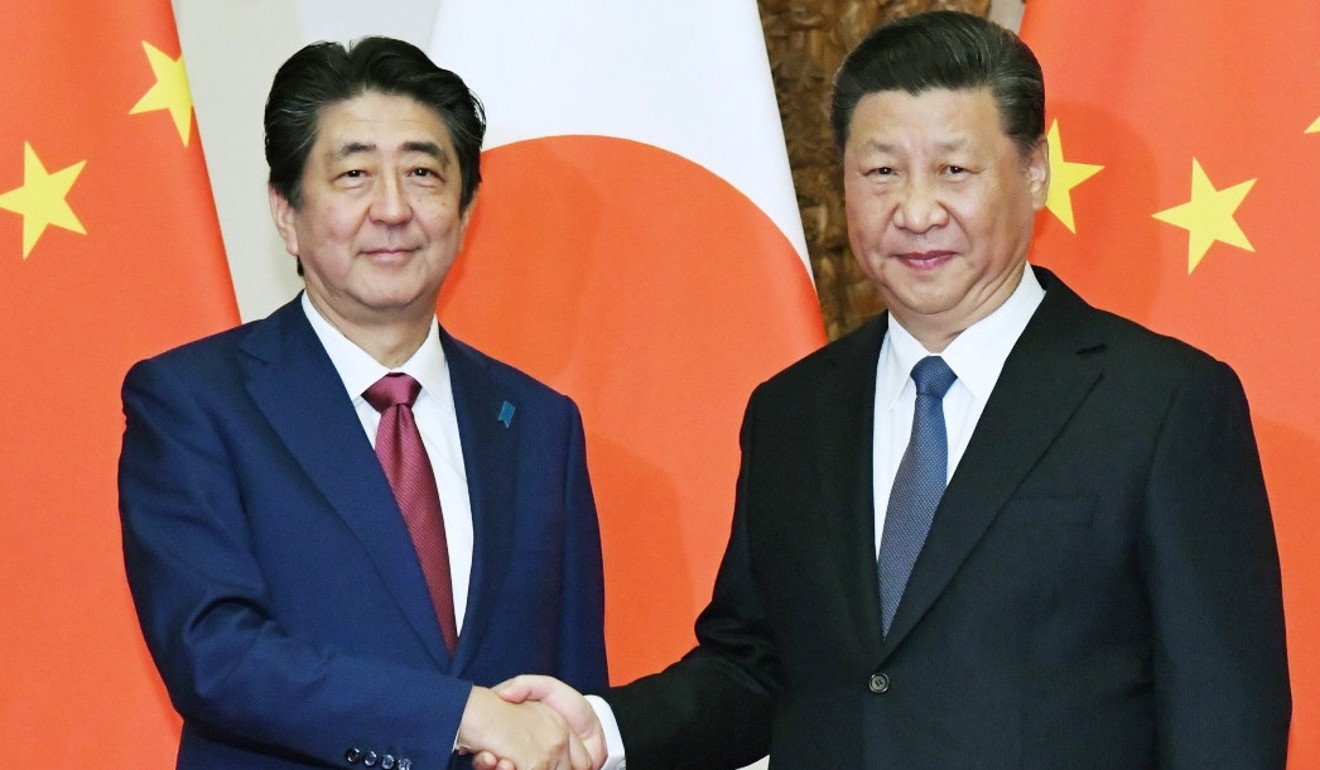
Chinese President Xi Jinping and Japanese Prime Minister Shinzo Abe pictured at the G20 summit in Argentina last year. Photo: AP

At this dialogue, which is an annual consultation plan agreed on by the two sides, the two sides will exchange views on China-Japan relations and issues of common concern, Chinese Foreign Ministry spokesperson Geng Shuang said at a regular press briefing.

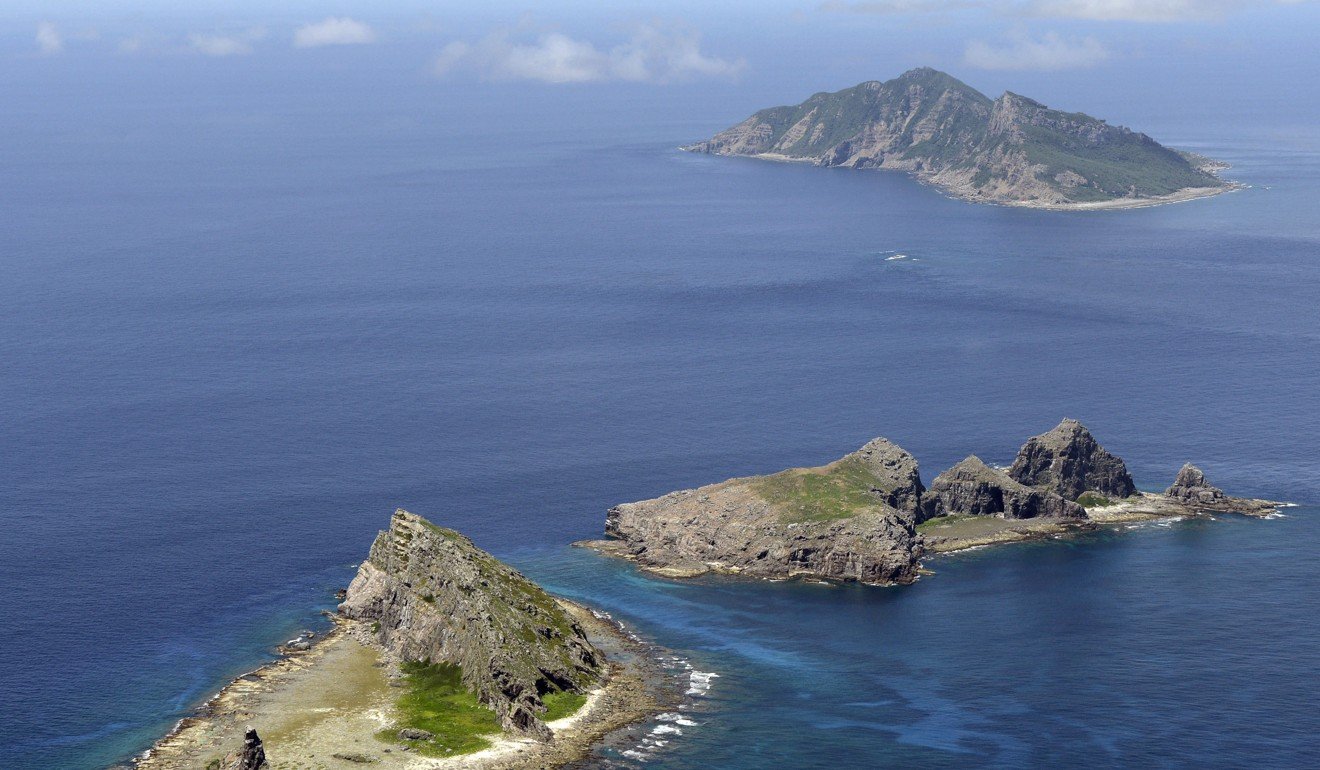
For years, the two neighbours have been mired in a territorial dispute over the Senkaku Islands in the East China Sea. The group of uninhabited islets, which are called Diaoyu in Chinese, are controlled by Japan but claimed by China.

But Sino-Japanese ties have been markedly improving recently, with 2018 – the 40th anniversary of the signing and entering into force of the bilateral Treaty of Peace and Friendship – serving as an incentive to forge better relations.

The dispute over the Senkaku – or Diaoyu – Islands is a long-standing barrier to better relations. Photo: Kyodo

In an interview with Japanese media, Chinese vice foreign minister Kong Xuanyou said the relationship between China and Japan has just returned to normal after going through ups and downs over the years, and both sides need to treasure the development.

“China is willing to work with Japan to further promote China-Japan relations,” he was quoted as saying in a Chinese foreign ministry transcript.

Kong also rejected suggestions that ties between China and Japan have become closer because of the China-US trade war – which pushed Beijing to seek support from its neighbours.

“Putting the relations between China, Japan and the US at opposite from each other is a zero-sum game and cold war mentality. China does not agree with it,” he said. “The friendly relationship among these two nations can be developed in parallel. This is welcomed by the region and the world”.

Source: SCMP

01/05/2019

Chinese President Xi Jinping’s overtures to Japan’s new emperor set tone as G20 summit in Osaka nears

  • Xi’s message talks of promoting ‘peaceful development’ as Reiwa era begins in Japan
  • Analysts see diplomacy as latest steps towards bringing an end to bitter rivalry
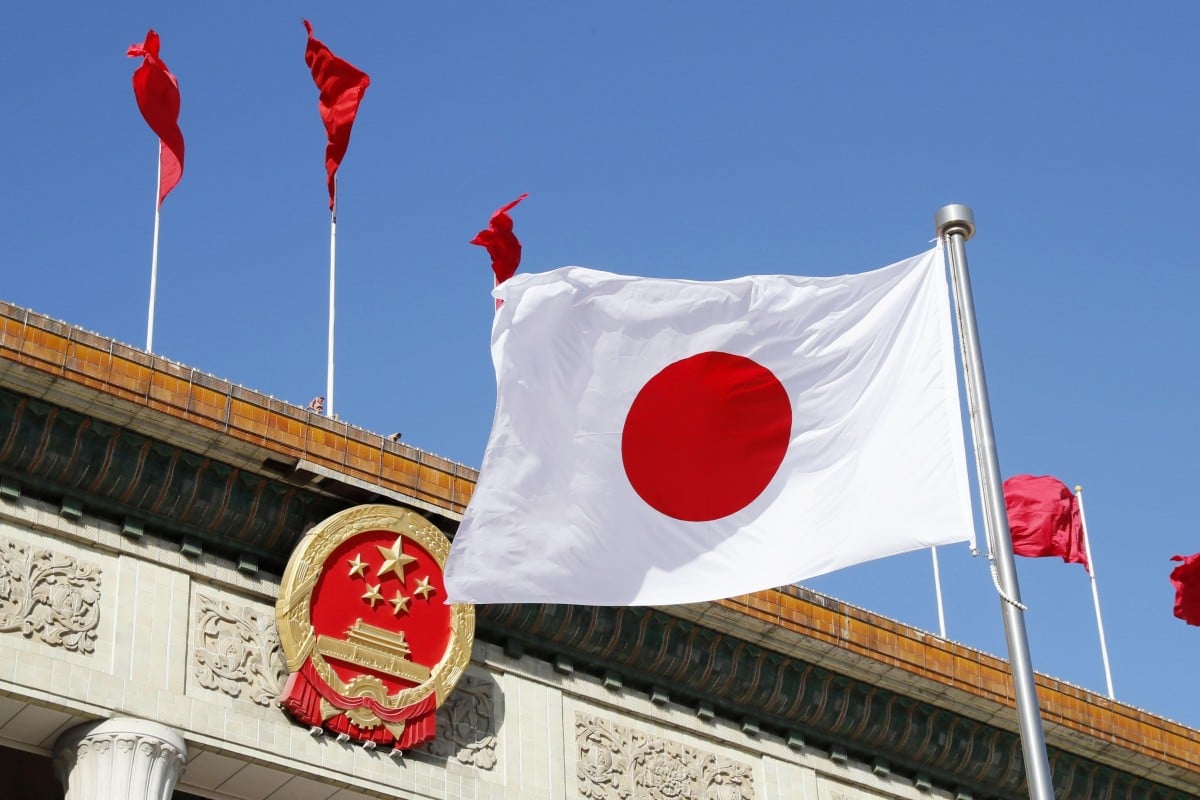
The Japanese flag flies at the Great Hall of the People in Beijing on October to mark the visit of Japanese Prime Minister Shinzo Abe to China. Photo: Kyodo
Chinese President Xi Jinping congratulated Emperor Naruhito on his ascent to the throne of Japan in an effort to strengthen China’s ties with its neighbour and competitor as Beijing’s trade dispute with the United States went on.
Xi sent greetings on Wednesday in which the president stressed the importance of relations between Beijing and Tokyo, China’s state-run Xinhua news agency reported.
The two countries should “work together to promote peaceful development and create a bright future for bilateral relations”, Xi said.
The president also sent a message to Akihito, now Japan’s emperor emeritus, and “expressed his greetings and wishes”, Xinhua said.
Akihito, 85, relinquished the throne to his son at midnight on Tuesday, bringing the Heisei era that spanned his 30-year reign to an end.

Naruhito took the Chrysanthemum Throne to begin the Reiwa era with a pledge to become a “symbol of unity”.

Xi’s message came as China and Japan tried to repair relations damaged by disputes over the East China Sea and the bitter legacy of the second world war.

Washington was locked in a trade tariff war with Beijing, and President Donald Trump’s America First policy had prompted fears about the US’ commitment to Asia at the highest levels of Japanese government. These have pushed Beijing and Tokyo closer and, in October, Japanese Prime Minister Shinzo Abe visited Beijing.

China set to appoint new ambassador to Japan, as Xi Jinping prepares for June visit

Xi was expected to attend a Group of 20 summit to be held in Osaka in June. A source said officials were considering whether Xi would dovetail a state visit to Japan with the summit.

Felix Wiebrecht, a China researcher at the Chinese University of Hong Kong, said in the international environment China was more willing to put a deep-seated rivalry aside and take Japan as a partner.

“Facing increasing tensions with the US, China is naturally turning towards other potential opportunities for cooperation,” Wiebrecht said.

“Xi is indeed very likely to visit Japan this year since it seems that both he and Abe are interested in strengthening their cooperation. A visit this year could be seen as a culmination in normalising their relationship and comes at the right time for China as its conflict with the US intensifies”.

Ryo Hinata-Yamaguchi, a visiting professor at Pusan National University in South Korea and an adjunct fellow at the Pacific Forum foreign policy research institute, said Xi’s message could be seen as Beijing’s expectation on Tokyo to keep relations positive.

“[But] this would raise questions in Japan, particularly regarding regional and bilateral security issues, as well as the trade issues between the US and China,” he said.

As Japan prepares to mark end of an era, a look back at how China started the system

“The big question is whether China – as well as the US – expects Japan to work as some kind of mediator between Beijing and Washington, causing dilemmas for the Japanese government”.

Some observers remarked on the possibility of sideline meeting between the two leaders at Osaka.

“Xi could meet with Abe [at G20] in a bilateral context too,” Zhang Baohui director of the Centre for Asian Pacific Studies at Lingnan University in Hong Kong, said.

He also felt that Xi may make a separate state visit to Japan, after the G20 meeting closed.

“Japan is reportedly interested in having a second and separate visit by Xi later in the year … The Japanese efforts are part of a broader attempt by the Abe administration to improve relations with China,” Zhang said.

“A separate state visit would cement the full recovery of Sino-Japanese relations since the 2012 Diaoyu Islands dispute,” Zhang said.

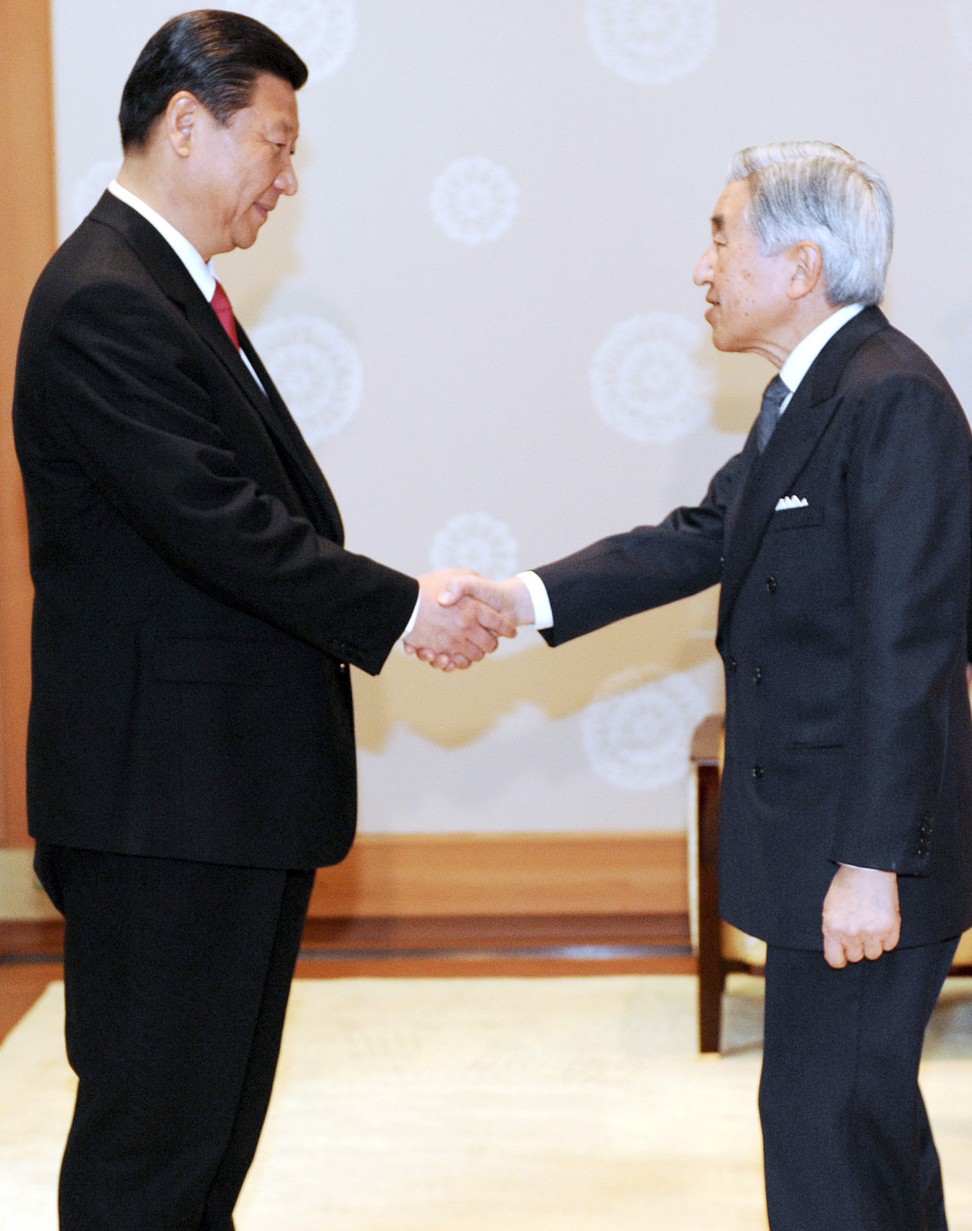
Xi Jinping, then Chinese Vice-President, meets Emperor Akihito in Tokyo in December 2009. Photo: Xinhua

Japan and China both claim the territorial rights over the Senkaku Islands – also known as the Diaoyu Islands – in the East China Sea.

In 2012, Japanese government purchased three of the disputed islands from private owners, which prompted large-scale protests in China. In the following year, Beijing set up the East China Sea Air Defense Identification Zone which included the islands, requiring all aircraft entering the zone to file a flight plan, further intensifying the conflict between the two countries.

Efforts this summer to intensify diplomacy “should bring greater stability to the East China Sea and may even lead to greater Sino-Japanese cooperation on regional issues like economic integration”, Zhang said.

“But Japan’s concern for a rising China and China’s expanding maritime activities in the East China Sea will continue,” Zhang added, noting that Japan has also expanded its military capabilities in disputed areas such as the South China Sea.

Chinese President Xi Jinping and Japanese Prime Minister Shinzo Abe are likely to continue their diplomacy during and after June’s G20 summit in Osaka. Photo: EPA
Law of Unintended Consequences

continuously updated blog about China & India

ChiaHou's Book Reviews

continuously updated blog about China & India

What's wrong with the world; and its economy

continuously updated blog about China & India