28/04/2020
BEIJING (Reuters) – China’s factory activity likely rose for a second straight month in April as more businesses re-opened from strict lockdowns implemented to contain the coronavirus outbreak, which has now paralysed the global economy.
The official manufacturing Purchasing Manager’s Index (PMI), due for release on Thursday, is forecast to fall to 51 in April, from 52 in March, according to the median forecast of 32 economists polled by Reuters. A reading above the 50-point mark indicates an expansion in activity.
While the forecast PMI would show a slight moderation in China’s factory activity growth, it would be a stark contrast to recent PMIs in other economies, which plummeted to previously unimaginable lows.
That global slump, caused by heavy government-ordered lockdowns, as well as the cautious resumption of business in China, suggests any recovery in the world’s second-largest economy is likely to be some way off.
“The recovery so far has been led by a bounce-back in production, however, the growth bottleneck has decisively shifted to the demand side, as global growth has weakened and consumption recovery has lagged amid continued social distancing,” Morgan Stanley said in a note.
“The expected slump in external demand has likely capped further recovery in industrial production.”
The latest official data showed 84% of mid-sized and small business had reopened as of April 15, compared with 71.7% on March 24.
Hobbled by the coronavirus, China’s economy shrank 6.8% in the first quarter from a year earlier, the first contraction since current quarterly records began.
That has left Chinese manufacturers with reduced export orders and a logistics logjam, as many exporters grapple with rising inventory, high costs and falling profits. Some have let workers go as part of the cost-cutting efforts.
A China-based brokerage Zhongtai Securities estimated that the country’s real unemployment rate, measured using international standards, could exceed 20%, equal to more than 70 million job losses and much higher than March’s official reading of 5.9%.
Sheng Laiyun, deputy head at the statistics bureau, said on Sunday migrant workers and college graduates are facing increasing pressures to secure jobs, while official jobless surveys show nearly 20% of employed workers not working in March.
Chinese authorities have rolled out more support to revive the economy. The People’s Bank of China earlier in April cut the amount of cash banks must hold as reserves and reduced the interest rate on lenders’ excess reserves.
Source: Reuters
Posted in 15, 20%, 24, 50-point, 70, above, according, activity, amid, amount, April, banks, began, Beijing, bottleneck, bounce-back, brokerage, Business, businesses, capped, cash, caused, cautious, China, China's, China's economy, China-based, China’s, chinese authorities, college graduates, compared, consumption, contain, continued, contraction, contrast, coronavirus, coronavirus outbreak, cost-cutting, costs, country’s, current, cut, decisively, demand, deputy head, due, earlier, ease, economies, Economists, economy, efforts, employed, equal to, estimated, exceed, excess, expanding, expansion, expected, export orders, exporters, external, facing, Factory, falling, first, first quarter, forecast, from, further, global economy, global growth, global slump, government-ordered, grapple, growth, heavy, high, Hobbled, hold, implemented, increasing, indicates, industrial, Interest rate, international, inventory, job losses, jobless, jobs, lagged, latest, led b, left, lenders,, let, likely, lockdowns, logistics, logjam, lows, manufacturers, Manufacturing, many, March, March’s, Mark, measured, median, mid-sized, migrant workers, million, moderation, month, more than, Morgan Stanley, much higher, nearly, note, off, Official, official data, other, paralysed, part, People’s Bank of China’s, plummeted, PMI, PMIs, polled, pressures, previously, production, profits, purchasing managers’ index (PMI), quarterly, rate, re-opened, reading, real, recent, records, recovery, reduced, release, reopened, reserves, resumption, Reuters, Reuters Poll, revive, rising, rolled out, rose, said, second, seen, shifted, show, showed, shrank, side, since, slight, slump, small business, Social distancing, some way, standards, stark, statistics bureau, straight, strict, suggests, Sunday, support, surveys, Thursday, to fall, to secure, Uncategorized, unemployment, unimaginable, using, weakened, while, workers, world’s second-largest economy, would, year |
Leave a Comment »
23/04/2020
- Test in Xiong’an, the new city being built south of Beijing, will focus on everyday goods and services for the first time
- American food outlets to be included in the digital currency tests, conducting small transactions with local firms
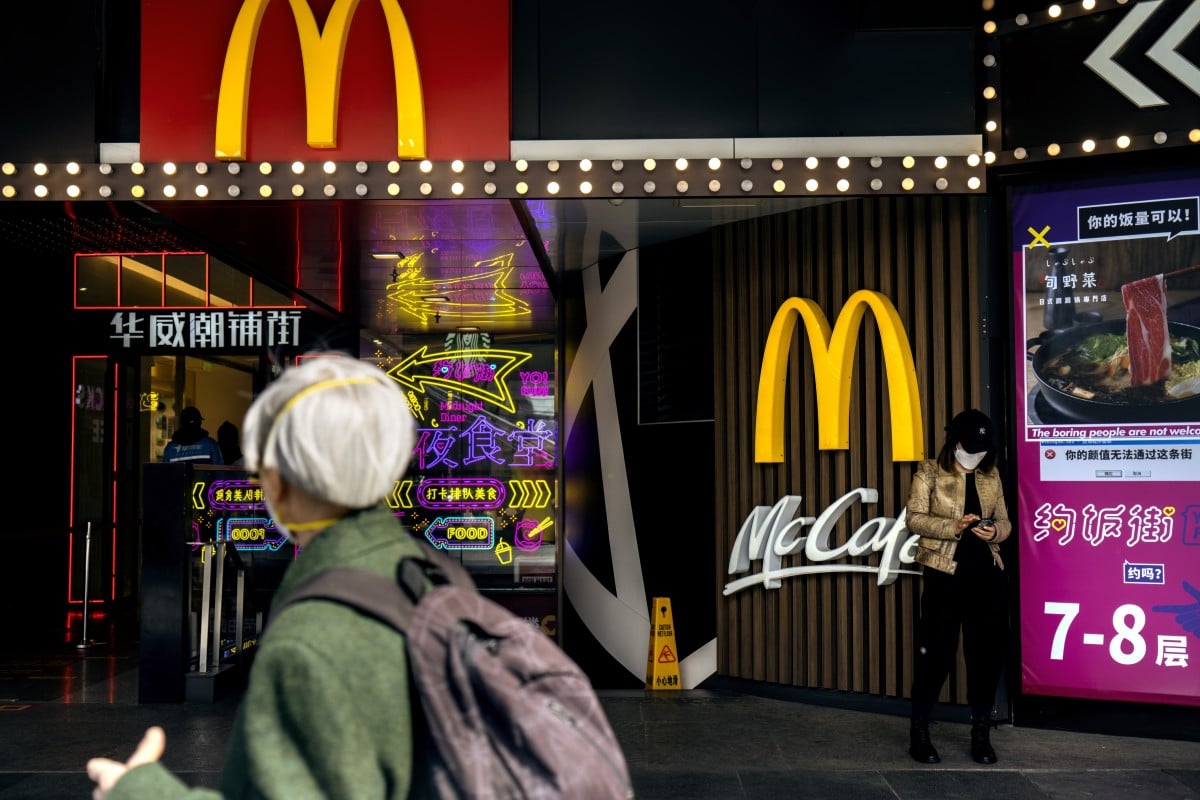
American chains Starbucks, McDonald’s and Subway were named on the People’s Bank of China’s list of firms that will test the digital currency in small transactions with 19 local businesses. Photo: Bloomberg
China’s central bank has accelerated the testing of its new sovereign digital currency and, for the first time, will include some foreign consumer brands in the programme.
American chains Starbucks, McDonald’s and Subway were named on the People’s Bank of China (PBOC)’s list of firms that will test the
digital currency in small transactions with 19 local businesses.
The global names will be joined by local hotels, convenience stores, a stuffed bun shop, a bakery, a bookstore and a gym, according to details revealed at a promotional event in the Xiong’an New Area, a city being built south of Beijing, news portal Sina.com reported.
The inclusion of businesses providing everyday goods and services marks an expansion of the PBOC’s testing. It follows a previous disclosure that last week in Suzhou the digital currency was used to pay half public sector workers’ travel subsidies for May.
Is China a currency manipulator?
Wednesday’s promotional event was organised by the local branch of the National Development and Reform Commission, the powerful planning agency, and attended by representatives of the Big Four state-owned banks and two of the country’s internet giants – Alibaba and Tencent.
China has not released a timetable for launching the digital yuan, but last week’s reports on new testing have fanned speculation that it could be imminent.
The tests were reportedly accelerated after Facebook launched its Libra project in June last year, an attempt to create a
global digital currency pegged to a basket of currencies and backed by global commercial giants.
The Libra Association, the consortium managing the project, announced changes last week in an attempt to win regulatory approval and pave the way for an official launch sometime later this year. The consortium said it would create multiple digital units tied to existing currencies such as the US dollar or the euro, rather than a single token based on a basket of currencies.
China’s official digital currency, known as Digital Currency Electronic Payment (DCEP), came into the public spotlight last week
when a screenshot of a test version of an app developed by the Agricultural Bank of China circulated online.
The digital currency app has several basic functions, similarly to other Chinese online payment platforms such as Alipay and WeChat Pay – the country’s two most popular online payment tools – allowing users to make and receive payments, and transfer money.
“It’s certain that the DCEP is now in its final testing stage and should be officially launched,” BlockVC, an investment firm, said in a research note.
The PBOC’s digital currency research institute confirmed last Friday that testing was being conducted in four cities: Shenzhen, Suzhou, Xiong’an and Chengdu. In addition, venues for the 2022 Winter Olympics in Beijing and Zhangjiakou will join the testing programme in the future.
What is the Hong Kong Dollar Peg?
The institute, which was inaugurated in 2017, said that the test versions and applications of the currency had not been finalised.
The project testing is based on two principles: the central bank issues the virtual money to commercial banks who then pass it on to consumers, and that is aimed at replacing cash in all transactions.
China is the first major economy to publicly announce plans for a sovereign digital currency, aiming to better control the rapid rise of digital payments worldwide.
The PBOC has, however, cracked down on the trading of other digital currencies and banned banks from accepting cryptocurrencies, which it views as a risk to financial stability.
Source: SCMP
Posted in 2022, accelerated, Agricultural Bank of China, Alibaba, American, among, bakery, Beijing, Big Four, bookstore, built, Chengdu, China’s, conducting, consortium, convenience stores, cryptocurrencies, digital currency, Digital Currency Electronic Payment (DCEP), everyday, Facebook, first time, focus, food outlets, Foreign firms, goods and services, Gym, included, internet giants, June, Libra, Libra Association, local firms, local hotels, May, McDonald’s, National Development and Reform Commission, New Area, new city, news portal, People’s Bank of China (PBOC)’s, People’s Bank of China’s, planning agency, public sector workers’, reported, set to, Shenzhen, Sina.com, small, South, sovereign, starbucks, stuffed bun shop, Subway, Suzhou, TENCENT, test, transactions, travel subsidies, Uncategorized, Winter Olympics, Xiongan, Zhangjiakou |
Leave a Comment »
07/04/2020
- Some 460,000 Chinese firms shut in the first quarter amid fallout from the coronavirus
- Registration of new firms between January and March fell 29 per cent from a year earlier
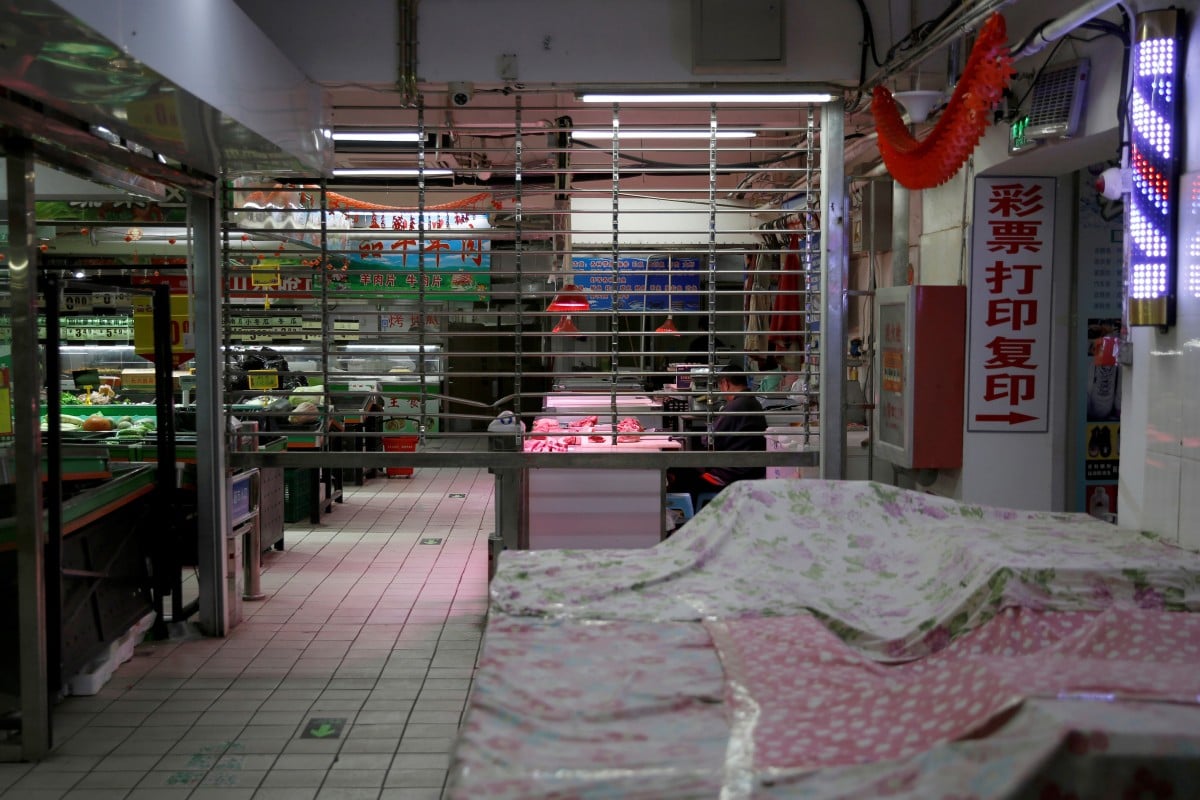
Many Chinese businesses are struggling from the economic fallout of the coronavirus. Photo: Reuters
More than 460,000 Chinese firms closed permanently in the first quarter as the coronavirus pandemic pummeled the world’s second largest economy, with more than half of them having operated for under three years, corporate registration data shows.
The closures comprised of businesses whose operating licenses had been revoked, as well as those who had terminated operations themselves, and included 26,000 in the export sector, according to Tianyancha, a commercial database that compiles public records.
At the same time, the pace of new firms being established slowed significantly. From January to March, around 3.2 million businesses were set up, a 29 per cent drop from a year earlier.
Most of these new companies were in traditional centres of economic power, such as Guangdong province in southern China, and close to half of them were in distribution or retail.
Coronavirus: Is the gig economy dead, and should the self-employed worry?
The number of business closures underlines the challenges facing China as it tries to revive its economy, which is at risk of a contraction in the first quarter for the first time since 1976.
“China has managed to get the Covid-19 outbreak largely under control and domestic supply disruptions have now mostly dissipated,” Yao Wei and Michelle Lam, economists from French bank Societe Generale, said in a recent note.
“However, there are signs of lasting damage to domestic demand, and on top of that the external shock resulting from widespread lockdowns in other major economies is arriving fast and furious.”
In
Dongguan, a once thriving industrial hub in the Pearl River Delta, rows of empty shops and closed factories are becoming a noticeable feature of the landscape as companies grapple with slumping international demand.
Coronavirus: Chinese companies cut salaries and staff in industries hit hardest by Covid-19
In March, a local export-oriented manufacturer of tote bags and toys in the city, Dongguan Fantastic Toy Company, collapsed after overseas orders dried up, leaving some workers with unpaid salaries, the local labour authority said last month. The government has ordered the factory’s landlord to pay the outstanding wages.
Chinese business owners who can no longer afford to maintain operations face a number of hurdles before they can walk away from a company.
If an insolvent firm wants to cancel its company registration, it needs to go through bankruptcy procedures or show a liquidation report confirming it had no unpaid debt or other obligations.
Once shareholders or creditors file for bankruptcy, it can take months for courts to accept the case, followed by a long process of verification, creditors’ meetings and asset sales, said Li Haifeng, a partner at Baker McKenzie FenXun.
A new phase of coronavirus blame game: what is the legacy of Covid-19 on global supply chains?
“I expect a surge shortly after the situation settles down. We know many enterprises are already on the verge of bankruptcy. It’s just that they don’t have to declare or file for bankruptcy immediately,” Li said, adding he had received many queries on the matter in recent months.
Given the costly nature of bankruptcy proceedings, particularly for small businesses
struggling with cash flow or without sufficient assets, the number of bankruptcy filings this year would not be high, said Zhu Bao, a Beijing-based lawyer.
Fears over a growing number of companies going bust also appears to have played some part in Chinese courts rejecting and delaying bankruptcy filings, according to lawyers and official documents.
Creditors who filed on behalf of suppliers that helped contain the coronavirus or companies on the brink of bankruptcy as a direct result of the pandemic usually had their claims knocked back, dozens of court documents filed over the past two months showed.
We know many enterprises are already on the verge of bankruptcy. It’s just that they don’t have to declare or file for bankruptcy immediately – Li Haifeng
The courts in these cases encouraged the creditors to reconcile with the struggling firms and ride out the difficulties.
This – along with disruptions to court proceedings due to virus lockdowns – helped slow the review of bankruptcies in Chinese courts to 1,770 in February and March, from 2,160 filings in January, according to the national enterprise bankruptcy information disclosure platform.
“The delay and rejection of taking corporate bankruptcy cases is certainly intended to keep the economy going. Too many bankruptcies cases do not do much to help economic recovery,” Zhu said.
China’s central leadership has maintained it wants to hit economic targets for this year, even as the country braces for a possible second wave virus outbreak.
The delay and rejection of taking corporate bankruptcy cases is certainly intended to keep the economy going – Zhu Bao
The odds of a first quarter economic contraction for China are growing, however, and economists are debating whether it still makes sense for Beijing to set a specific gross domestic product (GDP) growth target for 2020.
Ma Jun, an academic member of the People’s Bank of China’s monetary policy committee, is one prominent voice that has suggested Beijing drop a set target amid the uncertainty caused by the virus outbreak.
However, others like Yu Yongding, an economist from Chinese Academy of Social Sciences, said it was necessary to anchor the country’s economic expansion, though the government should be realistic about the goal, reported the Beijing-based financial media group Caixin.
Source: SCMP
Posted in Baker McKenzie FenXun, bankruptcy proceedings, batters, Caixin, Chinese Academy of Social Science, Chinese businesses, Chinese companies, Chinese courts, Chinese firms, close, closed factories, closed permanently, coronavirus, Coronavirus pandemic, cut salaries, Dongguan Fantastic Toy Company, economic fallout, economy, empty shops, fallout, gross domestic product (GDP), Guangdong, half a million, industrial hub, international demand, monetary policy committee, pandemic, Pearl River Delta, People’s Bank of China’s, registration, second largest economy, shut, slumping, Société Générale, staff, tote bags, toys, Uncategorized, virus outbreak, world’s |
Leave a Comment »



 CHINDIA ALERT: You'll be living in their world, very soon