Archive for ‘PetroChina’

04/10/2019

Large gas field discovered in Xinjiang

URUMQI, Oct. 3 (Xinhua) — The Tarim oilfield branch of PetroChina, China’s largest oil and gas producer, said Thursday that they discovered a huge gas field with an estimated reserve of 115.3 billion cubic meters in Xinjiang’s Tarim Basin.

Tian Jun, the company’s vice general manager, said they completed a successful test of a well in the gas field, with a daily output of 418,200 cubic meters of natural gas and 115.15 cubic meters of gas condensate.

The gas field has been estimated to contain 115.3 billion cubic meters of natural gas and 21.66 million tonnes of gas condensate, Tian said, adding that the field is expected to start production in November.

The Tarim oilfield provides natural gas to a total of 15 provincial-level regions in northern and eastern China via the country’s West-to-East gas pipelines.

Source: Xinhua

27/06/2019

China’s growing demand for clean energy and natural gas sparks contest in the Middle East

  • First Qatar, and now Saudi Arabia, are competing to dominate China’s fast-growing natural gas market, already the third largest in the world, as Beijing encourages the switch from coal to cleaner, greener energy
  • A PetroChina LNG tank at Rudong port in Nantong, Jiangsu province. China’s massive and rapidly growing appetite for natural gas is sparking off a scramble in the Middle East, as energy producers compete to become the biggest player in the market. Photo: Reuters
    A PetroChina LNG tank at Rudong port in Nantong, Jiangsu province. China’s massive and rapidly growing appetite for natural gas is sparking off a scramble in the Middle East, as energy producers compete to become the biggest player in the market. Photo: Reuters
    As more countries turn towards clean energy, the geoeconomic impact of natural gas as a fuel has become second only to that of oil. Over the past decade, the global demand for this carbon-free energy source has risen considerably and one major buyer is China.
    The third largest global market for natural gas, China has implemented government policies to replace the use of coal as fuel and millions of households are switching over to clean energy. Consequently, China’s market for gas expanded by a record 43 billion cubic metres last year to reach 280 billion cubic metres at the end of 2018.
    With the recent

    tax cuts in April

    , China’s gas consumption should continue to grow in the year ahead. As the demand spirals further, natural gas consumption in China is estimated to grow to around 620 billion cubic metres in 2030.

    Prioritising its energy security, Beijing last year approved a 22-year gas supply deal between QatarGas and PetroChina International Co. The agreement is PetroChina’s largest LNG supply deal by volume, and will provide 3.4 million tonnes of liquefied natural gas annually.
    With this deal, which QatarGas initiated with Total and ExxonMobil Corp as partners, Qatar achieved regional dominance and filled a vacuum left by major gas producer Iran, currently the target of US sanctions. Interestingly, Beijing has also unwittingly sparked off a competition between Qatar and Saudi Arabia, the kingpins of the Middle Eastern energy industry.
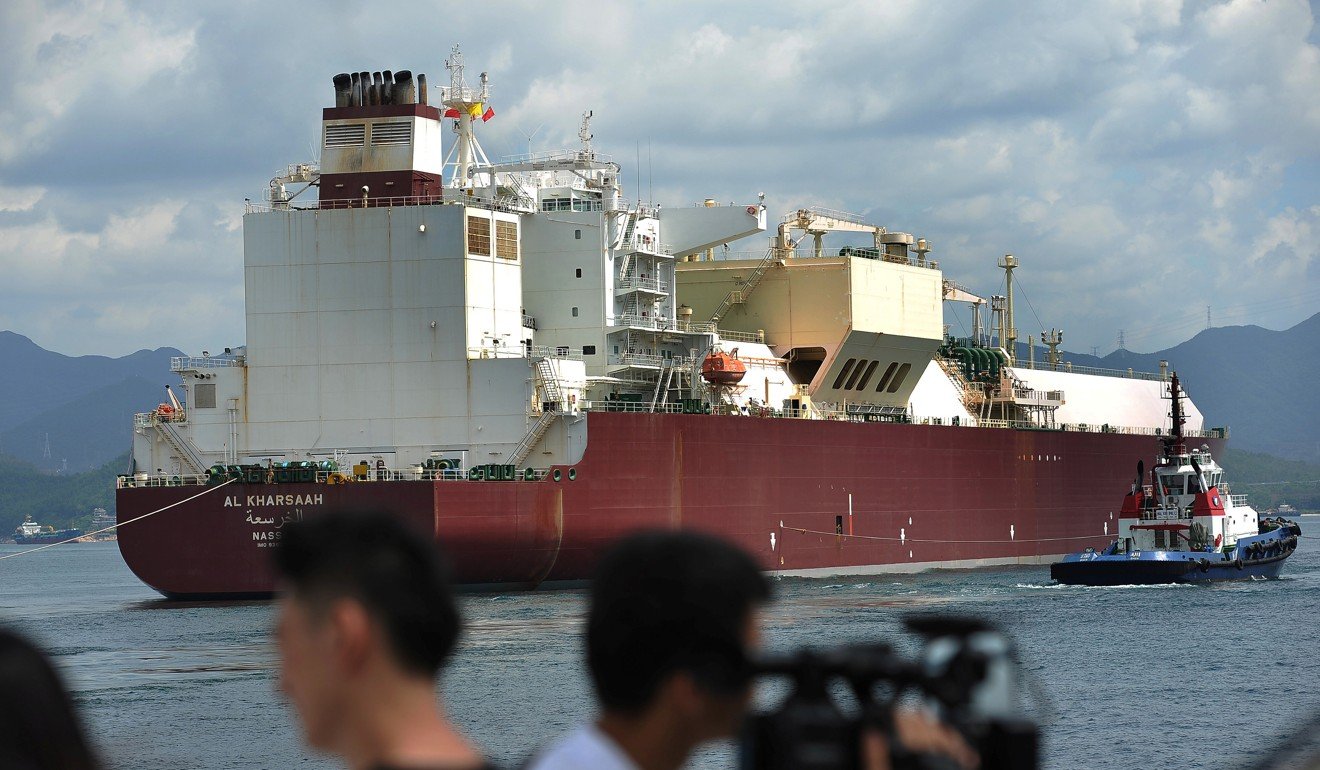
    A vessel carrying Qatar LNG looking to berth in Shenzhen, China last August. Qatar’s recent deal highlighted the massive and growing Chinese appetite for natural gas. Photo: Reuters
    A vessel carrying Qatar LNG looking to berth in Shenzhen, China last August. Qatar’s recent deal highlighted the massive and growing Chinese appetite for natural gas. Photo: Reuters
    China to become world’s top natural gas importer in 2019: report
    By exporting gas, as well as oil, Qatar sail unruffled through the

    economic and diplomatic boycott

    imposed by Saudi Arabia, the United Arab Emirates, Bahrain and Egypt in June 2017, over allegations that Qatar supports terrorism and is friendly with Iran, which the region sees as an enemy. Qatar denies this. Meantime, Qatar plans to further increase its gas output. To attract more buyers, it is offering attractive long-term supply contracts to other countries in the region.

    Inspired by the success of Qatar Gas, Saudi Arabia has stepped up its efforts to capture this new market. The Saudi state-owned oil giant Aramco plans to build an “energy bridge” between Saudi Arabia and China to better meet Beijing’s growing requirements for oil, gas, including LNG, said Aramco’s chief executive Amin Nasser at an industry event in Beijing in March.

    Aramco, already a major supplier of crude oil to China, would need to invest US$150 billion over the next decade to realise its plans to convert crude oil into chemicals, and eventually become a gas producer. “We need to help our stakeholders – including here in China and the wider Asia region – realise that oil and gas will remain vital to world energy for decades to come,” said Nasser.

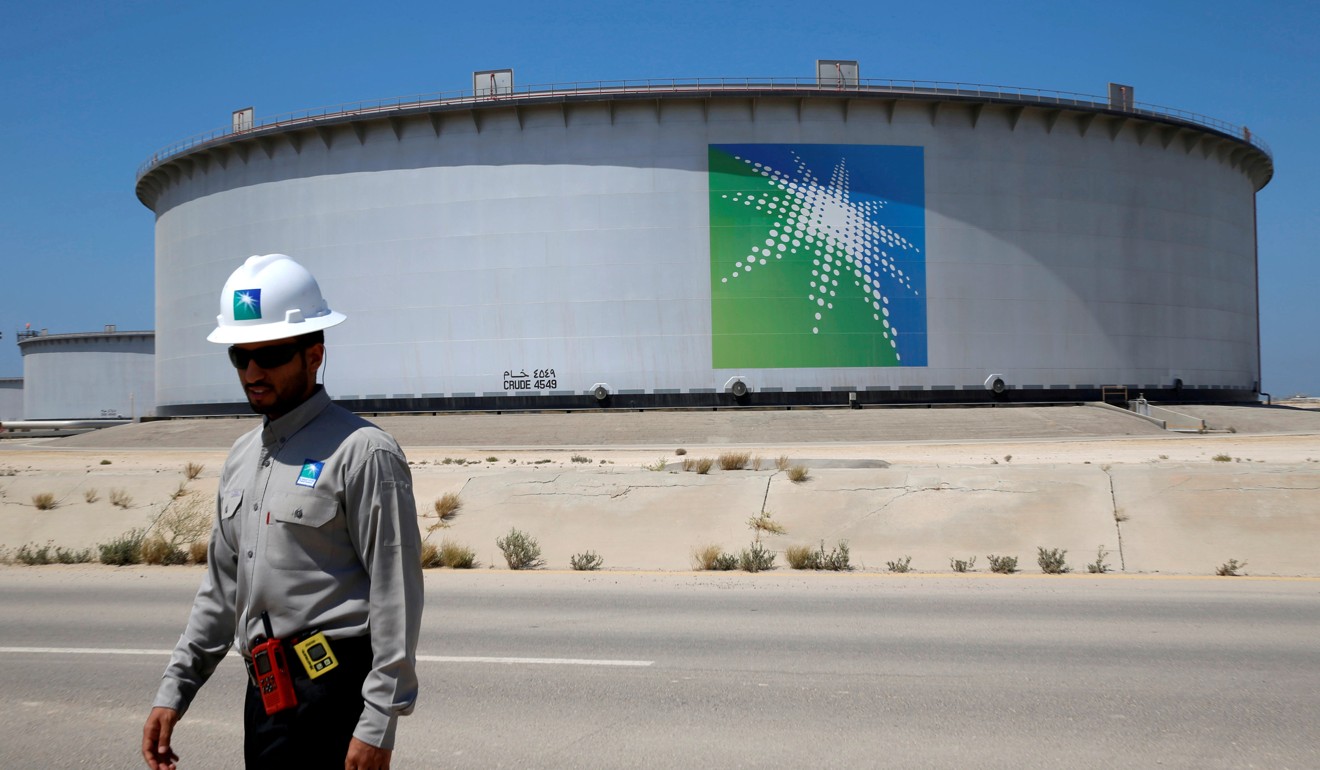
    An Aramco employee near an oil tank in Saudi Arabia. Aramco has grand ambitions to become a major producer of natural gas. Photo: Reuters
    An Aramco employee near an oil tank in Saudi Arabia. Aramco has grand ambitions to become a major producer of natural gas. Photo: Reuters

    The vision of Saudi Arabia as a major natural gas producer is in in line with Saudi Crown Prince Mohammed bin Salman’s economic plan Vision 2030. Riyadh has only Qatar to beat, with Iran on the back foot. Under sanctions pressure, Tehran, despite plans to increase gas exports, has clung on to just 1 per cent of the natural gas market, exporting 36.24 million cubic metres daily. Yet Iran was once part of the so-called regional gas troika along with Russia and Qatar, and is located at the cusp of several energy transit corridors. China, defying sanctions, continues to buy oil from Iran.

    In around five years, Riyadh could become a major gas exporter. Saudi Arabia has already replaced Iran as the main energy provider in countries such as China, Pakistan and India, and has made huge investments in energy projects in these countries.

    However, Qatar is also playing smart, sharply lowering its prices to clinch deals and make the right business connections. The competition for the growing natural gas market is a long game. The main possible setback for Riyadh is that its gas reserves do not match those in Qatar and Iran.

    Source: SCMP

08/04/2019

Shell enters China’s shale oil scene with joint study with Sinopec

SINGAPORE (Reuters) – Royal Dutch Shell has entered China’s shale oil sector, signing an agreement with state-owned Sinopec to study an East China block, part of the nation’s early efforts to unlock the potentially massive unconventional resource.

China is already in the initial stages of developing its vast shale gas resources, with production last year making up just 6 percent of total gas output after more than a decade of work. China’s shale oil is at an even more basic phase due to challenging geology and hefty development costs, experts said.

Shale oil makes up less than 1 percent of China’s crude output after several years of development, according to Angus Rodger, research director of Asia-Pacific upstream at Wood Mackenzie.

“China’s shale oil has very low permeability, which means very low per well output that makes the economics hard to work,” said an oil and gas official with China’s Ministry of Natural Resources (MNR). The official declined to be named because he’s not authorized to speak with the press.

Sinopec said on Monday it had agreed with Shell to study the Dongying trough of Shengli in China’s eastern province of Shandong, without giving further details.

Shell confirmed the joint study agreement, but did not offer further comment.

That makes Shell one of the few international oil and gas explorers venturing into China’s shale oil sector, and follows the Anglo-Dutch company’s exit from shale gas drilling in Sichuan province in the southwest after spending at least $1 billion (766.22 million pounds) and getting unsatisfactory results.

Unlike shale gas resources, which are highly concentrated in Sichuan, most of China’s shale oil is trapped in eastern regions such as the Songliao and Bohai Rim basins. North China’s Ordos and Junggar basins are also believed to hold large shale oil resources, the experts said.

The Dongying trough is part of the Bohai Rim basin, where top Chinese oil and gas group China National Petroleum Corp (CNPC) said in February that it is developing another small shale oil field with an annual output of 50,000 tonnes this year.

In 2013, U.S. energy firm Hess Corp signed a production-sharing contract with PetroChina, CNPC’s listed arm, to develop the Malang block of Santanghu basin in the northwest region of Xinjiang, China’s first shale oil deal.

Hess quit the block around late 2014 due to poorer-than-expected drilling prospects and as global oil prices plunged, said the MNR official.
“The understanding of geology, resource and the best recovery techniques (for shale oil) has only just begun,” said Woodmac’s Rodger.
Sinopec is hoping Shell’s expertise in shale oil exploration could help the Chinese state major turn around its fortunes at Shengli oilfield as the reserves at the giant conventional oilfield are depleting rapidly, said Rodger.
Source: Reuters
21/03/2019

PetroChina plans biggest capital expenditure in four years

BEIJING (Reuters) – PetroChina, Asia’s largest oil and gas producer, plans to boost its capital expenditure to a near record 300 billion yuan (£34.16 billion) in 2019, up 17 percent from last year, a company filing to the Hong Kong Stock Exchange showed.

The surge in spending came as PetroChina pledged to ramp up oil and gas production and reserves to answer Beijing’s call for greater energy security.

PetroChina’s fourth-quarter net earnings, though, fell 18 percent from the same period the previous year to 4.46 billion yuan, making it the worst quarterly performance since the third quarter of 2016, Reuters calculations showed.

Source: Reuters

Law of Unintended Consequences

continuously updated blog about China & India

ChiaHou's Book Reviews

continuously updated blog about China & India

What's wrong with the world; and its economy

continuously updated blog about China & India