Chindia Alert: You’ll be Living in their World Very Soon
aims to alert you to the threats and opportunities that China and India present. China and India require serious attention; case of ‘hidden dragon and crouching tiger’.
Without this attention, governments, businesses and, indeed, individuals may find themselves at a great disadvantage sooner rather than later.
The POSTs (front webpages) are mainly 'cuttings' from reliable sources, updated continuously.
The PAGEs (see Tabs, above) attempt to make the information more meaningful by putting some structure to the information we have researched and assembled since 2006.
BEIJING/SHANGHAI (Reuters) – China expects to import more soybeans and pork this year following the novel coronavirus outbreak and African swine fever, which has decimated its pig herds.
Soybean imports are forecast at 92.48 million tonnes this year, rising to 96.62 million tonnes in 2025 and 99.52 million tonnes in 2029, an official from the agriculture ministry told a video conference on the outlook for agriculture released on Monday.
Pork imports this year are seen rising to 2.8 million tonnes, a 32.7% increase from the previous year.
China is a key buyer and consumer of soybeans and pork globally, and typically imports millions of tonnes of soybeans per year to crush for meal to feed its livestock.
The African swine fever outbreak, however, had slashed China’s pig herd by over 40% last year, reducing supplies in the world’s biggest pork consumer.
Combined with the coronavirus outbreak, which hit the transport of pigs and delayed the restart of slaughtering plants, prices of China’s favourite meat rose to record levels in February.
China has been increasing pork imports in recent months to make up for the drop in domestic supply.
Despite the expected surge in imports, China’s 2020 pork consumption is forecast to fall to 42.06 million tonnes, down 5.6% year-on-year, hit by high prices and a fall in consumer demand due to the coronavirus outbreak, according to the agriculture ministry.
In line with the slowing consumption, China’s slaughtered pig herd this year will fall 7.8% year-on-year to 501.49 million heads. Pork output this year will also decline to 39.34 million tonnes from 2019, but will rebound to around 54 million tonnes in 2022.
In the longer term, however, pork imports are expected to gradually fall, the ministry forecast, while beef and mutton imports are set to increase in the next decade.
Meanwhile, China’s domestic soybean output is seen at 18.81 million tonnes in 2020, a 3.9% gain from the previous year, while crushing volumes were pegged at 85.98 million tonnes.
Soybean consumption will increase steadily and continue to rely mainly on imports in the next 10 years, said a ministry official.
The ministry also said China’s corn acreage and output are both set to increase in 2020, with production forecast to reach over 260 million tonnes this year, while annual rice output is expected to hold steady above 200 million tonnes per year in the next 10 years.
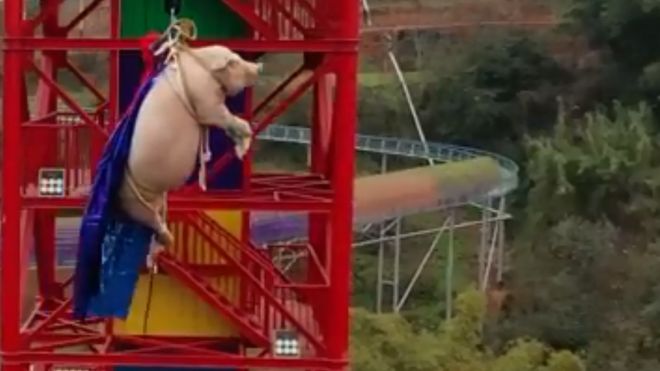
Image copyright THE PAPER/SCREENSHOTImage caption The stunt was held to mark the opening of the new bungee attraction
A Chinese theme park has triggered a wave of outrage on social media after it forced a pig to bungee jump off a 68-metre high tower.
Video footage shows the pig tied to a pole, carried by two men to the top of a tower before being pushed off.
The theme park located in Chongqing said the stunt was held to mark the opening of the new bungee attraction.
Local media outlets said the pig was sent to a slaughterhouse afterwards.
The stunt caused anger online – reflecting the growing importance of animal rights among China’s population.
The theme park has since put out a statement, saying that it accepted the “criticism” it had received.
“We sincerely accept netizens’ criticism and advice and apologise to the public,” it said. “We will improve [our] marketing of the tourist site, to provide tourists with better services.”
‘Vulgar marketing tactic’
The incident took place on 18 January at the Meixin Red Wine Town theme park in the sprawling Chinese municipality of Chongqing in south-western China.
The publicity event – which organisers called the golden pig bungee jump – was held to celebrate the opening of the theme park’s bungee attraction.
The pig, which according to local reports weighed 75kg (165 lbs), is seen being pushed off the tower with a purple cape tied around its shoulders. In one video of the incident, what sound like pig squeals can be heard.
What happens to the pig afterwards is not shown, though many local media reports say it was eventually sent to a slaughterhouse.
Animal cruelty is not punishable by law in China. However, there has been growing awareness of animal welfare issues in recent years.
Though a handful of people defended the incident on social media, saying it wasn’t any different to “killing a pig for food”, the majority of users condemned the company’s actions.
“This is a super vulgar marketing tactic,” said one commenter.
“Killing animals for consumption and treating them cruelly for entertainment are two different things,” another said. “There is no need to torture them like this.”
Animal protection organisation Peta condemned the incident, calling it “animal cruelty at its worst”.
“Pigs experience pain and fear in the same ways that we do, and this disgusting PR stunt should be illegal,” Jason Baker, Peta senior vice-president of international campaigns, told BBC News.
“The Chinese public’s angry response should be a wake-up call to China’s policy-makers to implement animal protection laws immediately.”
You may also be interested in
Media caption The extreme circus where performers risk their lives
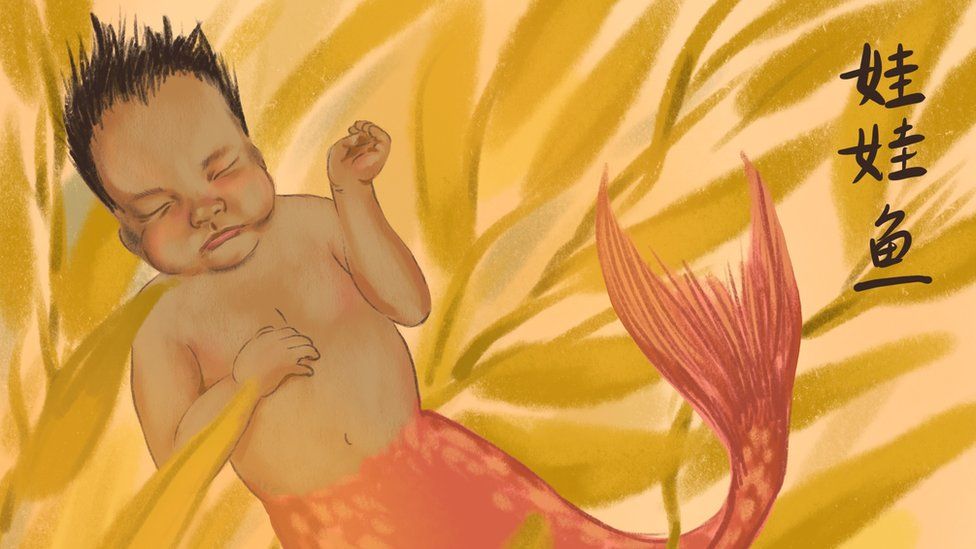
Image copyright FRANKIE HUANGImage caption The Giant salamander is ironically referred to as a “baby fish” in China
What do you get when you cross a baby with a fish?
It’s not the start of a dad joke, but one of a series of pictures drawn by Shanghai-based illustrator Frankie Huang.
Chinese is already one of the most pictorial languages in the world, but she’s taking it to the next level – by literally turning words into pictures. Her series, Putong Animals, re-imagines animals according to what they’re called in Mandarin Chinese – or Putonghua – the official language of China.
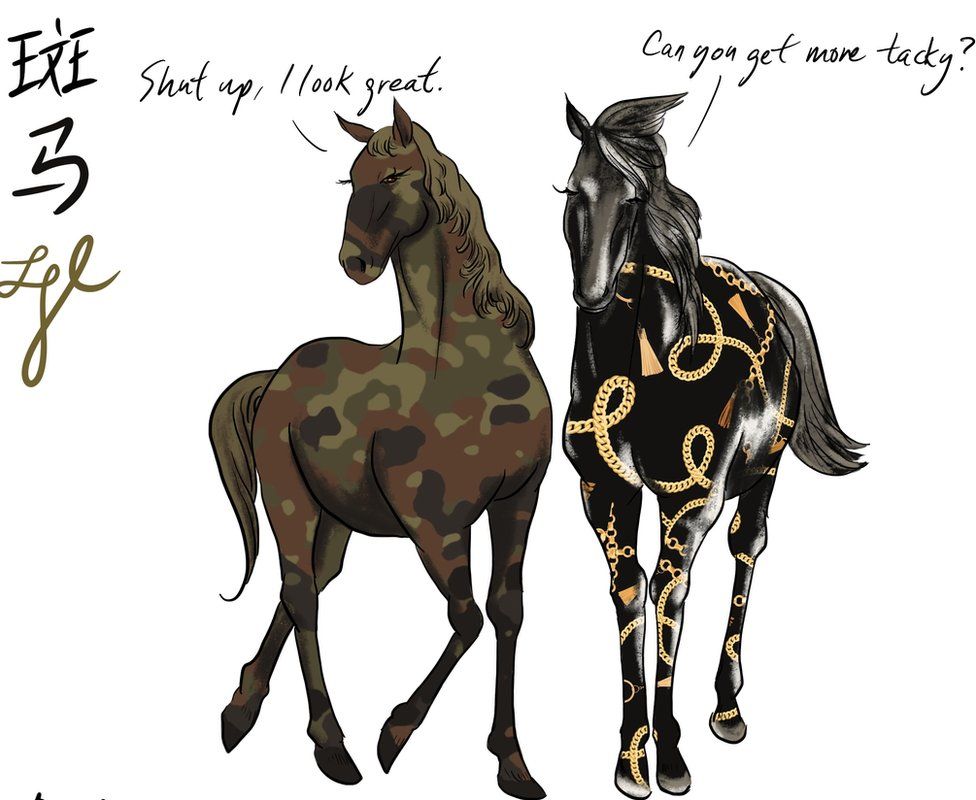
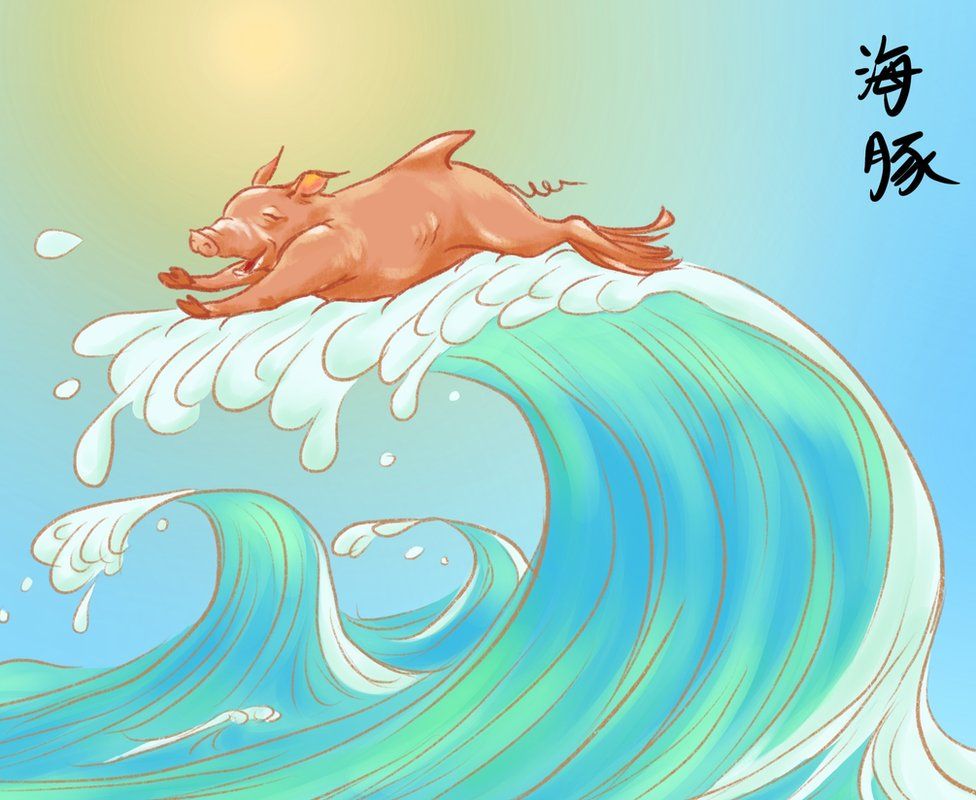
In Mandarin a zebra, for example, is literally a “patterned horse”. The dolphin has unflatteringly been turned into a “sea pig”.
Image copyright FRANKIE HUANGImage caption The Zebra is referred to literally as a “patterned horse” in Mandarin
Frankie says she came up with the idea for the series after seeing people on Twitter discussing how some animals had “really funny names when you translate them literally”.
“I realised no-one had done a series of this and I thought to myself ‘I suppose it’s time then’,” she told the BBC. “I wanted to create something that was not just pretty but also interesting.”
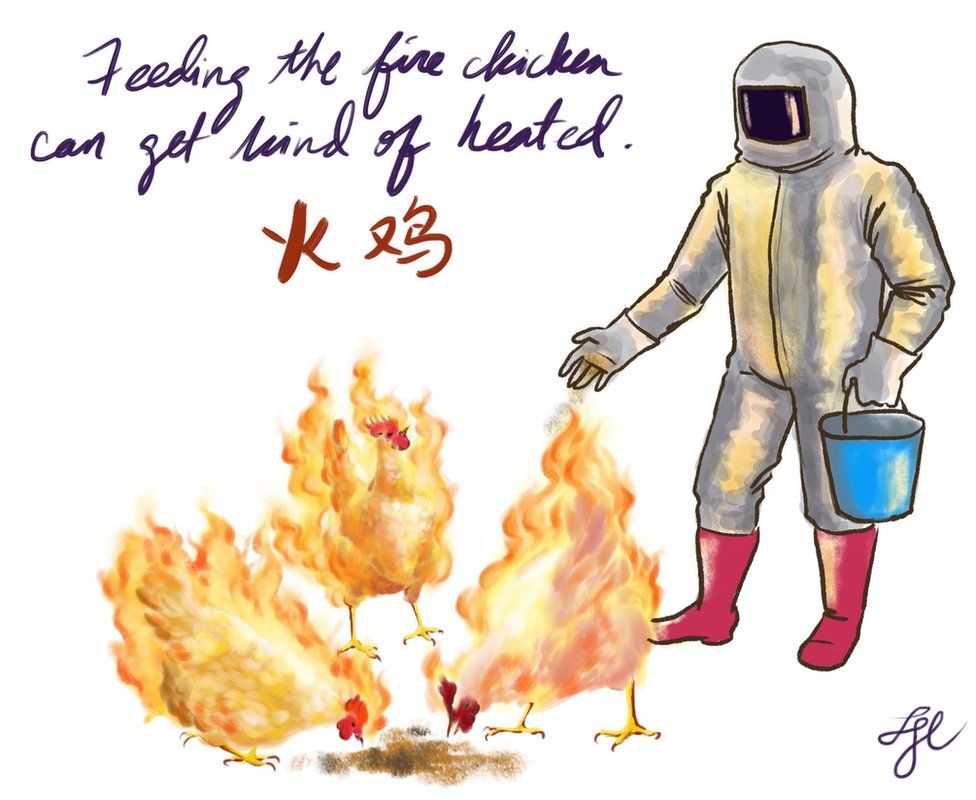
Image copyright FRANKIE HUANGImage caption Turkeys are “fire chickens” in Mandarin
“The turkey – or fire chicken – was the first one I drew. It was just a bunch of chickens on fire and a guy in a hazmat suit feeding them,” she said. “You can see that my technique actually developed as I got more into it.”
Frankie was born in the Chinese capital, Beijing, but grew up in the US, exposing her to both English and Mandarin from a young age.
“I’m both an outsider and insider [to the Chinese language] because of my upbringing, I think sometimes you need to be an outsider in order to really appreciate something,” said the illustrator.
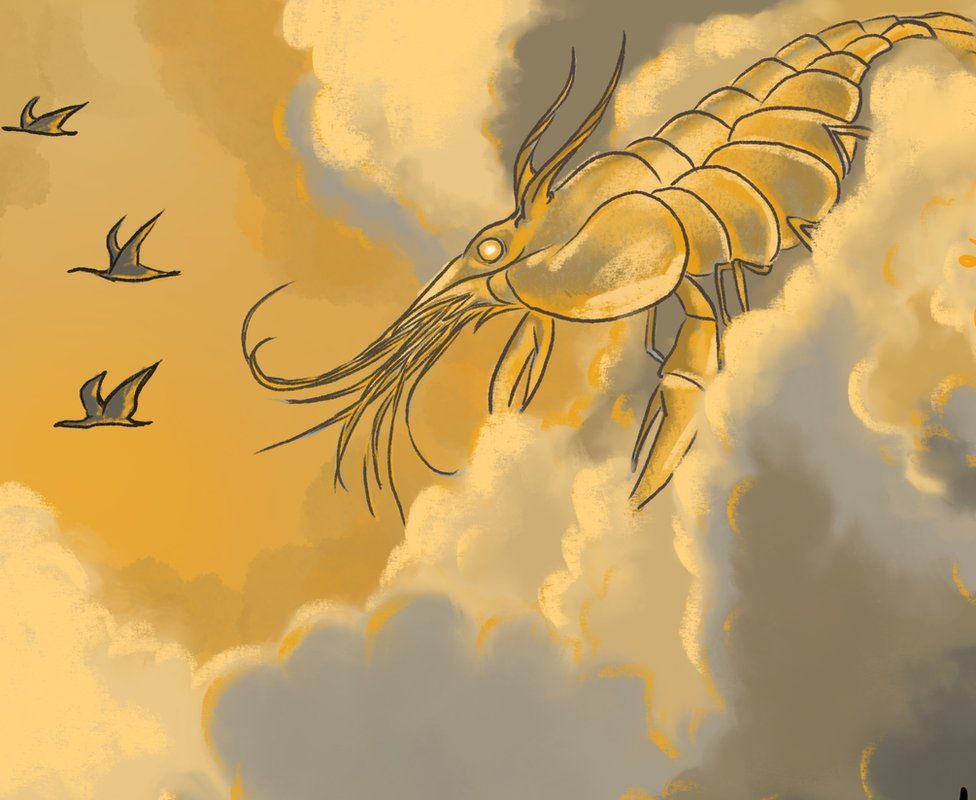
Image copyright FRANKIE HUANGImage caption The celestial lobster is known as a “dragon prawn”
Another one of Frankie’s favourite illustrations is the “dragon prawn” – or lobster.
“I wanted to make it look really majestic and godlike,” said Frankie. “Someone commented that it’s a celestial crustacean, I thought that was such a nice name for it.”
Image copyright FRANKIE HUANGImage caption While the dolphin is given the less than graceful name of “sea pig”
It takes Frankie around three hours to produce one illustration, from conceptualisation to sketching it out and eventually colouring it in.
She has for now completed her series on Putong Animals, but she is looking into turning the animals into characters of their own.
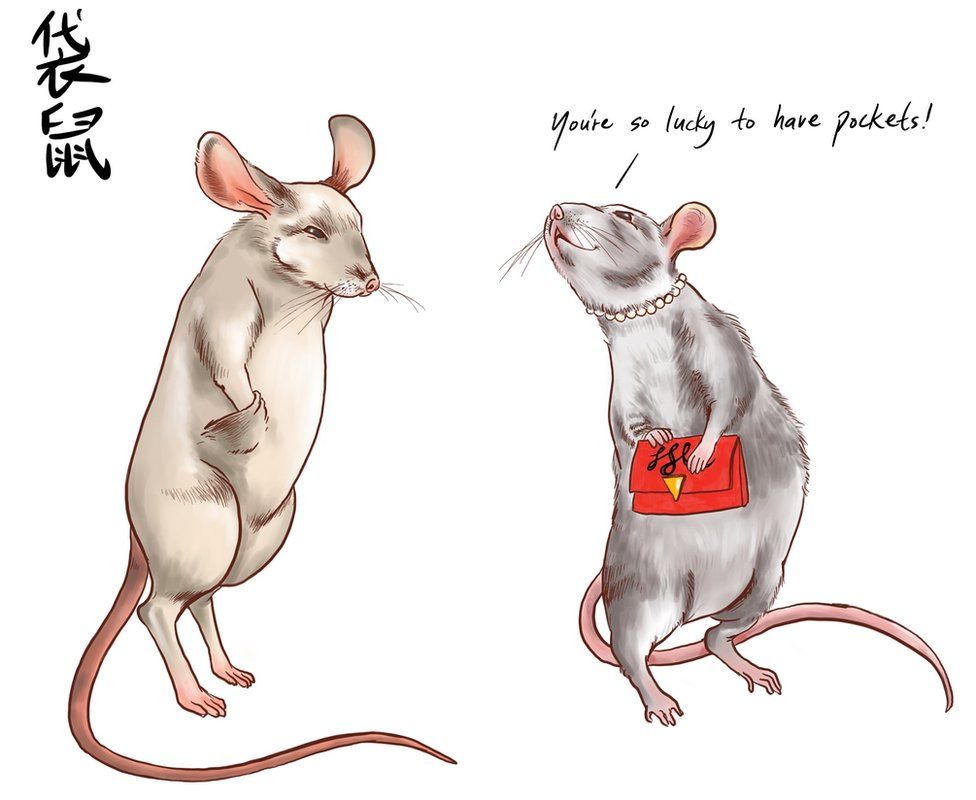
Image copyright FRANKIE HUANGImage caption Kangaroos are known as “pocket mice”, though they are far from tiny
“Even as far back as ancient Greece with Aesop’s fables, people were telling stories through animals,” she said.
“I actually started to write a story about the lives of the fire chicken. They’re on a planet where people use them in their lives, [like] putting them under their beds during winter to keep them warm. I want to eventually give them more personality.”
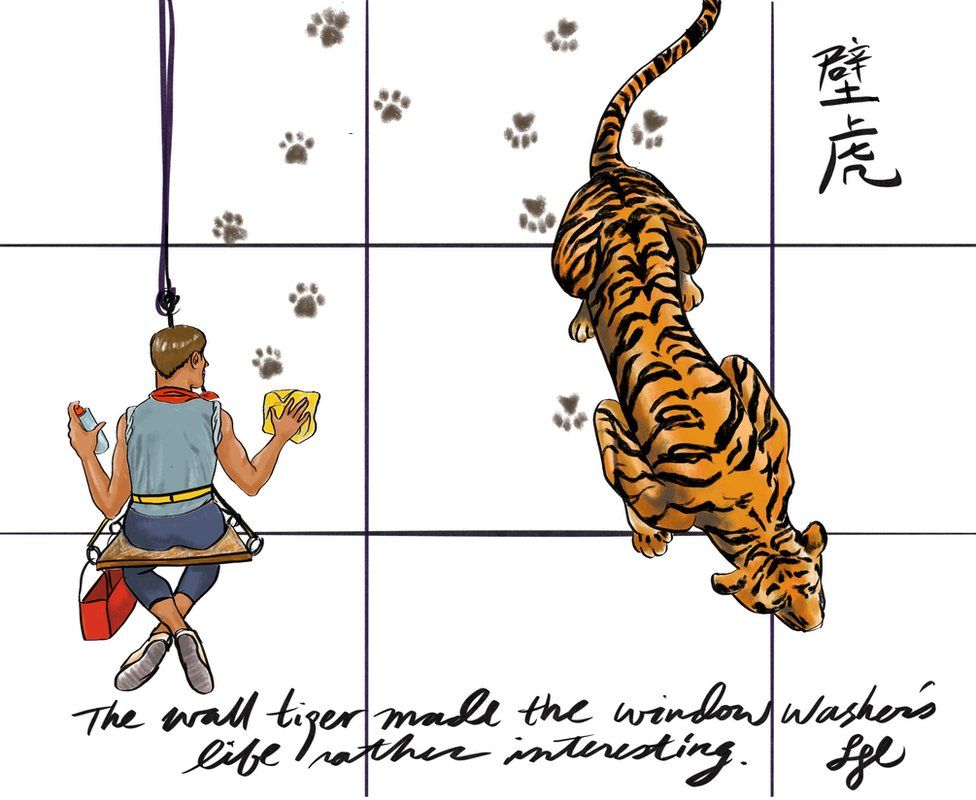
Image copyright FRANKIE HUANGImage caption The tiny gecko on the other hand, has earned the imposing name of “Wall Tiger”
But it’s not just animals that she illustrates – she’s also delved into Chinese phrases.
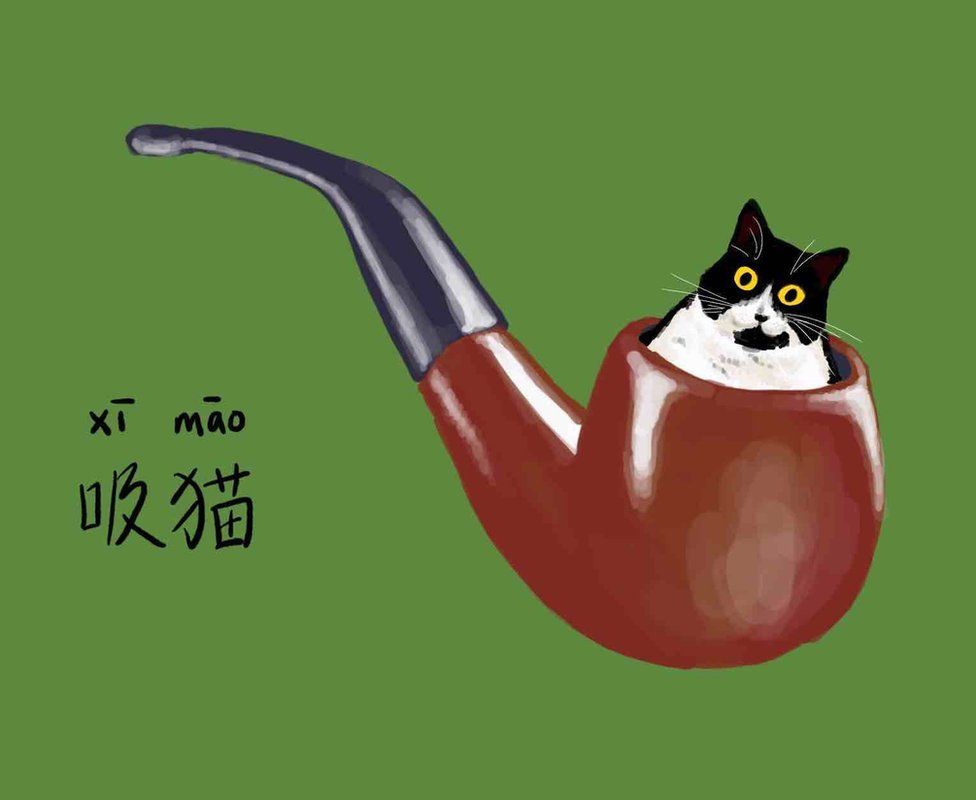
This picture showing a cat in a pipe is meant to illustrate the Chinese phrase “xi mao”, which literally translated, means to “inhale cat”.
Image copyright FRANKIE HUANGImage caption If someone is addicted to cats, they are “inhaling cat”
It’s a phrase that’s spread across young people in China, to describe someone who is a cat addict.
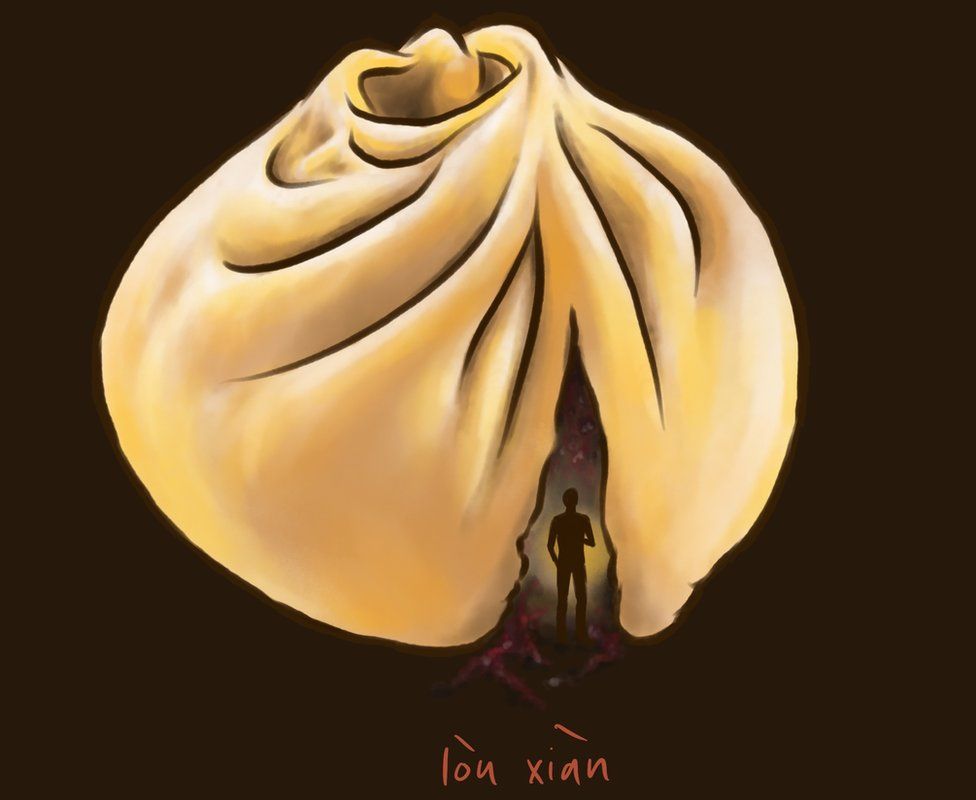
Another one she’s done shows stuffing spilling out of a dumpling – a literal translation of the Chinese phrase “lou xian”, or “for stuffing to leak out”. The phrase refers to a situation where truth is revealed.
“If you look closer, you’ll actually see some tentacles coming out of the dumpling, because I drew it after I watched Stranger Things 3,” Frankie laughingly admits.
Image copyright FRANKIE HUANGImage caption And the stuffing is out on this one
But she’s of course not the first person to have put a clever play on Chinese words – and sometimes others have done so for more political reasons.
Social media in China is heavily censored, and it’s not uncommon for social media companies in China to remove “sensitive” content. This was one of the obstacles that #MeToo – the movement that encouraged people to openly talk about their experiences of sexual harassment – faced in China.
The phrase #MeToo was heavily censored but to get around this, many instead began posting the Chinese words “rice bunny”, which is pronounced “mi tu” in Mandarin.
“One of the things that made me look more closer into pulling together and dissecting the Chinese language was the [phrase] mi tu,” said Frankie.
“The censorship forces [Chinese people] to constantly stay ahead of the government so they come up with these wonderful creations, sort of like how diamonds are created under enormous pressure. All these gems of wit are found on the Chinese internet.”
This is part of what Frankie hopes her illustrations will do – help people to recognise “humour and wit of the Chinese culture”.
“I want to hopefully reach more people to help them be interested in the Chinese language and culture,” she said.
“In this day and age, China is in the press constantly. [I want to show] there’s so much more to China than just the politics.
“I want to be independent of all these things and show people that you can love and enjoy the culture without all the politics. The politics are new, but this [language] is not.”
Policy statement outlines broad goals including plan to revive domestic soybean production
A farmer picks tea leaves in Mianxian county, Shaanxi province. Beijing’s policy document reiterated a strategy to improve income levels and living standards in China’s countryside. Photo: Xinhua
China will deepen reforms of its agriculture sector to promote its rural economy, the government said in its first policy statement of 2019, as it seeks to bolster growth and offset trade challenges.
Beijing’s statement, released late on Tuesday, comes after the world’s second-largest economy saw its weakest growth in 28 years in 2018 and remains entangled in a trade war with Washington.
“Under the complicated situation of increasing downward pressure on the economy and profound changes in the external environment, it is of special importance to do a good job in agriculture and rural areas,” the government said in the document issued by the State Council and published by official news agency Xinhua.
The biggest winners in Shenzhen, ‘China’s Silicon Valley’? Pig and chicken farmers
Known as the “No 1 document”, this year’s policy reiterated a rural rejuvenation strategy first laid out in 2017 to improve income levels and living standards in China’s countryside.
It also highlighted a plan to boost domestic soybean production but did not offer further details.
Chinese President Xi Jinping visits a farm in northeastern Heilongjiang province during an inspection tour in September. Photo: Xinhua via AP
Industry analysts said on Wednesday they were eagerly awaiting further details to assess the impact of the plan, which had already been flagged by Agriculture Minister Han Changfu earlier this month.
China has been overhauling its crop structure in recent years, reducing support for corn after stocks ballooned, and seeking to promote more planting of oilseeds that it mostly imports.
That goal has become increasingly important since a trade war with the United States, which led China to slap tariffs on soybean imports, tightening domestic supplies.
Han has previously urged authorities in China’s northeast to support soybean production through subsidies and called for rotating of soybeans with other crops including corn and wheat.
Beijing also aims to support the production of rapeseed in the Yangtze River Basin, according to the document.
The garlic case that foreshadowed the US-China trade war
As in previous years, it also called for stable grain production, but also an increase in imports of agriculture products where there are shortages in the domestic market.
“The focus now is on retaining production capacity, in the form of high quality farmland, and using the international market to make up production shortfalls,” said Even Rogers Pay, an agriculture analyst at China Policy, a Beijing-based consultancy.
The reference to imports is positive for trade partners like the United States, said Cherry Zhang, analyst with Shanghai JC Intelligence, who said it raised the likelihood that China will buy more US agriculture products.
China’s DJI turns its eye to enterprise uses like agriculture after conquering global commercial drone market
Shares of Chinese livestock companies, along with pig and poultry breeders, rose on Wednesday following the release of the policy paper.
The document also outlines plans to accelerate development of a new farm subsidy policy system and further crack down on the smuggling of agriculture products.
Additionally, the government said it plans to strengthen the monitoring and control of African swine fever outbreaks, after more than 100 cases were reported in China since August.
Other plans include continuing to tackle rural pollution and promoting recycling of agricultural waste such as manure and agricultural film.
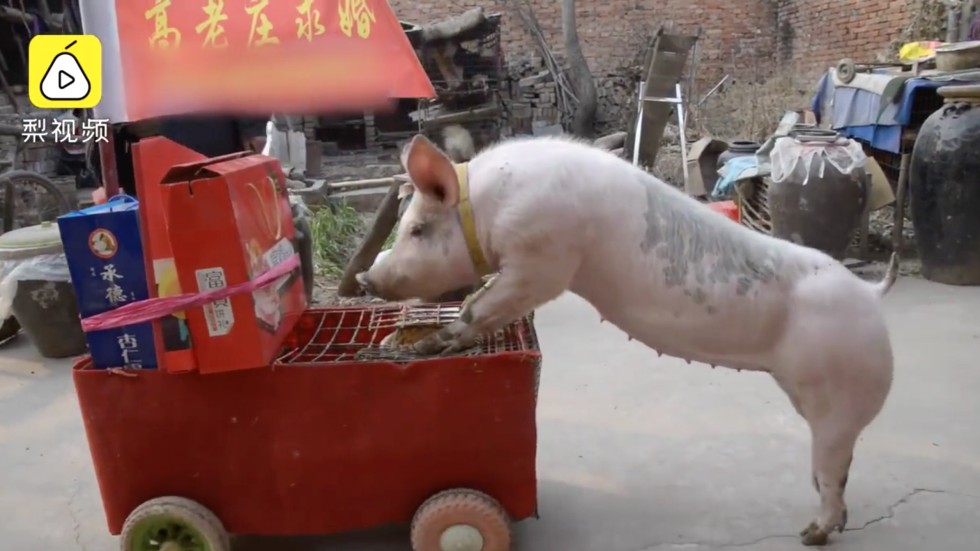
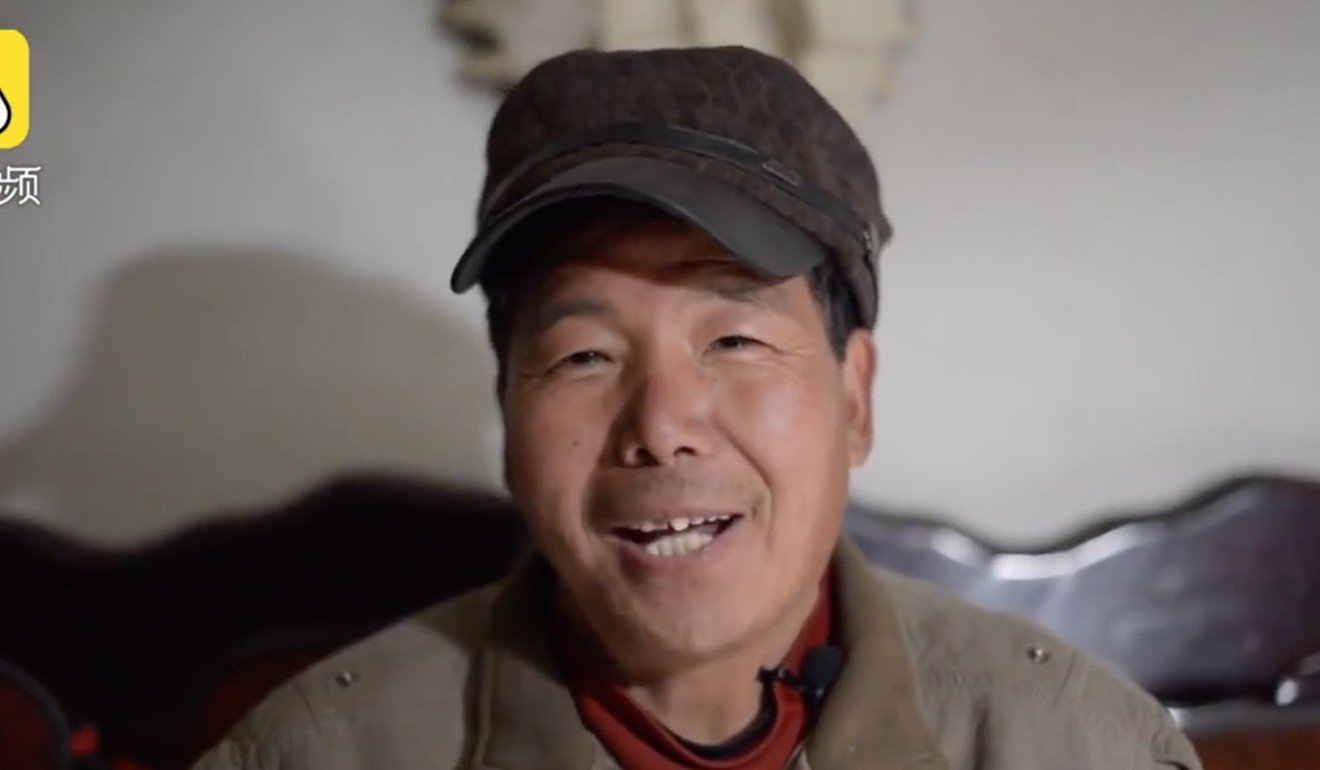
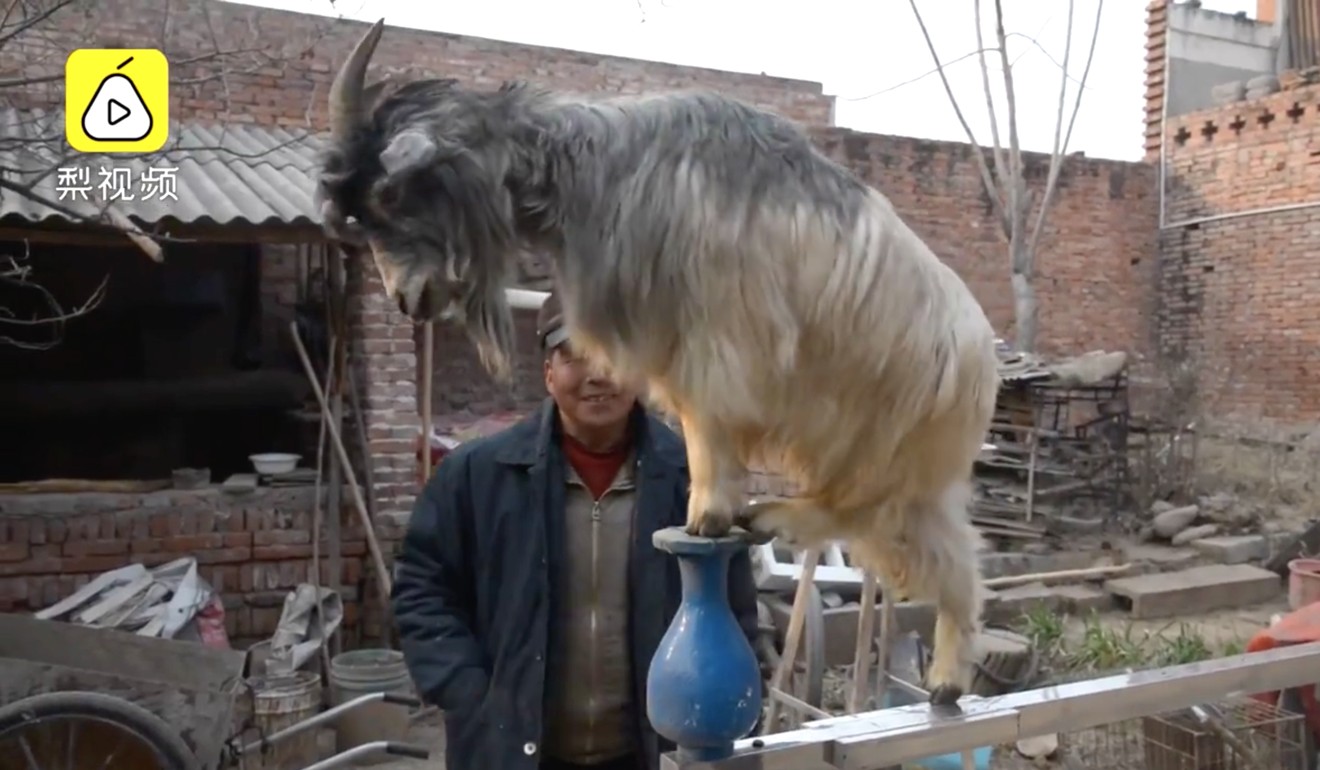
Wang Dingxuan, 54, said his star performer was a pig that he had trained to jump over hurdles and pull wedding carts – in return for a handful of treats.
Over the years, Wang has built up a strong bond with his animals, he said in an interview published on Pearvideo.com.
“I let the pig live in my house,” he said. “We’ve developed a close relationship.”
The farmer, from the city of Yanshi in Henan province, said he had always loved animals and decided to start training them after seeing a dog perform tricks on a Western television show.
After practising for several years, Wang set up the Yanshi City Happy Everyday Pet Performance Group in 2007.
The show features a number of animals, including a pig, dog, goat and pigeon. Footage of a goat walking along a narrow plank became a hit on social media.
“A man from Shandong saw my animals and wanted to buy my pig for more than 10,000 yuan (US$1,450),” Wang said. “I turned him down, but said we were willing to perform for him.”
Although he is now a big hit, Wang said his family was not supportive in the early days.
“They said I should be working in the daytime rather than playing with my animals,” he said. “So I trained my animals at night.”
His persistence worked, and his 75-year-old mother can now often be seen riding the pig on the streets of Yanshi.








 CHINDIA ALERT: You'll be living in their world, very soon
COMMENTS: