Archive for ‘Freedom’

14/04/2013

* China Makes Inroads in Nepal, Stemming Tibetan Presence

NY Times: “The wind-scoured desert valley here, just south of Tibet, was once a famed transit point for the Tibetan yak caravans laden with salt that lumbered over the icy ramparts of the Himalayas. In the 1960s, it became a base for Tibetan guerrillas trained by the C.I.A. to attack Chinese troops occupying their homeland.

Prayer wheels at a temple in the Mustang area of Nepal. The Chinese are trying to restrain the flow of disaffected Tibetans fleeing to Nepal and to enlist the help of the Nepalese authorities.

These days, it is the Chinese who are showing up in this far tip of the Buddhist kingdom of Mustang, northwest of Katmandu, Nepal. Chinese officials are seeking to stem the flow of disaffected Tibetans fleeing to Nepal and to enlist the help of the Nepalese authorities in cracking down on the political activities of the 20,000 Tibetans already here.

China is exerting its influence across Nepal in a variety of ways, mostly involving financial incentives. In Mustang, China is providing $50,000 in annual food aid and sending military officials across the border to discuss with local Nepalese what the ceremonial prince of Mustang calls “border security.”

Their efforts across the country have borne fruit. The Nepalese police regularly detain Tibetans during anti-China protests in Katmandu, and they have even curbed celebrations of the birthday of the Dalai Lama, the Tibetan spiritual leader, according to Tibetans living in Nepal.

via China Makes Inroads in Nepal, Stemming Tibetan Presence – NYTimes.com.

13/01/2013

Prof Chovanec is based in China and has great insights about all matters relating to China. This time about the likelihood of revolution in China.

prchovanec's avatarPatrick Chovanec

A surprising number of people in China have been writing and talking about “revolution”.  First came word, in November, that China’s new leaders have been advising their colleagues to read Alexis de Tocqueville’s classic book on the French Revolution, L’Ancien Régime et la Révolution (The Old Regime and the Revolution), which subsequently has shot to the top of China’s best seller lists.  Just this past week, Chinese scholar Zhao Dinxing, a sociology professor at the University of Chicago, felt the need to publish an article (in Chinese) laying out the reasons China won’t have a revolution (you can read an English summary here).  Minxin Pei, on the other hand, thinks it will.

In the midst of this debate, I happened across an interesting set of passages in retired Harvard professor Richard Pipes’ slender volume Three “Whys” of the Russian Revolution.  The first “why” he…

View original post 541 more words

Tags: ,
28/11/2012

* Tibetan students protest, as four more self-immolations reported

China needs to rethink its policy on Tibet. The issue of autonomy is not going to go away. Unlike the Muslim Uighurs, who are mainly domiciled in Xinjiang, Tibetans reside in large numbers in at least four provinces of which Tibet is only the main one.

BBC: “A crowd of Tibetan students has protested in Qinghai province, activists say, as four more self-immolations were reported.

A man taking a photograph in front of a screen displaying propaganda about China's Tibet Autonomous Region in Beijing, 12 November 2012

Reports said more than 1,000 students took part in the protest, which was reportedly provoked by the contents of a book.

Twenty students were in hospital, media reports and activist groups said.

The four self-immolations, meanwhile, occurred in Gansu, Sichuan and Qinghai provinces on Sunday and Monday.

Foreign media are banned from Tibetan regions, making reports of protests and self-immolations hard to verify independently. Chinese state media reports some of the protests and burnings but not all.

The student protest took place on Monday in Gonghe county in Qinghai province, London-based Free Tibet said.”

via BBC News – Tibetan students protest, as four more self-immolations reported.

14/08/2012

* Surge in Tibetan self-immolations challenges Chinese rule-rights group

Reuters: “As many as five Tibetans set themselves ablaze in China in the past week to protest Chinese rule over Tibet, a U.S. broadcaster said, a surge highlighted by a rights group as a sustained campaign against Beijing’s grip on religious freedom.

Two self-immolations on Monday in the Aba prefecture, a mountainous and mainly ethnic Tibetan part of Sichuan province, were followed by at least one clash between police and ethnic Tibetans that left one protester dead, Radio Free Asia said.

Lungtok, a monk from the restive Kirti monastery in Aba, and Tashi, believed to be a layman, set themselves ablaze on Monday “to highlight their opposition to Chinese rule in Tibetan-populated areas”, Radio Free Asia reported, saying three other Tibetans have died in self-immolations in the past week in China.

Many Tibetans have called for Beijing to allow the return of the Dalai Lama, their self-exiled Buddhist leader. China has branded the self-immolators “terrorists” and criminals and has blamed the Dalai Lama, for inciting them.

Calls to the Aba prefecture office were not answered.

Phelim Kine, senior Asia researcher for New York-based Human Rights Watch, said the frequency of the Tibetan self-immolations is “a reflection of the ever-deepening frustration and despair” that many Tibetans feel about hopes for reform and protection for their culture, religion and language.

“We don’t see any inkling of such changes in the short to medium term, instead we see a hardening of position by the Chinese government,” he said. “This is an unfortunate trend that will continue till we head into the leadership transition.”

Chinese leaders typically clamp down on possible sources of unrest before a once in a decade congress, likely in October, to announce a new leadership team.”

via Surge in Tibetan self-immolations challenges Chinese rule-rights group | Reuters.

Tibet (and Xinjiang) continue to be sore point with China. Religious and ethnic self-determination doesn’t want to go away, despite the efforts by China to improve the social and economic conditions.

See also:

03/08/2012

* Activists Trapped Between Government and Maoists

NY Times: “In one of India’s most violent internal conflicts, between Maoist rebels and government security forces, civil society activists appear to be collateral damage.

“Indian authorities and Maoist insurgents have threatened and attacked civil society activists, undermining basic freedoms and interfering with aid delivery in embattled areas of central and eastern India,” Human Rights Watch said in a report this week.

Through a broad swath of India, Maoist rebels, also known as Naxalites, have attempted to overthrow the government in an armed struggle that has its roots in a 1967 rural uprising. In the last two years, 1,611 people have died in a total of 3,968 incidents said to be related to the Maoist struggle.

As recently as last month, the police said they killed a group of Maoists in the dense forest of Chhattisgarh state, but civil rights activists demanded a judicial inquiry over what they called the slaughter of innocent tribal villagers.

The Human Rights Watch report said that grassroots activists who deliver development assistance and highlight abuses risk being targeted by security forces and Maoist insurgents.

“The police demand that they serve as informers, and those that refuse risk being accused of being Maoist supporters and subject to arbitrary arrest and torture,” the watchdog notes. “The authorities use sedition laws to curtail free speech and also concoct criminal cases to lock up critics of the government.”

The Maoists, on the other hand, frequently accuse activists of being informers and warn them against implementing government programs, according to the report.

“The Maoists have been particularly brutal towards those perceived to be government informers or “class enemies” and do not hesitate to punish them by shooting or beheading after a summary “trial” in a self-declared “people’s court” (jan adalat),” the report notes. It adds that this court in no way conforms to international standards.

The rights group said this report is based on more than 60 interviews with witnesses or those familiar with abuses in Orissa, Jharkhand and Chhattisgarh, from July 2011 to April this year.”

via Activists Trapped Between Government and Maoists – NYTimes.com.

See also: https://chindia-alert.org/prognosis/indian-challenges/

20/07/2012

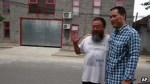
* China artist Ai Weiwei’s tax evasion appeal rejected

BBC News: “A court in China has rejected an appeal by Chinese artist and dissident Ai Weiwei against a tax evasion fine, his lawyer says.

Police barred Mr Ai from attending court in Beijing’s Chaoyang district to hear the verdict delivered.

Tax authorities imposed a 15m yuan ($2.4m, £1.5m) fine on Mr Ai’s firm for tax evasion in 2011. Supporters say the fine is politically motivated and Mr Ai wanted the court to overrule the penalty.

”We will keep appealing, until the day comes when we have nothing to lose,” Mr Ai said via Twitter. His lawyer Pu Zhiqiang, who was in court for the verdict, told reporters that the ruling was ”totally without reason”.

The artist, a outspoken critic of the government, was detained for almost three months without charge last year. “This country has once again proved to the world that law and justice don’t exist here” said Ai Weiwei on Twitter.

Outside his door witnesses counted up to 32 police cars.

His lawyers told the court the police were acting illegally preventing a free man from hearing the verdict in his own case. The entire case they say is illegal, from the secret detention of Mr Ai to the fact there’s no real evidence of tax evasion.

Ai Weiwei’s fame, his adept use of social media, his refusal to stay silent, and his persistent, sometimes impudent, criticisms of the Communist Party’s rule have all made this a litmus test for the way the party deals with dissent.

But, with the transfer of power to a new generation of leaders looming, China’s huge security apparatus appears determined to put ”stability” and ”harmony” first, and, critics will say, due process second.

After he was released, he was accused of tax evasion and the fine imposed.”

via BBC News – China artist Ai Weiwei’s tax evasion appeal rejected.

16/06/2012

* China to Investigate Death of Labor Activist

NY Times: “Chinese officials, bending to public pressure, have announced an investigation into the death of a veteran labor activist whose body was found hanging from a hospital window this month, days after he gave a series of interviews in which he vowed to continue fighting to end the Communist Party’s monopoly on power.

The dissident, Li Wangyang, who was convicted of organizing protests during the pro-democracy movement of 1989, had only recently emerged from prison. Friends and relatives have questioned how Mr. Li could have taken his own life because he was disabled from the beatings and other mistreatment he suffered during his 21 years behind bars.

Mr. Li, 62, was blind, nearly deaf and had difficulty walking unassisted.

According to the state-run Hong Kong China News Agency, public security officials in Hunan Province, where Mr. Li died, promised an investigation by a “team of experienced criminal investigation experts.” According to the agency, a police spokesman acknowledged that public pressure had prompted the announcement on Thursday.

Earlier this week, local officials in Shaoyang, the city where Mr. Li died, changed the cause of death to “accidental” from “suicide.”

Human rights advocates raised doubts after his death became public, but the suspicions began to spread more widely in the past week after family members and friends of Mr. Li disappeared or were warned by the police not to speak to the news media.”

via China to Investigate Death of Labor Activist – NYTimes.com.

Yet another case of the Chinese authorities bending to public opinion.  See also:

29/05/2012

* China’s Weibo microblog introduces user contracts

BBC News: “China’s biggest microblogging service has introduced a code of conduct explicitly restricting the type of messages that can be posted. Weibo – which resembles Twitter – took the action after local authorities criticised “unfounded” rumours posted by some users.

Reports suggest a credit score system will also be introduced with points deducted for rule breaches. Repeat offenders face having their accounts deleted. The services parent, Sina Corp, says it has more than 300 million registered users. Users are reported to start with 80 points – they gain more by taking part in promotional activities, but lose points if they break any of the rules. It is reported that if a subscribers points fell below 60 a “low credit” warning would appear on their microblog, leading to the possible cancellation of their account if it hit zero. If they “behaved” for two consecutive months their score is reported to return to 80.”

This is a sign of the authorities trying to restrain the internet in China, but a hardcore group of people will still find ways to get round the restraints,” Dr Kerry Brown, head of the Asia Programme at the Chatham House think tank, told the BBC. “There is a tradition of indirect criticism in which people make points using coded references. I very much doubt these rules will change anything.””

via BBC News – Chinas Weibo microblog introduces user contracts.

20/05/2012

* China dissident Chen Guangcheng arrives in the US

BBC News: “Chinese activist Chen Guangcheng has arrived in New York to begin a new life in the United States.

The blind human rights lawyer caused a diplomatic crisis when he escaped house arrest to arrive at the US embassy in Beijing last month. Speaking outside New York University, where he has been offered a fellowship, Mr Chen said China had dealt with the situation with “restraint and calm”. But he raised concerns about ongoing reprisals against his family. “Acts of retribution in Shandong have not been abated and my rights to practice law have been curbed – we hope to see a thorough investigation into this,” he said, referring to the province where he was kept under house arrest. The activist thanked US officials and his supporters for their help and said he had come to the United States for “recuperation in body and spirit”.

Chen Guangcheng and his family were taken from a Beijing hospital, where he was being treated for a foot injury, to the capitals airport on Saturday. A crowd of activists, supporters and curious New Yorkers greeted Chen at the university apartment block in Greenwich Village where he and his family will stay. Wearing dark glasses and hobbling on crutches, he may not have looked like a conquering hero, but that is how he was treated. There were cheers and screams of encouragement. Some had brought flowers, while one woman was led away in tears after failing to secure a hug from her idol.

Former House speaker Nancy Pelosi described his arrival in the US as “a milestone in the cause for human rights in China“.”

via BBC News – China dissident Chen Guangcheng arrives in the US.

28/04/2012

* Chinese Activist Chen Guangcheng Escapes House Arrest in China

New York Times: “The dramatic nighttime escape of a blind rights lawyer from extralegal house arrest in his village dealt a major embarrassment to the Chinese government and left the United States, which may be sheltering him, with a new diplomatic quandary as it seeks to improve its fraught relationship with Beijing.

The lawyer, Chen Guangcheng, one of the best-known and most politically savvy Chinese dissidents, evaded security forces surrounding his home this week and, aided by an underground network of human rights activists, secretly made his way about 300 miles to Beijing, where he is believed to have found refuge in the American Embassy, according to advocates and Chinese officials. An official in the Chinese Ministry of State Security on Friday said that Mr. Chen had reached the United States Embassy, but American officials would not confirm reports that Mr. Chen had found shelter there.

Mr. Chen’s escape represents a significant public relations challenge for the Chinese government, which has sought to relegate him to obscurity, confining him to his home in the remote village of Dongshigu and surrounding him with plainclothes security guards, even though there are no outstanding legal charges against him.

The case also poses a major new diplomatic test for the United States. In February, the Obama administration was thrust into an internal Chinese political dispute when Wang Lijun, the former top police official from the region of Chongqing, sought refuge in the American Consulate in Chengdu. Mr. Wang revealed details about the killing of a British businessman, setting off a cascade of events that led to the downfall of Bo Xilai, who was the party chief in Chongqing and a member of China’s Politburo. American diplomats said they had determined that Mr. Wang’s case did not involve national security, and he was turned over to Chinese officials, prompting criticism from some in Washington about their handling of the case. Both sides insist Mr. Wang left of his own accord.”

via Chinese Activist Chen Guangcheng Escapes House Arrest in China – NYTimes.com.

Law of Unintended Consequences

continuously updated blog about China & India

ChiaHou's Book Reviews

continuously updated blog about China & India

What's wrong with the world; and its economy

continuously updated blog about China & India