Archive for ‘GeoPolitics’

30/04/2012

* China launches two navigation satellites

Xinhua: “China successfully launched two satellites into space at 4:50 a.m. Beijing Time Monday, the 12th and 13th satellites for its Beidou global navigation and positioning network, the launch center said.

The launch of Long March 3B Rocket, Xichang Sa...

The launch of Long March 3B Rocket, Xichang Satellite Center, China. (Photo credit: Wikipedia)

The Beidou-2 satellites, launched from the Xichang Satellite Launch Center in the southwestern province of Sichuan, was boosted by a Long March-3B carrier rocket and has entered the scheduled orbit. It is the first time China has launched two navigation satellites with one rocket, and the two satellites will help to improve the accuracy of the Beidou, or Compass system, the center said in a statement. China will launch three more satellites for the Beidou network this year and a global satellite positioning and navigation system will be completed in 2020 with more than 30 orbiters, the statement said. Monday’s mission marked the 160th flight of Chinas Long March series of carrier rockets.”

via China launches two navigation satellites – Xinhua | English.news.cn.

China continues on its path to reduce reliance on Western hi-tech.

Related post: https://chindia-alert.org/2012/04/29/china-plans-national-unified-cpu-architecture/

27/04/2012

* China Wants More Trade With Central and Eastern Europe

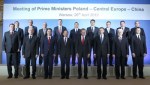
New York Times: “Prime Minister Wen Jiabao said Thursday that China wanted to double trade with the countries of Central and Eastern Europe to $100 billion a year by 2015, and pledged billions in loans to help promote investment in the region.

Mr. Wen made the announcement at a gathering in Warsaw that brought together business and political leaders of countries stretching from the Baltics to the Balkans that are eager to do business with China, even as they struggle to overcome stereotypes still held by many in the region who associate the Chinese as makers of inexpensive toys and designer knock-offs.

Infrastructure, high technology and green technology are target areas for growth, Mr. Wen said, announcing that Beijing would set up a $10 billion line of credit to support investment in these specific industries. He also pledged an additional $500 million in funds to be made available to Chinese companies seeking to make first-stage investment in the region.”

via China Wants More Trade With Central and Eastern Europe – NYTimes.com.

China continues to woo everyone. And Mr Wen is making himself very busy in his final year in office.

Related post: https://chindiapedia.wordpress.com/wp-admin/post.php?post=5753&action=edit

https://chindia-alert.org/political-factors/geopolitics-chinese/

27/04/2012

* China’s vice-premier starts landmark European mission

Li Keqiang, Chinese politician

Li Keqiang, Chinese politician (Photo credit: Wikipedia)

China Daily: “Visit covers Russia, Hungary, Belgium and EU headquarters

Business opportunities will emerge from the economic development of China and Russia and both countries will benefit from increasing prosperity and global influence, Vice-Premier Li Keqiang said on Thursday. “The two countries are in total agreement on this point,” Li said in a Russian newspaper article.

The vice-premier started a 10-day visit on Thursday, to promote trade and investment. He will visit Russia, Hungary, Belgium and EU headquarters in Brussels.”We view each others growth as opportunities because both nations share similar targets,” Li said.”

via Chinas vice-premier starts landmark European mission|Politics|chinadaily.com.cn.

The wooing continues unabated; Premier Wen visits Iceland, Sweden, Germany and Poland, then VP Li visits Russia, Hungary, Belgium and EU.

Related posts:

27/04/2012

* US Is Seeing Positive Signs From Chinese

New York Tines: “When China suddenly began cutting back its purchases of oil from Iran in the last month,  officials in the Obama administration were guardedly optimistic, seeing the move as  the latest in a string of encouraging signs from Beijing on sensitive security issues  like Syria and North Korea, as well as on politically fraught economic issues like China’s exchange rate.

As with so many signals from Beijing, though, its underlying motives for reducing its imports of Iranian oil remain a mystery: Are the Chinese embracing Western sanctions? Or, as some experts suspect, are they trying to extract a better price from one of their main suppliers of crude? The answer is probably a bit of both, according to senior administration officials who acknowledge that they do not know for certain. But for the White House, which has labored to build a more constructive relationship with China, Beijing’s motives may matter less than the general direction in which it appears to be moving.”

via U.S. Is Seeing Positive Signs From Chinese – NYTimes.com.

26/04/2012

* China Invests in Germany Amid Uncertainty

New York Times: “As Prime Minister Wen Jiabao of China tours Europe this week, it is no accident that Germany occupies a special place on his itinerary. After all, Germany is the one European Union country that has a trade surplus with China. And it has also been a focus of Chinese investment in Europe — so much so that analysts say some Germans are growing wary as Chinese businesses have been snapping up German engineering companies.

Mr. Wen, making his sixth visit in eight years, and the German chancellor, Angela Merkel, on Sunday opened the annual trade fair in Hanover, billed as the world’s leading showcase for industrial technology. They plan to witness the signing of an economic agreement at the Volkswagen headquarters, in Wolfsburg, on Monday. According to German media reports, the deal will include the opening of a new car plant in the far western Chinese region of Xinjiang.

Mr. Wen’s agenda, as with a follow-up trip planned by his likely successor, Vice Prime Minister Li Keqiang, seems aimed at presenting an aura of business as usual, even as trade tensions flare with the West and the Communist Party at home is embroiled in its biggest scandal in years, involving the deposed Politburo member Bo Xilai.”

via China Invests in Germany Amid Uncertainty – NYTimes.com.

Two birds with one stone: Collaboration with Germany & VW; and opening up a major auto plant in Xinjiang, one of the two provinces with significant unrest (the other, of course, is Tibet).

22/04/2012

* Time to Start Thinking by Edward Luce

Time to Start Thinking is a book destined to spark debate among liberals and conservatives alike. Drawing on his decades of exceptional journalism and his connections in Washington and around the world, Luce advances a carefully constructed and controversial argument that America is losing its position at the top of the world’s pecking order. He supports this argument with his interviews with key players in politics and business, from U.S. senators, senior White House officials, Fortune 100 chief executives, and many others, including Bill Gates and Admiral Mike Mullen.

Luce’s central thesis is that America is sleepwalking into economic and geopolitical decline. In a tightly argued book, Luce turns his attention to a number of critical issues set to determine America’s future: the changing structure of the U.S. economy, the continued polarization of American politics, the debilitating effect of the “permanent election campaign,” the challenges involved in the overhaul of the country’s public education system, the desperate situation facing America’s middle class, and the health of American innovation in technology and business.

His conclusion investigates America’s dwindling options in a world where the pace is increasingly being set elsewhere. Luce turns particular attention to Washington—he identifies the city’s insidious lobbying culture, the politicians’ constant need to fund raise, and the lack of bipartisanship as key stumbling blocks to an effectively functioning political system.

As distressing as it is important, Time to Start Thinking presents an America in economic, social, and political crisis. Those unwilling to face up to this reality may be tempted to blindly trust in American exceptionalism—but Luce argues that it is American pragmatism that will be the key to securing America’s future, if it is to be secured.

via Time to Start Thinking by Edward Luce.

Related article: http://www.nytimes.com/2012/04/08/books/review/time-to-start-thinking-by-edward-luce.html?pagewanted=all

From my limited understanding of Americans, I suspect that more non-Americans than Americans will bother to read this book. Which will be a great shame.

21/04/2012

* China’s Premier in Iceland, eyes on Arctic riches

extract from Reuters: “China signed accords on energy cooperation and the Arctic in Iceland on Friday as Premier Wen Jiabao started a tour of northern Europe that will focus on Chinese investment in a continent eager for funds and to trade with the rising world power.

Centrepiece of the trip will be a visit to Germany, where Wen and Chancellor Angela Merkel will on Sunday and Monday burnish industrial ties that have done much for both economies. That the prime minister of the world’s most populous nation should stop first, however, on a remote island of just 320,000 has raised hopes for an injection of Chinese cash into an economy ravaged by the bursting of a financial bubble in 2008 – but also suspicion of Beijing’s hunger for natural resources. …

Over two days, Wen, who trained as a geologist, will see volcanic geysers and electricity plants where Iceland captures geothermal energy. Friday’s meetings between Wen and Icelandic Prime Minister Johanna Sigurdardottir resulted in agreements to cooperate in the Arctic region, in marine and polar science and in geothermal energy. Orka Energy Ltd – an Icelandic firm focused on producing geothermal energy – and China’s Sinopec Group also signed a deal to develop geothermal energy in China for heating houses and the production of electricity, though no figures were provided. …

But by starting with a full-scale visit to Iceland, Wen has fuelled European concern that China might be trying to exploit the country’s economic troubles to gain a strategic foothold in the North Atlantic and Arctic region. The area has big reserves of oil, gas, gold, diamonds, zinc and iron. And with global warming melting polar ice, it may offer world powers new shipping routes – and naval interests – for the trade between Asia, Europe and America’s east coast. “When it comes to the Arctic, we always have China on our mind,” said one European diplomat from the Nordic region, who spoke to Reuters this week on condition of anonymity.

But conspiracy theories over why such an Asian giant would be interested in such a small nation abound. “Given Chinas investment pattern around the globe, people have asked questions. Why are doing this? Is there some ulterior motive?” said Embla Eir Oddsdottir at the Stefansson Arctic Institute. “For next decade they are going to be battling some sort of suspicion as to their motive, because people have a tendency to link them to some type of regime.” …”

via UPDATE 3-Chinas Wen in Iceland, eyes on Arctic riches | Reuters.

Why the suspicion and conspiracy theory?  China has been wooing all sorts of countries in the recent past – see posts:

https://chindia-alert.org/2012/04/16/us-alert-as-chinas-cash-buys-inroads-in-caribbean/

https://chindia-alert.org/2012/12/31/question-who-did-china-woo-in-2012/

https://chindia-alert.org/political-factors/geopolitics-chinese/

It is part of China’s geopolitical plan to be friends wioth everyone – without prejudice to religion, race, politics, etc!

19/04/2012

* Agni-V launch: India demonstrates ICBM capability; China reacts cautiously, says India not rival

Times of India: “Reacting cautiously to India’s test of Agni-V missile, China on Thursday said the two countries are not rivals and enjoy “sound” relations though the sources in the Chinese establishment feel that the launch can give rise to another round of arms race in the region.

“China has taken note of reports on India’s missile launch. The two countries have sound relationship. “During the recently held BRICS meeting in Delhi the leadership had consensus to take the relationship further and to push forward bilateral strategic cooperative partnership,” Chinese foreign ministry spokesman Liu Weimin told a media briefing in Beijing when asked about the launch.

In Delhi, the diplomatic sources in the Chinese embassy said the “Agni-V launch can give rise to another round of arms race in this part of the world. “They were also critical of the media commentary on the successful launch of the nuclear capable 5000 km-range Agni-V missile, saying it sounded provocative. Asked whether China was concerned as most of the country would come under the Agnis range, Liu said in Beijing that “both the countries are emerging powers. We are not rivals. We are cooperative partners. We should cherish the hard earned momentum of cooperation.”

via Agni-V launch: India demonstrates ICBM capability; China reacts cautiously, says India not rival – The Times of India.

18/04/2012

* India to test fire long-range missile

BBC News: “India is due to test fire a long-range intercontinental ballistic missile capable of carrying nuclear warheads. The locally-developed Agni-V missile has a range of more than 5,000km 3,100 miles and is expected to be launched in the eastern state of Orissa.

Visual description of the approximate range of...

Visual description of the approximate range of the (Indian) Agni ballistic missile series. (Photo credit: Wikipedia)

Analysts say the Agni meaning “fire” in Hindi and Sanskrit missile family is to be the cornerstone of Indias missile-based nuclear deterrent. The missiles are among India’s most sophisticated weapons. In 2010, India successfully test-fired Agni-II, an intermediate-range ballistic missile with a range of more than 2,000km 1,250 miles.

Defence analyst Rahul Bedi says the successful test flight of the Agni-V missile, which is capable of delivering a single 1.5-ton warhead deep inside nuclear rival China’s territory, will strengthen India’s nuclear deterrence once it comes into service by 2014-15. It is 17.5m-tall, solid-fuelled, has three stages and a launch weight of 50 tons. It has cost more than 2.5bn rupees $480m; £307m to develop.

Only China, Russia, France, the US, and Great Britain have such long-range missiles. Israel is thought to possess them.”

via BBC News – India to test fire long-range missile.

Let’s hope this doesn’t start a military space race between India and China. Both countries must surely haev better things to invest their money in than nuclear missiles!

16/04/2012

* US Alert as China’s Cash Buys Inroads in Caribbean

New York Times: “A brand new $35 million stadium opened here in the Bahamas a few weeks ago, a gift from the Chinese government. The tiny island nation of Dominica has received a grammar school, a renovated hospital and a sports stadium, also courtesy of the Chinese. Antigua and Barbuda got a power plant and a cricket stadium, and a new school is on its way. The prime minister of Trinidad and Tobago can thank Chinese contractors for the craftsmanship in her official residence.

China’s economic might has rolled up to America’s doorstep in the Caribbean, with a flurry of loans from state banks, investments by companies and outright gifts from the government in the form of new stadiums, roads, official buildings, ports and resorts in a region where the United States has long been a prime benefactor.

The Chinese have flexed their economic prowess in nearly every corner of the world. But planting a flag so close to the United States has generated intense vetting — and some raised eyebrows — among diplomats, economists and investors. “When you’ve got a new player in the hemisphere all of a sudden, it’s obviously something talked about at the highest level of governments,” said Kevin P. Gallagher, a Boston University professor who is an author of a recent report on Chinese financing, “The New Banks in Town.”

Most analysts do not see a security threat, noting that the Chinese are not building bases or forging any military ties that could invoke fears of another Cuban missile crisis. But they do see an emerging superpower securing economic inroads and political support from a bloc of developing countries with anemic budgets that once counted almost exclusively on the United States, Canada and Europe.

China announced late last year that it would lend $6.3 billion to Caribbean governments, adding considerably to the hundreds of millions of dollars in loans, grants and other forms of economic assistance it has already channeled there in the past decade. Unlike in Africa, South America and other parts of the world where China’s forays are largely driven by a search for commodities, its presence in the Caribbean derives mainly from long-term economic ventures, like tourism and loans, and potential new allies that are inexpensive to win over, analysts say.

American diplomatic cables released through WikiLeaks and published in the British newspaper The Guardian quoted diplomats as being increasingly worried about the Chinese presence here “less than 190 miles from the United States” and speculating on its purpose. One theory, according to a 2003 cable, suggested that China was lining up allies as “a strategic move” for the eventual end of the Castro era in Cuba, with which it has strong relations.

via U.S. Alert as China’s Cash Buys Inroads in Caribbean – NYTimes.com.

While the US is trying to encroach on China’s backyard with military alliances with Australia and other South Pacific nations, China is encroaching the US backyard too, but with stadiums, roads and other civilian projects.

Law of Unintended Consequences

continuously updated blog about China & India

ChiaHou's Book Reviews

continuously updated blog about China & India

What's wrong with the world; and its economy

continuously updated blog about China & India