Archive for ‘Politics’

11/12/2018

Assembly election result 2018: Countdown for 2019 begins, says Mamata Banerjee on BJP’s setback in state elections

Assembly election result 2018: The leaders decided to lay a roadmap for the 2019 Lok Sabha elections to oust the BJP from power by evolving a common strategy.

BJP,Congress,Telangana Assembly election Results 2018
Assembly election result 2018: West Bengal chief minister Mamata Banerjee was among the 21 opposition party leaders who on Monday agreed to work together to defeat the BJP.(AP)

It was people’s verdict and their victory, West Bengal chief minister Mamata Banerjee tweeted as the Congress was ahead in three states with votes being counted in the assembly elections, billed as the semi-final before next year’s Lok Sabha polls.

All three states — Madhya Pradesh, Rajasthan and Chhattisgarh — were won last time by the BJP, which had also won 60 of the 65 total parliament seats in these states in the 2014 general elections.

Click here for Telangana election results 2018 LIVE

Votes are also being counted in Telangana, where K Chandrashekhar Rao’s Telangana Rashtriya Samiti (TRS) has raced to a massive lead, validating his decision to call early elections. In Mizoram, the Congress’ last bastion in the state, the Mizo National Front is ahead.

“Semifinal proves that BJP is nowhere in all the states. This is a real democratic indication of 2019 final match. Ultimately, people are always the ‘man of the match’ of democracy. My congrats to the winners,” she said.

Click here for Madhya Pradesh election results 2018 LIVE

The leaders decided to lay a roadmap for the 2019 Lok Sabha elections to oust the BJP from power by evolving a common strategy.

“In the course of the next few months, we will place before the people of the country, a comprehensive programme of work anchored in complete transparency and accountability,” read a joint statement issued after the meeting.

The parties also appealed to all “liberal, progressive and secular forces to join them in their battle to save the Constitution and protect parliamentary democracy”.

10/12/2018

Violent veterans rally in China leads to 10 arrests

Ten suspects have been arrested for organising a “serious attack” on police officers during a veterans’ protest in northern China in October, according to state media.

According to People’s Daily, the accused organised a protest by 300 people from across the country, calling for better benefits for veterans, at a major public square in Pingdu, Shandong province.

During the assembly, some of the rally participants, led by the 10 suspects, acted violently towards the police and smashed police vehicles, the provincial police authority said, adding that their actions had caused injuries and led to substantial economic losses.

The report said 34 people, including an unknown number of police officers, were wounded in the violence, including two senior people officers who were seriously injured. In addition, a police bus and three private cars were destroyed.

More than 100 shops were forced to close during the rally and 11 buses had to change their routes to avoid the violence. Direct economic losses were estimated to have reached 8.2 million yuan (US$1.1 million).

The incident, on October 6, attracted the attention of the Ministry of Public Security as one of only a few large-scale examples of social unrest on the mainland over the past few years.

The People’s Daily report did not say if the 10 suspects were veterans, but local police said they had “complicated backgrounds” including criminal records in some cases.

All of the arrested are residents of Pingdu.

They are alleged to have used social media to contact people across the country and to have encouraged them to file petitions in Beijing during the “golden week” holiday, at the start of October, while posing as tourists.

They are also accused of spreading fake messages on social media after their plans were thwarted by authorities in Pingdu.

The suspects are reported to have told their followers they had been beaten up by government officials and encouraged them to support them by coming to the city.

At noon on October 6, about 300 people appeared at the People’s Hall square in Pingdu, waving banners and chanting slogans, although the report was unclear what they were calling for.

Two of the accused are said to have addressed the event, inciting people to use violence against the government.

One of the suspects, surnamed Ge, 46, was quoted as saying: “Bring wooden sticks and iron shovels with you. Hit their heads and beat them to death.”

Another suspect, surnamed Ji, 55, is alleged to have said: “We should kill more people to shock the whole nation”, according to the report.

Police said the suspects hired cars to take 105 sticks, 60 hammers, 16 dry powder extinguishers and a bag of talcum powder to the assembly site.

According to a local government statement, offers to negotiate with the protesters were rejected. The demonstrators also refused to leave the square until they received financial compensation from the government.

The conflict is believed to have been triggered when police tried to stop people crossing a cordon to join the 30 protesters originally within the square.

A tussle ensued and eight people were taken to a police bus parked nearby.

Several minutes later, three of the suspects are said to have led 60 protesters in an attack on the police. The windows of the police bus were smashed and the fire extinguisher was discharged into the vehicle, forcing police officers and the eight detained protesters to climb on to the roof of the bus to escape the fumes.

According to the report, the protesters threw stones at the police officers while also continuing to spray them with the fire extinguisher.

The police officers behaved in accordance with the law throughout the riot, which lasted for 11 minutes, the report said.

The report did not say how many people who took part in the rally were veterans.

Police said one of the suspects, surnamed Zheng, had previously been jailed for obstructing police and provoking trouble. Another suspect, surnamed Yang, had previously been caught with drugs.

Police also said a suspect surnamed Liu had been jailed for two years for theft, while another, surnamed Ge, had previously been sentenced to two years in jail for fraud.

Veterans have been an important issue for the mainland authorities this year, with the establishment in April of the new Ministry of Veterans Affairs.

The ministry has been collecting personal information from veterans across the country between August and December, as a “first step” in developing a policy on what packages veterans will receive from China’s governments in future, according to officials.

Last month the ministry and the Communist Party’s Central Propaganda Department spearheaded a nationwide role model campaign in which the nation’s 10 “most beautiful veterans” were selected.

09/12/2018

As election nears, religious tensions surge in an Indian village

NAYABANS, India (Reuters) – Nayabans isn’t remarkable as northern Indian villages go. Sugar cane grows in surrounding fields, women carry animal feed in bullock carts through narrow lanes, people chatter outside a store, and cows loiter.

But this week, the village in Uttar Pradesh state became a symbol of the deepening communal divide in India as some Hindu men from the area complained they had seen a group of Muslims slaughtering cows in a mango orchard a couple of miles away.

That infuriated Hindus, who regard the cow as a sacred animal. Anger against Muslims turned into outrage that police had not stopped an illegal practise, and a Hindu mob blocked a highway, threw stones, burned vehicles and eventually two people were shot and killed – including a police officer.

The events throw a spotlight on the religious strains in places like Nayabans since Prime Minister Narendra Modi’s Hindu nationalist Bharatiya Janata Party (BJP) came to power at the national level in 2014 and in Uttar Pradesh in 2017. Tensions are ratcheting up ahead of the next general election, due to be held by May.

The BJP said it was “bizarre” to assume the party would benefit from any religious disharmony, dismissing suggestions that its supporters were largely responsible for the tensions.

“In a large country like India nobody can ensure that nothing will go wrong, but it’s our responsibility to maintain law and order and we understand that,” party spokesman Gopal Krishna Agarwal said. “But people are trying to politicize these issues.”

SPONSORED

Nayabans, just about three hour’s drive from Delhi, has about 400 Muslims out of a population of 4,000, the rest are Hindu. Relations between the communities began deteriorating around the Muslim holy month of Ramadan last year when Hindus in the village demanded that loudspeakers used to call for prayer at a makeshift mosque be removed, local Muslims said.

“For 40 years mikes were used in the mosque, calls for prayer were made five times a day, but no one objected,” said Waseem Khan, a 28-year-old Muslim community leader in Nayabans.

“We resisted initially but then we thought it’s better to live in peace then create a dispute over a mike,” he said. “We don’t want to give them a chance to fan communal tensions.”

Reuters spoke with more than a dozen Muslims from the village but except for Khan, no one else wanted to be named for fear of angering the Hindu population.

Several among a group of Muslim women and girls standing outside the mosque said they have been living in fear since the BJP came to power in the state in 2017.

They said that Hindu groups now hold provocative processions through the village during every Hindu festival, loudspeakers blaring, something that used to happen rarely before. They said they felt “terrorised” by Hindu activists.

“While passing through our areas during their religious rallies, they chant ‘Pakistan murdabad’ (down with Pakistan) as if we have some connection to Pakistan just because we are Muslims,” Khan said.

HINDU PRIEST CHIEF MINISTER

The subcontinent was divided into Muslim Pakistan and Hindu-majority India at the time of independence from British colonial rule in 1947.

During the violence on Monday, many Muslims in Nayabans locked themselves in their homes fearing attacks. Some who had attended a three-day Muslim religious congregation some miles away stayed outside the area that night to avoid making themselves targets for the mob.

Muslim villagers say they are particularly fearful of the top elected official in Uttar Pradesh, Chief Minister Yogi Adityanath, who is a Hindu priest and senior BJP figure. Hindu hardliners started asserting themselves more in the village after he was elected, they say.

Uttar Pradesh sends 80 lawmakers to the lower house of parliament, the largest of any state in the country.

Considered the county’s political crucible, it has also been the scene for spiralling Hindu-Muslim tensions.

Slideshow (8 Images)

Adityanath said the lead up to the rioting in Nayabans was a “big conspiracy”, but did not elaborate.

In the only statement from his office on the incident, Adityanath ordered police to arrest those directly or indirectly involved in the slaughter of cows and made no mention of the death of the police inspector. He announced 1 million rupees ($14,110) as compensation for the family of the other dead man, a local who is among those accused by police for the violence.

Both men were Hindus and died of bullet wounds, although police said it was not yet clear who shot whom.

Police say they have arrested up to five people for the cow slaughter but have not given their religion. Locals say all the arrested people are Muslims. Four Hindu men have been arrested for the violence leading to the deaths.

“All invidious elements who may have conspired to vitiate the situation will be exposed through a fair and transparent investigation,” Anand Kumar, the second highest police official in Uttar Pradesh, told Reuters.

Asked if there was any bias against Muslims, Uttar Pradesh government spokesman Sidharth Nath Singh – who is also the state’s health minister – told Reuters: “We believe in equality and our motto is sabka saath, sabka vikas”, using a Hindi phrase often used by Modi that means “collective effort, inclusive growth”.

RELATIVE HARMONY

The two communities in Nayabans have lived in relative harmony for years, residents from both groups said.

But now Hindus in the village, who mostly say they support Yogi, accuse the Muslims of trying to turn themselves into the victims when they weren’t.

“Can’t believe they are raising our processions with journalists!” said Daulat, a Hindu daily wage labourer who goes by one name. “They are making it a Hindu-Muslim issue, we are not. Their people have been accused of killing cows, so they are playing the victim.”

At a middle school, metres from the police outpost near where the two men got killed, two women teachers, sitting on a veranda soaking in the winter sun, said its 66 students stopped coming for classes in the first few days after the violence.

“We worship cows and their slaughter can’t be accepted,” said one of the teachers, Uma Rani. “Two Hindus died here but nothing happened to the cow killers.”

Both teachers were Hindus.

Political analysts say relations between the two communities are likely to stay tense ahead of the national vote, particularly in polarised states such as Uttar Pradesh.

The BJP made a near-clean sweep in Uttar Pradesh in 2014, helping Modi win the country’s biggest parliamentary mandate in three decades, but pollsters predict a tighter contest next year because of a lack of jobs and low farm prices.

“Facing economic headwinds and lacklustre job growth, Modi will rally his conservative base by selectively resorting to Hindu nationalism,” global security consultancy Stratfor said last month.

Muslims say they increasingly feel like second-class citizens in their own country.

“The BJP will definitely benefit from such incidents,” said Tahir Saifi, a Muslim community leader a few miles from the area of violence who supports a regional opposition party in Uttar Pradesh. “They want all Hindus to unite, and when religion comes into the picture, other issues like development take a back seat.”

09/12/2018

China, Duterte and the Philippine dam set to become a reality, despite four decades of protest

  • Dumagats fear US$232 million project will displace them from lands they have called home for generations
  • Project aims to augment water security for fast-growing metropolitan Manila
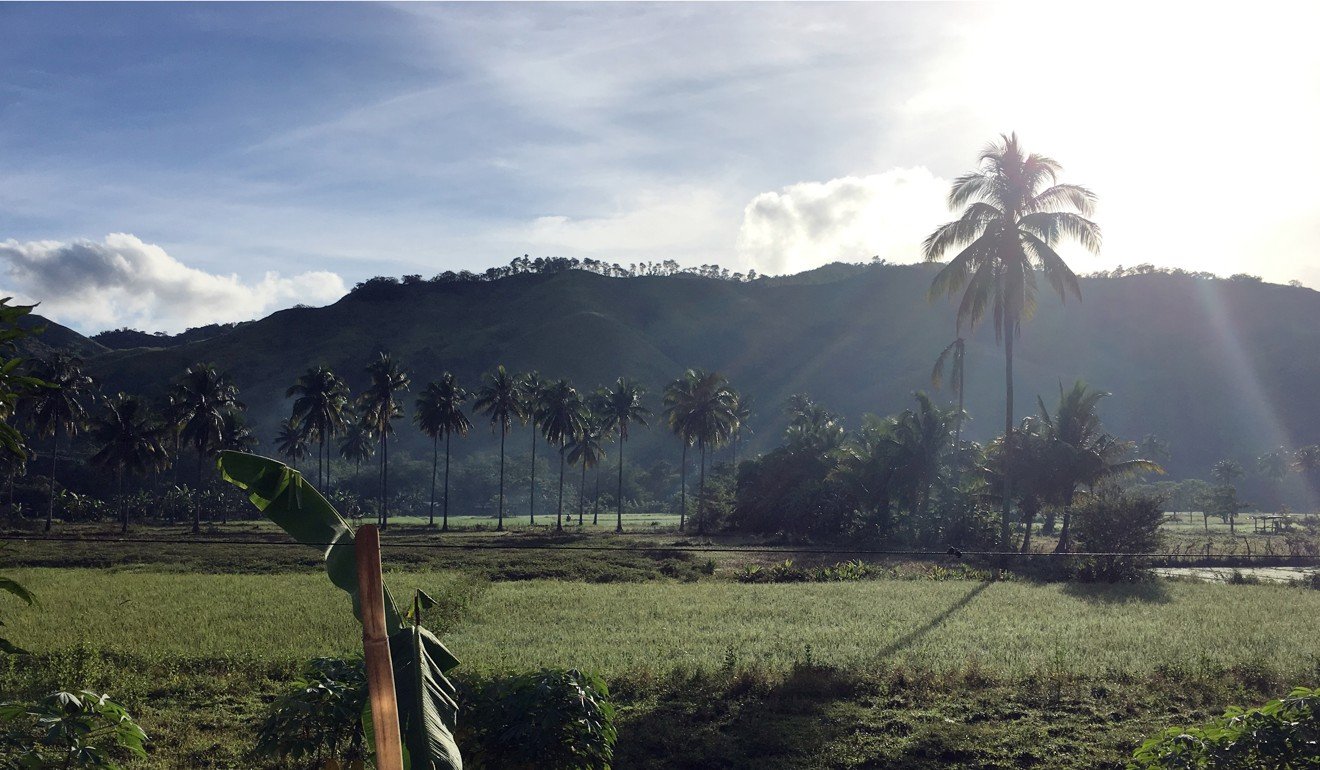
  • Deep inside the Sierra Madre mountain range about 60km (37 miles) east of the Philippine capital of Manila, distance is measured in river crossings.

    Deep inside the Sierra Madre mountain range about 60km (37 miles) east of the Philippine capital of Manila, distance is measured in river crossings.

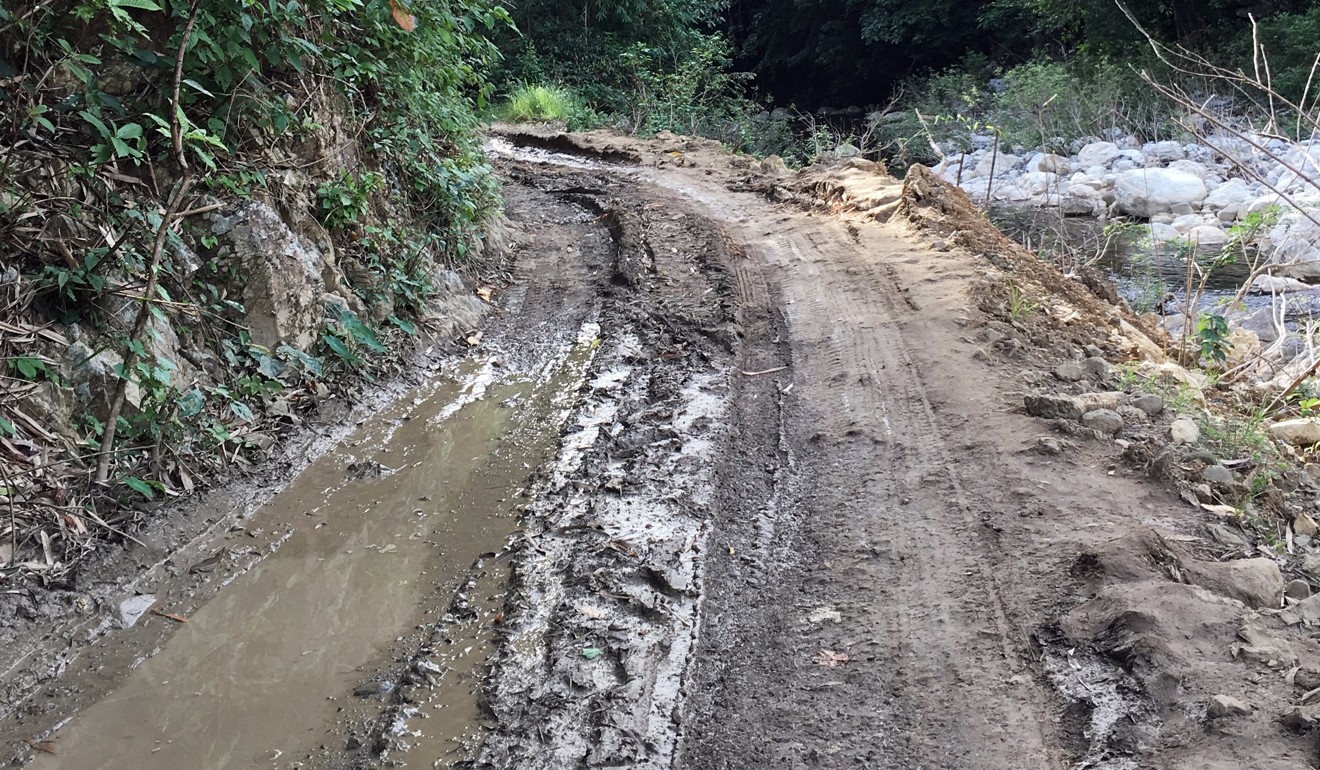
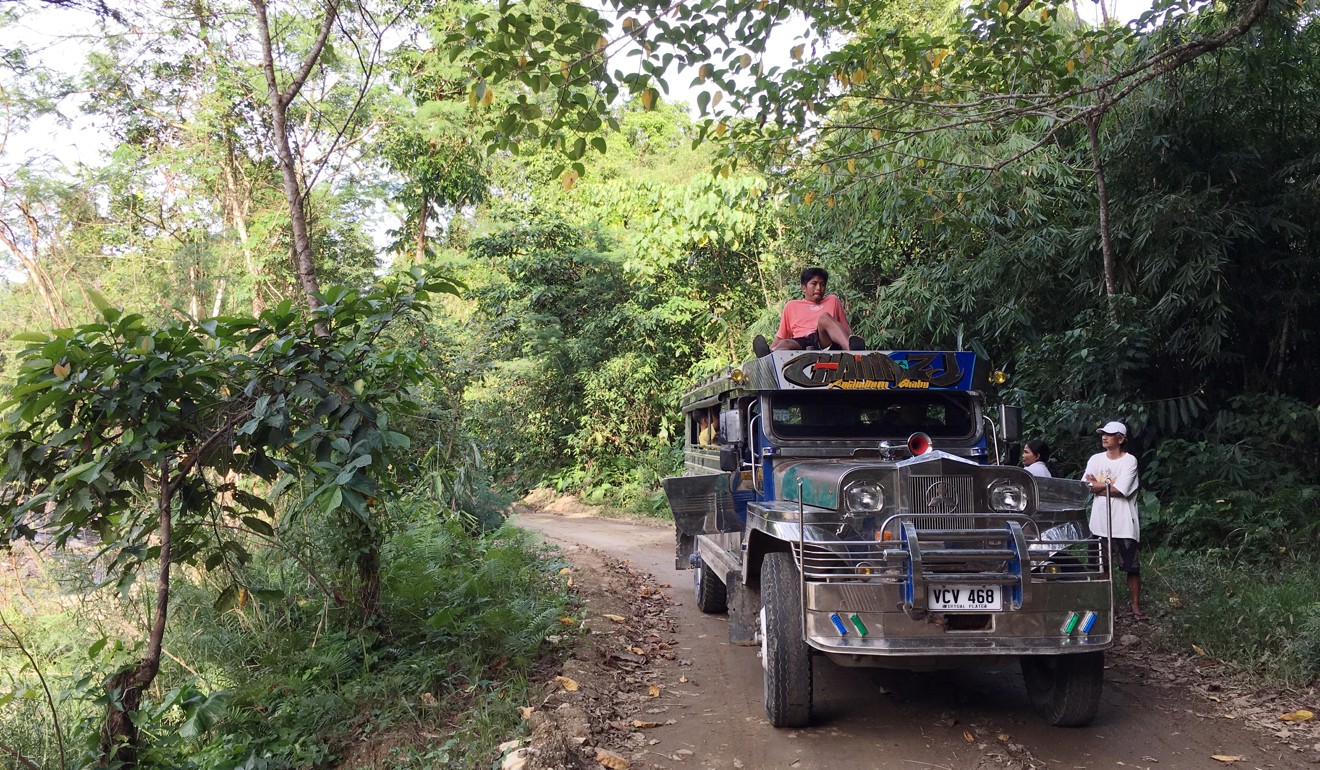
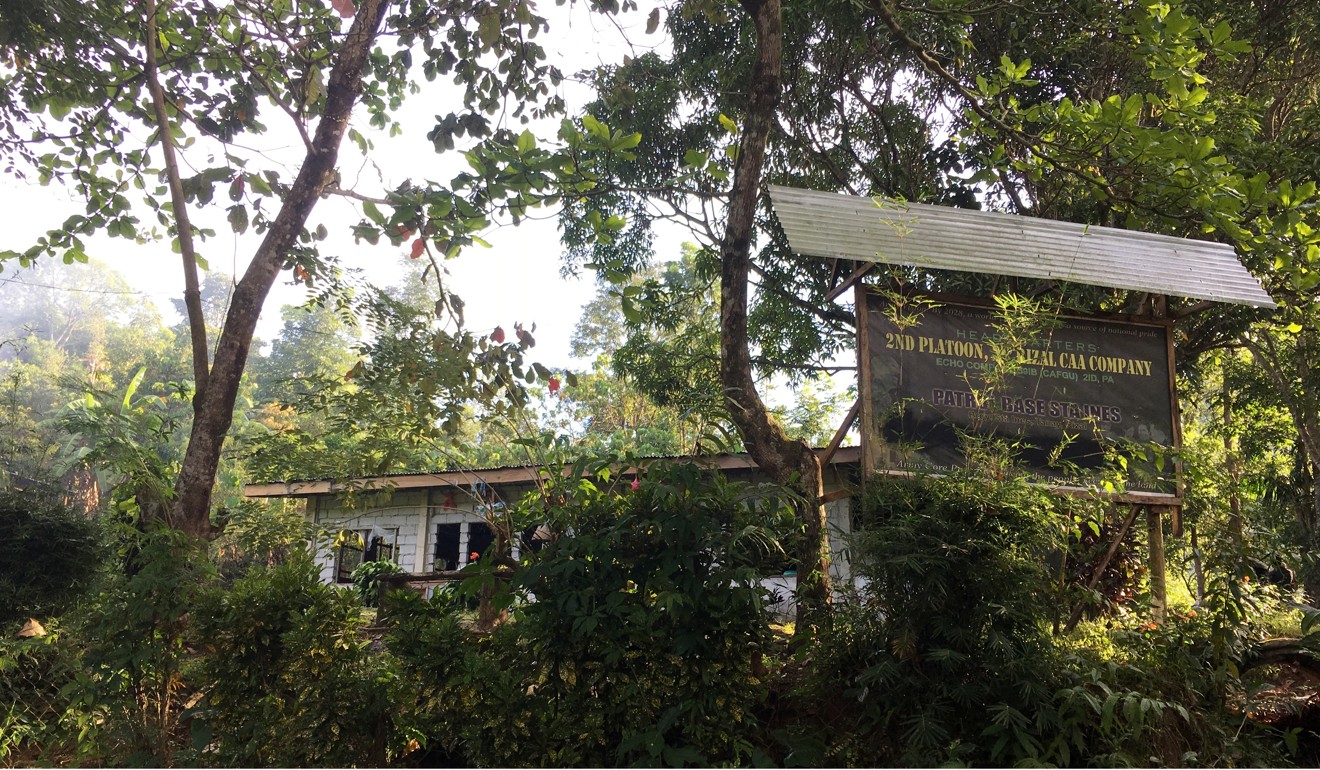
    It takes 13 crossings – a rocky journey by motorcycle, jeep or boat – from the administrative centre of the Santa Ines district to reach the remote area known as Sitio Nayon, the ancestral lands of the historically nomadic Dumagat tribe.

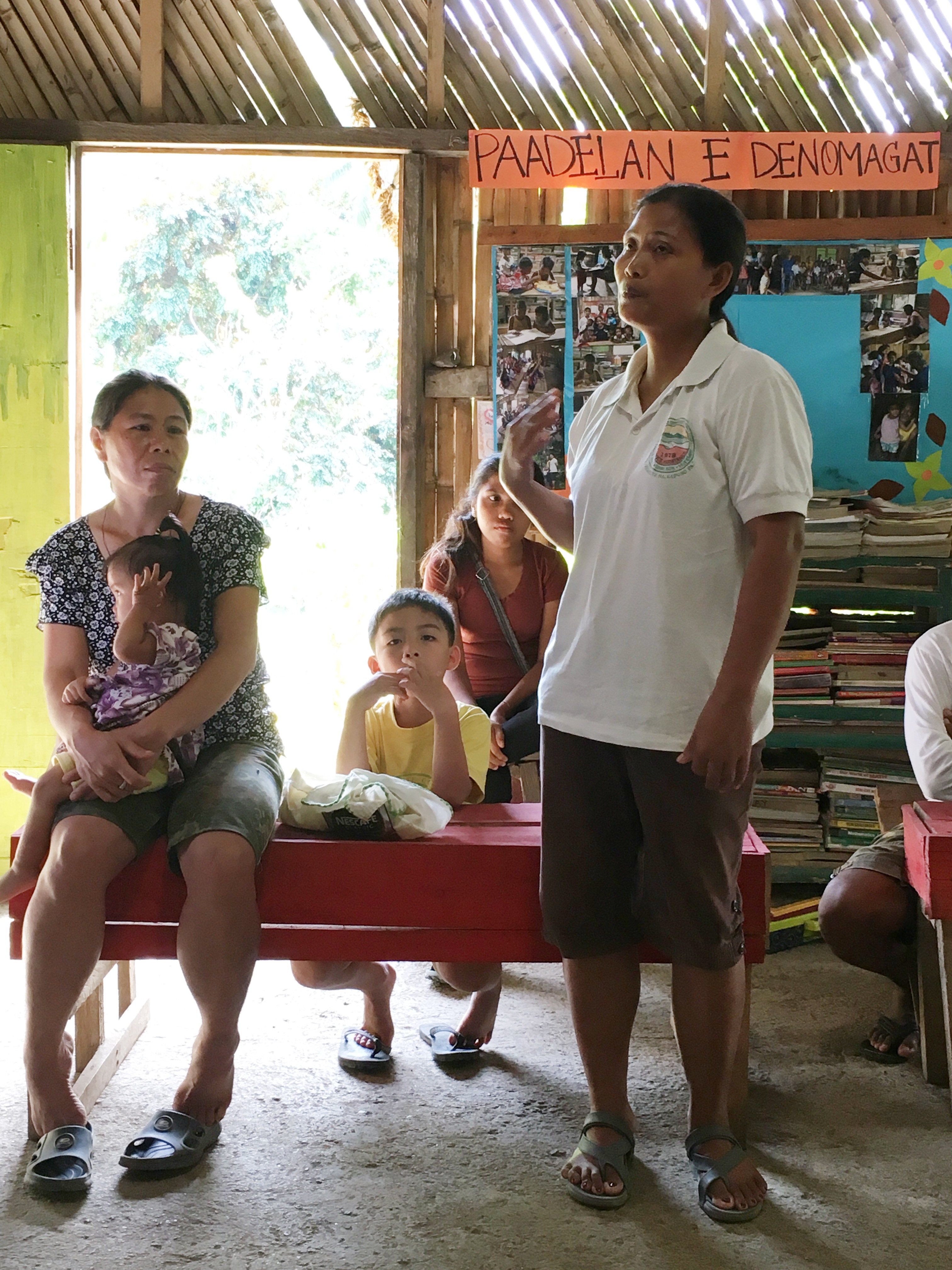
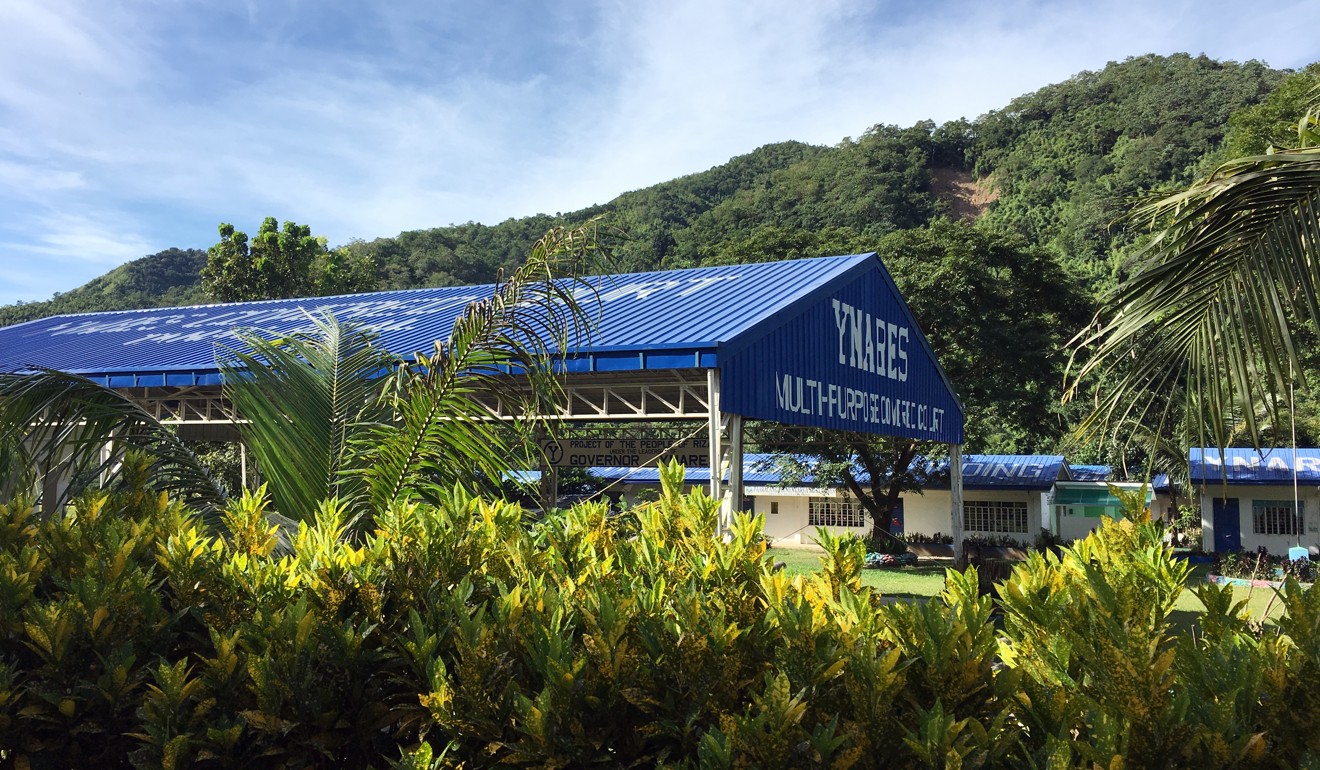
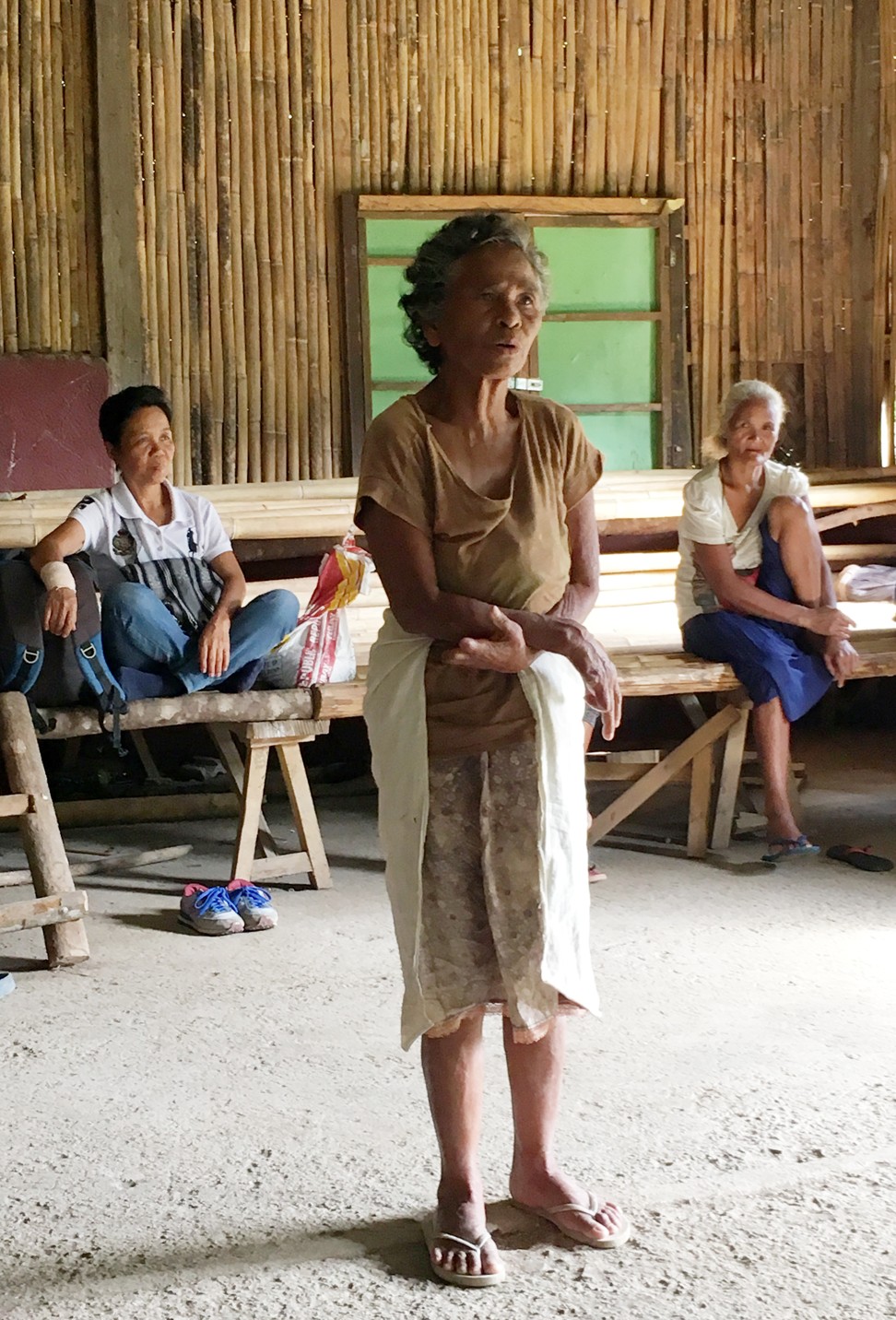
    Even by jeepney, the ubiquitous open-backed passenger truck, the journey takes an hour. Despite the distance, dozens of anxious villagers came together at the local community hall one afternoon to speak out against what they see as a looming threat to their way of life: the China-funded Kaliwa dam.

    “What will happen if we are forced to go elsewhere? We don’t know where to go,” Dante Alcien, from a nearby district in Lumutan, Quezon province, said to the villagers. “The Chinese government is committing a grave sin by building this dam. They are invading our territory.”

    The Dumagats fear that the 12.2 billion peso (US$231 million) mega dam, being built to augment water security for rapidly urbanising Metro Manila will displace them from the lands they have called home for generations.

    While the government projected that only 56 families would be directly displaced by the dam, villagers are concerned about the unknowns: a lack of information from the government, the potential environmental and flooding impact, and the prospect of approval for bigger dams in their river basin.

    Across the affected areas of Quezon and Rizal provinces, indigenous peoples have geared up for a long fight. It is a battle that has been raging for nearly four decades – starting in the late 1970s, when the project was first conceived during then strongman Ferdinand Marcos’ dictatorship.
    In late November, the dam officially got the go-ahead to proceed when a loan agreement and commercial contract were signed during Chinese President Xi Jinping’s high-profile visit to Manila. Twenty-nine deals were signed during his trip, marking the rapprochement between the two countries under the administration of Philippine President Rodrigo Duterte.

    The Kaliwa dam has been both a priority for China in the Philippines and a flagship water project for Duterte’s “Build, Build, Build” programme. Officials aimed to break ground quickly to allay concerns about the security of Manila’s water supply and the length of time it is taking the promised Chinese funds to come through.

    “It doesn’t look good that after waiting for 38 years, your president … cannot even inaugurate it, and this is just a small project in relation to the others,” said Reynaldo Velasco, administrator of the Metropolitan Waterworks and Sewerage System, the government agency that heads the project. “This is how we do things in the Philippines; only in the Philippines.”
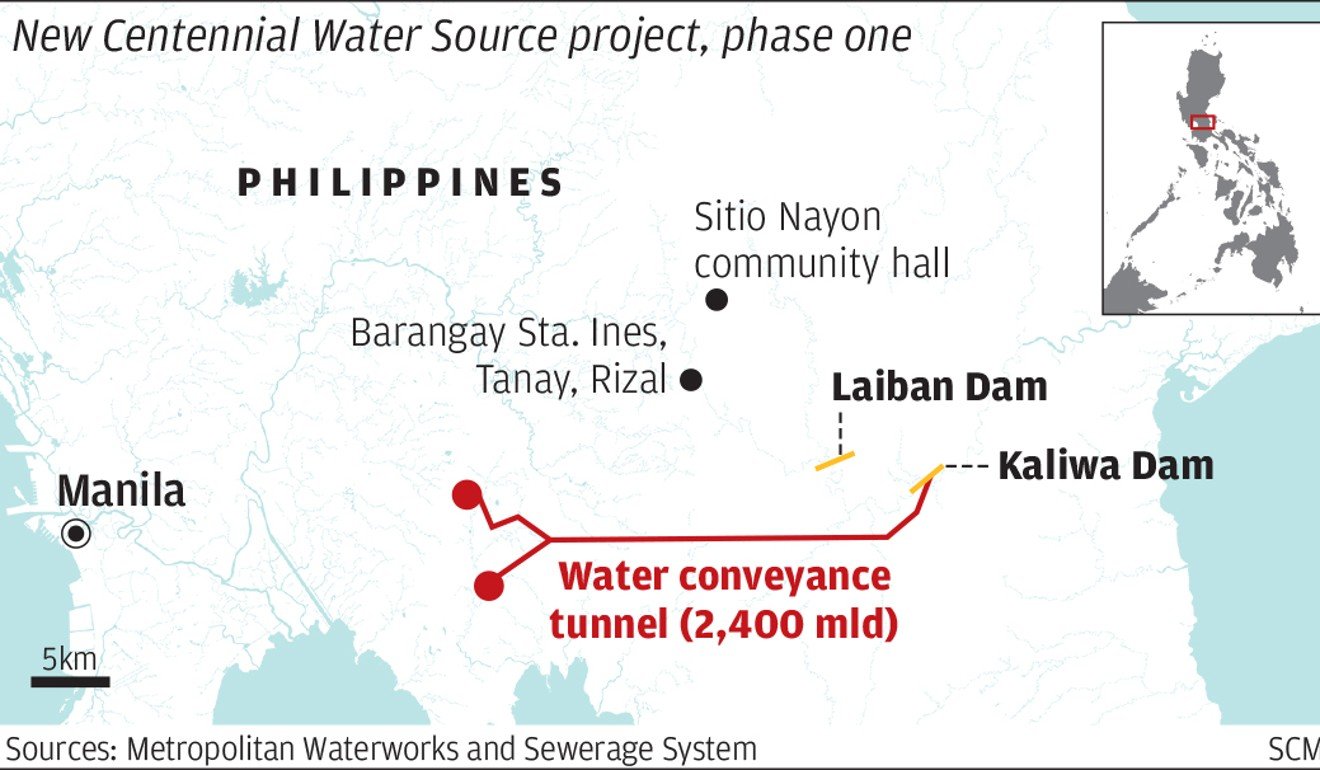
    The dam will supply an extra 600 million litres (158.5 million gallons) of water per day to Metro Manila – the seat of government and one of the three defined metropolitan areas of the Philippines. It was approved for construction in May 2014 by the National Economic and Development Authority and is the first phase of the broader New Centennial Water Source project, likely to be followed by the larger Kanan and Laiban dams.

    All three projects will stem from the Kaliwa-Kanan-Agos River Basin, with the Kaliwa dam set to be built in eastern Quezon province and connected to Metro Manila through neighbouring Rizal province by a 27.7km water supply tunnel, capable of conveying 2.4 billion litres per day.
    Chinese funding was earmarked for the Kaliwa dam as part of the US$9 billion in pledges that Duterte secured from Beijing in 2016.

    The Chinese government has poured funding into megaprojects around the world, in what observers see as a concerted effort to expand the country’s global presence and influence.

    Projects funded by Beijing have drawn criticism for laxer lending standards, and raised questions about transparency and the involvement of state-owned contractors. But Duterte, known for his anti-Western rhetoric, welcomes Chinese trade and aid, including Beijing’s support for his bloody war on drugs.
    For the Kaliwa dam, the financing model is official development assistance from China, switched over in June 2017 from a public-private partnership. The Export-Import Bank of China, the state-owned provider of export financing, will fund 85 per cent of the project, with the Metropolitan Waterworks and Sewerage System footing the rest of the bill.

    Under the official development help model, the Chinese embassy in the Philippines recommended three Chinese companies for the dam. State-owned China Energy was formally awarded the contract in August.

    Construction is expected to begin next year and finish by 2023, but Velasco has asked the Chinese contractor to finish the dam before Duterte’s term ends in 2022, joking that he would hang the company’s country manager from a large tree if it was not finished in time.

    “I already put out the rope for him – I’m just kidding,” he said in his office. “I’m asking them, because it is a big giant company in China, to do it earlier, before my president steps down … It’s possible. They have the technology. We have vetted their capabilities, and we agreed that they should work 24 hours [a day].

    “Of course, we cannot push them too hard, [potentially] sacrificing the quality of the work.”

    Globally, concern has been growing about the potential “debt trap” lurking in Chinese development projects. In the Philippines, worries are compounded by a 2007 government kickbacks scandal with a Chinese telecoms company, and by historic tensions from overlapping claims in the energy-rich South China Sea, waters that Manila refers to as the West Philippine Sea.

    “The Chinese are already claiming our territory in the West Philippine Sea, and now they want to gain more by entering into a contract for this dam,” Alcien, the Dumagat villager from Quezon, said. “Are they content yet from how much they have got? It feels like the Chinese are being greedy.”
    So far, foreign direct investment from China accounts for only about 3 per cent of the Philippines’ total, lagging far behind countries such as Japan, the United States and Indonesia. But Chinese capital has been flowing into the country rapidly, nearly doubling in the first three months of this year. In 2017, Chinese investment in the Philippines surged 67 per cent from a year earlier to US$53.8 million.

    Chinese foreign ministry spokesman Geng Shuang said in late November that it was impossible for the Philippines to fall into a “debt trap” from accepting China’s loans, since those borrowings made up only a small amount of the country’s total foreign debt.

    “China funds projects in the Philippines based on their needs,” Geng said. “We believe that the relevant projects will continue to improve people’s livelihoods and spur economic development, giving new impetus for their growth.”
    One much-touted Chinese investment is the US$62 million Chico River Pump irrigation project. Led by the Philippines’ National Irrigation Administration, the system will provide “a stable supply of water” to around 8,700 hectares (25,000 acres) of agricultural land, benefit 4,350 farmers and their families and serve 21 districts in the northern Luzon provinces of Cagayan and Kalinga, according to a government report.

    Although originally envisioned as a dam, it was eventually scaled down to a river pump amid decades of local resistance.

    “It’s only our current president who likes China. Before, it’s always the US [with whom the Philippines had close ties], right?” said Ricardo Visaya, administrator for the National Irrigation Administration, which also provided technical consultation for the Kaliwa dam.

    “But really, you can see the result of the cooperation that we established with China … and compared to other countries, it’s cheaper. So there are some [criticisms]. That is normal. There will always be negative reactions as well as positive reactions.”

    Velasco, from the Metropolitan Waterworks and Sewerage System, said debt would not be an issue for Kaliwa. The Chinese contractor, following Velasco’s instructions, would also hire Filipinos for non-technical jobs to spur local development, he said.

    “We don’t want people from outside to bully us,” Velasco said. “They are all employees, we are the employer … They have no other choice, or I will send them back home and I will ask their government to change them.”

    China Energy did not respond to multiple requests for comment. The Chinese consulate in the Philippines declined to make ambassador Zhao Jianhua available for an interview, and did not respond to specific questions about the Kaliwa dam.
    The dam is intended as a medium-term solution to Metro Manila’s water security, supplementing the Angat Dam, which provides most of the city’s water. According to the waterworks and sewerage system, water supply levels for the city are 7 to 10 per cent above demand, and planning ahead will avoid the need to substantially raise consumers’ water tariffs.

    International entities such as the World Bank and the Manila-based Asian Development Bank (ADB) are also working with Metro Manila on its water security programme, with ADB financing the Angat water transmission project and providing consultation for the Kaliwa dam.

    “We are helping them [on Kaliwa]. That project was there, even before, but we will be continuing our assistance on the strategy – technical assistance,” Ramesh Subramaniam, director general of Southeast Asia for the ADB, said.

    But Philippine environmental and rights groups have disputed the need for the Kaliwa dam, pointing to alternatives such as greater adoption of green water catchment – the collection of rainwater – as well as improving water efficiency in existing pipelines and using smaller-scale water sourcing projects.

    They argue the dams of the New Centennial Water Source project could increase the risks of flooding and damage to 28,000 hectares of forest, while displacing at least 30,000 mostly indigenous people.
    “We’re questioning the logic of a water project that will contribute to the degradation to the forests of the watershed,” said Leon Dulce, national coordinator for the environmental advocacy group Kalikasan. Alternatives existed that “do not require this scale of risk”, he said.

    Dulce and others warned that fierce opposition and action from local governments and communities in Quezon and Rizal could stall the project. That action could include petitioning the Philippines Supreme Court to grant a Writ of Nature against the dam to protect a constitutionally guaranteed right to a healthy environment.

    Though government officials such as Velasco call the dam a “done deal”, indigenous communities on the ground are not likely to budge because the stakes are so high.

    “The Dumagat and Remontados [tribes] have a symbiotic relationship with nature, living in their ancestral domain for centuries,” said Pete Montallana, chair of the Save Sierra Madre Network Alliance, and coordinator of the Indigenous Peoples Apostolate of the Prelature of Infanta. “Their culture is attached to that. To uproot them is literally to kill them as a people.”
    Ramcy Astoveza, a Dumagat member of the National Commission on Indigenous People, said the law ensured indigenous communities in the Philippines to the right to free, prior, and informed consent, or the power to approve or disapprove any project in their ancestral domain, including the Kaliwa dam. The commission would facilitate the process for the government to obtain consent of the Dumagat-Remontado in Tanay and General Nakar, Quezon, he said.

    Also in Santa Ines, more than 100 villagers gathered on a Saturday morning for mass at the local Catholic Church, where leaders introduced a resolution to oppose the dam and assert the people’s rights to their ancestral lands.

    After a detailed explanation of the implications of the project from Jennifer Haygood, senior researcher from the Ibon Foundation, an independent think tank, the priest asked people to stand if they opposed the dam. Everyone, young and old, rose in the narrow wooden pews.

    “At the end of the day, we just have to fortify our local community’s defences,” Dulce said.

    “They are the first and last line of defence against these projects. They have been able to successfully barricade against the dam for 40 years, and together with the indigenous people, we are ready to barricade against the dam for 40 more years, if it has to come to that point.”

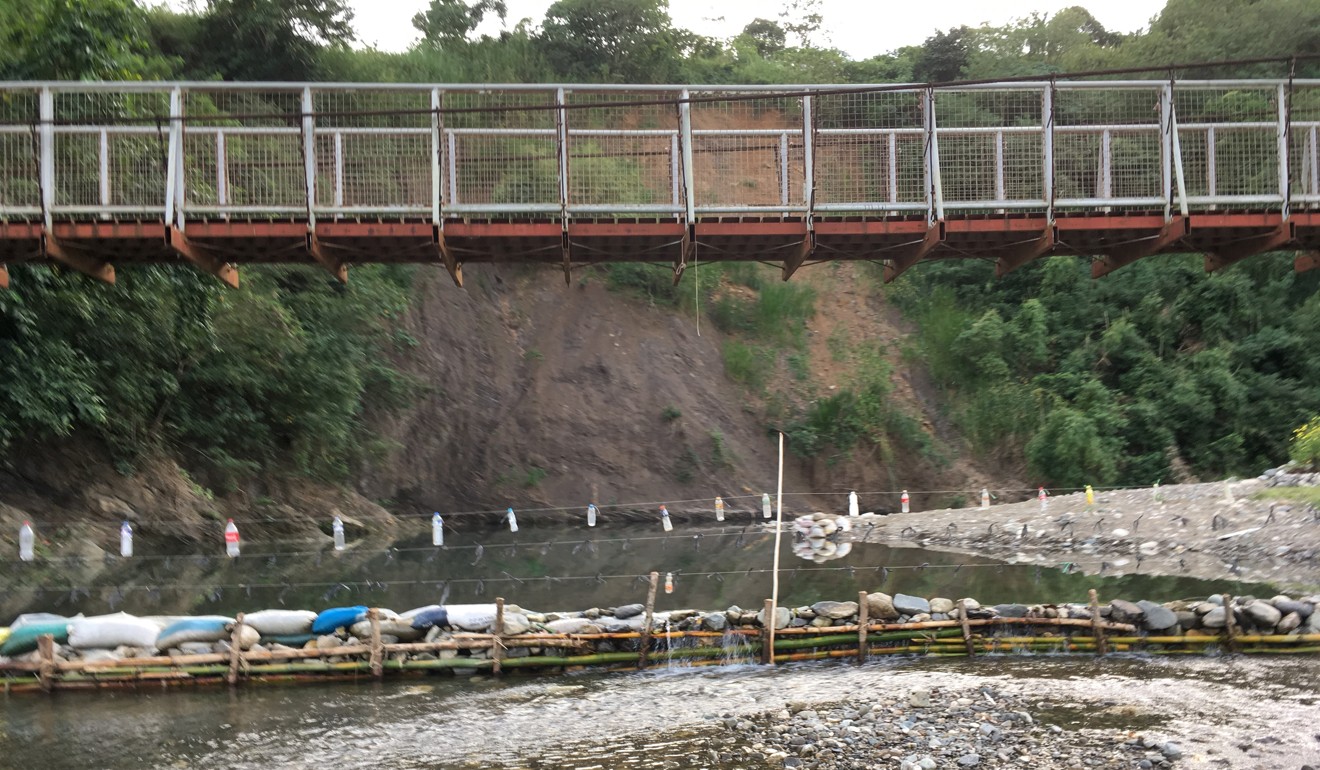
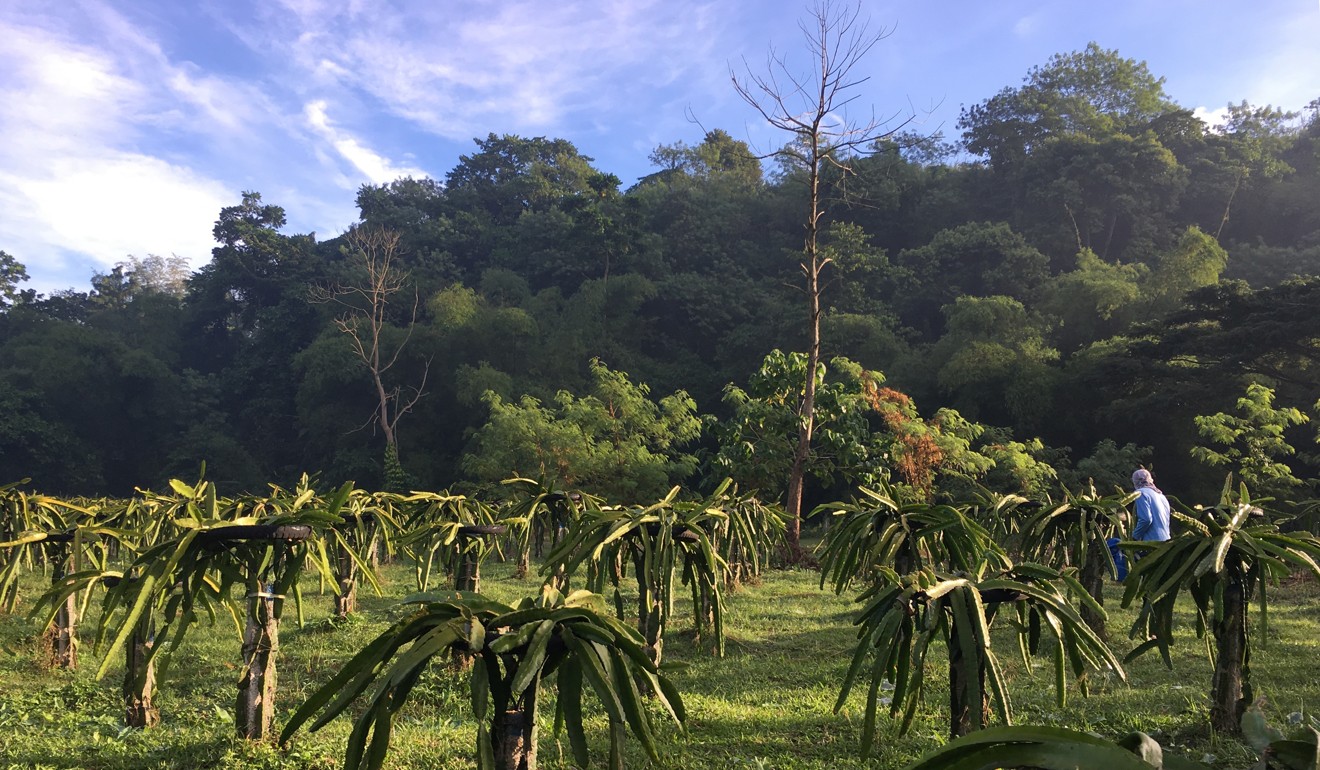
    Several river crossings away, at the Sitio Nayon community hall, dozens sat among shelves of donated books to air their grievances and fears. Just outside was their coveted river, and around the bend unpaved paths littered with slabs of rock. All around were long stretches of greenery that bled into the rugged outline of the Sierra Madre: balete fig trees, heartleaf plants, coconut trees and dragonfruit plantations.

    “I have been part of the resistance since I was young,” said a semi-nomadic villager named Miling, 66. “Because for us, this land is our life.”

    Another elder, a septuagenarian known as Loida, recalled travelling into the city to protest when she was younger. But she has since passed the baton to her grandchildren. As she spoke, she turned to her fellow villagers, her voice steady but her tone urgent.

    “I have not spoken to President Duterte personally, but he promised he would support us indigenous people,” she said. “But what is he doing now? He wants us to drown.

07/12/2018

China-U.S. dialogue on rule of law and human rights concludes in Beijing

BEIJING, Dec. 6 (Xinhua) — The eighth China-U.S. Dialogue on Rule of Law and Human Rights concluded in Beijing Wednesday.

Jiang Jianguo, deputy head of the Publicity Department of the Communist Party of China Central Committee, addressed the opening session of the three-day event.

Jiang expressed the hope that the dialogue between China and the United States in the field of human rights could comply with the trend and look at the big picture, respect differences and communicate equally, deepen cooperation and enhance mutual trust, in order to play a unique role in promoting the cause of human rights of the two countries and the healthy development of China-U.S. relations.

Huang Mengfu, chairman of China Foundation for Human Rights Development, said the dialogue, initiated in 2009, had become an important platform for non-governmental organizations of both countries to conduct exchanges on human rights, effectively enhancing mutual understanding.

“It reflects the good wishes of both sides to contribute to China-U.S. relations through people-to-people communication and exchanges,” Huang added.

Next year will mark the 40th anniversary of the establishment of diplomatic relations between the two countries, said Stephen A. Orlins, president of the National Committee on U.S.-China Relations.

Orlins said he hoped the dialogue would have a positive influence on relations between the two countries and called for confidence in the future of U.S.-China relations.

Over 50 experts and scholars from China and the United States attended the event. The American representatives visited the Supreme People’s Court and Beijing Internet Court on Wednesday.

05/12/2018

China ‘rejects German human rights delegation’s request’ to visit Xinjiang

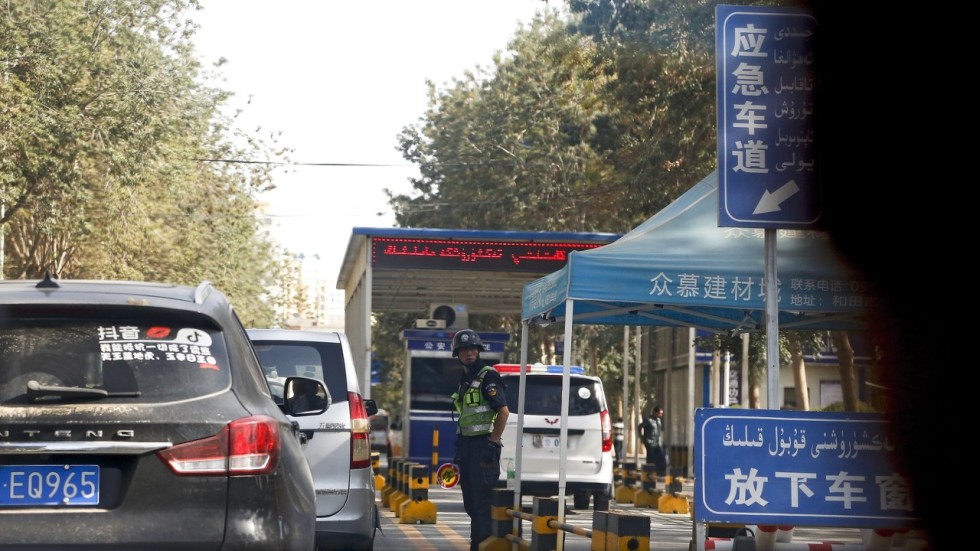
China has denied a German human rights delegation access to the far western region of Xinjiang to investigate mass detention centres for Uygurs, according to the German foreign ministry.

German Human Rights Commissioner Bärbel Kofler said on Tuesday that the request was made as part of preparations for the annual German-Chinese Human Rights Dialogue in Lhasa on Thursday and Friday.

“I am shocked by reports of the treatment of the Turkic Uygur minority, more than one million of whom are estimated to be imprisoned in internment camps in Xinjiang,” Kofler said, adding that she would continue to ask for permission to travel to Xinjiang.

She said she would also raise Germany’s concerns about religious freedom, civil society, and other human rights issues in China during the meeting in Tibet.

Germany has been a vocal critic of China’s human rights record, including the interment camps in Xinjiang

China says the camps are vocational training centres and part of its anti-terrorism efforts, but critics say Uygurs are forced into centres in violation of human rights.

Former inmates and monitoring groups say people in the camps are subjected to prison-like conditions and forced to renounce their religion and cultural background.

On a trip to China last month, German Foreign Minister Heiko Maas urged Beijing to be more transparent about conditions in the camps.

Germany, along with the United States and France, called on China to close the camps during a United Nations review of China’s human rights record in Geneva last month.

Last week, Uygur woman Mihrigul Tursun told the United States Congress that she was tortured multiple times while detained in one of the centres, where a number of detainees died.

After the dialogue in Tibet, Kofler will return to Beijing to meet German President Frank-Walter Steinmeier, who is on a state visit.

Last year’s human rights dialogue was cancelled by China, with neither China nor Germany saying why it was called off.

05/12/2018

Seoul voices concerns as more Chinese military aircraft spread their wings in South Korean air defence zone

Lee Jeong-ho reports on China's diplomacy for the Post. He also covers East Asian security and defence stories. ” data-title=”<a href="/author/lee-jeong-ho">Lee Jeong-ho</a>” data-html=”true” data-template=”

” data-original-title=””> 

6SHARE

Related Articles

South Korea has voiced its frustration about repeated intrusions into its air defence identification zone by Chinese military aircraft, moves that analysts say reflect Beijing’s opposition to strengthening ties between Seoul, Tokyo and Washington.

South Korean authorities said a Chinese plane, possibly a Shaanxi Y-9 electronic warfare and surveillance aircraft flew into the Korean zone Monday last week without notice. The plane entered near Socotra Rock in the Sea of Japan, or East Sea, at about 11am and flew out and into Japan’s air defence identification zone about 40 minutes later.

The plane re-entered the South Korean air defence zone, near the southeastern city of Pohang, at about 12.43pm. Then it travelled up to South Korea’s Exclusive Economic Zone in the Sea of Japan, cutting between the South Korean mainland and Ulleung island.

It was unusual for a Chinese aircraft to have taken that route. The plane was reported to have left the zone at 3.53pm.

Air defence identification zones are not covered by any international treaty and it is standard practice to notify the country concerned before entering its airspace.

The aircraft did not enter South Korean territorial airspace, which under the United Nations Convention on the Law of the Sea is defined as 12 nautical miles from shore.

According to the South Korean Air Force, the number of Chinese military aircraft entering its identification zone is rising. In 2016, there were about 60 incursions, 70 in 2017 and 110 were reported up to September this year.

Seoul called Du Nongyi, the Chinese military attaché to South Korea, to its defence ministry after Monday’s incident to expressed its “serious concerns” and called for “measures to prevent recurrences”.

A middle-ranking South Korea Air Force officer said Seoul paid “extra attention” to the incident.

Security analysts said the flights were a demonstration of China’s worries about increased US military activity in the region if US-North Korea negotiations failed.

Sending military planes over area allowed China to extend its surveillance and sent a message that it was watching and, if necessary, willing to act to protect its interests in the region, analysts said.

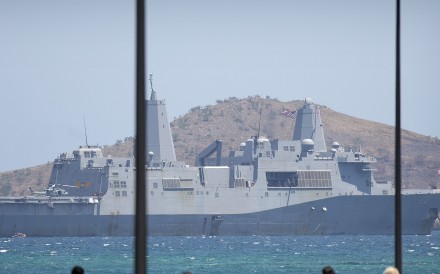
The US has sent military assets, including nuclear-capable B-52 bombers, to the Sea of Japan, prompting criticism from Beijing and Pyongyang. The US has long said North Korea’s behaviour was justification for joint military exercises with South Korea. These were stepped down this year to encourage Pyongyang at the negotiation table but could be stepped up again if talks on denuclearisation fail.

“China’s moves are part of its grand strategy to exert greater influence, presence, and pressure in the Indo-Pacific region … Possible failure of US-North Korea negotiations would be in [Beijing’s] calculations,” said Ryo Hinata-Yamaguchi, a visiting professor at Pusan National University in South Korea and adjunct fellow at the Pacific Forum – a donor-funded, non-profit foreign policy research institute based in Honolulu, Hawaii.

“I expect the [US-South Korea] exercises to resume at full scale [if] the US-North Korea negotiations or inter-Korean relations deteriorate … when both Washington and Seoul view that [the drills are] necessary.”

Zhao Tong, a fellow with the nuclear policy programme at the Carnegie-Tsinghua Centre for Global Policy in Beijing, said Monday’s overflight had several meanings.

The resumption of US-South Korea drills and Japan’s recent military modernisation “would be viewed by China as a direct threat to its own security and the overfly of Chinese aircraft could be used to send a deterrence signal”.

“Japan, in particular, is hosting increasingly advanced US military assets on its territory. Chinese reconnaissance aircraft flying in the Sea of Japan can help it keep an eye on what is going on in that region,” Zhao said.

Beijing fears the strengthening of an alliance network between the South Korea and Japan and, consequently, the completion of a US-South Korea-Japan triangle, often referred to as an Asian Nato.

South Korea and Japan signed a military intelligence pact in 2016, which China criticised as a deal between countries that shared a “cold-war mentality”.

“For China, the formation of a US-South Korea-Japan alliance triangle would be one of their biggest concerns as it would essentially be a powerful containment strategy against Beijing,” Hinata-Yamaguchi said.

“China would take, and has taken, measures to avoid the formation of an US-South Korea-Japan alliance triangle, such as the [push for] ‘three positions’ promised between China and the South Korea in the autumn of 2017,” Hinata-Yamaguchi said.

But Beijing played down the flight and called it a “routine arrangement”.

Ren Guoqiang, spokesman at the Ministry of National Defence, said last week that Chinese forces were “in line with the international law and practice” and the South Korea side “didn’t have to be too surprised about it”.

The ministry did not respond to requests for further comment.

03/12/2018

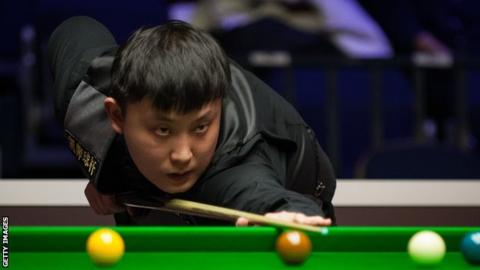
Yu Delu and Cao Yupeng match-fixing: Chinese pair banned in snooker corruption scandal

Yu Delu
Yu Delu’s highest finish at a ranking event was the semi-finals of the 2016 Scottish Open

China’s Yu Delu has been banned from snooker for 10 years and nine months after a major match-fixing inquiry.

His compatriot Cao Yupeng also pleaded guilty to fixing and was banned for six years, although three and a half years of his sentence are suspended.

Suspicious betting patterns in numerous matches were investigated over two years in one of the sport’s biggest corruption scandals.

Yu has been described as a “scourge to the game of snooker”.

As reported first by the BBC, the pair are the first Chinese players to be banned for cheating.

Yu, who manipulated the outcome of five matches over a two-and-a-half-year period, will serve the longest suspension since English player Stephen Lee was given a 12-year ban in 2013.

In one match, the stakes placed on the result totalled £65,000, which would have generated a profit of £86,000.

The 31-year-old reached the semi-finals of the 2016 Scottish Open and was ranked 43 in the world when he was charged.

Twenty-eight-year-old Cao, who fixed three matches, was runner-up in the Scottish event last year and world number 38 when initially suspended in May.

Both players were investigated by the World Professional Billiards and Snooker Association (WPBSA) before an independent tribunal ruled on their cases.

The tribunal, chaired by David Casement QC, found that Yu “engaged in deliberate and premeditated corruption to secure substantial financial gain for his friends/associates and himself.”

Yu also admitted lying to the investigator, failing to cooperate with the inquiry and betting on snooker when prohibited from doing so.

“It is very sad when talented players are attracted to the opportunity to make money from fixing matches,” said WPBSA chairman Jason Ferguson.

Cao Yupeng
Cao Yupeng “expressed his sorrow” over match-fixing and said he had financial difficulties

The fixed matches

Yu Delu admitted fixing in five matches:

  • Indian Open qualifiers: WON 4-3 v Martin McCrudden – 12 February 2015
  • Paul Hunter Classic: LOST 4-1 v Dominic Dale in Germany – 29 August 2015
  • Welsh Open: WON 4-3 v Ian Glover – 15 February 2016
  • European Masters qualifiers: LOST 4-1 v Michael Georgiou – 4 August 2017
  • Shanghai Masters: LOST 5-3 v Kurt Maflin – 15 November 2017

He also failed to report approaches to fix matches, did not cooperate with the investigation and breached rules by betting on snooker.

The scandals involved betting on markets in the Far East.

Yu won two of the five fixed matches, but had arranged for the correct score to be 4-3 to either player.

There is no suggestion any of the opponents were aware of the match-fixing plan.

Cao Yupeng admitted fixing in three matches:

  • Welsh Open: LOST 4-1 v Ali Carter – 15 February 2016
  • Indian Open qualifiers: LOST 4-0 v Stuart Bingham – 30 June 2016
  • UK Championship: LOST 6-1 v Stephen Maguire – 24 November 2016

Cao also failed to provide material that was requested during the investigation.

He told investigators that he received £5,000 for each of the matches he fixed and he was initially given an eight-year ban, but this was reduced to six – three and a half of which were suspended – because of his co-operation with the inquiry.

“Cao Yupeng has shown true remorse and he will assist the WPBSA in player education and in its fight against corruption, which is reflected in his reduced sanction,” said Ferguson.

Yu was given a 12-year ban, to match the sanction imposed on Lee five years ago, but this was reduced to 10 years and nine months because of his late guilty plea.

Analysis

Jamie Broughton, 5 live snooker reporter

These two players are well known in China, and this story will be headline news there.

Lengthy bans show that the sport’s world governing body, the WPBSA, has the capability and desire to investigate such cases all over the world, and not just in Europe.

Sanctions like this send out a clear message to any player tempted to get involved in match fixing that it’s not worth the risk of getting caught.

01/02/2018

Theresa May in talks with Chinese president Xi Jinping

Theresa May has met President Xi Jinping for talks on the second day of her visit to China.

At a joint press conference with Mr Xi, Mrs May said Britain and China were enjoying a “golden era” in their relationship.

And she wanted to “take further forward the global strategic partnership that we have established”.

The UK prime minister is in China at the head of a 50-strong business delegation.

With Mrs May’s discussions with Premier Li Keqiang on Wednesday largely given over to trade and Brexit, the talks with Mr Xi were due to focus on global issues, including North Korea’s nuclear ambitions.

After shaking hands for the cameras, Mrs May and Mr Xi were seated with their delegations on opposite sides of a large conference table at the Diaoyutai State Guesthouse in Beijing.

Mrs May hailed improved trading links between the two nations since Mr Xi’s state visit to Britain in 2015.

She added: “I’m very pleased with the people-to-people links we have been able to build on in education and in culture too.

“Also as you say we are both significant players on the world stage of outward looking countries.

“And as we both sit together as permanent members of the security council of the united nations, there are global challenges which we both face, as do others in the world.”

Image captionTheresa May outside the British Embassy in Beijing

Mrs May is understood to have raised environmental issues with Mr Xi – and she presented him with a box-set of the BBC’s Blue Planet II series, with a personal message from presenter Sir David Attenborough.

The show examined the effect of human behaviour on the environment and was referenced by Mrs May last month when she pledged to eradicate all avoidable plastic waste in the UK by 2042 as part of a 25-year green strategy.

Warm words

On the first day of her trip the prime minister announced a UK-China effort to strengthen international action against the illegal trade in ivory.

After meeting Mrs May in Beijing on Wednesday, Chinese Premier Li Keqiang said China would further open up its markets to the UK, including to agricultural products and financial services.

UK-China trade is currently worth a £59bn a year and Mrs May has said she expects deals worth a further £9bn to be signed during the course of her visit.

One of the UK companies travelling with the PM, health-tech firm Medopad, has said it signed more than £100m of commercial projects and partnerships with organisations including China Resources, GSK China, Peking University and Lenovo.

BBC political editor Laura Kuenssberg said the prime minister would want to build on the warm words from China when she meets Mr Xi, amid pressure on her from her own party and Brussels in recent days.

Fox urges Tories to focus on the ‘big picture’

By Laura Kuenssberg, political editor

International Trade Secretary Liam Fox is in China and wants his restive colleagues at home to focus on the big picture.

Listing the number of deals that have been done already this week during the prime minister’s visit he told me that building levels of trade with China is a real “success story”.

No 10 is confident that by the end of this marathon trip well over £9bn of new contracts will have been secured – such a high profile political investment edging deals over the line.

Dr Fox accepts it will take some to get trade deals done in the longer term. The UK will be limited not just before Brexit, but also during the transition period, in how much can get done.

31/01/2018

Theresa May unveils education deal at start of China visit

Theresa May has announced new education links with China as she arrives for a three-day visit to boost trade and investment after Brexit.

The initiative includes the extension of a Maths teacher exchange programme and a campaign to promote English language learning in China.

The UK prime minister has claimed her visit “will intensify the golden era in UK-China relations”.

But she has stressed China must adhere to free and fair trade practices.

In an article for the Financial Times ahead of her arrival, she acknowledged that London and Beijing did not see “eye-to-eye” on a number of issues – and she promised to raise concerns from UK industry about the over-production of steel and the protection of intellectual property against piracy.

‘Two great nations’

Other issues likely to be discussed include North Korea and climate change. It is not clear whether they will include human rights in Hong Kong.

Mrs May, who will hold talks with Chinese President Xi Jinping, is travelling at the head of a 50-strong business delegation, including BP and Jaguar Land Rover, as well as small firms and universities including Manchester and Liverpool.

Her first stop, Wuhan, in central China, is home to the largest number of students of any city in the world.

The education deal includes:

  • Extension of a maths teacher exchange programme for a further two years to 2020, enabling around 200 English teachers to visit China
  • Joint training of pre-school staff in the UK and China
  • Better information-sharing on vocational education
  • The launch of an “English is GREAT” campaign to promote English language learning in China
  • Education deals worth more than £550m, which it is claimed will create 800 jobs in the UK

Mrs May said new agreements signed on her trip would “enable more children and more young people than ever to share their ideas about our two great nations”, helping to ensure that “our golden era of co-operation will endure for generations to come”.

During the three-day trip, Mrs May is expected to focus on extending existing commercial partnerships rather than scoping out new post-Brexit deals.

She said she expected China to play a “huge role” in the economic development of the world, adding: “I want that future to work for Britain, which is why, during my visit, I’ll be deepening co-operation with China on key global and economic issues that are critical to our businesses, to our people, and to what the UK stands for.”

She acknowledged that her agenda “will not be delivered in one visit: it must be our shared objective over the coming years”.

Hong Kong concerns

But she added: “I’m confident that, as China continues to open up, co-operation and engagement will ensure its growing role on the global stage delivers not just for China, but for the UK and the wider world.”

In a statement ahead of the visit, a Chinese Ministry of Foreign Affairs spokesman said Beijing saw Mrs May’s trip as “an opportunity to achieve new development of the China-UK global comprehensive strategic partnership”.

But asked whether the UK had achieved its aim of becoming China’s closest partner in the West, he replied: “Co-operation can always be bettered. As to whether China and Britain have become the closest partners, we may need to wait and see how Prime Minister May’s visit this time plays out.”

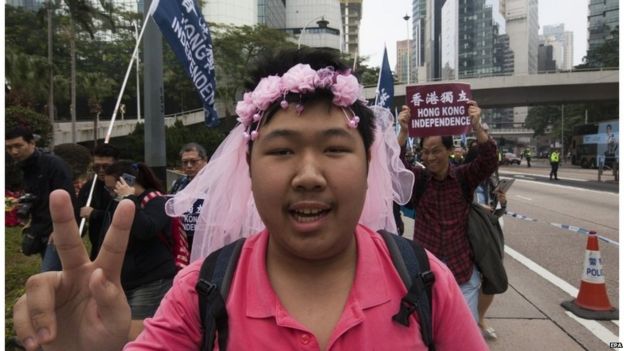
Pro-democracy protester in Hong KongImage copyrightEPA
Image captionCritics accuse China of abandoning its “one country, two systems” pledge on Hong Kong

In recent years, both countries have hailed a “golden era” in UK-Sino relations.

China has signalled its desire to invest in high-profile UK infrastructure projects, including the building of a new nuclear reactor at Hinkley Point – although its involvement has raised some national security concerns.

British trade with China has increased by 60% since 2010 and UK ministers are expected to use the trip to stress that the UK will remain an “excellent place to do business” after it leaves the EU next year.

The UK has said it will prioritise negotiating free trade agreements with major trading partners such as the United States, Australia and Canada after it leaves the EU in March 2019.

Earlier this year, the UK said it would not rule out becoming a member of the Trans Pacific Partnership free-trade zone, whose members include Japan, South Korea and Vietnam and which is considered by many as a counter-weight to Chinese influence in the region.

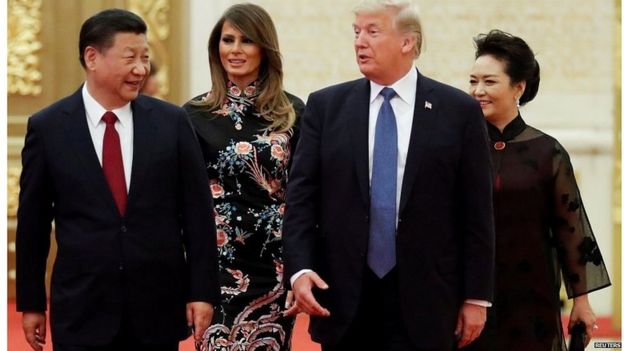
Chinese President Xi Jinping with his US counterpart Donald Trump in NovemberImage copyrightREUTERS
Image captionUS President Donald Trump and French counterpart Emmanuel Macron have both visited China recently

Lord Patten, the last British governor of Hong Kong, has urged Mrs May to use the visit to privately raise what he says has been the steady erosion of freedoms and rights in the former British colony in recent years.

Hong Kong is supposed to have distinct legal autonomy under the terms of its handover to China in 1997.

In a letter to the PM, Lord Patten and ex-Lib Dem leader Lord Ashdown said its residents needed assurances that the UK’s growing commercial relationship with China would not “come at the cost of our obligations to them”.

Law of Unintended Consequences

continuously updated blog about China & India

ChiaHou's Book Reviews

continuously updated blog about China & India

What's wrong with the world; and its economy

continuously updated blog about China & India