Archive for ‘Politics’

01/02/2017

The Economist explains: What is India’s “Cold Start” military doctrine? | The Economist

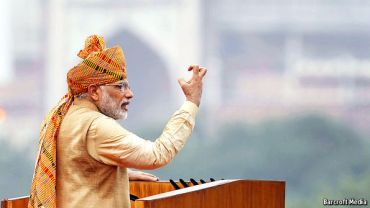
LAST week India celebrated its 68th Republic Day, the highlight of which is an elaborate parade to show off India’s military might (pictured).
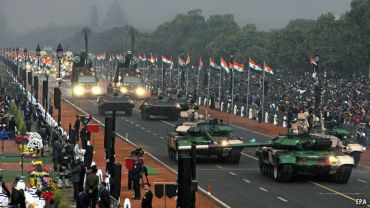
Soldiers goose-stepped and tanks rolled down Rajpath, New Delhi’s main ceremonial thoroughfare, as India’s president, Pranab Mukherjee, and this year’s guest of honour, Abu Dhabi’s Crown Prince Sheikh Mohammed bin Zayed al Nahyan, looked on. Fighter jets screeched overhead. The annual display was particularly pointed this year, coming barely three weeks after Bipin Rawat, India’s new army chief, acknowledged in an interview the existence of the country’s “Cold Start” military doctrine. What is Cold Start and why did General Rawat, who took office on December 31st, mention it in public?

Cold Start is the name given to a limited-war strategy designed to seize Pakistani territory swiftly without, in theory, risking a nuclear conflict. It has its roots in an attack on India’s parliament in 2001, which was carried out by terrorist groups allegedly used as proxies by Pakistan’s powerful intelligence services (ISI). India’s response to the onslaught was a flop: by the time its lumbering Strike Corps were mobilised and positioned on the frontier, Pakistan had already bulked up its defences, raising both the costs of incursion and the risk that it would escalate into a nuclear conflict. Cold Start is an attempt to draw lessons from this: having nimbler, integrated units stationed closer to the border would allow India to inflict significant harm before international powers demanded a ceasefire; by pursuing narrow aims, it would also deny Pakistan a justification for triggering a nuclear strike. Yet India has refused to own up to the existence of the doctrine since it was first publicly discussed in 2004. Nor was its rumoured existence enough to stop Pakistani terrorists from launching devastating attacks in Mumbai in 2008, killing 164 people.

One reason for India to keep its cards close to its chest is that it may not be capable of acting on Cold Start. Indeed, India’s army chief admitted to civilian leaders after the 2008 attacks that his battalions were “not ready for war” with Pakistan. It probably did not help that India’s political leaders never signed off on it either, as a leaked diplomatic cable from 2010 suggested. Yet things have taken a different turn since an assault last September on the Indian garrison of Uri in Kashmir, which left 19 dead. In a departure from India’s traditionally defensive posture, the government responded by authorising “surgical strikes” along the frontier, targeted at “terrorist launchpads” and “those protecting them”. By acknowledging the doctrine, which would demand a more potent retaliation than these commando operations, the army seems keen to signal that it has a range of strategic options, introducing an element of unpredictability in the seriousness of its response. Political leaders may have also come closer to embracing it. The government of Narendra Modi has shown keen interest in national-security matters, moving India into the world’s top-five defence spenders, addressing servicemen’s grievances and mulling a wholesale revamp of the armed forces’ structure.

Whether the strategy will prove effective remains to be seen. By pursuing Cold Start, the army may have reaped “the worst of both worlds”, says Walter Ladwig, a scholar at King’s College London. Should it come after a terrorist attack prepared with the ISI’s knowledge, India’s response would lack the element of surprise. That makes Cold Start a dubious deterrent. And Mr Rawat’s recognition of the doctrine’s existence provides further reason for Pakistan to develop “tactical” nukes—tiny warheads that could easily end up in inexpert or malevolent hands. The risk of overreaction on Pakistan’s side is heightened by India’s continued obfuscation about what exactly the concept means, making the whole premise seem misguided. Indeed, Pakistani officials have already threatened to use nuclear weapons, should India put Cold Start into action. In conventional war, confusing an enemy can lead to victory; when two nuclear powers are involved it is a surer step towards a disastrous draw.

Source: The Economist explains: What is India’s “Cold Start” military doctrine? | The Economist
Tags:
31/01/2017

The Chinese man trapped in India for half a century – BBC News

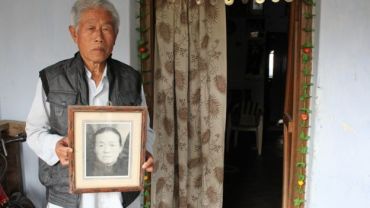
In 1963 a Chinese army surveyor crossed into India and was captured, weeks after a war between the countries. Wang Qi has been unable to leave India ever since – and longs to see his family in China.

BBC Hindi’s Vineet Khare met him.

Tirodi village is a nearly five-hour drive from the nearest airport in Nagpur in central India.

I am here to meet Wang Qi, a Chinese army surveyor who entered India in 1963 but could never go back. For over five decades, he has been longing to see his family back home.

Sporting cropped white hair, black trainers and a body warmer, Mr Wang, who is now in his eighties, hugs me when we meet. We are about to try and make video contact with his family more than 3,000km (1,864 miles) away in China.

Together we go to the government office, which is the only centre equipped with internet for miles around.

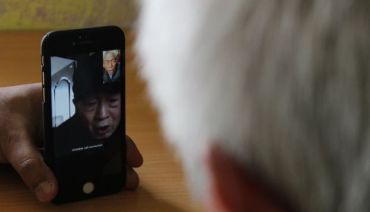
He watches in anticipation as I dial and then his eyes light up as the image of his elder brother Wang Zhiyuan, 82, appears on the screen, seated on a sofa in Xianyang, a city in China’s Shaanxi province.

The two brothers are seeing each other after more than 50 years. The conversation in Mandarin lasts 17 minutes.

“I couldn’t recognise him. He looked so old. He said he was alive just for me,” Wang Qi, also known by his Indian name Raj Bahadur, tells me in strongly accented Hindi as his three Indian-born children gather around to comfort him.

Mr Wang’s story is a long and sad one.

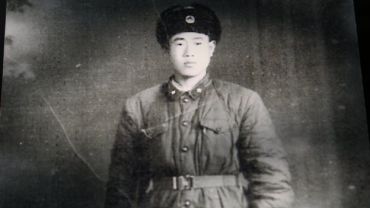
Born to a farmer family in Shaanxi with four brothers and two sisters, he studied surveying and joined China’s People’s Liberation Army in 1960.

Mr Wang says he was “tasked with building roads for the Chinese army” and was captured when he “strayed erroneously” inside India’s territory in January 1963.

“I had gone out of my camp for a stroll but lost my way. I was tired and hungry. I saw a Red Cross vehicle and asked them to help me. They handed me over to the Indian army,” he said.

Mr Wang’s mother died in 2006 before he could go back and see her

Indian officials said Mr Wang “intruded into India” and gave “false background and the circumstances” about his whereabouts to the authorities.

He spent the next seven years in a number of different jails before a court ordered his release in 1969.

Police took him to Tirodi, a far-flung village in the central state of Madhya Pradesh. He has not been allowed to leave the country ever since.

It’s still not clear whether Mr Wang is a prisoner of war. But he has been denied official Indian documents or citizenship and also been denied permission to travel back. His family says Mr Wang needs a document to exit India.

Senior local official Bharat Yadav agrees that there have been “deficiencies” and a “lack of interest” in the case.

“There are no suspicions about his actions. If he wants to go back, we will try and help him,” he said.

An official at the Chinese embassy, which helped him secure a passport in 2013, acknowledged he was aware of the issue. A response to questions sent to India’s federal home ministry is still awaited.

It has been a long, excruciating wait for Mr Wang.

Wang Qi joined China’s People’s Liberation Army in 1960

Be it language, food or a vastly different society, Mr Wang has had to adapt every step of the way.

“I began by working in a flour mill. But I cried in the night as I longed for my family. I missed my mother,” he said.

“I wondered what I had got into.”

Mr Wang married a local girl, Sushila, under “pressure from friends” in 1975.

“I was livid with my parents for marrying me off to an outsider. I had trouble understanding his language. I tolerated him for a few months. Then I got used to him,” she says with a smile.

Mr Wang tried his hand at business but his undefined legal status meant visits by local police.

Mr Wang married a local girl, Sushila, under “pressure from friends” in 1975

“I remember Mr Wang being beaten by the police for not bribing them. He was an honest man,” says BB Singh, his neighbour for many years.

“He always talked about his home in China. His family lived in utter poverty. He would cycle for miles with no break,” another former neighbour Jayanti Lal Waghela says.

Mr Wang wrote letters home but received his first reply only in the 1980s. Family pictures were exchanged.

He spoke to his mother for the first time in more than 40 years on the phone in 2002.

“She said she wanted to see me as her last days were near. I said I was trying to return. I wrote letters to everyone who mattered to provide me with exit documents but nothing moved.”

She died in 2006.

Mr Wang’s family in ChinaMr Wang’s nephew met him when he came to India as a tourist in 2009.

It was he who helped him to get the necessary documents for his passport.It is still not clear whether Wang Qi will be able to go to China – and if he did, would he want to return to India?

“My family is here. Where would I go?” he says, playing with his granddaughter in his lap.

Sushila is worried though. “I hope he comes back.”

Mr Wang with his family
Image captionIt is not clear whether Mr Wang will leave his family and return to China
24/01/2017

Xi Jinping portrays China as a rock of stability | The Economist

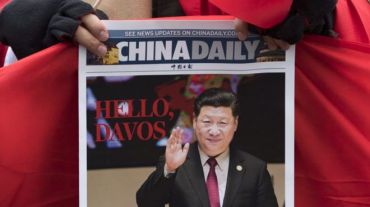
DELEGATES at the World Economic Forum in the Swiss resort of Davos often treat politicians as rock stars. But the fawning reception given to China’s leader, Xi Jinping, on January 17th was extraordinary.

He was the first Chinese president to attend the annual gathering of the world’s business and political elite. Even an overflow room was packed when he delivered, in his usual dour manner, a speech laced with literary references—rendered through bulky headsets into equally monotone translations. Mr Xi said little that was new, but the audience lapped it up anyway. Here, at a time of global uncertainty and anxiety for capitalists, was the world’s most powerful communist presenting himself as a champion of globalisation and open markets.

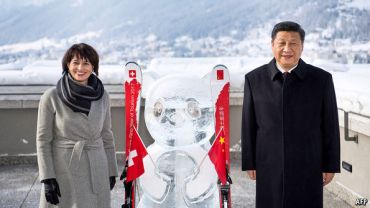
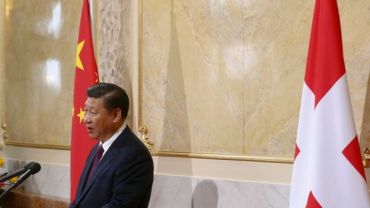
Mr Xi (pictured, next to a panda ice-sculpture) did not mention Donald Trump by name, nor even America, but his message was clear. “No one will emerge as a winner in a trade war,” he said, in a swipe at Mr Trump who has threatened, among other mercantilist acts, to slap heavy tariffs on Chinese goods. Mr Xi likened protectionism to “locking oneself in a dark room”, a phrase that delegates repeated with delight. His words seemed comforting to many of them after a year of political surprises, not least in America and Britain. Mr Xi quoted from Dickens to describe a “world of contradictions”, as he put it. “It was the best of times, it was the worst of times,” he said. Many foreign businesses complain about what they regard as a rise of protectionism in China, too—but no one could accuse Mr Xi of being out of tune with the Davos mood. China, Mr Xi assured delegates, “will keep its door wide open and not close it”.

The Chinese president also portrayed his country as a staunch defender of the environment. He said that sticking to the Paris agreement on climate change, which came into effect last year, was “a responsibility we must assume for future generations”. These, too, were welcome words to many listening: Mr Trump’s threat to reject the pact will make China’s commitment to it all the more crucial. The week of whose inauguration?

The timing of Mr Xi’s trip was fortuitous—according to the Financial Times his aides were working on it before Britain voted to leave the European Union and well before Mr Trump’s election victory. But he must have relished the points that those events enabled him to score at Davos. Mr Xi faces political battles of his own as he prepares for a five-yearly Communist Party congress in the autumn and a reshuffle right after it. He wants to install more of his allies in key positions. Standing tall on the world stage could help (and attending Davos will have reinforced the point to his colleagues that he is in charge of China’s economy, as he clearly is of every other main portfolio).

Mr Xi would have relished the occasion even had the predictions of many in the global elite a year ago proved accurate—that Britain would vote to stay in the EU and that Mr Trump would not win. The forum is one where embarrassing questions about China’s politics are seldom raised openly. Mr Xi could talk airily of China’s openness, with little fear of being asked why he is clamping down on dissent and tightening controls on the internet (last year this newspaper’s website joined the many foreign ones that are blocked). On January 14th China’s most senior judge condemned judicial independence as a “false Western ideal”.

Previously, the highest-ranking Chinese attendees had been prime ministers. In 2016 the vice-president, Li Yuanchao, who ranks lower than the prime minister in the party hierarchy, led the team. So why has Mr Xi waited until his fifth year as president to turn up? He may well have winced at the thought of doing so last year, when discussions were dominated by questions about China’s management of its slowing economy in the wake of a stockmarket crash and a sudden devaluation of the yuan. Many analysts still worry about China’s economy (not least its growing debt), but the West’s problems have loomed larger over the Swiss Alps this week.

And for all his uplifting talk, Mr Xi shows no signs of wanting to take over as the world’s chief troubleshooter, even if Mr Trump shuns that role. Mr Xi is preoccupied with managing affairs at home and asserting control in seas nearby (see article). “Nothing is perfect in the world,” the new Davos man sagely informed the delegates. But he is unlikely to take the lead in making the world a better place.

Source: Xi Jinping portrays China as a rock of stability | The Economist

Tags:
24/01/2017

5 Things Narendra Modi Will Be Listening For During His Chat with Donald Trump – Briefly – WSJ

Indian Prime Minister Narendra Modi is set to speak with U.S. President Donald Trump on Tuesday in a conversation that will set the tone for future relations.New Delhi hopes it can begin to decipher what the country’s top diplomat, S. Jaishankar, last week called a world in 2017 filled with “known and unknown unknowns”—a reflection on the rapidly-changing global landscape marked by Mr. Trump’s presidency in the U.S., turmoil in Europe and rising Chinese power.

Here are five things Mr. Modi will likely be listening for.

1 Pakistan

Mr. Trump has vowed to be tough on terror, a goal he shares with Mr. Modi. But it isn’t clear how that will shape the new U.S. administration’s views on Pakistan, India’s rival neighbor that Mr. Modi has called the epicenter of global terrorism.India’s security establishment will be watching to see if Mr. Trump puts greater pressure on Pakistan to stamp out terrorist groups on its soil and whether U.S. supply of aid and weapons to Islamabad, a long-standing thorn in India-U.S. ties, will diminish.Mr. Trump’s Pakistan policy will depend in large part on his approach to the conflict in Afghanistan, another big unknown Indians will be looking for more clarity on.

2 China

India is closely watching for clues on how Mr. Trump plans to tackle China, given the new U.S. president’s combative tone toward Beijing. A more-assertive China has in recent years driven closer U.S.-India collaboration on defense and security issues. In an address last week, Mr. Modi, without naming China, spoke about “rising ambitions and rivalries” in Asia as “visible stress points” and called for “predictable behavior rooted in international norms and respect for sovereignty.”But if U.S.-China differences spilled into a military confrontation, it is unclear how India, which is involved in territorial disputes with its more-powerful neighbor, will respond.

India will also be looking for signs of a different outcome analysts have predicted—a more inward-looking U.S. under Mr. Trump emboldening an ambitious Chinese leadership to expand the country’s power. Such a development could push India to play a bigger role in Asia and to further strengthen strategic ties with Japan, which is also wary of China’s rise.

3 H-1B visas

Indian officials are anxious to see if Mr. Trump moves to tighten visa rules that would affect the country’s outsourcing giants like Tata Consultancy Services Ltd., Infosys Ltd. and Wipro Ltd. that send programmers and engineers to the U.S. on high-skilled worker, or H-1B, visas. Mr. Trump at times during the campaign criticized the program for supplying “cheap labor.”

4 Russia

Among the biggest potential shifts under a Trump presidency is closer ties between the U.S. and Russia. India, which has long-standing ties with Moscow, would welcome such a development. Analysts in India believe U.S.-Russia tensions under President Barack Obama pushed Russia closer to China. New Delhi will keep an eye on whether Mr. Trump considers easing U.S. sanctions on Russia.

5 NSG membership

India is counting on U.S. backing to help it become a member of the Nuclear Suppliers Group that controls trade in nuclear fuel and technology. Mr. Modi has made a big push for New Delhi’s entry, but has repeatedly been stymied by China. He will hope Mr. Trump finds a way to override Beijing’s objections.

Source: 5 Things Narendra Modi Will Be Listening For During His Chat with Donald Trump – Briefly – WSJ

Tags:
23/01/2017

China’s first aircraft-carrier bares its teeth | The Economist

FOR Admiral Wu Shengli, the commander of China’s navy since 2006, it must have been a sweet swansong to mark his imminent retirement. In November China announced that its first and only aircraft-carrier, the Liaoning, was combat ready.

On December 24th its navy duly dispatched an impressive-looking carrier battle-group with three escorting destroyers, a couple of frigates, a corvette and a refuelling ship. It sailed from the northern port of Qingdao down through the Miyako Strait, past Taiwan and into the South China Sea.

Three weeks later the Liaoning (pictured) was back in port having sailed home via the Taiwan Strait, thus completing a loop around the island. The point was not lost on the Taiwanese, who scrambled fighter jets and sent naval ships to monitor the group’s progress. The Chinese ships showed off their firepower, with Shenyang J-15 fighters staging a series of take-off and landing drills. That everything went smoothly was evidence of the navy’s transformation under Admiral Wu (his career perhaps destined by his forename, which means victory). He had meticulously prepared for this moment, which came just four years after the carrier, acquired as a partially built hulk from Ukraine in 1998, formally entered naval service.

China’s deployment of an aircraft-carrier is not a military game-changer. But it is a conspicuous symbol of the country’s ambitions as a maritime and global power. The Liaoning has been a crucial building block for the navy in its evolution from a coastal defence force into what is now a modern navy that China uses to assert its (contested) maritime claims in the East and South China Seas. Within the next 25 years China expects its navy to become a powerful blue-water fleet that can guard China’s sea lanes of communication against any aggressor, push the US Navy beyond the “second island chain” far out into the Pacific (see map) and protect the country’s far-flung commercial interests.

Scary, perhaps, but also easy to sink

To that end, probably around 2004, China made up its mind that it must have aircraft-carriers. A second, indigenously designed one, based on the Liaoning but with the latest radar and space for more aircraft, is nearing completion at the northern port of Dalian. Many analysts believe that a third such vessel, larger and more complex, is under construction in Shanghai. Andrew Erickson of the US Naval War College says Admiral Wu adopted a “crawl, walk, run” approach to developing a carrier capability, recognising the difficulties involved. Carrier operations are inherently dangerous—America lost 8,500 aircrew in the 40 years to 1988 on its way to reaching what Mr Erickson calls its current “gold standard” of carrier expertise.


Commissioning the Liaoning was a good way to start. Much modified and fettled by the Chinese, the ship is based on the Soviet Kuznetsov-class design. It is big, with a displacement of about 60,000 tons, but nowhere near the size of America’s super-carriers such as the USS Ronald Reagan, which is based in Japan. That Nimitz-class ship displaces around 100,000 tons.

In other ways, too, the Liaoning pales in comparison with America’s 10 Nimitz-class carriers. They can carry more than 55 fixed-wing aircraft. The Liaoning can only handle 24 J-15s (based on the Russian Sukhoi SU-33) and a handful of helicopters. Unlike the American carriers, it lacks a catapult to propel aircraft from its deck. Instead it relies on a “ski-jump” prow to provide extra lift. As a result, the J-15s have to carry a lighter load of weapons and fuel. Heavier, slower airborne early-warning and anti-submarine aircraft cannot take off from the Liaoning at all. That limits the type of missions the ship can perform and makes the vessel vulnerable when operating beyond the range of shore-based aircraft. The Liaoning also depends on a notoriously unreliable Soviet-era design for its steam turbines, which cuts its range and speed compared with the nuclear-powered Nimitz-class carriers.

The US Office of Naval Intelligence has dismissed the Liaoning’s ability to project naval power over a long distance. But the ship does have military value. It can provide air-protection for China’s fleet, and would be a major asset in disaster-relief or evacuation missions. Peter Singer of the New America Foundation, a think-tank, says that a Liaoning-led battle group would also seem pretty formidable to neighbours, such as Vietnam or the Philippines, should China feel like bullying them.

But the main value of the Liaoning is the experience that it is giving the navy in the complex choreography of carrier operations. Those skills will help in the eventual deployment of indigenously designed carriers. The Chinese have been training with catapult-launch systems on land. This has fuelled speculation that the carrier thought

Source: China’s first aircraft-carrier bares its teeth | The Economist

20/01/2017

Taiwan’s President Tsai Ing-wen aspires to create ‘new era’ of peace with Beijing | South China Morning Post

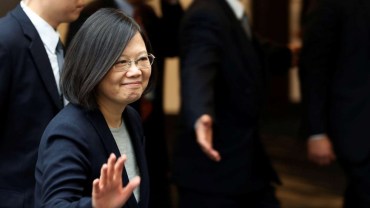
Taiwan aspires to create a “new era” of peace with mainland China, which should set aside the baggage of history and have positive dialogue, Taiwan’s President Tsai Ing-wen said in a letter to Pope Francis, adding military action could not resolve problems.

The issue of self-ruled and proudly democratic Taiwan has shot to the top of the international agenda since US President-elect Donald Trump broke with decades of precedent in December by taking a congratulatory telephone call from Tsai.

Pope Francis hails ‘good’ relations with China after getting gift from Xi Jinping

That, along with subsequent comments by Trump that the one-China policy was up for negotiation, has infuriated Beijing, which views Taiwan as a wayward province, to be bought under its control by force if necessary.

Mainland China is deeply suspicious of Tsai, whose ruling Democratic Progressive Party espouses the island’s formal independence, a red line for Beijing, and has cut off a formal dialogue mechanism with Taiwan.

In her January 5 letter to the Pope, released by her office on Friday, Tsai said upholding peace across the Taiwan Strait called for goodwill and communication.

Taiwan’s President Tsai Ing-wen continues call for Beijing talks but refuses to accept ‘one China’ principle“

Based on many years of experience in cross-Strait negotiations during my political career, I am convinced that military action cannot resolve problems,” Tsai said.

“Taiwan and mainland China were once embroiled in a zero-sum conflict that caused tension in the region and anxiety among our peoples.In contrast, today people on the two sides of the Taiwan Strait enjoy stable lives and normal exchanges under peaceful separate governance.

”China’s priests wary of Vatican’s Beijing olive branchTaiwan was committed to maintaining its democracy and the status quo of peace, but would not bow to pressure, she added.

“I urge the governing party across the Strait, together with the governing party in Taiwan, to set aside the baggage of history and engage in positive dialogue,” Tsai said.

The Vatican is one of only a handful of countries which still maintains formal diplomatic ties with Taiwan, although the Pope is trying to heal a decades-old rift with mainland China where Catholics are divided between those loyal to him and those who are members of a government-controlled official church.

Tsai said she sought to live up to the Pope’s words on nonviolent action.

“As the first female president in the ethnic Chinese world, I aspire to live up to your words as I devote myself to enhancing the well-being of the Taiwanese people and creating a new era for cross-Strait peace.”

Source: Taiwan’s President Tsai Ing-wen aspires to create ‘new era’ of peace with Beijing | South China Morning Post

Tags: ,
18/01/2017

Why Are Party Symbols Like the Bicycle So Important in Indian Elections? – India Real Time – WSJ

A familiar Indian political saga played out in the country this month, as two factions of a party squabbled over what emblem to identify themselves with for upcoming state elections.In a democracy of over 1.2 billion people, many of whom are still illiterate and identify their choice on the ballot paper by the symbol adopted by the party, the answer has more than symbolic importance.

In the case of Uttar Pradesh, India’s largest state, a bloc of the ruling Samajwadi Party is hoping to pedal to success using the symbol of a bicycle in regional polls that start next month.

The Election Commission of India ruled earlier this week that the right to use the name of the Samajwadi Party, or the Socialist party, and its logo—the bicycle–belonged to Akhilesh Yadav, the incumbent chief minister of Uttar Pradesh, and not his father and party founder Mulayam Singh Yadav.

The Yadav father and son have been dueling over control of the party, each claiming to be its head, since it split earlier this month. At the center of the contention was whose faction gets to use the bicycle, the party’s logo since its inception in 1992.The Election Commission of India said the group led by younger Akhilesh Yadav is the genuine Samajwadi Party and “is entitled to use its name and (the) reserved symbol ‘bicycle’” because it had the support of the majority of the party cadre.

Jostling over political symbols is an established trend in India, especially when parties split.

The emblems are valuable because they could be used to solicit voters’ loyalty that would have taken years to cultivate.

Congress, the current national main opposition party, has had to choose new symbols in the past after party splits. It settled for its current symbol–an open palm, which a party leader said stands for hard work and toil–ahead of the 1980 elections.Prime Minister Narendra Modi’s Bharatiya Janata Party meanwhile has retained its original election symbol– the lotus flower, that epitomizes creativity and prosperity in Hinduism–since its formation in 1980.

The bicycle has significant brand value for the Samajwadi Party, which has its voter base in the mostly rural and agrarian Uttar Pradesh, where the human-powered vehicle is one of the most-favored and affordable means of transportation. To connect to voters, the party’s leaders often cycle during campaigns and distribute bikes to their supporters.

The party says on its website that it “gives immense importance to the development of common man and thus adopted the vehicle of the common man–a bicycle as its symbol.”

Source: Why Are Party Symbols Like the Bicycle So Important in Indian Elections? – India Real Time – WSJ

Tags:
16/01/2017

India’s prime minister has a knack for shrugging off embarrassment | The Economist

ADDRESSING a conference in his home state of Gujarat on January 10th, Narendra Modi, India’s prime minister, exuded confidence. India’s economy is the fastest-growing and one of the most open in the world, he declared, reaffirming his government’s commitment to reform.

The 5,000-strong audience, sprinkled with foreign heads of state and corporate bigwigs, applauded warmly. One multinational’s boss drew cheers with a sycophantic call for India to “export” Mr Modi to run his home country, America, too.

The optimism and praise, however, contrasted with sobering economic news. Since November rating agencies have sharply lowered their growth forecasts. Small and medium-sized firms report big lay-offs. Vehicle sales fell in December by 19% compared with the previous December, their steepest drop in 16 years, says a car-industry lobby group. Housing sales in India’s eight biggest cities slid by 44% in the last quarter of 2016 compared with the year before, reckons Knight Frank, a global property firm, in a report. “The Indian government’s demonetisation move on November 8th brought the market to a complete standstill,” it says, alluding to Mr Modi’s surprise order to withdraw 86% of the notes used in daily transactions.

There is little doubt that Mr Modi’s assault on cash has caused ordinary Indians disruption, annoyance and, particularly for the poorest, severe distress—though the pain is easing now as the government prints more money to replace the scrapped notes. Yet just as would-be foreign investors seem happy to continue boosting Mr Modi, many Indians also still trust and admire the prime minister. Like America’s president-elect, Donald Trump, who once claimed he could “shoot somebody” and not lose votes, Mr Modi’s support seems oddly unaffected by his flaws. Anecdotal evidence, online polling and informal surveys all suggest that the prime minister’s misstep has scarcely dented his standing.

Opinion polls in India have a poor record, and none published since the demonetisation drive has specifically measured Mr Modi’s popularity. However, two surveys carried out in December in the state of Uttar Pradesh, India’s most populous, suggest that his Bharatiya Janata Party (BJP) remains poised to perform well in imminent state elections. When the results from several rounds of voting are tallied in March, the BJP could be basking in its biggest triumph since Mr Modi won national elections in 2014. The party has not suffered in municipal votes in several states since November and is well positioned in several other looming state polls.

Prior to the demonetisation drive, Mr Modi had handily weathered other storms. Murderous communal riots tarnished his long term as chief minister of Gujarat, for instance. Yet according to Pew, a research firm, the prime minister’s popularity in mid-2016, at an enviable 81%, had declined only marginally from a stunning 87% the year before. The liking is personal: Mr Modi regularly scores higher in such polls than either his party or his policies.

Some pundits speak of “Modi magic” to explain his immunity from criticism, but there are more straightforward reasons. One is the prime minister’s talent as a politician. Although often dour in countenance, Mr Modi is a pithy speaker in Hindi, with an unerring nose for the class-driven grudges that often guide voter sentiment. In debates over demonetisation, he successfully projected himself as a champion of the common man against currency hoarders and tax evaders. He is also extremely protective of his own image as a man above the fray. Mr Modi’s dress, gestures and public appearances are theatrically staid and uniform, punctuated by meaningful looks and silences. He does not hold press conferences, preferring to retain control of his narrative via carefully rehearsed interviews and his monthly “From the Heart” radio address.

Pygmy-slayer

Mr Modi is also lucky. His well-funded, highly disciplined and pan-Indian party faces an unusually divided and uninspiring opposition. Congress, a party that ran India for decades and still commands a nationwide base, is burdened by squabbling and corrupt local branches and a lack of clarity over ideology and the role of the Gandhi dynasty. India’s many other parties are all parochial, tied to the interests of one state, caste or other group, and so with little hope of playing a national role. Handed the golden opportunity of Mr Modi’s demonetisation fumble, the opposition has failed to mount a united charge.

Other institutions that might check Mr Modi’s ambitions, such as the press and the judiciary, are also not as vigilant as in other democracies. Some parts of the media are owned by Mr Modi’s friends and supporters; others by business groups with interests that are vulnerable to retribution. Journalists, whistle-blowers and activists are keenly aware that critics of the government often pay a price, whether in the form of “trolling” on the internet, harassment by officials or spurious lawsuits. India’s courts, meanwhile, do often clash with the government but are cautious in picking fights: on January 11th India’s supreme court airily dismissed a public-interest lawsuit demanding investigation of documents that appear to implicate dozens of officials in bribe-taking.

Even Mr Modi’s foes believe his administration is less corrupt than previous ones have been. However, as the banknote debacle revealed, it is not necessarily much more competent. The most iron-clad rule of Indian politics is anti-incumbency. Even the investors vying for Mr Modi’s attention may take note that, for all the talk of openness, India still has some of the world’s most tangled rules, highest corporate tax rates and most capricious officials.

Source: India’s prime minister has a knack for shrugging off embarrassment | The Economist

Tags:
16/01/2017

Why do Indians vote for ‘criminal’ politicians? – BBC News

Why do India’s political parties field candidates with criminal charges?

Why do the voters favour them despite their tainted past?

Political scientist Milan Vaishnav has been studying links between crime and democracy in India for many years now. His upcoming book When Crime Pays offers some intriguing insights into what is a disturbing feature of India’s electoral democracy.

The good news is that the general election is a thriving, gargantuan exercise: 554 million voters queued up at more than 900,000 stations to cast their ballots in the last edition in 2014. The fortunes of 8,250 candidates representing 464 political parties were at stake.

The bad news is that a third (34%) of 543 MPs who were elected faced criminal charges, up from 30% in 2009 and 24% in 2004.

Fiercely competitive

Some of the charges were of minor nature or politically motivated. But more than 20% of the new MPs faced serious charges such as attempted murder, assaulting public officials, and theft.

Now, India’s general elections are not exactly a cakewalk.The Indian politicians facing criminal charges

Why do many India MPs have criminal records?

Politics and the barrel of the gun

Over time, they have become fiercely competitive: 464 parties were in the fray in 2014, up from 55 in the first election in 1952.

The average margin of victory was 9.7% in 2009, the thinnest since the first election. At 15%, the average margin of victory was fatter in the landslide 2014 polls, but even this was vastly lower than, say, the average margin of victory in the 2012 US Congressional elections (32%) and the 2010 general election in Britain (18%).

India’s elections are fiercely competitiveAlmost all parties in India, led by the ruling BJP and the main opposition Congress, field tainted candidates. Why do they do so?

For one, says Dr Vaishnav, “a key factor motivating parties to select candidates with serious criminal records comes down to cold, hard cash”.

The rising cost of elections and a shadowy election financing system where parties and candidates under-report collections and expenses means that parties prefer “self-financing candidates who do not represent a drain on the finite party coffers but instead contribute ‘rents’ to the party”. Many of these candidates have criminal records.

There are three million political positions in India’s three-tier democracy; each election requires considerable resources.

Many parties are like personal fiefs run by dominant personalities and dynasts, and lacking inner-party democracy – conditions, which help “opportunistic candidates with deep pockets”.

‘Good proxy’

“Wealthy, self financing candidates are not only attractive to parties but they are also likely to be more electorally competitive. Contesting elections is an expensive proposition in most parts of the world, a candidate’s wealth is a good proxy for his or her electoral vitality,” says Dr Vaishnav, who is senior fellow at the Carnegie Endowment for International Peace.Political parties also nominate candidates with criminal backgrounds to stand for election because, simply put, they win.

During his research, Dr Vaishnav studied all candidates who stood in the last three general elections. He separated them into candidates with clean records and candidates with criminal records, and found that the latter had an 18% chance of winning their next election whereas the “clean” candidates had only a 6% chance.

Many Indians vote on lines on identity and religion

He did a similar calculation for candidates contesting state elections between 2003 and 2009, and found a “large winning advantage for candidates who have cases pending against them”.

Politics also offers a lucrative career – a 2013 study showed that the average wealth of sitting legislators increased 222% during just one term in office. The officially declared average wealth of re-contesting candidates – including losers and winners – was $264,000 (£216,110) in 2004 and $618,000 in 2013, an increase of 134%.

‘Biggest criminal’

Now why do Indians vote for criminal candidates? Is it because many of the voters are illiterate, ignorant, or simply, ill-informed?

Dr Vaishnav doesn’t believe so.

Candidates with criminal records don’t mask their reputation. Earlier this month, a candidate belonging to the ruling party in northern Uttar Pradesh state reportedly boasted to a party worker that he was the “biggest criminal”. Increasing information through media and rising awareness hasn’t led to a shrinking of tainted candidates.

Dr Vaishnav believes reasonably well-informed voters support criminal candidates in constituencies where social divisions driven by caste and/or religion are sharp and the government is failing to carry out its functions – delivering services, dispensing justice, or providing security – in an impartial manner.

“There is space here for a criminal candidate to present himself as a Robin Hood-like figure,” says Dr Vaishnav.

Clearly, crime and politics will remain inextricably intertwined as long as India doesn’t make its election financing system transparent, parties become more democratic and the state begins to deliver ample services and justice.

Prime Minister Narendra Modi has suggested state funding of polls to help clean up campaign financing. Earlier this month, he said people had the right to know where the BJP got its funds from. Some 14% of the candidates his BJP party fielded in the last elections had faced serious charges. (More than 10% of the candidates recruited by the Congress faced charges). But no party is walking the talk yet.

Source: Why do Indians vote for ‘criminal’ politicians? – BBC News

Tags:
16/01/2017

Davos 2017: Can Xi Jinping be star of the show? – BBC News

China’s President Xi Jinping heads to Davos this week.

It’s the first time a Chinese head of state is attending the global forum and he’ll be star of the show.

But besides the allure of snow-capped alpine peaks and tasty cups of hot chocolate, why is he doing this? And why now?

First off, let’s not kid ourselves. Davos is a venue where little meaningful gets done.

It has struggled to shake its reputation as a very expensive talking shop that sees the rich and powerful of global business, politics, arts and society meet every year to sip cocktails and connect.

Along the way they’re supposed to think big thoughts about how to improve the world economy.

But given that their wealth and lifestyles are precisely what many parts of the developed world is seeing a backlash against right now, it’s not clear how much their solutions will help.

Davos: Are the global elite in retreat?

Globalisation and free trade are being attacked in the US and Europe. And with a new president about to enter the White House, President Xi’s speech will be watched very carefully.

According to Jiang Jianguo, a minister in China’s State Council Information office, President Xi will be “offering Chinese remedies for the world’s economic ailments”.

So what might he say, and why is this important? Here are three things I’ll be watching for:

1) Free trade is good trade

Globalisation has arguably benefited China more than any other country in the world.As the US pulls out of free trade agreements, President Xi is likely to laud its merits, and position China as the world’s newest and friendliest trading partner.

Of course, there’s always the criticism that China only opens up its economy just enough to benefit itself.But President Xi is likely to tackle that too. Chinese leaders tend to make big announcements in speeches abroad, so watch out for any further possible access to China’s economy.

2) China as a force for peace, not war

China’s growing military might in the South China Sea is a potential flashpoint

It’s part of China’s public diplomacy to convince the world that China’s rise is a good thing for everyone.

President Xi will be likely to present an image of China to the world “as a friend to everyone, a big wonderful panda that everyone should hug, and that everyone should just relax,” says Prof Kerry Brown of the Lau China Institute at King’s College London.

But this may be a hard sell, especially given the lingering concerns about China’s growing military might in the South China Sea.

Davos is a good opportunity to challenge these perceptions, says Jia Xiudong, at the China Institute of International Affairs in Beijing.

“Other countries may see China as an aggressive, assertive country. But this is a misunderstanding. That’s why it’s such a good opportunity for the president to communicate his message.

“Oh, and that no-one will be unfurling Free Tibet flags or heckling him (at least not inside the venue) will probably be an added benefit.

3) It’s all about symbolism, silly

President Xi’s speech comes just three days before Donald Trump is inaugurated as the 45th president of the United States.

“America is downgraded slightly in the eyes of the world because of the election,” says Prof Brown. “And China is more prominent – so it’s quite significant.”

Vanity is also a factor. President Xi enjoys massive popularity at home, and, as you might expect, would like to see that level of respect paid to him on the international stage.

What better way to do that than to praise the virtues of China’s economic wisdom to a receptive crowd, at a time when faith in the US’s ability as the de facto superpower is being questioned and dissatisfaction for the free market system – and the inequality it has created – is rising.

But while President Xi may enjoy being thrust into the spotlight on the Davos stage, it won’t erase some of the hard truths he has to deal with back home.

China’s economy is slowing down and its currency, the yuan, is weakening to lows not seen since 2008.

All of this has Beijing extremely concerned. China knows better than most that a growing gap between the haves and the have nots is devastating for social stability.

Source: Davos 2017: Can Xi Jinping be star of the show? – BBC News

Law of Unintended Consequences

continuously updated blog about China & India

ChiaHou's Book Reviews

continuously updated blog about China & India

What's wrong with the world; and its economy

continuously updated blog about China & India