Archive for ‘Politics’

15/09/2016

Censors clamp down on China’s ‘Traingate’ – BBC News

In Britain the leader of the Labour Party, Jeremy Corbyn became embroiled in a very public argument with a rail company about whether or not he was able to get a seat on one of its trains – a controversy that quickly acquired the nickname ‘Traingate’.

Now China is experiencing its own Traingate moment, but in this case the official whose behaviour has come under scrutiny seems to be getting help to minimise discussion of his actions.

Chinese government censors are reportedly censoring mentions of Pan Changjie, the Deputy Commander of the People’s Armed Police Force, who it is claimed used his rank to secure first class seats on a high-speed train.

It’s alleged that Pan compounded the offence by refusing to let a passenger sit in her reserved seat during a journey from Tangshan to Dandong. To make matter worse, Communist Party officials are not allowed to travel first class, and so the incident has enraged some online users.

Anjing_BerBer says Pan refused to get out of her reserved seat

However, most posts that mention Pan appear to have been swiftly taken offline.

The allegations surfaced when a woman with the social media handle ‘Anjing_BerBer’ blogged about her experiences of travelling on the same train as Pan and his colleagues on 6 September.

The woman said she had bought a first class reserved seat. But she described how, when she boarded the train, she found Pan in her seat, surrounded by a group of officials. She asked him to move, but said that he refused, and said warningly, “We’re from the Beijing Armed Police.”

She took her phone out to film him but describes how she was “blocked and threatened by black-clad Special Police“. However, she managed to take a picture of Pan and some of his colleagues playing cards on the train, while she was forced to stand for most of the journey.

The woman’s post with the photo was removed from the social media platform Weibo, a fact she noted in a later post. “My published article was ‘automatically’ deleted. How strange! There might be someone who has a guilty conscience,” she wrote.

“My published article was ‘automatically’ deleted. How strange! There might be someone who has a guilty conscience.”

No media in mainland China have mentioned the alleged incident and a search of Pan’s name on leading search engine Baid brings up news reports only from as recently as August.

Posts on Weibo that mention Pan have been quickly taken offline by government censors. According to censorship-monitoring website Free Weibo, “Pan Changjie” is currently one of the top 10 censored search terms.

Source: Censors clamp down on China’s ‘Traingate’ – BBC News

15/09/2016

Why water war has broken out in India’s Silicon Valley – BBC News

On Monday afternoon, a school bus was stopped in the Banashankari area in southern Bangalore. Three drunk men got into the bus and asked aloud: “Which child belongs to Karnataka and and which child belongs to Tamil Nadu?”

The 15-odd students, aged between 10 and 14, were stunned. Their school had asked them to leave early because the situation was tense, with violence and arson breaking out in many parts of the city.

“Luckily the driver handled it tactfully. He told the intruders that everyone was a native of Bangalore and that their families supported Karnataka on [water sharing with] Cauvery,” said a parent, not wanting to be identified.

Battle for access

By dusk, dark smoke had filled the Bangalore skies. Some 35 buses had been set on fire by protesters, just because the buses belonged to a travel agency whose owner is Tamil.

Is India facing its worst-ever water crisis?

India to ‘divert rivers’ to tackle droughtEarlier this month India’s Supreme Court ruled that Karnataka must release 12,000 cubic feet of water per second to Tamil Nadu from the Cauvery river until 20 September. Both states say they urgently need the water for irrigation and a battle about access to it has raged for decades.

Karnataka says water levels in Cauvery have declined because of insufficient rainfall

India’s water war

The Cauvery originates in Karnataka and flows through Tamil Nadu before joining the Bay of Bengal.

The dispute over its waters originated in the 19th Century during the British rule between the then Madras presidency (modern day Tamil Nadu) and the province of Mysore (now Karnataka).

Karnataka and Tamil Nadu have both argued that they need the water for millions of farmers in the region.

The Cauvery river water tribunal was set up in 1990 after the failure of several rounds of talks between the two states.

Dozens of meetings have been held to find a settlement to the century-old dispute.

In 2007, the tribunal ruled Tamil Nadu state would get 419bn cubic feet of water a year. Karnataka would get only 270bn.

Karnataka says water levels in the Cauvery have declined because of insufficient rainfall – 42% of the 3,598 irrigation tanks in the state are dry – and that it cannot therefore share water with Tamil Nadu. So Tamil Nadu went to the top court demanding 50,000 cubic feet of water per second.

When the Supreme Court on 2 September asked Karnataka to “live and let live”, the state softened and offered to release 10,000 cubic feet of water per second to Tamil Nadu every day for five days.

On 5 September however, the top court ordered Karnataka to release 15,000 cubic feet of water per second for 10 days. This ruling was later modified to 12,000 cubic feet of water per second until 20 September.

This would mean that nearly a quarter of the water now available in the Cauvery basin will flow into Tamil Nadu.

A truck from neighbouring Tamil Nadu set on fire in Bangalore

Tamil Nadu says it badly needs the river water for irrigation. Drought-hit Karnataka argues that most of the river water is now needed for drinking water supplies in Bangalore and some other cities, leaving no water for irrigation at all.

But even farmers in Tamil Nadu are unhappy with their share.P Ayyakannu, president of the local South Indian Rivers Interlinking Farmers Association, called it “akin to giving pigeon feed to an elephant”.

Rising violenceFeeling let down by the top court’s order, Karnataka is boiling.

The main city of Bangalore is the worst affected: the violence in the technology hub forced the closure of many offices and much of the public transport system. Police have imposed an emergency law that prohibits public gatherings, and more than 15,000 officers have been deployed across the city.

One person was killed when police opened fire on protesters on Monday evening. Buses and trucks bearing Tamil Nadu number plates have been attacked and set on fire. Schools and colleges are closing early and many businesses are shut.

A group of activists belonging to a fringe pro-Karnataka group assaulted an engineering student because he had ridiculed Kannada film stars for supporting the strike on Friday, by posting memes on Facebook. The student was hunted down and forced to apologise.

Across the border, in Tamil Nadu, petrol bombs were hurled at a popular restaurant owned by a resident of Karnataka in Chennai while the driver of a vehicle with Karnataka number plates was slapped and ordered to say “Cauvery belongs to Tamil Nadu”.

Normal life has been disrupted in Bangalore

Protests have shut down Bangalore city

The latest violence brings back memories of the anti-Tamil riots in Bangalore in 1991 over the same issue.

Then, some 200,000 Tamils were reported to have left the city, after incidents of violence and arson targeting them.

There was a proposal in 2013 to set up a panel comprising representatives from the two warring states to resolve disputes over river water sharing.

But successive governments have dragged their feet on this, and the two leaders – Karnataka chief minister Siddaramaiah and his counterpart in Tamil Nadu, Jayaram Jayalalitha – have not reached out to each other to resolve the crisis. And with Delhi reduced to being a reluctant referee, the onus has fallen on the Supreme Court to crack the whip.

Source: Why water war has broken out in India’s Silicon Valley – BBC News

04/09/2016

China says should constructively handle disputes with India | Reuters

Chinese President Xi Jinping told Indian Prime Minister Narendra Modi on Sunday that the two countries should respect each other’s concerns and constructively handle their differences.

The two nuclear-armed neighbours have been moving to gradually ease long-existing tensions between them.

Leaders of Asia’s two giants pledged last year to cool a festering border dispute, which dates back to a brief border war in 1962, though the disagreement remains unresolved.

Meeting on the sidelines of the G20 summit in the eastern Chinese city of Hangzhou, Xi said relations had maintained a steady, healthy momentum, and should continue to increase mutual understanding and trust.

“We ought to respect and give consideration to each other’s concerns, and use constructive methods to appropriately handle questions on which there are disputes,” Xi said, in comments carried by China’s Foreign Ministry.

“China is willing to work hard with India the maintain the hard-won good position of Sino-India relations,” Xi added.

China’s Defence Ministry said last month that it hoped India could put more efforts into regional peace and stability rather than the opposite, in response to Indian plans to put advanced cruise missiles along the disputed border with China.

Indian military officials say the plan is to equip regiments deployed on the China border with the BrahMos missile, made by an Indo-Russian joint venture, as part of ongoing efforts to build up military and civilian infrastructure capabilities there.

China lays claim to more than 90,000 sq km (35,000 sq miles) ruled by New Delhi in the eastern sector of the Himalayas. India says China occupies 38,000 sq km (14,600 sq miles) of its territory on the Aksai Chin plateau in the west.

India is also suspicious of China’s support for its arch-rival, Pakistan.Modi arrived in China from Vietnam, which is involved in its own dispute with China over the South China Sea, where he offered Vietnam a credit line of half a billion dollars for defence cooperation.Modi’s government has ordered BrahMos Aerospace, which produces the BrahMos missiles, to accelerate sales to a list of five countries topped by Vietnam, according to a government note viewed by Reuters and previously unreported.

Source: China says should constructively handle disputes with India | Reuters

04/09/2016

UK’s May to review security risks of Chinese-funded nuclear deal | Reuters

Prime Minister Theresa May said on Sunday she wanted her security advisers to review a delayed nuclear power investment from China – a source of diplomatic tension – as she arrived in the country to attend a G20 summit.

May upset Chinese officials in July by delaying a $24 billion project that would see French firm EDF (EDF.PA) build Britain’s first new nuclear power plant in decades with the help of $8 billion from China.

Speaking during her first visit to China, May was asked whether she would ask the National Security Council, a team of ministers supported by intelligence officers, to look at the potential security implications of the Hinkley deal.

“I will be doing exactly as you’ve said,” May replied, saying it would be part of her decision-making process. The comment marked the first official acknowledgement that national security was a factor in her decision.

The initial delay caught investors by surprise and has cast doubt over whether May, who took office in July following Britain’s vote to leave the European Union, will continue to court China as a major source of infrastructure investment.

“This is the way I operate,” May earlier told reporters en route to the summit, which will include a one-to-one with Chinese President Xi Jinping.

“I look at the evidence, …take the advice and consider that and come to my decision.

“A final decision is expected later this month.

May, a former interior minister, is wary of the risks of allowing China to invest in nuclear projects, according to a former cabinet colleague. The EDF deal is viewed as a precursor to Chinese involvement in another two nuclear plants.

Asked whether she trusted China, May said: “Of course we have a relationship with them… What I want to do is build on that relationship.

“She also stressed a need to broaden the group of nations that Britain can trade with and tap for cash to help reinvigorate its power, transport and technology infrastructure.”This is the G20, this is about talking to a number of world leaders. I’m going to give the message that Britain is very much open for business… I want to be talking about the opportunities for free trade around the world.”

Source: UK’s May to review security risks of Chinese-funded nuclear deal | Reuters

26/08/2016

The Economist explains: Why Kashmir is erupting again | The Economist

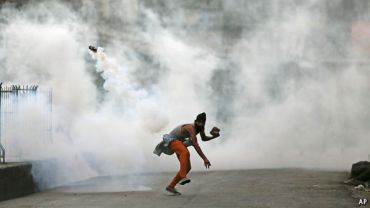
TODAY marks the 48th consecutive day of protests in Jammu & Kashmir, India’s only Muslim-majority state. Young Kashmiri men have been on the streets calling for independence from India and throwing stones at security forces. Indian security forces have responded with tear gas and shotguns that fire small-bore pellets instead of buckshot.

A strict curfew has also been imposed across the Kashmir valley, which includes Srinagar, the region’s largest city. So far, 66 civilians and two police officers have been killed in the violence. Why are Kashmiris protesting?

The region has been disputed since the partition of India and Pakistan in 1947. Both sides claim the territory and have fought three wars over it. Kashmir has been living under India’s Armed Forces (Special Powers) Act, which gives special powers to the army, since the eruption in 1990 of an armed insurgency that was covertly supported by Pakistan. Some 40,000 people have been killed since. Even in the relatively peaceful past decade, unrest has flared up, most notably in the summers of 2008 and 2010. The current protests started on July 9th after Indian security forces killed Burhan Wani, a young and charismatic Islamist militant. Resentment had been building for months. Kashmiris worried when Narendra Modi’s Hindu-nationalist Bharatiya Janata Party (BJP) came to power in 2014 that his national government would make life difficult for Muslims. At state elections later that year, the local Peoples Democratic Party formed a coalition with the BJP, leaving them feeling betrayed. Wani’s killing has mobilised a generation that had grown up under what it sees as an illegitimate Indian occupation.

The result has been a seven-week cycle of violent protests and retaliatory action by the police and paramilitary forces. Their supposedly non-lethal pellets have blinded dozens and injured hundreds. Shops and businesses have remained closed since the protests started, either under curfew orders or because of calls for strikes from separatist leaders. Many Kashmiris have not left their homes for weeks. Few expect the situation to improve any time soon, despite soothing words this week from Mr Modi and a visit to the region by India’s home minister.An obstacle to any lasting solution is India’s insistence on seeing Kashmir through the prism of its rivalry with Pakistan. The Indian government’s immediate reaction to this summer’s unrest was to accuse its neighbour of meddling. In fact, Wani was a home-grown insurgent; the young men on the streets are locals. Unemployment is widespread and economic opportunities are few. The state was also promised special status, guaranteeing autonomy, in India’s constitution. And many Kashmiris now want more: a survey in 2010 by Chatham House, a think-tank, found overwhelming support for independence. Kashmiris are at best ambivalent about their attachment to India. Until the government recognises their demands, the anger is unlikely to dissipate.

Source: The Economist explains: Why Kashmir is erupting again | The Economist

25/08/2016

China’s logistic hub in Djibouti to stabilize region, protect interests – Global Times

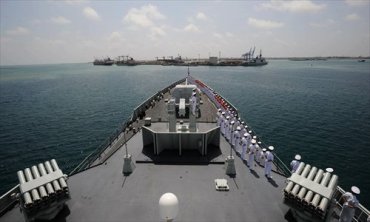
About 7,700 kilometers away from Beijing, in Djibouti in the Horn of Africa, China’s first overseas installation for naval vessels is under construction.

Scheduled to be completed in 2017, the base is set to resupply Chinese warships, according to government statements.

But despite Beijing’s insistence that the facility will simply help with escort missions, peacekeeping and humanitarian rescues in the Gulf of Aden and the waters off Somalia, many have argued this move represents Chinese “military expansion” beyond the Asia-Pacific region.

“Through exaggerating or distorting, they attempt to hype the ‘threat of China’ and tarnish China’s image, so as to suppress China’s efforts to build maritime power,” Li Jie, a Beijing-based maritime expert, told the Global Times.

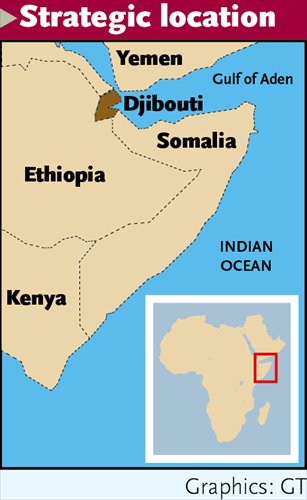
“The base is far less than a military base in its scale and function,” said Zhang Junshe, a researcher from PLA Naval Military Studies Research Institute. “The base will be a logistic hub for Chinese vessels to get replenishment and temporary rest. It differs from US-style military bases, which have become bridgeheads for the country to easily and quickly wield military deterrence or intervention to other territories,” Li noted. The Republic of Djibouti, located in a strategically important position between the Indian Ocean and the Red Sea, hosts the military facilities of several countries, including the US, Japan and France, the country’s former colonial ruler. Italy and Spain also have permanent military installations in the country, according to a recent report by Hong Kong-based Phoenix TV.

These countries have stationed a variety of assets in these bases, including personnel, ships, UAVs and surveillance aircraft which are used for anti-terror and anti-piracy operations in Africa and the Middle East.

International obligations

The news that China will build a “military base” in Djibouti was first revealed in May last year, when Djiboutian President Ismail Omar Guelleh told AFP that “discussions are ongoing,” and China’s presence would be “welcome.

“Since then, it has aroused wide attention and concern. The US even reportedly protested against it. “Washington protested against the China-Djibouti pact and expressed concern over China’s plans to build a military base in the Obock region, but to no avail,” according to an article published in April on foreignaffairs.com, a US-based international affairs news portal.

At a regular press briefing on November 26, 2015, China’s foreign ministry first confirmed that China was negotiating with Djibouti over the construction of a “logistics facility.” Spokesman Hong Lei citied the need to resolve resupply difficulties for Chinese escort vessels, adding “[The facility] will be significant for Chinese army to fulfill its international obligations and safeguard global and regional peace and stability.”

Three months later at a press briefing by Chinese defense ministry on February 25, spokesman Wu Qian told media that China had reached an agreement with Djibouti to build a facility and construction had already begun. According to official figures, China has deployed more than 30,000 personnel on peacekeeping missions, the most of any of the five permanent members of the UN Security Council.Since 2008, China has sent 22 escort fleets, a total of more than 60 vessels, to the Gulf of Aden and Somali waters, escorting more than 6,000 ships from home and abroad.

In March last year, hundreds of Chinese nationals threatened by escalating violence in Yemen were evacuated to Djibouti by their government.

But currently, these fleets need to dock in the ports of other countries to get rest and food supplies. “They need to organize people to purchase food locally. Besides, due to different types of fuels, refueling is also a problem,” Zhang said.

The new base will help China save money. Yang Huawen, a captain from China’s Northern Theater Command who joined a 10-month peacekeeping operation in Mali in 2014, is happy this facility is being built.

“In those tropical areas, the food goes bad quickly. The cost of mending equipment and maintenance is high,” Yang told the Global Times. “Building a logistic hub in the region can provide stable supplies efficiently and economically.”

Djibouti, with a landmass of 23,200 square kilometers of which 90 percent is volcanic desert, is poor in natural resources. Its ability to produce fruits, vegetables, and seafood is limited, according to a Chinese national who has spent time in the country. “Most of its vegetables are imported from its neighbor Ethiopia. Vegetables sell for there as much as five to 10 times what they do on the domestic market in China,” said the person.

Zhang also cited another advantage of the new facility – the Chinese government needn’t conduct diplomatic negotiations with the host country each time its vessels dock in their port.


Source: China’s logistic hub in Djibouti to stabilize region, protect interests – Global Times

25/08/2016

Iran keen to join China in rival to Panama Canal | Business | The Times & The Sunday Times

Iran has expressed interest in joining forces with a Chinese company that plans to build a $50 billion canal across Nicaragua that links the Atlantic and Pacific and rivals the Panama Canal.Mohammed Javad Zarif, the Iranian foreign minister, said that business leaders who went with him to the Central American state this week had discussed teaming up with HKND, a private Hong Kong company that has broken ground on the project but made little progress in the past two years.

Iranian involvement in a Chinese-run strategic waterway may raise concerns in the United States, which was instrumental in building the Panama Canal a century ago.

Daniel Ortega, Nicaragua’s left-wing president, shares Iran’s antipathy towards the US and is favoured for re-election in polls this November.

The project to build the 172-mile waterway has caused controversy at home, where environmentalists say that the route would take supertankers across Lake Nicaragua, bulldoze fragile ecosystems and involve the biggest earth-moving operation in history.

With an estimated 30,000 people likely to be displaced by construction, there have been protests against the canal, although the government insists that more than 80 per cent of the population of the country backs it. Amnesty International has denounced what it called Nicaragua’s “reckless handling” of the project.

There have been doubts about the financial health of Wang Jing, the Hong Kong tycoon behind the canal, and whether he might be backed by the Chinese government, which has massively invested across Latin America and Africa in the past decade.

Mr Wang is understood to have lost more than 80 per cent of his $10 billion fortune as a result of the volatility in the Chinese stock market. The project managers say that it is an international initiative not dependent on the vagaries of the Chinese share prices. After the groundbreaking ceremony in December 2014, the project appeared to have been put on hold, prompting speculation that it had run out of steam.

However, Mr Wang’s HKND group said this year that work on the Pacific terminal and wharf would begin this month, with work on the canal scheduled to start at the end of the year.

Mr Zarif, whose country recently had years of crippling US sanctions lifted, is on a tour of Latin America that began on Monday in Cuba, which has renewed diplomatic ties with the US but has yet to have its own half-century of sanctions lifted.Nicaragua was Mr Zarif’s second stop with an entourage of 120 Iranian business leaders and state economists, and he was scheduled to head on to Ecuador, Venezuela, Bolivia and Chile.

Source: Iran keen to join China in rival to Panama Canal | Business | The Times & The Sunday Times

25/08/2016

China and US to ratify landmark Paris climate deal ahead of G20 summit, sources reveal | South China Morning Post

China and the United States are set to jointly announce their ratification of a landmark climate change pact before the G20 summit early next month, the South China Morning Post has learned.

Senior climate officials from both countries worked late into the night in Beijing on Tuesday to finalise details, and a bilateral announcement is likely to be made on September 2, according to sources familiar with the issue.

President Xi Jinping will meet his US counterpart Barack Obama for the G20 summit in Hangzhou, Zhejiang province, two days later on September 4.

How China, the ‘world’s largest polluter’, is taking on climate change

“There are still some uncertainties from the US side due to the complicated US system in ratifying such a treaty, but the announcement is still quite likely to be ready by Sept 2,” said a source, who declined to be named.

If both sides announce the ratification on the day, it would be the last major joint statement between the two leaders before Obama leaves office.

China and the US account for about 38 per cent of global greenhouse gas emissions, according to the World Resources Institute.

By ratifying the Paris Agreement on climate change, Beijing and Washington could generate momentum for the accord to come into effect as a binding international treaty.

The pact agreed by representatives from 195 countries in Paris last December aims to keep the increase in the global average temperature to well below 2 degrees Celsius on pre-industrial levels.

Countries began the ratification process on April 22, Earth Day, and by Tuesday, 23 nations had joined, but they account for just 1 per cent of emissions.

China and the US create a new climate for international collaboration on the environment

The treaty will enter into force only after 55 countries representing at least 55 per cent of emissions ratify or join the deal in other ways.

China had said earlier it would ratify the accord before the G20 summit in September.

In June, the US said it would “work towards” approving the deal before end of the year, with the White House keen to seal a key part of Obama’s environmental protection legacy before he leaves office in January.

US law allows the nation to join international agreements in a number of ways, including through the authority of the president.

With China and US joining, some civil society trackers say they are confident the deal could hit the 55 per cent threshold before the end of the year.

On Wednesday, investors managing more than US$13 trillion of assets urged leaders of the Group of Twenty major economies to ratify the deal before the end of December.

The 130 investors also called for the G20 to double global investment in clean energy, develop carbon pricing and phase out fossil fuel subsidies.

How a little-known chapter in Sino-US cooperation may have helped save the planet

“Governments must ratify the Paris agreement swiftly and have a responsibility to implement policies that drive better disclosure of climate risk, curb fossil fuel subsidies and put in place strong pricing signals sufficient to catalyse the significant private sector investment in low carbon solutions,” said Stephanie Pfeifer, chief executive at Institutional Investors Group on Climate Change.

Ratification is expected to play out differently in the US compared with China.

While China has “few uncertainties” at home for passing the deal, it could cause controversy within the US, according to Liu Shuang, an officer with Energy Foundation’s low-carbon development programme.But the Obama administration’s commitment to international frameworks suggests the accord would be passed in a way that would make it difficult for his successors to undo, civil society trackers said.

‘I may do something else’: Donald Trump’s threat to renegotiate UN climate deal greeted with widespread dismay

The two countries started extensive cooperation at the leadership level in 2014. In a joint declaration that year, China promised its emissions would peak before 2030, while the US promised to cut emission by at least 26 per cent. That deal is widely regarded as paving the way for the Paris Agreement.

Source: China and US to ratify landmark Paris climate deal ahead of G20 summit, sources reveal | South China Morning Post

18/08/2016

India ready for Pakistan talks; U.N. alarmed by Kashmir violence | Reuters

India is ready to send its top diplomat to Pakistan for talks focused on fighting cross-border terrorism, sources at foreign ministry said on Wednesday, after a spike in tension in the disputed northernmost region of Kashmir.

Foreign Secretary Subrahmanyam Jaishankar was willing to attend talks on the invitation of his Pakistani counterpart, the sources said, stressing cross-border terrorism was central to the situation in Jammu and Kashmir state.

The olive branch comes after 40 days of violent protests in Indian-ruled Kashmir set off by the killing by security forces of a field commander of Pakistan-based Islamic militant group Hizbul Mujahideen who enjoyed wide support.

At least 64 people have died and thousands injured in clashes with security forces, denounced by Pakistan, which also claims the right to rule Jammu & Kashmir in a territorial dispute that dates back to partition in 1947.

The Indian sources, who declined to be identified, made it clear, however, that India “rejects in their entirety the self-serving allegations regarding the situation in J&K, which is an integral part of India.”Jammu and Kashmir (J&K) is the name of India’s only Muslim-majority state that includes the disputed Kashmir region.

A spokesman for Pakistan’s foreign ministry declined to comment late on Wednesday, saying the government was preparing a response to the proposed Indian visit.

A U.N. human rights official expressed “deep regret” at the failure of both the Indian and Pakistani authorities to grant access to the separate parts of Kashmir that each run to investigate allegations of serious human rights violations.

U.N. High Commissioner for Human Rights Zeid Ra’ad Al Hussein said in a statement issued in Geneva it was unfortunate that sincere attempts by the United Nations to independently assess the facts in relation to reports of human rights violations had failed.

“Without access, we can only fear the worst,” said Zeid.

The nuclear-armed neighbours, which have fought three wars since independence in 1947, both claim Kashmir in full but rule it in part.

In the latest violence on Wednesday, militants killed three members of the security forces when they ambushed an army convoy and then fired on a police jeep that came to the scene.

In a worrying escalation the previous day, security forces fired live rounds at a crowd of stone-throwing protesters in Baramulla district, killing five and wounding 10.

Earlier, police and troops trying to control crowds had resorted to the use of shotguns, whose pellets are meant to incapacitate but not kill.

But residents of Kashmir say the shotguns have inflicted severe injuries and even blinded hundreds of people including bystanders.

Prime Minister Narendra Modi ratcheted up tensions in his annual Independence Day speech on Monday, accusing Pakistan of glorifying terrorism.

In a tit-for-tat escalation in the war of words between the neighbours, Modi said he had received messages of support from leaders in restive regions of Pakistan, in particular the troubled southwestern province of Baluchistan.

India accuses Muslim Pakistan of supporting Kashmiri fighters while Pakistan accuses India of meddling in Pakistani trouble spots, in particular of helping separatists fighting the Pakistani state in resource-rich Baluchistan.

Both sides deny the accusations.

Source: India ready for Pakistan talks; U.N. alarmed by Kashmir violence | Reuters

16/08/2016

Indian Prime Minister Narendra Modi’s Independence Day Speech in 10 Quotes – India Real Time – WSJ

Indian Prime Minister Narendra Modi on Monday made the annual Independence Day speech at Delhi’s Red Fort.

With the end of his colorful turban blowing in the wind, he outlined his government’s achievements and took a swipe at Pakistan.

Here are 10 quotes from the 90-minute speech, based on the official translation from Mr. Modi’s office:

On India’s progress:   “India is not 70 years old but this journey is 70 years long.

”On governance:   “Now turning self governance to good governance is the resolve of 1.25 billion countrymen.”

On India’s problems:   “If India has thousands of problems, it also has 1.25 billion brains that have the ability to resolve them.

”On economic growth:   “As far as GDP growth rate is concerned, we have left behind even the big economies of the world.”

On the goods-and-services tax:   “The GST regime is to become a powerful tool to strengthen the economy.

”On toilets:   “More than 20 million toilets have been constructed in our villages. Over 70,000 villages have been free from open defecation.

”On stalled projects:   “Blocking projects, delaying them and wasting money amounts to criminal negligence.

”On inflation:   “I will not allow the poor man’s dish to become costlier.”

On Pakistan and the Kashmir region:   “The way the people of Balochistan, Gilgit and Pakistan-occupied Kashmir praised me, has enhanced the prestige of my 1.25 billion countrymen.”

On caste and minority divisions:    “Serve all people without discrimination. Do not disregard anyone for his age or caste, Respect all.”

Source: Indian Prime Minister Narendra Modi’s Independence Day Speech in 10 Quotes – India Real Time – WSJ

Law of Unintended Consequences

continuously updated blog about China & India

ChiaHou's Book Reviews

continuously updated blog about China & India

What's wrong with the world; and its economy

continuously updated blog about China & India