Archive for ‘Politics’

05/09/2014

Chinese woman wrongfully jailed for theft given apology and payout 25 years after | South China Morning Post

Twenty-five years after she was locked up behind bars, a Guangdong woman on Thursday received more than 650,000 yuan (HK$818,000) in compensation for being wrongfully imprisoned – in the latest case of corrective measures for miscarried justice in China.

suspect_ap.jpg

Bai Chunrong was sentenced to eight years in prison for theft on July 28, 1989, and served time until she was released in 1996, the Guangdong province newspaper New Express reported.

Bai filed an appeal in March 1990 but the Foshan Intermediate People’s Court upheld the conviction. There were no further details about her crime given in the court announcement.

The same court reopened the case in late March and the judge declared her innocent on the grounds of insufficient evidence.

Bai received the compensation from the Foshan court judge, who apologised to Bai for the wrongful conviction.

Bai, crying while kneeling on the floor and kowtowing to the magistrate, said: “I really thank the current court and judge for helping me get vindicated.”

Last month, in a rare acquittal, a court in southeastern Fujian province overturned the death penalty against a food hawker convicted of double murder.

via Chinese woman wrongfully jailed for theft given apology and payout 25 years after | South China Morning Post.

05/09/2014

China warns again of dark side of the mooncakes | Reuters

China’s crackdown on corruption, a scourge Communist Party leaders fear threatens their hold on power, is likely to last at least another five years, an official said, warning also against the mid-autumn tradition of handing out mooncakes as gifts.

Freshly-baked mooncakes pass along a conveyor belt at a mooncakes factory in Shanghai September 12, 2013.  REUTERS/Aly Song

Wang Qishan, secretary of China’s anti-corruption watchdog, was quoted as saying the government’s “campaign against extravagance and corruption” would continue for at least five years, the official China Daily said.

Wang’s comments, also reported on television on Thursday, were made in August at a meeting in Beijing.

President Xi Jinping has promised to go after “tigers and flies” in rooting out rampant graft, a campaign that has brought down politicians and company executives in industries including oil, cars and healthcare.

The campaign has also dragged down sales of high-end products from the fiery sorghum-based liquor, baijiu, to mooncakes, both traditional popular gifts for smoothing business and official ties.

Wang criticized the tradition of giving mooncakes as presents around the Mid-Autumn Festival, adding that the practice created opportunities for graft, the China Daily said.

Mooncake sales have taken a steep hit ahead of this month’s festival. In key production regions, sales were half the level of last year, the China Daily said, citing the Wuchuan Association of Mooncakes.

via China warns again of dark side of the mooncakes | Reuters.

05/09/2014

Modi’s first 100 days looked more like Manmohan’s than Vajpayee’s

The new prime minister hasn’t faced a major crisis or unveiled a startlingly new policy.

For the last week, Indian newspapers, channels and websites have been plastered with evaluations of Narendra Modi’s first 100 days. From dedicating entire editions to the 100-day landmark to building complex timelines describing every policy announcement over the last three months (and even comparing what has been achieved to the Bharatiya Janata Party’s campaign promises), there has been so much content that it’s hard to arrive at a conclusion about whether Modi’s Prime Ministership has been good or bad.

That might be expected, considering the scale of the challenge that the new government has set for itself. Alternatively, it might also be surprising: many expected Modi Sarkar to be a hate-it-or-love-it administration, rather than one that would leave people with lukewarm feelings.

Another way to approach the question might be to try and figure out how Modi’s first 100 days will be remembered. The first few months of new governments can often set the tone for what is to come. In hindsight, the trends picked up in the first days are then grafted on to narratives that are applied to entire tenures.

A look back at previous prime ministers might give us an inkling of how this will play out.

via Scroll.in – News. Politics. Culture..

05/09/2014

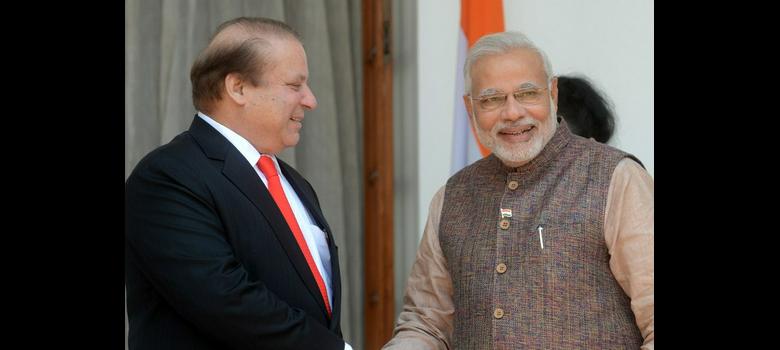
Nawaz Sharif attempts mango diplomacy to placate Modi

Pakistan government keen on reigniting diplomatic ties with India

Pakistan Prime Minister Nawaz Sharif on Thursday sent a package of special mangoes from his country through “official channels” to his Indian counterpart Narendra Modi. This move is seen in Indian diplomatic circles as Pakistan’s initial attempt to rectify the damage caused by its High Commissioner Abdul Basit’s meetings with separatist leaders from Kashmir last month. In response to these meetings, India had cancelled foreign-secretary levels talks with Pakistan scheduled for August 25. Meanwhile, there is speculation that Modi and Sharif might conduct bilateral talks on the sidelines of the United Nations General Assembly summit in New York later this month.

via Scroll.in – News. Politics. Culture..

04/09/2014

Businessman caught in Colombia is China’s first economic fugitive extradited from Latin America | South China Morning Post

A businessman from Zhejiang province, who was arrested in Colombia over allegations he fled the mainland after leaving debts totalling millions of yuan, was repatriated to China yesterday.

a-yiwu.jpg

The case is the first time the mainland has extradited an economic fugitive from a Latin American country, China News Service reported.

The 35-year-old suspect, whose surname was given as Wu, was arrested in Colombia on August 28, it said.

He owned a trading company in Yiwu city and reportedly fled China on a flight from Shanghai‘s Pudong International Airport on September 9, 2012.

He had allegedly left unpaid debts totalling more than four million yuan (more than HK$5 million).

Zhejiang police launched an investigation into Wu about a month later, and order for his arrest was issued in December 2012.

After cooperating with Interpol, Zhejiang police discovered in July that Wu was in Colombia, said Ding Pinglian, of the Zhejiang provincial police bureau.

Four police officers were then sent to Colombia to assist with Wu’s arrest and extradition.

Wu is expected to stand trial in Yiwu, China News Service reported.

A total of 11 people suspected of economic crime have been repatriated since the Ministry of Public Security launched a campaign to return fugitives in July, the report said.

The ministry said last month that more than 150 mainlanders suspected of economic crimes were in the United States, which had become the “top destination” for Chinese fugitives.

via Businessman caught in Colombia is China’s first economic fugitive extradited from Latin America | South China Morning Post.

04/09/2014

Democracy for Hong Kong: Unyielding | The Economist

PRO-DEMOCRACY activists announced the start of a “new era of civil disobedience” on the night of August 31st, after China’s top legislature laid down restrictive guidelines on the kind of elections that are allowed in Hong Kong, a semi-autonomous territory. Officials in Beijing had promised to allow the election of Hong Kong’s next leader, in 2017, through universal suffrage. With the announcement China has clarified that there is a catch, a big one: the government sees itself as being under no obligation to allow open nominations for the election’s candidates. Before the announcement, Chen Zuoer, one of the officials who helped negotiate Hong Kong’s handover to mainland China back in 1997, had warned that “blood will be shed” if their opponents refuse to back down.

In a show of defiance, an alliance of activists who support fully open elections held a rally on Sunday night to declare that it would launch waves of protests, culminating in the occupation of the city’s main financial district. Their movement has been many months in the making; they call it “Occupy Central with Love and Peace”. It was first proposed nearly two years ago by Benny Tai, an associate law professor at the University of Hong Kong, in anticipation of a disappointing official interpretation of “universal suffrage”—just like the one that the central government has now given them.

Police arrested at least 22 people during protests that began on Sunday night and carried through Monday morning. The student-union president at the Chinese University of Hong Kong has announced a strike; students there will have a rally of their own on September 4th around a replica of the “Goddess of Democracy” statue that became famous for its appearance in Tiananmen Square in 1989. Other universities are expected to see strikes of their own announced in the next few days.

Many of the participants at Sunday’s rally despair at convincing the bureaucrats in Beijing to change their position—but they feel they need to put up a fight anyway. “Normal protests are no longer useful,” in the words of Agnes Chow Ting, a student protester. She led a failed attempt after the rally to “ambush” a delegation of officials from the central government.

Such actions may attract international attention but indeed, they are less than likely to sway decision-makers in Beijing. Li Fei, a deputy secretary-general of the National People’s Congress Standing Committee, told local politicians on September 1st that the committee believes Hong Kong’s police will be capable of handling any disturbance that might be caused by “a small group of people seeking to undermine Hong Kong”, as he characterises the Occupy movement.

Hong Kong’s current chief executive, Leung Chun-ying, was picked for the role in 2012 by a 1,200-member “election committee”. A reliable majority of that committee were Hong Kongers who will ever be glad to demonstrate loyalty to their counterparts in Beijing.

via Democracy for Hong Kong: Unyielding | The Economist.

04/09/2014

India and Japan Are a Perfect Fit – India Real Time – WSJ

Indian Prime Minister Narendra Modi’s visit to Japan will generate headlines for the big deals that he does (or doesn’t) conclude with his Japanese counterpart Shinzo Abe. These include civil nuclear cooperation, high-speed rail construction and defense ties.

However, the bilateral relationship ultimately depends on thousands of smaller commercial deals. If the two leaders set the tone and clear away obstacles, the India-Japan partnership can become the driver of Asia’s growth. Mr Modi said on this visit that Japan and India bear a ‘huge responsibility’ to define the path of Asian growth in the 21st century.

The two powers are complementary on several levels, but primarily in the economic realm. Japan has the largest growth problem in the world while India has the largest development problem.

There is no clearer example of this than India’s need for new roads, railways and ports. The Reserve Bank of India has defined India’s key economic problem as a supply-side deficit; demand is abundant, at times rampant, but supply responses are reduced by the unavailability and cost of capital, alongside logistics bottlenecks. The result is higher inflation and lower growth.

Japan can provide the solution in the form of capital and technology. Tokyo is a partner in the $90 billion Delhi-Mumbai Industrial Corridor which will create new “smart cities,” seven of which have started construction. Some 100 more are planned nationwide. This initiative has already yielded the Delhi Metro, built under budget and within schedule with Japanese loans and rolling stock.

via India and Japan Are a Perfect Fit – India Real Time – WSJ.

04/09/2014

Japan PM Abe appoints China-friendly lawmakers to key posts | Reuters

Japanese Prime Minister Shinzo Abe picked two veteran lawmakers with friendly ties to China for top party posts on Wednesday in an apparent signal of hope for a thaw in chilly ties with Beijing and a summit with Chinese leader Xi Jinping.

Japan's Prime Minister Shinzo Abe walks into the Prime Minister's official residence in Tokyo September 3, 2014.  REUTERS/Yuya Shino

The change in executives in Abe’s Liberal Democratic Party (LDP) is part of a broad leadership rejig, including a cabinet reshuffle, aimed at strengthening party unity and polishing Abe’s image 20 months after he surged back to office.

In a move welcomed by Tokyo stock market players, Abe drafted Yasuhisa Shiozaki, 63, a proponent of an overhaul of Japan’s Government Pension Investment Fund (GPIF), to head the ministry of labor, health and welfare, which oversees GPIF.

The fund is finalizing plans to boost the weighting of domestic stocks in its portfolio.

Abe also gave women almost a third of the posts in his 18-minister cabinet to show his commitment to promoting women as part of his “Abenomics” growth strategy.

But he retained core cabinet members such as Chief Cabinet Secretary Yoshihide Suga, Finance Minister Taro Aso, 73, Economics Minister Akira Amari, 65, and Foreign Minister Fumio Kishida, 57, signaling policy continuity.

Abe’s new line-up faces a number of challenges, including how to repair ties with China that have been frayed by rows over disputed territory and Japan’s wartime history, and whether to go ahead with a planned sales tax rise next year despite signs the economy is faltering.

via Japan PM Abe appoints China-friendly lawmakers to key posts | Reuters.

03/09/2014

In Modi’s first 100 days, foreign ministry moves fastest on Raisina Hill

With her many visits abroad, External Affairs Minister Sushma Swaraj has been running the busiest ministry in the new government.

India’s new foreign minister, Sushma Swaraj, seems to be running the busiest ministry on Raisina Hill ─ the area of Lutyen’s Delhi that houses key government buildings ─ for the regime led by Prime Minister Narendra Modi.

Modi’s decision to invite all the heads of state in the South Asian Association for Regional Cooperation group to his swearing-in ceremony, widely hailed as a good and forward-thinking move, meant that Swaraj had to be on her toes from the get-go. In no time at all, Swaraj and Modi embarked on trips to neighbouring countries such as Bangladesh and Nepal, which an Indian head of state had not officially visited since 1997.

Swaraj has had her hands full, visiting neighbours such as Bangladesh and Myanmar in quick succession while overseeing the successful evacuation of hundreds of stranded Indian citizens from hotspots such as Iraq and Libya and formulating India’s position on the conflict between Israel and the Palestinian territory of Gaza. She has just returned from Vietnam and was set to go to Beijing for a trilateral meeting with the Chinese and Russian foreign ministers but the government called off her trip, perhaps in deference to the sensitivities of Japan, where Prime Minister Modi arrived on Sunday for a summit.

On Israel, despite the BJP’s highly favourable stance towards the country, India eventually stuck to its historical position by voting in favour of Palestine at the United Nations Human Rights Commission. Many BJP supporters questioned the government’s move, with some saying it was unable to break out of a Congress-era mindset.

The new order at the Ministry of External Affairs has a spring in its heels. From looking to invite all heads of state in the African Union to New Delhi to attracting mixed responses for allowing Modi to cancel talks with Pakistan after its high commissioner met Kashmiri separatist leaders from the Hurriyat Conference, the ministry has been hogging the limelight on Raisina Hill.

via Scroll.in – News. Politics. Culture..

03/09/2014

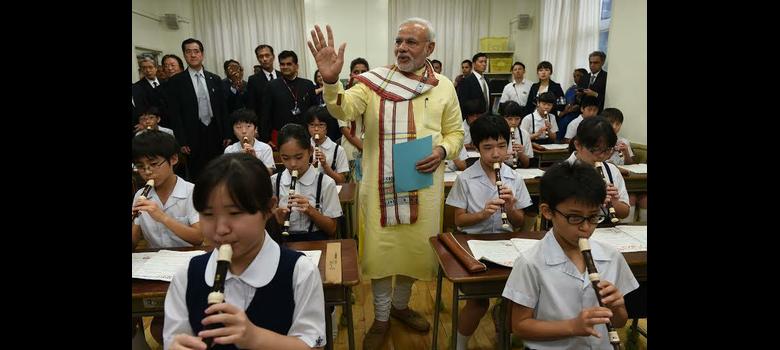
These photos show what Modi did in Japan when he wasn’t attending to business

All prime ministers enjoy spending time abroad, especially if it is while visiting a particularly friendly ally.

Prime Minister Narendra Modi isn’t exactly the jovial type. Sure, he peppers his speeches with a bit of light humour occasionally, but he doesn’t seem like the kind of person who would enjoy a comedy night on television. So what could possibly make him really happy? The same thing that makes heads of states happy all over the world: leaving their own countries to visit friendly allies.

And by any measure, it seems like Modi managed to have a blast in Japan (even if no nuclear deal was signed). Since he also happens to be the Selfie Era Prime Minister, every moment of this fun journey was documented and promptly tweeted by the prime minister’s official twitter account.

more photos from:  http://scroll.in/article/677092/These-photos-show-what-Modi-did-in-Japan-when-he-wasn’t-attending-to-business

Law of Unintended Consequences

continuously updated blog about China & India

ChiaHou's Book Reviews

continuously updated blog about China & India

What's wrong with the world; and its economy

continuously updated blog about China & India