

- Chinese and US researchers take inspiration from the hardy insect to design a robot that moves fast and is hard to squash
Their work on soft robots was conducted under the Tsinghua-Berkeley Shenzhen Institute partnership, an initiative to collaborate with global researchers on fields such as environmental science and new energy technology.
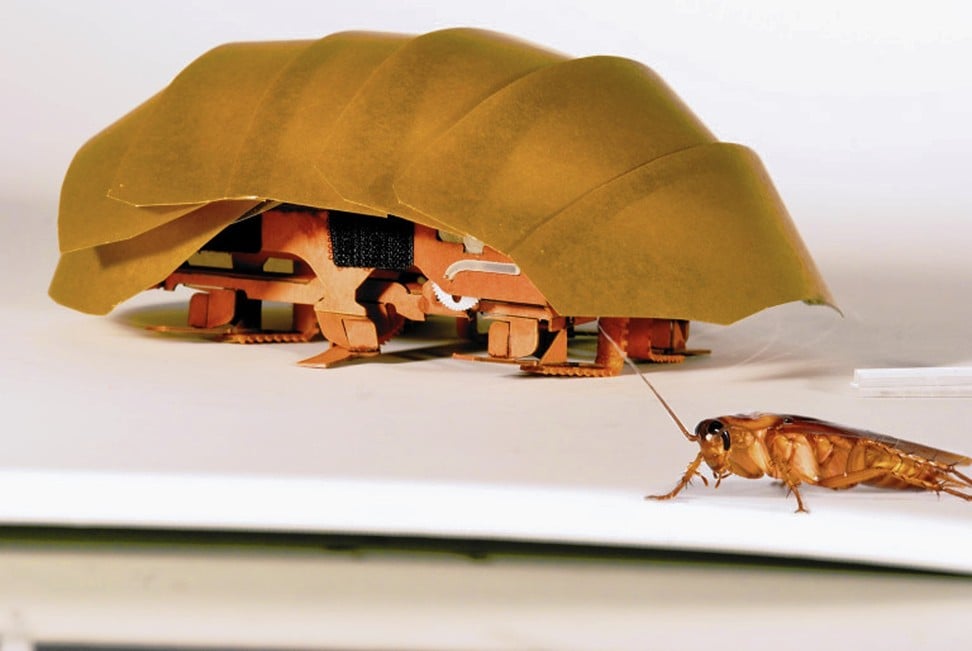
Scientists have long taken inspiration from insects, including cockroaches, for engineering robots. Researchers from UC Berkeley previously developed a palm-sized, roach-like robot – about 20 times the size of the bug – for rescue use in 2017.
By comparison, the new prototype achieved breakthroughs in terms of size and more importantly, the speed and robustness.
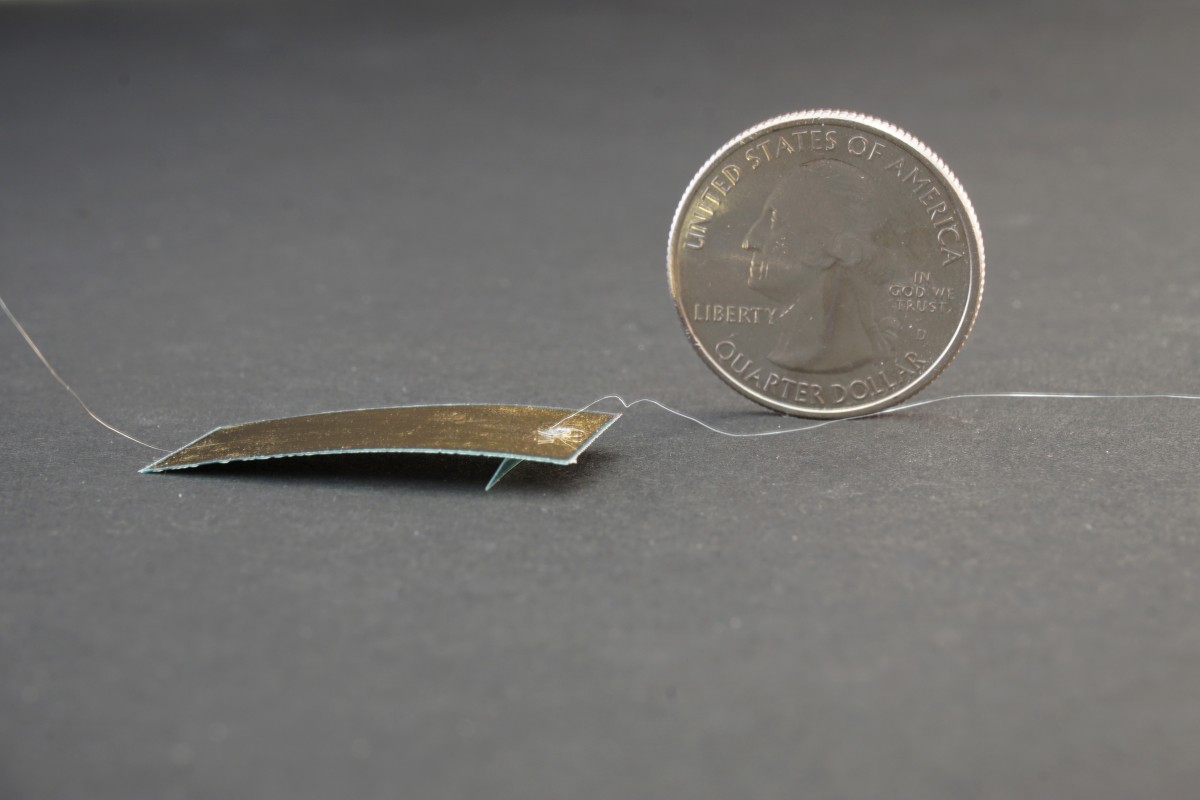
The latest robot, which is about the size of a postage stamp and weighs less than one-tenth of a gram, is composed of a flexible piezoelectric thin film and a polymer skeleton with two legs.
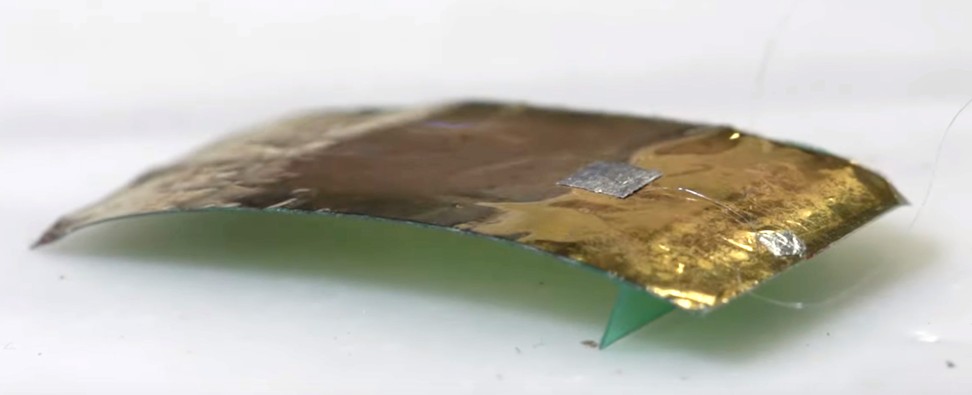
Despite its petite frame, this prototype showed the fastest speed among insect-scale robots in a similar weight range, as well as “ultra-robustness”, according to Lin Liwei, a professor of mechanical engineering at UC Berkeley who directed the research, in a separate email interview.
It can move as fast as a cockroach with speeds of up to 20 body lengths per second. It also continued to move after it was stepped on by an adult human weighting 60 kilograms, which is about 1 million times heavier than the robot, according to the study.
Those features sets up the robot for potential application in disaster relief, a field in which its size, agility and resilience would be invaluable to help detect survivors trapped beneath the rubble in catastrophes, such as major earthquakes.
Earthquakes have caused much devastation in China, a seismically active country with the world’s biggest population. For example, about 87,000 people died and more than 370,000 were injured when a magnitude-8 earthquake struck Wenchuan, a county in southwestern China’s Sichuan province, in 2008.
“The key innovation is the soft materials and structures used in the robot,” Lin said. “If the robot is too soft, it won’t be able to move fast. If the robot is too stiff, it can’t withstand the force of human weight.” The study detailed how the right combination of soft materials and structure enabled the robot to operate efficiently.
While the robot is currently attached to thin cables for power, the researchers are working to integrate a battery and control circuit to get rid of the existing wire in its design, helping expand its use in other applications.
“We want to make the robot carry small sensors, like a gas sensor, to provide it with more functions,” said Zhong Junwen, a researcher at UC Berkeley and one of the authors of the study, in a separate email interview. “With such a sensor, the robot can detect harmful gas leakage.”
Source: SCMP

 CHINDIA ALERT: You'll be living in their world, very soon