

BEIJING (Reuters) – China’s factory gate prices fell the most in five months in March, with deflation deepening and set to worsen in coming months as the economic damage wrought by the coronavirus outbreak at home and worldwide shuts down many countries.
The world’s second-largest economy is trying to restart its engines after weeks of near paralysis to contain the pandemic that had severely restricted business activity, flow of goods and the daily life of people.
Friday’s data from the National Bureau of Statistics suggested a durable recovery was some way off, with China’s producer price index (PPI) falling 1.5% from a year earlier, the biggest decline since October last year. It compared with a median forecast of a 1.1% fall tipped by a Reuters poll of analysts and a 0.4% drop in February.
Headline consumer inflation also eased somewhat last month, partly led by government control measures, while core prices remained benign, leaving more room for monetary easing, some analysts said.
The overall decline in the factory gate gauge was exacerbated by a slump in global oil and commodities prices, which filtered through to crude oil, steel and non-ferrous metal industries, the statistics bureau said in a statement accompanying the data.
“The issue of having more supply than demand, and persistently low oil prices, will intensify deflationary pressures,” said Yang Yewei, a Beijing-based analyst with Southwest Securities.
“Work resumptions on the production side are faster than the repair in demand. Downstream demand is recovering slowly and still remains weak,” he said.
The oil and gas extraction sector had the biggest year-on-year price fall of 21.7%, among the 40 major industrial sectors surveyed, deteriorating sharply from a 0.4% drop in the previous month.
The stringent travel and transport curbs have now been lifted across much of the country including Wuhan, the epicentre of the outbreak where the virus first emerged in late 2019. So far the virus has killed more than 3,300 and infected over 81,000 people in the country.
Analysts expect a deep first-quarter economic contraction in China and have grown increasingly pessimistic about the country’s prospects for 2020 due to the pandemic’s sweeping global impact.
Many economists and policymakers are forecasting a steep global recession this year as numerous countries are forced into lockdowns to contain the spread of the coronavirus, severely curtailing business activity in a major blow to jobs and incomes.
Worldwide, the virus has killed around 95,000 people and infected more than 1.5 million. Policymakers globally have responded to the crisis by launching an unprecedented package of stimulus measures, injecting trillions of dollars to backstop their economies that have been brought to a virtual standstill.
Beijing has also rolled out a series of fiscal and monetary support steps, and sources have told Reuters that policymakers are readying more stimulus in the coming months to stabilise growth and prevent mass unemployment.
China’s consumer prices rose 4.3% from a year earlier in March, compared with a 4.8% gain tipped by a Reuters poll and a 5.2% increase in February, as logistics and transport conditions improved and government price control measures kicked in.
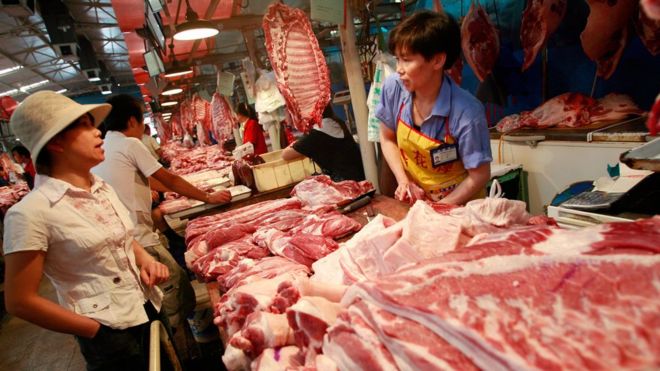
But food prices still rose over 18% from a year earlier, led by a 116.4% jump in pork prices, the data showed. The virus outbreak has pushed up prices of some food items, such as pork and vegetables.
Core inflation – which excludes food and energy prices – remained benign last month at 1.2%,but it still edged up from 1% in February.
Source: Reuters

 CHINDIA ALERT: You'll be living in their world, very soon