Archive for ‘President Xi Jinping’

06/02/2020

China drafts banks, brokerages and funds into war on virus

SHANGHAI/HONG KONG (Reuters) – China’s President Xi Jinping is enlisting the state-dominated financial sector in a war against a virus outbreak that has killed more than 500, mobilising lenders, brokerages and fund managers to pump resources into stricken parts of the economy.

Answering Beijing’s call, banks are rushing to offer virus-fighting loans at ultra-low rates, investment banks are helping companies issue anti-virus bonds faster, and managers of mutual funds are refraining from selling stocks, to damp market panic.

Concerted efforts to rein in the virus that emerged late last year in the central city of Wuhan highlight the centralized power the ruling Communist Party wields in a sector dominated by state-owned companies.

But the campaign, which has stirred memories of government rescue efforts during a market crash in 2015, deepens concern over corporate governance in China and risks sowing seeds of future trouble.

Wuhan DDMC Culture & Sports Co (600136.SS), a leisure company in the city, won Shanghai Stock Exchange approval to issue bonds of up to 600 million yuan (66.32 million pounds) via a “green channel” created for virus-hit companies, it said on Thursday.

“It’s like receiving charcoal on a snowy day,” the company, whose operations were wrecked by the epidemic, said on its website.

Three other companies – Zhuhai Huafa Group, Sichuan Kelun Pharmaceutical and China Nanshan Development Group – have raised a combined 2.1 billion yuan ($301 million) this week by issuing bonds via the interbank market, to fund virus-battling efforts.

Proceeds from the debt issuance, which won quicker-than-usual approval from regulators, will fund drug discovery programmes and hospital construction, the companies said.

Regulators have also asked banks to inject cheap funds into virus-stricken areas, and not to withdraw loans from companies suffering the impact. Sectors such as tourism, transport and leisure are the worst-hit.

Bank of Suzhou, in the eastern province of Jiangsu, vowed to cut financing costs for hundreds of small corporate clients and bolster lending.

For companies such as food producers, logistics firms and makers of anti-virus drugs, it will cut the rate on loans by 10 basis points below the lending benchmark, to stand as low as 3.98%.

A loan officer at Bank of China promised special treatment for those defaulting because of virus fallout, saying the central bank would cap interest on loans to firms with operations critical to beating the virus, such as makers of masks and drugs.

He added, “Such companies will enjoy the lowest possible rates.”

But the orchestrated support also triggered concerns of moral hazard among some.

“I’m afraid many companies about to go bankrupt will come and say their businesses are affected by the virus outbreak,” said a bond fund manager, who declined to be named.

A flurry of government support has helped stabilise stocks in China’s equity market after a plunge on Monday.

Regulators have told major mutual fund companies and insurers not to cut net equity positions this week, and urged brokerages to limit short-selling activities by clients, said sources who sought anonymity.

Fund managers were also nudged to do their bit. China’s fund association, which is supervised by the securities regulator, said employees at 26 mutual fund houses had put their own money – or more than 2 billion yuan ($287 million) – into fund products since Monday.

Source: Reuters
24/01/2020

George Soros takes aim at ‘authoritarian’ Presidents Xi and Trump

Media caption The billionaire financier and philanthropist has become a divisive figure in global politics in recent years

Billionaire philanthropist George Soros has launched a stinging attack on the “authoritarian rulers” of both the US and China.

He said President Donald Trump was a “conman and the ultimate narcissist” who had breached the limits of the US constitution.

And he said China’s President Xi Jinping was using technology to exert total control over Chinese life.

“The world would be a better place if they weren’t in power,” Mr Soros said.

Using his annual speech at the World Economic Forum, in Davos, the financier warned of a growing threat from populism and climate change, while pledging $1bn towards a new global university network to tackle intolerance.

But the businessman – who is a major donor to the US Democratic party – said Beijing and Washington posed the biggest threat to “open societies”.

“Both [leaders] try to extend the powers of their office to its limit and beyond.

“Trump is willing to sacrifice the national interests for his personal interests and he will do practically anything to win re-election.

“By contrast, Xi Jinping is eager to exploit Trump’s weaknesses and use artificial intelligence to achieve total control over his people.”

The White House was approached for comment.

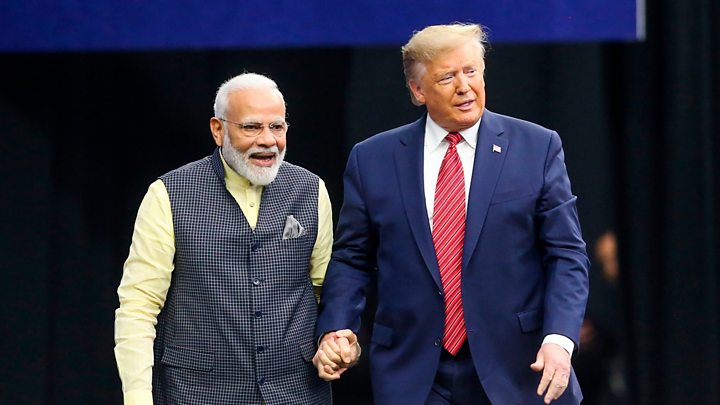
Media caption Modi to Trump: “My honour to introduce you to my family”

Mr Soros also targeted Indian Prime Minister Narendra Modi, saying the Indian state was “imposing punitive measures on Kashmir, a semi-autonomous Muslim region, and threatening to deprive millions of Muslims of their citizenship”.

He was referring to two controversial decisions made by Mr Modi’s Hindu nationalist government.

The first was to strip the disputed Kashmir region of its semi-autonomous status and place it under virtual lockdown.

The second is the introduction and passage of a controversial citizenship law that critics say is discriminatory towards Muslims.

It seeks to fast-track Indian citizenship to non-Muslim minorities from three nearby Muslim-majority countries.

Media caption The Conspiracy Files: Why did Hungary’s PM turn on George Soros?

The US and China recently struck a deal to de-escalate a major trade war which has seen both sides impose tariffs on billions of dollars worth of exports.

But Mr Soros said President Xi’s had stifled China’s economy, while Mr Trump had “overheated” his.

“US stock markets are high but can’t be kept at boiling point for too long.”

Mr Soros, a Jew who survived Nazi occupation by forging identity documents, became infamous for his involvement in the devaluation of the British pound, known as Black Wednesday.

But it is his philanthropic and political activities that have made him a divisive figure in the US, Europe and beyond.

He has spent billions of his own money funding human rights projects and liberal democratic ventures around the world, and has become a frequent target for criticism by right-wing groups due to his support for liberal causes.

Much of the criticism aimed at him has been criticised as having anti-Semitic undertones.

The financier, who is a regular at the elite World Economic Forum, said his new university network would help promote “critical thinking” in an age of intolerance.

The move will be seen as a riposte to Hungarian President Victor Orban, who has repeatedly tried to shut down the Central European University, a private institution set up by Mr Soros in the country in 1971.

Mr Orban’s populist nationalist government claims Mr Soros has a secret plot to flood Hungary with migrants and destroy the nation, an accusation Mr Soros denies.

Mr Soros said the network would be “the most important and enduring project of my life and I should like to see it implemented while I am still around”.

Source: The BBC

27/12/2019

China’s ‘great friendship’ with Micronesia grows warmer, leaving US with strategic headache in Pacific

  • As US financial support expires in 2023, Beijing could ‘loosen the screws’ on regional alliance with lucrative development deals
  • Independence vote in Micronesia’s Chuuk state in March could raise the stakes, potentially allowing China access to strategically vital waters
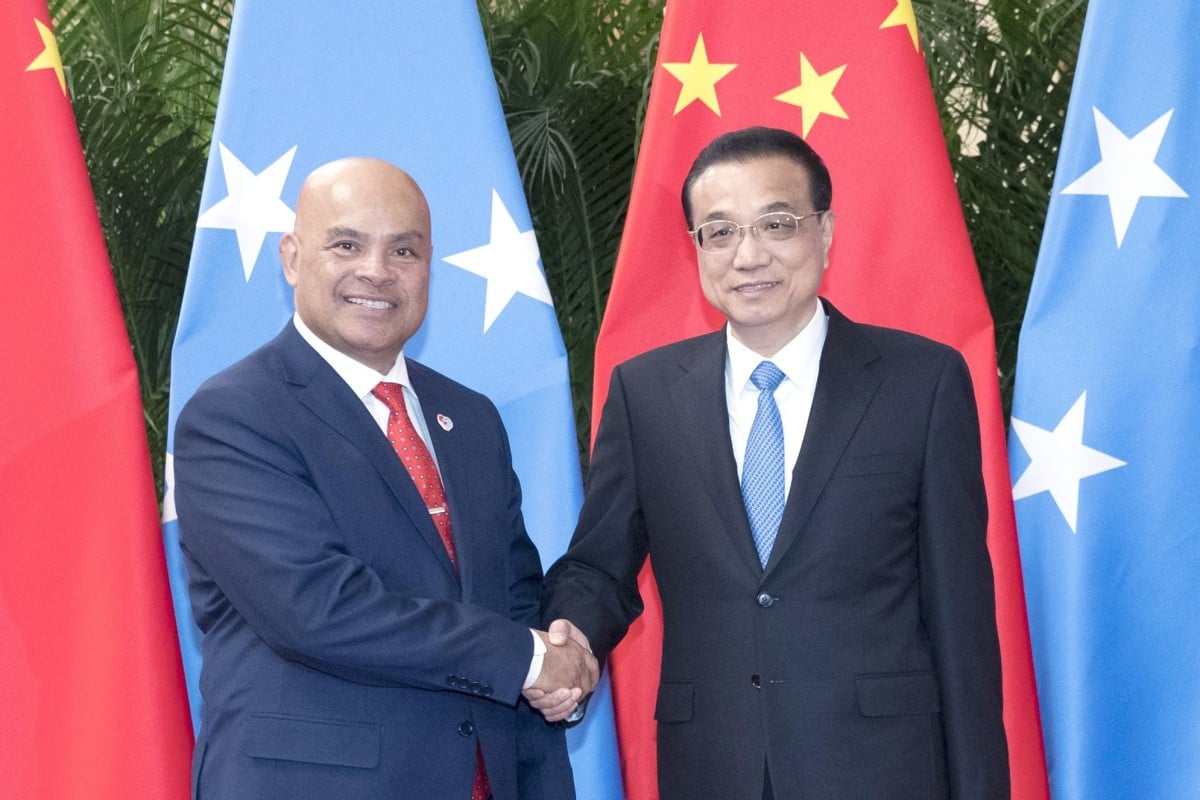
President of the Federated States of Micronesia David Panuelo shakes hands with Chinese Premier Li Keqiang at the Great Hall of the People in Beijing. Photo: Xinhua
In China earlier this month, David Panuelo, the president of the Federated States of Micronesia, climbed the Badaling section of the Great Wall. And, according to Huang Zheng, Beijing’s ambassador to the Pacific nation, the countries’ “great friendship rose to even greater heights” during Panuelo’s visit.
Chinese investment in Micronesia reached similarly lofty levels in conjunction with Panuelo’s trip, which marked three decades of diplomatic ties and included meetings with President Xi Jinping and Premier Li Keqiang. Beijing has committed US$72 million in economic development deals, almost as much as its total investment of the previous three decades.
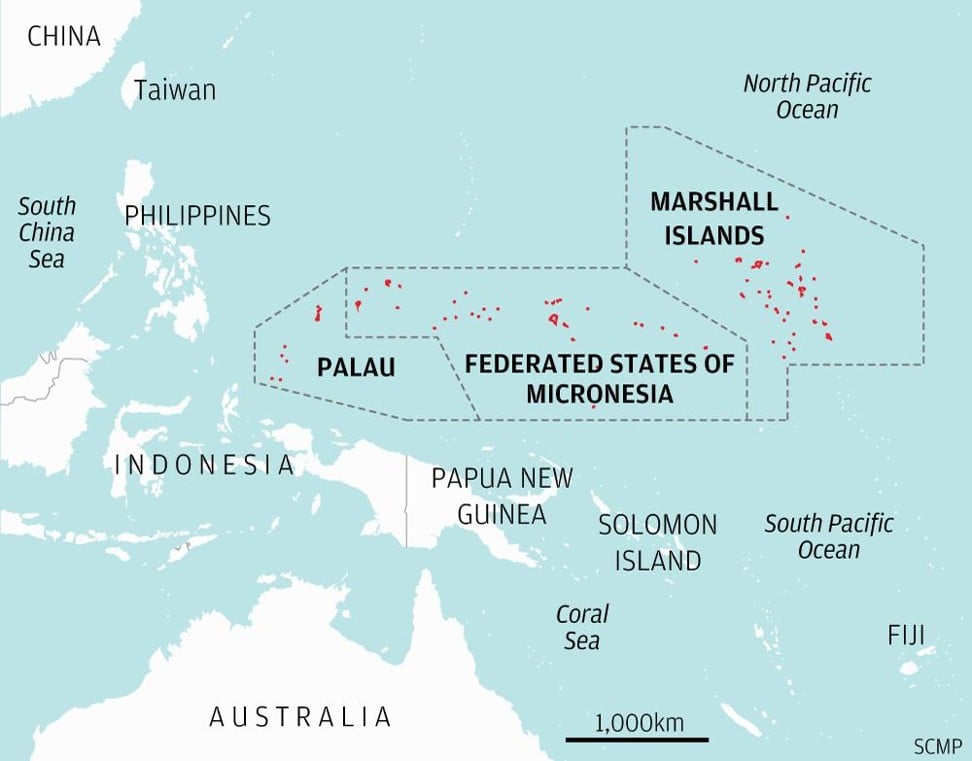
Micronesia is one of three Pacific nations with agreements with Washington, known as the Compact of Free Association (COFA), which allows their citizens to live and work in the US. In exchange, Micronesia, neighbouring Palau and the Marshall Islands grant the US exclusive military and defence access to their territorial waters – more than 2 million square miles of the Pacific that have been an essential element of Washington’s power projection in the region since World War II.
However, analysts warn Micronesia’s “great friendship” and tighter economic ties with Beijing could undermine this long-standing defence relationship with the US.
Much of China’s funding has been directed to Micronesia’s Chuuk state, which will in March vote in an independence referendum.
Although Chuuk is home to fewer than 50,000 people, its waters include one of the region’s deepest and most strategically appealing lagoons, creating extra incentive for Beijing and potential concern for Washington as the two countries

vie for influence in the Pacific.

How China ‘loosens the screws’

With a population of just 113,000 people, Micronesia relies on remittances sent home by citizens working in the US as well as the financial support from Washington under COFA. That assistance is scheduled to expire in 2023, creating uncertainty about the future of the relationship and making Chinese investment even more influential.

“Panuelo’s visit to China is a perfect example of how [the Chinese side] just needs to do a little to get a lot,” said Derek Grossman, senior analyst at Rand Corporation, a Washington think tank. “US$100 million is not very much for them and they can essentially loosen the screws [on COFA] with that.”

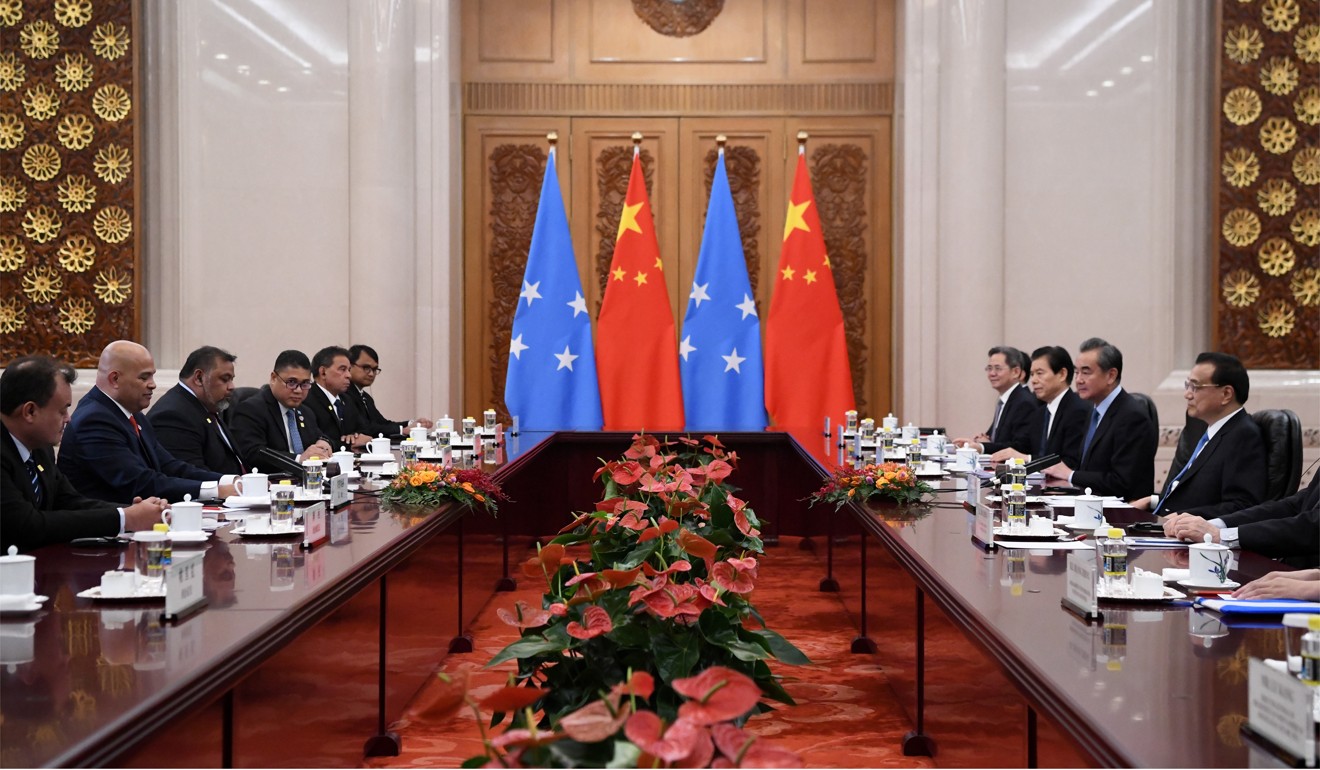
Micronesian President David Panuelo (second on left) and Chinese Premier Li Keqiang (right) during their talks in Beijing. Photo: EPA-EFE
The value of Micronesia’s bilateral trade with China has increased by nearly 30 per cent annually for the past five years, according to Micronesia’s Foreign Ministry. In 2017, the island nation signed onto President Xi’s signature Belt and Road Initiative which aims to build a vast network of strategic investment, trade routes and infrastructure projects across more than 150 countries.
US-China tech war’s new battleground: undersea internet cables14 Dec 2019

In recent years Chinese funding in Micronesia has built office and residential complexes for government officials, a showpiece new convention centre in the capital city Palikir, transport infrastructure and student exchanges, according to a recent report by Rand.

Jian Zhang, associate professor at UNSW Canberra at the Australian Defence Force Academy, said Beijing’s investment reflected a decision to cultivate broader, deeper ties.

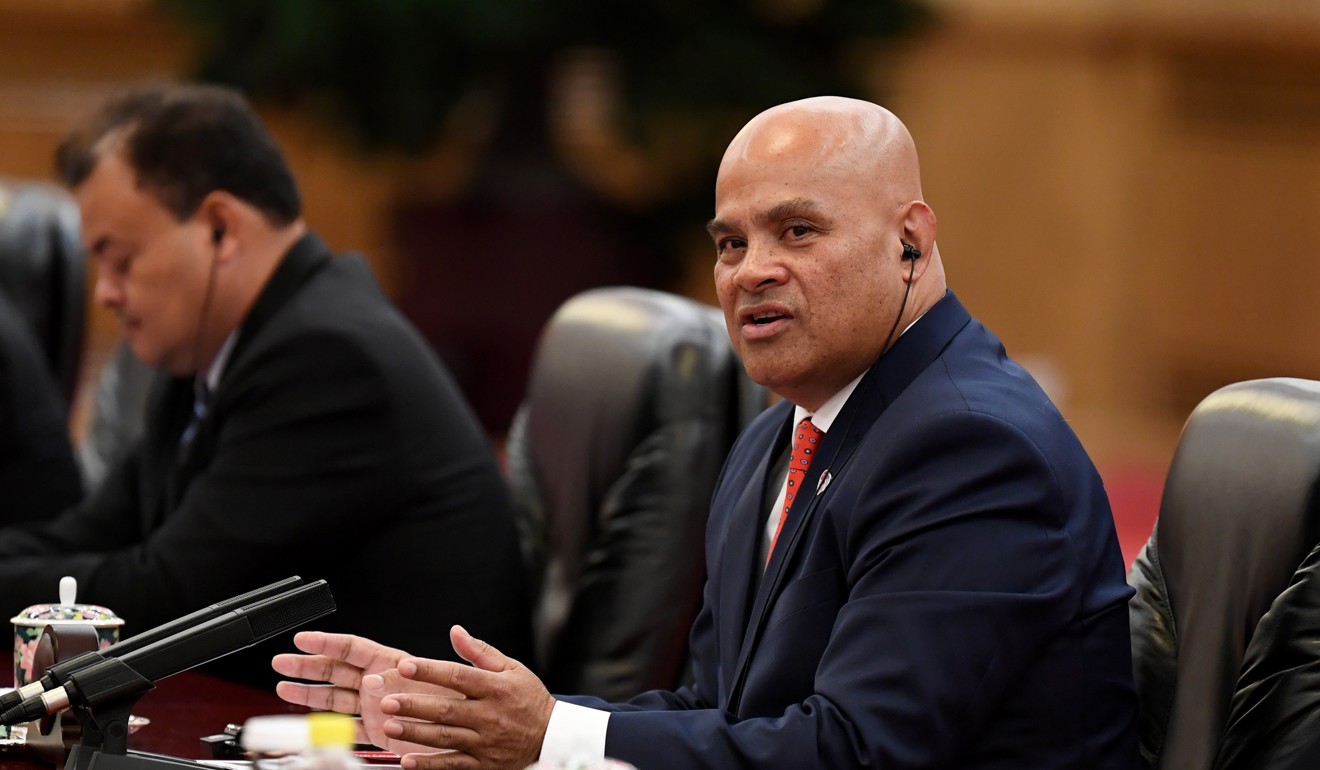
Micronesian President David Panuelo during his meeting with Chinese officials in Beijing. Photo: EPA-EFE
“China’s interest in building the relationship with Micronesia is not just about its diplomatic rivalry with Taiwan or economic interests,” he said. “It has elevated the relationship to a comprehensive strategic partnership which encompasses all areas.”

During his recent visit, Panuelo described China as Micronesia’s top economic partner and the US as its top security partner. Pompeo’s visit to Micronesia highlights US anxiety about rising Chinese influence in Pacific 5 Aug 2019

Gerard Finin, professor of regional planning at Cornell University, who previously worked with the US Department of State in the Pacific, said: “China’s leadership consistently accords large ocean states the full protocol that is expected when a head of state visits.

“In contrast, Washington has only had a limited number of meetings and never hosted an official state visit to Washington for the leader of a Pacific Island nation,” said Finin.

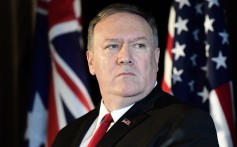
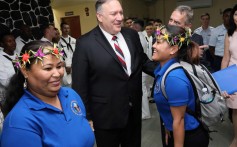
US President Donald Trump in May hosted the leaders of Micronesia, Palau and the Marshall Islands together at the White House. When Mike Pompeo visited Micronesia
in August, he became the only sitting US secretary of state to have done so.
Pompeo said negotiations to update COFA had begun but no details have been made public. Micronesia has assembled a team to conduct the negotiations but the US has not, the Honolulu Civil Beat website reported.
US Secretary of State Mike Pompeo visited Micronesia in August. Photo: AFP

Breakaway vote could raise the stakes

Panuelo’s team met Micronesian students studying in China and representatives of state-owned China Railway Construction Corporation, which will build the roads in Chuuk, funded in part by US$50 million from Beijing. Construction of the Chuuk government complex was also funded by Beijing and the state’s governor joined Panuelo for his visit.

Should Chuuk vote to separate from Micronesia in March, it could also mean breaking from COFA, jeopardising the US work privileges of thousands of Chuukese and opening the state’s waters to other partners, particularly China.

Chuuk is home to one of the deepest lagoons in the Pacific, a geographic rarity of particular value in strategic military operations and submarine navigation.

US Coast Guard looks to bolster Pacific allegiances as Chinese clout grows
22 Oct 2019

Zhang said Beijing would explore any opportunity to build a port with potential military capability.

“China has a long-term need to gain a strategic foothold in the region,” Zhang said. “That is a key part of the Belt and Road Initiative. At the general level it’s an economic initiative but an important aspect of the maritime Silk Road is to develop a network of strategically located port facilities.”

Sabino Asor, chair of the public education committee for the Chuuk Political Status Commission, told Civil Beat seceding from Micronesia would be the best option for Chuuk’s future.

“There is no encouraging prospect if Chuuk remains within the Federation,” he said.

However, Patrick Buchan, at Washington think tank Centre for Strategic and International Studies, said Chuuk’s dependence on remittances from the US made breaking from COFA unlikely.

China courts Pacific island states in pursuit of ‘foothold’ as US risks losing influence

8 Aug 2019

In the meantime, uncertainty over COFA negotiations persists, although there is a chance it will be renewed with few changes.

“There is circulation with people easily coming and going that provides a level of understanding and friendship that does not exist between too many other countries,” Finin said.

However, China’s most attractive feature may be its willingness to at least discuss the most pressing concern of Pacific Island nations: climate change.

“When the Trump administration talks about how it doesn’t believe in climate change, or can’t even say the words – that is really offensive for Pacific nations,” Grossman said. “China knows that, and is taking full advantage of it.”

Source: SCMP

20/12/2019

Fishermen cry foul as China bids to fix drought-hit lake

WUCHENG, China (Reuters) – After wading through mudflats, Fan Xinde, a 36-year-old fisherman, sifts old copper coins from the debris scooped from the bed of a dwindling river that feeds China’s biggest freshwater lake, the Poyang.

As residents fled invading Japanese troops 80 years ago, the coins were packed into boxes and sent down the river on rafts, with many sinking without trace. They are now being unearthed as the water in the Poyang recedes to its lowest level in decades, providing a small income for fishermen like Fan facing an uncertain future.

On Jan. 1 2020, China will ban fishing in environmentally sensitive regions along the Yangtze, China’s longest river, and by the start of 2021, fishing throughout the Poyang itself will be prohibited for at least 10 years.

Fan, who has worked half his life on the lake, said he and as many as 100,000 other fishermen were being unfairly blamed for mounting local environmental problems and must now find other ways to make a living.

“Our sources of income have been cut off. We don’t have anything else,” he said. “To be honest, we shouldn’t be collecting the coins at all because they are owned by the state, but it is only a tiny amount.”

The government says excessive fishing has brought stocks down to perilously low levels and put endangered species under threat, including China’s last surviving river mammal, the Yangtze finless porpoise.

But the Poyang, described by President Xi Jinping as a vital “kidney” filtering the water supplies of 40% of China’s population, has also been hurt by intensive sand mining, untreated wastewater and the impact of the giant Three Gorges Dam some 560km (350 miles) upstream.

Water in the Poyang, which spills off from the middle reaches of the Yangtze River in Jiangxi province, routinely declines in winter. But the lake is now at its lowest in 60 years. With little rain since July, hundreds of shriveled anchovies and tiny shellfish have been baked into the exposed shoreline flats.

DAMS AND QUARRIES

Residents blame the Three Gorges Project for the problems facing the lake, with its vast 660km-long (410 mile-long) reservoir storing huge volumes of water behind a giant dam for power generation.

“The Three Gorges is blocking off all the water,” said Zhang Yingsheng, a 59-year old fisherman picking clams from the edge of the lake. “Every winter is like this now, but this year is especially low because of the drought.”

With the 181-metre (600-foot) dam reducing the Yangtze’s flow in winter, water from the Poyang drains quickly and easily back into the river.

But the primary cause of problems is the two decades of intensive sand mining in the Poyang, said David Shankman, professor at the University of Alabama, who studies the lake.

“Sand mining has made the drainage channel (in the northern part of the lake) deeper and wider” accelerating the draining, he said.

Zhang said quarrying by giant dredgers had hit fishing hard, with deeper lake beds making it harder for fishermen to deploy their nets. The sand industry had also damaged the lake’s ecosystem, he said.

According to policy plans seen by Reuters, the local government is already working to reduce mining activity in the Poyang after banning it in the Yangtze River two decades ago.

Annual sand production will be limited to 39.9 million tonnes from 2019-2024, down 26.9% compared to the 2014-2018 period. Dredgers will be permitted to mine 65 square km (25 square miles) of the lake area, a quarter of the previous level.

The new policy was a sign officials had recognized sand mining had become a serious environmental liability, Shankman said, but simply stopping the activity wouldn’t automatically solve the problems.

“It depends not only on the extent of the mining, and not on the total area of the mining, but where they are mining,” he said.

IRREVERSIBLE

China is in the middle of a campaign aimed at ending big and “destructive” development along the Yangtze. President Xi said restoring the Poyang was a crucial element of the plan to revitalize regions along the river’s banks.

But experts say many of the devastating changes to the lake are irreversible.

Even before the Three Gorges Dam and the sand mining boom, the lake had already shrunk considerably as a result of an earlier campaign to reclaim farmland and curb floods through the use of dykes and diversions.

“Everything in the lake has been dramatically altered by landscape change, dams and sand mining,” said Shankman. “The amount of water in the lake, in the Yangtze River, the sediment going in and going out – everything is affected by human activity.”

Source: Reuters

18/12/2019

Xi Focus: Xi attends commissioning of first Chinese-built aircraft carrier

CHINA-HAINAN-XI JINPING-FIRST CHINESE-BUILT AIRCRAFT CARRIER-COMMISSIONING (CN)

Chinese President Xi Jinping, also general secretary of the Communist Party of China Central Committee and chairman of the Central Military Commission (CMC), presents the People’s Liberation Army (PLA) flag and the naming certificate to the captain and political commissar of aircraft carrier Shandong, respectively, during the commissioning ceremony of China’s first domestically built aircraft carrier at a naval port in Sanya, south China’s Hainan Province, Dec. 17, 2019. Xi attended the commissioning ceremony of China’s first domestically built aircraft carrier, the Shandong, here Tuesday afternoon. The new aircraft carrier, named after Shandong Province in east China, was delivered to the PLA Navy and placed in active service Tuesday at the naval port. (Xinhua/Li Gang)

SANYA, Dec. 17 (Xinhua) — President Xi Jinping, also general secretary of the Communist Party of China Central Committee and chairman of the Central Military Commission (CMC), attended the commissioning ceremony of China’s first domestically built aircraft carrier, the Shandong, here Tuesday afternoon.

The new aircraft carrier, named after Shandong Province in east China, was delivered to the People’s Liberation Army (PLA) Navy and placed in active service Tuesday at a naval port in Sanya, south China’s Hainan Province.

The ceremony started at around 4 p.m.

Xi presented a PLA flag and the naming certificate to the captain and political commissar of the Shandong, respectively, and posed for a group photo with them.

After the ceremony, Xi boarded the Shandong and reviewed the guards of honor. He also inspected the onboard equipment and asked about the work and life of carrier-based aircraft pilots.

On the bridge of the Shandong, Xi greeted the officers and soldiers and signed his name in the log.

Xi also met with representatives of the aircraft carrier unit and the manufacturer at the dock.

Commending China’s achievements in aircraft carrier construction, Xi encouraged them to continue their efforts to make new contributions in the service of the Party and the people.

Approved by the CMC, the Shandong was given the hull number 17.

Source: Xinhua

30/11/2019

Chinese police prepare for Macau handover anniversary with anti-terror drill near Hong Kong

  • Zhuhai police, at the end of the world’s longest sea bridge, use body armour and tear gas in preparation for Macau’s 20th anniversary celebration
  • Hong Kong is just an hour’s drive away from Macau using the bridge
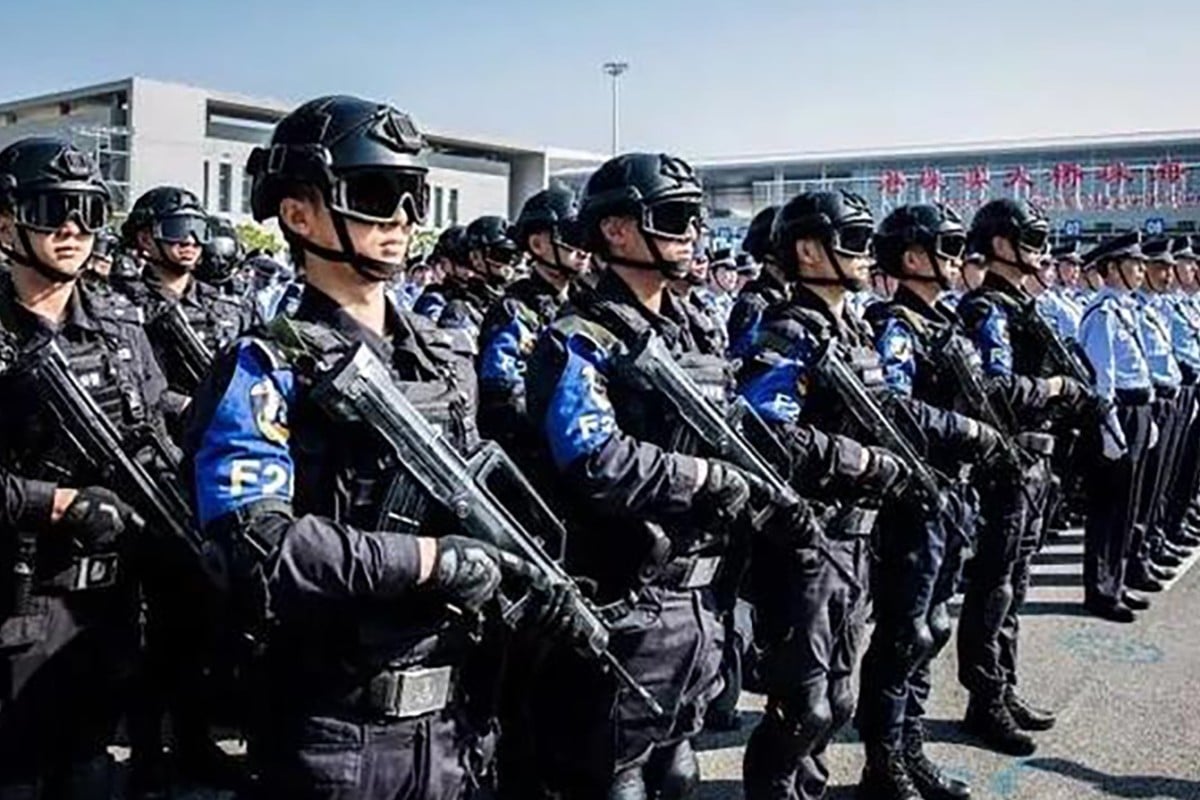
More than 1,000 police officers took part in the anti-terror drill in Zhuhai. Photo: Toutiao
Armed police in the southern Chinese city of Zhuhai held a massive anti-terror drill at its end of the Hong Kong-Zhuhai-Macau Bridge on Friday morning as part of its preparations for the 20th anniversary of the handover of Macau, when President Xi Jinping is expected to visit the city.
More than 1,000 police officers and 80 vehicles were involved in the exercise, amid 
ongoing political turmoil in Hong Kong

, according to local news portal Southcn.com.

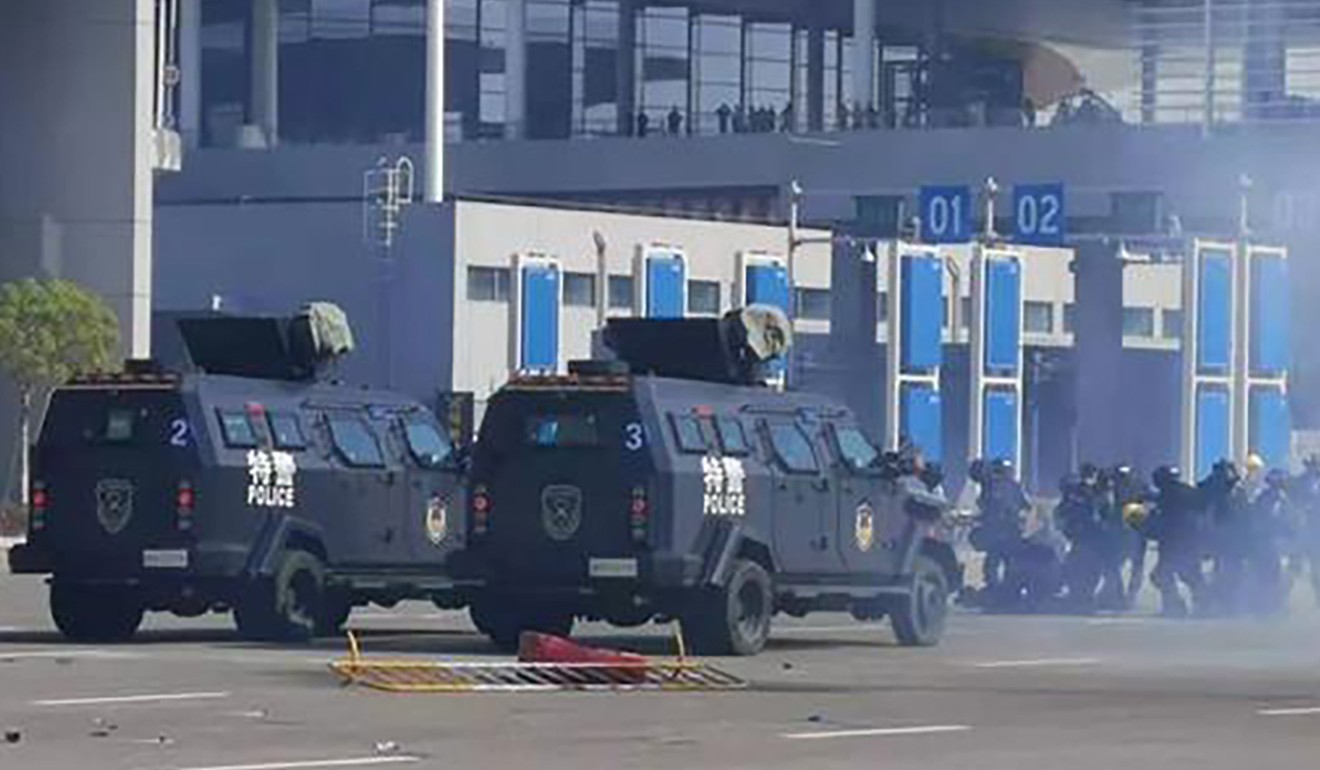
Photos circulated online showed officers in body armour, helmets and shields firing tear gas as they confronted a group of people carrying sticks and wearing black shirts and yellow helmets – attire associated with the protesters in Hong Kong, 60km (37 miles) away from Macau.
The drill was held three weeks before the 20th anniversary of Macau’s return to Chinese administration under the “one country, two systems” policy on December 20.
Police trucks and riot officers during Friday’s exercise at the Zhuhai end of the Hong Kong-Zhuhai-Macau Bridge. Photo: Toutiao

Security is expected to be tightened when Xi visits the city, in response to the violent clashes in Hong Kong over the past six months, which Beijing has repeatedly blamed on radical protesters.

The former Portuguese colony is connected to Hong Kong and its neighbouring city of Zhuhai, Guangdong province, by the world’s longest sea crossing bridge. It takes about an hour to drive from Hong Kong to Macau via the bridge.

Guo Yonghang, Zhuhai party chief, urged the local police to stay loyal to the party. “[Police] should be loyal and fulfil duty and mission to create a peaceful and stable political and social environment for the construction of the Guangdong-Hong Kong-Macau Greater Bay Area and the celebration of the 20th anniversary of Macau’s reunification to the motherland,” he said.

Macau was returned to China two years after Hong Kong and celebrations of its success under one country, two systems could be overshadowed by its neighbour’s anti-government protests which stemmed from opposition to proposed extradition legislation and have escalated into violence on the streets and in university campuses.

In August, two months after more than 2 million people in Hong Kong took to the streets to protest the now-suspended extradition bill, police in Shenzhen held at least three drills featuring anti-riot exercises involving tear gas, armoured vehicles and water cannon.

Source: SCMP

23/11/2019

President Xi meets IMF chief to advance cooperation

CHINA-BEIJING-XI JINPING-IMF CHIEF-MEETING (CN)

Chinese President Xi Jinping meets with International Monetary Fund (IMF) Managing Director Kristalina Georgieva at the Great Hall of the People in Beijing, capital of China, Nov. 22, 2019. (Xinhua/Huang Jingwen)

BEIJING, Nov. 22 (Xinhua) — Chinese President Xi Jinping met with International Monetary Fund (IMF) Managing Director Kristalina Georgieva in Beijing on Friday.

Xi extended his welcome for Georgieva’s first visit to China as IMF chief.

Xi said global economic growth is slowing down with increasing downside risks, protectionism in the world is on the rise, and multilateralism and free trade are facing severe challenges. Therefore, the international community has higher expectations for the role of the IMF.

“I hope that under your administration, the IMF will further improve the international currency and its governance system, and enhance the representation and voice of emerging markets and developing countries,” said Xi.

The Chinese president expressed the hope that the IMF will continue to promote global trade, safeguard a fair and open global financial market, and advance the development of the international order in a more just and rational manner.

Xi said in recent years, China and the IMF have carried out sound cooperation in strengthening the capacity building of countries involved in the Belt and Road Initiative.

“China is willing to continuously deepen cooperation with the IMF,” said Xi.

Stressing that China’s economic development has great resilience, potential and room for maneuvering, Xi said the long-term positive trend of China’s economic growth will not change.

“I am full of confidence in China’s development,” said Xi, noting that China will stick to the new vision for development, forge ahead high-quality economic development, continuously promote a higher level of opening up, and bring more opportunities to the world economic growth.

Georgieva said China aims to eradicate absolute poverty by 2020, and the goal is of landmark significance for China and the world. China has achieved sustained and strong economic growth through reform and opening up. It is believed that China will continue to remain open to the outside world in various fields including finance and capital.

The IMF attaches great importance to its relationship with China and will continue to deepen cooperation with China, she said.

Noting that the world economy is currently in a difficult period, Georgieva said the IMF firmly supports free and open trade and strives to achieve peaceful trade relations.

She said the IMF is ready to carry out reforms in line with the needs of the times and enhance the weight of emerging economies.

Georgieva also expressed the willingness to work with China to advance the building of a community of a shared future for humanity and strengthen Belt and Road cooperation.

During her stay in China, Georgieva, who took office as the managing director of the IMF last month, also attended a roundtable meeting hosted by Chinese Premier Li Keqiang with leaders of six major international economic and financial institutions.

Source: Xinhua

17/11/2019

Chinese vice president addresses international conference to commemorate Confucius’s birth

CHINA-BEIJING-WANG QISHAN-CONFERENCE-CONFUCIUS' BIRTH (CN)

Chinese Vice President Wang Qishan poses for a group photo with representatives of guests before they attend the opening ceremony of the international conference in commemorating the 2,570th anniversary of Confucius’ birth and the sixth Congress of the International Confucian Association (ICA) in Beijing, capital of China, Nov. 16, 2019. Wang addressed the opening ceremony of the conference here on Saturday. (Xinhua/Ju Peng)

BEIJING, Nov. 16 (Xinhua) — Chinese Vice President Wang Qishan addressed the opening ceremony of the international conference in commemorating the 2,570th anniversary of Confucius’ birth and the sixth Congress of the International Confucian Association (ICA) Saturday.

Wang, on behalf of President Xi Jinping and the Chinese government, extended sincere congratulation to the opening of the conference.

The notable achievements in the past 70 years of the People’s Republic of China were made through the hard work of Chinese people, drawing on the wisdom and fine elements of Chinese civilization, Wang said.

President Xi’s keynote speech at the fifth ICA Congress in 2014 pointed out the direction of how to advance Confucianism and other fine elements in traditional culture as well as promote mutual learning among different civilizations, he said.

Wang called for the efforts to borrow the wisdom from traditional Chinese culture, respect other cultures across the world and enhance exchanges and mutual learning.

He also expressed the hope that the ICA will use Confucianism as a bridge to explore and improve understanding of the world and contribute to the progress of human civilization.

Source: Xinhua

15/11/2019

Xi’s remarks point way to stabilizing Hong Kong situation: spokesperson

BEIJING, Nov. 15 (Xinhua) — President Xi Jinping’s latest remarks on the Hong Kong situation are the strongest voice from the central government on the work of ending violence and chaos in Hong Kong, a spokesperson said Friday.

Xi’s remarks on Thursday in Brazil have pointed the way to stabilizing the situation in the Hong Kong Special Administrative Region (SAR), said Yang Guang, a spokesperson for the Hong Kong and Macao Affairs Office of the State Council.

The president’s words came as the disturbances in Hong Kong have lasted more than five months and radical violent crimes have been escalating recently, the spokesperson said.

His remarks are a strong support to the Hong Kong SAR government led by Chief Executive Carrie Lam, a great inspiration to Hong Kong residents, and a stern warning to the rioters and their backroom supporting forces, Yang said.

The office will work with resolve to implement the president’s requirements to firmly support the chief executive in leading the SAR government to govern in accordance with the law, firmly support the Hong Kong police in strictly enforcing the law, and firmly support the Hong Kong judicial bodies in severely punishing the violent criminals in accordance with the law, Yang said.

The spokesperson pledged various means of supporting and encouraging the Hong Kong people from all walks of life to build up “overwhelming positive energy” in countering violence and safeguarding rule of law, for the end of chaos and the restoration of social stability in Hong Kong as soon as possible.

“The central government and 1.4 billion people of China will always be the strongest backing for Hong Kong to overcome any challenges and risks,” he said.

Source: Xinhua

13/11/2019

Xinjiang cotton sparks concern over ‘forced labour’ claims

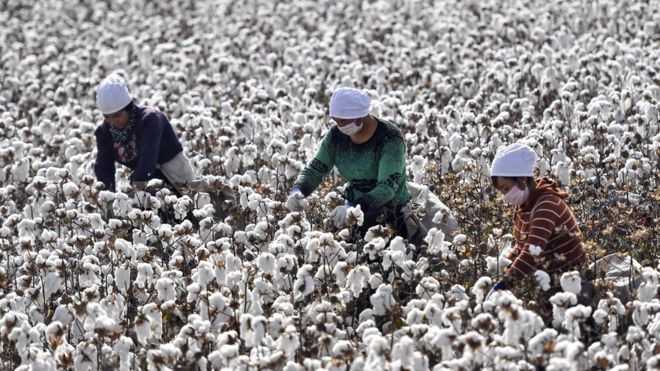
Farmers pick cotton during the harvest on October 21, 2019 in Shaya County, Xinjiang Uygur Autonomous Region of China.Image copyright GETTY IMAGES

Global retailers are facing scrutiny over cotton supplies sourced from Xinjiang, a Chinese region plagued by allegations of human rights abuses.

China is one of the world’s top cotton producers and most of its crop is grown in Xinjiang.

Rights groups say Xinjiang’s Uighur minority are being persecuted and recruited for forced labour.

Many brands are thought to indirectly source cotton products from the Xinjiang region in China’s far west.

Japanese retailers Muji and Uniqlo attracted attention recently after a report highlighted the brands used the Xinjiang-origin of their cotton as a selling point in advertisements.

H&M, Esprit and Adidas are among the firms said to be at the end of supply chains involving cotton products from Xinjiang, according to a Wall Street Journal investigation.

“You can’t be sure that you don’t have coerced labour in your supply chain if you do cotton business in China,” said Nathan Ruser, researcher at the Australian Strategic Policy Institute.

“Xinjiang labour and what is almost certainly coerced labour is very deeply entrenched into the supply chain that exists in Xinjiang.”

What is happening in Xinjiang?

UN experts and human rights groups say China is holding more than a million Uighurs and other ethnic minorities in vast detention camps.

Rights groups also say people in camps are made to learn Mandarin Chinese, swear loyalty to President Xi Jinping, and criticise or renounce their faith.

China says those people are attending “vocational training centres” which are giving them jobs and helping them integrate into Chinese society, in the name of preventing terrorism.

What is produced in Xinjiang?

The Xinjiang region is a key hub of Chinese cotton production.

China produces about 22% of global cotton supplies, according to a report by the Center for Strategic and International Studies (CSIS).

Last year, 84% of Chinese cotton came from Xinjiang, the report said.

That has raised concerns over whether forced labour has been used in the production of cotton from the region.

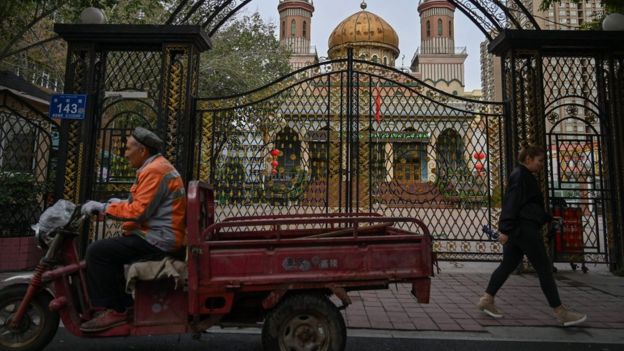
This photo taken on September 11, 2019 shows people walking past a mosque in Urumqi, the regional capital of Xinjiang.Image copyright GETTY IMAGES
Image caption The Uighurs are mostly Muslims, and number about 11 million in China’s Xinjiang region

Nury Turkel, chairman of the Uighur Human Rights Project in Washington, said the Uighurs were being “detained and tormented” and “swept into a vast system of forced labor” in Xinjiang.

In testimony to US congress, he said it was becoming “increasingly hard to ignore the fact” that the goods manufactured in the region have “a high likelihood” of being produced with forced labour.

Which brands use Xinjiang cotton?

Amy Lehr, director of CSIS Human Rights Initiative, said in many cases Western companies aren’t buying directly from factories in Xinjiang.

“Rather, the products may go through several stages of transformation after leaving Xinjiang before they are sent to large Western brands,” she said.

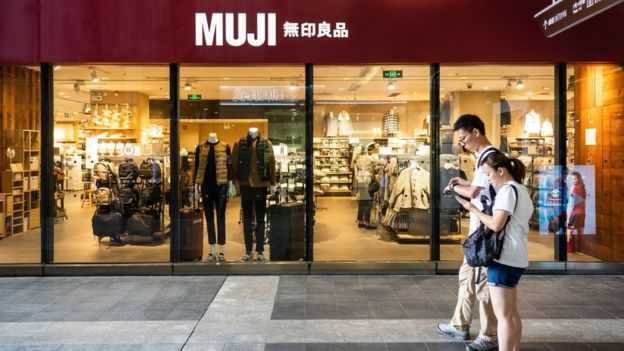
Some, like Muji, are very open about sourcing material from Xinjiang.

The Japanese retail chain launched a new Xinjiang Cotton collection earlier this year.

One of its advertisements boasts “soft and breathable” men’s shirts made from organic cotton “delicately and wholly handpicked in Xinjiang”.

Another Japanese fashion brand Uniqlo had also touted the Xinjiang region in an advertisement advertisment for men’s shirts.

In the fine print of the shirt description, the advert said the shirts were made from Xinjiang cotton, “famous for its superb quality”.

That reference was later removed from the advertisement “given the complexity of this issue”, according to a spokesperson for Uniqlo.

“Uniqlo does not have any production partners located in the Xinjiang region. Moreover, Uniqlo production partners must commit to our strict company code of conduct.

“To the best of our knowledge, this means our cotton comes only from ethical sources,” the spokesperson told the BBC.

Pedestrians walk past a Japanese household and consumer goods retailer, Muji store in ShenzhenImage copyright GETTY IMAGES

According to the Wall Street Journal report which focused on workers at a mill operated by Huafu Fashion in Aksu, Xinjiang, yarn made in the region was present in the supply chains of several international retailers including H&M, Esprit and Adidas.

Many of the companies looked into the allegations, including those without clear links to the Huafu mill.

In a statement to the BBC, Adidas said: “While we do not have a contractual relationship with Huafu Fashion Co., or any direct leverage with this business entity or its subsidiary, we are currently investigating these claims.”

“We advised our material suppliers to place no orders with Huafu until we have completed those investigations,” the Adidas spokesperson said.

Esprit, which also does not source cotton directly from Xinjiang, said it had made several inquiries earlier this year.

“We concluded that a very small amount of cotton from a Huafu factory in Xinjiang was used in a limited number of Esprit garments,” the firm said in a statement.

The company has instructed all suppliers to not source Huafu yarn from Aksu, the statement said.

H&M said it does not have “a direct or indirect business relationship” with any garment manufacturer in the Xinjiang region.

“We have an indirect business relationship with Huafu’s spinning unit in Shanyu, which is not located in the Xinjiang region, and according to our data, the vast majority of the yarn used for our garment manufacturing comes from this spinning unit,” a spokesperson for H&M said.

“Since we have an indirect business relationship with the yarn supplier Huafu, we also asked for access to their spinning facilities in Aksu. Our investigations showed no evidence of forced labor.”

Source: The BBC

Law of Unintended Consequences

continuously updated blog about China & India

ChiaHou's Book Reviews

continuously updated blog about China & India

What's wrong with the world; and its economy

continuously updated blog about China & India