Archive for ‘President’

14/02/2020

U.S., China, Russia making world more dangerous – German president

MUNICH (Reuters) – Germany’s president took an indirect swipe at U.S. President Donald Trump on Friday in accusing Washington, China and Russia of stoking global mistrust and insecurity with a “great powers” competition” that could threaten a new nuclear arms race.

In opening remarks at the annual Munich Security Conference, German President Frank-Walter Steinmeier deplored the three big powers’ approach to global affairs and, without naming Trump, took issue with his vow to “make America great again”.

“‘Great again’ – even at the expense of neighbours and partners,” quipped Steinmeier, a former Social Democrat foreign minister whose comments on foreign policy carry authority.

As foreign minister in 2014, he was central to the so-called “Munich consensus” when German leaders said Berlin was ready to assume more responsibility in global affairs. Steinmeier pressed that point again on Friday, but not before bemoaning the foreign policy approaches of Russia, China and the United States.

“Russia…has made military force and the violent shifting of borders on the European continent the means of politics once again,” he said in the text of a speech for delivery at the opening of the conference.

“China…accepts international law only selectively where it does not run counter to its own interests,” Steinmeier said.

“And our closest ally, the United States of America, under the present administration itself, rejects the idea of an international community.”

The upshot is “more mistrust, more armament, less security…all the way to a new nuclear arms race,” he said.

In response, he said, Germany should raise defence spending to contribute more to European security and to maintain its alliance with the United States, recognising that U.S. interests were gravitating away from Europe toward Asia.

He also called for a European policy towards Russia “that is not limited to condemning statements and sanctions alone”.

Europe, he added, “must find its own balance with China between intensifying competition between systems and the need for cooperation.”

Source: Reuters

20/12/2019

Senior Chinese official meets Republic of Congo president

REPUBLIC OF THE CONGO-BRAZZAVILLE-YANG JIECHI-VISIT

Yang Jiechi (L), a member of the Political Bureau of the Communist Party of China (CPC) Central Committee and director of the Office of the Foreign Affairs Commission of the CPC Central Committee, meets with President of the Republic of the Congo Denis Sassou Nguesso in Brazzaville, capital of the Republic of the Congo, Dec. 19, 2019. (Xinhua/Wang Songyu)

BRAZZAVILLE, Dec. 19 (Xinhua) — Yang Jiechi, a member of the Political Bureau of the Communist Party of China (CPC) Central Committee, met with President of the Republic of the Congo Denis Sassou Nguesso here on Thursday.

Yang, also director of the Office of the Foreign Affairs Commission of the CPC Central Committee, said the two countries are good friends, good partners and good brothers.

In recent years, the two countries’ heads of state have met many times to steer the development of bilateral ties, he said.

Political mutual trust between the two countries continues to deepen, and their practical cooperation has yielded remarkable results, said the Chinese official, adding that financial and aviation cooperation has become a new growth point, and progress has been made in key projects such as the construction of the Pointe Noire special economic zone.

China has always supported the Republic of the Congo in developing its economy, improving people’s livelihood, and adhering to a development path that suits its national realities, Yang said.

He urged the two sides to keep the momentum of high-level exchanges, and to continue to firmly support each other on issues concerning their respective core interests and concerns.

Under the framework of the Belt and Road Initiative (BRI) and the Forum on China-Africa Cooperation, the two sides should expand their cooperation in various fields, strengthen communication and coordination, safeguard the common interests of the two countries and those of developing countries as a whole, so as to demonstrate the high level of the comprehensive strategic cooperative partnership between the two countries.

For his part, Sassou said the Congolese side treasures its friendship with China. The Congolese side highly appreciated that Chinese President Xi Jinping chose the country as one of the destinations of his first foreign trip in 2013 after taking office, Sassou said.

The Congolese people appreciate valuable long-term support from China, particularly recent flood relief assistance and supplies, he said.

Sassou added that the Congolese side will continue its active participation in the BRI, and is looking forward to further strengthening mutual cooperation in key areas, including agriculture, infrastructure and industrial facilities.

Yang also met with Foreign Minister of the Republic of the Congo Jean-Claude Gakosso on the same day.

Source: Xinhua

28/10/2019

Military World Games of “historic” and “peace” close in Wuhan

(SP)CHINA-WUHAN-7TH MILITARY WORLD GAMES-CLOSING CEREMONY

Xu Qiliang, president of the 2019 Military World Games organizing committee and also vice chairman of China’s Central Military Commission, declares the 7th CISM Military World Games close during the closing ceremony of the Games in Wuhan, capital of central China’s Hubei Province, Oct. 27, 2019. (Xinhua/Xiao Yijiu)

WUHAN, Oct. 27 (Xinhua) — Xu Qiliang, president of the 2019 Military World Games organizing committee, also vice chairman of China’s Central Military Commission, declared the Games close on Sunday in Wuhan, central China, to wrap up the biggest ever “Olympics for the military”.

Chinese Vice Premier Sun Chunlan, also president of the Wuhan Military World Games organizing committee, thinks highly of the organization of the Games and the performances of worldwide athletes.

“We have experienced a successful, wonderful and unforgettable military games in the lastest 10 days. This is a military gala of sharing friendship and safeguarding peace,” said Sun at the closing ceremony.

“This Games have showcased the spirits of the military personnel, which uphold perseverance, challenging limits and striving for better. This Games are full of wonders and achievements and are set to leave China’s marks in its history,” she added.

According to Sun, seven world records had been set and 85 International Military Sports Commission (CISM) affiliated records had been broken here in the tournament, as athletes rated it as a high-level international event, which featured 67 Olympic and world champions.

After 10-day competitions, host China collected 133 golds and 239 medals in total, the first time for a country to grab 100 plus golds. The traditional powerhouse Russia obtained 51 golds and 161 medals in all as an evident runner-up in medal tally, followed by Brazil, the host for 2011 Games, with 21 golds and 88 medals. France, Poland and Germany lined up from fourth to sixth places, all clinching 10 plus golds.

Herve Piccirillo, CISM president, hailed the Games as great success and tagged it with two key words “historic” and “peace” on Friday, lauding its material and spiritual legacy to the host city and the world.

“These are games that will mark the history of military competitions and develop new practices in the future,” said Piccirillo in an interview with Xinhua.

The president picked the word “historic” for its history-making participation of nearly 10,000 military personnel, investment for games organization, mobilization of volunteers and passion from Chinese people.

Explaining the word “peace”, he said, “because the message that is carried by a whole people, because beyond the games, it is all the Chinese people who are spreading this message of solidarity and peace, which corresponds to ‘friendship through sport’, the motto of the CISM.”

The 52-year-old Frenchman repeated his praise on the Games on Sunday at the closing ceremony, saying “the Military World Games leaves Wuhan unparalleled tangible and intangible heritage for the future generations.”

Piccirillo applauded the Athletes’ Village and sports facilities built for the Games. “Athletes’ Village represents the effectiveness of the city government’s effort to balance between urban development and environmental protection,” said he. “The multiple sports venues built in line with highest standards in the world can serve any future international sports event that Wuhan may step up to host.”

It’s the first time all competitions for the Games had been staged in a single city. The size of the host city, as well as its diversified terrain and abundant water resources, made it possible in Wuhan, where 35 sports venues were built or renovated to meet international standards.

A 30-building Village was built to accommodate the athletes and coaches, which is also the first attempt in the Games’ 24-year history.

Piccirillo expressed his sincere thanks to the organizers and volunteers for their contributions and services to the promotion of military sports, commenting “you have completed your jobs excellently.”

“I would like to thank the governments of China, Hubei province, and Wuhan city for enabling us all, valid and disabled, to share the common value of the military under the banner of inclusiveness, equality, universal love and sharing, and this is the greatest success of the event,” said Piccirillo.

“All these will not have been possible without the conscientious efforts of the organizing committee. The volunteers have made our stay in Wuhan better, easier and more convenient.”

Ma Guoqiang, Party secretary of Wuhan city, paid tributes to the participants across the world, saying they have been “writing down a brand-new page in the history of world military sports,” and honored their performances at the event.

“Military athletes from 109 countries have come here and given their full and best plays in the competitions. They have not only demonstrated excellent sports skills, but also showed high morale,” said Ma at the ceremony.

He also praised the athletes with disabilities, noting they have exemplified the military dignity and showcased the power of life with their firm determination and great perseverance.

Ma underlined the theme of “peace” delivered from the Games and the sign of goodwill from China. “Peace is an eternal theme and a shared aspiration of the human society, as well as an unremitting pursuit of the Chinese people,” said Ma.

“This Games, as a sign of goodwill from the Chinese government, the Chinese armed forces, and the Chinese people, convey our yearning and blessing for peace. We hope the Games, like bright sunshine, can dispel the darkness of war and build a bridge of friendship to promote exchanges between civilizations.”

The 2019 Games has attracted the largest number of athletes and presented the most sports in history. Nearly 10,000 soldiers from 109 nations have competed for 329 gold medals in events from athletics, football, swimming, and basketball to parachuting, lifesaving, aeronautical and naval pentathlons.

It’s the first time the Games are open to the public, instead of being confined to barracks. Over 600,000 tickets had been sold, according to the Games executive committee, with men’s basketball, women’s volleyball, swimming and diving in highest demand.

The Games will also leave Wuhan with huge benefits to infrastructure improvements, new subway lines, and environmental upgrades. Over the past three years, the city renovated 1,300 kilometers of its urban roads and saw its metro network reach 330 kilometers in total length. Meanwhile, a total of 360,000 trees were planted.

First held in 1995 in Rome, the Military World Games are a multi-sports event for military personnel organized by the CISM.

Source: Xinhua

24/09/2019

China 70th anniversary: Pigeon ban and lockdowns as countdown begins

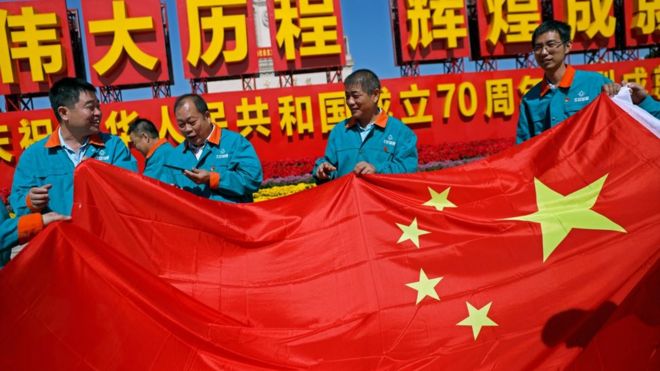
Chinese workers with Chinese flagImage copyright EPA
Image caption China is getting dressed up for its big birthday party

One week from now, the People’s Republic of China will mark its 70th anniversary with celebrations on a scale not seen in China in decades.

Beijing is pulling out all stops and 1 October will be flush with fireworks, fanfare and a huge military parade.

To ensure it goes smoothly, authorities have been ramping up security in the capital – and online – for weeks.

But with yet more protests expected in Hong Kong, the territory might just rain on China’s parade.

What is it all about?

The birth of modern China was declared on 1 October 1949, after the communists under Mao Zedong won the civil war that followed World War Two.

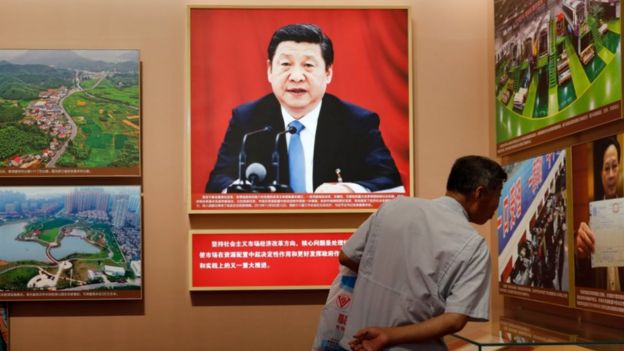
Portrait of Xi JinpingImage copyright EPA
Image caption Exhibitions are highlighting the achievements of the Communist Party

The date is marked every year, but celebrations for this 70th anniversary are expected to eclipse previous events.

It’s the first big anniversary since China has emerged as a global power. While 10 years ago China was a superpower in the making, it is now the world’s second largest economy, almost eye-to-eye with the United States.

What to expect?

The main celebrations will take place in the capital, Beijing, where there will be a grand military parade with “advanced weapons” on display, followed by a “mass pageant”.

President Xi Jinping – considered the most powerful Chinese leader since Mao – will address the Chinese people. His speech is expected to celebrate China’s rapid growth and which will be closely watched for any indication of the country’s direction in the coming years.

The president will also hand out honours for contributions to the country and in the evening there will be a grand gala and fireworks show.

All official Chinese celebrations are carefully choreographed and the success of this one is particularly important to the government.

The Dos and Don’ts

The parade – open to invited guests only – will take place around Tiananmen Square in central Beijing. The surrounding area will be practically under lockdown, and in fact has been so several times already.

During rehearsals leading up to the big day, hotels near Tiananmen Square told guests that for several hours each day, no-one would be able to leave the hotel or return to it should they be out, leading to much travel chaos and rebookings.

Many shops and restaurants in the centre are also closed or have shortened hours and some subway stations are temporarily shut.

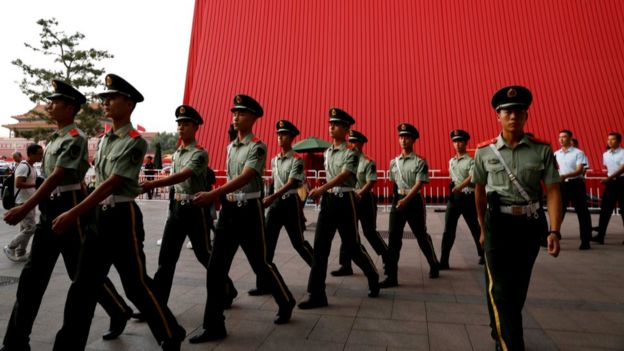
Chinese paramilitary policeImage copyright EPA
Image caption Security is tight ensure the party goes to plan

Trains to Beijing are running numerous safety checks on their passengers and vehicles going into the city are also being tightly watched.

On the big day itself, areas around Tiananmen Square will be blocked and guarded. Local residents will need to identify themselves if they want to pass.

To ensure the sun will shine brightly on the celebration in notoriously polluted Beijing, several coal plants and construction sites in and around the city have been ordered to stop work for the duration.

There’s also a ban on any low-flying aerial vehicles in place. That means anything from light aircraft to drones, balloons and even racing pigeons.

Censorship galore

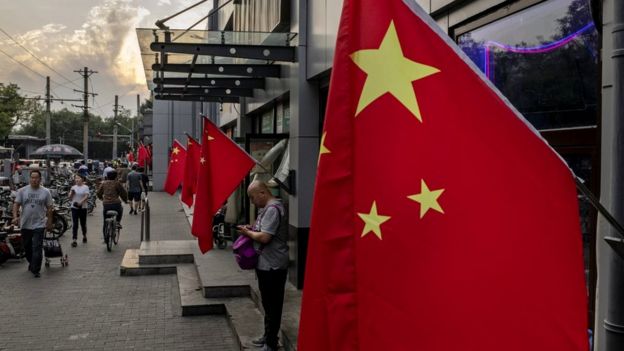
Across much of the city centre, there are national flags set up at every door. Voluntary inspectors are monitoring the streets and locals have told the BBC they’re being questioned after having even brief conversations with foreigners

One person said she was asked by an inspector: “Who were those foreigners? Why were they here?”

The tight control naturally extends online as well. Popular social media platform Weibo said it was deleting content that “distorts” or “insults” the country’s history ahead of the anniversary.

Chinese flags outside a row of shopsImage copyright GETTY IMAGES
Image caption Every house and every shop is sporting a national flag

Chinese journalists are always expected to toe the party line anyway, but starting in October they will have to pass an extra test to prove they are versed particularly in Xi Jinping’s teachings, officially called Xi Jinping Thought on Socialism with Chinese Characteristics, which has been written into the constitution.

Whether or not they pass the exam will then determine whether they’ll be accredited as journalists.

“The fundamental point with this ‘training’ and indoctrination process isn’t so much about the content,” David Bandurski of China Media Watch told the BBC.

“It is about reinforcing the message and understanding among journalists that they work, first and foremost, for the Chinese Communist Party, and serve its agenda.”

So not only will the events be choreographed – the domestic coverage of them will also be tightly guarded.

What about Hong Kong?

Despite Beijing’s determination to let its achievements shine on 1 October, there’s a good chance Hong Kong will pull focus.

Anti-Beijing protests always take place in Hong Kong on China’s National Day, but this time, the activists know that the world is watching.

Anti-government protests have rocked the city for months and the situation shows no sign of dying down.

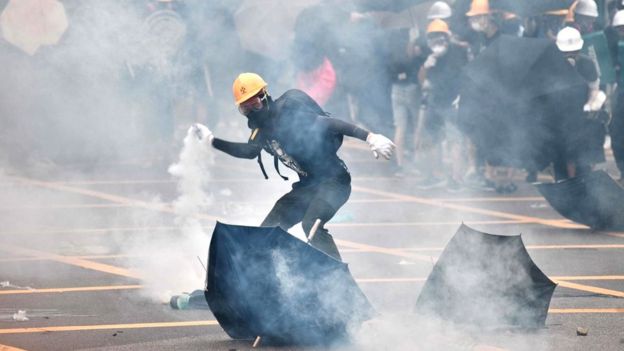
Clashes between police and activists have been becoming increasingly violent, with police using tear gas and activists storming parliament.

Protester throwing a tear gas can back at the policeImage copyright AFP
Image caption The protests have often escalated into violent clashes

That means two things for 1 October: official celebrations in the territory are being toned down to avoid clashes – the annual fireworks display has been cancelled – while at the same time, activists are planning to step up their protests.

On Sunday 29 September, a “Global Anti Totalitarianism March” is scheduled to take place at various locations around the world in support of Hong Kong.

On 1 October itself, a march in central Hong Kong is planned with everyone asked to wear black.

If the past weeks’ demonstrations are anything to go by, the smiles and celebrations in Beijing will be competing for media space with pictures of tear gas and angry young protesters in Hong Kong.

Source: The BBC

12/09/2019

President Xi meets Macao’s new chief executive

CHINA-BEIJING-XI JINPING-HO IAT SENG-MEETING (CN)

Chinese President Xi Jinping meets with Ho Iat Seng, the newly elected and appointed chief executive of the Macao Special Administrative Region, at the Great Hall of the People in Beijing, capital of China, Sept. 11, 2019. (Xinhua/Xie Huanchi)

BEIJING, Sept. 11 (Xinhua) — President Xi Jinping on Wednesday met with Ho Iat Seng, the newly elected and appointed chief executive of the Macao Special Administrative Region (SAR), at the Great Hall of the People in Beijing.

Xi congratulated Ho on his appointment by the central government as the fifth-term chief executive of the Macao SAR.

“You has long adhered to the position of loving the country and Macao, enthusiastically served the Macao society, worked wholeheartedly on public posts including as a member of the National People’s Congress Standing Committee and president of the Legislative Assembly of the Macao SAR, and made contributions to the country’s reform and opening up, modernization, as well as prosperity and stability of Macao,” Xi said to Ho, adding that the central government fully recognizes such efforts.

“Your nomination and election with overwhelming support fully show that you have won broad endorsement in Macao,” Xi told Ho.

This year marks the 20th anniversary of Macao’s return to the motherland.

For the past 20 years, under the leadership of two chief executives Edmund Ho Hau Wah and Chui Sai On, the Macao SAR government has united people from all walks of life, fully and accurately understood and implemented the principle of “one country, two systems,” firmly upheld the authority of the Constitution and the Basic Law, passed on the core values of loving the country and Macao, promoted Macao’s rapid economic growth, sustained improvement in people’s livelihood and social stability and harmony, demonstrating to the world a successful practice of “one country, two systems” with Macao characteristics, said Xi.

“One country, two systems” has proved to be a workable solution welcomed by the people, said Xi.

Xi hoped that Ho will accurately grasp Macao’s situation and the country’s strategic development needs, unite and lead the Macao SAR government and people from all walks of life to strive for the region’s long-term development and continue the successful implementation of “one country, two systems.”

Ho said he is honored to be appointed the fifth-term chief executive of the Macao SAR by the central government.

Ho pledged to, under the leadership of President Xi and the central government, firmly implement the “one country, two systems” principle, safeguard the authority of the Constitution and the Basic Law, maintain favorable relations between the central government and the Macao SAR, uphold the central government’s overall governing power, defend the country’s sovereignty, security and development interests and make steady progress in implementing the “one country, two systems” principle.

Han Zheng and other senior officials also attended the meeting.

Source: Xinhua

26/01/2019

China’s top legislator holds talks with president of Chilean Chamber of Deputies

CHINA-BEIJING-LI ZHANSHU-CHILE-CHAMBER OF DEPUTIES-PRESIDENT-TALKS (CN)

Li Zhanshu (R), chairman of China’s National People’s Congress (NPC) Standing Committee, holds talks with Maya Fernandez Allende, president of the Chilean Chamber of Deputies, in Beijing, capital of China, Jan. 25, 2019. (Xinhua/Liu Weibing)

BEIJING, Jan. 25 (Xinhua) — China’s top legislator Li Zhanshu held talks with Maya Fernandez Allende, president of the Chilean Chamber of Deputies, in Beijing Friday.

Hailing the traditional friendship between the two countries, Li, chairman of China’s National People’s Congress (NPC) Standing Committee, said the precious experience of bilateral friendship should be passed down and carried forward.

“We are glad to see that China-Chile relations have been upgraded to a comprehensive strategic partnership and have yield cooperative results in various fields,” said Li, adding that those achievements were derived from “sincere treatment, mutual respect and trust, complementary advantages, mutually beneficial and win-win results” between the two countries.

China-Chile relations will embrace new opportunities in the next two years, said the top legislator, calling on the two sides to enhance friendly cooperation in various fields and promote comprehensive strategic partnership for continued development featuring exchanges of two heads of state and jointly building the Belt and Road.

“China stands ready to work with Chile and countries around the world to build a community of a shared future featuring equality, mutual benefit and common development, but not targeting or excluding any third party,” he said.

On enhancing cooperation between the two legislative bodies, Li called on the NPC and the National Congress of Chile to continue to give full play to the political communication committee, expand experience exchanges on legislation, supervision and governance, guarantee the joint construction of the Belt and Road and expansion of economic and trade cooperation in compliance with rule of law, optimize the business environment, and promote cultural and people-to-people exchanges and cooperation between the two countries.

Fernandez said the National Congress of Chile stands ready to work with the NPC of China to continue to give full play to communication mechanism and platform, explore cooperation potential, facilitate people-to-people exchanges, and constantly enrich the connotation of bilateral relations. She said Chile will, as always, adhere to the one-China policy.

Source: Xinhua

13/01/2019

Senior CPC official meets Afghan president’s national security adviser

CHINA-BEIJING-GUO SHENGKUN-AFGHAN PRESIDENT'S NATIONAL SECURITY ADVISER-MEETING (CN)

Guo Shengkun (R), a member of the Political Bureau of the Communist Party of China (CPC) Central Committee and head of the Commission for Political and Legal Affairs of the CPC Central Committee, meets with Afghan president’s national security adviser Hamdullah Mohib in Beijing, capital of China, Jan. 11, 2019. (Xinhua/Shen Hong)

BEIJING, Jan. 12 (Xinhua) — Guo Shengkun, a member of the Political Bureau of the Communist Party of China (CPC) Central Committee, met with Afghan president’s national security adviser Hamdullah Mohib Friday in Beijing.

Guo, also head of the Commission for Political and Legal Affairs of the CPC Central Committee, called on China and Afghan to implement the consensus reached by the two heads of state and continue to advance the strategic cooperative partnership between the two countries.

China’s law enforcement and security departments stand ready to enhance cooperation with Afghan in counter-terrorism, border security, institution and personnel security, so as to safeguard security and development interests of the two countries, and promote regional peace and stability.

Mohib said Afghan will resolutely fight against terrorism, and stands ready to deepen law enforcement and security cooperation between the two countries.

09/01/2019

Chinese, Djibouti presidents exchange congratulations on 40th anniversary of ties

BEIJING, Jan. 8 (Xinhua) — Chinese President Xi Jinping on Tuesday exchanged congratulatory messages with Djibouti President Ismail Omar Guelleh to mark the 40th anniversary of bilateral relations.

In his message, Xi said that in the past 40 years, China and Djibouti have seen a healthy and stable development of their relations, with mutual understanding and support on issues of great concern to or concerning the core interests of each other, in addition to plentiful fruits of cooperation in various fields.

Xi recalled the top-level exchanges that included Guelleh’s state visit to China in November 2017 when they together announced the establishment of a bilateral strategic partnership; and their exchange in September 2018 when they reached a new consensus on further ties and witnessed the signing of a memorandum of understanding on pushing forward the Belt and Road construction.

Xi said he highly values the development of China-Djibouti relations, and is willing to work with Guelleh and take the opportunity of the 40th anniversary of bilateral diplomatic ties to consolidate the mutual political trust, deepen the cooperation in co-building the Belt and Road, and implement the results from the Forum on China-Africa Cooperation (FOCAC) Beijing Summit, so as to lift the bilateral strategic partnership to new heights.

In his message to Xi, Guelleh said he is satisfied with and proud of the smooth development of bilateral ties over the 40 years since his country and China established a diplomatic relationship.

The November 2017 decision to lift bilateral relations to a strategic partnership showed the two countries’ resolve to forge closer ties while providing the direction for their economic and trade cooperation, he said.

Guelleh thanks the Chinese government and people for the help and support to Djibouti. He said Djibouti will continue adhering to the one-China policy.

Guelleh added that he is willing to join Xi in the efforts to push bilateral relations further forward.

08/01/2019

Senegal hopes to further advance cooperation with China: president

SENEGAL-DAKAR-CHINA-WANG YI-MEETING

Senegalese President Macky Sall (L) meets with Chinese State Councilor and Foreign Minister Wang Yi in Dakar, Senegal, on Jan. 6, 2019. (Xinhua/Wang Teng)

DAKAR, Jan. 7 (Xinhua) — The dynamic and practical relations between Senegal and China are a fine example for other countries, and Senegal hopes to further cooperation with China in various fields, President Macky Sall said on Sunday.

He made the remarks during talks with visiting Chinese State Councilor and Foreign Minister Wang Yi.

Sall extended congratulations upon the successful soft landing of China’s Chang’e-4 lunar probe on the far side of the moon, saying that his country is willing to strengthen cooperation with China in such fields as science, technology and innovation.

The successful Beijing Summit of the Forum on China-Africa Cooperation (FOCAC) in 2018 shows China’s strategic vision to develop China-Africa ties, the president said.

In the hearts of the African people, they know who is a true friend to them, Sall said, adding that Africa and China share a relationship featuring mutual respect, mutual benefit, win-win cooperation and common development.

Sall said Senegal is willing to push forward the comprehensive strategic cooperative partnership with China and will support China’s rightful stance on international affairs.

For his part, Wang said Chinese President Xi Jinping’s successful and historic visit to the West African country in 2018 has injected strong impetus into the two countries’ relations.

The solid political trust between China and Senegal consolidates the foundation for the two countries’ high-quality cooperation in various areas, Wang said.

China is willing to be an enduring and reliable partner for Senegal, the Chinese foreign minister said. He called for closer coordination between China and Senegal, the co-chairs of the FOCAC, to jointly implement the results of the summit and build a closer community with a shared future for China and Africa.

05/01/2019

Taiwan President Tsai Ing-wen open to cross-strait talks, but has some demands for Beijing first

  • Leader explains her rejection of Xi Jinping’s proposal to start talks on unification based on ‘one country, two systems’
PUBLISHED : Saturday, 05 January, 2019, 5:00pm
UPDATED : Saturday, 05 January, 2019, 6:13pm

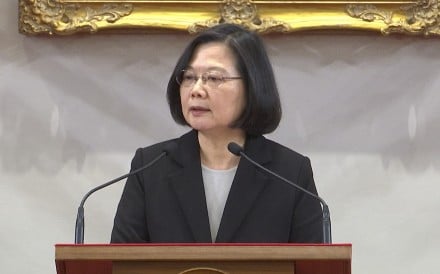
Taiwan’s President Tsai Ing-wen said on Saturday she was open to talks with the mainland if Beijing was willing to promote democracy and renounce the use of force against the self-ruled island.

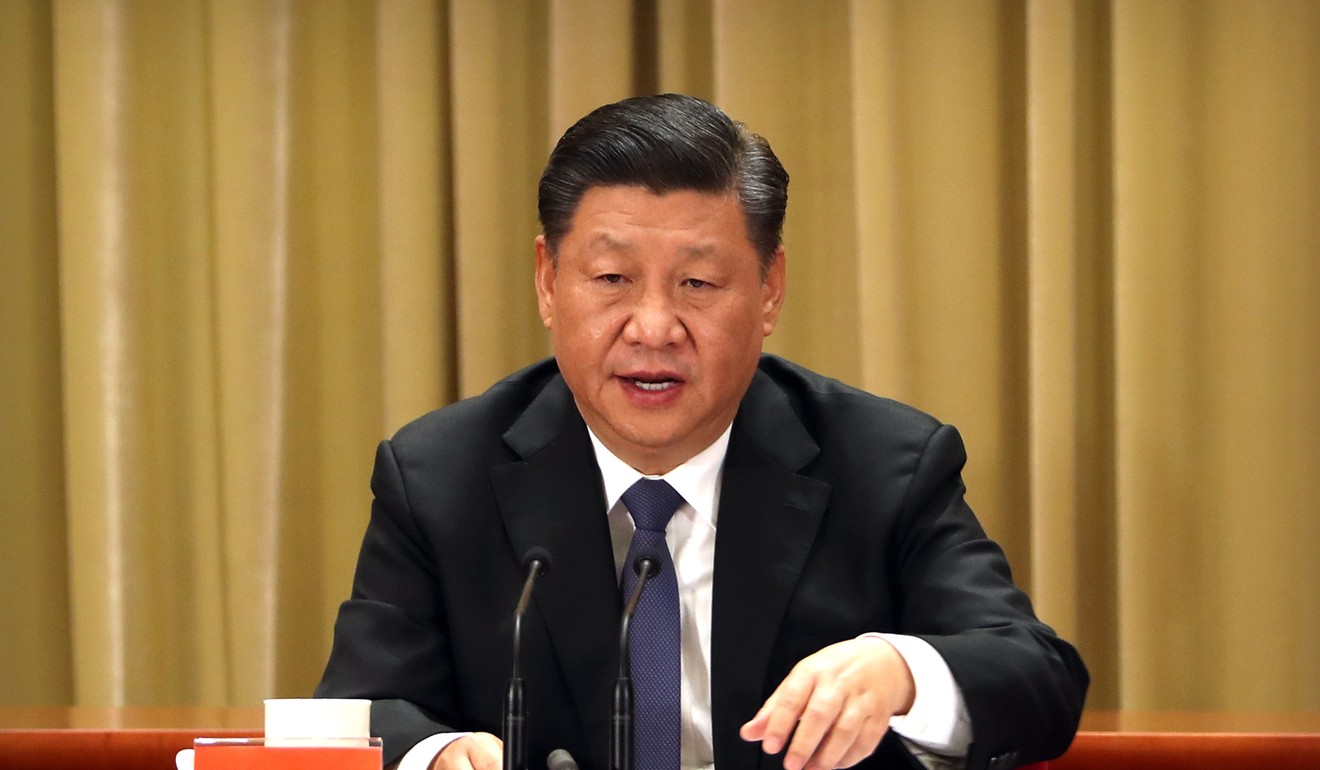
Tsai’s comments came two days after she rejected Chinese President Xi Jinping’s proposal for the two sides to start talks on unification based on the “one country, two systems” model which applied in Hong Kong.

“As the democratically elected president, I have to defend our democracy, freedom, and way of life,” she told foreign journalists in Taipei to explain her rejection of Xi’s proposal, made in a speech on Wednesday to mark 40 years since the end of military confrontation across the Taiwan Strait.

Tsai said Xi’s statement highlighted two fundamental dangers posed by Beijing to freedom and democracy in Taiwan.

“First, by emphasising ‘one China’ and ‘one country, two systems,’ particularly in the context of the so-called 1992 consensus, China has made clear their political intentions towards Taiwan and their steps for unification.

“This is a major disregard for the fact that the Republic of China, Taiwan does exist, and is in full operation like all other democratic countries,” she said.

“Second, China’s plan to engage in political consultation with the political parties instead of the democratically elected government of Taiwan, is a continuation of its deliberate campaign to undermine and subvert our democratic process and create division in our society.”

The 1992 consensus refers to an understanding that there is only one China, though each side may have its own interpretation of what constitutes “China”.

In his speech, Xi rephrased the consensus as an understanding that “the two sides of the Taiwan Strait belong to one China, jointly seeking to achieve cross-strait unification”.

Beijing suspended official talks and exchanges with Taiwan when Tsai was elected president in 2016 and refused to accept the consensus.

Since then Beijing, which considers Taiwan a wayward province awaiting unification by force if necessary, has staged a series of war games to intimidate the island and poached five of Taiwan’s diplomatic allies to try to pressure Tsai into accepting the consensus.

“As a democracy, cross-strait interaction must follow the rules and oversight of the people of Taiwan, and therefore any discussions must be between governments that are representative of the people on both sides,” Tsai said on Saturday.

She identified a lack of mutual trust as the key problem keeping the two sides from consulting on a possible way of dealing with each other.

“The lack of democracy and protection of human rights, as well as the military threats from China are the major reasons [that people here do not trust Beijing],” Tsai said.

This was why majority opinion in Taiwan opposed cross-strait unification, as people there did not want to live in a system without democracy and human rights, she said.

Asked if the Tsai administration would want talks with Beijing, Tsai said her government did not oppose talks, but Beijing must “move towards democracy, protect human rights and renounce the use of force against us”.

“Only when the two sides step up efforts to accumulate adequate trust will the room for [negotiation] be widened and options [for talks] increased,” she said.

Tsai said Taiwan had long adhered to the principle of refraining from provoking Beijing and had done all it could to maintain stability in the region.

On the contrary, she said, Beijing had tried to suppress Taiwan and refused to cooperate with the island, even on health issues like the outbreak of African swine fever which threatened the well-being of the public in Taiwan.

Tsai added that she had also sought international support to defend the self-ruled island’s democracy and way of life, as well as Taiwan’s refusal to accept the one country, two systems approach offered by Xi for unification talks, given Beijing’s snubbing of democracy and human rights.

She asked Beijing to take note of the democratic mindset of Taiwanee.

Law of Unintended Consequences

continuously updated blog about China & India

ChiaHou's Book Reviews

continuously updated blog about China & India

What's wrong with the world; and its economy

continuously updated blog about China & India