Archive for ‘Press release’

08/05/2020

French hospital says first suspected COVID-19 cases weeks earlier than official record in country

A COVID-19 patient is wheeled out from an EHPAD (Housing Establishment for Dependant Elderly People) in Epinay sur Seine near Paris, France, on April 22, 2020. (Photo by Aurelien Morissard/Xinhua)

The first suspected cases of COVID-19 infection in France could date back to Nov. 16 last year, a hospital in eastern France said. Before this announcement, the first COVID-19 infection cases officially recorded in France were on Jan. 24, 2020.

PARIS, May 8 (Xinhua) — The first suspected cases of COVID-19 infection in France could date back to Nov. 16 last year, some nine weeks earlier than the official record of the country’s first confirmed cases, a hospital in eastern France said Thursday.

“Doctor Michel Schmitt, head of the medical imaging department at the Albert Schweitzer hospital in Colmar, has reviewed 2,456 chest scans performed between Nov. 1 and April 30, for all reasons (cardiac, pulmonary, traumatic, tumor pathologies),” said the hospital in a press release.

A suspected patient of COVID-19 is transferred to an EHPAD in Epinay sur Seine near Paris, France, April 22, 2020. (Photo by Aurelien Morissard/Xinhua)

The typical scans compatible with COVID-19 infection have been also reviewed in a second then a third reading by two other experienced radiologists. According to this retrospective study, the first cases of contamination with COVID-19 were thus identified from Nov. 16 in this hospital, it said.

Albert Schweitzer hospital added that it has launched a collaboration with France’s National Center for Scientific Research to start an epidemiological exploitation of these results.

Before this announcement, the first case of COVID-19 infection in east France was officially identified in late February. It involved a 36-year-old man who returned from a trip to Lombardy, then hotspot of the epidemic in Italy.

A giant mask is seen on a residential building in Saint-Mande, near Paris, France, on May 2, 2020. (Photo by Aurelien Morissard/Xinhua)

The first COVID-19 infection cases officially recorded in France were on Jan. 24, 2020 relating to individuals who had recently arrived or returned from China.

France on Thursday registered 178 new deaths caused by the novel coronavirus, taking the tally to 25,987. As hospitalization data continued to slow, the government said on Thursday that the country would start to unwind the nearly-two-month anti-coronavirus lockdown from Monday.

Source: Xinhua
02/05/2020

How a llama could hold the key to beating the coronavirus

  • An antibody engineered from the animal’s immune system was found to neutralise the virus that causes Covid-19
  • American and Belgian researchers hope the discovery may help protect humans from the deadly illness
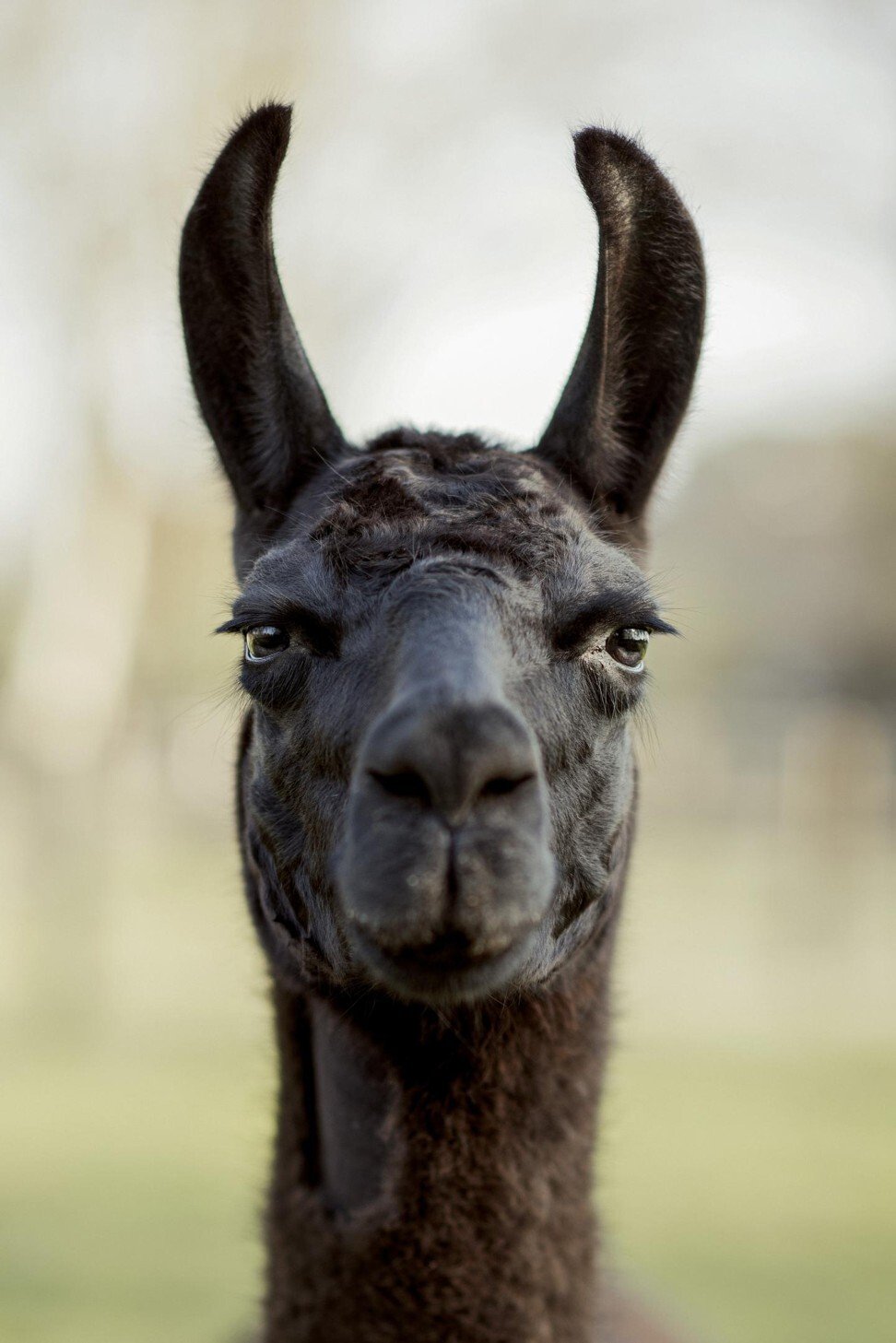
Winter the lama (front) lives on a farm operated by Ghent University's Vlaams Institute for Biotechnology. Photo: Tim Coppens
Winter the llama (front) lives on a farm operated by Ghent University’s Vlaams Institute for Biotechnology. Photo: Tim Coppens

A Belgian llama could hold the key to producing an antibody that neutralises the coronavirus that causes Covid-19.

More studies and clinical trials are needed to see if it can be used in humans to treat Covid-19, but the team of American and Belgian scientists who engineered the antibody said they were encouraged by their preliminary findings, which will be published in the journal Cell next week.

Jason McLellan, from the University of Texas at Austin and co-author of the study, described it as one of the “first antibodies known to neutralise Sars-CoV-2”, the official name for the virus.

“With antibody therapies, you’re directly giving somebody the protective antibodies and so, immediately after treatment, they should be protected,” he wrote in a press release.

“The antibodies could also be used to treat somebody who is already sick to lessen the severity of the disease.”
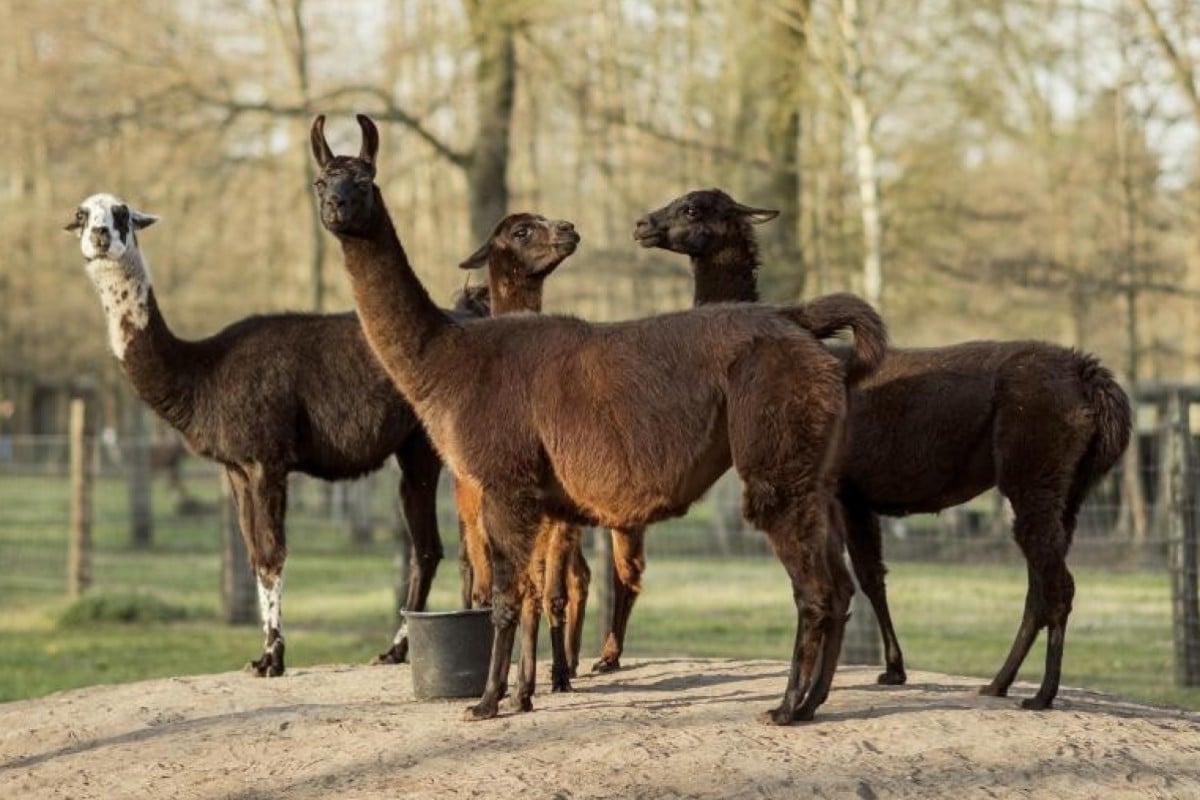
Winter the llama produced antibodies that proved effective against the Sars-CoV-2 virus. Photo: Tim Coppens
The scientists have been working on coronaviruses – including severe acute respiratory syndrome (Sars) and Middle East respiratory syndrome (Mers) – for years.

In 2016 they injected the llama, named Winter, with Sars and Mers in the hope of developing a treatment for the diseases.

“I thought this would be a small side project,” said Dorien De Vlieger from Ghent University in Belgium, who helped to isolate antibodies against coronaviruses from the llamas.

China’s race for a Covid-19 vaccine hits a hurdle – no outbreak at home

1 May 2020

“Now the scientific impact of this project became bigger than I could ever expect. It’s amazing how unpredictable viruses can be.”

A llama’s immune system produces two types of antibodies when it detects pathogens, one similar to human antibodies and one that is about a quarter of the size.

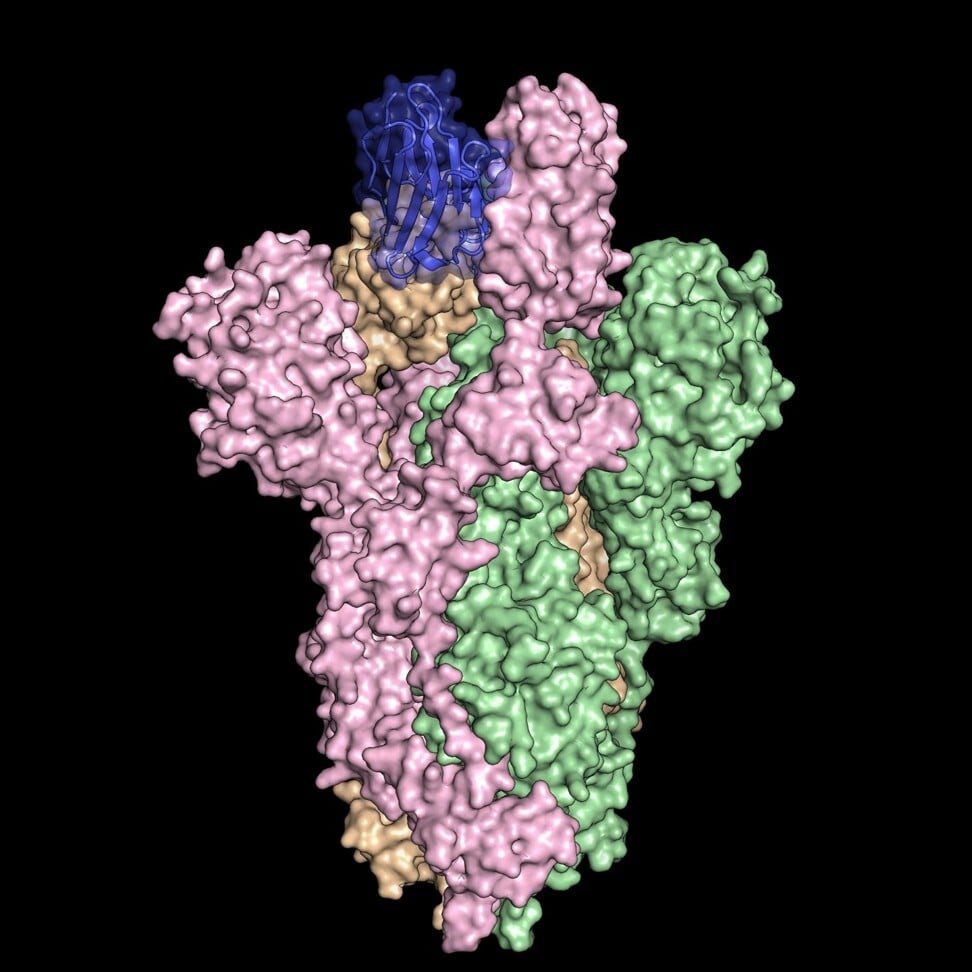
The antibodies produced by Winter were found to be effective in targeting the Sars virus’s spike protein, which allows it to bind to human cells.

Chinese firm ready to make 100 million Coronavirus vaccine doses if trials are successful
This year they decided to test the antibodies Winter had produced during the Sars experiment to see if it could prove effective against Covid-19.

Although it did bind itself to the Sars-CoV-2 virus it did so “weakly”, so the team then linked two copies of the antibody together to make it bind more effectively.

Oxford vaccine effective in monkeys, heading for mass production in India

30 Apr 2020

“That was exciting to me because I’d been working on this for years. But there wasn’t a big need for a coronavirus treatment then. This was just basic research,” said Daniel Wrapp from the University of Texas, a co-author of the study.

The smaller type of antibodies produced by llamas, called single-domain antibodies or nanobodies, can be used in an inhaler, according to Wrapp.

“That makes them potentially really interesting as a drug for a respiratory pathogen because you’re delivering it right to the site of infection,” said Wrapp.

Researchers created an antibody dubbed VHH-72Fc (blue) that binds tightly to the Sars-CoV-2 spike protein (pink, green and orange), blocking the virus from infecting cells. Photo: University of Texas at Austin
The researchers are preparing for more trials with hamsters or primates to further test the antibody, before taking it to human trials.
The main subject of the study, Winter the llama, is now four years old and lives on a farm operated by Ghent University’s Vlaams Institute for Biotechnologym which said it has around 130 other llamas and alpacas at the facility.
Source: SCMP
Law of Unintended Consequences

continuously updated blog about China & India

ChiaHou's Book Reviews

continuously updated blog about China & India

What's wrong with the world; and its economy

continuously updated blog about China & India