28/04/2020
BEIJING (Reuters) – China’s factory activity likely rose for a second straight month in April as more businesses re-opened from strict lockdowns implemented to contain the coronavirus outbreak, which has now paralysed the global economy.
The official manufacturing Purchasing Manager’s Index (PMI), due for release on Thursday, is forecast to fall to 51 in April, from 52 in March, according to the median forecast of 32 economists polled by Reuters. A reading above the 50-point mark indicates an expansion in activity.
While the forecast PMI would show a slight moderation in China’s factory activity growth, it would be a stark contrast to recent PMIs in other economies, which plummeted to previously unimaginable lows.
That global slump, caused by heavy government-ordered lockdowns, as well as the cautious resumption of business in China, suggests any recovery in the world’s second-largest economy is likely to be some way off.
“The recovery so far has been led by a bounce-back in production, however, the growth bottleneck has decisively shifted to the demand side, as global growth has weakened and consumption recovery has lagged amid continued social distancing,” Morgan Stanley said in a note.
“The expected slump in external demand has likely capped further recovery in industrial production.”
The latest official data showed 84% of mid-sized and small business had reopened as of April 15, compared with 71.7% on March 24.
Hobbled by the coronavirus, China’s economy shrank 6.8% in the first quarter from a year earlier, the first contraction since current quarterly records began.
That has left Chinese manufacturers with reduced export orders and a logistics logjam, as many exporters grapple with rising inventory, high costs and falling profits. Some have let workers go as part of the cost-cutting efforts.
A China-based brokerage Zhongtai Securities estimated that the country’s real unemployment rate, measured using international standards, could exceed 20%, equal to more than 70 million job losses and much higher than March’s official reading of 5.9%.
Sheng Laiyun, deputy head at the statistics bureau, said on Sunday migrant workers and college graduates are facing increasing pressures to secure jobs, while official jobless surveys show nearly 20% of employed workers not working in March.
Chinese authorities have rolled out more support to revive the economy. The People’s Bank of China earlier in April cut the amount of cash banks must hold as reserves and reduced the interest rate on lenders’ excess reserves.
Source: Reuters
Posted in 15, 20%, 24, 50-point, 70, above, according, activity, amid, amount, April, banks, began, Beijing, bottleneck, bounce-back, brokerage, Business, businesses, capped, cash, caused, cautious, China, China's, China's economy, China-based, China’s, chinese authorities, college graduates, compared, consumption, contain, continued, contraction, contrast, coronavirus, coronavirus outbreak, cost-cutting, costs, country’s, current, cut, decisively, demand, deputy head, due, earlier, ease, economies, Economists, economy, efforts, employed, equal to, estimated, exceed, excess, expanding, expansion, expected, export orders, exporters, external, facing, Factory, falling, first, first quarter, forecast, from, further, global economy, global growth, global slump, government-ordered, grapple, growth, heavy, high, Hobbled, hold, implemented, increasing, indicates, industrial, Interest rate, international, inventory, job losses, jobless, jobs, lagged, latest, led b, left, lenders,, let, likely, lockdowns, logistics, logjam, lows, manufacturers, Manufacturing, many, March, March’s, Mark, measured, median, mid-sized, migrant workers, million, moderation, month, more than, Morgan Stanley, much higher, nearly, note, off, Official, official data, other, paralysed, part, People’s Bank of China’s, plummeted, PMI, PMIs, polled, pressures, previously, production, profits, purchasing managers’ index (PMI), quarterly, rate, re-opened, reading, real, recent, records, recovery, reduced, release, reopened, reserves, resumption, Reuters, Reuters Poll, revive, rising, rolled out, rose, said, second, seen, shifted, show, showed, shrank, side, since, slight, slump, small business, Social distancing, some way, standards, stark, statistics bureau, straight, strict, suggests, Sunday, support, surveys, Thursday, to fall, to secure, Uncategorized, unemployment, unimaginable, using, weakened, while, workers, world’s second-largest economy, would, year |
Leave a Comment »
03/06/2019
- China-Vietnam (Shenzhen-Haiphong) Economic and Trade Cooperation Zone is only Chinese state-owned industrial park in Vietnam
- Venture has attracted increasing interest since start of US-China trade war, but operators say first duty is to support Xi Jinping’s trade initiative
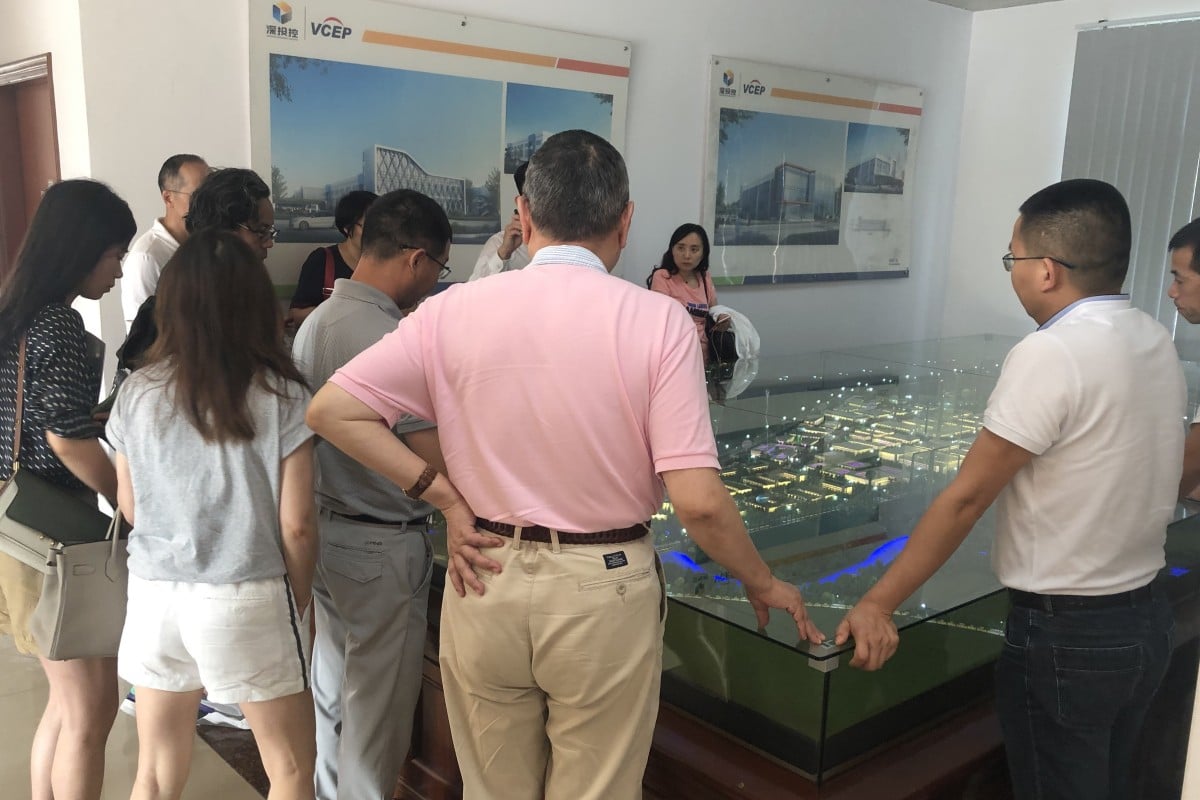
A total of 16 of the 21 Chinese companies that have relocated to the China-Vietnam (Shenzhen-Haiphong) Economic and Trade Cooperation Zone did so after the start of the US-China trade war. Photo: Cissy Zhou
Until the middle of 2018, business was slow for the only Chinese state-owned industrial park in Vietnam, located in the northeastern manufacturing hub of Haiphong and wholly-owned by the Shenzhen city government.
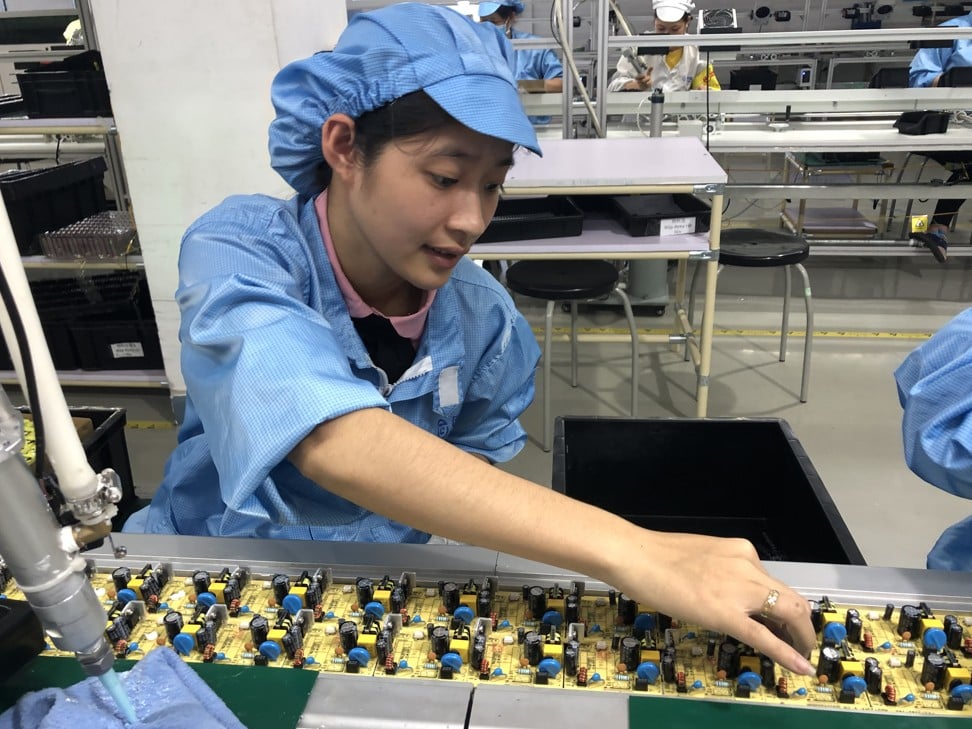
US President Donald Trump’s tariffs on Chinese goods enacted last year changed that, with 16 of the 21 Chinese companies that have relocated to the China-Vietnam
(Shenzhen-Haiphong) Economic and Trade Cooperation Zone – many of them electronic device manufacturers – having done so since the start of the trade war.
However, profit-making was never the top priority for the park’s operators, which took over the reins from private investors after a series anti-Chinese riots raged through southern and central Vietnam in May 2014 forced the owners to abandon the project.
Protesters set fire to other industrial parks and factories and attacked Chinese workers, killing more than 20 people and injuring more than 100.
While any commercial organisation would be thrilled at the rush of manufacturing firms into Vietnam, for the park’s operators, the first duty is to showcase the Chinese government’s top international economic cooperation project, the Belt and Road Initiative.
[They] requested that we make this industrial park a showcase for the Belt and Road Initiative, so that when our top leaders pay state visits to Vietnam, they can come to our park Chen Xu
The Shenzhen arm of the State-owned Assets Control and Supervision Commission (SASAC), which oversees all city owned companies “has requested that we make this industrial park a showcase for the Belt and Road Initiative, so that when our top leaders pay state visits to Vietnam, they can come to our park”, Chen Xu, vice general manager at the Vietnam-China Economic and Trade Cooperation Park (VCEP), told the South China Morning Post.
The Chinese industrial enclave in Vietnam is part of a largely untold story of the trade war. The common narrative is that Chinese and international firms are fleeing China to avoid paying tariffs, setting up in low-cost hubs in Vietnam and elsewhere in Southeast Asia, but the picture is more nuanced than that.
In Haiphong, a part of the Chinese government is actively encouraging firms to come to Vietnam, armed with US$200 million in investment capital and with a vision of creating 30,000 jobs by the time the entire three-phase project is completed in 2022.
The then-private VCEP project was suspended after the 2014 riots, and after the local government in Vietnam said it would reclaim the land unless it resumed, the Shenzhen government “decided to fully take over the project”, according to VCEP general manager Zhang Xiaotao.
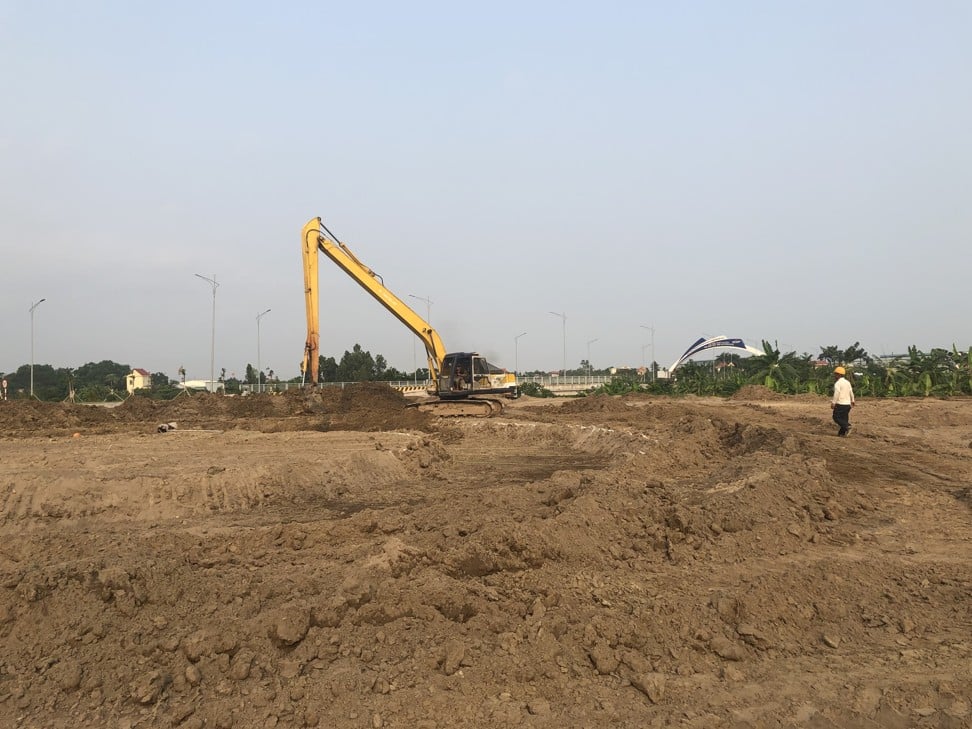
Newcomers must now buy land from the park and build their facilities themselves as the original buildings have already been rented out. Photo: Cissy Zhou
“Our evaluation then was that we could not make a profit out of this project. Then why did we still take it over? We have to serve the Belt and Road Initiative, as it is a national strategy,” Zhang added. “In fact, we surrender part of our profit [because] we sell the land [in the park] at a lower price and with better facilities than in neighbouring industrial parks. We are still in the red based upon the current land price. Our bosses understand the situation and ask us at least not to lose money.
“To make a profit is of course the priority of any company. But we are different, we are not a pure commercial project.”
Furthermore, it is a commonly held assumption that China is only open to losing low-end, labour intensive and high-polluting industry, as it looks to upgrade its manufacturing profile domestically. And while there is certainly truth to that as examples of low-value Chinese manufacturing plants litter Vietnam, VCEP is keen to avoid that persona.
Because of the need to maintain a relatively high-profile, the park does not welcome labour-intensive manufacturers such as shoes factories, because “it is bad for our image”, Chen said. Instead, it is focused on hi-tech engineering – exactly the kind of industry China is desperate to nurture on its own soil. In this sense, the Shenzhen-Haiphong facility represents something of a paradox.
With 1,500 people currently employed, it is some way from reaching its 30,000 goal, but the number of Chinese manufacturers wanting to set up factories in the park is now about eight times what it was before the trade war started last July, according to both Chen and Zhang. Newcomers must now buy land from the park and build their facilities themselves as the original buildings have already been rented out.
The relatively poor state of the surrounding infrastructure has also led VCEP to spend 30 million yuan (US$4.3 million) on a new road and bridge linking the park to the national highway in Haiphong.
“We could not wait for the Vietnamese government to build the infrastructure. They don’t have the money and their efficiency is low, so we built it ourselves,” said Li Meng, a member of VCEP’s Strategic Investment Department, who said it took less than nine months to finish the project.
The cost of the bridge was more than triple what it would have cost in China as “the efficiency is much lower here and we needed to import a lot of material from China due to lack of material in Vietnam”, Li added
“Every inch of the road and the bridge linking the national highway in Haiphong to VCEP is paved with renminbi.”
The Vietnam-China Economic and Trade Cooperation Park has a vision of creating 30,000 jobs by the time the entire three-phase project is completed in 2022. Photo: Cissy Zhou
TP-Link, the Shenzhen-based Chinese manufacturer of computer networking products, has rented a plant in the park and will start testing its equipment in July. The company, the world’s largest provider of consumer Wi-fi networking devices, has bought an additional 140,000 square metres of land in the park to expand production.
When TP-Link bought the land in late-2018, the price was between US$75 to US$80 per square metre, Chen said. Now, six months later, the price has risen to US$90 per square metre. This is indicative of the huge spike in interest in manufacturing in Vietnam caused by the trade war. Data from Vietnam’s Foreign Investment Agency shows that Vietnam attracted US$16.74 billion in foreign capital over the first five months of 2019, a year-on-year increase of 69.1 per cent. Of this, 72 per cent was invested in the processing and manufacturing sectors.
“Chinese local governments are, of course, unhappy with the increasing number of manufacturers who are relocating to Vietnam, but President Xi has clearly put forward the Belt and Road Initiative, which local governments cannot disturb. So local governments are not encouraging manufacturers to relocate, but they dare not try to stop them,” said vice-general manager Chen.
The Chinese inflow has also met with opposition in Vietnam, although far from the scale of the deadly riots of 2014.
“Some local [Vietnamese] media have been demonising China, with local prime time TV news talking about fake Chinese meat and poisoned food and hyping these cases. High-ranking Chinese officials have asked the Vietnamese government to guide public opinion in the right direction,” Chen added.
General manager Zhang added that the Vietnamese authorities have also become more sensitive to investment from China, a view reflected by Lam Thanh Ha, a senior lecturer at the Diplomatic Academy of Vietnam university which operates under the management of Vietnam’s Ministry of Foreign Affairs. “Overreliance on foreign cash in general and Chinese capital in particular may pose risks for Vietnam in terms of exchange rate fluctuations and external influences,” Ha warned.
“As production is generally dependent on transnational supply chains, foreign enterprises in Vietnam are often deeply engaged in both import and export processes, leaving the Vietnamese economy vulnerable to global economic conditions,” Ha added.
In a
by the Post earlier in May, Ha warned that Vietnam should avoid “becoming China’s dirty industrial backyard”, although Zhang had the opposite view.
“We are not shifting all our low-end industries to Vietnam, which would be irresponsible. China is trying to help Vietnam with sincerity, even if we don’t make a profit, we still want to proceed with the project,” he said.
Source: SCMP
Posted in Assets Control and Supervision Commission (SASAC), Beijing, Belt and Road Initiative, Belt and Road Initiative (BRI), China-Vietnam (Shenzhen-Haiphong) Economic and Trade Cooperation Zone, China’s state-owned industrial park, Foreign Investment Agency, Haiphong, image, processing and manufacturing sectors, profits, Shenzhen, Strategic Investment Department, TP-Link, trade war, trumps, Uncategorized, VCEP, Vietnam, Vietnam-China Economic and Trade Cooperation Park (VCEP), Vietnamese government, Xi JinPing |
Leave a Comment »



 CHINDIA ALERT: You'll be living in their world, very soon