Chindia Alert: You’ll be Living in their World Very Soon
aims to alert you to the threats and opportunities that China and India present. China and India require serious attention; case of ‘hidden dragon and crouching tiger’.
Without this attention, governments, businesses and, indeed, individuals may find themselves at a great disadvantage sooner rather than later.
The POSTs (front webpages) are mainly 'cuttings' from reliable sources, updated continuously.
The PAGEs (see Tabs, above) attempt to make the information more meaningful by putting some structure to the information we have researched and assembled since 2006.
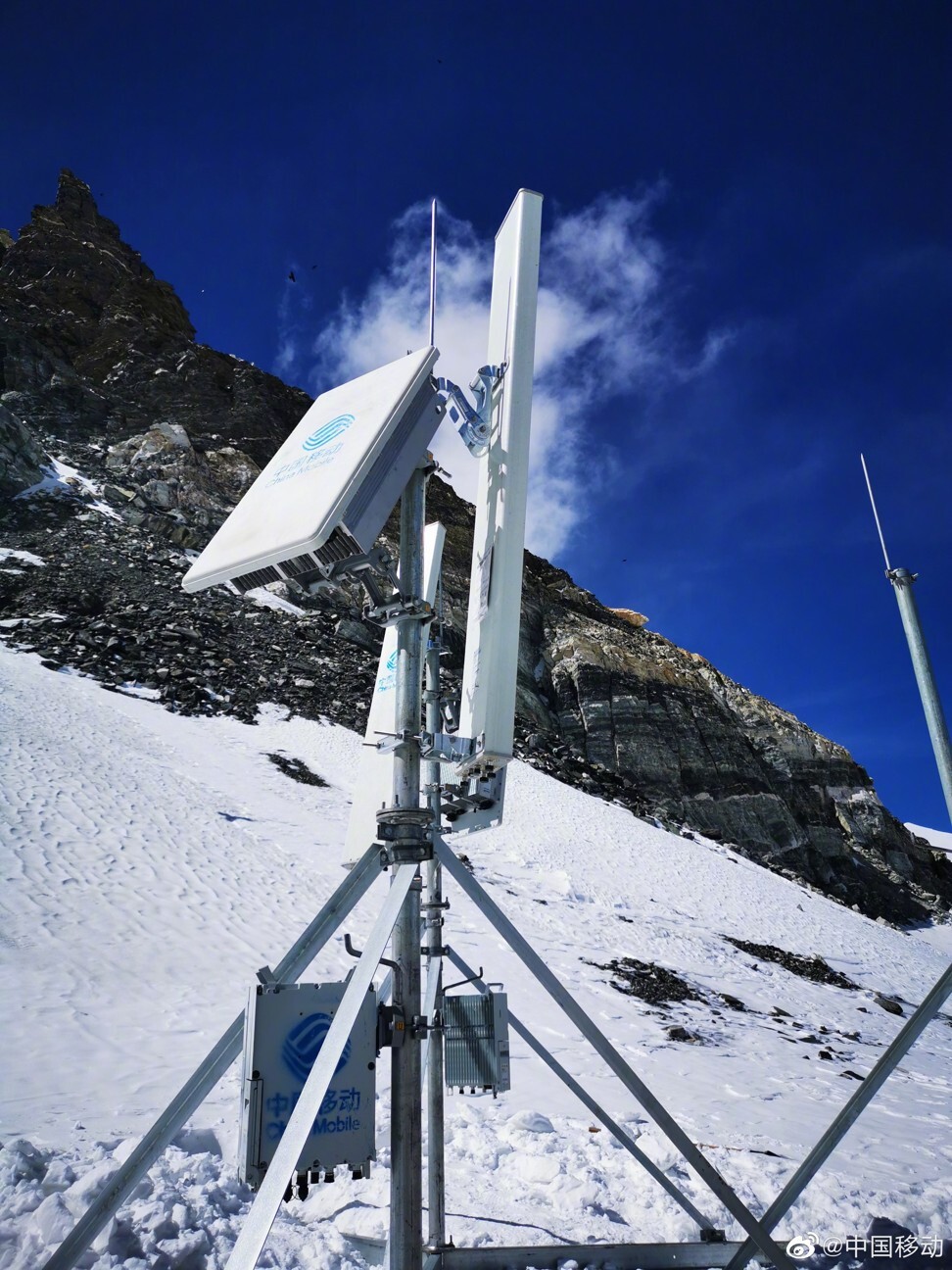
This marks the latest mobile network upgrade on Mount Everest, where Chinese carriers had previously installed 2G, 3G and 4G equipment
China Mobile plans to deploy Huawei 5G gear at an altitude of 6,500 metres, providing network coverage to the mountain’s summit
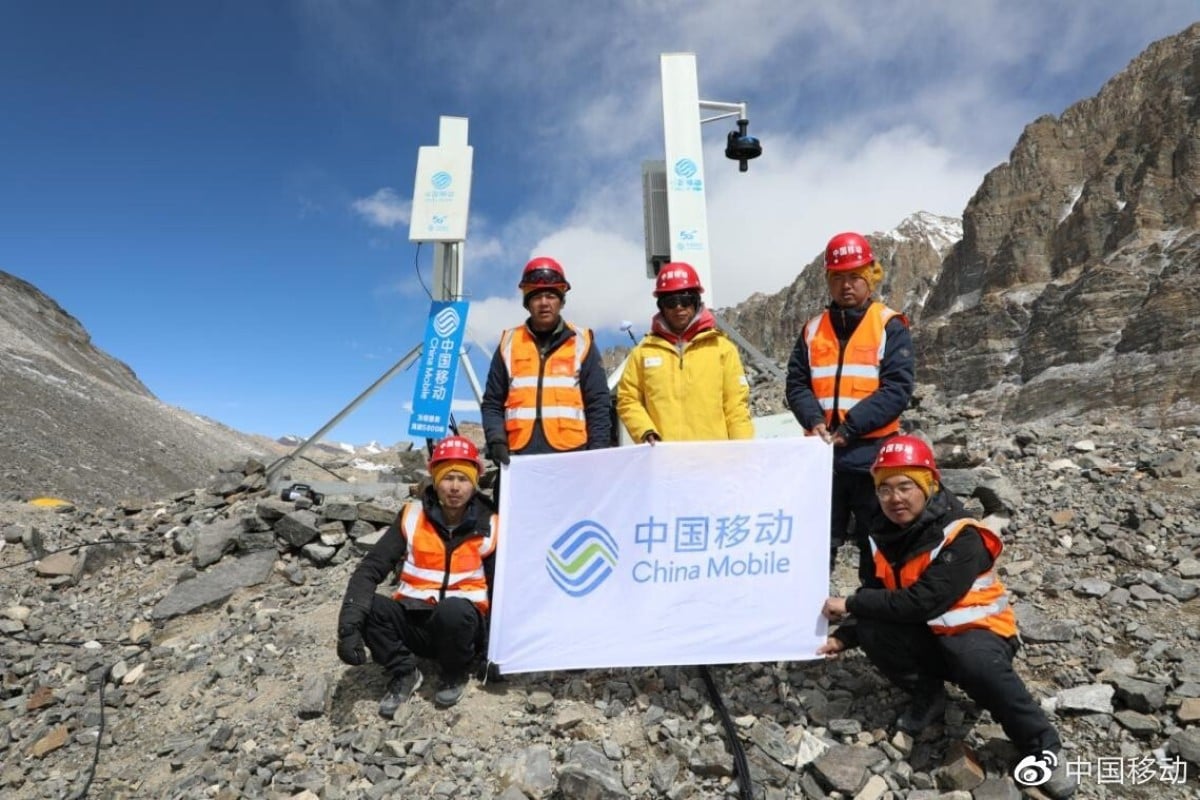
A team from China Mobile shows off the initial 5G base stations, supplied by Huawei Technologies, that the telecoms carrier deployed on Mount Everest this April. Photo: Weibo
Huawei Technologies has teamed up with wireless network operators China Mobile, China Unicom and China Telecom to roll out advanced 5G infrastructure on
The deployment of 5G base stations on the famous Himalayan mountain, with an elevation of 8,848 metres, has extended the reach of the next-generation mobile technology, which has been held up as “the connective tissue” for the Internet of Things, autonomous cars, smart cities and other new applications – providing the backbone for the industrial internet. The new 5G infrastructure roll-outs were announced by Huawei in a post on Chinese microblogging site Weibo on Monday and confirmed by its spokeswoman on Tuesday.
China Mobile, the world’s largest wireless network operator, said its 5G project on Mount Everest marked “not only another extreme challenge in a human life exclusion zone, but also laid a solid foundation for the later development of 5G smart tourism and 5G communications for scientific research”, according to the company’s post on Weibo on Monday.
The Hong Kong and New York-listed carrier set up three 5G base stations – radio access gear that connects mobile devices to the broader telecommunications network – on April 19 in two camps at altitudes of 5,300 metres and 5,800 metres, which provide online download speed of about 1 gigabit per second.
China Mobile plans to install two more 5G base stations, supplied by telecommunications gear maker Huawei Technologies, on Mount Everest before April 25. Photo: Weibo
Installation of two more base stations are expected to be completed by China Mobile before April 25 in another camp at an altitude of 6,500 metres, providing 5G network coverage to the summit of Mount Everest. The international border between China and Nepal is 1,414 kilometres in length and runs across that summit.
More than 150 China Mobile employees are taking part on the construction and maintenance of the new 5G base stations as well as upgrading existing infrastructure on the surrounding areas, according to the company. It said 25 kms of new optical cables have also been laid out to support this project.
China Telecom confirmed its Mount Everest project on Tuesday in a statement, which said its 5G base stations were installed on April 13 at an altitude of 5,145 metres. It partnered with state-run China Central Television to broadcast a 24-hour live-streamed programme on April 14 from Mount Everest, which had an audience of more than six million people.
China Mobile did not immediately respond to a request for comment. China Unicom did not immediately reply to a separate request for comment.
Mobile network operators in China launched initial commercial 5G services last year. The country has already deployed more than 160,000 5G base stations, covering more than 50 cities, according to a report published last month by the GSMA, the trade body which represents mobile operators worldwide.
While initial commercial 5G mobile services were launched in countries like South Korea, the US, and Australia, the scale of China’s market is likely to dwarf the combined size of those economies, negating any first-mover advantage.
The steady annual deployment of new 5G base stations is critical to meet future demand in the world’s second largest economy and biggest smartphone market. China is expected to have 600 million 5G mobile users by 2025, which would make up 40 per cent of total global 5G subscribers, according to the GSMA.
But trade with partner countries might not be as badly affected as with countries elsewhere in the world, observers say
China’s trade with belt and road countries rose by 3.2 per cent in the January-March period, but second-quarter results will depend on how well they manage to contain the pathogen, academic says
China’s investment in foreign infrastructure as part of its Belt and Road Initiative has been curtailed because of the coronavirus pandemic. Photo: Xinhua
The coronavirus pandemic is set to cause a slump in Chinese investment in its signature
and a dip in trade with partner countries that could take a year to overcome, analysts say.
But the impact of the health crisis on China’s economic relations with nations involved in the ambitious infrastructure development programme might not be as great as on those that are not.
China’s total foreign trade in the first quarter of 2020 fell by 6.4 per cent year on year, according to official figures from Beijing.
Trade with the United States, Europe and Japan all dropped in the period, by 18.3, 10.4 and 8.1 per cent, respectively, the commerce ministry said.
By comparison, China’s trade with belt and road countries increased by 3.2 per cent in the first quarter, although the growth figure was lower than the 10.8 per cent reported for the whole of 2019.
China’s trade with 56 belt and road countries – located across Africa, Asia, Europe and South America – accounts for about 30 per cent of its total annual volume, according to the commerce ministry.
Despite the first-quarter growth, Tong Jiadong, a professor of international trade at Nankai University in Tianjin, said he expected China’s trade with belt and road countries to fall by between 2 and 5 per cent this year.
His predictions are less gloomy than the 13 to 32 per cent contraction in global trade forecast for this year by the World Trade Organisation.
“A drop in [China’s total] first-quarter trade was inevitable but it slowly started to recover as it resumed production, especially with Southeast Asian, Eastern European and Arab countries,” Tong said.
“The second quarter will really depend on how the epidemic is contained in belt and road countries.”
Nick Marro, Hong Kong-based head of global trade at the Economist Intelligence Unit, said he expected China’s total overseas direct investment to fall by about 30 per cent this year, which would be bad news for the belt and road plan.
“This will derive from a combination of growing domestic stress in China, enhanced regulatory scrutiny over Chinese investment in major international markets, and weakened global economic prospects that will naturally depress investment demand,” he said.
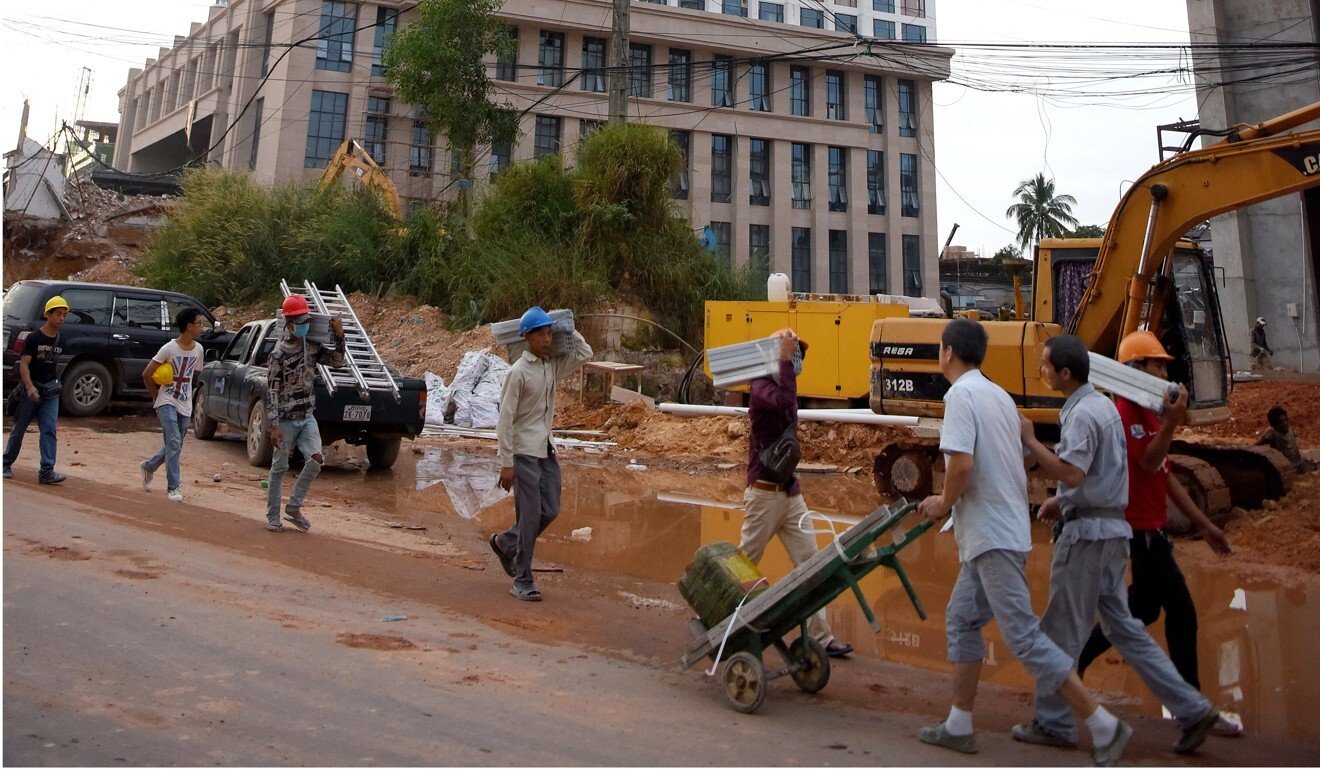
The development of the Chinese built and operated special economic zone in the Cambodian town of Sihanoukville is reported to have slowed, while infrastructure projects in Bangladesh, including the Payra coal-fired power plant, have been put on hold.
The development of the Chinese built and operated special economic zone in the Cambodian town of Sihanoukville is reported to have slowed. Photo: AFP
Marro said the reduction of capital and labour from China might complicate other projects for key belt and road partner, like Pakistan, which is home to infrastructure projects worth tens of billions of US dollars, and funded and built in large part by China.
“Pakistan looks concerning, particularly in terms of how we’ve assessed its sovereign and currency risk,” Marro said.
“Public debt is high compared to other emerging markets, while the coronavirus will push the budget deficit to expand to 10 per cent of GDP [gross domestic product] this year.”
Last week, Pakistan asked China for a 10-year extension to the repayment period on US$30 billion worth of loans used to fund the development of infrastructure projects, according to a report by local newspaper Dawn.
China’s overseas investment has been falling steadily from its peak in 2016, mostly as a result of Beijing’s curbs on capital outflows.
Last year, the direct investment by Chinese companies and organisations other than banks in belt and road countries fell 3.8 per cent from 2018 to US$15 billion, with most of the money going to South and Southeast Asian countries, including Singapore, Vietnam, Indonesia and Pakistan.
Tong said the pandemic had made Chinese investors nervous about putting their money in countries where disease control measures were becoming increasingly stringent, but added that the pause in activity would give all parties time to regroup.
“Investment in the second quarter will decline and allow time for the questions to be answered,” he said.
“Past experience along the belt and road has taught many lessons to both China and its partners, and forced them to think calmly about their own interests. The epidemic provides both parties with a good time for this.”
Dr Frans-Paul van der Putten, a senior research fellow at Clingendael Institute in the Netherlands, said China’s post-pandemic strategy for the belt and road in Europe
might include a shift away from investing in high-profile infrastructure projects like ports and airports.
Investors might instead cooperate with transport and logistics providers rather than invest directly, he said.
“Even though in the coming years the amount of money China loans and invests abroad may be lower than in the peak years around 2015-16, I expect it to maintain the belt and road plan as its overall strategic framework for its foreign economic relations,” he said.
Documentary puts China’s literary hero into context: there is Dante, there’s Shakespeare, and there’s Du Fu
Theatrical legend Sir Ian McKellen brings glamour to beloved verses in British documentary
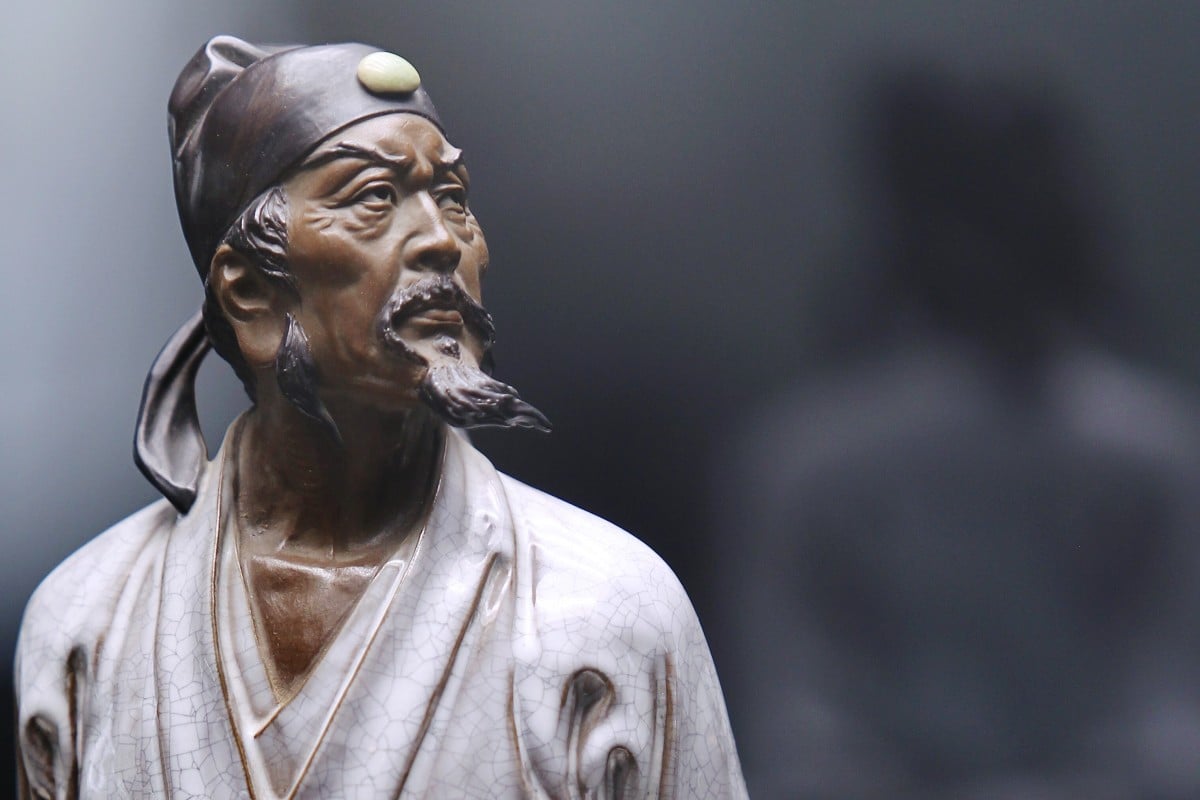
A ceramic figurine of Du Fu, a prominent Chinese poet of the Tang dynasty. Du is the subject of a new BBC documentary, thrilling devotees of his poetry. Photo: Simon Song
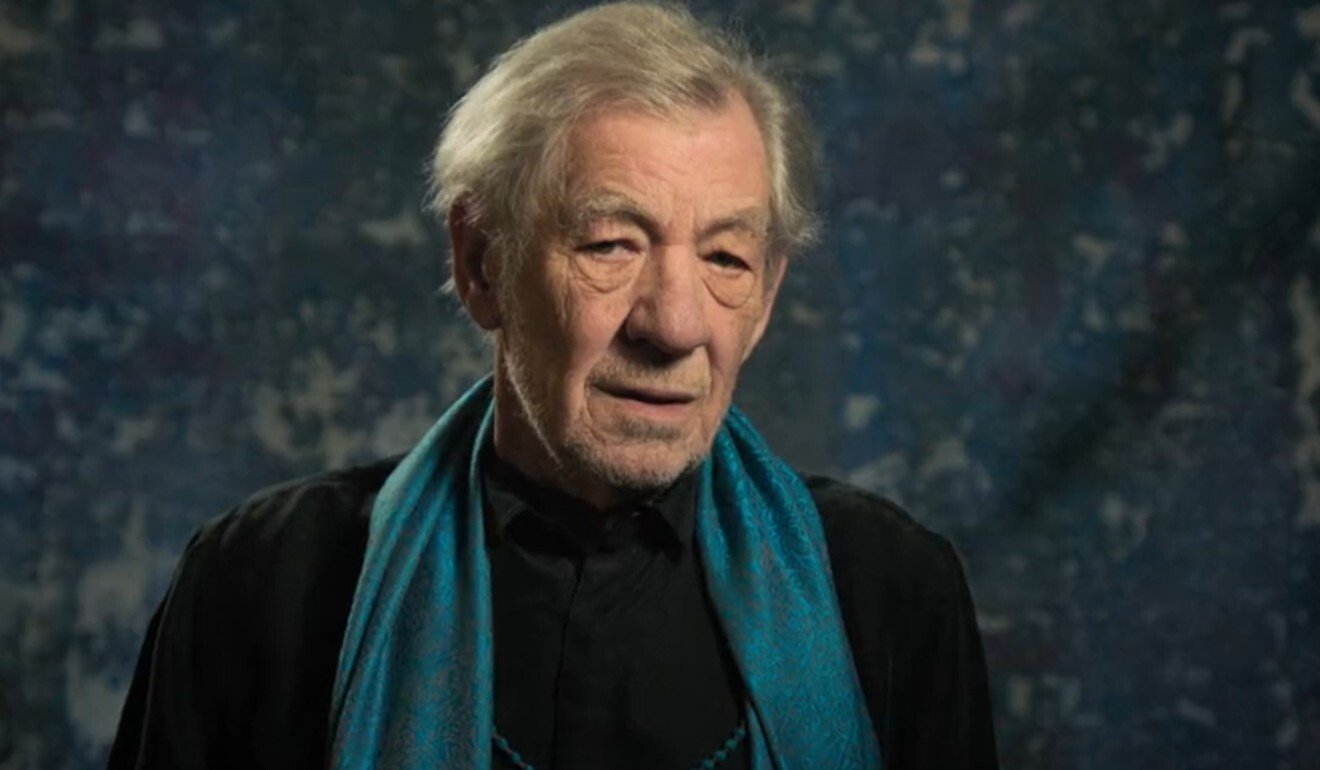
The resonant words of an ancient Chinese poet spoken by esteemed British actor Sir Ian McKellen have reignited in China discussion about its literary history and inspired hope that Beijing can tap into cultural riches to help mend its image in the wake of the coronavirus pandemic.
The BBC documentary Du Fu: China’s Greatest Poet has provoked passion among Chinese literature lovers about the poetic master who lived 1,300 years ago.
Sir Ian Mckellen read works of ancient Chinese poet Du Fu in Du Fu: China’s Greatest Poet. Photo: BBC Four / MayaVision International
The one-hour documentary by television historian Michael Wood was broadcast on television and aired online for British viewers this month but enthusiasm among Chinese audiences mean the trailer and programme have been widely circulated on video sharing websites inside mainland China, with some enthusiasts dubbing Chinese subtitles.
The documentary has drawn such attention in Du’s homeland that even the Communist Party’s top anti-graft agency has discussed it in its current affairs commentary column. Notably, Wood’s depiction of Du’s life from AD712 to 770 barely mentioned corruption in the Tang dynasty (618-907) government.
“I couldn’t believe it!!” Wood said in an email. “I’m very pleased of course … most of all as a foreigner making a film about such a loved figure in another culture, you hope that the Chinese viewers will think it was worth doing.”
Often referred to as ancient China’s “Sage of Poetry” and the “Poet Historian”, Du Fu witnessed the Tang dynasty’s unparalleled height of prosperity and its fall into rebellion, famine and poverty.
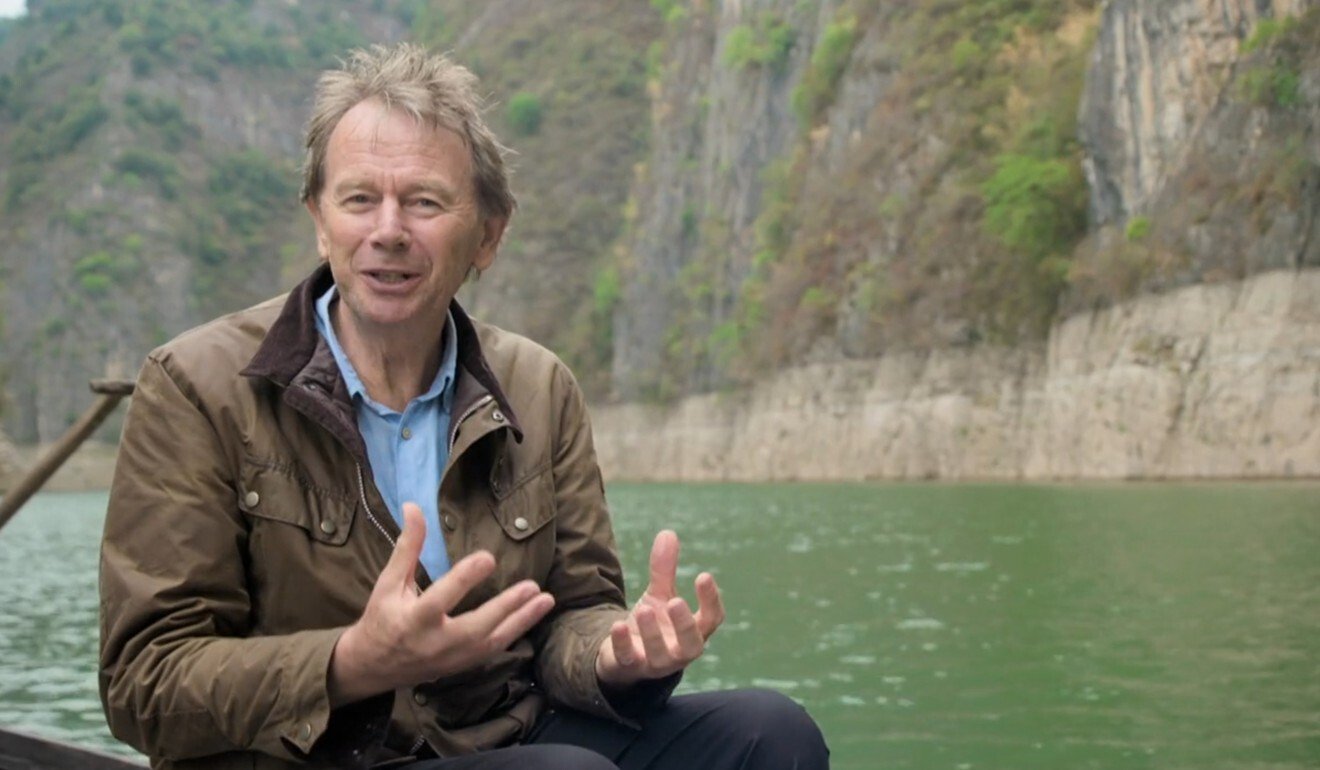
Writer, historian and presenter Michael Wood followed the footsteps of the ancient Chinese poet Du Fu in Yangtze River gorges. Photo: BBC Four / MayaVision International
Wood traced Du’s footsteps to various parts of the country. He interviewed Chinese experts and Western sinologists, offering historical and personal contexts to introduce some of Du’s more than 1,400 poems and verses chronicling the ups and downs of his life and China.
The programme used many Western reference points to put Du and his works into context. The time Du lived in was described as around the as the Old English poem Beowulf was composed and the former Chinese capital, Changan, where Xian is now, was described as being in the league of world cities of the time, along with Constantinople and Baghdad.
Harvard University sinologist Stephen Owen described the poet’s standing as such: “There is Dante, there’s Shakespeare, and there’s Du Fu.”
The performance of Du’s works by Sir Ian, who enjoyed prominence in China with his role as Gandalf in the Lord of the Rings movie series, attracted popular discussion from both media critics and general audiences in China, and sparked fresh discussion about the poet.
“To a Chinese audience, the biggest surprise could be ‘Gandalf’ reading out the poems! … He recited [Du’s poems] with his deep, stage performance tones in a British accent. No wonder internet users praised it as ‘reciting Du Fu in the form of performing a Shakespeare play,” wrote Su Zhicheng, an editor with National Business Daily.
A stone sculpture at Du Fu Thatched Cottage in Chengdu city, China. Photo: Handout
On China’s popular Weibo microblog, a viewer called Indifferent Onlooker commented on Sir Ian’s recital of Du’s poem My Brave Adventures: “Despite the language barrier, he conveyed the feeling [of the poet]. It’s charming.”
Some viewers, however, disagreed. At popular video-sharing website Bilibili.com, where uploads of the documentary could be found, a viewer commented: “I could not appreciate the English translation, just as I could not grasp Shakespeare through his Chinese translated works in school textbooks.”
Watching the documentary amid the coronavirus pandemic, some internet users drew comparisons of Du to Fang Fang, a modern-day award-winning poet and novelist who chronicled her life in Wuhan during the Covid-19 lockdown.
Shanghai pictured in April. Devastation wrought by the coronavirus pandemic has brought about a new suspicion of China. Photo: Bloomberg
The pandemic has infected more than 2.5 million people and killed more than 170,000. It has put the global economy in jeopardy, fuelling calls for accountability. British Foreign Secretary Dominic Raab last week called for a “deep dive” review and the asking of “hard questions” about how the coronavirus emerged and how it was not stopped earlier.
Steve Tsang, director of the SOAS China Institute at University of London, said the British establishment and wider public had changed its perception of Beijing as questions arose about outbreak misinformation and the political leverage of personal protective gear supply.
“The aggressive propaganda of the Chinese government is getting people in the UK to look more closely at China and see that it is a Leninist party-state, rather than the modernising and rapidly changing society that they want to see in China,” Tsang said.
On Sunday, a writer on the website of the National Supervisory Commission, China’s top anti-corruption agency, claimed – without citing sources – that the Du Fu documentary had moved “anxious” British audience who were still staying home under social distancing measures.
“If anyone wants to put the fear of the coronavirus behind them by understanding the rich Chinese civilisation, please watch this documentary on Du Fu,” it wrote, adding that promoting Du’s poems overseas could help “healing and uniting our shattered world”.
English-language state media such as CGTN and the Global Times reported on the documentary last week and some Beijing-based foreign relations publications have posted comments about the film on Twitter.
Wood said he had received feedback from both Chinese and British viewers that talked about “the need, especially now, of mutual understanding between cultures”.
“It is a global pandemic … we need to understand each other better, to talk to each other, show empathy: and that will help foster cooperation. So even in a small way, any effort to explain ourselves to each other must be a help,” Wood said.
He said the idea for producing a documentary about Du Fu started in 2017, after his team had finished the Story of China series for BBC and PBS.
Du Fu: China’s Greatest Poet first aired in Britain on April 7 on BBC Four, the cultural and documentary channel of the public broadcaster. It is a co-production between the BBC and China Central Television.
Wood said a slightly shorter 50-minute version would be aired later this month on CCTV9, Chinese state television’s documentary channel.
The film was shot in China in September, he said.
“I came back from China [at the] end of September, so we weren’t affected by the Covid-19 outbreak, though of course it has affected us in the editing period. We have had to recut the CCTV version in lockdown here in London and recorded two small word changes on my iPhone!” Wood said.
SEOUL (Reuters) – South Korean and Chinese officials on Tuesday cast doubt on reports North Korean leader Kim Jong Un was ill after media outlets said he had undergone a cardiovascular procedure and was in “grave danger”.
Daily NK, a Seoul-based speciality website, reported late on Monday, citing one unnamed source in North Korea, that Kim was recovering after undergoing the procedure on April 12. The North Korean leader is believed to be about 36.
CNN cited a U.S. official with direct knowledge of the matter as saying Washington was “monitoring intelligence” that Kim was in grave danger after surgery. Bloomberg quoted an unnamed U.S. official as saying the White House was told that Kim took a turn for the worse after the surgery.
However, two South Korean government officials rejected the CNN report without elaborating on whether Kim had undergone surgery. The presidential Blue House said there were no unusual signs coming from the reclusive, nuclear-capable state.
Kim is the unquestioned leader of North Korea and the sole commander of its nuclear arsenal. He has no clear successor and any instability in the country could be a major international risk.
RELATED COVERAGE
Factbox: Questions hang over North Korea succession amid reports on Kim health
The state KCNA news agency gave no indication of the whereabouts of Kim in routine dispatches on Tuesday, but said he had sent birthday gifts to prominent citizens.
An official at the Chinese Communist Party’s International Liaison Department, which deals with North Korea, told Reuters the source did not believe Kim was critically ill. China is North Korea’s only major ally.
Chinese foreign ministry spokesman Geng Shuang said Beijing was aware of reports about the health of Kim, but said it does not know their source, without commenting on whether it has any information about the situation.
South Korean shares exposed to North Korea tumbled and the Korean won fell on the reports. The won traded down more than 1% against the dollar even as South Korean government sources said Kim was not gravely ill.
U.S. stock futures were trading 0.5% lower, but it was not clear how much of that weakness was owing to the collapse in U.S. oil prices and consequent concerns over global demand.
Daily NK said Kim had been admitted to hospital on April 12, just hours before the cardiovascular procedure, as his health had deteriorated since August due to heavy smoking, obesity and overwork.
It said he was now receiving treatment at a villa in the Mount Myohyang resort north of the capital Pyongyang.
“My understanding is that he had been struggling (with cardiovascular problems) since last August but it worsened after repeated visits to Mount Paektu,” a source was quoted as saying, referring to the country’s sacred mountain.
Accompanied by senior North Korean figures, Kim took two well-publicised rides on a stallion on the snowy slopes of the mountain in October and December.
KIM’S HEALTH KEY TO STABILITY
An authoritative U.S. source familiar with internal U.S. government reporting on North Korea questioned the CNN report that Kim was in “grave danger”.
“Any credible direct reporting having to do with Kim would be highly compartmented intelligence and unlikely to leak to the media,” a Korea specialist working for the U.S. government said on condition of anonymity.
Japan’s top government spokesman, Yoshihide Suga, declined to comment on the reports of Kim’s health.
“We are regularly gathering and analysing information about North Korea with great concern,” he said. “We will keep gathering and analysing information regarding North Korea by collaborating with other countries such as the U.S.”
Kim’s potential health issues could fuel uncertainty over the future of the reclusive state’s dynastic rule and stalled denuclearisation talks with the United States, issues in which Kim wields absolute authority.
With no details known about his young children, analysts say his sister and loyalists could form a regency until a successor is old enough to take over.
Speculation about Kim’s health first arose following his absence from the anniversary of the birthday of its founding father and Kim’s grandfather, Kim Il Sung, on April 15.
On April 12, North Korean state media reported that Kim Jong Un had visited an airbase and observed drills by fighter jets and attack aircraft.
Two days later North Korea launched multiple short-range anti-ship cruise missiles into the sea and Sukhoi jets fired air-to-surface missiles as part of military exercises.
The missile launches were part of the celebrations for Kim’s grandfather, Seoul officials said, but there was no North Korea state media report on his attendance or the tests.
Reporting from inside North Korea is notoriously difficult, especially on matters concerning the country’s leadership, given tight controls on information. There have been false and conflicting reports in the past on matters related to its leaders.
Kim is a third-generation hereditary leader who rules North Korea with an iron-fist, taking over the titles of head of state and commander in chief of the military since late 2011.
In recent years Kim has launched a diplomatic offensive to promote both himself as a world leader and his hermit kingdom, holding three meetings with U.S. President Donald Trump, four with South Korean President Moon Jae-in and five with China’s President Xi Jinping.
He was the first North Korean leader to cross the border into South Korea to meet Moon in 2018. Both Koreas are technically still at war, as the Korean War of 1950-53 ended in an armistice, not a peace treaty.
Kim has sought to have international sanctions against his country eased, but has refused to dismantle his nuclear weapons programme, a steadfast demand by the United States.
Indian Prime Minister Narendra Modi told his country’s space scientists he was proud of a programme that had come so near to putting a probe on the Moon.
Contact with Chandrayaan-2 was lost moments before its Vikram module was due to touch down at the lunar south pole.
The fate of the craft is not yet known, but Mr Modi said there would be further opportunities.
India would have been the fourth nation to make a soft landing on the Moon.
“The best is yet to come in our space programme. India is with you,” said Mr Modi.
The Chandrayaan-2 approached the Moon as normal until an error occurred about 2.1km (1.3 miles) from the surface, officials said.
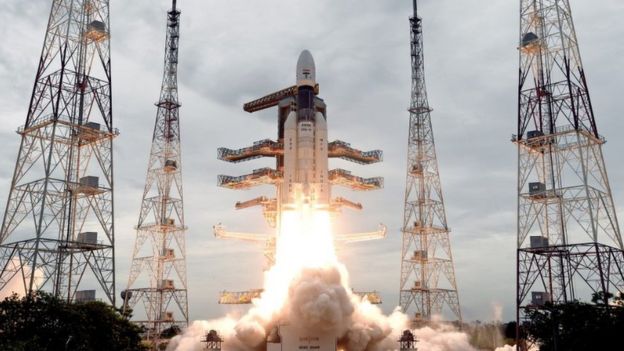
Image copyright ISROImage caption The mission’s lift-off was broadcast live to an audience of hundreds of millions
India’s Space Research Organization (Isro) said it lost contact seconds before the ship was expected to land.
The country’s first Moon mission – Chandrayaan-1, in 2008 – carried out the first and most detailed search for water on the lunar surface using radars.
What happened?
Chandrayaan-2 entered the Moon’s orbit on 20 August and was due to make a controlled descent to the surface early on Saturday, Indian time, over a month after it first took off.
Staff at mission control were glued to the screens at Isro’s Bangalore space centre as the spacecraft made its descent towards the surface.
The control room burst into applause during the so-called rough breaking phase of the descent, with Prime Minister Modi watching the action from behind a glass screen.
Isro chairman Kailasavadivoo Sivan announced to staff that the ship’s initial descent had been “normal,” and that the mission’s data would be analysed.
Mr Sivan had earlier described the final descent as “15 minutes of terror”.
The rover (called Pragyan – wisdom in Sanskrit) had the capacity to travel 500m from the lander in its 14-day life span, and would have sent data and images back to Earth for analysis.
The mission would have focused on the lunar surface, searching for water and minerals and measuring moonquakes, among other things.
Why would it have been significant?
A soft landing on another planetary body – a feat achieved by just three other countries so far – would have been a huge technological achievement for Isro and India’s space ambitions, writes science writer Pallava Bagla.
He adds that it would also have paved the way for future Indian missions to land on Mars, and opened up the possibility of India sending astronauts into space.
For the first time in India’s space history, the interplanetary expedition was led by two women – project director Muthaya Vanitha and mission director Ritu Karidhal.
Media caption Is India a space superpower?
It is also a matter of national pride – the satellite’s lift-off in July was broadcast live on TV and Isro’s official social media accounts.
The mission has also made global headlines because it’s so cheap – the budget for Avengers: Endgame, for instance, was more than double at an estimated $356m. But this isn’t the first time Isro has been hailed for its thrift. Its 2014 Mars mission cost $74m, a tenth of the budget for the American Maven orbiter.
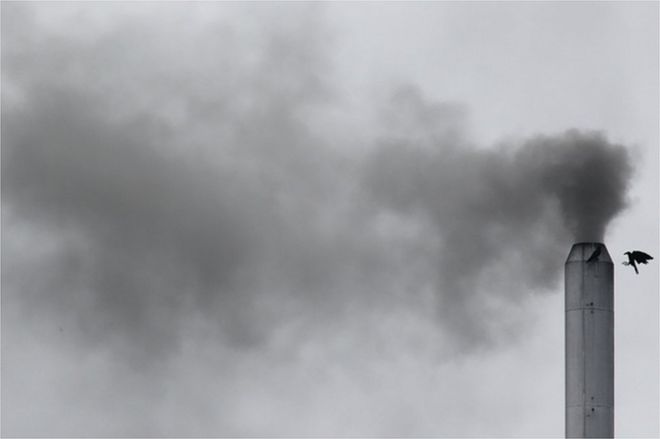
Image copyright AFPImage caption Much of the air pollution is caused by factory emissions
Air pollution contributed to the deaths of at least 1.2 million Indians in 2017 – but a unique pilot scheme to combat air pollution in the western state of Gujarat could prove to be a model for the rest of the country. The BBC spoke to experts to find out more about the world’s first ever such experiment.
The concentration of tiny particulate matter (known as PM2.5) in India is eight times the World Health Organization’s standard.
These particles are so tiny that they can enter deep into the lungs and make people susceptible to respiratory and cardiovascular diseases, making them extremely deadly.
Air pollution in India is caused by fumes from cooking on wood or dung indoors in villages, and a combination of traffic exhaust, soot and construction dust and factory emissions in the cities.
Now Gujarat has launched the world’s first “cap and trading” programme to curb particulate air pollution.
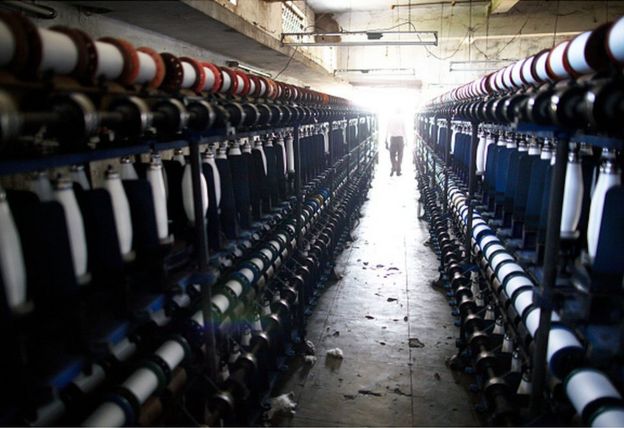
Image copyright AFPImage caption Surat is a dense industrial city where textile and dye factories are a major source of pollution
Put simply, the government sets a cap on emissions and allows factories to buy and sell permits to stay below the cap.
It is being launched in the dense, industrial city of Surat, where textile and dye factories are a major source of pollution. Since 2011, local pollution control authorities have been working on the impact of emissions trading in Surat, along with the University of Chicago and Harvard University.
How will this programme work?
The basic commodity in the emissions trading system is particulate matter, which is emitted by industries through their smoke stacks.
Under the emissions trading system, industries must hold a permit for each unit of particulate that they emit, and must comply with the prescribed standard of 150 milligrams per cubic metre of particulate matter released in the atmosphere.
Although industries can trade permits among themselves, the total quantity of these permits are fixed, so that air pollution standards are met.
For example, an industry that finds it inexpensive to decrease emissions is likely to over-comply with the standards – this would allow them to sell its excess permits to another industry that finds it more expensive to decrease emissions.
Both industries benefit by reducing their total costs of compliance, while the total emissions are held constant.
Importantly, this trading system gives firms an incentive to find ways to reduce emissions because they are able to sell any extra reductions to other firms.
These incentives have been shown to prompt firms to innovate so that they find new and inexpensive ways to reduce their emissions.
This standard will be used to set the overall emissions from all the industries that are participating in the pilot programme.
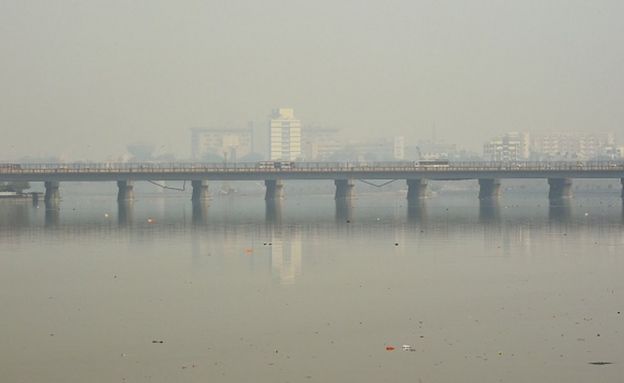
Image copyright AFPImage caption Smoggy skies over the Sabarmati river in Gujarat
Why is this programme being implemented in Surat?
Michael Greenstone, economist and director of the Energy Policy Institute at Chicago (EPIC), says the programme in Surat is a result of a multi-year process that his institute has been working on with the Gujarat Pollution Control Board (GPCB) over the last four years.
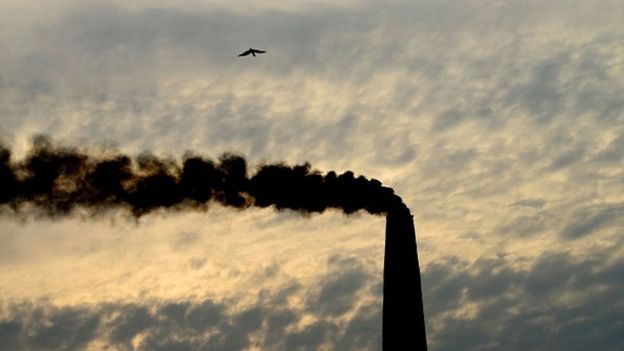
In 2015, the environment ministry ordered 17 highly polluting industries – such as pulp and paper, distillery, sugar, tanneries, power plants, and iron and steel – to mandatorily install continuous emission monitoring system (CEMS) devices. They are a network of sensors installed in factories that send live readings of pollution emitted through their smoke stacks.
In the first phase of experiment, some 170 industries installed the devices, which cost anywhere between $2,500 and $7,000 (£2,000-£5,600).
“We worked with GPCB and the industries extensively on how to understand and use this data for regulation,” Dr Greenstone says.
Image copyright AFPImage caption Highly polluting industries in India have been asked to install emission control systems
“In the Gujarat experiment, we are working with textile, paper and sugar manufacturing industries.”
Can this programme be scaled up in a country as vast as India?
The state’s pollution board set this up as a pilot so that whatever is learnt here can be applied to help the operation of the market, says Dr Greenstone.
If successful, there will be a strong case for expanding this regulatory approach to other parts of Gujarat and other states in India.
“Particulate air pollution is shortening lives in India, so if the pilot is successful there is a terrific opportunity for a win-win by scaling up emissions trading in order to reduce industries’ compliance costs and to improve air quality which would ultimately [improve] people’s health,” he adds.
Will this ambitious programme work?
Siddharth Singh, energy expert and author of The Great Smog of India, says the emissions trading scheme has the potential to work.
“Firstly, unlike in other countries, emission trading schemes are not a politically sensitive topic, so it could quietly be tested and scaled up if it proves to be successful. Secondly, India has some experience in running a similar scheme.”
India’s Bureau of Energy Efficiency has been running a programme to improve industrial energy efficiency. It targets some 500 large users of energy across India and encourages trade in energy efficiency certificates. This has led to decreased energy use and emissions, as well as cost savings.
Media caption A hair-raising drive through the Delhi smog
“India is only testing the trading programme at the state level,” he adds.
“There is nothing to lose here, even if the pilot fails. But if it succeeds, it could be scaled up and prove to be a great policy tool to address particulate air pollution in India.”






 CHINDIA ALERT: You'll be living in their world, very soon
South Korea, China cast doubt on reports North Korean leader Kim gravely ill
SEOUL (Reuters) – South Korean and Chinese officials on Tuesday cast doubt on reports North Korean leader Kim Jong Un was ill after media outlets said he had undergone a cardiovascular procedure and was in “grave danger”.
Daily NK, a Seoul-based speciality website, reported late on Monday, citing one unnamed source in North Korea, that Kim was recovering after undergoing the procedure on April 12. The North Korean leader is believed to be about 36.
CNN cited a U.S. official with direct knowledge of the matter as saying Washington was “monitoring intelligence” that Kim was in grave danger after surgery. Bloomberg quoted an unnamed U.S. official as saying the White House was told that Kim took a turn for the worse after the surgery.
However, two South Korean government officials rejected the CNN report without elaborating on whether Kim had undergone surgery. The presidential Blue House said there were no unusual signs coming from the reclusive, nuclear-capable state.
Kim is the unquestioned leader of North Korea and the sole commander of its nuclear arsenal. He has no clear successor and any instability in the country could be a major international risk.
RELATED COVERAGE
The state KCNA news agency gave no indication of the whereabouts of Kim in routine dispatches on Tuesday, but said he had sent birthday gifts to prominent citizens.
An official at the Chinese Communist Party’s International Liaison Department, which deals with North Korea, told Reuters the source did not believe Kim was critically ill. China is North Korea’s only major ally.
Chinese foreign ministry spokesman Geng Shuang said Beijing was aware of reports about the health of Kim, but said it does not know their source, without commenting on whether it has any information about the situation.
South Korean shares exposed to North Korea tumbled and the Korean won fell on the reports. The won traded down more than 1% against the dollar even as South Korean government sources said Kim was not gravely ill.
U.S. stock futures were trading 0.5% lower, but it was not clear how much of that weakness was owing to the collapse in U.S. oil prices and consequent concerns over global demand.
Daily NK said Kim had been admitted to hospital on April 12, just hours before the cardiovascular procedure, as his health had deteriorated since August due to heavy smoking, obesity and overwork.
It said he was now receiving treatment at a villa in the Mount Myohyang resort north of the capital Pyongyang.
“My understanding is that he had been struggling (with cardiovascular problems) since last August but it worsened after repeated visits to Mount Paektu,” a source was quoted as saying, referring to the country’s sacred mountain.
Accompanied by senior North Korean figures, Kim took two well-publicised rides on a stallion on the snowy slopes of the mountain in October and December.
KIM’S HEALTH KEY TO STABILITY
An authoritative U.S. source familiar with internal U.S. government reporting on North Korea questioned the CNN report that Kim was in “grave danger”.
“Any credible direct reporting having to do with Kim would be highly compartmented intelligence and unlikely to leak to the media,” a Korea specialist working for the U.S. government said on condition of anonymity.
Japan’s top government spokesman, Yoshihide Suga, declined to comment on the reports of Kim’s health.
“We are regularly gathering and analysing information about North Korea with great concern,” he said. “We will keep gathering and analysing information regarding North Korea by collaborating with other countries such as the U.S.”
Kim’s potential health issues could fuel uncertainty over the future of the reclusive state’s dynastic rule and stalled denuclearisation talks with the United States, issues in which Kim wields absolute authority.
With no details known about his young children, analysts say his sister and loyalists could form a regency until a successor is old enough to take over.
Speculation about Kim’s health first arose following his absence from the anniversary of the birthday of its founding father and Kim’s grandfather, Kim Il Sung, on April 15.
On April 12, North Korean state media reported that Kim Jong Un had visited an airbase and observed drills by fighter jets and attack aircraft.
Two days later North Korea launched multiple short-range anti-ship cruise missiles into the sea and Sukhoi jets fired air-to-surface missiles as part of military exercises.
The missile launches were part of the celebrations for Kim’s grandfather, Seoul officials said, but there was no North Korea state media report on his attendance or the tests.
Reporting from inside North Korea is notoriously difficult, especially on matters concerning the country’s leadership, given tight controls on information. There have been false and conflicting reports in the past on matters related to its leaders.
Kim is a third-generation hereditary leader who rules North Korea with an iron-fist, taking over the titles of head of state and commander in chief of the military since late 2011.
In recent years Kim has launched a diplomatic offensive to promote both himself as a world leader and his hermit kingdom, holding three meetings with U.S. President Donald Trump, four with South Korean President Moon Jae-in and five with China’s President Xi Jinping.
He was the first North Korean leader to cross the border into South Korea to meet Moon in 2018. Both Koreas are technically still at war, as the Korean War of 1950-53 ended in an armistice, not a peace treaty.
Kim has sought to have international sanctions against his country eased, but has refused to dismantle his nuclear weapons programme, a steadfast demand by the United States.
Source: Reuters
Posted in 1950-53, 2018, 36, about, absence, absolute, accompanied, admitted, after, air-to-surface missiles, airbase, ally, analysts, anniversary, anonymity, anti-ship, April, armistice, arose, attack aircraft, attendance, August, authoritative, authority, aware, “grave danger”, “monitoring intelligence”, before, Beijing, believed, Birthday, birthday gifts, Bloomberg, Blue House, border, capital, cardiovascular, cardiovascular problems, cast, celebrations, China, China's President Xi Jinping, China’s, Chinese Communist Party’s International Liaison Department, chinese foreign ministry spokesman, Chinese officials, cited, citing, Citizens, clear, CNN, collaborating, collapse, coming from, commander-in-chief, comment, commenting, compartmented, concerning, concerns, condition, conflicting, consequent, controls, Country, country’s, critically ill, cross, Daily NK, deals, December, declined, demand, denuclearisation, details, deteriorated, difficult, diplomatic offensive, Direct, dismantle, dollar, doubt, drills, dynastic rule, eased, elaborating, enough, especially, exposed, false, fighter jets, fired, first, five, following, founding father, four, future, given, global demand, government officials, government spokesman, grandfather, gravely, head of state, health, heavy smoking, hereditary, hermit kingdom, himself, Hospital, hours, ill, indication, information, Instability, intelligence, international, international risk, iron-fist, issues, Japan’s, KCNA news agency, Kim, Kim Il Sung, Kim Jong Un, knowledge, Korean, Korean War, launched, leader, leadership, leak, lower, loyalists, Major, matter, matters, media, media outlets, meetings, Military, military exercises, Monday, Mount Myohyang, Mount Paektu, Mountain, multiple, North, North Korean leader, notoriously, nuclear arsenal, nuclear weapons, nuclear-capable, obesity, observed, October, Official, old, one, only, overwork, owing, part, peace treaty, President Moon Jae-in, presidential, procedure, programme, prominent, promote, Pyongyang, quoted, receiving, reclusive, recovering, refused, regency, rejected, repeated, report, reported, reports, Resort, Reuters, rides, routine dispatche, routine dispatches, rules, sacred mountain, sanctions, saying, sea, senior, sent, Seoul, shares, short-range, sister, situation, snowy slopes, sole commander, source, South Korea, South Korean, speciality, speculation, stalled, stallion, state, steadfast, still at war, struggling, succession, successor, Sukhoi jets, surgery, take over, taking, talks, technically, tests, Third-generation, Three, tight, titles, told, top, trading, treatment, Tuesday, tumbled, turn for the worse, two, U.S. official, U.S. oil prices, U.S. President Donald Trump, Uncategorized, uncertainty, undergoing, undergone, United States, unlikely, unnamed, unquestioned, unusual signs, urn for the worse, villa, visited, visits, Washington, weakness, website, well-publicised, whereabouts, whether, White House, wields, without, won, world leader, worsened, young children | Leave a Comment »