Archive for ‘protective clothing’

30/03/2020

Emergency medical supplies donated by China arrive in Nepal to combat COVID-19

KATHMANDU, March 29 (Xinhua) — The emergency epidemic prevention materials donated by the Chinese side arrived here on Sunday to help Nepal fight the COVID-19 pandemic.

The supplies that arrived at Tribhuvan International Airport in Nepali capital city Kathmandu in the wee hours of Sunday were formally handed over to the Nepali Health Minister Bhanu Bhakta Dhakal by the Chinese Ambassador to Nepal Hou Yanqi.

Dhakal welcomed the Chinese support and expressed gratitude to the northern neighbor for helping the Himalayan country overcome the epidemic.

“I would like to thank the Chinese people and the Chinese government for supporting Nepal in this difficult time to fight the COVID-19,” the minister said during the handover ceremony.

At a time when many countries are fighting against this battle, China keeping Nepal in the priority list and sending supplies immediately is really commendable, the minister expressed, adding that Nepal expects China’s support in the coming days as well.

The donations from China’s Sichuan Province and the Chinese Embassy include different kinds of masks, thermometers, Chloroquine phosphate tablets, protective clothing and portable ventilators weighing 1.1 tons.

Similarly, the donation from Alibaba Foundation, Jack Ma Foundation includes 100,200 N95 masks and 20,064 PCR test kits weighing 1.4 tons.

“We will try our best to send other necessary supplies as soon as possible. In case of any emergency, we can send a medical expert team or arrange a video conference meeting as well to help the health workers here,” the Chinese ambassador said.

She also welcomed the national lockdown enforced by the Nepal government, stating that it has received encouraging support from the general public.

Nepal is reportedly in dire need for medical supplies as the entire situation escalates in the country. Nepal, facing the shortage of test kits and personal protective equipment for health workers, has recorded five confirmed cases of the COVID-19 so far.

But there is a growing concern over a possible spike in the cases due to the relatively low number of tests. Nepal has enforced a week-long nationwide lockdown since March 24 to prevent the spread of infection.

The health ministry said that the received support materials will be distributed to federal and provincial levels hospitals immediately and will be useful for the prevention and management of the COVID-19 in Nepal.

Mahendra Shrestha, director general at the Department of Health Services under the Health Ministry, told Xinhua on Saturday, “The procured test kits from China will help us in the situation of spike in positive cases of the COVID-19.”

Source: Xinhua
05/09/2019

China earmarks site to store nuclear waste deep underground

  • Researchers will conduct tests at site in Gansu to see whether it will make a viable facility to store highly radioactive waste safely
  • Scientists say China has the chance to become a world leader in this field but has to find a way to ensure it does not leak
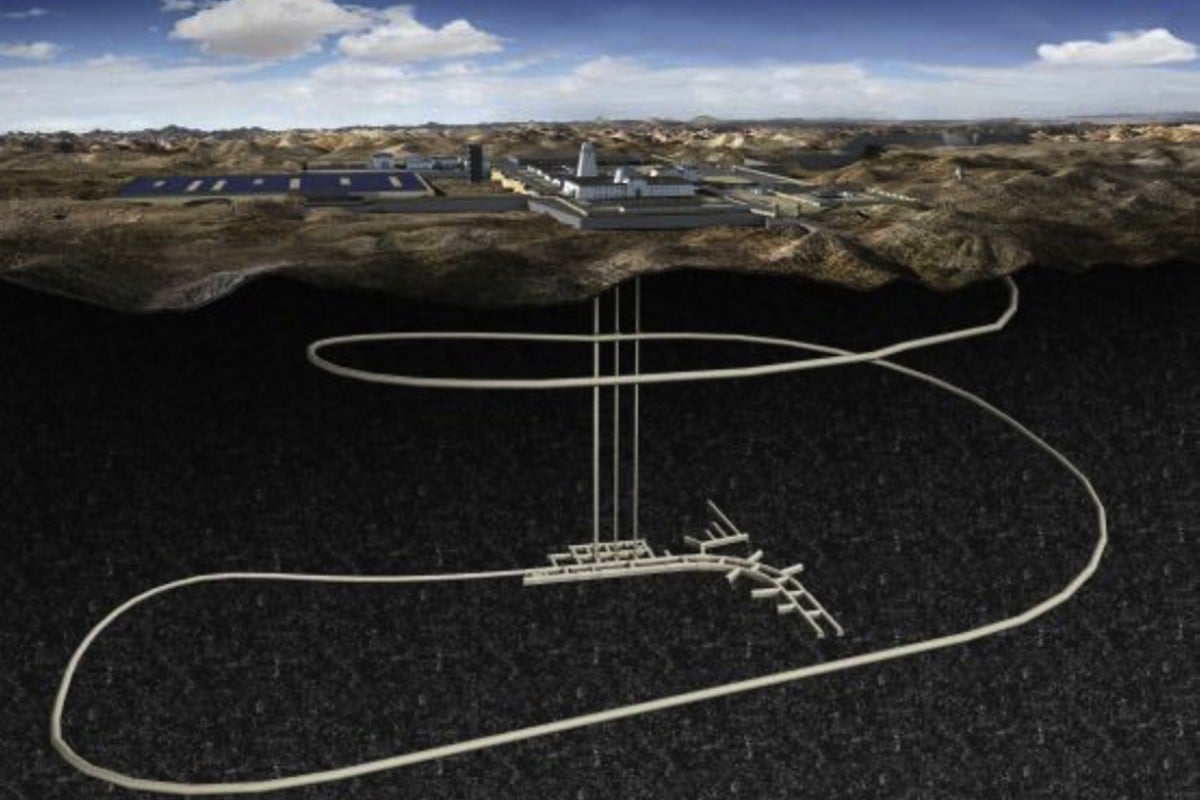
A preliminary design for the Beishan Underground Research Laboratory. Photo: Handout

China has chosen a site for an underground laboratory to research the disposal of highly radioactive waste, the country’s nuclear safety watchdog said on Wednesday.

Officials said work will soon begin on building the Beishan Underground Research Laboratory 400 metres underground in the northwestern province of Gansu.

Liu Hua, the head of the Chinese National Nuclear Safety Administration, said work would be carried out to determine whether it would be possible to build a repository for high-level nuclear waste deep underground.

“China sees radioactive waste disposal as a very important part [of the development nuclear energy],” said Liu. “To develop nuclear energy, we must have safe storage and disposal of nuclear waste.”

China condemns US blacklisting of nuclear firms and says American companies could be hurt as a result
The Chinese authorities see nuclear power an important source of energy that will help to curb carbon emissions and pollution as well as reducing its dependence on fuel imports.

But while the country has made great strides in the development of nuclear power, it needs to find a safe and reliable way of dealing with its growing stockpiles of nuclear waste.

Liu said the Gansu site had been identified as a possible location for a deep nuclear waste store after years of searching.

Once the laboratory is built, scientists and engineers will start experiments to confirm whether it will make a viable underground storage facility.

“Based on the data of the experiments, we can then decide if we are going to pick this as the final site,” he added.

China ‘actively promoting’ nuclear fuel processing plant with French Areva
Chinese officials usually stay tight-lipped about how nuclear waste is disposed of mainly because of fears that any discussion of the topic would trigger safety fears, although in recent years more efforts have been made to inform the public to win support.
Scientists say that nuclear waste can be divided into three categories depending on the level of radioactivity.
Low-level waste consists of minimally radioactive materials such as mop heads, rags, or protective clothing used in nuclear plants, while intermediate-level waste covers things such as filters and used reactor components.
High-level waste, however, is generated by the reprocessing of spent nuclear fuel and scientists generally agree that the safest way to dispose of it is to bury it deep underground in areas where the geology means it will have a minimal impact on the environment while it decays over thousands of years.
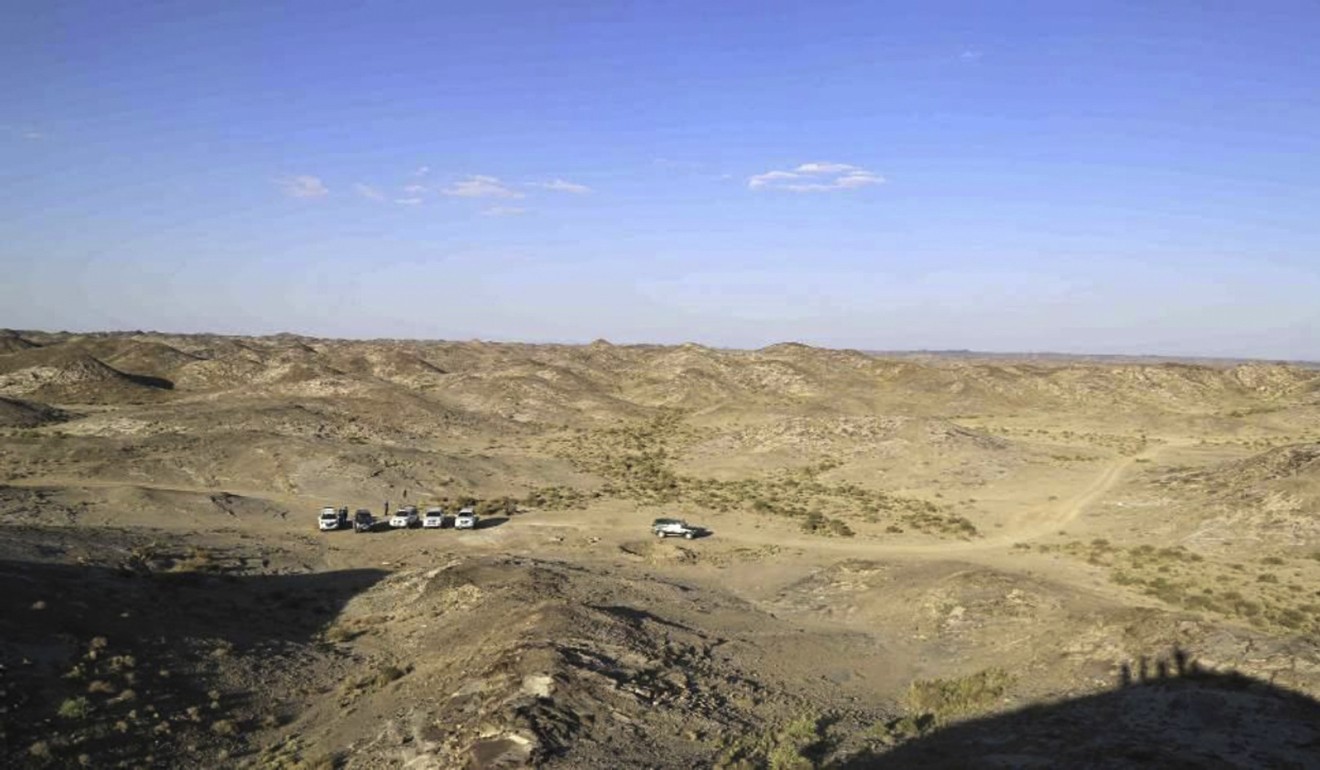
The facility will be built in a remote part of Gansu province. Photo: Handout

Some Chinese scientists said the country had the chance to lead the world in this area of research but others have expressed concerns about safety.

Jiang Kejun, a senior researcher at the Energy Research Institute of China’s National Development and Reform Commission, said that very few countries in the world are studying this form of nuclear waste disposal.

“It gives China an opportunity to be a leader in research in this area, plus China has the technology and financial means,” he said.

About a dozen countries including France, Switzerland, Japan, and the United States have carried out research in this area, but in recent years most have abandoned or scaled back their programmes.

At present there are storage sites operating in Finland and the US, but other countries such as Germany have abandoned plans to build similar facilities.

Washington blacklists Chinese nuclear firms for ‘helping military acquire US technology’

But despite broad scientific support for underground disposal, some analysts and many members of the public remain sceptical about whether it is really safe.

Lei Yian, an associate professor at the School of Physics at Peking University, said there was no absolute guarantee that the repositories would be safe when they are come into operation.

“Leakage has happened in [repositories] in the US and the former Soviet Union … it’s a difficult problem worldwide,” he said. “If China can solve it, then it will have solved a global problem.”

China is also building more facilities to dispose of low and intermediate level waste. Officials said new plants were being built in Zhenjiang, Fujian and Shandong, three coastal provinces that currently lack disposal facilities.

At present, two disposal sites for low and intermediate-level waste are in operation in Gansu and Guangdong provinces.

Source: SCMP

Law of Unintended Consequences

continuously updated blog about China & India

ChiaHou's Book Reviews

continuously updated blog about China & India

What's wrong with the world; and its economy

continuously updated blog about China & India