Archive for ‘Qatar’

02/03/2020

Coronavirus: South Korea church leader apologises for virus spread

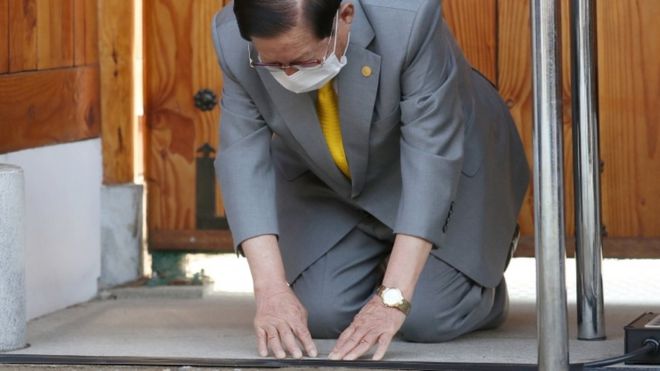
Leader of the Shincheonji Church of Jesus holds press conference in South KoreaImage copyright EPA
Image caption Lee Man-hee is the founder of the Shincheonji Church

The head of the religious sect that has been at the centre of the coronavirus outbreak in South Korea has apologised to the nation for the disease’s spread.

Lee Man-hee, the leader of the Shincheonji Church of Jesus, got on his knees and bowed at a news conference.

About 60% of the country’s more than 4,000 confirmed cases are sect members.

On Monday, South Korea – the biggest hotspot outside China – reported 476 new cases, bringing the total number to 4,212. It has recorded 26 deaths.

Prosecutors have been asked to investigate Mr Lee on possible charges of gross negligence.

“Although it was not intentional, many people have been infected,” said the 88-year-old leader. “We put our utmost efforts, but were unable to prevent it all.”

Media caption Empty shelves as coronavirus ‘panic-buying’ hits Australia

Of the confirmed cases, 3,081 are from the southern city of Daegu and 73% of these cases have been linked to the Shincheonji Church near there.

In the capital Seoul, the mayor urged the city’s 10 million residents to work from home and to avoid crowded places.

Why is the Shincheonji Church of Jesus in the spotlight?

Members of the fringe Christian group are believed to have infected one another and then travelled around the country, apparently undetected.

The group has been accused of keeping its members’ names secret, making it harder to track the outbreak.

But church spokesman Kim Shin-chang told the BBC they had provided a list of members, students, and buildings to authorities.

“We were worried about releasing this information because of the safety of our members,” Mr Kim said.
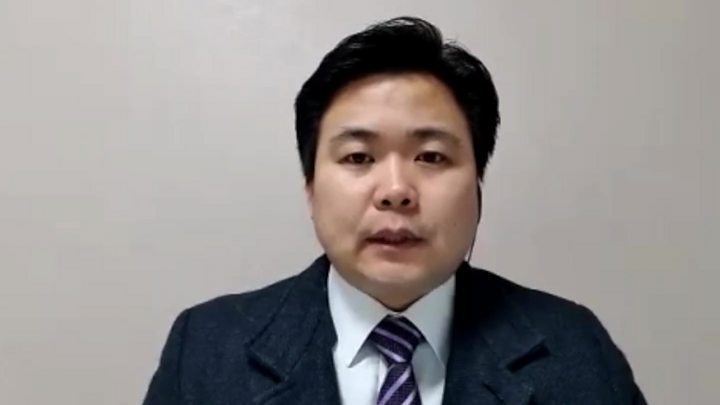
Media caption ‘We’re often persecuted’: Spokesman for virus-hit S Korean church defends secrecy

Mr Lee claims he is the second coming of Jesus Christ and identifies as “the promised pastor” mentioned in the Bible who will take 144,000 people to heaven with him.

The Shincheonji Church is labelled as a cult within South Korea and also in the Christian community, which results in the group often being discriminated against, persecuted or criticised, Mr Kim told the BBC.

What’s the global situation?

The number of people killed worldwide by the coronavirus has exceeded 3,000, as China reported 42 more deaths. More than 90% of the total deaths are in Hubei, the Chinese province where the virus emerged late last year.

But there have also been deaths in 10 other countries, including more than 50 in Iran and more than 30 in Italy.

Worldwide, there have been almost 90,000 confirmed cases, with the numbers outside China now growing faster than inside China.

In other developments:

  • In the UK, where there are 36 confirmed cases, Prime Minister Boris Johnson has called a meeting of the emergency Cobra committee on Monday
  • Indonesia – one of the world’s most populous countries – has announced its first confirmed cases of coronavirus, a 64-year-old woman and her 31-year-old daughter, currently being treated at a Jakarta hospital
  • Iceland and Andorra also reported their first confirmed cases on Monday
  • Share prices in Asia and in Europe rose after central banks pledged to intervene to help protect markets from the impact of the coronavirus. Concerns about the outbreak last week wiped more than $5tn (£3.9tn) from global stocks
  • US sportswear giant Nike has closed its European headquarters in Hilversum city in the Netherlands after an employee tested positive for the virus

In the European hotspot of Italy, the number of infections doubled in 48 hours, the head of the country’s civil protection body said on Sunday.

There have been at least 34 deaths and 1,694 confirmed cases. Amazon said two of its employees in Italy have the virus and are under quarantine.

Countries including Qatar, Ecuador, Luxembourg and Ireland all confirmed their first cases over the weekend. On Monday, Ecuador reported five new cases of the disease, bringing the total number of infected patients in the country to six.

The US state of New York has also confirmed its first case. The patient is a woman in her 30s who contracted the virus during a recent trip to Iran. Two people have died in the US, both in the state of Washington.

Presentational grey line

What do I need to know about the coronavirus?

Presentational grey line

What’s the situation in China?

China on Monday reported 42 more deaths, all in Hubei. There were also 202 confirmed new cases – only six of which were outside Hubei.

A total of 2,912 people have died inside China, with more than 80,000 confirmed cases of the virus.

A spokesman from China’s National Health Commission said the next stop would be to “focus on the risks brought by the resumption of work”.

China’s economy has taken a hit – with factory activity falling at a record rate.

On Monday, a man was sentenced to death by a Chinese court for fatally stabbing two officials at a virus checkpoint, news agency AFP reported.

Ma Jianguo, 23, refused to co-operate with officials – though it is not clear what he was told to do – and stabbed two checkpoint officials.
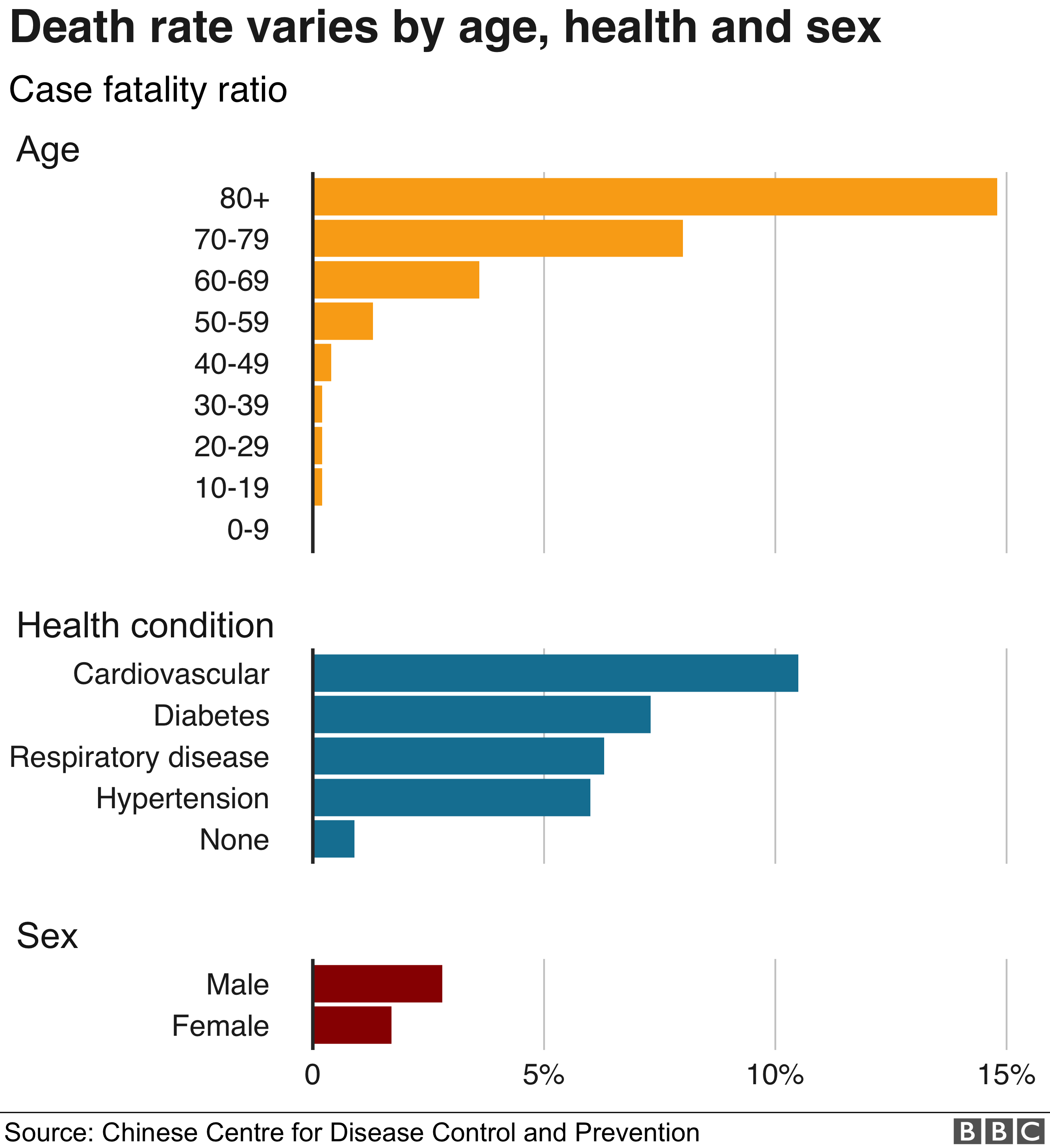

Death rates for different groupsPresentational white spaceWhat has the WHO said?

On Sunday, the World Health Organization (WHO) said the virus appears to particularly affect those over 60, and people already ill.

It urged countries to stock up on ventilators, saying “oxygen therapy is a major treatment intervention for patients with severe Covid-19”.

In the first large analysis of more than 44,000 cases from China, the death rate was 10 times higher in the very elderly compared to the middle-aged.

But most patients have only mild symptoms and the death rate appears to be between 2% and 5%, the WHO said.

By comparison, the seasonal flu has an average mortality rate of about 0.1%, but is highly infectious – with up to 400,000 people dying from it each year.

Other strains of coronavirus, such as Severe Acute Respiratory Syndrome (Sars) and Middle East Respiratory Syndrome (Mers), have much higher death rates than Covid-19.

Source: The BBC
29/02/2020

Afghan conflict: US and Taliban sign deal to end 18-year war

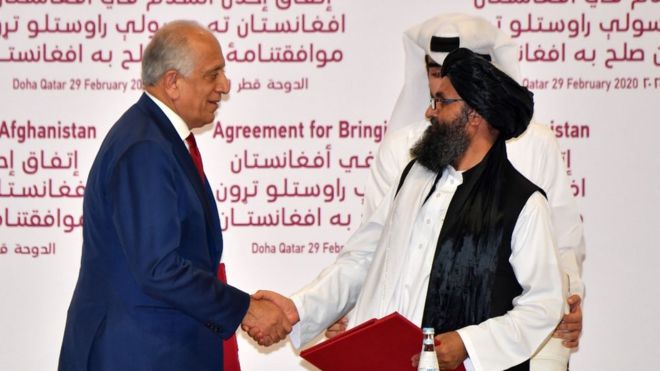
US Special Representative for Afghanistan Reconciliation Zalmay Khalilzad and Taliban co-founder Mullah Abdul Ghani Baradar shake hands after signing a peace agreementImage copyright AFP
Image caption US envoy Zalmay Khalilzad and the Taliban’s Mullah Abdul Ghani Baradar shook hands on the deal

The US and the Taliban have signed an agreement aimed at paving the way towards peace in Afghanistan after more than 18 years of conflict.

The US and its Nato allies have agreed to withdraw all their troops from the country within 14 months if the militants uphold the deal.

US Secretary of State Mike Pompeo and Taliban leaders attended the signing ceremony in Doha in Qatar.

Talks between the Afghan government and the Taliban are due to follow.

Under the agreement signed in Doha, the militants also agreed not to allow al-Qaeda or any other extremist group to operate in the areas they control.

The US invaded Afghanistan weeks after the September 2001 attacks in New York by the Afghanistan-based al-Qaeda group.

More than 2,400 US troops have been killed during the conflict. About 12,000 are still stationed in the country. President Trump has promised to put an end to the conflict.

What happened in Doha?

The deal was signed by US special envoy Zalmay Khalilzad and Taliban political chief Mullah Abdul Ghani Baradar with Mr Pompeo as a witness.

In a speech, Mr Pompeo urged the militant group to “keep your promises to cut ties with al-Qaeda”.

Meanwhile US Defence Secretary Mark Esper was in the Afghan capital Kabul alongside Afghanistan’s President Ashraf Ghani – whose government did not take part in the US-Taliban talks.

Mr Esper said: “This is a hopeful moment, but it is only the beginning. The road ahead will not be easy. Achieving lasting peace in Afghanistan will require patience and compromise among all parties.” He said the US would continue to support the Afghan government.

What’s in the agreement?

Within the first 135 days of the deal the US will reduce its forces in Afghanistan to 8,600, with allies also drawing down their forces proportionately.

The move would allow US President Donald Trump to show that he has brought troops home ahead of the US presidential election in November.

The deal also provides for a prisoner swap. Some 5,000 Taliban prisoners and 1,000 Afghan security force prisoners would be exchanged by 10 March, when talks between the Taliban and the Afghan government are due to start.

The US will also lift sanctions against the Taliban and work with the UN to lift its separate sanctions against the group.

Presentational grey line

Landmark deal rife with uncertainties

Analysis box by Lyse Doucet, chief international correspondent

This historic deal has been years in the making, as all sides kept seeking advantage on the battlefield.

The agreement is born of America’s determination to bring troops home and a recognition, at least by some Taliban, that talks are the best route to return to Kabul.

It’s a significant step forward, despite deep uncertainty and scepticism over where it will lead. When the only alternative is unending war, many Afghans seem ready to take this risk for peace.

Taliban leaders say they’ve changed since their harsh rule of the 1990s still seared in the memory of many, and most of all Afghan women.

This process will test the Taliban, but also veteran Afghan leaders of the past, and a new generation which has come of age in the last two decades and is hoping against hope for a different future.

Presentational grey line

How did US-Taliban talks come about?

Since 2011, Qatar has hosted Taliban leaders who have moved there to discuss peace in Afghanistan. It has been a chequered process. A Taliban office was opened in 2013, and closed the same year amid rows over flags. Other attempts at talks stalled.

In December 2018, the militants announced they would meet US officials to try to find a “roadmap to peace”. But the hard-line Islamist group continued to refuse to hold official talks with the Afghan government, whom they dismissed as American “puppets”.

Media caption The view from Lashkar Gah province on whether peace with the Taliban is possible

Following nine rounds of US-Taliban talks in Qatar, the two sides seemed close to an agreement.

Washington’s top negotiator announced last September that the US would withdraw 5,400 troops from Afghanistan within 20 weeks as part of a deal agreed “in principle” with Taliban militants.

Days later, Mr Trump said the talks were “dead”, after the group killed a US soldier. But within weeks the two sides resumed discussions behind the scenes.

A week ago the Taliban agreed to a “reduction of violence” – although Afghan officials say at least 22 soldiers and 14 civilians have been killed in Taliban attacks over that period.

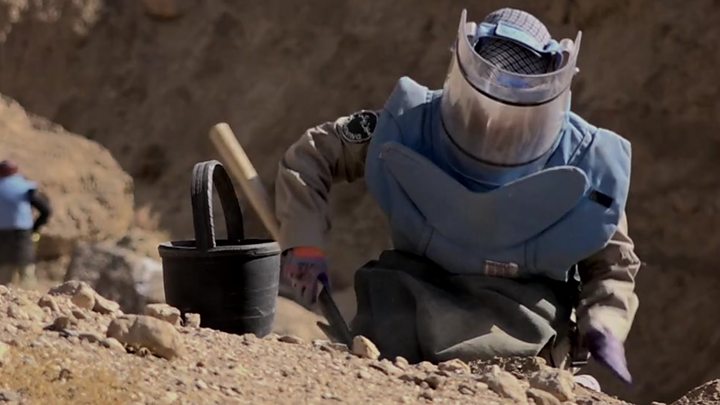
Media caption Meet Fatima and Fiza, some of the women removing landmines in Afghanistan

What’s the background to the Afghan war?

It began when the US launched air strikes one month following the 11 September 2001 attacks and after the Taliban had refused to hand over the man behind them, Osama bin Laden.

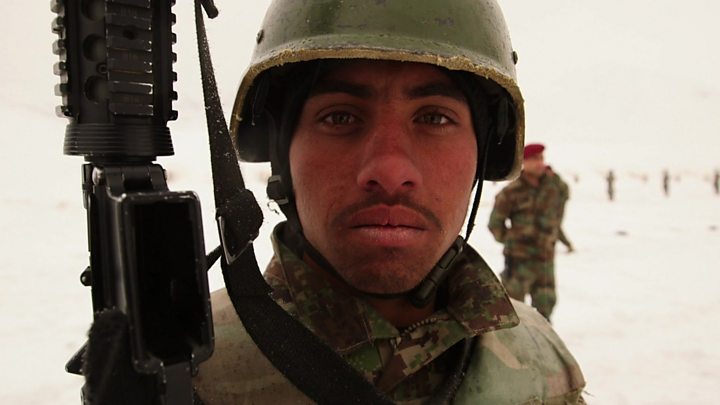
Media caption Tens of thousands of Afghan soldiers have been killed and injured. This is their story

The US was joined by an international coalition and the Taliban were quickly removed from power. However, they turned into an insurgent force and continued deadly attacks, destabilising subsequent Afghan governments.

The international coalition ended its combat mission in 2014, staying only to train Afghan forces. But the US continued its own, scaled-back combat operation, including air strikes.

The Taliban has however continued to gain momentum and last year the BBC found they were active across 70% of Afghanistan.

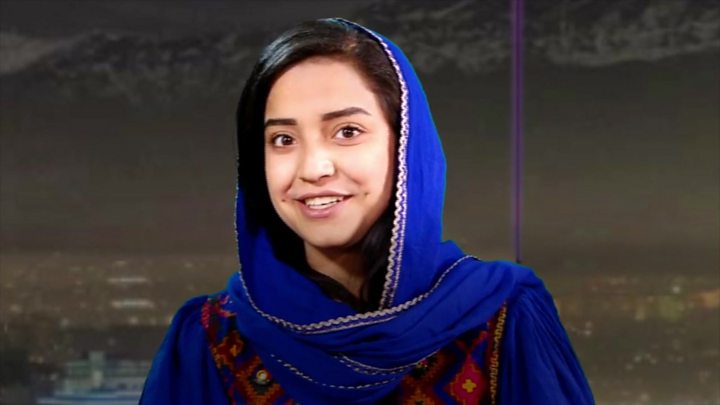
Media caption Zan TV presenter Ogai Wardak: “If the Taliban come, I will fight them”

Nearly 3,500 members of the international coalition forces have died in Afghanistan since the 2001 invasion.

The figures for Afghan civilians, militants and government forces are more difficult to quantify. In a February 2019 report, the UN said that more than 32,000 civilians had died. The Watson Institute at Brown University says 58,000 security personnel and 42,000 opposition combatants have been killed.

Why has the war lasted so long?

There are many reasons for this. But they include a combination of fierce Taliban resistance, the limitations of Afghan forces and governance, and other countries’ reluctance to keep their troops for longer in Afghanistan.

At times over the past 18 years, the Taliban have been on the back foot. In late 2009, US President Barack Obama announced a troop “surge” that saw the number of American soldiers in Afghanistan top 100,000.

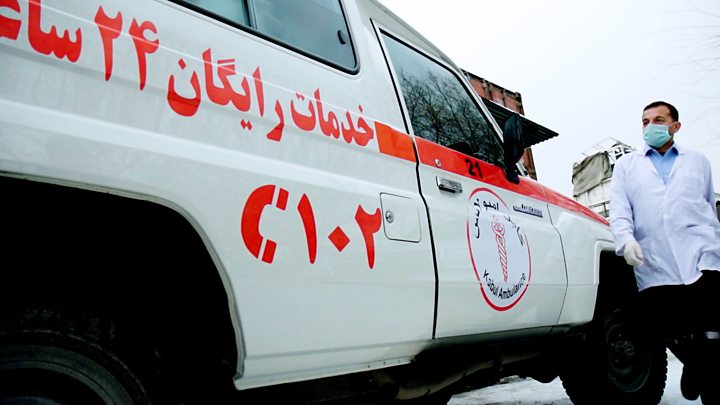
Media caption The BBC was given exclusive access to spend a week with ambulance workers in Afghanistan.

The surge helped drive the Taliban out of parts of southern Afghanistan, but it was never destined to last for years.

The BBC World Service’s Dawood Azami says there are five main reasons the war is still going on now. They include:

  • a lack of political clarity since the invasion began, and questions about the effectiveness of the US strategy over the past 18 years
  • the fact each side is trying to break what has become a stalemate – and that the Taliban have been trying maximise their leverage during peace negotiations
  • an increase in violence by Islamic State militants in Afghanistan – they’ve been behind some of the bloodiest attacks recently

There’s also the role played by Afghanistan’s neighbour, Pakistan.

Source: The BBC

06/11/2019

French President Emmanuel Macron tells Chinese leader Xi Jinping talks are needed to calm Hong Kong situation

  • French leader calls for restraint and says he raised the topic ‘on several occasions’ during his visit
  • Two sides find common ground on need to defend free trade and fight climate change as Donald Trump starts process of pulling US out of Paris Climate Agreement
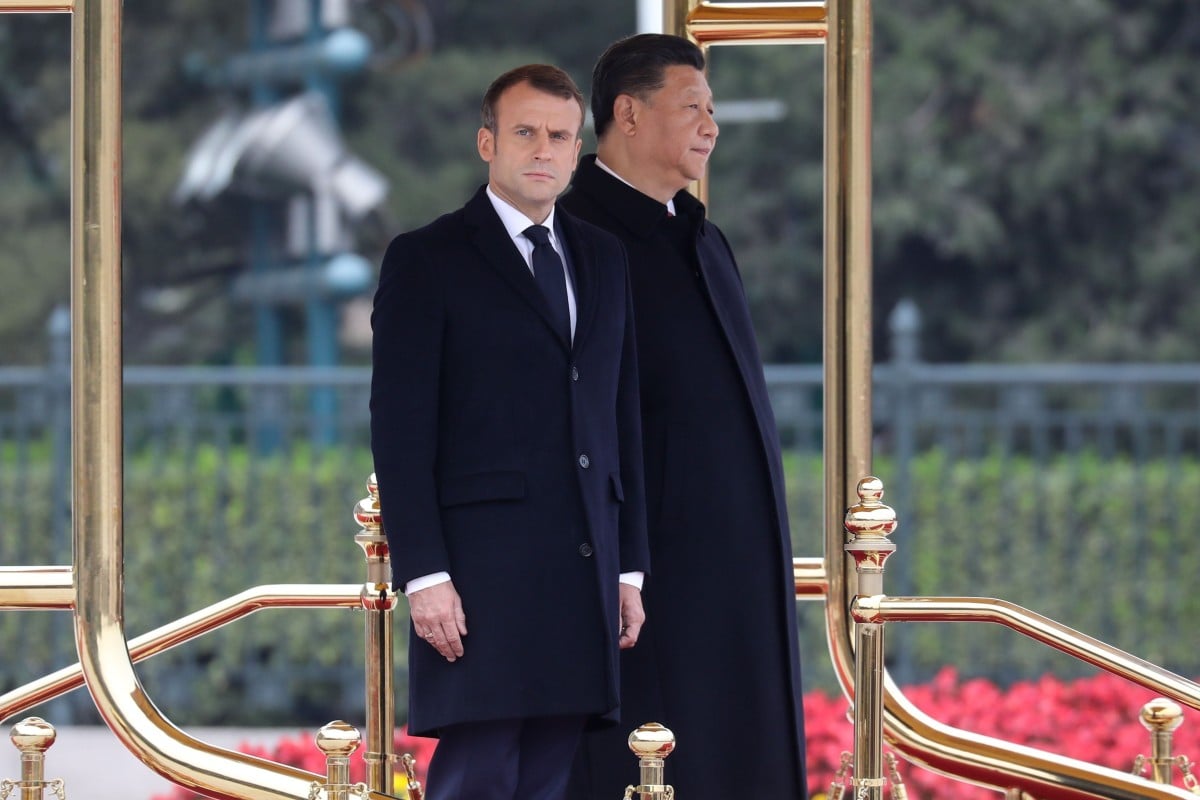
Xi Jinping and Emmanuel Macron at a welcome ceremony ahead of their talks in Beijing on Wednesday. Photo: AFP

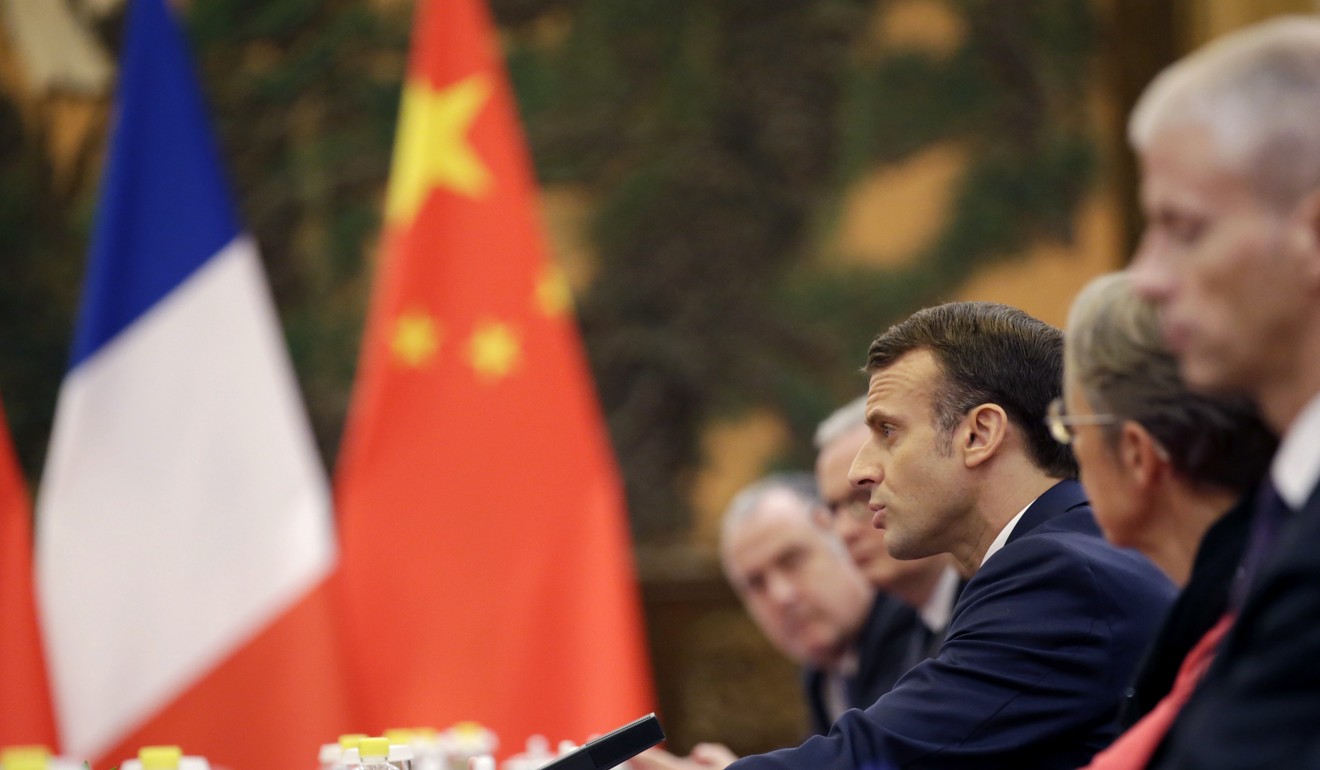
French President Emmanuel Macron said he raised human rights and the Hong Kong situation during his talks with his Chinese counterpart Xi Jinping on Wednesday.

Macron’s visit to China concluded with pledges to work together on climate change, but the French leader also said he also called for a de-escalation of the situation in the city through dialogue after months of protests.

Macron, who had promised to raise “taboo” topics during the visit, told a press conference: “I obviously raised this with President Xi Jinping on several occasions.

“We have repeatedly called on the parties involved to [engage in] dialogue, to show restraint, to de-escalate.”

The discussion followed Xi’s meeting with Hong Kong’s embattled Chief Executive Carrie Lam Cheng Yuet-ngor in Shanghai on Monday, where he expressed “high trust” in her and “fully affirmed” support for her response to the unrest that has gripped the city since June.

Earlier the French and Chinese leaders had restated their commitment to protect free trade and pledged their continued support for the Paris Agreement as the United States begins the process of formally withdrawing from the global climate deal.

Macron expressed “regret” over “some countries’ negative attitude” towards environmental protection and the fight against climate change and pledged to work with China to halt the loss of biodiversity.

The French president’s office also released a statement on Wednesday that reaffirmed France and China’s joint support for the “irreversible” Paris Agreement.

Macron points to common ground with China on tariffs and climate action

With the European Union, China and Russia backing the pact, he added, “the isolated choice of one or another is not enough to change the course of the world. It only leads to marginalisation.”

The two countries also agreed to work together to develop joint nuclear power projects and signed a series of contracts worth US$15 billion.

The deals covered aeronautics, energy and agriculture, including approval for 20 French companies to export poultry, beef and pork to China.

An additional action plan released after the talks said French utility giant EDF and China General Nuclear Power should be encouraged to cooperate on projects in China or third countries, citing the joint efforts by the two companies to build nuclear reactors at the Hinkley Point C station in Britain as an example.

The two sides also committed to signing a contract for the construction of a nuclear fuel recycling plant in China, which would involve French energy giant Orano, by January 31.

Xi took what appeared to be a veiled swipe at the United States, which is still embroiled in a protracted trade war and other confrontations with Beijing.

“We advocate for mutual respect and equal treatment, and are opposed to the law of the jungle and acts of intimidation,” Xi said.

“We advocate for openness, inclusion and for mutually beneficial cooperation, and are opposed to protectionism and a zero-sum game.”

Macron said China and the European Union should work in partnership as the world became more unstable, calling on the two sides to further open up market access.

“We call again for trade multilateralism to respond to distortions that have appeared in the global economy, which have led to a profound rise in inequalities and imbalances that explain the surge of challenges to the international systems,” he said.

“China and Europe also share the same views that the trade war only leads to loss.”

Macron kicks off China visit with deal to protect wine and cheese from counterfeiting

Chinese state news agency Xinhua said the two countries agreed to work together to push forward with plans to assemble Airbus’s A350 model in China.

Meanwhile, Beijing Gas Group and French utility firm Engie will collaborate on a liquefied natural gas terminal and storage in the northern city of Tianjin, while France’s Total will set up a joint venture with China’s Shenergy Group to distribute liquid nitrogen gas by truck in the Yangtze River Delta.

The two countries also agreed to reach an agreement by the end of January 2020 on the cost and location of a nuclear fuel reprocessing facility to be built by Orano, formerly known as Areva.

Wu Libo a professor and director of the Centre for Energy Economics and Strategies Studies at Fudan University, said there was “great potential” for further cooperation between the two countries on nuclear energy.

“France has many useful experiences in the operation and management of nuclear power plants and its plants have long-term safe and stable operation records,” she said.

The two sides agreed to work together on joint nuclear power projects. Photo: AP

Jiang Kejun, a senior researcher at the Energy Research Institute of China’s National Development and Reform Commission, said China’s cooperation with France would add credibility to potential third-country projects.

“China has advanced third-generation technology but it’s still a new member in the nuclear power market, while France has developed nuclear energy for a long time, and its EPR reactors – a technology designed and developed in France – are in business operation,” he said.

Jiang said possible markets for the joint projects included Argentina and India, while some Middle Eastern states – such as Saudi Arabia and Qatar – had expressed interest in nuclear energy.

China’s ambassador hits out at Macron’s team for backing ‘hypocritical’ EU stance on Hong Kong

Tong Jiadong, professor of international trade at Nankai University, said that the deals between the two sides helped show that France and China could work together to counteract US unilateralism.

“Objectively speaking, this will form, or at least imply, an opposition to US unilateralism,” Tong said. “China hopes the cooperation between these two countries produces demonstrable effects for other EU member states.”

Ding Chun, a professor of European Studies at Fudan University, said he did not think the EU wanted to “choose a side” between the US and China.

But Ding continued: “If we are talking about free trade and multilateralism, there’s no doubt that the EU and China share a common view and can balance Donald Trump’s unilateralism.”

Source: SCMP

27/06/2019

China’s growing demand for clean energy and natural gas sparks contest in the Middle East

  • First Qatar, and now Saudi Arabia, are competing to dominate China’s fast-growing natural gas market, already the third largest in the world, as Beijing encourages the switch from coal to cleaner, greener energy
  • A PetroChina LNG tank at Rudong port in Nantong, Jiangsu province. China’s massive and rapidly growing appetite for natural gas is sparking off a scramble in the Middle East, as energy producers compete to become the biggest player in the market. Photo: Reuters
    A PetroChina LNG tank at Rudong port in Nantong, Jiangsu province. China’s massive and rapidly growing appetite for natural gas is sparking off a scramble in the Middle East, as energy producers compete to become the biggest player in the market. Photo: Reuters
    As more countries turn towards clean energy, the geoeconomic impact of natural gas as a fuel has become second only to that of oil. Over the past decade, the global demand for this carbon-free energy source has risen considerably and one major buyer is China.
    The third largest global market for natural gas, China has implemented government policies to replace the use of coal as fuel and millions of households are switching over to clean energy. Consequently, China’s market for gas expanded by a record 43 billion cubic metres last year to reach 280 billion cubic metres at the end of 2018.
    With the recent

    tax cuts in April

    , China’s gas consumption should continue to grow in the year ahead. As the demand spirals further, natural gas consumption in China is estimated to grow to around 620 billion cubic metres in 2030.

    Prioritising its energy security, Beijing last year approved a 22-year gas supply deal between QatarGas and PetroChina International Co. The agreement is PetroChina’s largest LNG supply deal by volume, and will provide 3.4 million tonnes of liquefied natural gas annually.
    With this deal, which QatarGas initiated with Total and ExxonMobil Corp as partners, Qatar achieved regional dominance and filled a vacuum left by major gas producer Iran, currently the target of US sanctions. Interestingly, Beijing has also unwittingly sparked off a competition between Qatar and Saudi Arabia, the kingpins of the Middle Eastern energy industry.
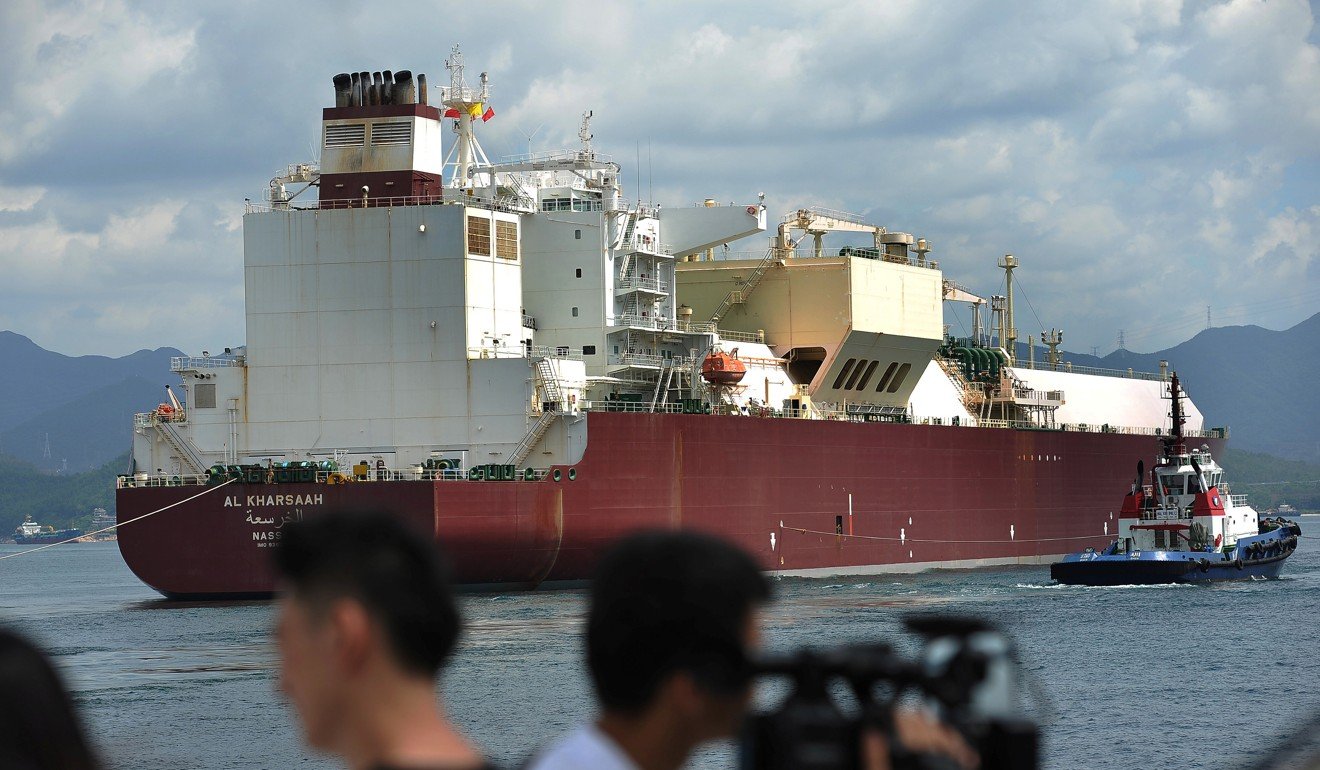
    A vessel carrying Qatar LNG looking to berth in Shenzhen, China last August. Qatar’s recent deal highlighted the massive and growing Chinese appetite for natural gas. Photo: Reuters
    A vessel carrying Qatar LNG looking to berth in Shenzhen, China last August. Qatar’s recent deal highlighted the massive and growing Chinese appetite for natural gas. Photo: Reuters
    China to become world’s top natural gas importer in 2019: report
    By exporting gas, as well as oil, Qatar sail unruffled through the

    economic and diplomatic boycott

    imposed by Saudi Arabia, the United Arab Emirates, Bahrain and Egypt in June 2017, over allegations that Qatar supports terrorism and is friendly with Iran, which the region sees as an enemy. Qatar denies this. Meantime, Qatar plans to further increase its gas output. To attract more buyers, it is offering attractive long-term supply contracts to other countries in the region.

    Inspired by the success of Qatar Gas, Saudi Arabia has stepped up its efforts to capture this new market. The Saudi state-owned oil giant Aramco plans to build an “energy bridge” between Saudi Arabia and China to better meet Beijing’s growing requirements for oil, gas, including LNG, said Aramco’s chief executive Amin Nasser at an industry event in Beijing in March.

    Aramco, already a major supplier of crude oil to China, would need to invest US$150 billion over the next decade to realise its plans to convert crude oil into chemicals, and eventually become a gas producer. “We need to help our stakeholders – including here in China and the wider Asia region – realise that oil and gas will remain vital to world energy for decades to come,” said Nasser.

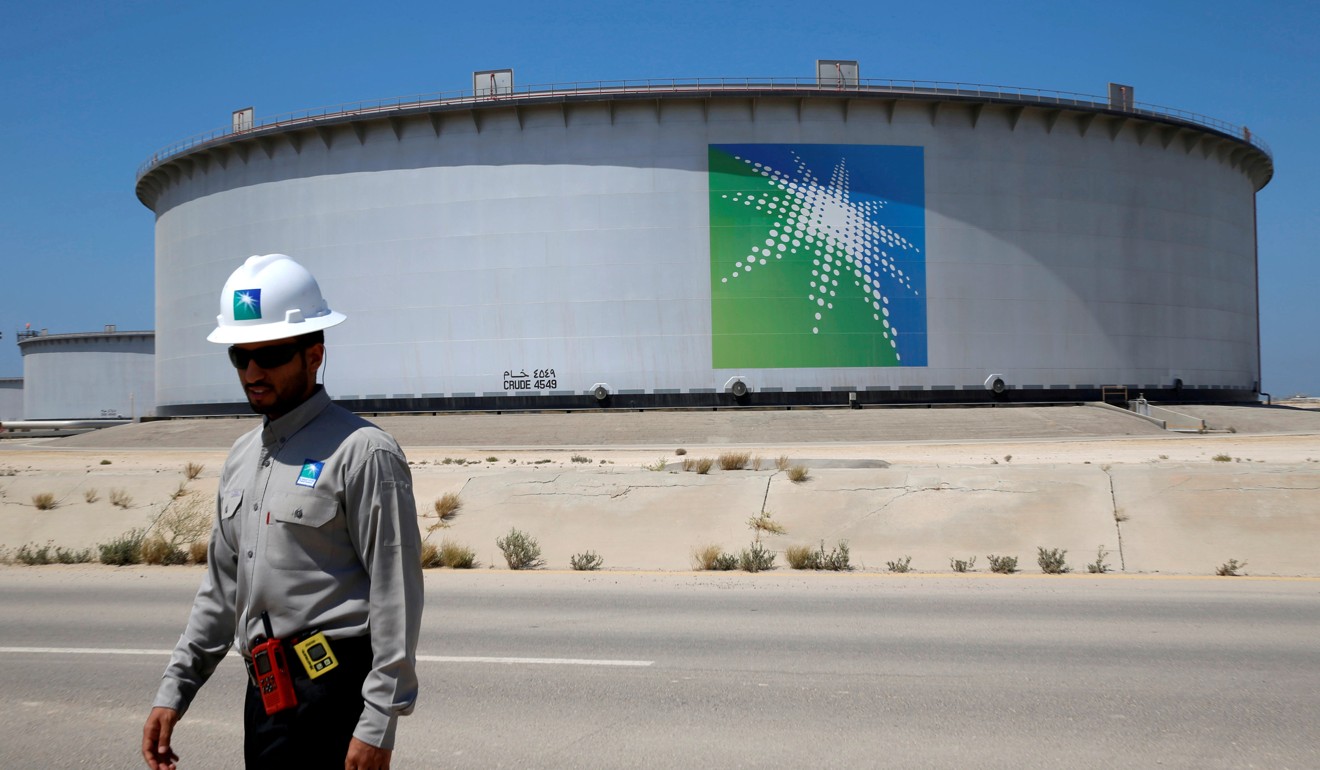
    An Aramco employee near an oil tank in Saudi Arabia. Aramco has grand ambitions to become a major producer of natural gas. Photo: Reuters
    An Aramco employee near an oil tank in Saudi Arabia. Aramco has grand ambitions to become a major producer of natural gas. Photo: Reuters

    The vision of Saudi Arabia as a major natural gas producer is in in line with Saudi Crown Prince Mohammed bin Salman’s economic plan Vision 2030. Riyadh has only Qatar to beat, with Iran on the back foot. Under sanctions pressure, Tehran, despite plans to increase gas exports, has clung on to just 1 per cent of the natural gas market, exporting 36.24 million cubic metres daily. Yet Iran was once part of the so-called regional gas troika along with Russia and Qatar, and is located at the cusp of several energy transit corridors. China, defying sanctions, continues to buy oil from Iran.

    In around five years, Riyadh could become a major gas exporter. Saudi Arabia has already replaced Iran as the main energy provider in countries such as China, Pakistan and India, and has made huge investments in energy projects in these countries.

    However, Qatar is also playing smart, sharply lowering its prices to clinch deals and make the right business connections. The competition for the growing natural gas market is a long game. The main possible setback for Riyadh is that its gas reserves do not match those in Qatar and Iran.

    Source: SCMP

15/06/2019

China, Qatar pledge to deepen political trust, boost cooperation

TAJIKISTAN-DUSHANBE-XI JINPING-QATARI EMIR-MEETING

Chinese President Xi Jinping (R) meets with Qatari Emir Sheikh Tamim Bin Hamad Al-Thani in Dushanbe, Tajikistan, June 15, 2019. (Xinhua/Zhang Ling)

DUSHANBE, June 15 (Xinhua) — Chinese President Xi Jinping met with Qatari Emir Sheikh Tamim Bin Hamad Al-Thani here on Saturday, pledging to deepen political mutual trust and boost cooperation between the two nations.

Voicing his appreciation for Tamim’s commitment to promoting the bilateral ties, Xi recalled the emir’s state visit to China in January this year during which the two heads of state had an in-depth exchange of views and reached extensive consensus on developing the China-Qatar strategic partnership under new circumstances.

During Saturday’s meeting on the sidelines of the fifth summit of the Conference on Interaction and Confidence Building Measures in Asia, Xi said China and Qatar should consolidate their political mutual trust and continue understanding and supporting each other on issues involving their core interests.

The two sides should accelerate the all-round cooperation in energy, trade and economy, infrastructure construction, investment, the fifth-generation (5G) telecommunications and other areas, said the Chinese president.

On the cooperation on fighting terrorism, Xi expressed gratitude to the Qatari side for its support for China’s counter-terrorism and de-extremization efforts, stressing that the Chinese side stands ready to step up coordination and cooperation with Qatar in multilateral affairs.

Tamim hailed the strategic significance of the Qatar-China relationship, calling his China visit in January a great success.

The Qatari side is ready to work with China to boost cooperation in key areas including investment and energy, as well as increase cultural and people-to-people exchanges, Tamim said.

Qatar firmly supports China’s push to safeguard sovereignty and fight against terrorism, said the emir. He spoke highly of China’s fair stance on international affairs, where the Chinese side upholds that disputes should be resolved through dialogue between nations, and pledged to increase coordination with the Chinese side in multilateral affairs.

Source: Xinhua

04/02/2019

Spotlight: Qatari emir’s visit to China shows positive signals

DOHA, Feb. 3 (Xinhua) — Qatari Emir Sheikh Tamim Bin Hamad al-Thani’s recent visit to China has been welcomed by analysts and businessmen from both sides.

“The visit to China by Emir Tamim opened a new era of cooperation between the two countries with impressive results,” analyst Nabil al-Mrir told Xinhua.

“A number of Memorandums of Understanding (MoUs) were signed during the visit including one on strategic dialogue between the governments of Qatar and China,” al-Mrir added.

“The visit drew a roadmap to boost strategic partnership between the two countries in political, economic, investment, energy, technology and security cooperation domains,” he said.

The analyst noted that Qatar is one of the biggest liquefied natural gas (LNG) producers in the world, and China is one of the biggest importers of LNG.

“The expansion of cooperation in production and consumption of LNG between the two countries will be beneficial for both of them,” he said.

Analyst Hassan al-Ali told Xinhua that the visit of the emir of Qatar to China is very important especially in the light of the ongoing blockade imposed on his country.

In early June in 2017, Saudi Arabia, the United Arab Emirates, Egypt, and Bahrain imposed a blockade on Qatar and cut all the diplomatic ties and transport links with Qatar, accusing it of supporting terrorist groups.

Qatar vehemently denied the accusations.

“Doha needs to boost cooperation and trade exchange with various countries to change its economic development mode from reliance on oil and gas export to a diversified one,” al-Ali said.

He pointed out that Qatar needs technologies and experience of China which has great potentials in management and production.

“The results of the visit will give a push to the economic development in Qatar quickly,” the analyst added.

Source: Xinhua

01/02/2019

China, Qatar agree to deepen strategic partnership

CHINA-BEIJING-XI JINPING-QATARI EMIR-TALKS (CN)

Chinese President Xi Jinping holds talks with Sheikh Tamim Bin Hamad al-Thani, emir of Qatar, at the Great Hall of the People in Beijing, capital of China, Jan. 31, 2019. Prior to the talks, Xi held a welcome ceremony for Tamim at the Great Hall of the People. (Xinhua/Li Tao)

BEIJING, Jan. 31 (Xinhua) — Chinese President Xi Jinping met with Qatari Emir Sheikh Tamim Bin Hamad Al-Thani Thursday in Beijing, and they agreed to deepen the bilateral strategic partnership featuring mutual respect, equality and mutual benefit, and common development.

Xi recalled the establishment of the strategic partnership between the two countries in Beijing in 2014, saying that many consensuses reached at that time on developing bilateral relations were being implemented in joint efforts, which had brought tangible benefits to the two peoples.

China is willing to enhance communication with Qatar to deepen political mutual trust, Xi said, adding that China supports Qatar in exploring its development path suitable to its own conditions.

He said China appreciated Qatar’s firm adherence to the one-China policy, and thanked Qatar for its firm support on issues concerning China’s core interests.

Xi called on the two sides to further synergize their development strategies and jointly build the Belt and Road Initiative.

The two countries have initially formed a new pattern of cooperation with oil and gas cooperation as the backbone, infrastructure construction as the focus, and finance and investment as the new growth point, Xi said, calling for the progress in cooperation in energy, infrastructure construction, high and new technology, and investment.

The two sides should strengthen exchanges, share experiences and increase cooperation in international anti-terrorism and anti-extremism campaigns, Xi said.

Regarding people-to-people exchange, Xi called on the two sides to advance cooperation in such areas as tourism, culture, sports and media, especially by supporting each other in hosting the 2022 Beijing Winter Olympic Games and the 2022 World Cup in Qatar.

Noting the significance of regional cooperation and stability in the Gulf for the prosperity of the region, Xi voiced China’s support for appropriately addressing differences and contradictions through political and diplomatic means, and within the Cooperation Council for the Arab States of the Gulf (GCC) and the Arab frameworks, in order to resume unity and harmony among the Gulf states.

The Chinese side stands ready to continue playing a constructive role in accordance with the wish of the GCC countries, Xi told the emir of Qatar.

Hailing the rapid development of the bilateral ties, Tamim said the Qatari side was confident of the Chinese economy.

As one of the earliest countries that had responded to the Belt and Road Initiative, Qatar looks forward to cooperating extensively with China in energy, investment, technology, infrastructure construction and other sectors, Tamim said.

Tamim spoke highly of the performance of Chinese enterprises in Qatar, and welcomed Chinese companies’ investment in the Gulf country. The Qatari side is committed to enhancing cultural, tourism and media exchanges with China.

Lauding China’s constructive stance in multilateral affairs as well as in the Middle East and Gulf issues, Tamim said the Qatari side was willing to strengthen communication and coordination with China, and deepen cooperation with the Chinese side to fight terrorism and extremism.

After the talks, the two heads of state attended a ceremony of the signing of cooperation documents between the two countries.

Prior to the talks, Xi held a ceremony to welcome Tamim at the Great Hall of the People.

Source: Xinhua

13/12/2018

China-Qatar visa exemption agreement to take effect later this month

CHINA-BEIJING-WANG YI-QATAR-DEPUTY PM-STRATEGIC DIALOGUE MECHANISM-MEETING (CN)

Chinese State Councilor and Foreign Minister Wang Yi (R) and Sheikh Mohammed bin Abdulrahman Al Thani, deputy prime minister and minister of foreign affairs of Qatar, co-chair the first meeting of a China-Qatar inter-governmental strategic dialogue mechanism in Beijing, capital of China, Dec. 12, 2018. (Xinhua/Ding Haitao)

BEIJING, Dec. 12 (Xinhua) — An agreement on mutual exemption of visas between China and Qatar will take effect from Dec. 21, the two countries announced Wednesday in Beijing.

The announcement came as State Councilor and Foreign Minister Wang Yi and Sheikh Mohammed bin Abdulrahman Al Thani, deputy prime minister and minister of foreign affairs of Qatar, co-chaired the first meeting of a China-Qatar inter-governmental strategic dialogue mechanism in Beijing.

The two sides hope to take this opportunity to bolster cooperation in tourism and expand people-to-people exchanges.

This year marks the 30th anniversary of the establishment of diplomatic relations between China and Qatar. Wang said it is of great importance to initiate an inter-governmental strategic dialogue mechanism between the two countries.

“China stands ready to work with Qatar to push bilateral ties towards another 30 years of faster development,” said Wang. He proposed the two sides use the opportunity of jointly pursuing the Belt and Road Initiative to synergize their development strategies and carry out win-win cooperation in in fields including energy, high and new technology, investment, finance.

Wang also introduced the measures taken and results achieved by Xinjiang Uygur Autonomous Region in combating violence, terrorism and extremism.

While calling terrorism a common threat to humanity, Mohammed said Qatar supports the measures taken by China in safeguarding national security and stability, and stands ready to strengthen cooperation in security and anti-terrorism.

Law of Unintended Consequences

continuously updated blog about China & India

ChiaHou's Book Reviews

continuously updated blog about China & India

What's wrong with the world; and its economy

continuously updated blog about China & India