Archive for ‘rabies vaccines’

22/02/2019

China’s social credit system report shows that richest provinces are home to the most dodgy firms

  • Firms in Jiangsu and Guangdong provinces top the list of new additions to blacklist in 2018
  • Bogus advertising, illegal activities in property industry, substandard health care products and P2P lending fraud are typical cases

Social credit system: China’s richest regions are also home to the most blacklisted firms

22 Feb 2019
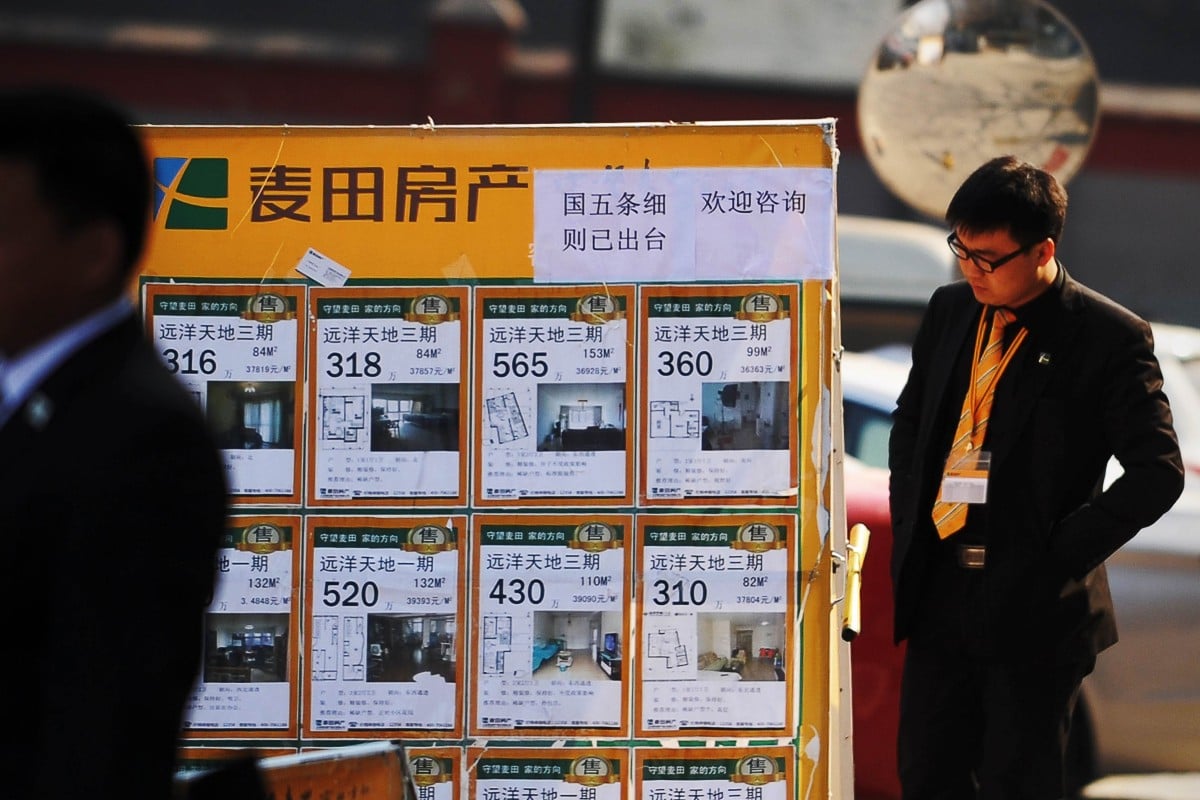
A real property agent checks a property advertising board in Beijing. According to a report by the Chinese government, property brokerages are among the country’s least scrupulous group of firms. Photo: Agence France-Presse

A real property agent checks a property advertising board in Beijing. According to a report by the Chinese government, property brokerages are among the country’s least scrupulous group of firms. Photo: Agence France-Presse

China’s wealthiest regions also have the largest number of untrustworthy businesses, according to the government’s social credit system, which rates citizens and companies based on their behaviour.

Jiangsu, the country’s second largest provincial economy – 9.26 trillion yuan (US$1.37 trillion) – accounted for 16.7 per cent of the discredited businesses that were added to the national blacklist last year, more than any other region.

According to a report compiled by the National Public Credit Information Centre that is backed by China’s state planner, the National Development and Reform Commission, Guangdong is next in line.

Guangdong is China’s most prosperous province, Guangdong, but is also home to 12.77 per cent of the total 3.59 million blacklisted firms. The southern province had a gross domestic product of 9.73 trillion yuan last year.

In third spot was Zhejiang, the prosperous province just south of Shanghai, while the capital city of Beijing was ranked fifth. These places together contributed slightly more than 30 per cent of China’s gross domestic product (GDP) last year.

By naming and shaming the millions of Chinese businesses and individuals on the annual blacklist, Beijing hopes to boost “trustworthiness” in Chinese society. Under the system, each of its 1.4 billion citizens is expected to receive a personal trustworthiness score.

“In more developed coastal provinces, businesses have long operated in the grey area between emerging China and established Hong Kong,” said Brock Silvers, managing director of Kaiyuan Capital, a Shanghai-based financial advisory firm.

Silvers said the situation evoked the Chinese saying: “Heaven is high and the Emperor is far away”, which alludes to local officials’ tendency to disregard central government’s directives.

While it was previously not such a faux pas to engage in “untrustworthy” behaviour in attaining economic development, things are now different.

China’s social credit system shows its teeth, banning millions from taking flights, trains

“The ability to cut corners in search of profit isn’t as prized in China’s modern economy, and many of those old traits can now lead companies to be added to Beijing’s blacklist,” Silvers said.

Among the firms named in the hall of shame is Chuangyue Energy Group, from northwest Xinjiang, which topped the list of new cases involving at least 500 million yuan in fraudulent activity.

Chuangyue and its legal representative Qin Yong were reprimanded by the Shenzhen Stock Exchange in 2016 for failing to disclose transactions on time. The transaction involved changes to the shareholding structure of a listed firm in which Chuangyue held interest in, state media reported.

Also on the list was property developer Zhonghong Holding, which was delisted from the Shenzhen exchange late-last year after its shares fell below the par value of 1 yuan for 20 consecutive days.

Zhonghong had posted massive losses, failed to repay loans and halted development projects during 2018.

A typical area of fraud cited in the report was bogus advertising, with the biggest number of discredited companies located Shanghai, China’s most commercial city.

Property brokerage was a hotbed industry for fraudsters. The report named and shamed two agents in Wuhan, An Yi Real Estate Brokerage and Hong Run De Real Estate Brokerage, which Chinese netizens described as “black brokers”.

In one case, Hong Run De subdivided one flat to lease without the owner’s knowledge and consent. To terminate the contract, the owner had to pay “compensation” of 30,000 yuan before they could reclaim the flat.

Other dodgy sectors were health care product makers and peer-to-peer (P2P) lending platforms.

Quanjian Group, a maker of herbal medicines, was accused of making false marketing claims about the benefits of a product that a four-year-old cancer patient drank.

Health care companies are among the worst performing in China, according to a report on the country’s social credit index. Photo: Agence France-Presse

Changsheng Bio-Technology, the major Chinese manufacturer of rabies vaccines, was fined US$1.3 billion in October after it was found to have fabricated records.

A total of 1,282 P2P operators, more than half located in Zhejiang, Guangdong and Shanghai, were placed on the blacklist because they could not repay investors, or were involved in illegal fundraising.

While more individuals and companies were added to the blacklist, others were also removed – 2.17 million. Those removed had paid taxes owed or fines imposed.

Source: SCMP
12/02/2019

Next stop Xinjiang for one of China’s rising political stars Wang Junzheng

  • Trusted senior cadre tipped for leadership role in implementing Beijing’s ‘stabilising measures’ in the Uygur region
  • His career so far has been a fast track of rotation and promotion
PUBLISHED : Tuesday, 12 February, 2019, 6:33pm
UPDATED : Tuesday, 12 February, 2019, 6:53pm

Beijing has sent a trusted senior cadre – with a track record of versatility and economic development – to join the highest decision-making body of China’s highly sensitive Xinjiang Uygur autonomous region.

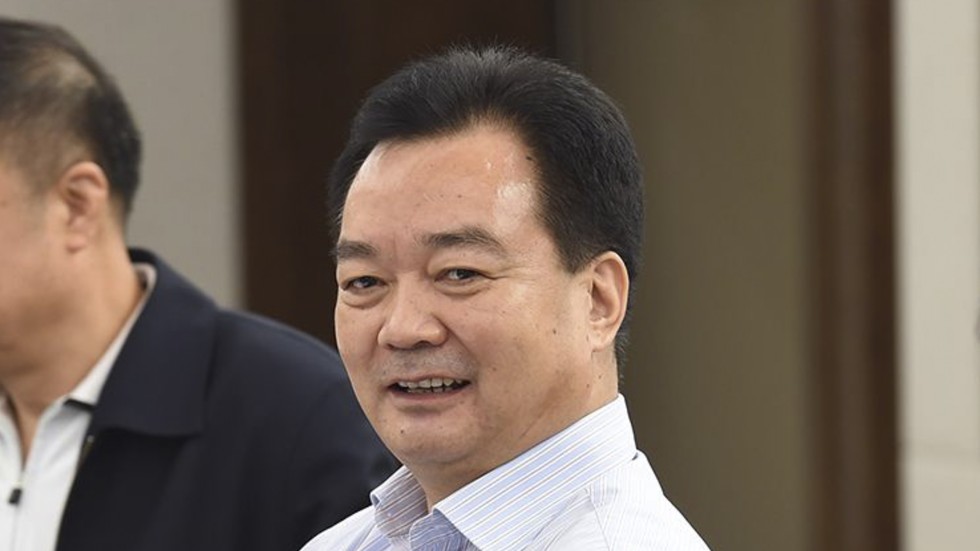
Wang Junzheng, 56, has been appointed to Xinjiang’s 14-member Communist Party standing committee, according to an official statement on Monday. His new role was not specified in the two-paragraph announcement.


Analysts said he was expected to assume a leadership role in the party’s regional political and legal affairs commission – a critical body in the implementation of China’s “stabilising measures” in Xinjiang, which include the controversial “re-education camps” where up to 1 million people from the Muslim ethnic minority group are reportedly being held.

In a move that may have paved the way for such a role for Wang, the incumbent head of Xinjiang’s political and legal affairs commission – Zhu Hailun, 61 – was elected deputy head of Xinjiang’s People’s Congress in January. It is standard practice in China for deputy provincial level cadres to step down and take up such positions on reaching 60.

Dr Alfred Wu, an associate professor at Singapore’s Lee Kuan Yew School of Public Policy, said that while there were other vacancies in both Xinjiang’s political and legal affairs commission and its united front work department, Wong’s legal experience made it likely he would take up the role vacated by Zhu.

A source familiar with Wang told the South China Morning Post he was among a group of cadres who had won the trust of President Xi Jinping.

Wang’s career has been on a fast track of rotation and promotion. He reached vice-provincial level when he was only 49 and, five years later, became an alternate member of the Central Committee – the party’s highest organ of power – at the 19th party congress in October 2017.

He moves to Xinjiang from the northeastern province of Jilin, where he was a member of the provincial party standing committee and party chief of Changchun, the provincial capital.

It was not all smooth sailing for Wang in Jilin, where his career was tainted by last year’s Changchun Changsheng vaccine scandal.

National outrage followed the revelation that one of China’s biggest vaccine makers, Changsheng Bio-tech, had systematically forged data in its production of rabies vaccines and had sold ineffective vaccines for diphtheria, whooping cough and tetanus that were given to hundreds of thousands of babies – some as young as three months old.

Heads rolled. Sackings included Jilin vice-governor Jin Yuhui, who had overseen food and drug regulation; Li Jinxiu, a former Jilin food and drug chief; Changchun mayor Liu Changlong; and Bi Jingquan, deputy director of the State Market Regulatory Administration in Beijing.

In a farewell speech published in People’s Daily on Monday, Wang apparently made a veiled reference to the scandal and admitted some shortcomings.

“Because of my constraints, I could have done better on some issues … and have failed to meet the expectations of the Party and people,” he said.

Alfred Wu said the Xinjiang posting showed Wang’s career had not been tainted by the Changchun vaccine scandal.

“Going to Xinjiang is both an opportunity and a challenge for Wang. If he can prove himself in stabilising Xinjiang, he will go further [in his career],” Wu said.

Xinjiang is Wang’s fourth provincial posting. He began his political career in Yunnan, southwestern China, where he spent nearly two decades working with many ethnic minority groups.

He was the legal chief of Kunming, the provincial capital of Yunnan, from 1988 to 2000 and also served as vice-president of the Yunnan Higher People’s Court from 2005 to 2007.

In 2009 Wang became party chief of Lijiang, a tourist city in Yunnan where the economy thrived under his watch.

“More importantly, he struck a balance between tourism development and environmental conservation and was noticed by the leadership,” a source said.

Wang left Yunnan in 2012 when he was promoted to provincial vice-governor of Hubei in central China. He later became party chief of the city of Xiangyang in Hubei province and was promoted to provincial party standing committee member in 2013.

After three years in Hubei, Wang headed north to Jilin, becoming Changchun party chief in January 2016.

Wang was born in the eastern province of Shandong. He graduated from Shandong University with a bachelor’s degree in socialism studies and a master’s in the same subject from Renmin University in Beijing in the 1980s. He attained his doctorate in management from Tsinghua University in 2006.

Source: SCMP

Law of Unintended Consequences

continuously updated blog about China & India

ChiaHou's Book Reviews

continuously updated blog about China & India

What's wrong with the world; and its economy

continuously updated blog about China & India