Chindia Alert: You’ll be Living in their World Very Soon
aims to alert you to the threats and opportunities that China and India present. China and India require serious attention; case of ‘hidden dragon and crouching tiger’.
Without this attention, governments, businesses and, indeed, individuals may find themselves at a great disadvantage sooner rather than later.
The POSTs (front webpages) are mainly 'cuttings' from reliable sources, updated continuously.
The PAGEs (see Tabs, above) attempt to make the information more meaningful by putting some structure to the information we have researched and assembled since 2006.
China is set to release pork supplies from its central reserves as it moves to tackle soaring prices and shortages caused by an outbreak of swine fever.
A state-backed body will auction 10,000 tonnes of frozen pork from its strategic reserves on Thursday.
China, the world’s biggest producer and consumer of pork, has struggled to control the spread of the disease.
In a bid to stabilise prices, a state-backed group that manages the pork reserves will auction imported frozen pork from countries including Denmark, France, the US and UK.
Only 300 tonnes will be sold to each bidder at the auction.
Pork is used widely in Chinese festivals, and the auction comes as the country prepares to celebrate a week-long national holiday for the 70th anniversary of the People’s Republic of China.
Julian Evans-Pritchard, senior China economist at Capital Economics, said the auction would provide slight relief to the industry but would not do much to contain prices.
“In itself, I don’t think it will be able to prevent pork prices from rising further unless they manage to get the disease under control,” he said.
Beijing created its strategic pork reserve in 2007 but the size of the stockpile is not known.
Capital Economics estimates that at most, the stockpile would hold four days’ worth of pork supplies to feed China.
About 1.2 million pigs have been culled in China in an effort to halt the spread of swine fever since August 2018, according to data from the Food and Agriculture Organization, a UN agency.
In April, Rabobank estimated Chinese pork production would fall by up to 35% this year due to swine fever.
The supply shortage has sent pork prices soaring and has eaten into household incomes.
That poses a fresh challenge for the Chinese economy, which is already facing a slowdown and a trade war between Beijing and Washington.
Agriculture ministry says long-term goal is achievable despite the loss of a third of domestic livestock owing to impact of disease
Observers believe foreign producers will never be able to produce enough to satisfy the world’s largest market for the meat
A pork vendor sleeps at a stall at a Beijing wholesale market. Photo: Simon Song
China will continue to strive for self-sufficiency in pork production although its farming industry has suffered a devastating blow after African swine fever wiped out about one-third of its hog herds, officials said on Wednesday.
Yu Kangzhen, a vice-minister for agriculture, said it was unrealistic for China to pin its hope on imports in meeting the country’s demand for pork.
Last year, China consumed about half of the world’s pork but more than 95 per cent was sourced from domestic supplies, which have taken a serious hit this year due to swine fever.
The disease is deadly for pigs, although not for humans, and there is currently no cure or vaccine.
“Even at its highest level, imports accounted for about 2 per cent of China’s domestic production,” said Yu at a press conference in Beijing.
“So from the statistics alone, we can see that we must adhere to the principle of self-sufficiency if we are to meet our demand for meat, and this also explains why we have put forward a 95 per cent self-sufficiency target.”
According to Yu, the total global trade in pork last year was 8 million tonnes – less than 15 per cent of China’s total production of 54 mi
Peng Shaozong, an official from the pricing department of the National Development and Reform Commission (NDRC), expressed confidence that foreign suppliers would be interested in filling any gaps in the Chinese market.
“Imports are guided by the market. If there is money to be made [in selling to China], they will definitely come,” said Peng on the sidelines of the press conference.
Pan Chenjun, from agribusiness bank Rabobank, said China’s pork production was expected to continue to fall in the coming year, putting pressure on the country’s US$140 billion pork industry.
In July, China’s pig population had fallen by 32.2 per cent from a year earlier, and was down 9.4 per cent compared with the previous month, according to latest government figures.
However, Pan said the government’s 95 per cent self-sufficiency target was in line with market realities.
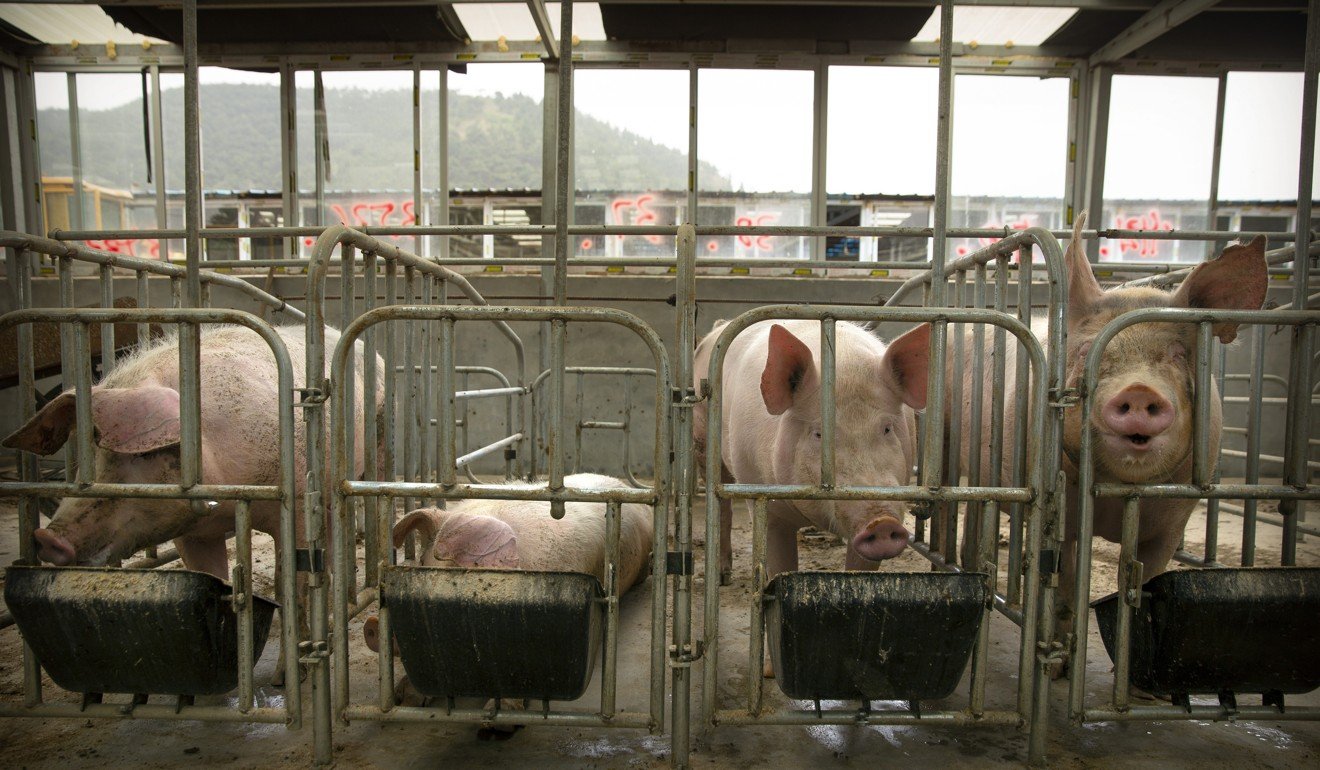
China’s domestic pig stocks have fallen by a third. Photo: AP
“In any case, the 95 per cent [self-sufficiency] goal is reasonable, as China’s pork market size is too big, and imports, despite rising this year, still represent just a small part,” Pan said.
Although China’s domestic shortfall may offer a windfall to foreign suppliers, they must obtain government approval before they could sell to China.
On Monday, Beijing approved imports from 25 Brazilian meat factories, bringing the country’s total number to 89.
On Wednesday, Danish officials completed a three-day trip to China, saying they expected to increase pork exports to China.
Danish food minister Mogens Jensen attended the opening of a new meat processing facility near Shanghai operated by Danish Crown.
China imported 230,000 tonnes of pork from Denmark in 2018, according to the country’s foreign ministry.
On Tuesday, the Chinese State Council issued a new set of guidelines to support the industry, outlining measures such as increased subsidies to boost domestic production in the face of worsening pork shortages that have sent prices to record highs.
The consumer price index released on Tuesday reinforced the bleak picture of a tight market supply as the data showed that pork prices rose by 46.7 per cent in August compared with a year earlier, almost double the 27 per cent rise witnessed in July.
Prices of pork are one of the major indicators used by Chinese citizens to gauge their well-being and, at the moment, that well-being is being eroded rapidly.
According to NDRC, China has already spent a total of 3.23 billion yuan (US$454 million) in subsidies so far this year to tackle the pork shortage crisis.
“As much as 1.1 billion yuan has been newly added under the budget of the central government, with the focus on supporting western provinces in the Yangtze River basin to carry out farm improvement works to control pollution and reduce livestock and poultry waste,” Peng from the NDRC said.
However, a report published by research firm Gavekal Dragonomics on Wednesday cautioned that the government’s plans to soften the blow on the industry might not be effective.
“As the overhaul of pig-raising practices to eliminate the disease would take years even if the government was moving more aggressively, high prices and pork shortages are going to persist,” the report said.
Getting rid of the disease in a nation that consumes half the world’s pork could take three to five years
Demand for soybeans used in feed is expected to be curbed
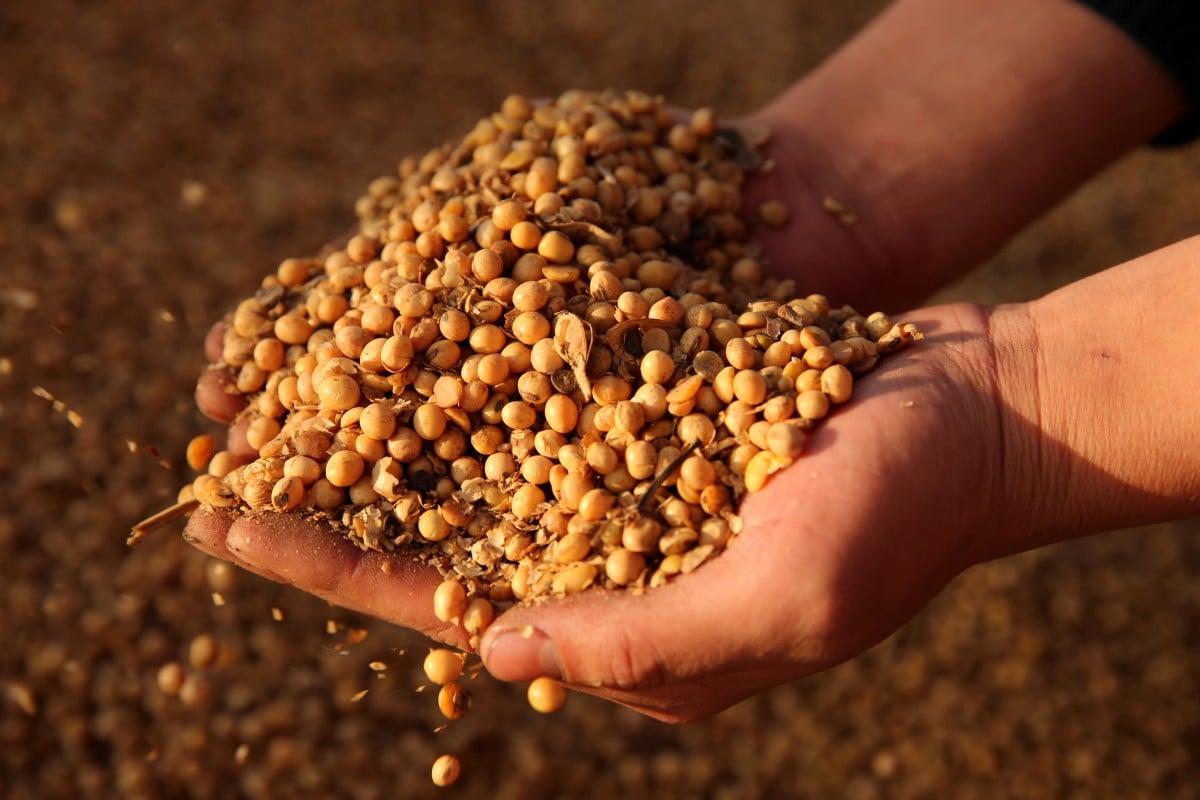
A decline or slower growth in Chinese soy imports has been forecast for the next couple of years. Photo: Reuters
Forget Donald Trump’s trade war. It’s a deadly pig disease spreading through China that will really reshape the global soybean market for years to come.
Getting rid of the disease and rebuilding the herd in a nation that consumes half the world’s pork will take three to five years, curbing demand for soybeans used in feed, according to analysts.
Given China is the largest soybean importer and most of its shipments usually come from the US, the oilseed has been the poster-child for the tit-for-tat tariff spat. While trade tensions have prompted China’s feed makers to curb the oilseed’s usage, it is the pig virus that will upend the market.
The US Department of Agriculture and Intl FCStone are already forecasting a decline or slower growth in Chinese soy imports for the next couple of years.
“Today, African swine fever is the bigger story as it relates to demand,” said Corey Jorgenson, president of the grain unit of US crop handler The Andersons, which buys and sells corn, wheat and soybeans from American farmers. “It will impact us for a crop year or more. This is not a 2019 event.”
African swine fever, first spotted in Africa in the 1900s, kills most infected pigs within 10 days, although it isn’t known to harm humans. China has already culled more than a million pigs after 122 outbreaks in 30 provinces. The disease shows no signs of abating.
Cargill, one of the top agriculture commodity traders, said quarterly earnings from animal nutrition and Chinese oilseed crushing were hit by the virus. Andersons also has soybean demand destruction built into its projections.
Pork production in China probably will decline about 30 per cent this year, a drop roughly the size of Europe’s entire annual supply, according to Rabobank, a top lender to the agriculture industry.
Pork production in China is expected to drop about 30 per cent this year, according to Rabobank, a top lender to the agriculture industry. Photo: Bloomberg
Share:
The number of breeding sows in China already slumped 21 per cent in March from a year earlier, according to a report by the Ministry of Agriculture and Rural Affairs published on Friday.
The bank says it will take at least three years to rebuild the herd. Informa’s Agribusiness Intelligence is betting on three years, while brokerage FCStone expects at least five years.
China inflation soars on African swine fever epidemic
The structure of China’s pork industry makes it “nearly impossible” to stop the spread of African swine fever, said Arlan Suderman, chief commodities economist for FCStone.
That is because a large part of the production and slaughter is in small family-owned operations. Many farmers who had the disease and tried to repopulate their herds ended up getting it again, according to Informa.
“We are seeing that the Chinese hog producer today is not repopulating those facilities because either they are afraid they are going to get African swine fever from a neighbour or it is still in the building and they cannot get it cleaned,” said David Williams, director of global proteins at Informa.
Chinese soy imports dropped 14 per cent in the first quarter, partly as the trade war pushed feed makers to switch to alternatives.
Why are the little piggies no longer going to market in China’s Shandong?
While some fear that could be a permanent change, Jim Sutter, the chief executive of the US Soybean Export Council, says feed makers would return to using whatever is more economical when the trade war ends, and that includes soy.
Soybean imports by China are forecast to decline for the first time in 15 years to 88 million tonnes this season and FCStone says purchases could drop again to 71 million tonnes in 2019-20 due to the impact of African swine fever – the firm’s forecast also assumes the continuation of the tariff dispute.
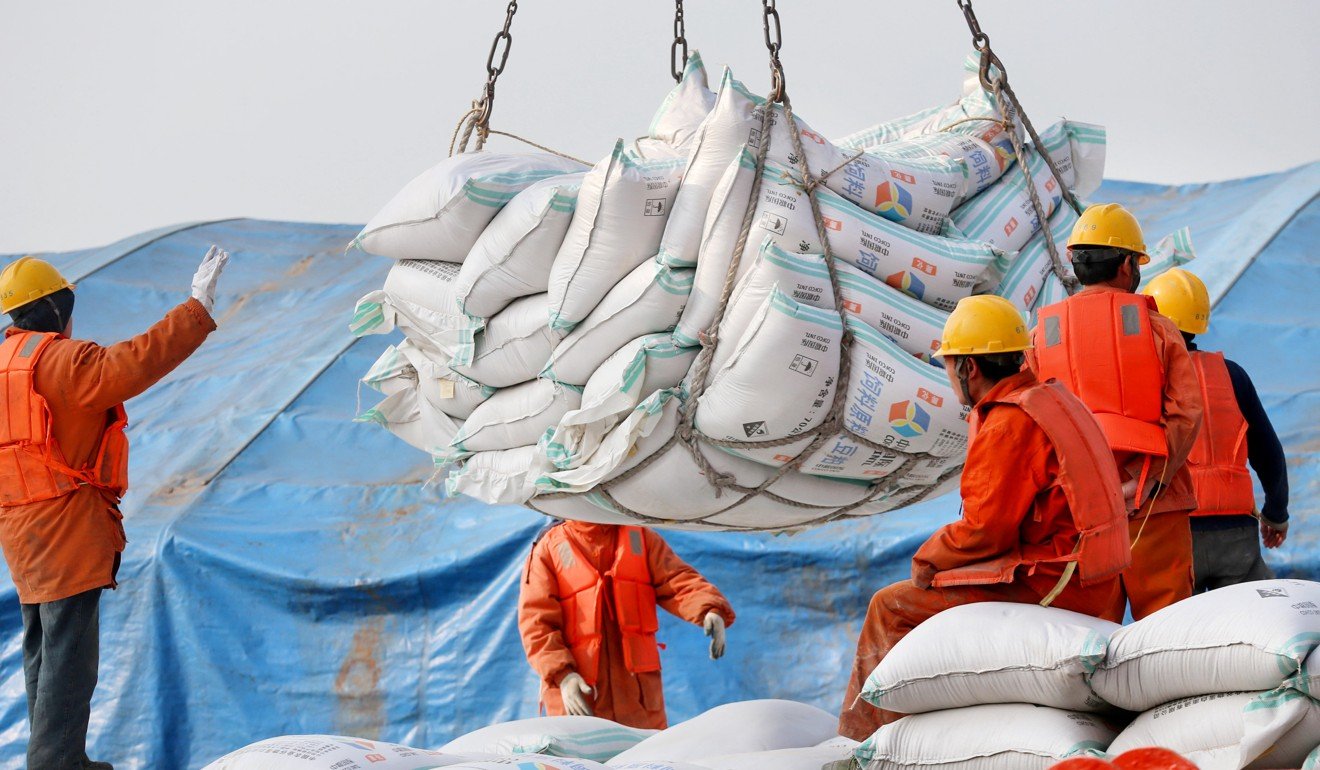
Soybean imports by China are forecast to decline for the first time in 15 years to 88 million tonnes this season. Photo: Reuters
The USDA’s Foreign Agriculture Service still expects imports to grow next season, albeit at a slower pace. They would remain below levels reached in 2017-18.
China is buying enough soybeans “that they don’t need to try to influence the trade talks”, said Suderman. “That is masking the drop in consumption right now, but that means they will have more soybeans in storage that they can use down the road as well, so eventually we will see that full drop in demand.”
Pork group scraps big trade event over African swine fever fears
It’s not all bad news for the soybean market. In the medium term, China will need to import more pork and other meats. As a result, American pork exports will probably jump 20 per cent this year, while European Union shipments could climb 10 to 15 per cent, Informa estimates.
All of that will require expansion of herds, boosting demand for soy meal and increasing crush margins for the likes of Archer-Daniels-Midland and Bunge.
Soybean-based feed for pigs was already becoming pricier before the swine virus outbreak, because of the trade war. Photo: AFP
China’s appetite for pork is already starting to pick up. The nation bought a record 77,700 tonnes of US supply in the week ended April 4, even as 25 per cent tariffs on American product remained in place, according to USDA data. The purchase sent Chicago futures up by the daily maximum allowed by the exchange.
The spread of the virus combined with China’s voracious appetite for pork means June hog futures are already up 21 per cent this year, the best performing agricultural benchmark in the Bloomberg Commodity Index.
China to expand soybean crop, subsidies to cut reliance on US imports
Pork prices are expected to rise by more than 20 per cent in the US this year and 15 per cent in western Europe, according to Informa forecasts.
“People are continuing to want to eat pork,” USSEC’s Sutter said in an interview after returning from a trip to China.
“They might in the short run be eating other meats because the price of pork has gone up. But people did not think when we asked them the question that there would be a long-term loss in demand for pork in China. People did not think that was the case.”


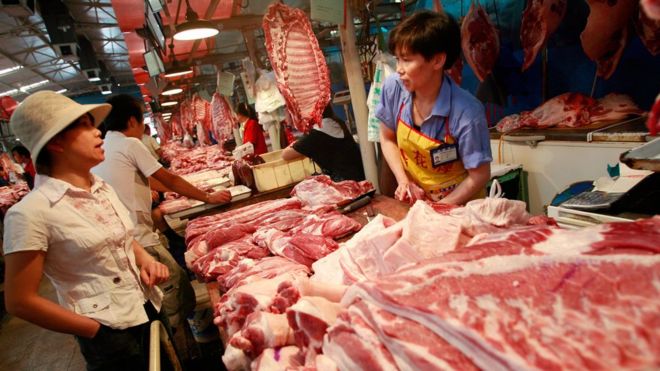 Image copyright GETTY IMAGES



 CHINDIA ALERT: You'll be living in their world, very soon