Archive for ‘relations’

18/04/2020

Ukraine court rejects Chinese appeal in aerospace deal opposed by United States

  • China’s Skyrizon Aircraft Holdings bought a majority stake in Motor Sich, but the shares were frozen in 2017 pending an investigation by Ukraine’s security service
  • Washington and Beijing have competed for influence in Ukraine since its relations with Moscow soured when Russia annexed the Crimea peninsula in 2014
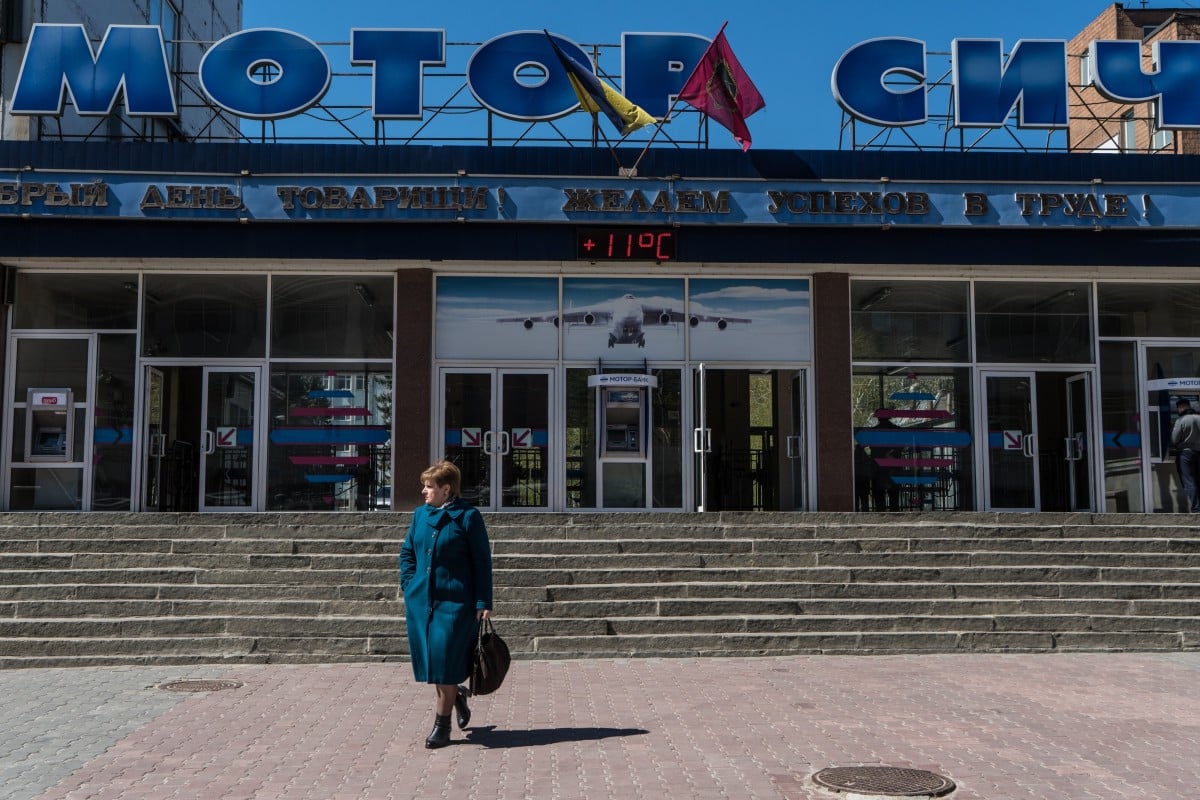
Chnia’s Skyrizon says it will appeal a Kiev court’s decision to block its purchase of Ukrainian aircraft engine maker Motor Sich. Photo: Getty Images

A court in Kiev has rejected an appeal by Chinese investors to unfreeze the shares of a Ukrainian aircraft engine maker, a setback for the Chinese company that sought to buy the Ukrainian firm in a deal opposed by the United States.

China’s Skyrizon Aircraft Holdings bought a majority stake in Motor Sich, but the shares were frozen in 2017 pending an investigation by Ukraine’s security service (SBU). Washington wants the deal scrapped.

The US and China have competed for influence in Ukraine since its relations with Moscow soured when Russia annexed the Crimea peninsula in 2014.

In its ruling, the court kept the shares frozen, citing the SBU investigation into whether selling Motor Sich sabotages national security by allowing sensitive technology into foreign hands. The ruling was dated March 13, shared with the parties this week.

Skyrizon plans further appeals, said a lawyer involved in the case, speaking anonymously due to the political sensitivity of the case. Zelensky’s office, the US embassy and the Chinese embassy did not respond to requests for comment. Motor Sich and the SBU declined to comment.

Motor Sich severed ties with Russia after the annexation of Crimea. Photo: Wikipedia
Motor Sich severed ties with Russia, its biggest client, after the annexation of Crimea. The wrangle over its future has held up efforts to find new markets, and supporters of a quick resolution say it is now operating at less than half capacity.

“Motor Sich has become a hostage to the geopolitical situation,” former prime minister Anatoliy Kinakh, chairman of an industrial union which has called for the government to resolve the dispute quickly, said.

The state’s anti-monopoly committee has launched its own investigation and says it is waiting to receive more documents before deciding whether to sanction the sale.

President Volodymyr Zelensky’s administration has had to balance strengthening ties to Beijing with keeping the United States, its biggest military aid donor, onside. In recent weeks, Beijing and Washington have both offered aid to Ukraine to fight the coronavirus.

At the moment it is a very difficult task when we have the biggest powers in the world and their interests are in conflict in Ukraine,” Oleksandr Danylyuk, a former top security official under Zelensky, said.

Source: SCMP
19/11/2019

Senior political advisor urges efforts for national reunification

BEIJING, Nov. 18 (Xinhua) — A senior political advisor Monday urged more efforts to be made for the peaceful reunification of the motherland and the great rejuvenation of the Chinese nation.

Su Hui, vice-chairperson of the National Committee of the Chinese People’s Political Consultative Conference, made the remarks at a symposium held by study and research committee of the China Council for the Promotion of Peaceful National Reunification (CCPPNR).

Su, also chairperson of the Taiwan Democratic Self-Government League Central Committee and deputy head of the CCPPNR, called for efforts to promote the peaceful development of relations across the Taiwan Strait.

Su also urged the research committee to guide more people, especially those in Taiwan, to further understand the historical trend of cross-Strait relations and the central authorities’ policies toward Taiwan.

The committee was also urged to strengthen communication with Taiwan experts and scholars to seek and expand consensus and explore ways and mechanism for advancing the peaceful development of cross-Strait relations and realizing the peaceful reunification of the motherland.

Source: Xinhua

22/05/2019

China, Kenya relations have developed with deep roots: Chinese envoy

NAIROBI, May 21 (Xinhua) — China and Kenya have deepened mutual political trust and expanded cooperation over the years, pushing their relations to the level of a comprehensive strategic cooperative partnership, Chinese Ambassador to Kenya Wu Peng said on Tuesday.

Wu said increased cooperation has seen China’s non-financial direct investment in Kenya record double-fold increase to about 520 million U.S. dollars in 2018.

“Now we have over 400 Chinese companies in Kenya, creating thousands of jobs for local community,” Wu said.

“Both sides enjoy frequent exchanges in education, science and culture. The China-Africa Joint Research Center and China-Kenya Joint Laboratory for Crop Molecular Biology have been operating smoothly in Kenya,” Wu said during the sixth press club meeting in Nairobi.

Since 2015, he said, China has provided over 67,000 training opportunities for Kenyans.

“Currently, over 2,400 Kenyan students are studying in China. In 2018, over 81,000 Chinese tourists traveled to Kenya for leisure and adventure,” he said.

Wu observed that China’s funding to Kenya and other developing countries is aimed at development.

“China always attaches high importance to debt sustainability. Before making decisions, Chinese companies and banks, even the third party, go through rigorous feasibility studies, evaluation, and review of a country’s credit rating,”said Wu, who used the occasion to discuss some hot topics about the China-Kenya partnership.

Huge infrastructural projects like the standard gauge railway (SGR) may take long to yield returns, but they are solid and valid assets, whose value will grow in time, he stressed.

The SGR, according to Wu, is a flagship project that showcases the fast speed and high quality of China-Kenya cooperation.

The building of Mombasa-Nairobi SGR has driven the Kenya’s economic growth by 1.5 percent and created 46,000 jobs for local residents.

He said the train shortened the Nairobi-Mombasa trip from over 10 hours to five hours. Since its launch in May 2017, with an average booking rate of 99 percent, over 2.77 million passengers have traveled by the SGR, and around 4.2 million tonnes of goods have been transported, said Wu.

In the first full year of operation, SGR earned nearly 10.33 billion Kenyan shillings (about 103 million dollars, which is very close to the operation cost of 120 million dollars a year, he said, adding that for an infrastructural project of SGR’s magnitude, it is not easy to achieve near break-even in one year.

China and Kenya are currently discussing the construction of the Mombasa Special Economic Zone and the Naivasha Industrial Park, said the ambassador.

“With the development of the industrial chain from railway transportation, port economy to industrial parks, we have every reason to believe that SGR will benefit Kenya’s efforts towards industrialization, and strongly boost Kenya’s GDP growth significantly.”

He noted that China does not pursue a policy of trade surplus with Kenya, adding it is paying great attention to Kenya’s desire to expand exports.

“We understand how important agricultural exports are to Kenya. Consequently, we have been working hard to expand China’s imports for Kenya’s agricultural produce,” said Wu.

Last year, China and Kenya signed an agreement on export of stevia to China. An agreement on the export of frozen avocados was also signed, which makes Kenya the first African country to export avocados to China, he added.

He said the two countries are working to seal the deal on export of fresh avocados, as well as working on other horticultural products.

Christopher Chika, head of Asia and Australasia affairs at Kenya’s Ministry of Foreign Affairs, said Kenya will continue to engage with China as long as the relationship is beneficial.

“Our relationship is based on mutual respect and equality. China plays a great role in stabilizing Africa and we shall work with the Chinese nationally, regionally and internationally,” Chika said.

Source: Xinhua

19/05/2019

Brazil’s vice-president Hamilton Mourao heads to China to mend relations

  • General will spend five days meeting top Chinese leaders including President Xi Jinping
  • Mission seeks to patch up wounds caused by Brazilian President Jair Bolsonaro’s anti-China rhetoric
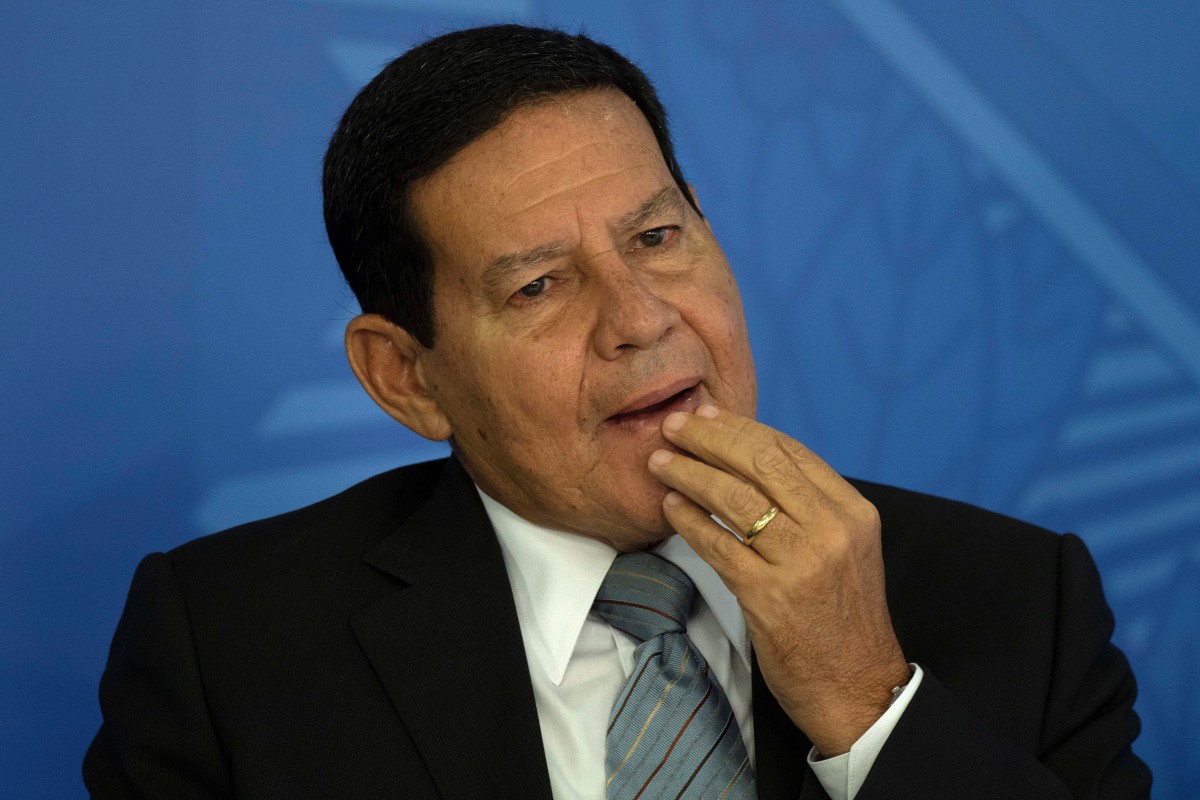
Hamilton Mourao favours maximising engagement with China. Photo: EPA-EFE
Brazil’s vice-president is expected to land in Beijing on Sunday on a mission to patch up wounds caused by President Jair Bolsonaro’s lacerating anti-China rhetoric.
General Hamilton Mourao will spend five days in China rubbing shoulders with some of the country’s most powerful leaders, culminating in an audience with President Xi Jinping, in an effort to shore up the relationship between the two emerging market giants. Bolsonaro himself is due to visit later this year, while Xi is due to visit Brasilia in November for the BRICS summit.
China – Brazil’s most important trading partner for the past decade – remains a sensitive subject in the Bolsonaro administration. While Mourao and the other business-oriented members of government favour maximising engagement with the Asian giant, Bolsonaro and his more radical appointees view China with a high degree of suspicion, as a predatory economy that wishes not merely to invest in Brazil, but to own it.

“The Chinese can buy in Brazil, but they can’t buy Brazil,” the president said at a breakfast with journalists last month.

Brazilian President Jair Bolsonaro said last month that the “Chinese can buy in Brazil, but they can’t buy Brazil”. Photo: AFP

Still, in comparison with his pre-election criticism of China as “heartless”, Bolsonaro in office has dialled down his anti-Beijing sentiment. Mourao’s visit is part of an effort to reset that relationship.

“The Chinese understand that Mourao plays a central role in toning down Bolsonaro’s rhetoric,” said Oliver Stuenkel, a specialist on BRICS – an association of five major emerging economies, namely Brazil, Russia, India, China and South Africa – at the FGV business school. “They know that the Mourao-China relationship will be fundamental.”

Should China be worried about Bolsonaro’s bromance with Trump?

Speaking to reporters recently, Mourao recognised the need to balance the Bolsonaro administration’s desire to pivot towards the United States with practical considerations of China’s economic significance.

“The US are the champions of democracy and freedom and our government has left it very clear what this represents,” the vice-president said. “But on the other side we have to be sufficiently pragmatic to understand the importance of China for Brazil’s economic development.”

Chinese investment in Brazil reached almost US$134 billion between 2003 and 2018, Brazilian government figures showed.

Chinese President Xi Jinping is expected to meet the visiting Brazilain vice-president. Photo: AP

While the trade war between the US and China may offer Brazil some short-term gains, particularly for its agricultural sector, the downsides outweigh the benefits, according to Renata Amaral, a foreign trade analyst at Barral MJorge consultancy.

“In truth this war is no good for anyone,” she said.

Mourao said that Brazil was monitoring the situation “critically and cautiously”.

Why US-China trade war could be good for Brazil
From the Chinese perspective, Beijing is looking for Brazil’s formal support for its “Belt and Road Initiative” – Chinese President Xi Jinping’s signature global infrastructure megaproject. Asked whether Brazil might sign up to the programme, Mourao said that any agreement would have to be approved by Bolsonaro in the second half of the year.
After trips to the Great Wall of China and the Shanghai Stock Exchange, Mourao will meet Xi, in a clear sign of Brazil’s importance to China. “The visit of vice-president Mourao will reinforce mutual political confidence, deepen our friendly cooperation and add new dimensions to our strategic partnership,” according to Chinese foreign ministry spokesman Geng Shuang.
With Beijing both uncertain about the direction of Brazilian foreign policy under Bolsonaro and eager to strike deals on infrastructure and food security, it makes sense for the Chinese to roll out the red-carpet for Mourao, according to Hussein Kalout, a specialist in foreign policy and a researcher at Harvard.
China trade vs economic growth: the dilemma for Brazil’s president
While the federal government remains ambivalent about its relationship with China, some of Brazil’s powerful state governors are seeking to develop their own relationship with the Asian country. One of them is Carlos Massa Ratinho Junior, the governor of the southern state of Parana, who travelled to China recently to discuss agriculture and railroad projects.
“We’re open to talk with any country that wants to and understands that the state of Parana is the best to place to invest in Brazil,” the governor said in an interview, adding that his actions did not conflict with the federal government’s stance towards Beijing.

But in a sign of the domestic pressure Bolsonaro is under not to abandon entirely his sceptical attitude to China, Luiz Philippe de Orleans e Braganca, the vice-president of the lower house’s foreign affairs committee and a lawmaker from Bolsonaro’s own party, said the government should set limits to the partnership.

“It’s good to talk to China, but it depends what is being discussed,” he said. “For example, the 5G network set up by China is dangerous because it will give the Chinese more information about Brazilian citizens than the Brazilian government.”

Source: SCMP

20/01/2019

China-U.S. relations contribute to world peace, prosperity

SAN FRANCISCO, Jan. 18 (Xinhua) — China-U.S. relations have achieved remarkable development over the past 40 years, delivering huge benefits to the two peoples and making significant contributions to world peace and prosperity, a senior Chinese diplomat said here Friday.

Addressing an event marking the 40th anniversary of the establishment of diplomatic relations between China and the United States, Chinese Consul General Wang Donghua said the older generation of Chinese and U.S. leaders broke the ice of isolation between the two countries “with extraordinary strategic vision and political wisdom” to establish bilateral diplomatic ties.

“The establishment of China-U.S. diplomatic relations has had a huge and profound impact on the development of our bilateral relations and the maintenance of world peace,” Wang said.

San Francisco Mayor London Breed said at the event that the 40 years of China-U.S. relations have been “a time of growing exchanges and understanding.”

“We have realized the great possibilities of cooperation between our two nations, and this anniversary is a chance to remember that we have an enormous stake in each other’s success,” she said.

“In an interconnected world, countries would be more prosperous when we work together as one,” said Breed.

Heidi Kuhn, founder and CEO of Roots of Peace, a California-based humanitarian NGO dedicated to the removal of landmines and rebuilding of war-torn regions, said her family has maintained very close relations with China and the Chinese people for 150 years.

“I look forward to the next 150 years ahead. I’m so proud of the formal diplomatic relations between the United States and China,” Kuhn said.

Johannes Hoech, a San Francisco-based businessman who travels to China two to three times a year, said he has very close relations with China and made many Chinese friends.

“The prospect for the two countries is very positive. There’s a lot of mutual interest. There is a lot of curiosity about each other’s cultures and each other’s backgrounds,” he said.

“Since both countries’ interests are much larger than their differences, I am sure they will find a way to work out a solution to those disputes,” Hoech said.

Source: Xinhua

17/01/2019

Russia, China enjoy confident progressive development of relations in all areas: Lavrov

MOSCOW, Jan. 16 (Xinhua) — Russia and China enjoy a “very confident progressive development of relations in all areas,” Russian Foreign Minister Sergei Lavrov said Wednesday.

The two countries reached a record trade turnover in 2018 but this is not a limit, as Russia and China have ambitious plans discussed by President Vladimir Putin and President Xi Jinping at various meetings, Lavrov said at his annual press conference.

According to China’s customs authority, trade turnover between China and Russia surged by 27.1 percent to a record high of 107.06 billion U.S. dollars last year.

The two governments have identified about 70 projects worth a total of more than 100 billion dollars in various fields, including nuclear energy, agriculture, transport and space cooperation, Lavrov said.

He specially mentioned the coordination of the Russian and Chinese global navigation systems GLONASS and BeiDou.

“So our prospects in trade, economic and investment areas are very, very significant,” the top Russian diplomat said.

Lavrov also praised the close cooperation and coordination between Moscow and Beijing in international affairs, including within BRICS (Brazil, Russia, India, China and South Africa), the Shanghai Cooperation Organization and the United Nations, as well as harmonizing the Eurasian Economic Union with the Belt and Road Initiative.

Russia and China have common approaches to resolving conflicts solely by political methods on the basis of international law and dialogue, including in Syria, elsewhere in the Middle East and on the Korean Peninsula, Lavrov said.

“The friendship between Russia and China is not aimed against anyone,” Lavrov stressed.

Russia and China are friends because they are neighbors, have many common interests, are strategic partners in international affairs and equally see the need to make the world more stable, more secure and more democratic, he added.

Source: Xinhua

02/01/2019

Xi highlights breakthroughs in cross-Strait relations over 70 years

BEIJING, Jan. 2 (Xinhua) — President Xi Jinping highlighted the breakthrough progress made in the cross-Strait relations since 1949, at a gathering on Wednesday to commemorate the 40th anniversary of Chinese mainland’s Message to Compatriots in Taiwan.

Over the 70 years, estrangement between the mainland and Taiwan was ended in line with the common will of compatriots across the Strait, and Taiwan compatriots have made great contributions to the reform and opening-up in the mainland, said Xi, who is also general secretary of the Communist Party of China (CPC) Central Committee and chairman of the Central Military Commission.

During the seven decades, the mainland and Taiwan reached the 1992 Consensus based on the one-China principle, and the political exchanges across the Strait have reached new heights, Xi said.

Over the 70 years, the basic principles of “peaceful reunification” and “one country, two systems” were established, and the basic policy of upholding “one country, two systems” and advancing the national reunification was laid out, according to Xi.

He continued that more and more countries and peoples have understood and supported the cause of the reunification of China over the 70 years.

Furthermore, over the 70 years, a series of major victories in the battles against “Taiwan independence” and separatists have been achieved, Xi said.

Law of Unintended Consequences

continuously updated blog about China & India

ChiaHou's Book Reviews

continuously updated blog about China & India

What's wrong with the world; and its economy

continuously updated blog about China & India