Chindia Alert: You’ll be Living in their World Very Soon
aims to alert you to the threats and opportunities that China and India present. China and India require serious attention; case of ‘hidden dragon and crouching tiger’.
Without this attention, governments, businesses and, indeed, individuals may find themselves at a great disadvantage sooner rather than later.
The POSTs (front webpages) are mainly 'cuttings' from reliable sources, updated continuously.
The PAGEs (see Tabs, above) attempt to make the information more meaningful by putting some structure to the information we have researched and assembled since 2006.
BEIJING, Feb. 22 (Xinhua) — Supply of daily necessities has been stable in China, including the epidemic-hit Hubei Province, despite the ongoing novel coronavirus outbreak that heavily impacted daily life and factory activities, an official with the Ministry of Commerce said Saturday.
With more Chinese returning to work, more than 95 percent of the chain supermarkets and about 90 percent of the large fast-food chains have opened to customers, Wang Bin with the commerce ministry told a press conference.
Meanwhile, around 80 percent of the chain convenience stores and 80 percent of the large wholesale farm produce markets nationwide have resumed operation, along with many farmers’ markets and grocery stores.
In China’s 50 key wholesale farm produce markets, vegetable transaction volume on Friday jumped 26.4 percent from the beginning of the month, he said.
In contrast, other retailers are getting back to service at a slower pace. For instance, only 50 percent of the department stores and shopping malls have so far opened for business, according to Wang.
For Hubei, especially the provincial capital Wuhan where the epidemic first broke out with the largest number of infections, Wang said while the epidemic did cause some difficulties, the local market is generally stable with stocks of grain, meat and vegetables on the rise.
Local authorities in Wuhan have ordered online purchase, group buying and direct delivery services to provide daily necessities to residents kept indoors by the epidemic.
Up to 80 percent of communities in the city’s central districts are covered by group buying services from shops and supermarkets, he said.
To ensure food price stability in the epidemic-hit Hubei, Wang said the commerce ministry has ordered 150 key food producers, including state-owned food group COFCO and major pork producer Shuanghui, to provide over 600,000 tonnes of food to the region.
For the next stage, Wang said the authorities will work on product circulation, farm product sales and further resumption of wholesale markets to both help farmers sell their produce while ensuring daily supplies for residents amid the epidemic.
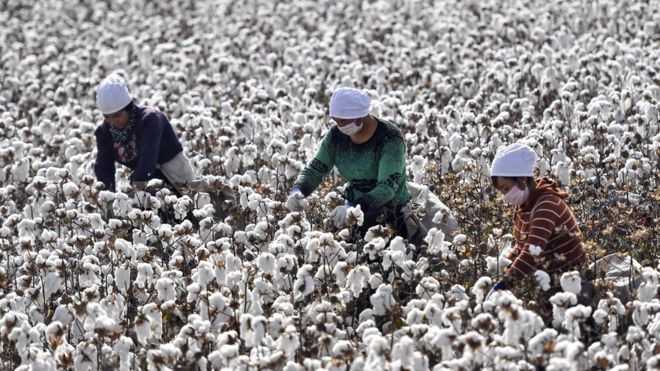
Global retailers are facing scrutiny over cotton supplies sourced from Xinjiang, a Chinese region plagued by allegations of human rights abuses.
China is one of the world’s top cotton producers and most of its crop is grown in Xinjiang.
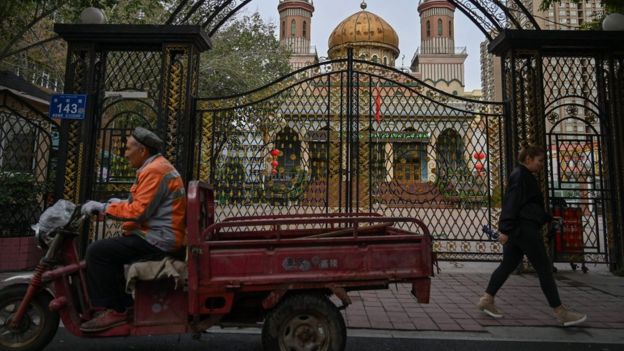
Rights groups say Xinjiang’s Uighur minority are being persecuted and recruited for forced labour.
Many brands are thought to indirectly source cotton products from the Xinjiang region in China’s far west.
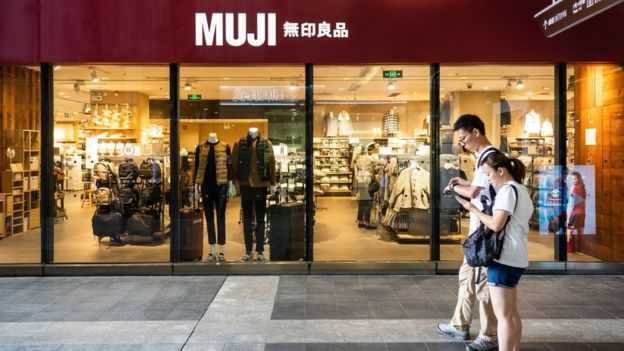
Japanese retailers Muji and Uniqlo attracted attention recently after a report highlighted the brands used the Xinjiang-origin of their cotton as a selling point in advertisements.
“You can’t be sure that you don’t have coerced labour in your supply chain if you do cotton business in China,” said Nathan Ruser, researcher at the Australian Strategic Policy Institute.
“Xinjiang labour and what is almost certainly coerced labour is very deeply entrenched into the supply chain that exists in Xinjiang.”
What is happening in Xinjiang?
UN experts and human rights groups say China is holding more than a million Uighurs and other ethnic minorities in vast detention camps.
Rights groups also say people in camps are made to learn Mandarin Chinese, swear loyalty to President Xi Jinping, and criticise or renounce their faith.
China says those people are attending “vocational training centres” which are giving them jobs and helping them integrate into Chinese society, in the name of preventing terrorism.
What is produced in Xinjiang?
The Xinjiang region is a key hub of Chinese cotton production.
Last year, 84% of Chinese cotton came from Xinjiang, the report said.
That has raised concerns over whether forced labour has been used in the production of cotton from the region.
Image copyright GETTY IMAGESImage caption The Uighurs are mostly Muslims, and number about 11 million in China’s Xinjiang region
Nury Turkel, chairman of the Uighur Human Rights Project in Washington, said the Uighurs were being “detained and tormented” and “swept into a vast system of forced labor” in Xinjiang.
In testimony to US congress, he said it was becoming “increasingly hard to ignore the fact” that the goods manufactured in the region have “a high likelihood” of being produced with forced labour.
Which brands use Xinjiang cotton?
Amy Lehr, director of CSIS Human Rights Initiative, said in many cases Western companies aren’t buying directly from factories in Xinjiang.
“Rather, the products may go through several stages of transformation after leaving Xinjiang before they are sent to large Western brands,” she said.
Some, like Muji, are very open about sourcing material from Xinjiang.
“Uniqlo does not have any production partners located in the Xinjiang region. Moreover, Uniqlo production partners must commit to our strict company code of conduct.
“To the best of our knowledge, this means our cotton comes only from ethical sources,” the spokesperson told the BBC.
Many of the companies looked into the allegations, including those without clear links to the Huafu mill.
In a statement to the BBC, Adidas said: “While we do not have a contractual relationship with Huafu Fashion Co., or any direct leverage with this business entity or its subsidiary, we are currently investigating these claims.”
“We advised our material suppliers to place no orders with Huafu until we have completed those investigations,” the Adidas spokesperson said.
Esprit, which also does not source cotton directly from Xinjiang, said it had made several inquiries earlier this year.
“We concluded that a very small amount of cotton from a Huafu factory in Xinjiang was used in a limited number of Esprit garments,” the firm said in a statement.
The company has instructed all suppliers to not source Huafu yarn from Aksu, the statement said.
H&M said it does not have “a direct or indirect business relationship” with any garment manufacturer in the Xinjiang region.
“We have an indirect business relationship with Huafu’s spinning unit in Shanyu, which is not located in the Xinjiang region, and according to our data, the vast majority of the yarn used for our garment manufacturing comes from this spinning unit,” a spokesperson for H&M said.
“Since we have an indirect business relationship with the yarn supplier Huafu, we also asked for access to their spinning facilities in Aksu. Our investigations showed no evidence of forced labor.”
NEW DELHI (Reuters) – India’s new curbs on e-commerce companies may not be enough to win over small store owners and traders in next year’s general election, with the key voting bloc still seething over what it sees as broken promises by Prime Minister Narendra Modi.
From Feb. 1, e-commerce firms such as Amazon.com and Walmart-owned Flipkart Group will not be able to sell products from companies in which they have an equity interest or form exclusive agreements with sellers.
Intended to prevent predatory pricing and deep discounting, the curbs follow intense lobbying by India’s many millions of small shopkeepers and the middlemen who serve them, particularly after Walmart this year spent $16 billion to acquire Flipkart.
The sector, which includes an estimated 25 million small store owners, largely supported Modi in the 2014 general election. While seeing the new rules as a step in the right direction, many small businesses feel too much damage has been done after Modi went back on promises that he would not allow the entry of foreign companies into the domestic retail sector.
“We clapped and voted for Modi believing in his promises. But what have we got is just a slap on our face,” said Pankaj Revri, president of a furniture market association in central Delhi.
The curbs, announced on Wednesday, surprised foreign e-commerce firms as little had been done by the government despite over three years of lobbying by domestic retailers.
Modi’s Hindu nationalist Bharatiya Janata Party is widely viewed as panicking after losing five state elections this month. The government, which must hold a general election by May, is also expected to come up with new support programs for farmers as their opposition grows due to low crop prices.
An opinion poll by TV channel ABP News this week predicted Modi’s party could fall short of a majority if the opposition forms an effective alliance in the national election.
EARNINGS HALVED
B.C. Bhartia, president of the Confederation of All India Traders, said some small businesses had seen earnings more than halve in the last few years as they struggle to compete with low prices offered by the American-controlled behemoths.
“The last minute policy change is too little and too late,” he said.
In particular, retailers and traders believe Modi turned a blind eye to what they say was the use of policy loopholes by major e-commerce companies to offer heavy discounts that allowed them to seize market share for goods such as electronic items.
Asked about those accusations, Amazon India said in a statement that it had always operated “in compliance with the laws of the land” and that had more than 400,000 small and medium businesses on its marketplace.
Flipkart declined to comment on the specific allegations.
Small Indian businesses have also been bruised by other Modi policies, including a sudden ban on the use of high-value currency notes in late 2016 and the launch of a national sales tax in 2017, both of which raised compliance costs.
Bhartia said if the government was serious about the concerns of small traders, it should prosecute violators of trade rules and appoint an independent regulator to curb malpractice.
FILE PHOTO: The logo of Flipkart is seen on the company’s office in Bengaluru, India, May 9, 2018. REUTERS/Abhishek N. Chinnappa
A government official told reporters on Thursday the administration could consider demands for a regulator in its new e-commerce policy, expected to be released in the coming months.
A September report by PricewaterhouseCoopers estimated online commerce in India would grow 25 percent a year for next five years, hitting $100 billion a year by 2022.
The new curbs could harm those growth prospects and discourage some foreign investors, said investment consultants.
“Sentiment is definitely hurt,” said Harminder Sahni of retail consultant Wazir Advisors, adding that the policy suggested online retail business should only be done by Indians.
Amazon said in its statement it was evaluating the new guidelines to engage as necessary with the government so it could remain true to its vision of “transforming how India buys and sells and generating significant direct and indirect employment.”
Flipkart said the advent of e-commerce had created hundreds of thousands of jobs and “the industry was set to be a major growth driver for the Indian economy and create millions of jobs in the future.”
Exclusive: Foxconn to make iPhones in India-source
“It is important that a broad market-driven framework through the right consultative process be put in place in order to drive the industry forward,” it added.
The government boasts of attracting nearly $223 billion foreign investment in the last four years, compared with about $152 billion in the previous four years.



 CHINDIA ALERT: You'll be living in their world, very soon