09/03/2020
- Shen Cong, taken from the family home in Guangzhou 15 years ago, was found in a nearby city last week
- He was one of nine children abducted by a gang, but police say there is no evidence of a woman alleged to be the go-between
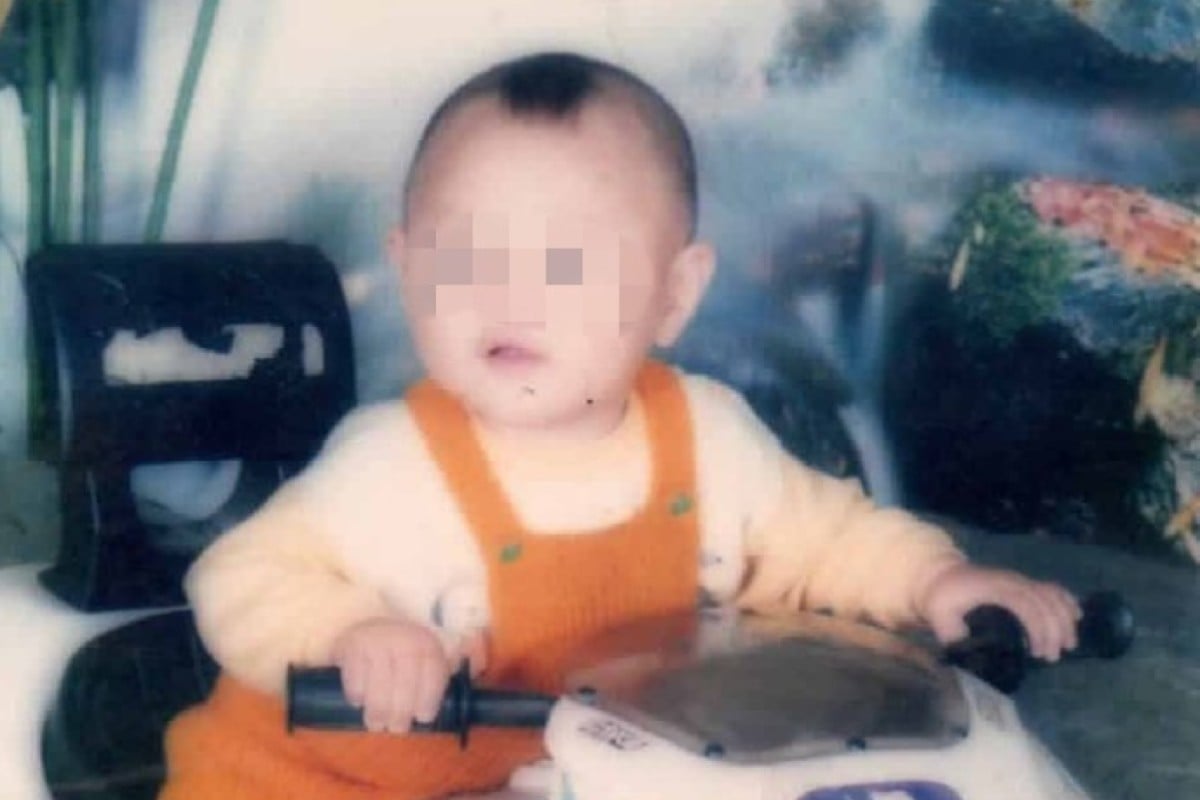
Shen Cong’s parents had been searching for him since he was abducted in 2005. Photo: Handout
A teenage boy was reunited with his parents in the southern Chinese city of Guangzhou on Saturday after being kidnapped from their home as an infant, ending a 15-year search by his family.
The boy was taken in 2005 – one of nine children abducted by a gang in Guangdong province around that time. In recent years the case has drawn attention on Chinese social media, particularly the alleged involvement of a shadowy go-between known as “Aunt Mei”, but Guangzhou police stressed there was no evidence such a person existed.
Police said 16-year-old Shen Cong had been found on Wednesday in Meizhou, a city about 400km (250 miles) away. DNA testing confirmed he was the missing child and police arranged the reunion with his parents, Shen Junliang and his wife, who was identified as Yu in the statement.
Police did not say what had led to the discovery of the boy, but they said his foster parents had been taken in for questioning.
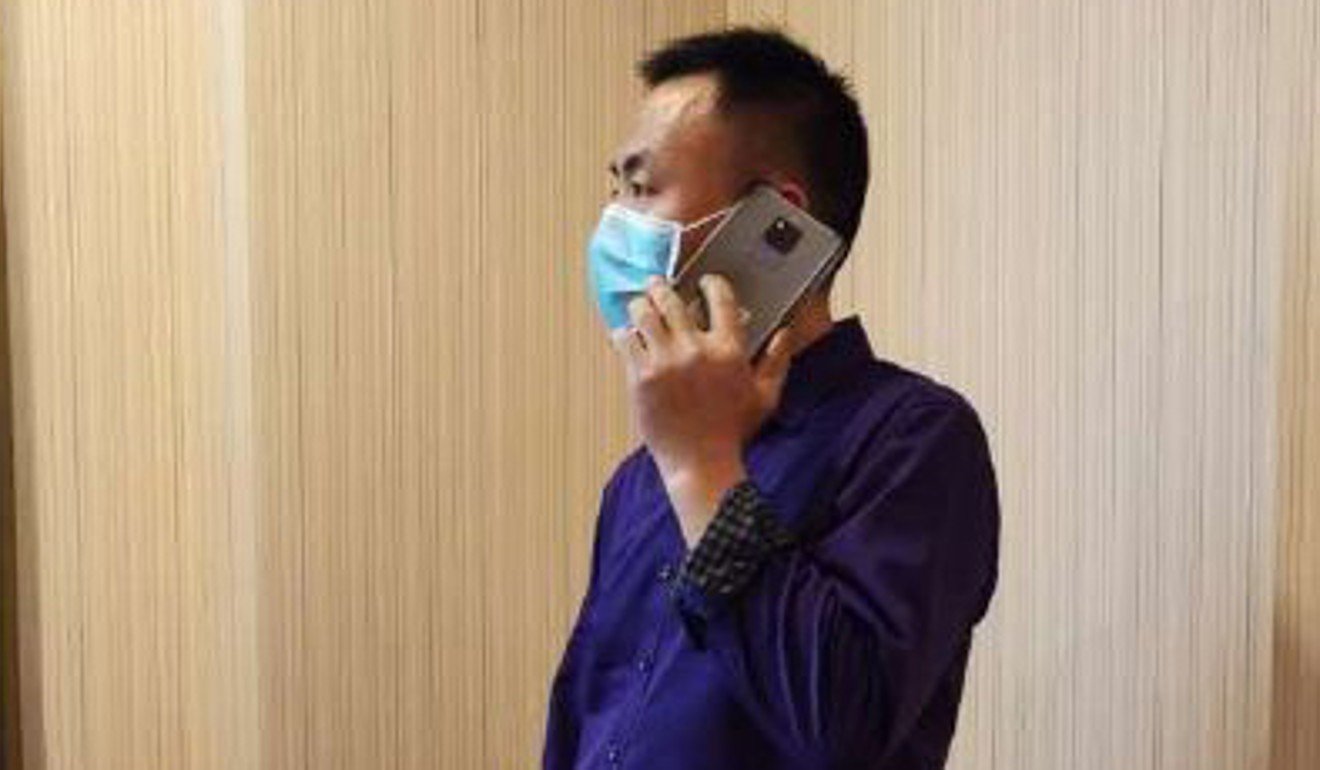
His biological father Shen Junliang on Sunday said they were overjoyed to have their son back home, adding that he was healthy and a tall boy who loved sports.
“Before I met my son I’d been imagining what it would be like to talk to him. I didn’t think he would be this mature – he seems more mature than his peers and he has good manners,” the father wrote on Weibo, China’s Twitter. “We’ve spent the entire time together, from Saturday night until now. We’re getting along and he’s happy too.”
Shen Junliang said they were overjoyed to have their son back home at last. Photo: Handout
The parents are now getting to know their son, having not seen him since he was abducted from their rented flat in Zengcheng district on January 4, 2005.
That day, the child had been at home with his mother while his father was at work. Shen Junliang has alleged that two of their neighbours led two strangers into the flat at about 10.40am, and the two strangers drugged and tied up Yu before kidnapping the one-year-old boy.
His mum revealed she was abandoned as a kid. A film was born
Shen Junliang had been searching for his boy ever since. He gave up his job and has travelled all over Guangdong province looking for him. He had more than 1 million posters printed with photos and a description of his son, offering a reward of 100,000 yuan (US$14,400) for any information on the case.
One of them read: “Shen Cong has birthmarks on the toe of his left foot, his right buttock and his right thigh. Anyone who has any leads … please contact me or Guangzhou police.”
Kidnapped: the Chinese parents desperately searching for missing children
He started posting about the case on Weibo in 2016, sharing every piece of news related to the kidnap and appealing for anyone with information to come forward.
In March that year, there was a development, with police arresting five suspects in the case.
Police said the lead suspect, Zhang Weiping, had confessed to selling Shen Cong to a couple in Heyuan, another city in Guangdong, for 13,000 yuan on January 6, 2005.
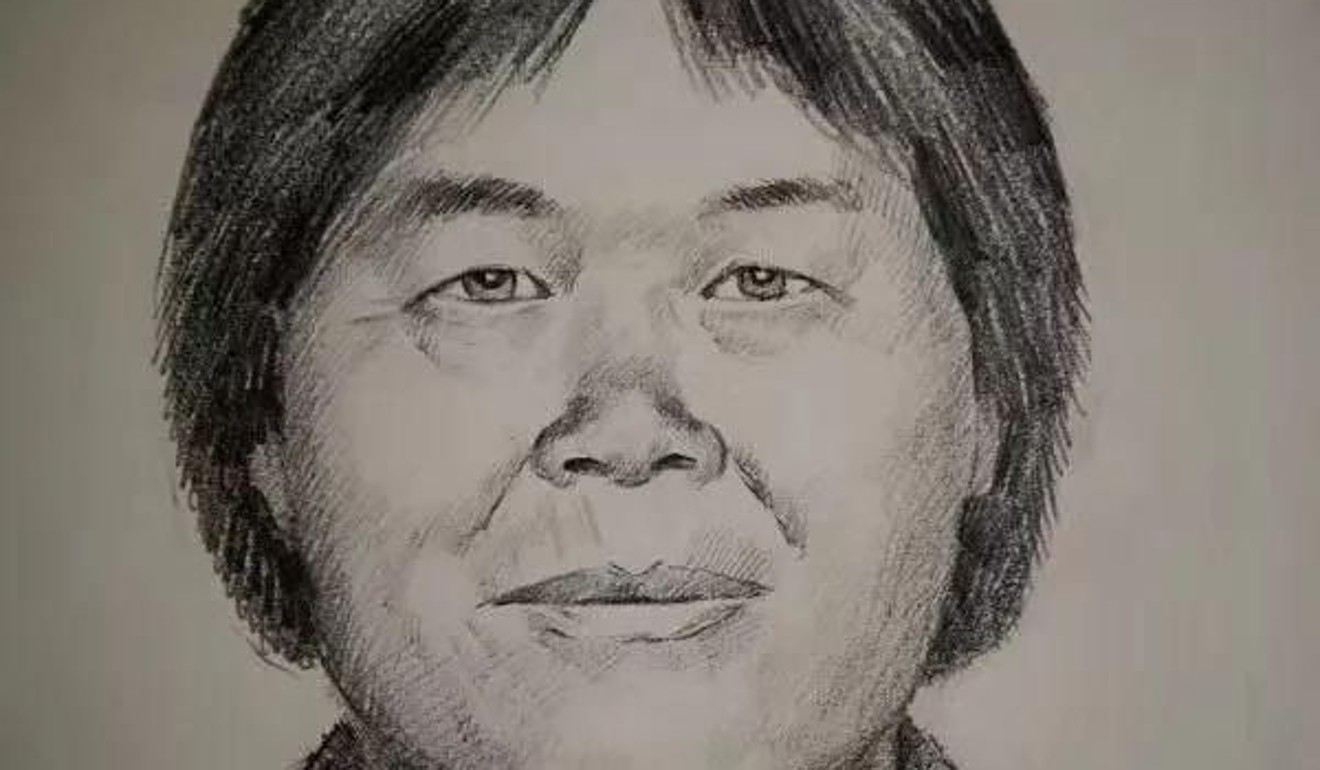
Zhang told police that an intermediary nicknamed Aunt Mei had been involved in that deal and the sale of eight other boys in the province from 2003 to 2005.
Zhang Weiping, who was sentenced to death for kidnapping children, alleged an intermediary known as Aunt Mei was involved in the case. Photo: Handout
Zhang and another gang member were sentenced to death for kidnapping children in 2018, two others were jailed for life, and a fifth person was jailed for 10 years.
Two of the other boys who had been abducted were found by police last year.
But Guangzhou police said they had not found any information leading them to the mysterious woman – apparently in her 60s and a Cantonese and Hakka speaker – Zhang alleged was the go-between.
“Police have checked all the details, all the people and places related to Zhang’s confession,” the statement said. “We’ve also received reports from people all over China since 2017 about Aunt Mei, but so far none of these tips have proved to be true.”
Source: SCMP
Posted in ‘Aunt Mei’, baby, Cantonese, case, Chinese, DNA testing, guangdong province, Guangzhou, Hakka speaker, kidnapped, parents, Police, reunited, son, teenage, Twitter, Uncategorized, Weibo, Zengcheng district |
Leave a Comment »
17/12/2019
- Centre could make Taiwan more self-sufficient in its defence capability
- Latest arms deal is further evidence of closer relations under presidencies of US’ Donald Trump and Taiwan’s Tsai Ing-wen
A Taiwanese F-16V takes off during a drill in May. Photo: EPA-EFE
has further bolstered its defence links with the United States with plans to build an F-16 fighter jet maintenance centre, as the Taipei government continues to resist Beijing’s objective of unification.
The self-ruled island’s Aerospace Industrial Development Corporation (AIDC) and US defence contractor Lockheed Martin signed a strategic partnership agreement on Tuesday that aimed to promote the establishment of an F-16 fighter jet maintenance centre in Taiwan, to be completed by 2023.
It is the latest of several significant agreements with the US during Donald Trump’s presidency. Trump approved a US$2.2 billion arms sale on July 8 that included 108 American-made M1A2T Abrams tanks and 250 Stinger missiles.
He was quicker to approve F-16 sales than his predecessors, agreeing in August to sell the island 66 F-16V jets, which will mean Taiwan owns the most F-16s in the Asia-Pacific region.
Trump also approved, in September last year, a US$330 million deal to provide spare parts and other logistics for several types of the island’s military aircraft – less than a year after the US agreed to sell US$1.4 billion of missiles, torpedoes and an early warning system to Taiwan.
Beijing views Taiwan as a breakaway province to be reunited with the mainland by force if necessary.
‘Fighter jets trump battle tanks’ in Taiwan’s US arms priorities
Collin Koh, a research fellow at the S. Rajaratnam School of International Studies with Nanyang Technological University in Singapore, said the planned maintenance centre underlined how Taiwan-US military ties had become stronger under the more enthusiastic US administration of Trump and the Taiwanese presidency of
.
“The [F-16 fighter jet maintenance] centre, by improving the availability and readiness of the F-16 fleet, allows Taiwan to sustain its combat aviation, not only for daily operation but also for training,” Koh said.
“This does represent a step up. Taiwan is no longer just an end-user operating the American hardware, but will also be empowered to service it. It is designed to help Taiwan achieve better defence self-sufficiency, one of the key pledges by the Tsai administration.”
Tang Shaocheng, a senior researcher in international relations at Taiwan’s National Cheng-chi University, said the increasingly close relations between Taipei and Washington made dealing with the island more tricky for Beijing.
Beijing ‘interferes daily’ in Taiwan’s election, says Tsai Ing-wen
“The Tsai administration cares about what the US thinks but not what Beijing thinks, paving the way for ever-closer ties,” Tang said. “That definitely leaves less room for Beijing to get Taipei into its orbit, by using various economic measures.”
Beijing has suspended exchanges with Taipei and staged a series of war games around Taiwan to intimidate the island since Tsai, of the independence-leaning Democratic Progressive Party, became president in 2016 and refused to accept its one-China policy.
Beijing has also tried to isolate Taiwan internationally by poaching its
diplomatic allies
since Tsai took office, has repeatedly warned Washington against seeking closer military ties with Taipei, and has protested against every arms deal the two have made.
The US acknowledges the Chinese claim that it has sovereignty over Taiwan, which split from the mainland in 1949 and is self-governing. However, the US regards the status of Taiwan as unsettled and supports the island with arms sales and other measures, such as by sending warships through the Taiwan Strait that separates the island from China.
Posted in Aerospace Industrial Development Corporation (AIDC), Beijing, breakaway province, build, centre, defiant, Democratic Progressive Party, Democratic Progressive Party (DPP), F-16 fighter jet, fighter jet, mainland, message, National Cheng-chi University, one-China policy, partnership, President Donald Trump, President Tsai Ing-wen, reunited, S. Rajaratnam School of International Studies, sending, Singapore, Singapore’s Nanyang Technological University, sovereignty, Taipei, Taiwan, Taiwan Strait, Uncategorized, US, warships, Washington |
Leave a Comment »
19/10/2019
- Vice-Premier Hu Chunhua will lead delegation at two-day summit that is expected to be attended by 400 officials and 200 businesspeople
- Observers say it is Beijing’s latest effort to regain momentum in the region and will be closely watched in the US
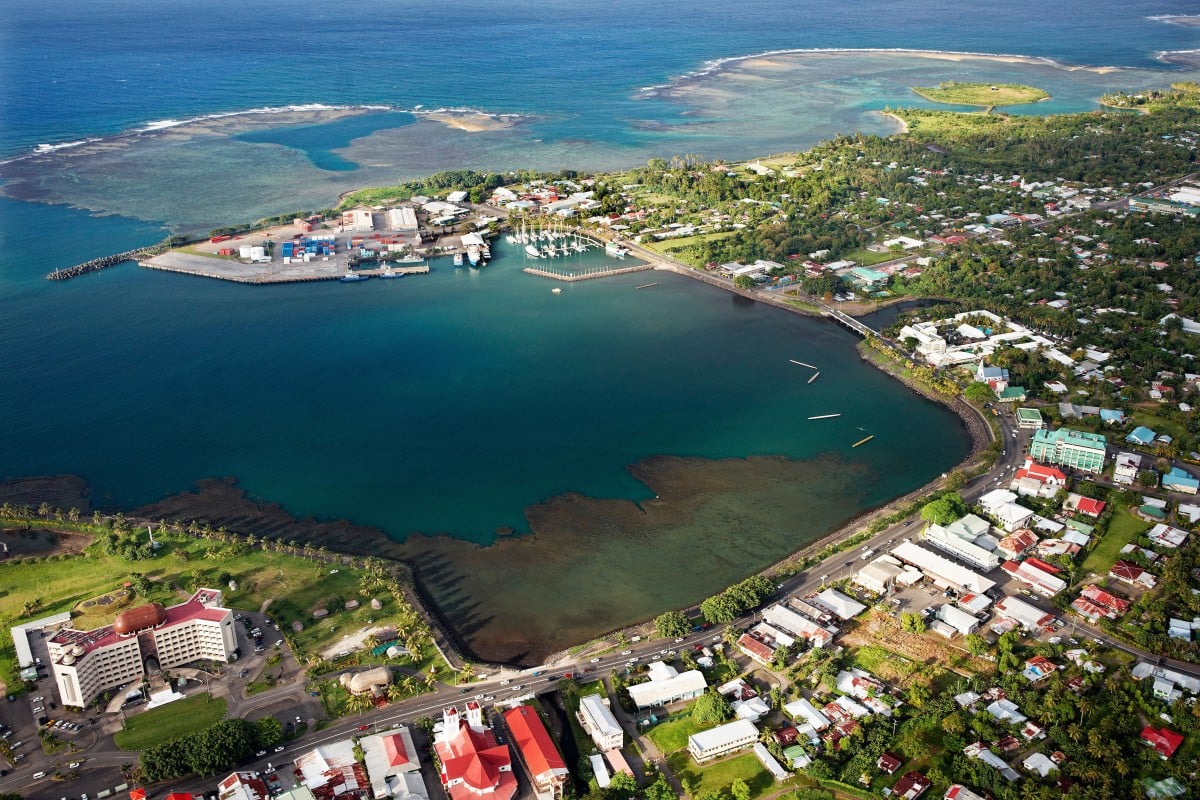
Samoan capital Apia will host the third China-Pacific Island Countries Economic Development Cooperation Forum, which begins on Sunday. Photo: Alamy
China will seek to expand its economic and diplomatic influence in the South Pacific at a forum this weekend, amid growing concern from the US and its allies over Beijing’s push in the strategically important region.
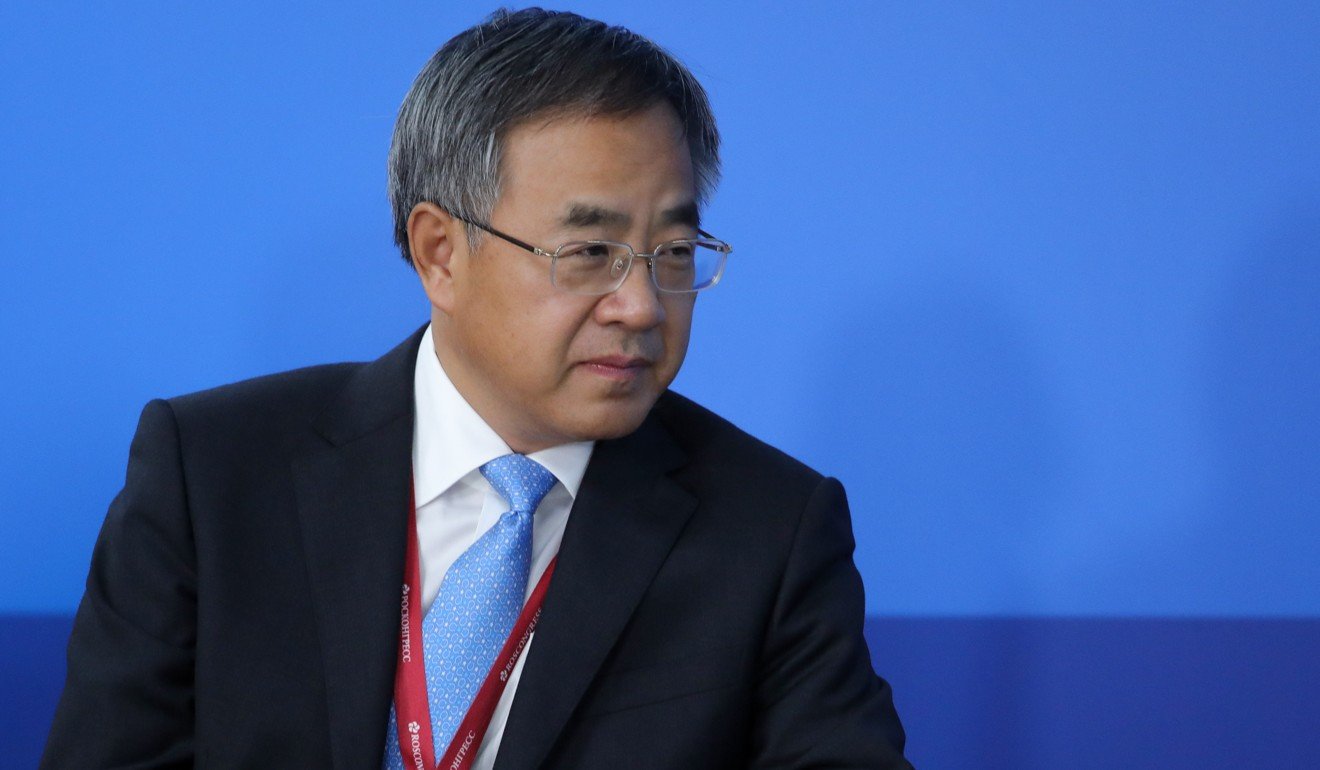
Vice-Premier Hu Chunhua will lead the Chinese delegation at the third China-Pacific Island Countries Economic Development Cooperation Forum in the Samoan capital Apia, which begins on Sunday. It is expected to be attended by 400 officials and more than 200 businesspeople.
Hu, the former Communist Party chief of China’s manufacturing powerhouse Guangdong who now overseas commercial and agricultural affairs, is expected to deliver a keynote speech at the opening ceremony.
Beijing sees the two-day forum as “timely” and “a good opportunity to deepen mutually beneficial cooperation between China and the Pacific”, a commerce ministry spokesperson told the official Economic Daily newspaper.
Trade, agriculture and fisheries, as well as tourism, infrastructure and climate change were at the top of the agenda for the forum, the spokesperson said.
Leaders of all the Pacific nations – except the four that do not have formal diplomatic ties with Beijing – are expected to attend the forum. Australia, which has “observer status” at the summit, will send Ewen McDonald, deputy secretary of the Department of Foreign Affairs and Trade and the head of its Pacific office.
Vice-Premier Hu Chunhua will lead the Chinese delegation at the forum. Photo: EPA-EFE
The forum comes after China hailed a “new breakthrough” in the region following the decision last month by the Solomon Islands and then Kiribati – despite warnings from the US – to cut diplomatic ties with Taipei and switch to Beijing.
They are the latest of Taipei’s allies to be
poached by Beijing as it ramps up pressure on the self-ruled island that it sees as a renegade province to be reunited with the mainland, by force if necessary.
Observers said this weekend’s forum was Beijing’s latest effort to regain momentum in the Pacific.
“Having one of China’s top 25 officials visit the region so soon after [Chinese President] Xi Jinping spent close to three days in Papua New Guinea last November is certainly significant,” said Jonathan Pryke, director of the Pacific Islands programme at the Lowy Institute in Sydney, referring to Hu’s position in the 25-member Politburo.
“It shows clearly China’s attempt to recapture momentum after the West, and in particular Australia, have redoubled their efforts in maintaining and building relationships in the Pacific,” he said.
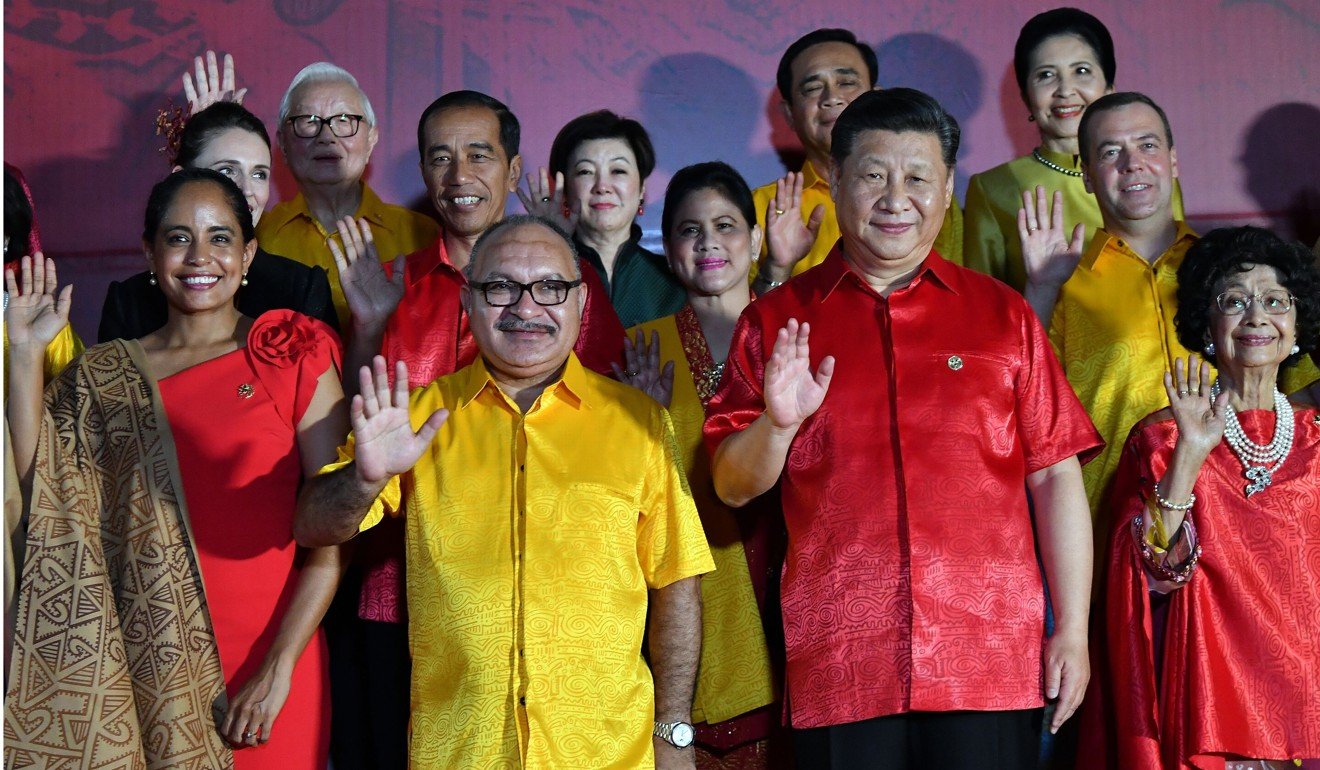
Papua New Guinea’s Prime Minister Peter O’Neill (second from left) and Chinese President Xi Jinping (second from right) pose for a photo during Xi’s visit in November. Photo: AFP
First held in Fiji in 2006, the forum is part of China’s efforts to expand its reach in the resource-rich region.
Back then, premier Wen Jiabao announced 3 billion yuan of concessional loans to Pacific nations and promised to facilitate more trade, medical aid and tourism with the countries. Chinese capital has been pouring into the region – particularly from the mining and fisheries sectors – ever since.
Of note was a 440 million yuan investment, supported by loans from the Export-Import Bank of China, to build a central business centre at Nuku’alofa, the capital of Tonga.
US and allies sideline China in PNG’s Bougainville by helping fund independence vote
As China’s influence grows, the South Pacific – a region traditionally under US hegemony, and on Australia’s doorstep – has “increasingly become a major power that cannot be neglected” and “an important part of China’s greater strategic landscape”, according to Shi Chunlin, an associate professor at Dalian Maritime University.
Trade has increased between China and the eight Pacific nations that have diplomatic ties with Beijing, rising to a combined US$4.32 billion last year – up 25 per cent from 2017.
China has also become the largest trading partner of new ally the Solomons, the second-largest to Papua New Guinea and Fiji, and the third-largest to Samoa.
China’s direct investment in the region has also jumped, reaching US$4.53 billion last year, a more than fourfold increase from the US$900 million of 2013.
Pryke said Beijing was expected to offer new support and loans to the Pacific nations.
“But the Pacific are much more picky about how they want to engage with all partners than they were a decade ago,” he added.
Returning from a trip to China earlier this month, Solomon Islands Prime Minister Manasseh Sogavare confirmed Beijing would provide a US$74 million grant to build a new stadium for the 2023 Pacific Games in the capital Honiara – something its former ally Taipei had committed to fund.
China Sam Group also reportedly signed an agreement on September 22 to lease the island of Tulagi in the Solomons, the site of a former Japanese naval base. The agreement mentioned the development of a refinery on the island, but critics said it could also potentially be used as a military base.
China is now the second-largest donor in the region, only after Australia, which has viewed Beijing’s financial largesse with suspicion.
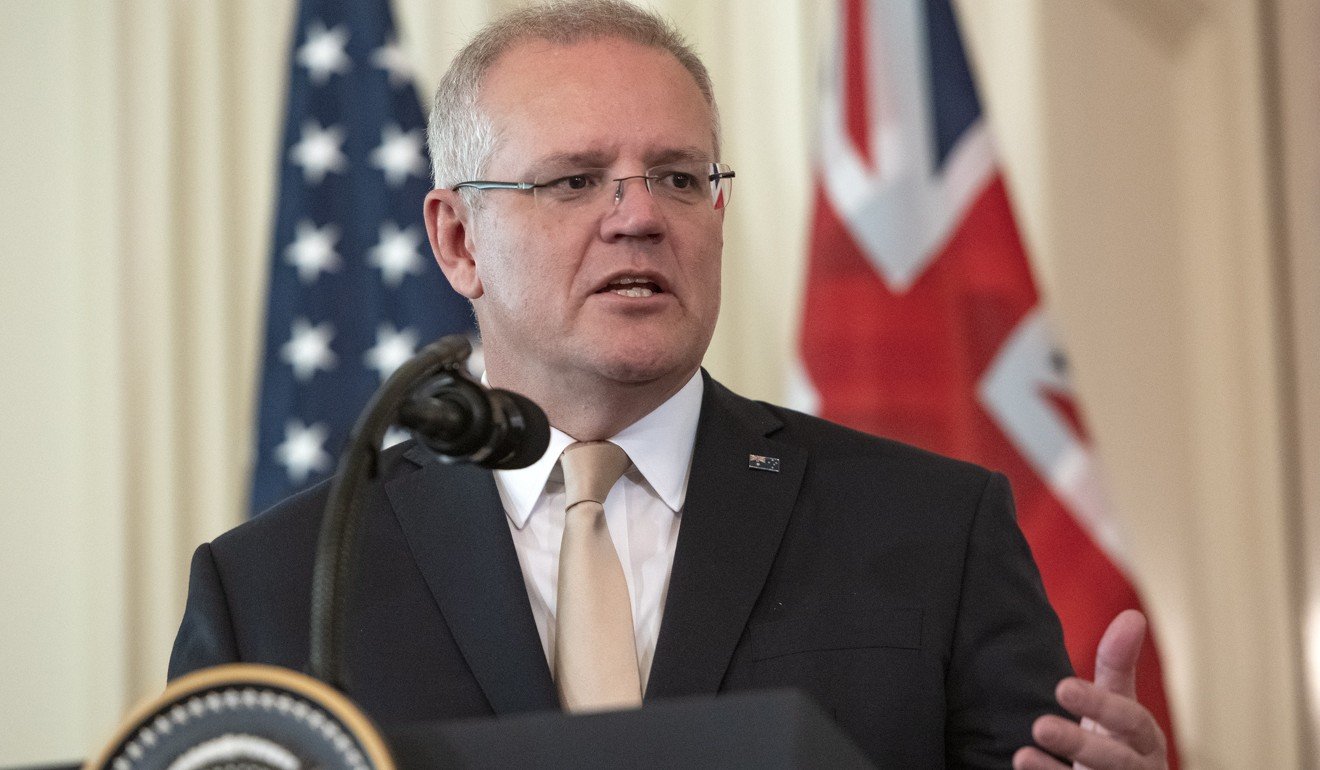
Last year, in an apparent effort to counter China’s rising influence in the region, Australian Prime Minister Scott Morrison announced that Pacific countries would be offered up to US$2.18 billion in grants and cheap loans to build infrastructure.
Australian Prime Minister Scott Morrison last year announced up to US$2.18 billion in grants and cheap loans for infrastructure in Pacific nations. Photo: EPA-EFE
The US, meanwhile, has also been wary of China’s push in the Pacific, amid an escalating geopolitical competition between the world’s two largest economies across many fronts – from trade to tech supremacy and security. The US has long maintained exclusive defence access in the region through its Guam military base and security pacts with the Federated States of Micronesia, the Marshall Islands and Palau.
Derek Grossman, a senior defence analyst with the US-based Rand Corporation, said this year’s forum in Samoa was likely to be higher profile than previous years after Beijing lured away two more diplomatic allies from Taipei.
He said it would be “closely watched in the US for how Beijing continues to leverage sweet economic deals via its Belt and Road Initiative to potentially entice others to switch”.
“The US, along with close friends Australia, Japan and New Zealand, are becoming increasingly concerned over the prospects for China to one day curry enough influence in these small island states to gain port access that could be used for new naval bases,” he said.
The most important issue at the forum, he said, would be “whether the West assesses that China is making further inroads with these states”.
“The likely answer will be that it is, suggesting that the US and its partners will have to compete with China in this region to ensure that it remains ‘free and open’, per the US Indo-Pacific strategy,” he said.
Source: SCMP
Posted in agriculture, Apia, Australia, Beijing, Beijing’s, Belt and Road Initiative, Belt and Road Initiative (BRI), China alert, China-Pacific Island Countries Economic Development Cooperation Forum, Chinese Vice-Premier Hu Chunhua, climate change, commercial and agricultural affairs, Dalian Maritime University, delegation, Department of Foreign Affairs and Trade, Economic Daily, economic forum, expected, Export-Import Bank of China, Federated States of Micronesia, Fiji, fisheries, Guam, guangdong province, Infrastructure, Japan, Japanese naval base, Kiribati, mainland, Marshall Islands, New Zealand, Nuku’alofa, Pacific Games, Palau, Papua New Guinea, Papua New Guinea (PNG), Prime Minister Manasseh Sogavare, Prime Minister Peter O’Neill, ramp up, RAND Corporation, refinery, renegade province, reunited, Samoa, self-ruled island, Solomon Islands, South Pacific push, Sydney, Taipei, Tonga, Tourism, Trade, Tulagi, Uncategorized, US, US Indo-Pacific strategy |
Leave a Comment »
25/02/2019
- Tears of joy as hundreds turn out to welcome home the lost boy of their village
- DNA samples crack the case after decades of heartache
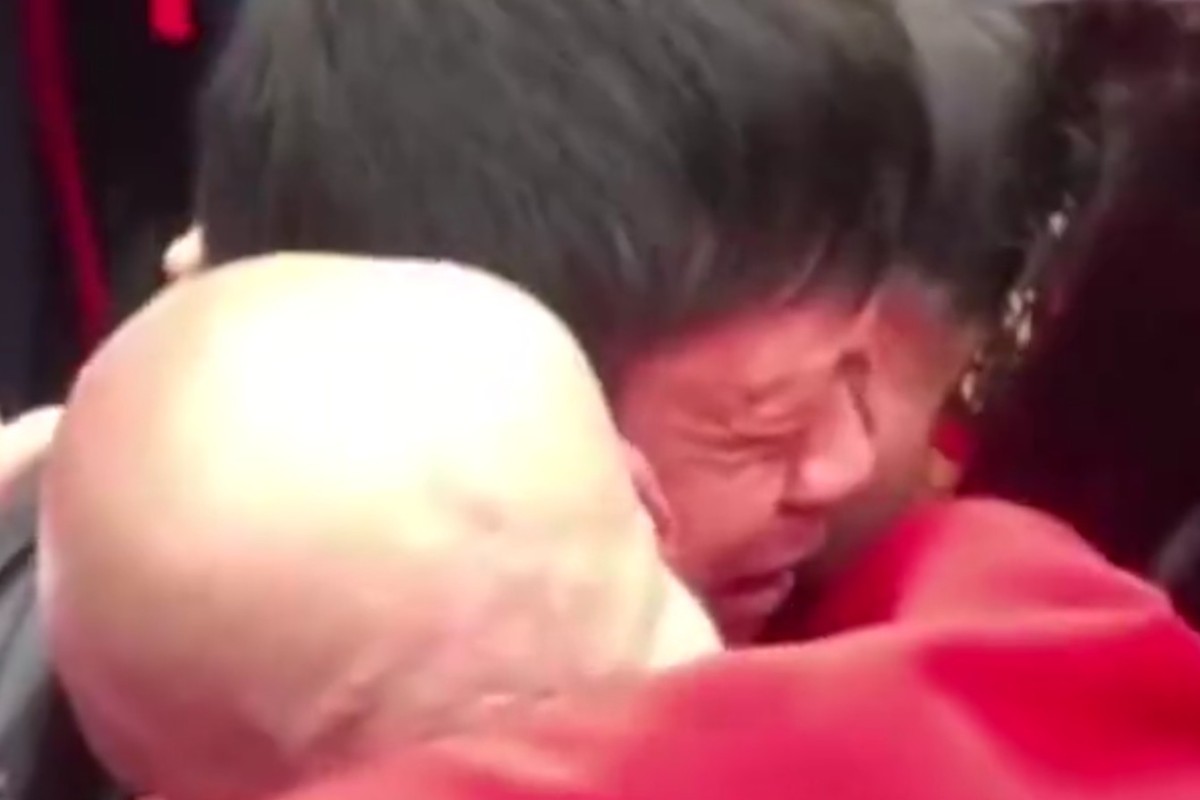
The tearful moment a man is finally reunited with his parents 31 years after he was abducted as a three-year-old. Photo: Weibo
A man who was abducted as a child 31 years ago was finally reunited with his parents in a celebration which included hundreds of people from surrounding villages in Sichuan province, southwest China.
Qin Yujie – whose given name was Cheng Xueping – knelt and sobbed as he hugged his long-lost parents in Chengjiawan village, surrounded by “Welcome Home” banners and the noise of firecrackers.
“I have been looking for you for years and couldn’t find a clue,” Qin told his weeping parents Cheng Jiguang and Gaolingzhen at their reunion on Friday, according to the Western China City Daily newspaper.
As well as the joy of seeing their son again, the Chengs were also able to meet Qin’s wife and children for the first time as hundreds of people gathered around them, many of them in tears.
Qin was three years old in 1988 when he was snatched from a construction site in Guizhou province, southern China, where his parents were working. They searched frantically for their son over many hours that day and, since then, have spent their life savings and borrowed money to travel all over China looking for traces of their son.
Eventually they provided DNA samples to a national database established by the police to assist in the search for China’s many abducted children.
After three decades they finally learned the truth – that their son had been abducted and sold to a village in north China’s Hebei province.
In 2018, a DNA sample Qin provided to his employers yielded an unexpected result. Sichuan police were alerted to a match between Qin’s DNA sample and Cheng’s, his birth father.
Police tracked him down and contacted the Chengs to provide another DNA sample to be sure of the results and, in February this year, the new test confirmed that Cheng and Gao were indeed Qin’s biological parents.
A video of their emotional reunion has been making the rounds on Chinese social media.
The abduction of women and children is a common crime in China. In December 2018 two child traffickers, Zhang Weiping and Zhou Rongping, were sentenced to death for their role in eight separate cases, involving the sale of nine children between 2003 and 2005.
In one particularly brutal case, their gang broke into a rented home, tied up a woman and took away her son to be sold through a middleman, police said. Zhang, Zhou and the other gang members were finally detained in 2016.
In recent years, there have been several official as well as grassroots efforts to help abducted children find their parents. The Ministry of Public Security established an official system called Tuanyuan in 2016 which sends alerts of missing children’s information through social media platforms and mobile phone texts, similar to the “Amber Alert” system in the US.
As of May 2018, Chinese media reported the system had published information about 3,053 missing children and helped find 2,980 of them.
On Baobeihuijia, a grassroots website run by volunteers, there are still 43,858 families looking for their children and 39,446 people looking for their families.
Source: SCMP
Posted in Amber Alert, Baobeihuijia, Cheng Jiguang, Cheng Xueping, Chengjiawan, China alert, firecrackers, Gaolingzhen, Hebei province, kidnap victim, parents, Qin Yujie, reunited, sichuan province, Tuanyuan, Uncategorized, Western China City Daily, Zhang Weiping, Zhou Rongping |
Leave a Comment »






 CHINDIA ALERT: You'll be living in their world, very soon