Archive for ‘Reuters report’

15/05/2020

Coronavirus: Can China test all of Wuhan in only 10 days?

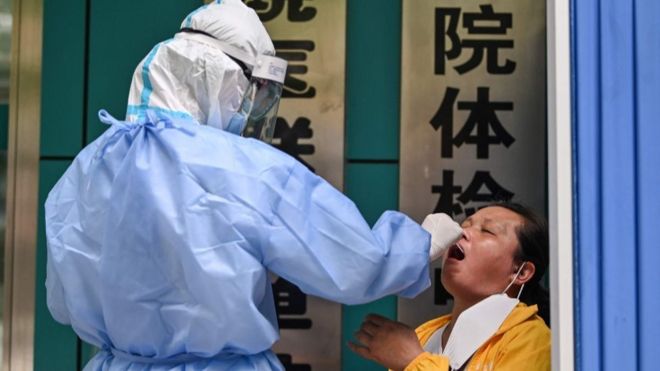
A medical worker takes a swab sample from a woman to be tested for the COVID-19 novel coronavirus in Wuhan, in Chinas central Hubei province on May 13, 2020.Image copyright GETTY IMAGES
Image caption Testing everyone in 10 days would be a huge challenge

China is drawing up ambitious plans to test the entire population of Wuhan, the city where the Covid-19 pandemic began.

The announcement came after the emergence of six new coronavirus cases in the city – the first ones since early April.

The authorities had originally promised to test all 11 million people in 10 days.

But it now appears they might be aiming for a less ambitious timetable.

How long will the testing take?

In late April, the Hubei provincial government reported 63,000 people were being tested in Wuhan every day.

And by 10 May, that figure had dropped to just under 40,000.

There are more than 60 testing centres across the city, according to the official Hubei Daily newspaper.

These have a maximum capacity of 100,000 tests a day at most, making it hard to see how a target of testing the entire population in just 10 days could be met.

So the authorities have indicated the tests will not all start and finish within the same 10-day period.

“Some districts [in the city] will start from 12 May, others from 17 May, for example,” the Wuhan Centre for Disease Control said.

“Each district finishes its tests within 10 days from the date it started.”

And according to a Reuters report on 13 May, preparations for carrying out tests had begun in two out of the city’s 13 districts.

What proportion have been tested already?

The authorities say they have now tested more than three million people in the city.

Wuhan University pathogen biology department deputy director Yang Zhanqiu told the Global Times newspaper he believed up to five million Wuhan residents may have already been tested.

The population of the city – originally 11 million – has also fluctuated over time.

The authorities said up to five million people had left the city for the lunar New Year holiday before it was locked down on 23 January.

The lockdown then lasted until 8 April, but it is unclear how many of these residents have now returned.

Should everyone be tested?

Wuhan University’s Yang Zhanqiu said there was no need to test everyone living in neighbourhoods with no reported cases.
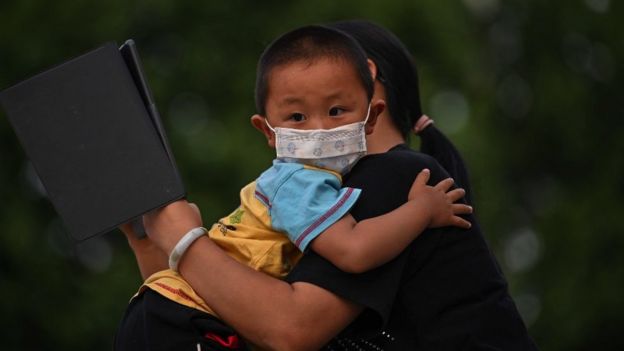
A mother holds his son next to Yangtze River in Wuhan, in Chinas central Hubei province on May 12, 2020. -Image copyright GETTY IMAGES
Image caption There are worries about asymptomatic coronavirus cases

The authorities have said they will begin with people considered most at risk – for example in the older, more densely populated areas, as well as those in key jobs such as healthcare.

Also, people who have been tested in the previous seven days will not need to be tested again.

But Chinese Center for Disease Control and Prevention chief epidemiologist Wu Zunyou told state TV: “The virus could take longer to manifest itself in patients with weak immunity and these people are also prone to ‘on’ and ‘off’ symptoms.”

Banner image reading 'more about coronavirus'
Banner

Yang Zhanqiu adds: “You’ll never know if people were infected after testing negative.”

And US-based Council for Foreign Affairs senior fellow for global health Yanzhong Huang said: “There would still be the possibility of isolated outbreaks in the future, which even large-scale testing will not address.”

Source: The BBC
02/04/2020

Shenzhen becomes first Chinese city to ban eating cats and dogs

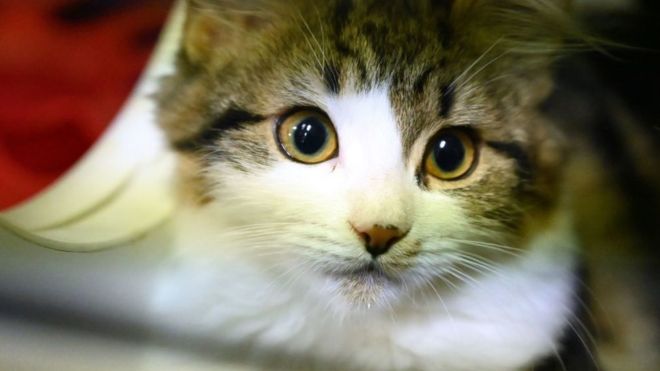
A cat waiting to be adopted looks out of its cage at the Royal Society for the Prevention of Cruelty to Animals (RSPCA)Image copyright GETTY IMAGES
Image caption Most Chinese people don’t actually consume dogs and cats and never plan to

Shenzhen has become the first Chinese city to ban the sale and consumption of dog and cat meat.

It comes after the coronavirus outbreak was linked to wildlife meat, prompting Chinese authorities to ban the trade and consumption of wild animals.

Shenzhen went a step further, extending the ban to dogs and cats. The new law will come into force on 1 May.

Thirty million dogs a year are killed across Asia for meat, says Humane Society International (HSI).

However, the practice of eating dog meat in China is not that common – the majority of Chinese people have never done so and say don’t want to.

“Dogs and cats as pets have established a much closer relationship with humans than all other animals, and banning the consumption of dogs and cats and other pets is a common practice in developed countries and in Hong Kong and Taiwan,” the Shenzhen city government said, according to a Reuters report.

“This ban also responds to the demand and spirit of human civilization.”

Animal advocacy organisation HSI praised the move.

“This really could be a watershed moment in efforts to end this brutal trade that kills an estimated 10 million dogs and 4 million cats in China every year,” said Dr Peter Li, China policy specialist for HSI.

However, at the same time as this ruling, China approved the use of bear bile to treat coronavirus patients.

Bear bile – a digestive fluid drained from living captive bears – has long been used in traditional Chinese medicine.

The active ingredient, ursodeoxycholic acid, is used to dissolve gallstones and treat liver disease. But there is no proof that it is effective against the coronavirus and the process is painful and distressing for the animals

Brian Daly, a spokesman for the Animals Asia Foundation, told AFP: “We shouldn’t be relying on wildlife products like bear bile as the solution to combat a deadly virus that appears to have originated from wildlife.”

Banner image reading 'more about coronavirus'
Banner

A wildlife market

In February, Chinese authorities banned the trade and consumption of wild animals.

The move came after it emerged that a market in Wuhan selling wild animals and wildlife meat could have been the starting point for the outbreak of the new coronavirus, providing the means for the virus to travel from animals to humans.

News of this led the Chinese government to crack down strongly on the trade and on the markets that sold such products.

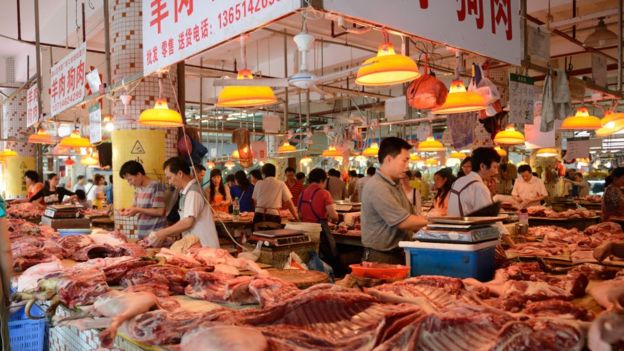
Covered market in ShenzhenImage copyright GETTY IMAGES
Image caption File photo of a wet market in China

There are now close to one million confirmed cases of the virus worldwide, and more than 47,000 deaths, according to a Johns Hopkins University tally.

In China alone, there are 81,589 confirmed cases and 3,318 deaths, said the National Health Commission.

Scientists and researchers are still no closer to finding out what the source of the virus is and how it could have spread to humans.

Source: The BBC

25/02/2020

Gui Minhai: Hong Kong bookseller gets 10 years jail

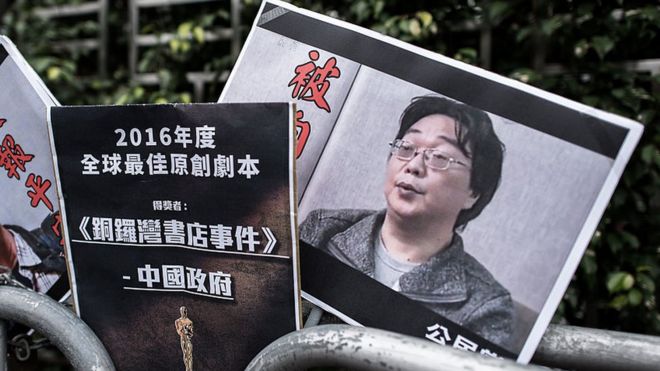
Mr Gui Minhai on a placardImage copyright GETTY IMAGES
Image caption Mr Gui has been in and out of Chinese detention for years

A Chinese court has sentenced Hong Kong bookseller Gui Minhai to 10 years in jail for “illegally providing intelligence overseas”.

Mr Gui, who holds Swedish citizenship, has been in and out of Chinese detention since 2015, when he went missing during a holiday in Thailand.

He is known to have previously published books on the personal lives of Chinese Communist Party members.

Rights groups condemned the “harsh sentence” and called for his release.

He was one of five owners of a small bookstore in Hong Kong who went missing in 2015. It later emerged that they had been taken to China. Four were later freed, but Mr Gui remained in Chinese detention.

In delivering its verdict, the Ningbo Intermediate People’s Court said that his Chinese citizenship had been reinstated in 2018. China does not recognise dual citizenship.

Sweden’s foreign minister on Tuesday called for Mr Gui’s release, referring to him a “citizen”.

“We have not had access to the trial,” said Ann Linde in a tweet. “[We] demand that Gui be released and that we have access to our citizens to provide consular support.”

But according to a Reuters report, a Chinese foreign ministry spokesman said consular arrangements had been put on hold because of the latest coronavirus outbreak, and would be restored once the health problem was “resolved”.

Zhao Lijian added that Mr Gui’s “rights and interests… [had] been fully guaranteed”.

Human rights group Amnesty International on Tuesday also called for Mr Gui to be released immediately and said the charges were “completely unsubstantiated”.

A forced confession?

Mr Gui first made headlines in 2015 when he vanished from Thailand and resurfaced in China.

After his disappearance, there were allegations that he had been abducted by Chinese agents. Chinese officials, however, say Mr Gui and the four other men all went to China voluntarily.

The bookseller ultimately confessed to being involved in a fatal traffic accident more than a decade earlier – a confession supporters say was forced.

He served two years in prison but he was arrested months after his release while he was travelling to the Chinese capital of Beijing with two Swedish diplomats.

China later released a video interview featuring Mr Gui. In it, he accused Sweden of “sensationalising” his case. It is not uncommon for Chinese criminal suspects to appear in “confessional” videos.

Earlier in 2019, Sweden recalled its ambassador to China Anna Lindstedt, who was accused of brokering an unauthorised meeting between Angela Gui – the daughter of Mr Gui – and two Chinese businessmen.

Ms Gui – who has been vocal in campaigning for her father’s release – said one of the men had pressured her to accept a deal where her father would go to trial and might be sentenced to “a few years” in prison, and in return she would stop all publicity around her father’s detention.

Source: The BBC

Law of Unintended Consequences

continuously updated blog about China & India

ChiaHou's Book Reviews

continuously updated blog about China & India

What's wrong with the world; and its economy

continuously updated blog about China & India