Archive for ‘riots’

16/03/2020

In Indian capital, riots deepen a Hindu-Muslim divide

NEW DELHI (Reuters) – For years, Hindus and Muslims lived and worked peacefully together in Yamuna Vihar, a densely populated Delhi district.

But the riots that raged through the district last month appear to have cleaved lasting divisions in the community, reflecting a nationwide trend as tensions over the Hindu nationalist agenda of Prime Minister Narendra Modi boil over.

Many Hindus in Yamuna Vihar, a sprawl of residential blocks and shops dotted with mosques and Hindu temples, and in other riot-hit districts of northeast Delhi, say they are boycotting merchants and refusing to hire workers from the Muslim community. Muslims say they are scrambling to find jobs at a time when the coronavirus pandemic has heightened pressure on India’s economy.

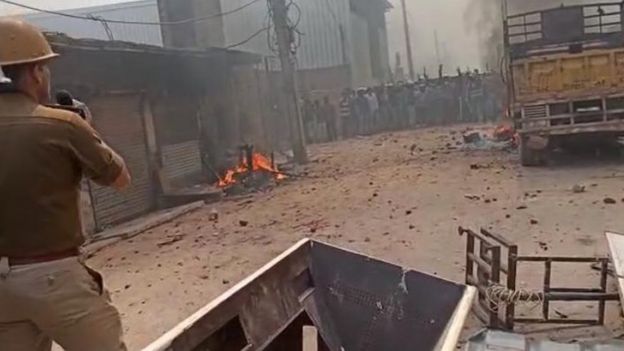
“I have decided to never work with Muslims,” said Yash Dhingra, who has a shop selling paint and bathroom fittings in Yamuna Vihar. “I have identified new workers, they are Hindus,” he said, standing in a narrow lane that was the scene of violent clashes in the riots that erupted on Feb. 23.

The trigger for the riots, the worst sectarian violence in the Indian capital in decades, was a citizenship law introduced last year that critics say marginalises India’s Muslim minority. Police records show at least 53 people, mostly Muslims, were killed and more than 200 were injured.

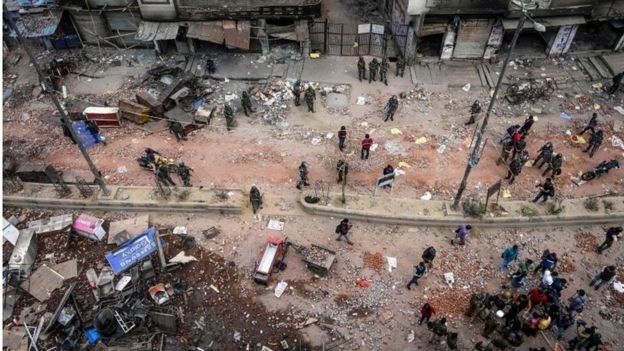
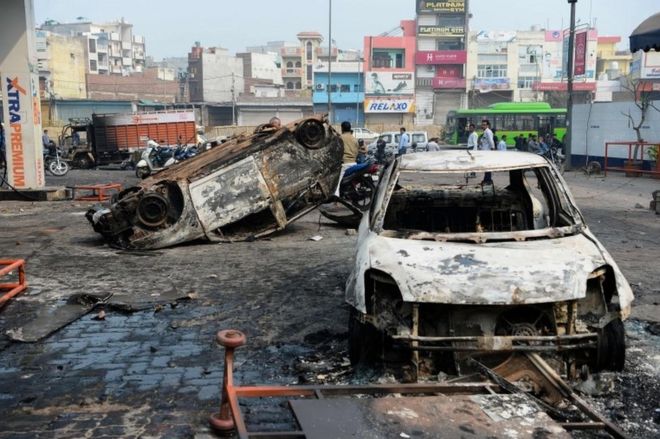
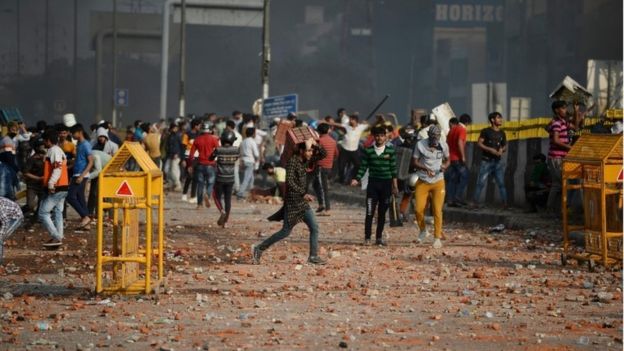
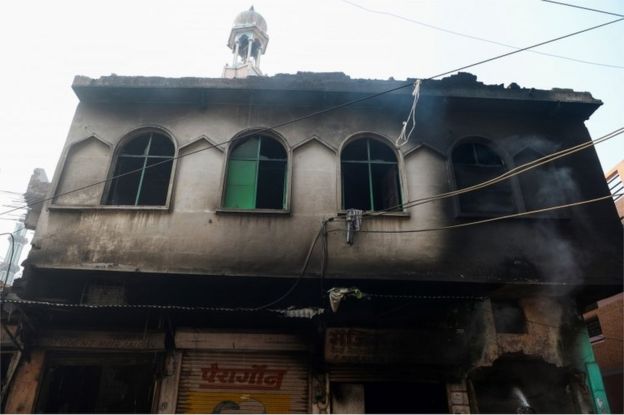
Dhingra said the unrest had forever changed Yamuna Vihar. Gutted homes with broken doors can be seen across the neighbourhood; electricity cables melted in the fires dangle dangerously above alleys strewn with stones and bricks used as makeshift weapons in the riots.

Most Hindu residents in the district are now boycotting Muslim workers, affecting everyone from cooks and cleaners to mechanics and fruit sellers, he said.

“We have proof to show that Muslims started the violence, and now they are blaming it on us,” Dhingra said. “This is their pattern as they are criminal-minded people.”

Those views were widely echoed in interviews with 25 Hindus in eight localities in northeast Delhi, many of whom suffered large-scale financial damages or were injured in the riots. Reuters also spoke with about 30 Muslims, most of whom said that Hindus had decided to stop working with them.

Suman Goel, a 45-year-old housewife who has lived among Muslim neighbours for 23 years, said the violence had left her in a state of shock.

“It’s strange to lose a sense of belonging, to step out of your home and avoid smiling at Muslim women,” she said. “They must be feeling the same too but it’s best to maintain a distance.”

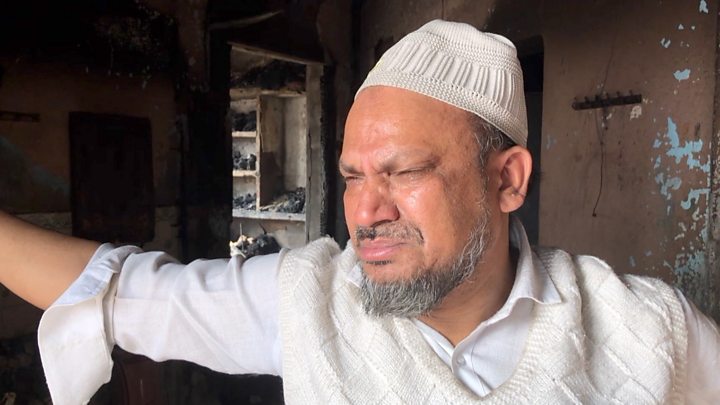
Mohammed Taslim, a Muslim who operated a business selling shoes from a shop owned by a Hindu in Bhajanpura, one of the neighbourhoods affected by the riots, said his inventory was destroyed by a Hindu mob.

He was then evicted and his space was leased out to a Hindu businessman, he said.

“This is being done just because I am a Muslim,” said Taslim.

Many Muslims said the attack had been instigated by hardline Hindus to counter protests involving tens of thousands of people across India against the new citizenship law.

“This is the new normal for us,” said Adil, a Muslim research assistant with an economic think tank in central Delhi. “Careers, jobs and business are no more a priority for us. Our priority now is to be safe and to protect our lives.”

He declined to disclose his full name for fear of reprisals.

Emboldened by Modi’s landslide electoral victory in 2014, hardline groups began pursuing a Hindu-first agenda that has come at the expense of the country’s Muslim minority.

Vigilantes have attacked and killed a number of Muslims involved in transporting cows, which are seen as holy animals by Hindus, to slaughterhouses in recent years. The government has also adopted a tough stance with regard to Pakistan, and in August withdrew semi-autonomous privileges for Jammu and Kashmir, India’s only Muslim-majority state.

In November, the Supreme Court ruled that a Hindu temple could be built at Ayodhya, where a right-wing mob tore down a 16th-century mosque in 1992, a decision that was welcomed by the Modi government.

The citizenship law, which eases the path for non-Muslims from neighbouring Muslim-majority nations to gain citizenship in India, was the final straw for many Muslims, as well as secular Indians, sparking nationwide protests.

Modi’s office did not respond to questions from Reuters about the latest violence.

NIGHT VIGILANTES

During the day, Hindus and Muslims shun each other in the alleys of the Delhi districts that were hardest hit by the unrest in February. At night, when the threat of violence is greater, they are physically divided by barricades that are removed in the morning.

And in some areas, permanent barriers are being erected.

On a recent evening, Tarannum Sheikh, a schoolteacher, sat watching two welders install a high gate at the entrance of a narrow lane to the Muslim enclave of Khajuri Khas, where she lives. The aim was to keep Hindus out, she said.

“We keep wooden batons with us to protect the entrance as at any time, someone can enter this alley to create trouble,” she said. “We do not trust the police anymore.”

In the adjacent Hindu neighbourhood of Bhajanpura, residents expressed a similar mistrust and sense of insecurity.

“In a way these riots were needed to unite Hindus, we did not realise that we were surrounded by such evil minds for decades,” said Santosh Rani, a 52-year-old grandmother.

She said she had been forced to lower her two grandchildren from the first floor of her house to the street below after the building was torched in the violence, allegedly by a Muslim.

“This time the Muslims have tested our patience and now we will never give them jobs,” said Rani who owns several factories and retail shops. “I will never forgive them.”

Hasan Sheikh, a tailor who has stitched clothing for Hindu and Muslim women for over 40 years, said Hindu customers came to collect their unstitched clothes after the riots.

“It was strange to see how our relationship ended,” said Sheikh, who is Muslim. “I was not at fault, nor were my women clients, but the social climate of this area is very tense. Hatred on both sides is justified.”

Source: Reuters
28/02/2020

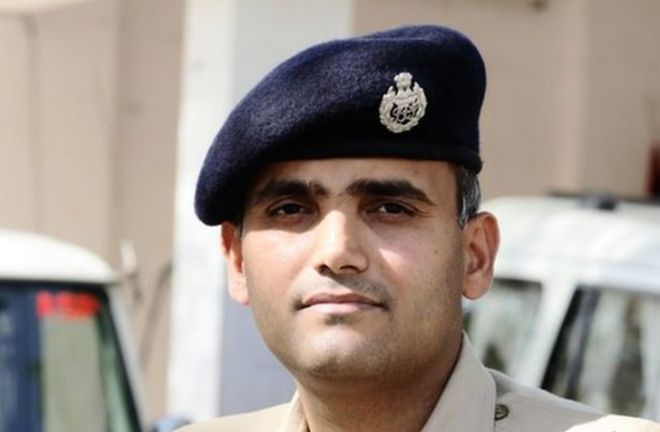
Delhi riots: ‘Hero cop’ who braved a mob to save lives

Mr Jadaun wants the police force to become more professional to implement progressive ideasImage copyright ANKIT SRINIVAS
Image caption Neeraj Jadaun said he was only doing his duty

An Indian policeman is being hailed as a hero after he braved rioting mobs to save families during days of religious violence in the capital Delhi.

Riots in the city broke out on Sunday, killing 39 people and injuring more than 200.

Neeraj Jadaun, a superintendent of police in neighbouring Uttar Pradesh state, told the BBC’s Vikas Pandey that he was patrolling a border checkpoint on 25 February when he heard sounds of gunfire coming from Karawal Nagar in Delhi – just 200m (650ft) away from him.

He saw a mob of 40-50 people setting vehicles on fire when one of them jumped into a house with a petrol bomb. At that point, Mr Jadaun decided to break with traditional police protocol and made a split-second decision to cross the state border into Delhi.

In India, police officers need explicit permission to cross state borders.

“I chose to cross. I was willing to go alone despite being aware of the danger and the fact that it was beyond my jurisdiction. Those were the most terrifying 15 seconds of my life. Thankfully, the team followed me, and my seniors also supported me when I informed them later,” he said.

“It was dangerous as we were outnumbered and the rioters were armed. We first tried to negotiate with them and when that failed, we told them that police would open fire. They retreated but seconds later, they threw stones at us and we also heard gunshots,” he added.

However, Mr Jadaun and his team held their positions and kept pushing back until the rioters finally left.

Richi Kumar, a reporter with the Hindi daily Amar Ujala, described Mr Jadaun’s decision as the “bravest act” he had ever seen.

“The situation was very dangerous. The rioters were fully armed and they were not ready to listen anybody. I can describe them as bloodthirsty. They were throwing stones at the police but Mr Jadaun did not back down. There was real danger of policemen being shot at by rioters,” he told the BBC.

Mr Jadaun facing a violent mob
Image caption Mr Jadaun took a split-second decision to cross state borders and stop a mob

The violence first broke out in north-east Delhi between protesters for and against a controversial citizenship law.

But they have since taken on communal overtones.

Mr Jadaun said the rioters he saw had come prepared for arson.

“The area had many shops with stocks of bamboo. A fire would have engulfed the whole area and had that been allowed to happen, the death toll in Delhi would have been much higher.”

But, Mr Jadaun is uncomfortable about being hailed as a hero.

“I am not a hero. I have taken oath to protect any Indian in danger. I was just doing my duty because I wasn’t willing to let people die under my watch. We were in a position to intervene and we did that,” he added.

Media caption Delhi religious riots: ‘Mobs set fire to my house and shop’

Similar small acts of heroism – of Hindus and Muslims standing together – have also begun to emerge.

Subhash Sharma, from Ashok Nagar, one of the worst-affected areas, described how he ran to help after mobs set a mosque on fire.

“There were thousands of people in the mob and there were only a handful in the mosque. As soon as I saw it set on fire, I switched on the water pump in my house and ran there with a hose,” Mr Sharma told BBC Hindi.

Murtaza, a man from the same neighbourhood, said that he wanted to flee the area, but his Hindu neighbours told him not to leave.

“They assured us they would not let anybody harm us,” he said.

A general view of the riot-hit area following clashes between people supporting and opposing a cententious amendment to Indias citizenship law, in New Delhi on February 27, 2020Image copyright AFP
Image caption The religious violence has killed 38 people and injured more than 200

BBC Hindi’s Faisal Mohammed also spoke to two neighbours – a Hindu and a Muslim – from the Vijay park area in Maujpur, one of the areas worst-affected by the violence.

The two described how they rallied their neighbours to chase away a mob that had been burning vehicles and shattering windows in the vicinity.

“The next day we shut the main road and people from the neighbourhood gathered together and sat outside,” one of the men, Jamaluddin Saifi, said.

Residents there also set up a “peace committee” – made up of both Hindus and Muslims – who went from house to house telling people not to believe rumours and to keep children inside.

As the Indian capital struggles to pick up the pieces, it is these stories that are giving residents some hope that life can eventually go back to normal.

Source: The BBC

26/02/2020

Why Delhi violence has echoes of the Gujarat riots

Local residents look at burnt-out vehicles following clashes between people supporting and opposing a contentious amendment to India"s citizenship law, in New Delhi on February 26, 2020Image copyright AFP
Image caption Delhi remains on edge after three days of rioting

The religious violence which has roiled Delhi since the weekend is the deadliest in decades.

What began as small clashes between supporters and opponents of a controversial citizenship law quickly escalated into full-blown religious riots between Hindus and Muslims, in congested working class neighbourhoods on the fringes of the sprawling capital.

Armed Hindu mobs rioted with impunity as the police appeared to look the other way. Mosques and homes and shops of Muslims were attacked, sometimes allegedly with the police in tow. Journalists covering the violence were stopped by the Hindu rioters and asked about their religion. Videos and pictures emerged of the mob forcing wounded Muslim men to recite the national anthem, and mercilessly beating up a young Muslim man. Panicky Muslims began leaving mixed neighbourhoods.

On the other side, Muslim rioters have also been violent – some of them also armed – and a number of Hindus, including security personnel, are among the dead and injured.

Media caption Delhi religious riots: ‘Mobs set fire to my house and shop’

Three days and 20 deaths later, Prime Minister Narendra Modi tweeted his first appeal for peace. There were no commiserations for the victims. Delhi’s governing Aam Aadmi Party was criticised for not doing much either. Many pointed to the egregious failure of Delhi’s police – the most well-resourced in India – and the inability of opposition parties to rally together, hit the streets and calm tensions. In the end, the rioters operated with impunity, and the victims were left to their fate.

Demonstrators gather along a road scattered with stones following clashes between supporters and opponents of a new citizenship law, at Bhajanpura area of New Delhi on February 24, 2020Image copyright AFP
Image caption More than 20 people have been killed in the rioting

Not surprisingly, the ethnic violence in Delhi has drawn comparisons with two of India’s worst sectarian riots in living memory. Nearly 3,000 people were killed in anti-Sikh riots in the capital in 1984 after the then prime minister Indira Gandhi was assassinated by her Sikh bodyguards. And in 2002, more than 1,000 people, mostly Muslims, died after a train fire killed 60 Hindu pilgrims in Gujarat – Mr Modi was then the chief minister of the state. The police were accused of complicity in both riots. The Delhi High Court, which is hearing petitions about the current violence, has said it cannot let “another 1984” happen on its “watch”.

Ashutosh Varshney, a professor of political science at Brown University who has extensively researched religious violence in India, believes that the Delhi riots are beginning to “look like a pogrom” – much like the ones in 1984 and 2002.

Pogroms happen, according to Prof Varshney, when the police do not act neutrally to stop riots, look on when mobs go on the rampage and sometimes “explicitly” help the perpetrators. Evidence of police apathy in Delhi has surfaced over the past three days. “Of course, the violence thus far has not reached the scale of Gujarat or Delhi. Our energies should now focus on preventing further escalation,” he says.

Political scientist Bhanu Joshi and a team of researchers visited constituencies in Delhi ahead of February’s state elections. They found the BJP’s “perfectly oiled party machinery constantly giving out the message about suspicion, stereotypes and paranoia”. In one neighbourhood, they found a party councillor telling people: “You and your kids have stable jobs, money. So stop thinking of free, free. [She was alluding to free water and electricity being given to people by the incumbent government.] If this nation doesn’t remain, all the free will also vanish.” Such paranoia about the security of the nation at a time when India has been at its most secure has “widened” existing ethnic divisions and “made people suspicious”, Mr Joshi said.

burnt-out mosque and shops are seen following clashes between people supporting and opposing a contentious amendment to India"s citizenship law, in New Delhi on February 26, 2020.Image copyright AFP
Image caption Mosques have been vandalised in the clashes

In the run-up to the Delhi elections Mr Modi’s party embarked on a polarising campaign around a controversial new citizenship law, the stripping of Kashmir’s autonomy and building a grand new Hindu temple on a disputed holy site. Party leaders freely indulged in hate speech, and were censured by poll authorities. A widely reported protest against the citizenship law by women in Shaheen Bagh, a Muslim-dominated neighbourhood in Delhi, was especially targeted by the BJP’s campaign, which sought to show the protesters as “traitors”.

“The repercussion of this campaign machine is the normalisation of suspicion and hate reflected in WhatsApp groups, Facebook pages, and conversations families have among themselves,” says Mr Joshi.

It was only a matter of time before Delhi’s fragile stability would be shaken. On Sunday a BJP leader issued a threat, telling the Delhi police they had three days to clear the sites where people had been protesting against the citizenship law and warned of consequences if they failed to do so. The first reports of clashes emerged later that day. The ethnic violence that followed was a tragedy foretold.

Source: The BBC

16/10/2019

Ayodhya dispute: The complex legal history of India’s holy site

In this file photograph taken on December 6, 1992 Hindu youths clamour atop the 16th century Muslim Babri Mosque five hours before the structure was completely demolished by hundreds supporting Hindu fundamentalist activists.Image copyright AFP
Image caption The dispute turned to violence in 1992 when a Hindu mob destroyed a mosque at the site

The Ayodhya dispute, which stretches back more than a century, is one of India’s thorniest court cases and goes to the heart of its identity politics.

Hindus believe that Ayodhya, a city in the northern state of Uttar Pradesh, is the birthplace of one of their most revered deities, Lord Ram.

But Muslims say they have worshipped there for generations.

A court case pertaining to the ownership of the land has been dragging on in the Supreme Court for years, but a verdict is expected next month.

The court concluded its final hearing into the case on Wednesday.

What is the row actually about?

At the centre of the row is a 16th Century mosque that was demolished by Hindu mobs in 1992, sparking riots that killed nearly 2,000 people.

Many Hindus believe that the Babri Masjid was actually constructed on the ruins of a Hindu temple that was demolished by Muslim invaders.

Muslims say they offered prayers at the mosque until December 1949 when some Hindus placed an idol of Ram in the mosque and began to worship the idols.

Over the decades since, the two religious groups have gone to court many times over who should control the site.

Since then, there have been calls to build a temple on the spot where the mosque once stood.

The case currently being heard by five judges in the top court is to determine who the land in question belongs to.

A verdict is expected between 4 and 15 November.

Hinduism is India’s majority religion and is thought to be more than 4,000 years old. India’s first Islamic dynasty was established in the early 13th Century.

Who is fighting the case?

The long and complicated property dispute has been dragging in various courts for more than a century.

This particular case is being fought between three main parties – two Hindu groups and the Muslim Waqf Board, which is responsible for the maintenance of Islamic properties in India.

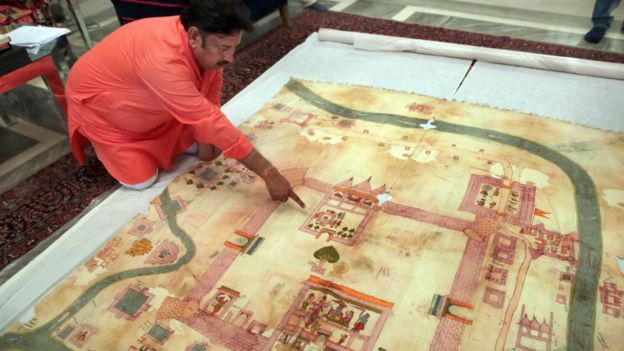
Ramu Ramdev, OSD at the City Palace, points out Lord Ramas birth place in an old dilapidated map of Ayodhya depicting the birthplace of Lord Rama, being taken out from archives of erstwhile royal family of Jaipur, at City Palace, on August 11, 2019 in Jaipur, India.Image copyright GETTY IMAGES

The Hindu litigants are the Hindu Mahasabha, a right-wing political party, and the Nirmohi Akhara, which is a sect of Hindu monks.

They filed a title dispute in the Allahabad High Court in 2002, a decade after the mosque was demolished.

A verdict in that case was pronounced in September 2010 – it determined that the 2.77 acres of the disputed land would be divided equally into three parts.

The court ruled that the site should be split, with the Muslim community getting control of a third, Hindus another third and the Nirmohi Akhara sect the remainder. Control of the main disputed section, where the mosque once stood, was given to Hindus.

The judgement also made three key observations.

It affirmed the disputed spot was the birthplace of Lord Ram, that the Babri Masjid was built after the demolition of a Hindu temple and that it was not built in accordance with the tenets of Islam.

The Supreme Court suspended this ruling in 2011 after both Hindu and Muslim groups appealed against it.

What are the other important legal developments?

In 1994 the Supreme Court, which was ruling on a related case, remarked that the concept of a mosque was “not integral to Islam”. This has bolstered the case made by Hindus who want control of the entire site.

In April 2018, senior lawyer Rajeev Dhavan filed a plea before the top court, asking judges to reconsider this observation.

But a few months later the Supreme Court declined to do so.

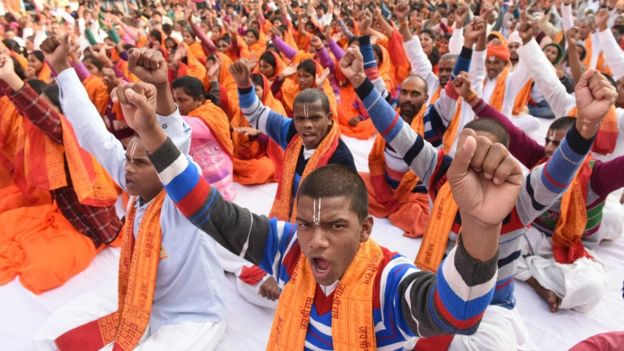
VHP saints at Karsevak Puram taking park in Hindu Swabhiman Sammelan organized by the VHP to mark 25th anniversary Babri Masjid demolition, on December 6, 2017 in AyodhyaImage copyright GETTY IMAGES
Image caption Hindu activists are demanding the construction of the Ram Temple

Have religious tensions eased in India in recent years?

Ever since the Narendra Modi-led Hindu nationalist BJP first came to power in 2014, India has seen deepening social and religious divisions.

The call for the construction of a Hindu temple in Ayodhya has grown particularly loud, and has mostly come from MPs, ministers and leaders from the BJP since it took office.

Restrictions on the sale and slaughter of cows – considered a holy animal by the majority Hindus – have led to vigilante killings of a number of people, most of them Muslims who were transporting cattle.

An uninhibited display of muscular Hindu nationalism in other areas has also contributed to religious tension.

Most recently, the country’s home minister Amit Shah said he would remove “illegal migrants” – understood to be Muslim – from the country through a government scheme that was used recently in the north-eastern state of Assam.

Source: The BBC

19/02/2019

Viewpoint: Should Britain apologise for Amritsar massacre?

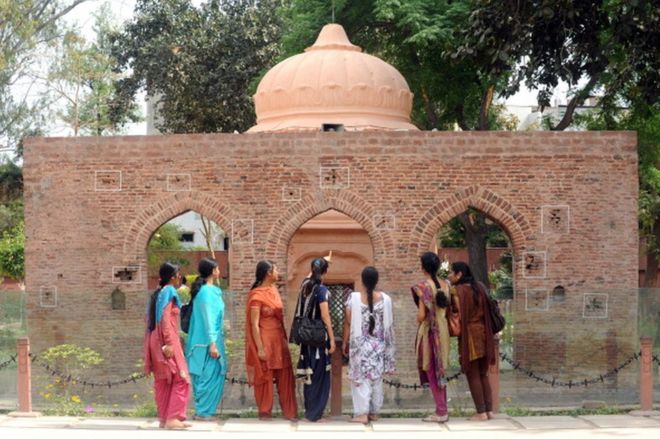
Indian visitors look at the bullet ridden wall at the historical site of the Jallianwala Bagh massacre in Amritsar on April 12, 2011Image copyrightAFP
Image captionVisitors can inspect a bullet-ridden wall at the site of the massacre

Hundreds of Indians attending a public meeting were shot dead by British troops in the northern Indian city of Amritsar in 1919. Historian Kim Wagner sifts fact from fiction as the UK House of Lords prepares to debate the massacre, including if Britain should apologise.

On 13 April 1919, Sergeant WJ Anderson witnessed first-hand the brutal massacre of hundreds of Indian civilians at Jallianwala Bagh, a public garden in Amritsar city.

“When fire was opened the whole crowd seemed to sink to the ground, a whole flutter of white garments, with however a spreading out towards the main gateway, and some individuals could be seen climbing the high wall,” Anderson later recalled.

“There was little movement, except for the climbers. The gateway would soon be jammed. I saw no sign of a rush towards the troops.”

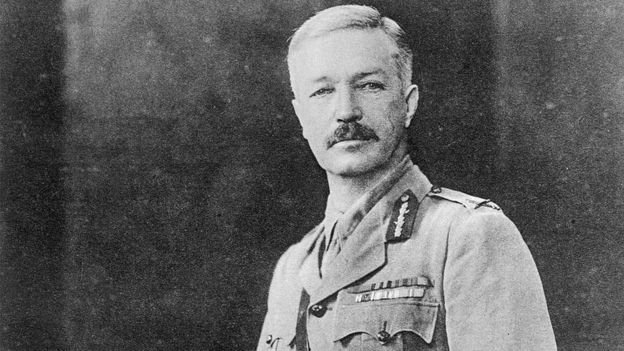
He had served as the bodyguard of Brigadier General RH Dyer, who had rushed to Amritsar a few days earlier to quell what he believed to be a major uprising.

The crowd of more than 20,000 people, however, were not armed rebels. They were local residents and villagers from the surrounding countryside who had come to listen to political speeches or simply to spend a few hours in the gardens.

It was also the day of the Baisakhi festival, which marked the anniversary of the creation of the Khalsa, or Sikh community, and annually attracted thousands of visitors and pilgrims.

The crowd comprised Hindus, Muslims and Sikhs. Most were men and young boys, including some infants; only a few women were present.

British Brigadier General R.E.H. DyerImage copyrightGETTY IMAGES
Image captionBrigadier General Dyer rushed to Amritsar to quell what he believed to be a major uprising

When Gen Dyer ordered his troops to cease firing, Jallianwala Bagh resembled a battlefield strewn with corpses. Between 500 and 600 people were killed, and probably three times as many wounded. The exact numbers will never be known for certain but the official death count, reached months later, was just 379.

In recent years, much of the public debate has focused on calls for a formal British apology – the demand has been led by, among others, Indian politician and author Shashi Tharoor.

Queen Elizabeth II visited the memorial at Jallianwala Bagh in 1997 and then Prime Minister David Cameron visited in 2013 – both showed their respect yet carefully avoided making an actual apology.

In December 2017, the Mayor of London, Sadiq Khan, nevertheless urged the British government to make just such a gesture during his own visit to Amritsar.

“I am clear that the government should now apologise, especially as we reach the centenary of the massacre. This is about properly acknowledging what happened here and giving the people of Amritsar and India the closure they need through a formal apology,” he said.

ritish Prime Minister David Cameron (C) along with Punjab State Chief Minister Parkash Singh Badal (2L), and Shiromani Gurdwara Parbandhak Committee (SGPC) President Avtar Singh Makkar (2R) visit the Sikh Shrine Golden temple in Amritsar on February 20, 2013Image copyrightAFP
Image captionOn his 2013 visit, Cameron avoided making an actual apology but said the massacre was “deeply shameful”

Exactly what happened at Jallianwala Bagh, however, remains unclear, and a century later, the actual circumstances of the massacre are still shrouded in myth and misconceptions.

There are, for instance, people, often with a nostalgic attachment to the Empire, who still insist that Gen Dyer only opened fire as a final resort when the crowd ignored his warning to disperse – even though the general himself was quite clear that he gave no such warning.

Similarly, the idea that the shooting was necessary and prevented much worse violence conveniently ignores the fact that Indian riots in April 1919 were in each and every case precipitated by British actions.

Factual inaccuracies are also to be found at the Jallianwala Bagh memorial today. Among other things, a sign claims that 120 bodies of the victims of the massacre were recovered from what has become known as the Martyrs’ Well. It’s believed that many people jumped into the well to escape the bullets.

But there is no evidence for this story, which appears to be based on a mix-up with the infamous well at Kanpur city, where the bodies of British women and children were disposed after a massacre in 1857.

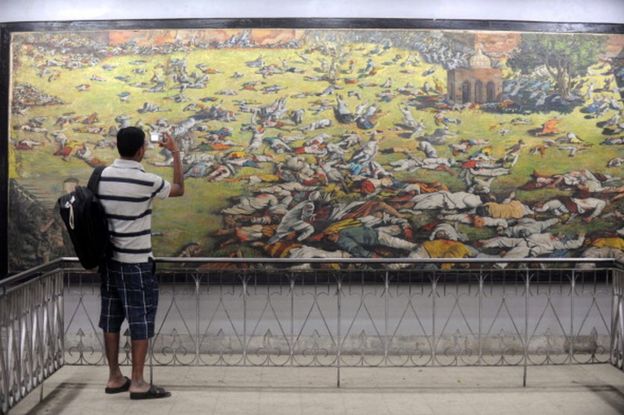
Visual depictions of the Jallianwala Bagh massacre also show machine guns being used, when the historical record is quite clear that the shooting was carried out by 50 Gurkha and Baluchi troops armed with rifles.

Gen Dyer also did not orchestrate the massacre, and deliberately trap the crowd inside the gardens, as some popular accounts have it.

An Indian man takes a photograph of a painting depicting the Jallianwala Bagh massacre in Amritsar on April 12, 2011. The Amritsar massacre, also known as the Jallianwala Bagh Massacre, took place on April 13, 1919 when British Indian Army soldiers on the direct orders of their British officers opened fire on an unarmed gathering killing at least 379 men, women and children, according to official records. AFP PHOTO /NARINDER NANU (Photo credit should read NARINDER NANU/AFP/Getty Images)Image copyrightGETTY IMAGES
Image captionThe crowd were not armed rebels but local residents and villagers

In fact, it was British panic and misreading of the political turmoil in India that was at the root of the violence.

While Indian nationalists were looking forward to political reforms and greater self-determination after the end of World War One, the British were still haunted by the spectre of the 1857 “mutiny”, an uprising that is often referred to as India’s first war of independence.

So, when riots broke out in Amritsar on 10 April – and five Europeans and dozens of Indians were killed – the authorities responded with immediate and indiscriminate force. Three days later, Gen Dyer entered what he mistakenly perceived to be a war zone.

Where popular depictions show a peaceful crowd of locals quietly listening to a political speech, Gen Dyer instead perceived a defiant and murderous mob, which had only days before run rampant through Amritsar. When he ordered his troops to open fire, it was an act of fear, spurred on by a disastrously flawed threat assessment.

None of this exonerates Gen Dyer or detracts from the sheer brutality of the massacre – nor does it justify the subsequent torture and humiliation of Indians under martial law. The indisputable violence of the Jallianwala Bagh massacre hardly requires any embellishment. Nevertheless, facts matter if we are to pay our respect to those who died rather than simply perpetuate politically convenient fiction. And to understand is not the same as to condone.

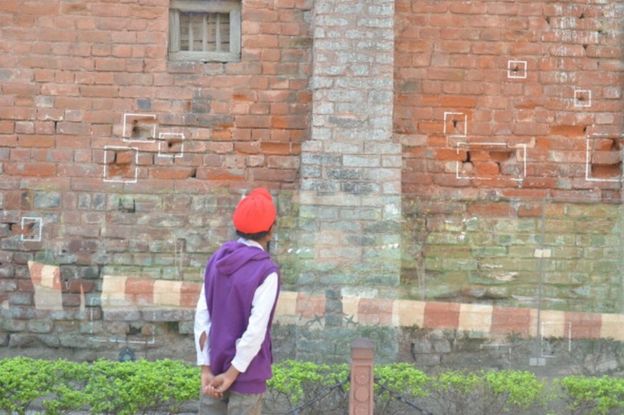
A visitor looking at the bullet marks on a wall on the eve of 95th anniversary of the massacre at Jallianwala Bagh on 12 April 2014 in Amritsar.Image copyrightGETTY IMAGES
Image captionThere are bullet marks on a wall in the garden

Apologies and centenaries, which are essentially about the present rather than the past, are rarely conducive to an honest and nuanced reckoning with history.

An apology from a British government in the throes of Brexit, at the moment, seems highly unlikely. It it indeed doubtful whether an official acknowledgement of the massacre would be construed as more than an act of political expediency.

The question thus remains whether an apology without a genuine understanding of the past can ever provide the “closure” that so many seek.

Source: The BBC

09/02/2019

India court hands 7 Muslim men life sentences for killings that sparked 2013 riots

NEW DELHI (Reuters) – An Indian court on Friday sentenced seven Muslim men to life in prison for the murder of two Hindu men in 2013 in the northern state of Uttar Pradesh, an incident that had sparked religious riots killing about 65 people and displacing thousands.

The riots began in the district of Muzaffarnagar, 130 km (81 miles) northeast of New Delhi, and spread to other areas in the country’s most populous state months before the 2014 election won by Prime Minister Narendra Modi’s Hindu nationalist party.

A court in Muzaffarnagar sentenced the men after they were found guilty of killing the two Hindus in the village of Kawal on Aug. 27, 2013, prosecutor Rajeev Sharma told Reuters.

Reuters could not immediately contact the families of the convicted men.

Nearly all the victims here of the riots were Muslims, including about 12,000 people who were made temporarily homeless due to the unrest that polarised western Uttar Pradesh on religious lines.

Source: Reuters

17/12/2018

‘Carnage of unbelievable proportions’: Delhi High Court convicts Sajjan Kumar for 1984 riots

Sajjan Kumar,anti-Sikh riots case,1984 anti-sikh riots case
Congress’ Sajjan Kumar was convicted today by Delhi High Court in 1984 riots case(PTI)

The Delhi High Court on Monday called the anti-Sikh riots case of 1984 “communal frenzy” after the then prime minister Indira Gandhi was assassinated by her bodyguards as it sentenced Congress leader Sajjan Kumar to life imprisonment in one of the cases.

As it reversed the trial court’s order acquitting Kumar, the court also directed him to surrender by December 31, 2018, and slapped a fine of Rs 5 lakh on him and Rs 1 lakh on all other accused in the case.

The case relates to the murder of five members of a family during the anti-Sikh riots in the Raj Nagar area in the Delhi Cantonment on November 1, 1984.

“What happened in the aftermath of the assassination of the then Prime Minister was carnage of unbelievable proportions in which over 2,700 Sikhs were murdered in Delhi alone. The law and order machinery clearly broke down and it was literally a ‘free for all’ situation which persisted. The aftershocks of those atrocities are still being felt,” justice S Muralidhar and justice Vinod Goel said while handing the 203-page judgement.

Also watch | Congress’ Sajjan Kumar convicted in 1984 Sikh riots case, gets life term 

The judges also quoted a poem by Amrita Pritam on the violence after the Partition in 1947 in India and Pakistan. She escaped to India with her two children from Pakistan’s Lahore.

“She was moved to pen an “Ode to Waris Shah” in which she spoke of the fertile land of Punjab having “sprouted poisonous weeds far and near” and where “Seeds of hatred have grown high, bloodshed is everywhere/Poisoned breeze in forest turned bamboo flutes into snakes/Their venom has turned the bright and rosy Punjab all blue,” they said.

Also read | Congress’ Sajjan Kumar convicted in 1984 Sikh riots, gets life term

“The killings would continue in the streets of Delhi. Thirty-seven years later, the country was again witness to another enormous human tragedy. Following the assassination of Smt. Indira Gandhi, the then Prime Minister of India, on the morning of 31st October 1984 by two of her Sikh bodyguards, a communal frenzy was unleashed.”

‘Political patronage’

The judges recalled the violence in which thousands of Sikhs were killed, some burnt alive, as their houses were destroyed in Delhi and across the country.

“A majority of the perpetrators of these horrific mass crimes, enjoyed political patronage and were aided by an indifferent law enforcement agency … The criminals escaped prosecution and punishment for over two decades.”

“There was an abject failure by the police to investigate the violence which broke out in the aftermath of the assassination of the then Prime Minister Smt. Indira Gandhi is apparent from the several circumstances highlighted hereinabove.”

There was an “utter failure” to register separate first report information in the case of five deaths in which Congress leader Kumar and others were sentenced.

“The failure to record any incident whatsoever in the DDR and the lack of mention of PW-1’s statement therein, amongst other circumstances, established the apathy of the Delhi Police and their active connivance in the brutal murders being perpetrated.

Here is what they also said in the summary of their judgement:

1. This was an extraordinary case where it was going to be impossible to proceed against A-1 in the normal scheme of things because there appeared to be ongoing large-scale efforts to suppress the cases against him by not even recording or registering them. Even if they were registered they were not investigated properly and even the investigations which saw any progress were not carried to the logical end of a charge sheet actually being filed. Even the defence does not dispute that as far as FIR No.416/1984 is concerned, a closure report had been prepared and filed but was yet to be considered by the learned MM.

2. The trial Court completely omitted to address the charge of conspiracy despite detailed arguments submitted by the CBI in that regard. There was a two-pronged strategy adopted by the attackers. First was to liquidate all Sikh males and the other was to destroy their Crl.A. 1099/2013 & Connected Matters Page 200 of 203 residential houses leaving the women and children utterly destitute. The attack on the Raj Nagar Gurudwara was clearly a part of the communal agenda of the perpetrators.

Read | ‘Will pay for sins’: Arun Jaitley targets Congress after Sajjan Kumar conviction

3. The mass killings of Sikhs between 1st and 4th November 1984 in Delhi and the rest of the country, engineered by political actors with the assistance of the law enforcement agencies, answer the description of “crimes against humanity”. Cases like the present are to be viewed in the larger context of mass crimes that require a different approach and much can be learnt from similar experiences elsewhere.

4. Common to the instances of mass crimes are the targeting of minorities and the attacks spearheaded by the dominant political actors facilitated by the law enforcement agencies. The criminals responsible for the mass crimes have enjoyed political patronage and managed to evade prosecution and punishment. Bringing such criminals to justice poses a serious challenge to our legal system. Decades pass by before they can be made answerable. This calls for strengthening the legal system. Neither “crimes against humanity‟ nor genocide‟ is part of our domestic law of crime. This loophole needs to be addressed urgently.

5. The acquittal of A-1 by the trial Court is set aside. He is convicted of the offence of criminal conspiracy punishable under Section 120B read with Sections 302, 436, 295, and 153A (1) (a) and (b) IPC; for the offence punishable under Section 109 IPC of abetting the commission of the aforementioned offences; and for the offence of delivering provocative speeches instigating violence against Sikhs Crl.A. 1099/2013 & Connected Matters Page 201 of 203 punishable under Section 153A (1) (a) and (b) IPC.

Law of Unintended Consequences

continuously updated blog about China & India

ChiaHou's Book Reviews

continuously updated blog about China & India

What's wrong with the world; and its economy

continuously updated blog about China & India