18/04/2020
- China’s Skyrizon Aircraft Holdings bought a majority stake in Motor Sich, but the shares were frozen in 2017 pending an investigation by Ukraine’s security service
- Washington and Beijing have competed for influence in Ukraine since its relations with Moscow soured when Russia annexed the Crimea peninsula in 2014
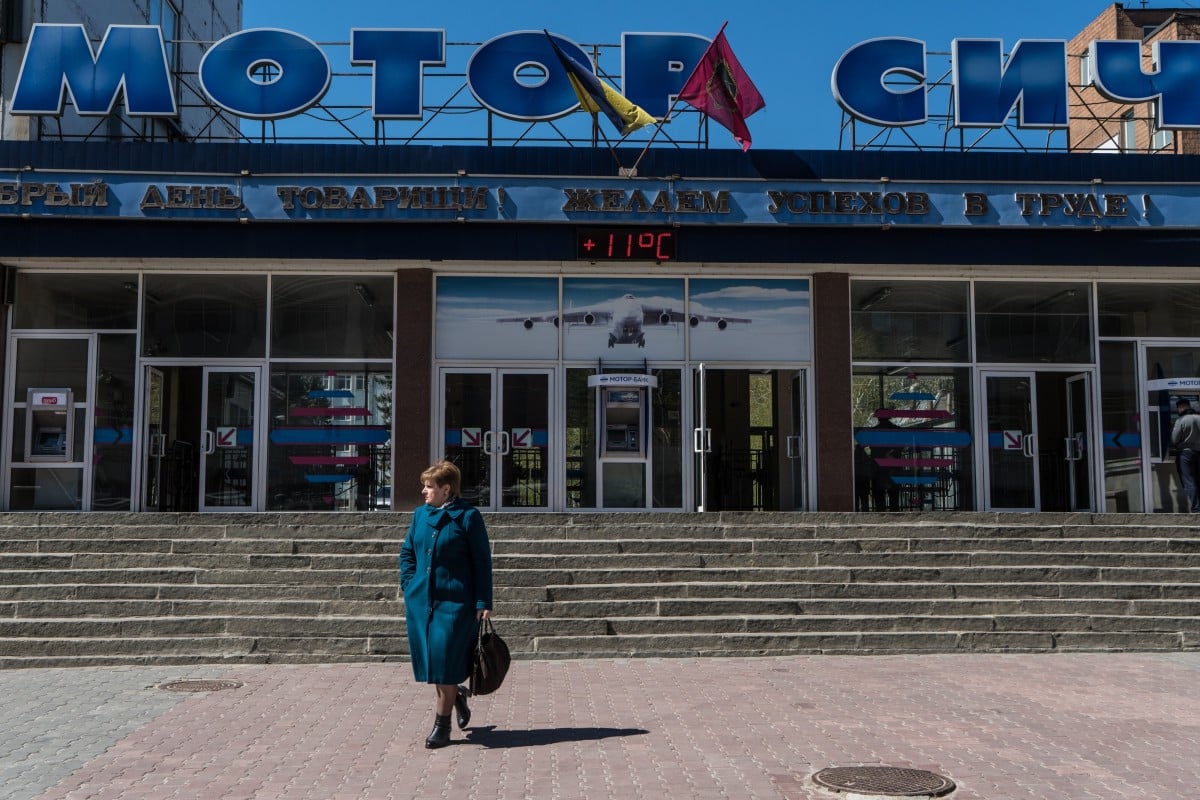
Chnia’s Skyrizon says it will appeal a Kiev court’s decision to block its purchase of Ukrainian aircraft engine maker Motor Sich. Photo: Getty Images
A court in Kiev has rejected an appeal by Chinese investors to unfreeze the shares of a Ukrainian aircraft engine maker, a setback for the Chinese company that sought to buy the Ukrainian firm in a deal opposed by the United States.
China’s Skyrizon Aircraft Holdings bought a majority stake in Motor Sich, but the shares were frozen in 2017 pending an investigation by Ukraine’s security service (SBU). Washington wants the deal scrapped.
The US and China have competed for influence in Ukraine since its relations with Moscow soured when Russia annexed the Crimea peninsula in 2014.
In its ruling, the court kept the shares frozen, citing the SBU investigation into whether selling Motor Sich sabotages national security by allowing sensitive technology into foreign hands. The ruling was dated March 13, shared with the parties this week.
Skyrizon plans further appeals, said a lawyer involved in the case, speaking anonymously due to the political sensitivity of the case. Zelensky’s office, the US embassy and the Chinese embassy did not respond to requests for comment. Motor Sich and the SBU declined to comment.
Motor Sich severed ties with Russia after the annexation of Crimea. Photo: Wikipedia
Motor Sich severed ties with Russia, its biggest client, after the annexation of Crimea. The wrangle over its future has held up efforts to find new markets, and supporters of a quick resolution say it is now operating at less than half capacity.
“Motor Sich has become a hostage to the geopolitical situation,” former prime minister Anatoliy Kinakh, chairman of an industrial union which has called for the government to resolve the dispute quickly, said.
The state’s anti-monopoly committee has launched its own investigation and says it is waiting to receive more documents before deciding whether to sanction the sale.
President Volodymyr Zelensky’s administration has had to balance strengthening ties to Beijing with keeping the United States, its biggest military aid donor, onside. In recent weeks, Beijing and Washington have both offered aid to Ukraine to fight the
coronavirus.
At the moment it is a very difficult task when we have the biggest powers in the world and their interests are in conflict in Ukraine,” Oleksandr Danylyuk, a former top security official under Zelensky, said.
Source: SCMP
Posted in 2014, 2017, administration, Aerospace, Aid, aircraft engine maker, allowing, annexed, anonymously, anti-monopoly committee, appeal, balance, Beijing, biggest, both, bought, China’s, Chinese appeal, Chinese embassy, competed, coronavirus, court, court’s decision, Crimea peninsula, deal, dispute, documents, fight, firm, foreign hands, frozen, geopolitical situation, Government, influence, investigation, investors, keeping, Kiev, launched, Lawyer, majority, military aid donor, Moscow, Motor Sich, National security, offered, onside, opposed, political sensitivity, President Volodymyr Zelensky’s, purchase, quickly, recent, rejects, relations, resolve, Russia, sabotages, sale, sanction, security service, security service (SBU), sensitive, shares, Skyrizon, Skyrizon Aircraft Holdings, soured, stake, strengthening, Technology, ties, to block, Ukraine, Ukraine’s, Ukrainian, Uncategorized, unfreeze, United States, US embassy, Washington, weeks, Zelensky |
Leave a Comment »
08/09/2019
- International watchdog to vote on whether to extend restrictions to southern African countries that are the biggest exporters
- If passed, China may find it hard to buy elephants from Africa
An elephant is hoisted into Chongqing zoo in southwestern China, on loan from another Chinese zoo. Photo: Reuters
China, one of the leading buyers of African elephants, could face difficulty in acquiring the mammals if a widening of a ban on their sale to zoos is ratified next week by the global regulator of wildlife trade.
A motion further restricting the sale of live elephants was on Sunday supported by 46 countries at the committee stage of the Convention on International Trade in Endangered Species of Wild Fauna and Flora (Cites) in Geneva. It will go to a final vote on August 28.
The sale of elephants from West, Central and East Africa is already banned – but there is a lower level of protection for them in southern African countries such as South Africa, Namibia and Zimbabwe, which are the top three exporters of wild elephants to overseas zoos, according to Cites.
Keeping elephants caught from the wild in zoos is considered cruel by conservation and animal rights groups.
Conservationists criticised Zimbabwe’s capture of 35 baby elephants that were exported to a Chinese zoo in February. There was also uproar from activists in 2015 when a video filmed in a Chinese zoo showed two dozen elephants bought from Zimbabwe exhibiting signs of distress.
Zimbabwe was among 18 countries that opposed the potential ban at the committee stage, along with the United States – another leading buyer of elephants from Africa. China was one of 19 countries that abstained, while the European Union’s 28 countries did not vote.
If the motion is passed, China and the US – both known to be buying elephants from Africa and keeping them in so-called captive facilities or zoos – may find it hard to source the animals from the continent. Zimbabwe has come under
global scrutiny
for its capture and sale of elephants to captive facilities including zoos and safari parks in China and the US.
Peter Knights, founder and chief executive of WildAid, an environmental organisation in San Francisco, explained that Cites still allowed the movement of live elephants for on-site conservation efforts such as moving the animals back into the wild or to a national park where they had been depleted.
“This is not primarily a conservation issue but more about animal welfare,” he said. “As highly social, intelligent animals, African elephants do not usually do well in captivity, requiring very large areas, and often developing behavioural problems in captivity and not usually reproducing successfully – indicating far from ideal housing.”
According to Humane Society International, which promotes animal welfare, Zimbabwe has sold more than 100 baby elephants to zoos in China since 2012, with a further 35 reportedly awaiting export.
On Monday, 55 elephant specialists protested to the US wildlife management agency about plans for the country’s zoos to import juvenile elephants caught in the wild from Zimbabwe. They asked the agency to prohibit imports of wild-caught elephants for captivity in US facilities.
“We are vehemently opposed to the proposed imports,” the experts wrote in a letter to the agency. “Young elephants are dependent on their mothers and other family members to acquire necessary social and behavioural skills. Male calves only leave their natal families at 12 to 15 years old and females remain for life. Disruption of this bond is physically and psychologically traumatic for both the calves and remaining herds and the negative effects can be severe and lifelong.”
The letter said that eSwatini, formerly Swaziland, had sold a total of 11 wild elephants to two American zoos in 2003, and a further 18 to three US zoos in 2016.
‘Hundreds’ of elephants are being poached each year in Botswana
Concerns about keeping elephants in zoos come at a time when the animals remain under threat in Africa from poachers who kill them for ivory.
Southern African countries such as Botswana, Namibia, Zimbabwe and Zambia are pushing to reopen the trade in ivory. Zambia is seeking to have the classification of its elephants downgraded to allow commercial trade in registered raw ivory with approved trading partners.
Other countries, including Kenya, Nigeria and Gabon, are seeking the highest possible levels of protection for all of Africa’s elephants.
Two previous attempts at regulating the ivory trade failed to curb poaching, which has caused elephant numbers to dwindle over the past two decades. A 2016 study estimated that 30,000 to 40,000 elephants were being killed every year, with about 400,000 remaining in total.
Knights, of WildAid, said that between 1975 and 1989 – the first period in which the ivory trade was regulated – half of Africa’s elephants were lost. During the second attempt at regulation between 2008 and 2017, participating countries claimed to have addressed the problem but poaching increased.
“It is clear that we cannot control ivory trade and that legal trade stimulates poaching and demand for ivory, rather than substituting for it as some countries suggest. The price fell by two-thirds when China banned domestic sales,” Knights said, adding that demand for ivory came primarily from Asia.
“Most seized shipments are en route to China. It has banned all sales and is making a great effort to crack down on illegal trade.”
Source: SCMP
Posted in affect, africa, African countries, African elephants, ban, Botswana, buy, China alert, Chongqing zoo, Convention on International Trade in Endangered Species of Wild Fauna and Flora (Cites), elephants, eSwatini, European Union, Gabon, Geneva, hoisted, Humane Society International, International watchdog, ivory, Ivory trade, Kenya, mammals, Namibia, Nigeria, poaching, safari parks, sale, San Francisco, South Africa, southern, Swaziland, Uncategorized, US, US-China relationship, vote, West, Central and East Africa, wild, WildAid, Zimbabwe, zoos |
Leave a Comment »
19/08/2019
- President says sale of Lockheed Martin F-16Vs will go ahead if ratified by Senate
- Military experts have said the jets would bolster Taiwan’s ability to counter the threat of air strikes from mainland China
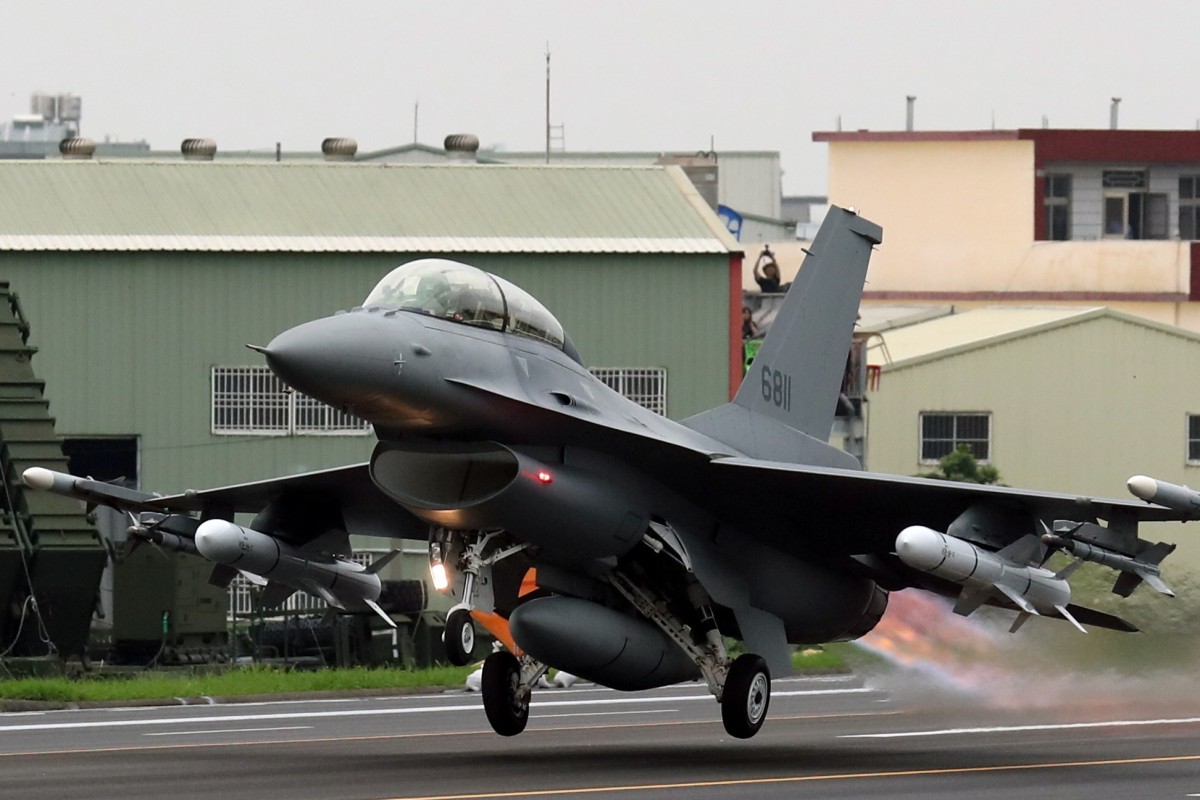
A Taiwan Air Force F-16V takes off during a drill in May. Photo: EPA-EFE
Beijing warned it would take countermeasures against Washington for selling 66 fighter jets to Taiwan after US President Donald Trump said he had approved the US$8 billion deal.
Chinese foreign ministry spokesman Geng Shuang on Monday said the sale of Lockheed Martin F-16V jets was a serious violation of the one-China principle.
“China has made numerous solemn representations to the US on the sale of F-16V jets to Taiwan,” Geng said in a press conference, adding that the United States should halt the sale.
“The US has to bear all the consequences triggered by the sale,” Geng said. “China will take necessary measures to defend its self-interest based on the development of the situation.”
Geng gave no details of the action China would take. In July, Beijing said it would impose sanctions on US firms involved in a deal to sell US$2.2 billion worth of tanks, missiles and related equipment to Taiwan, describing it as harmful to China’s sovereignty and national security.
Liang Yunxiang, an international relations expert from Peking University, said one countermeasure Beijing might use was to suspend military-to-military exchanges with the United States.
Speaking to reporters in New Jersey on Sunday, Trump said that the sale would need to be ratified by the US Senate but that he had approved it.
“It’s US$8 billion. It’s a lot of money. That’s a lot of jobs. And we know they’re going to use these F-16s responsibly,” he said.
If the deal is approved by Congress, it will be the first time since 1992 that the United States has sold F-16s to Taiwan. Previous requests were rejected by the Barack Obama administration, which instead offered to upgrade Taiwan’s existing fleet of about 140 F-16A/B Block 20 aircraft.
During months of slow progress since
the sale was outlined earlier this year, some lawmakers and defence experts had suggested that Trump was using the proposed deal as leverage to secure a better agreement for the US in talks to resolve its year-long
Taiwan’s presidential office and foreign ministry lauded Trump’s announcement, calling it a strong sign of the US’ commitment to its security and saying the deal would help to maintain regional stability.
“The new warplanes will greatly strengthen our anti-air defence capability and we will continue to be devoted to safeguarding peace and stability across the Taiwan Strait and in the region, thereby maintaining freedom and democracy in Taiwan,” presidential office spokesman Alex Huang said.
‘Fighter jets trump battle tanks’ in Taiwan’s US arms priorities
In a statement, Taiwan’s foreign ministry said persistent war games by the mainland around the island and in the East and South China Sea had not only sabotaged peace and stability in the region but also triggered grave concern from China’s neighbours.
It described Trump’s approval of the deal as a “strong indicator of the close and growing security partnership between the US and Taiwan”.
Opinion: Care needed over Taiwan arms deal
Military experts have said the new variant of the F-16, the Viper – which can carry a wide range of short and medium-range air-to-air missiles – is more able to counter the threat of an air strike from mainland China’s fourth-generation aircraft, such as the Su-35 and J-10.
Last week, Republican Senator Marco Rubio said the US administration had made progress in advancing the deal, which he called “an important step in support of Taiwan’s self-defence efforts”.
In July, the US also approved arms sales to Taiwan worth US$2.2 billion, including 108 M1A2T Abrams tanks and 250 Stinger portable surface-to-air missiles.
Beijing strongly opposes arms deals with Taiwan, which it considers a renegade province, but the US is obliged to help defend the self-governing island under the terms of its Taiwan Relations Act, effective since 1979.
Source: SCMP
Posted in Abrams tanks, air strikes, approves, Barack Obama administration, Beijing, China’s sovereignty, chinese foreign ministry spokesman, Congress, consequences, countermeasures, fighter jets, Foreign Ministry, foreign ministry spokesman, international relations expert, Lockheed Martin F-16Vs, Mainland China, Military experts, National security, one-China principle, Peking University, President Donald Trump, renegade province, sale, Senate, Stinger portable surface-to-air missiles, Taiwan, Taiwan Relations Act, Taiwan Strait, Uncategorized, US, war games, warns, warplanes, Washington |
Leave a Comment »





 CHINDIA ALERT: You'll be living in their world, very soon