Archive for ‘save’

01/04/2020

Coronavirus: India’s race to build a low-cost ventilator to save Covid-19 patients

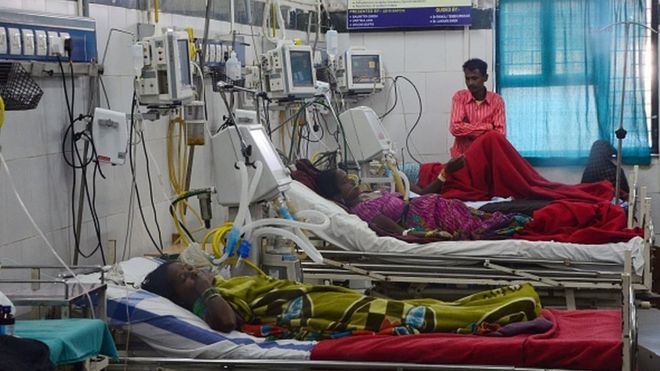
Patients on ventilators in an Indian hospitalImage copyright GETTY IMAGES
Image caption India has an estimated 48,000 ventilators and most of them are already in use

In an 8,000 sq ft (743 sq m) facility in the western Indian city of Pune, a bunch of young engineers are racing against time to develop a low-cost ventilator that could save thousands of lives if the coronavirus pandemic overwhelms the country’s hospitals.

These engineers – from some of India’s top engineering schools – belong to a barely two-year-old start-up which makes water-less robots that clean solar plants.

Last year, Nocca Robotics had a modest turnover of 2.7 million rupees ($36,000; £29,000). The average age of the mechanical, electronic and aerospace engineers who work for the firm is 26.

India, by most estimates, only has 48,000 ventilators. Nobody quite knows how many of these breathing assistance machines are working. But it is a fair assumption that all those available are being used in intensive care units on existing patients with other diseases.

About one in six people with Covid-19 gets seriously ill, which can include breathing difficulties. The country faces seeing its hospitals hobbled as others around the world have been, with doctors forced to choose who they try to save.

At least two Indian companies make ventilators at present, mostly from imported components. They cost around 150,000 ($1,987; £1,612) rupees each. One of them, AgVa Healthcare, plans to make 20,000 in a month’s time. India has also ordered 10,000 from China, but that will meet just a fraction of the potential demand.

The invasive ventilator being developed by the engineers at Nocca Robotics will cost 50,000 rupees ($662). Within five days of beginning work, a group of seven engineers at the start-up have three prototypes of a portable machine ready.

They are being tested on artificial lungs, a prosthetic device that provides oxygen and removes carbon dioxide from the blood. By 7 April, they plan to be ready with machines that can be tested on patients after approvals.
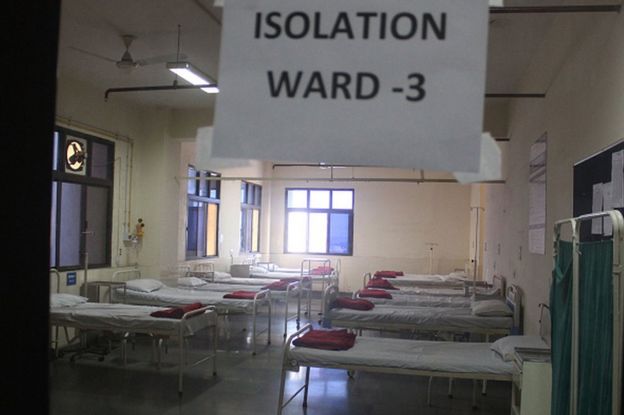
India hospitalImage copyright GETTY IMAGES
Image caption India is beefing up isolation beds in hospitals

“It is most certainly doable,” said Dr Deepak Padmanabhan, a cardiologist at Bangalore’s Jayadeva Institute of Cardiovascular Sciences and Research, and a key advisor on this project. “The simulations on artificial lungs have been done and seem to work well.”

Inspiring story

The race to develop this inexpensive, home-grown invasive breathing machine is an inspiring story of swift coordination and speedy action involving public and private institutions, something not common in India.

“The pandemic has brought us all together in ways I could never imagine,” says Amitabha Bandyopadhyay, a professor of biological sciences and bioengineering at Indian Institute of Technology (IIT), Kanpur, and a key mover of the project.

The young engineers mined open source medical supplies groups on the internet to find information on how to make the ventilators. After securing permissions, it took them exactly eight hours to produce the first prototype. Of particular use, say doctors, were some designs by engineers at MIT. With imports stalled, the engineers picked up pressure sensors – a key component of the machine that helps supply oxygen to lungs at a pressure that doesn’t cause injury – from those used in drones and available in the market.
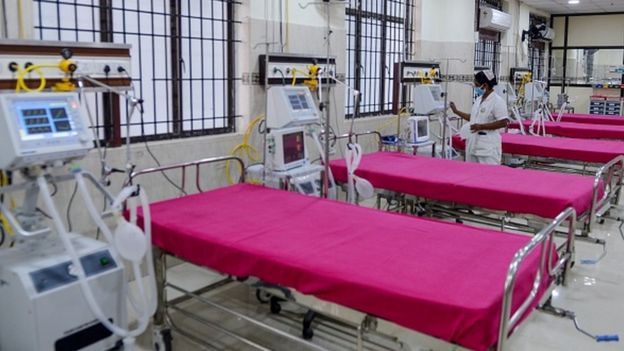
India hospitalImage copyright AFP
Image caption India needs thousands of ventilators to cope with a possible rush of patients

Local authorities helped open firms that stock components – each machine needs 150 to 200 parts – and made sure that a bunch of engineers who had returned home to Nanded after the lockdown were still able to travel 400km (248 miles) back to Pune to work on the machine.

Some leading Indian industrialists, including a major medical device-making company, have offered their factories to manufacture the machines. The plan is to make 30,000 ventilators, at around 150-200 a day, by the middle of May.

Social media influencers joined the effort. Rahul Raj, a lithium battery-maker and an IIT alumnus, crowd-sourced a group called Caring Indians to “pool resources and experience” to cope with the pandemic. Within 24 hours, 1,000 people had signed up. “We tweeted to the local lawmaker and local police in Pune to help the developers, and made contacts with people who would be interested in the project,” Mr Raj said.

‘No-frills machine’

Expat Indian doctors and entrepreneurs who went to the same school – IIT is India’s leading engineering school and alumni include Google chief Sundar Pichai – held Zoom meetings with the young developers, advising them and asking questions about the machine’s development. The head of a US-based company gave them a 90-minute lecture on how to manage production. A former chief of an info-tech company told them how to source the components.

Lastly, a bunch of doctors vetted every development and asked hard questions. In the end, more than a dozen top professionals – pulmonologists, cardiologists, scientists, innovators, venture capitalists – have guided the young team.

Doctors say the goal is to develop a “no-frills” breathing machine tailored to Indian conditions.

Ventilators depend on pressurised oxygen supply from hospital plants. But in a country where piped oxygen is not available in many small towns and villages, developers are seeing whether they can also make the machine run on oxygen cylinders. “In a way we are trying to de-modernise the machine to what it was barely 20 years ago,” says Dr Padmanabhan.

“We are not experienced. But we are very good at making products easily. The robots that we make are much more complex to make. But this is a life-saving machine and carries risk, so we have to be very, very careful that we develop a perfect product which clears all approvals,” said Nikhil Kurele, the 26-year-old co-founder and chief executive officer of Nocca Robotics.

In just a week’s time, India will learn whether they pulled off the feat.
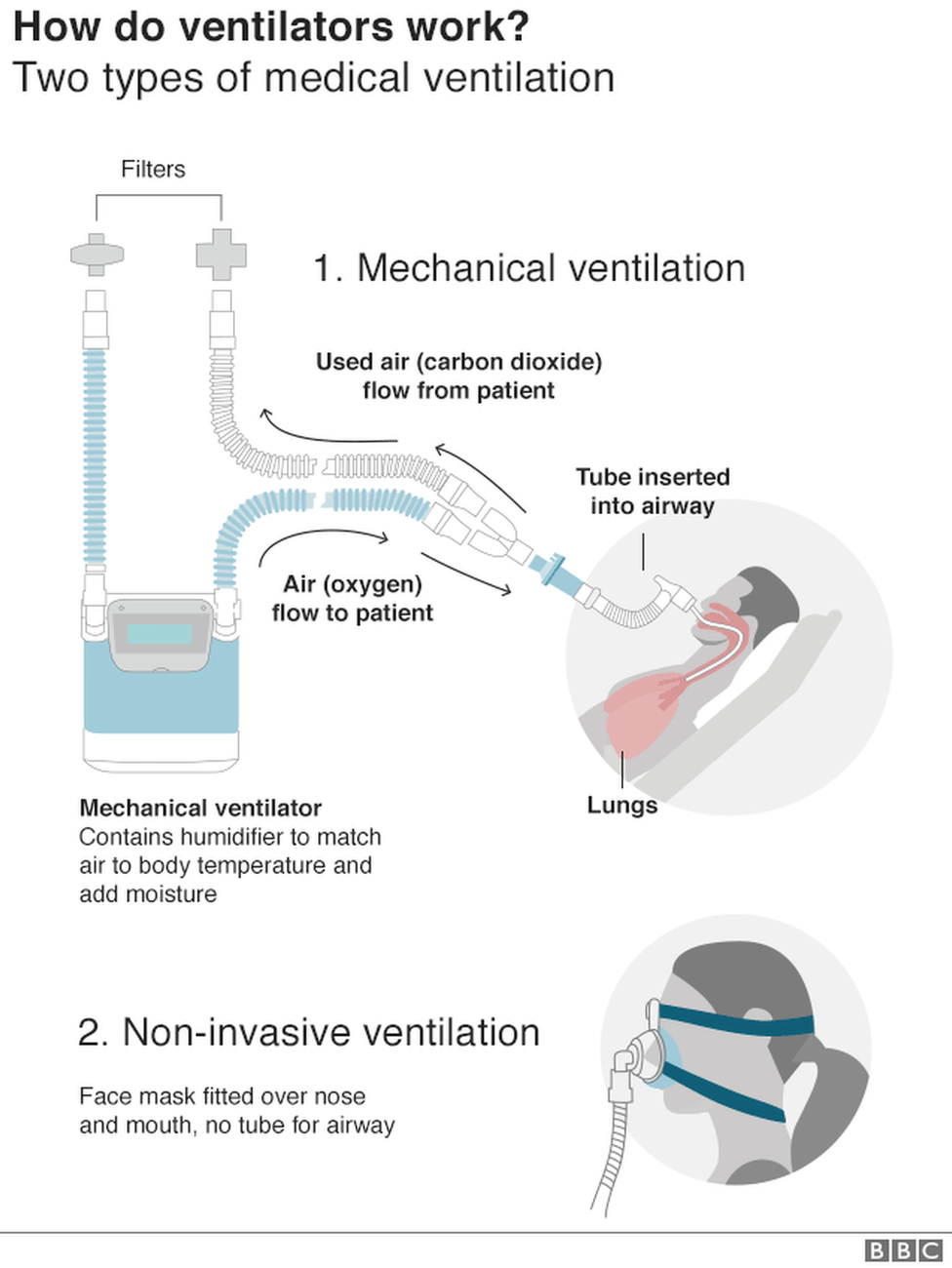
Graphic showing two common types of medical ventilation
Presentational white space

Source: The BBC

27/03/2020

Xi Focus: China underscores unity to save world economy from recession

BEIJING, March 27 (Xinhua) — As the novel coronavirus disease (COVID-19) makes social distancing and working from home the new normal, leaders of the Group of 20, home to almost two-thirds of the world’s population and about 86 percent of the gross world product, convened Thursday for a virtual summit that sent a clear message: We are in the same boat.

The G20 Extraordinary Virtual Leaders’ Summit on COVID-19 was the first of its kind in the history of G20, and also the first major multilateral event attended by President Xi Jinping since the outbreak of the COVID-19.

Speaking to his colleagues via video link from Beijing, Xi put forward four proposals to cope with a situation that is “disturbing and unsettling,” calling for an all-out global war against the COVID-19 outbreak and enhancing international macro-economic policy coordination to prevent a recession.

“At such a moment, it is imperative for the international community to strengthen confidence, act with unity and work together in a collective response,” Xi said. “We must comprehensively step up international cooperation and foster greater synergy so that humanity as one could win the battle against such a major infectious disease.”

In a demonstration of the need for greater global coordination and solidarity, the G20 members were joined by leaders from invited countries including hard-hit Spain as well as multiple international organizations including the United Nations (UN), the World Health Organization (WHO), the World Trade Organization (WTO), and the International Monetary Fund (IMF).

While previous G20 summits often discussed high-stake topics like economic recession and boosting development policy, Thursday’s emergency meeting came at a time when the world is grappling with a dicey pandemic and concerns are mounting over the “black swan” event that could derail the global economy.

As China’s epidemic prevention and control are continuously improving, and the trend of an accelerated restoration of normal production and life is being consolidated and expanded, his remarks at the G20 summit are timely and of critical importance for countries now fighting at the front lines of a battle to stem the pandemic and forestalling a recession.

UNITED WE STAND

The number of COVID-19 cases worldwide topped 462,684, with 20,834 deaths as of 10 a.m. Central European Time, Thursday, according to the data kept by the WHO. The economic toll is also climbing as more businesses and trade come to a grinding halt amid massive lockdowns.

“The COVID-19 pandemic is endangering countries rich and poor, large and small, strong and weak alike,” said Wei Jianguo, vice chairman of the China Center for International Economic Exchanges and former vice minister of Commerce. “We are now at a critical juncture of fighting the pandemic and stabilizing the global economy, and the international community expects the G20 to play a leading role.”

The significance and urgency of Thursday’s meeting hark back to scenarios in the depth of the global financial crisis in 2008 when meetings of G20 finance ministers and central bank governors were raised to the level of heads of state and government for better crisis coordination. What’s different is that grave challenges facing the world today have led to warnings of a downturn even worse than in 2008.

“This pandemic will inevitably have an enormous impact on the economy,” WTO Director-General Roberto Azevedo said in a video clip posted on the website of the organization. “Recent projections predict an economic downturn and job losses that are worse than the global financial crisis a dozen years ago.”

To prevent the world economy from falling into recession, Xi said countries need to leverage and coordinate their macro policies to counteract the negative impact as the outbreak has disrupted production and demand across the globe.

“We need to implement strong and effective fiscal and monetary policies to keep our exchange rates basically stable. We need to better coordinate financial regulation to keep global financial markets stable. We need to jointly keep the global industrial and supply chains stable,” he told the summit in a speech titled “Working Together to Defeat the COVID-19 Outbreak.”

Xi’s remarks on fighting as one echoed. IMF Managing Director Kristalina Georgieva said: “We project a contraction of global output in 2020, and recovery in 2021. How deep the contraction and how fast the recovery depends on the speed of containment of the pandemic and on how strong and coordinated our monetary and fiscal policy actions are.”

“We will get through this crisis together. Together we will lay the ground for a faster and stronger recovery,” she said in a statement released after the conference call.

The important lesson in international solidarity is often forgotten when things are going fine, William Jones, Washington bureau chief of the U.S. publication Executive Intelligence Review, told Xinhua in a recent interview.

“The experience with the COVID-19 will hopefully lead to more collaborative efforts between countries and strengthen the notion of a community with a shared destiny,” he said.

As China is a key driver of global economic growth, its economic performance bears great significance on the outlook of global recovery. In a strong morale and practical boost, Xi reaffirmed China would actively contribute to the global war against COVID-19 and a stable world economy.

“Guided by the vision of building a community with a shared future for mankind, China will be more than ready to share its good practices, conduct joint research and development of drugs and vaccines, and provide assistance where it can to countries hit by the growing outbreak,” Xi said.

Xi said China will contribute to a stable world economy by continuing to advance reform and opening-up, widen market access, improve the business environment and expand imports and outbound investment, and called on all G20 members to take collective actions — cutting tariffs, removing barriers, and facilitating the unfettered flow of trade.

The country is beefing up wider opening-up to foreign investment. Revision of the negative list on foreign investment is underway as part of the plan to improve business environment and expand the catalog of industries where foreign investment is encouraged.

New editions of the list will probably be released in May, expanding market access of the tertiary sector, such as health care, aged service, finance, transportation, logistics, tourism, education and training and value-added services of telecommunications, said Zhang Fei with the Chinese Academy of International Trade and Economic Cooperation.

Noting that a global solution is needed to address the global challenge brought about by the pandemic, Azevedo said cross-border trade and investment flows have a role to play in efforts to combat the COVID-19 pandemic and will be vital for fostering a stronger recovery once the medical emergency subsides.

“No country is self-sufficient, no matter how powerful or advanced it may be. Trade is what allows for the efficient production and supply of basic goods and services, medical supplies and equipment, food and energy that we all need,” he said.

Source: Xinhua

28/02/2020

Delhi riots: ‘Hero cop’ who braved a mob to save lives

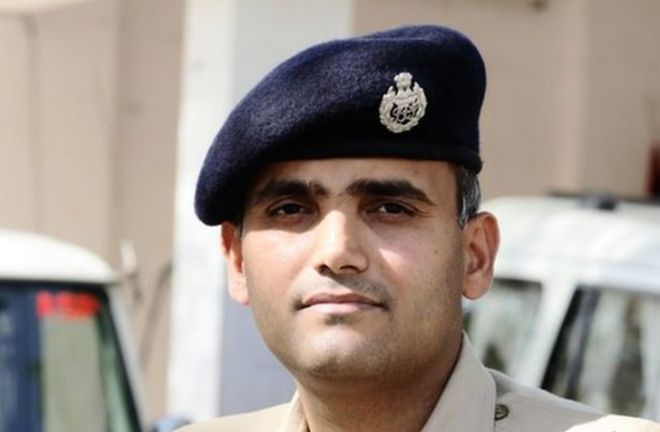
Mr Jadaun wants the police force to become more professional to implement progressive ideasImage copyright ANKIT SRINIVAS
Image caption Neeraj Jadaun said he was only doing his duty

An Indian policeman is being hailed as a hero after he braved rioting mobs to save families during days of religious violence in the capital Delhi.

Riots in the city broke out on Sunday, killing 39 people and injuring more than 200.

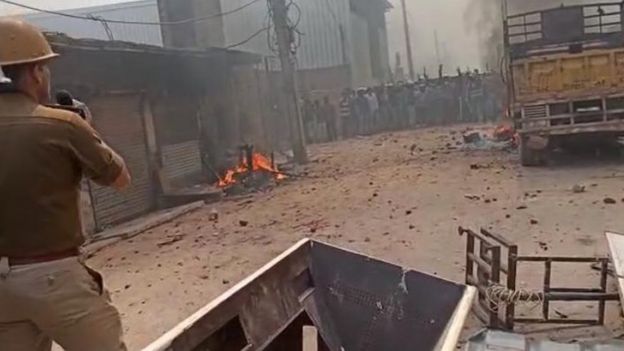
Neeraj Jadaun, a superintendent of police in neighbouring Uttar Pradesh state, told the BBC’s Vikas Pandey that he was patrolling a border checkpoint on 25 February when he heard sounds of gunfire coming from Karawal Nagar in Delhi – just 200m (650ft) away from him.

He saw a mob of 40-50 people setting vehicles on fire when one of them jumped into a house with a petrol bomb. At that point, Mr Jadaun decided to break with traditional police protocol and made a split-second decision to cross the state border into Delhi.

In India, police officers need explicit permission to cross state borders.

“I chose to cross. I was willing to go alone despite being aware of the danger and the fact that it was beyond my jurisdiction. Those were the most terrifying 15 seconds of my life. Thankfully, the team followed me, and my seniors also supported me when I informed them later,” he said.

“It was dangerous as we were outnumbered and the rioters were armed. We first tried to negotiate with them and when that failed, we told them that police would open fire. They retreated but seconds later, they threw stones at us and we also heard gunshots,” he added.

However, Mr Jadaun and his team held their positions and kept pushing back until the rioters finally left.

Richi Kumar, a reporter with the Hindi daily Amar Ujala, described Mr Jadaun’s decision as the “bravest act” he had ever seen.

“The situation was very dangerous. The rioters were fully armed and they were not ready to listen anybody. I can describe them as bloodthirsty. They were throwing stones at the police but Mr Jadaun did not back down. There was real danger of policemen being shot at by rioters,” he told the BBC.

Mr Jadaun facing a violent mob
Image caption Mr Jadaun took a split-second decision to cross state borders and stop a mob

The violence first broke out in north-east Delhi between protesters for and against a controversial citizenship law.

But they have since taken on communal overtones.

Mr Jadaun said the rioters he saw had come prepared for arson.

“The area had many shops with stocks of bamboo. A fire would have engulfed the whole area and had that been allowed to happen, the death toll in Delhi would have been much higher.”

But, Mr Jadaun is uncomfortable about being hailed as a hero.

“I am not a hero. I have taken oath to protect any Indian in danger. I was just doing my duty because I wasn’t willing to let people die under my watch. We were in a position to intervene and we did that,” he added.

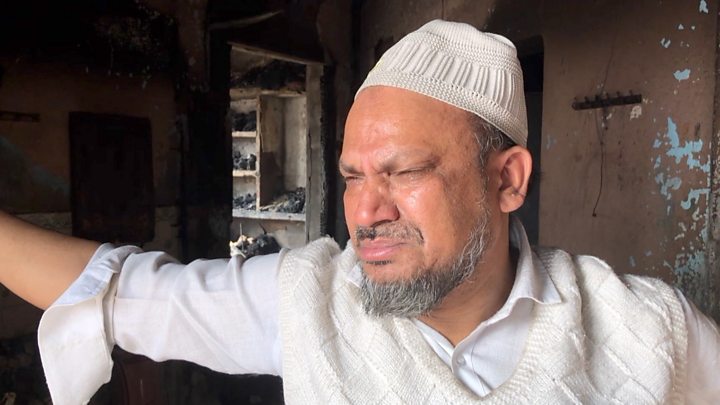
Media caption Delhi religious riots: ‘Mobs set fire to my house and shop’

Similar small acts of heroism – of Hindus and Muslims standing together – have also begun to emerge.

Subhash Sharma, from Ashok Nagar, one of the worst-affected areas, described how he ran to help after mobs set a mosque on fire.

“There were thousands of people in the mob and there were only a handful in the mosque. As soon as I saw it set on fire, I switched on the water pump in my house and ran there with a hose,” Mr Sharma told BBC Hindi.

Murtaza, a man from the same neighbourhood, said that he wanted to flee the area, but his Hindu neighbours told him not to leave.

“They assured us they would not let anybody harm us,” he said.

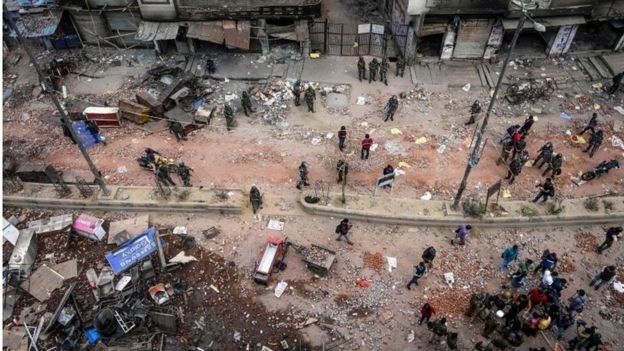
A general view of the riot-hit area following clashes between people supporting and opposing a cententious amendment to Indias citizenship law, in New Delhi on February 27, 2020Image copyright AFP
Image caption The religious violence has killed 38 people and injured more than 200

BBC Hindi’s Faisal Mohammed also spoke to two neighbours – a Hindu and a Muslim – from the Vijay park area in Maujpur, one of the areas worst-affected by the violence.

The two described how they rallied their neighbours to chase away a mob that had been burning vehicles and shattering windows in the vicinity.

“The next day we shut the main road and people from the neighbourhood gathered together and sat outside,” one of the men, Jamaluddin Saifi, said.

Residents there also set up a “peace committee” – made up of both Hindus and Muslims – who went from house to house telling people not to believe rumours and to keep children inside.

As the Indian capital struggles to pick up the pieces, it is these stories that are giving residents some hope that life can eventually go back to normal.

Source: The BBC

17/02/2020

China Focus: Cured coronavirus patients donate plasma to save more

WUHAN/SHANGHAI, Feb. 16 (Xinhua) — Twenty recovered coronavirus patients donated their plasma to those in severe condition in Wuhan, capital of the hard-hit province of the novel coronavirus disease (COVID-19), said the province’s COVID-19 scientific research team Sunday.

The donors are doctors and nurses who have recovered from the disease for 10 days at the Jiangxia District’s No. 1 people’s hospital and traditional Chinese medicine hospital.

Twelve patients in severe condition have received the plasma treatment. An expert with Jiangxia District’s No. 1 people’s hospital said that the patients have shown improved clinical symptoms about 12 to 24 hours after they received the treatment.

“We are observing the therapeutic results and improving our treatment plans,” the expert said, adding that plasma donation won’t hurt the donor once he or she has been cured for 10 days.

Zhang Dingyu, head of Wuhan Jinyintan Hospital, a major designated hospital to admit confirmed cases in Wuhan, called upon cured patients who were infected with COVID-19 to donate plasma as initial results had indicated the effectiveness of convalescent plasma-derived therapeutic products in curing infected patients in severe and critical conditions.

In Shanghai, official data showed 124 patients have recovered from COVID-19 and discharged from hospitals by Saturday afternoon, of whom 14 have shown willingness to donate their plasma to assist coronavirus research and treatment.

Some recovered patients regard the donation as a way to pay back to the society after they received timely and effective treatment.

“Before being discharged from the hospital, I learned from the nurses that I can donate plasma, which I think is very helpful,” said a recovered patient surnamed Liu who is willing to become a donor.

“We were helped by others and we want to help other patients as well,” Liu said.

Source: Xinhua

07/10/2019

Aarey protests: Supreme Court steps in to save Mumbai trees after protests

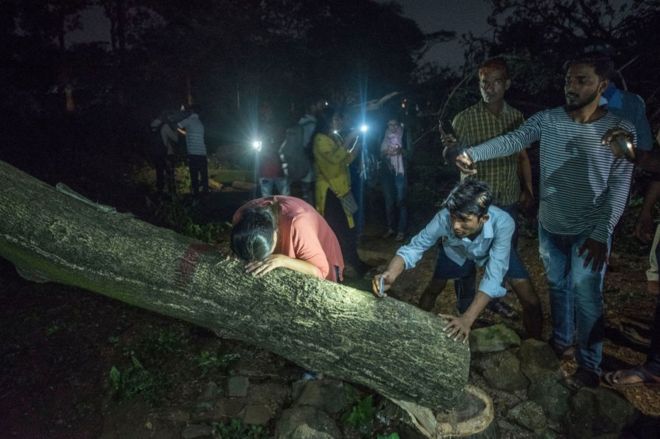
Protesters cry over felled trees in Aarey colony on October 5, 2019 in Mumbai, India.Image copyright GETTY IMAGES
Image caption Protesters cry over felled trees in Aarey colony

India’s top court has asked officials to stop cutting trees in a forested area in Mumbai city after protesters clashed with police over the weekend.

The trees, part of a green strip known as Aarey colony, were being cut to make way for a new metro rail project.

Locals have long opposed the move, and filed petitions seeking Aarey to be declared a protected area.

But a high court dismissed the petitions on Friday, sparking protests as officials began felling the trees.

They planned to cut 2,185 trees, and admitted in the Supreme Court that more than 1,500 had already been cut. But petitioners claim that officials have cut around 2,500 trees.

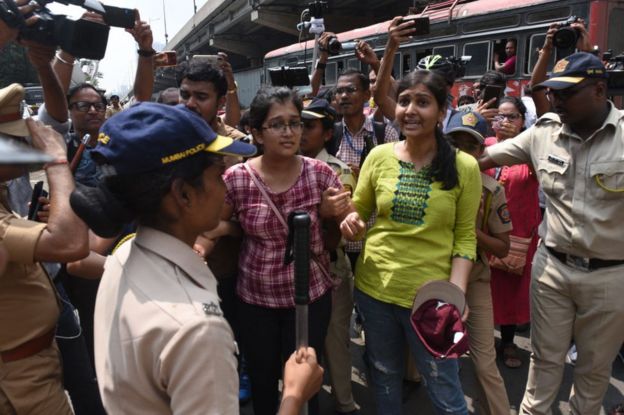
Local residents, students and environmental activists clashed with police on Friday as they took to the streets to stop authorities, and even broke through barricades to enter Aarey colony. More than 50 people were arrested and police imposed restrictions on public gatherings.

The protests grabbed the national spotlight over the weekend, and the Supreme Court took suo moto (without a formal complaint from any party) notice.

What did the Supreme Court say?

A special two-judge bench heard the matter on Monday after students wrote to the chief justice, asking the court to intervene and save the trees.

The court asked the state government of Maharashtra, where Mumbai is located, to not cut any more trees.

Activists were forcefully evacuated from Aarey Checknaka and taken to local Police Station at Goregaon, on October 5, 2019 in Mumbai, India.Image copyright GETTY IMAGES
Image caption Police arrested more than 50 protesters

The court also asked the government to maintain “status quo” – which means that no construction can take place – until 21 October when it will hear the matter again.

The court also ordered the release of all activists who were arrested or detained on bail.

What is Aarey colony?

Spread over 1,300 hectares (3,212 acres), Aarey is a densely forested area dotted with lakes and has the Mithi river flowing through it. It lies at the heart of Mumbai and is often referred to as its last green lung.

It’s locally known as the Aarey “milk colony” because most of the land was given to the department of dairy development in 1951. But they are allowed to grow cattle fodder only on a fraction of the land.

Activists break barricades to stop authorities from cutting at the main gate of Metro car shed , Picnic point, Aarey colony , Goregaon east, on October 5, 2019 in Mumbai.Image copyright GETTY IMAGES
Image caption Protesters broke through barricades and clashed with police on Friday

Earlier this year, officials cleared some 40 hectares of the forested area to build a zoo, complete with a night safari. And now, locals complain, another slice of it is in danger from the metro construction.

They also fear that the government will eventually clear the way for private builders to encroach on the Sanjay Gandhi National Park, which lies to the north of Aarey colony.

Officials, however, dismiss these fears as unfounded and point out that the construction for the metro only requires 30 hectares.

How crucial is the metro rail for Mumbai?

The city badly needs a “mass rapid transport system,” Ashwini Bhide, managing director of the Mumbai metro rail corporation, had told the BBC earlier.

The land in Aarey colony, she said, was “the most suitable land due to its size, shape and location”.

She has also been defending the decision to cut the trees on Twitter.

Presentational white space

India’s financial hub is congested and infamous for its crawling traffic jams.

Its colonial-era local train system ferries some 7.5 million people between the city’s suburbs and its centre on a daily basis.

Officials say that the metro will eventually carry around 1.7 million passengers every day and bring down the number of vehicles on the road by up to 650,000.

Source: The BBC

19/03/2019

Govt asks banks to save Jet Airways, avoid bankruptcy: Report

The government has also nudged its 49 percent-owned National Investment and Infrastructure Fund (NIIF)— created to invest in stalled and new infrastructure projects — to buy a stake in Jet, a separate government source said.

BUSINESS Updated: Mar 19, 2019 15:53 IST

Reuters
Reuters
New Delhi
Jet Airways,Jet bankruptcy,Naresh Goyal
Saddled with more than 1 billion dollars of debt, Jet is struggling to stay aloft.(REUTERS)

The government has asked state-run banks to rescue privately held Jet Airways without pushing it into bankruptcy, as Prime Minister Narendra Modi seeks to avert thousands of job losses weeks before a general election, two people within the administration told Reuters.

The finance ministry has in the past year sought regular updates from the banks, led by State Bank of India (SBI), on Jet’s financial health, the people said. In recent months, the banks have provided weekly updates about a revival plan and also sought government advice, the people added.

“Top officials at the finance ministry seek regular updates on the issue,” said an official at one of Jet’s lenders, who did not want to be identified as discussions are private.

Details of the discussion between the finance ministry and bankers on bailing out Jet have not been previously reported.

New Delhi has urged state-run banks to convert debt into equity and take a stake in Jet in a rare move in India to use taxpayer money to save a struggling private-sector company from bankruptcy. The two people plus one more source, however, said this would be “transitory” and lenders could sell the stakes once Jet revives.

Also read:Civil aviation minister Suresh Prabhu calls emergency meeting on Jet Airways crisis

The government has also nudged its 49 percent-owned National Investment and Infrastructure Fund (NIIF) – created to invest in stalled and new infrastructure projects – to buy a stake in Jet, a separate government source said.

Saddled with more than 1 billion dollars of debt, Jet is struggling to stay aloft. It has delayed payments to banks, suppliers, employees and aircraft lessors – some of which have begun terminating lease deals.

The world’s biggest democracy is gearing up for an election next month and its booming aviation sector, which employs close to a million people, has been one of the job-creation success stories that Modi can point to as he seeks a second term.

It is crucial for India that Jet revives as the fall of its second-largest airline could have “disastrous consequences for the investment climate” in the sector, a top government official told Reuters.

The official is concerned that if Jet collapses it could drive up airfare in a fast-growing market, wiping out efforts to bring low-cost air travel to India’s hinterland.

A chaotic end could also make it more difficult for the government to sell a stake in Air India, at least in the short run. Last year, it failed to sell part of its stake in the indebted carrier which currently relies on taxpayer money.

If the government’s plan for Jet succeeds, then state-run banks including SBI and Punjab National Bank (PNB) as well as NIIF would together own at least a third of the airline until they find a new buyer.

Currently, Abu Dhabi’s Etihad Airways is Jet’s largest shareholder with a 24 percent stake.

India’s finance ministry, SBI, PNB and Jet Airways did not respond to requests for comment.

KINGFISHER’S COLLAPSE

Most companies in Jet’s financial condition would be placed by creditors into India’s new bankruptcy process, two bankers said. However, memories of the chaos sparked by Kingfisher Airlines’ demise in 2012 have prompted the government to seek a more sober road to rescue, they said.

Kingfisher’s bankruptcy caused job losses, lessors lost millions of dollars and banks took massive writedowns.

Putting what is essentially a services provider like Jet through the bankruptcy process would diminish its value because it owns no major assets, unlike a manufacturing company, as most of its planes are leased, said another government official.

Also read: Jet Airways delays interest payments, grounds 4 more planes

If it is pushed into bankruptcy and lessors start pulling even more planes out of service, there would be nothing left for any potential investors, the official said. Already 41 planes have been grounded by lessors in the past three months, leading to flight cancellations.

While on the surface Jet’s future still hangs in the balance with its main shareholder Etihad at loggerheads over the final terms of any deal, behind-the-scenes support from the government means there is likely to be a bailout.

But there are no easy options, one of the sources said, adding that the lenders do not have the expertise to run an airline so they have to decide what to do once they convert their debt into equity.

New Delhi is also backing a proposal for Jet’s founder and Chairman Naresh Goyal to step down if it means saving the airline, another official said. “Saving Jet is not equivalent to saving Goyal,” the official said.

RISING AIRFARE

Jet, with its fleet of 119 planes, once controlled a sixth of India’s domestic aviation market. The 25-year-old airline is also one of only two full-service carriers that flies to international destinations. The other is Air India.

The government ideally wants four to six major airlines to ensure fares are competitive and passengers have greater choice, according to the top government source.

Also read: Not paid salaries for months, Jet Airways pilots seek govt help

India plans to build 100 new airports costing about $60 billion which would need a steady stream of flights to sustain them, and that is possible only if there are enough airlines, a separate official said.

“The investment in these airports will solely depend on operators willing to have regular flights at affordable prices and one operator going bankrupt does not help,” he said.

17/12/2018

Drones called in to save the Great Wall of China

Drones called in to save the Great Wall

A very 21st Century piece of tech is being called in to save the crumbling Great Wall of China.


Large sections of the Great Wall of China are in urgent need of preservation work, but hard to reach.


So drones are coming to the rescue.

Law of Unintended Consequences

continuously updated blog about China & India

ChiaHou's Book Reviews

continuously updated blog about China & India

What's wrong with the world; and its economy

continuously updated blog about China & India