Archive for ‘scientist’

20/02/2020

India’s surgical mask makers scramble to meet Asian demand surge amid coronavirus outbreak

  • Eyeing large profits, Indian manufacturers are scrambling to meet the demand from countries such as China and Malaysia
  • But this new focus on exports means the domestic market is being underserved, and substandard masks are hitting shelves
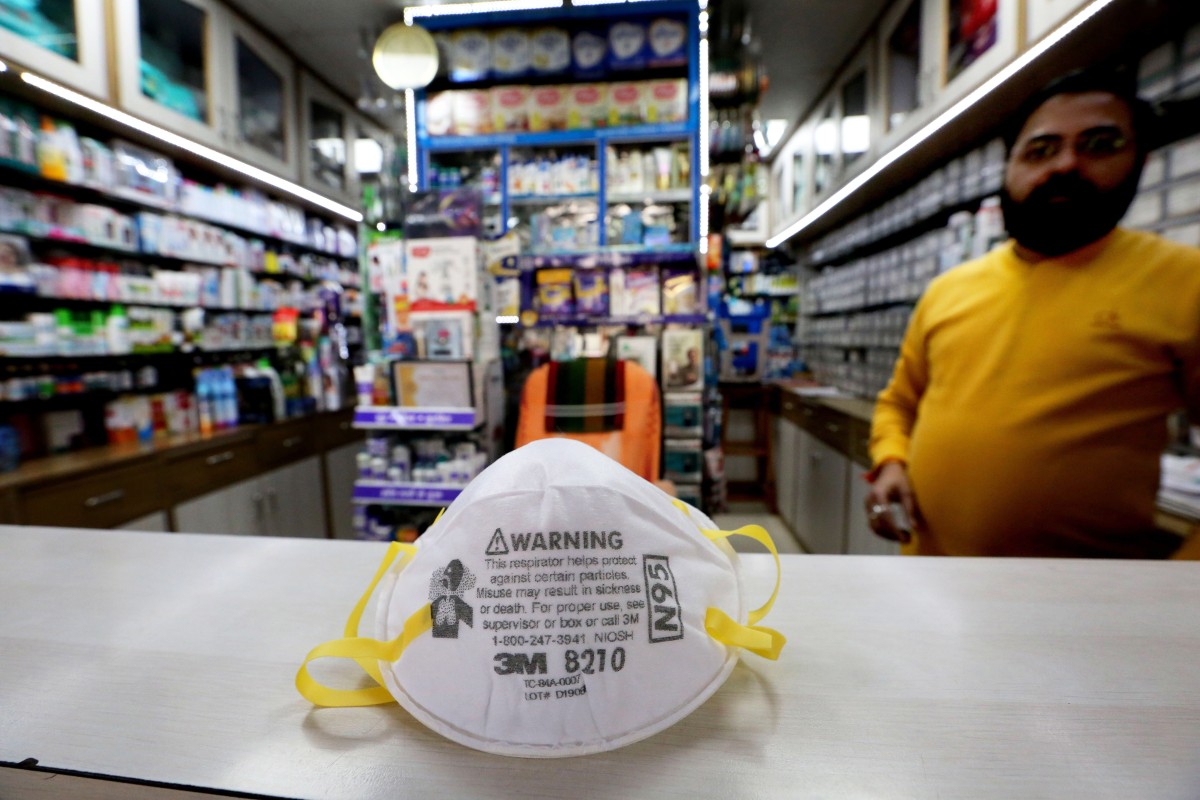
A vendor shows an N95 face mask at medical store in Bhopal, India. Photo: EPA
Indian

manufacturers and distributors of surgical face masks are currently in overdrive to meet a surge in global demand for protective gear amid the coronavirus outbreak.

With an eye on enormous profits, these suppliers have turned their focus to exports,

particularly China

– causing a chronic local shortage of masks due to the relatively lower margins in the domestic market.

Indian manufacturers produce 240 million disposable masks every year, primarily for domestic use, as per the estimates of the Association of Indian Medical Device Industry.

There are no large-scale manufacturers of surgical masks in the country; the landscape is dominated by more than a dozen medium-sized companies with a production capacity of between 20,000 and 100,000 masks a day.

China, Asean foreign ministers begin emergency meeting on coronavirus in Vientiane

20 Feb 2020

The production cost of a mask is estimated to be 1 rupee (less than 2 US cents), and masks were sold for 2-4 rupees at retail outlets a month ago. As of this week, the price of a surgical mask has skyrocketed to 15 rupees.

In some regions where there is a shortfall, retail stores are reportedly demanding as much as 50 rupees. Some experts, meanwhile, say exporting masks to coronavirus-threatened Asian countries where masks are in high demand could fetch firms up to US$15 per mask.

China has so far imported over 1.2 billion masks to meet soaring demand, according to the Ministry of Commerce.

Manoj Rajawat – director of Orthosut Biomedical and Engineering Company, which distributed about 500,000 masks every month before the surge in demand – estimates that nearly 90 per cent of masks manufactured in India in recent weeks have been exported to countries such as China, Malaysia and Singapore.

“The value of the exported masks could [easily be more than 50] times what it was before the virus outbreak in China,” Rajawat said.

More than 75,000 people have been infected with the coronavirus, the vast majority of them on mainland China, and more than 2,000 patients have died with more than 16,000 staging a full recovery. This includes India’s three cases of infection, which were discovered in Kerala and have since been cured.

To allay fears of a domestic shortage, the Indian government briefly banned exports of masks and protective gear earlier this month, when the country’s first case of coronavirus infection was confirmed. A week later, however, the ban was partially lifted for two- and three-ply masks as the demand for such protective equipment kept rising overseas.

Multiple Indian ministries are closely monitoring the situation, but are reluctant to comment on specific issues beyond releasing official notifications.

Coronavirus: Anxious Asian countries want China flight ban, says new poll

20 Feb 2020

“Indian manufacturers have exponentially increased their production of masks. With the government lifting the restrictions on exports, [these firms] are also catering to international demand, somewhat focusing more on exports as it seems more beneficial,” said Vivek Tiwari, chief executive of Medikabazaar, a business-to-business online platform for medical supplies and equipment.

However, experts and observers such as Prasad Danave, president of the Retail and Dispensing Chemist Association, say Indian manufacturers are not equipped to deal with the sudden demand for such large quantities.

“I talked to one of the manufacturers and his capacity to produce disposable masks is 20,000 pieces per day. Suddenly, two purchasers approached him asking for 2 million masks and 5 million masks respectively. It is impossible to cater to such a need immediately,” Danave said.
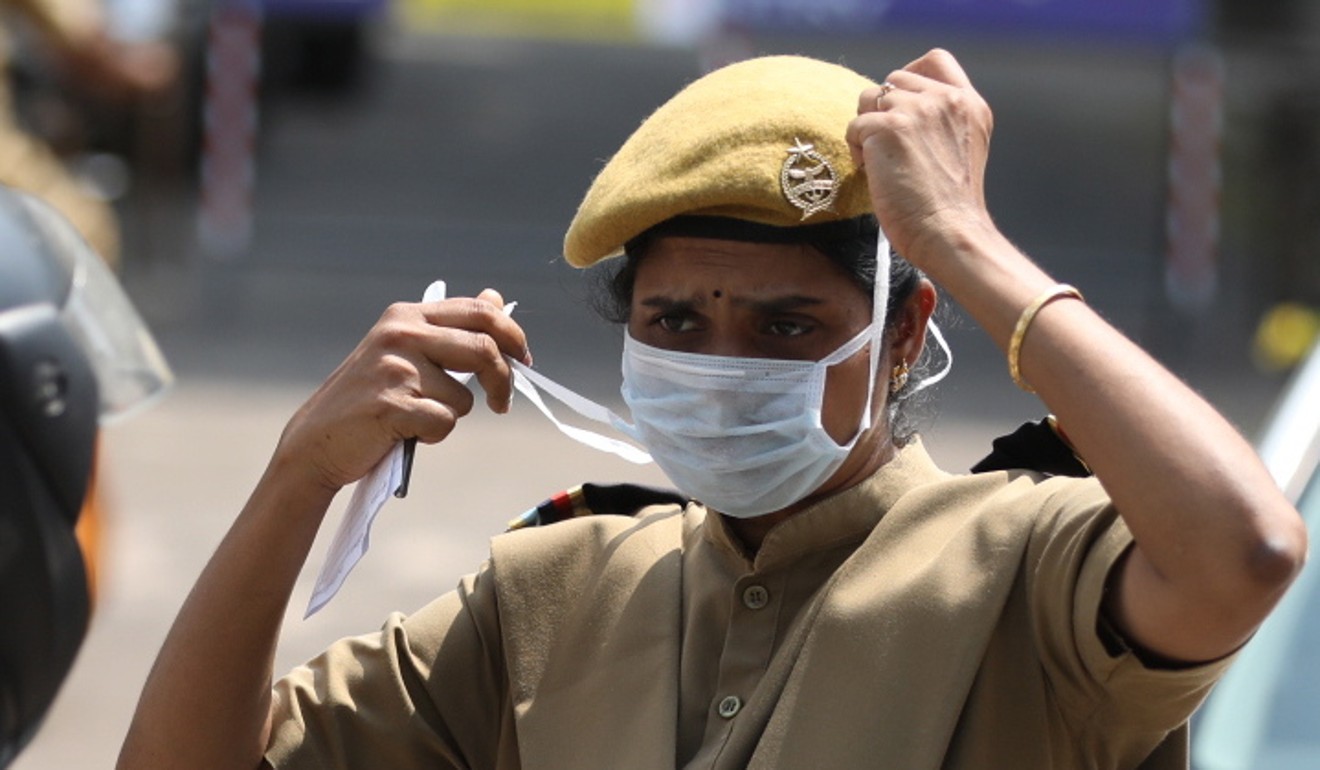
A police officer in Kochi, India wears a face mask amid fears of the coronavirus outbreak. Photo: EPA
The N95 respirator, an industrial-purpose face mask, is in huge demand as people seek to protect themselves from the coronavirus. Alcohol-based hand sanitisers are also flying off shelves, while there are also concerns of panic buying and shopkeepers hyping up demand for their products to capitalise on the situation.
Abhay Pandey is the national president of the All Food and Drug Licence Holder Foundation, an industry organisation which represents about 7,000 pharmaceutical suppliers across India. He said vendors are distributing substandard face masks to domestic consumers due to a shortage of production time given the increased demand, as well as the lack of a credible mechanism to ensure standards.
Coronavirus: Japan scientist stands by ‘chaotic’ criticism of cruise ship quarantine
20 Feb 2020

“There’s a micro-filter which is usually fitted between two layers in the three-ply face masks used by doctors during surgical procedures. Now, the suppliers are preparing substandard face masks without this filter for the Indian market, and for exports they’re sending the good quality ones,” Pandey said.

Mask makers in China, the world’s largest producer of face masks, are currently operating at 76 per cent capacity, National Development and Reform Commission official Cong Liang said at a press conference in Beijing on Tuesday.

This means they are producing about 15.2 million masks daily but demand is estimated to be between 50 and 60 million units, according to Chinese media reports citing mainland mask manufacturers.

Source: SCMP

23/11/2019

Peking Man wasn’t that smart – even for the Stone Age, Chinese scientist says

  • Researcher says some might find it hard to accept that early humans they assumed to be their ancestors ‘were stupid’
  • Report suggests that isolation may have made Peking Man less adaptable
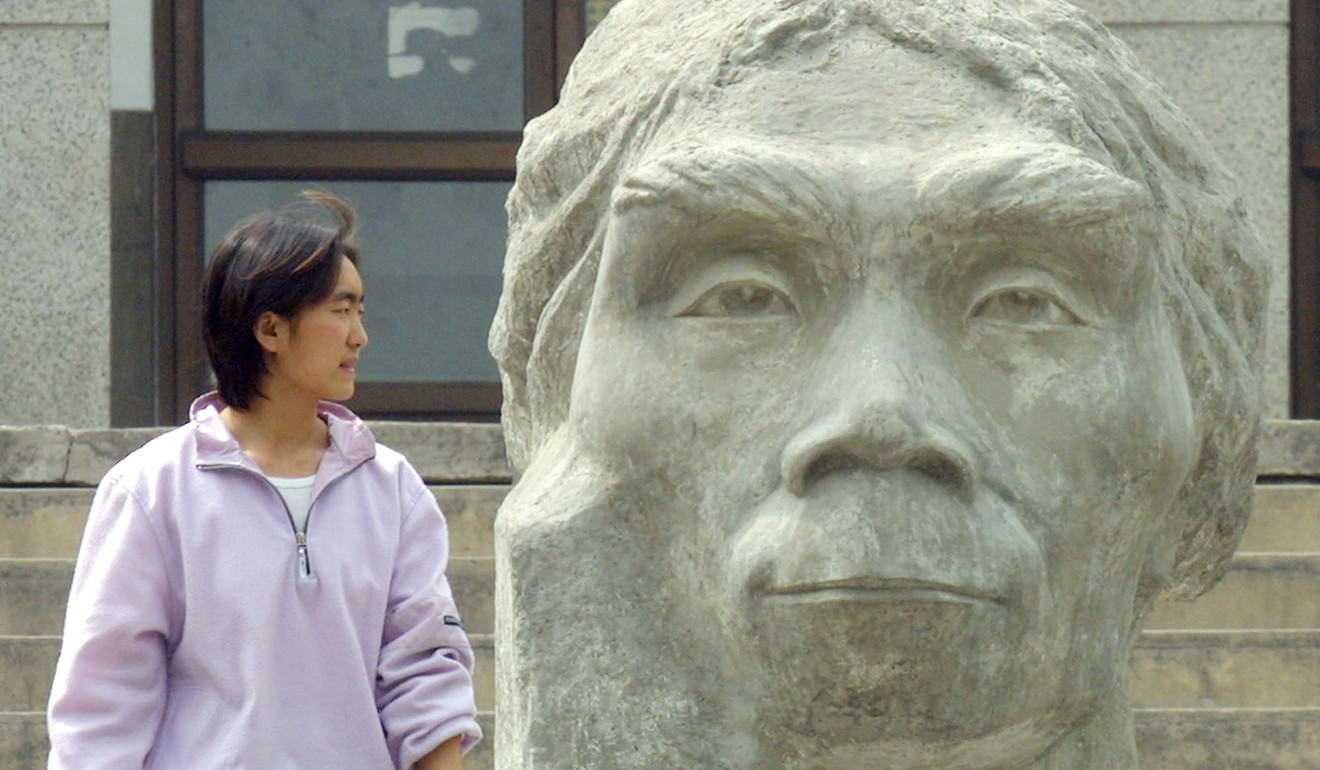
Peking Man is the earliest human sub species discovered in China. Photo: Reuters

“Peking Man”, the Stone Age humans who are believed to be ancestors of the Chinese, left little evidence that they had ever evolved, according to a Chinese scientist.

“It may be hard for some people to accept, but evidence shows they [

Peking Man

] were stupid,” said Professor Wei Qi, a researcher with the Institute of Vertebrate Palaeontology and Palaeoanthropology at the Chinese Academy of Sciences in Beijing.

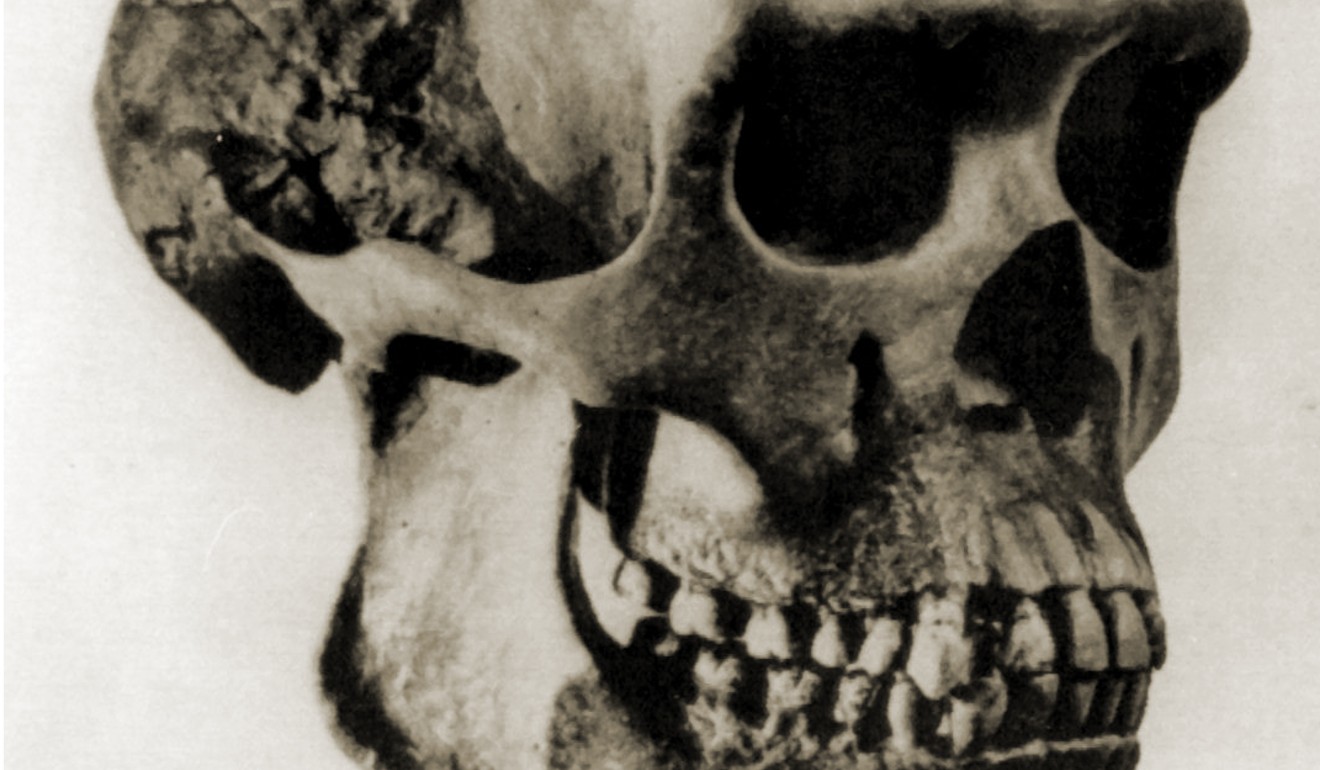
In 1929, a nearly complete skull of Homo erectus pekinensis was discovered in a cave at Zhoukoudian in southwest Peking, as the Chinese capital was then known.

Peking Man became a household name as the earliest human sub species discovered in China, and some scientists maintained that they passed their DNA on to present-day Chinese.

Peking Man is thought to be an ancient ancestor of modern Chinese. Photo: AP

In a paper for the journal Fossils to be published at the end of the month, Wei compared stone tools found at the Peking Man site to those made by the Nihewanians, palaeolithic humans who lived in what is now Yangyuan, northern Hebei province, more than a million years ago.

According to the theory of evolution, the human brain’s complexity should increase over time, expanding creativity and improving the quality of tools.

Wei said his study found very little evidence of evolution in Peking Man. He said they tended to work a piece of stone by repeatedly striking it on one side but rarely turning it.

How Asian fossils could rewrite history of human evolution

Most of the stones worked by the Nihewanians for cutting or other purposes had marks all over them. “It means they would try another side to get a better result,” Wei said. “That is a sign of intelligence.”

He said there was more evidence in Peking Man finds, including many coarse artefacts and few finely processed tools.

ADVERTISING

Other researchers have said the same thing over the years. Pei Wenzhong, a palaeontologist who discovered some of the first Peking Man remains, said the tools appeared primitive compared to other early human artefacts, but there was no investigation at the time.

A Chinese report suggests there is little evidence of evolution to be found in Peking Man remains. Photo: UPI

Wei, who analysed more than 140 finds dated to roughly 700,000 years ago, said the structural changes in Peking Man skulls found in different layers of sediment from various times suggested an unusually slow evolution over half a million years.

Professor Chen Quanjia, a palaeoanthropologist with the college of humanities at Jilin University in northeastern China, said there was an appearance of roughness to Peking Man tools, but that did not mean a lack of intelligence.

“The blame lies in the material,” he said.

Peking Man made tools with quartz, the only material available in the area. Quartz is not easy to handle, often creating a rough surface that makes further processing difficult.

The caves of Zhoukoudian on the outskirts of Beijing are still a treasure trove for archaeologists. Photo: AFP

Wei said material could not explain the difference. A few fine tools made with quartz were found at Zhoukoudian but they were dated to about 300,000 years ago.

“Making high-quality tools with quartz is not a problem, but [that becomes possible] only when the maker becomes smart enough,” he said.

100,000 year old human remains ‘show evidence of cannibalism’

Why Peking Man crafts were so poor remains a big question. Wei said that some patterning on their tools suggested they might be an offshoot of the Nihewanians that was driven out and settled in Zhoukoudian – now a World Heritage Site – about 200km (124 miles) away.

In that isolated environment, Peking Man might have interbred over many generations, Wei said.

This increases the chances of offspring being born with so-called deleterious traits such as inherited conditions and illnesses that affect quality of life and the ability to adapt and survive.

Source: SCMP

24/01/2019

Panda teeth are self-regenerating, Chinese and US scientists find – and it could benefit human dentures

  • The animals’ tooth enamel is able to recover its structure after damage, research reveals
  • Potential uses for human dentures and ceramics are being explored
PUBLISHED : Thursday, 24 January, 2019, 6:01pm
UPDATED : Thursday, 24 January, 2019, 6:01pm

Chinese and American scientists have discovered that pandas have self-regenerating teeth and are studying its potential uses for human dentures and ceramics.Giant panda tooth enamel can recover its structure at a microscopic and nanoscopic level to counter wear and tear, the Chinese Academy of Sciences’ Institute of Metal Research has said.

This regeneration helps the animals to munch up to 38kg of tough bamboo stems every day. The fibrous plant makes up 99 per cent of a panda’s typical diet.

However, the study found that the enamel was not resistant to large-scale cracks.

The discovery was made by a research team led by Liu Zengqian, a scientist at the institute’s fracture mechanics laboratory.

The team also included members from the University of California, Berkeley, the University of Science and Technology of China and the Lanzhou University of Technology.

The scientists have been studying the properties of giant panda tooth enamel since 2016.

Panda tooth enamel is made of the mineral hydroxyapatite, whose fibres are arranged in a special structure that reduces the growth of small cracks, Liu was quoted as saying in the Chinese Academy of Sciences press release. Water molecules help the process along, it said.

The research team is using these findings to develop high-performance material for use in bionic human dentures and durable ceramics.

In 2015, researchers at the Chengdu Research Base of Giant Panda Breeding in southwest China found that pandas’ digestive systems had not evolved to adapt to their all-bamboo diet.

Despite spending up to 14 hours a day eating bamboo, giant pandas were able to digest only about 17 per cent of the bamboo they consumed, the researchers found.

Wild giant panda survival rates are threatened by the loss of their bamboo rainforest habitat, but the population has recovered after a high-profile captivity breeding programme backed by the Chinese government.

The animals are no longer classified as endangered. According to the latest census taken in 2014, more than 1,800 pandas are alive in the wild.

Source: SCMP

17/01/2019

China’s first lunar leaf dies after Chang’e scientists forced to cut power to stop battery running low

  • Cotton seed that became first plant to come to life on the surface of the moon dies after being exposed to far side’s extreme temperatures
  • Lander did not carry any spare batteries, so power to biosphere had to be cut off
PUBLISHED : Thursday, 17 January, 2019, 7:09pm
UPDATED : Thursday, 17 January, 2019, 7:48pm

China’s dream of a moon harvest has died young. Just two days after they announced that plant shoots had to come to life on the moon, the Chang’e team said a lack of battery capacity meant they had been forced to cut off the power supply that kept them alive.

The decision proved fatal for the cotton seeds that produced the “first leaf” on the moon after they were exposed to temperatures of 120 Celsius (250F) by day and minus 170 Celusis by night.

The extreme conditions on the far side of the moon also killed three other plant seeds, yeast and fruit fly eggs that had been carried inside the lunar lander’s biosphere.

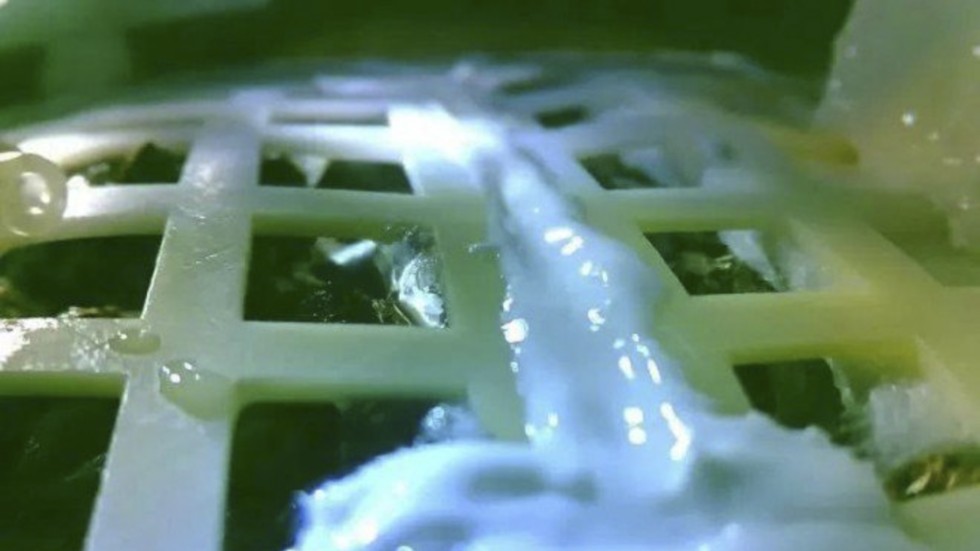
On Tuesday the team behind the mission announced the success of the first ever biology experiment to be conducted on the moon with the release of pictures of a sprouting cotton seed inside the biosphere.

The Chang’e probe, carrying the seeds and eggs in an airtight aluminium cylinder, touched down on the far side of the moon on January 3, but the team did not say when the seeds had started to germinate.

However, the researchers would have known that any success would prove fleeting.

The only battery available in the spacecraft, a solar cell, could not afford to keep the temperature inside the biosphere under control and the plants were doomed to die once the temperatures on the moon went beyond what life on Earth could endure.

“Because of the weight limit of the Chang’e launch, we were unable to bring a battery to the moon,” Liu Hanlong director of the experiment and vice-president of Chongqing University in southwest China, told Inkstone, a sister publication of the South China Morning Post.

It was not clear why additional batteries were not carried on the lander if the survival of the plants on the moon depended on battery-powered temperature control.

“Without temperature control, the plants and animals would not survive,” said Liu.

The mini ecosystem contained in the cylinder also included rapeseed and potato seeds, which had also sprouted, and these are certain to have met the same fate as the cotton sprout once the power went out.

It was not clear how long any of the seeds had survived.

The Chinese public, however, seemed far from discouraged by the news judging by the reaction on social media.

Despite comments expressing surprise at the lack of sufficient battery power to carry on the experiment, most posts on the social media network Weibo were overwhelmingly positive.

“What a pity, but we should not give up. We should keep trying,” wrote one Weibo user. “Eventually we will grow a complete plant [on the moon] in the future,” read another post.

Chinese researchers shared their optimism, saying the data they had obtained from the sprouting, however short, would provide them with valuable information onto how to grow crops under low-gravity, high-radiation conditions – an insight which might one day prove invaluable in sustaining a manned base in space or even on the surface of the moon.

“We have given consideration to future survival in space. Learning about these plants’ growth in a low-gravity environment would allow us to lay the foundation for our future establishment of space base,” Liu told a press conference on Tuesday.

Source: SCMP

06/01/2019

Chinese scientists succeed in developing clonal seeds from hybrid rice

HANGZHOU, Jan. 5 (Xinhua) — Chinese scientists have succeeded in developing clonal seeds from hybrid rice, said an online paper published in Nature Biotechnology Friday night.

The team, led by Wang Kejian, from the China National Rice Research Institute and the Chinese Academy of Agricultural Sciences, conducted simultaneous genome engineering of meiosis and fertilization genes in developing the clonal seeds.

Usually, beneficial phenotypes are lost in subsequent generations owing to genetic segregation. But with the clonal seeds, the heterosis, or hybrid vigor of the hybrid rice, can be passed on to produce high-yielding crops.

“The success has proved the feasibility of apomixis for hybrid rice, which is significant theoretically. I hope that with their further research, the seeds will be put into production soon,” said Yuan Longping, the “father of hybrid rice.”

Statistics show that China has planted 16 million hectares of hybrid rice, about 57 percent of the total planting area of rice across the country. The annual output of hybrid rice is about 2.5 million tonnes.


Source: XinhuaNet

01/12/2018

Chinese scientists discover spider species nurses young with milk

BEIJING, Nov. 30 (Xinhua) — Chinese scientists have discovered a species of spiders that can produce milk and care for their young, providing a new take on the understanding of invertebrate animals’ maternal care.

The study, published online Thursday on the U.S. journal Science, was conducted by researchers from the Chinese Academy of Sciences (CAS).

The findings focus on Toxeus Magnus, a species of jumping spider native to southeastern Asia, which lives in nests and looks like ants.

According to the study, spider mothers in their laboratory-based nests were found to feed a milk-like substance to their spiderlings and continue to care for them as they matured.

During the first 20 days, the spider babies were found to first drink droplets of spider milk left on the surface of the nest and then suck directly from their mother’s abdomen area.

Compared with cow’s milk, spider milk has nearly four times the protein but less fat and sugar.

From about day 20 to day 40, the young spiders were able to leave the nest to hunt food, but they were still allowed to drink milk from their mothers.

The most intriguing part starts after 40 days when the spiders reach sexual maturity. Only daughters were allowed to stay with their mother in the nest, while the sons were attacked by the females and not allowed to return home.

In the study, maternal care and milk provisioning appeared to work together to ensure the long-term survival of young spiders.

Of the 187 spiderlings observed in 19 different nests, the survival rate was 76 percent for spiders that received both. Separated from the mother at day 20, the survival rate of the spiderlings dropped to 50 percent.

Previous studies show that maternal care, which continues after the offspring reach maturity, only exist among some long-lived advanced social vertebrates like humans and elephants.

Chen Zhanqi, lead author of the study from Xishuangbanna Tropical Botanical Garden, CAS, told Xinhua the findings demonstrate that mammal-like provisioning and parental care for sexually mature offspring also evolved in invertebrates.

He noted that the new findings encourage researchers to reevaluate this “parenting style” among animals, especially in invertebrates. Invertebrates make up over 95 percent of Earth’s species.

Nicole Royle, a senior lecturer in the behavioral ecology of Exeter University in Britain, said it is the most comprehensive study that proves long-term maternal care also exists in invertebrates.

“It will help researchers gain a better understanding of the evolution process of milk provisioning and parental care for sexually mature offspring across the animal kingdom,” he said.

Law of Unintended Consequences

continuously updated blog about China & India

ChiaHou's Book Reviews

continuously updated blog about China & India

What's wrong with the world; and its economy

continuously updated blog about China & India