Chindia Alert: You’ll be Living in their World Very Soon
aims to alert you to the threats and opportunities that China and India present. China and India require serious attention; case of ‘hidden dragon and crouching tiger’.
Without this attention, governments, businesses and, indeed, individuals may find themselves at a great disadvantage sooner rather than later.
The POSTs (front webpages) are mainly 'cuttings' from reliable sources, updated continuously.
The PAGEs (see Tabs, above) attempt to make the information more meaningful by putting some structure to the information we have researched and assembled since 2006.
Some 460,000 Chinese firms shut in the first quarter amid fallout from the coronavirus
Registration of new firms between January and March fell 29 per cent from a year earlier
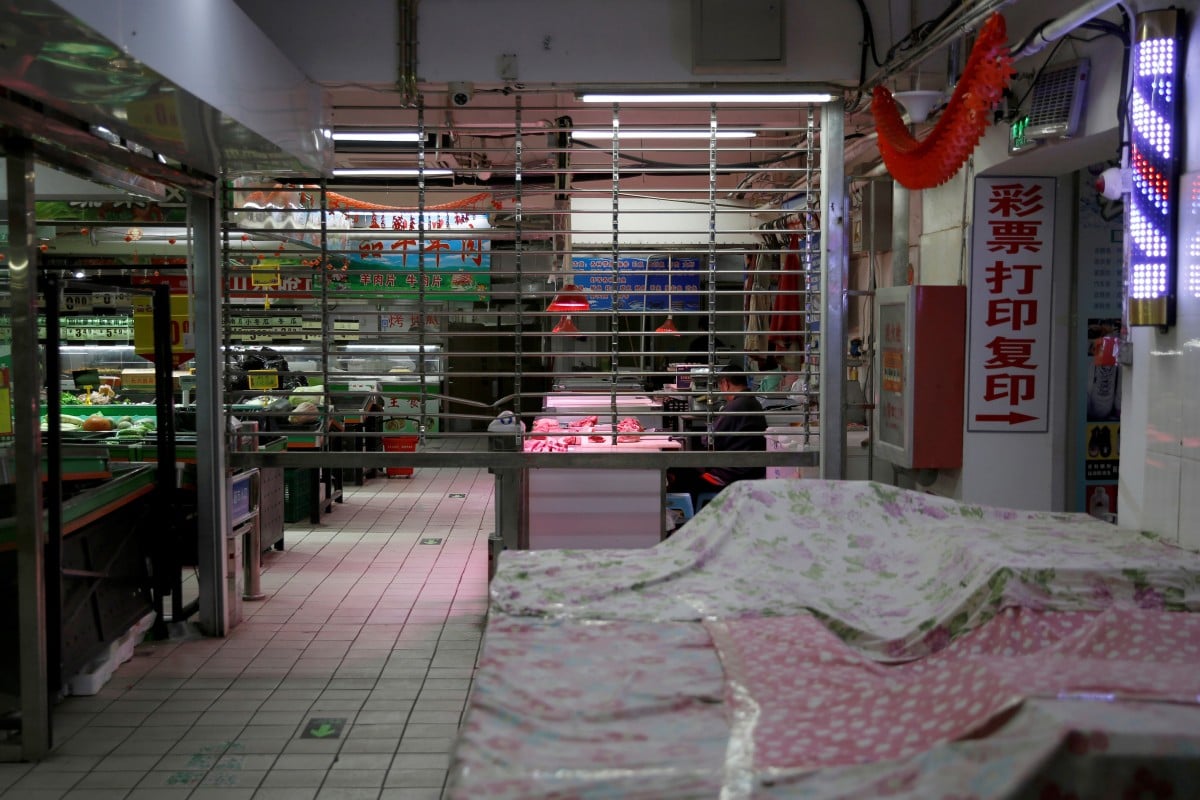
Many Chinese businesses are struggling from the economic fallout of the coronavirus. Photo: Reuters
More than 460,000 Chinese firms closed permanently in the first quarter as the coronavirus pandemic pummeled the world’s second largest economy, with more than half of them having operated for under three years, corporate registration data shows.
The closures comprised of businesses whose operating licenses had been revoked, as well as those who had terminated operations themselves, and included 26,000 in the export sector, according to Tianyancha, a commercial database that compiles public records.
At the same time, the pace of new firms being established slowed significantly. From January to March, around 3.2 million businesses were set up, a 29 per cent drop from a year earlier.
Most of these new companies were in traditional centres of economic power, such as Guangdong province in southern China, and close to half of them were in distribution or retail.
Coronavirus: Is the gig economy dead, and should the self-employed worry?
The number of business closures underlines the challenges facing China as it tries to revive its economy, which is at risk of a contraction in the first quarter for the first time since 1976.
“China has managed to get the Covid-19 outbreak largely under control and domestic supply disruptions have now mostly dissipated,” Yao Wei and Michelle Lam, economists from French bank Societe Generale, said in a recent note.
“However, there are signs of lasting damage to domestic demand, and on top of that the external shock resulting from widespread lockdowns in other major economies is arriving fast and furious.”
In Dongguan, a once thriving industrial hub in the Pearl River Delta, rows of empty shops and closed factories are becoming a noticeable feature of the landscape as companies grapple with slumping international demand.
Coronavirus: Chinese companies cut salaries and staff in industries hit hardest by Covid-19
In March, a local export-oriented manufacturer of tote bags and toys in the city, Dongguan Fantastic Toy Company, collapsed after overseas orders dried up, leaving some workers with unpaid salaries, the local labour authority said last month. The government has ordered the factory’s landlord to pay the outstanding wages.
Chinese business owners who can no longer afford to maintain operations face a number of hurdles before they can walk away from a company.
If an insolvent firm wants to cancel its company registration, it needs to go through bankruptcy procedures or show a liquidation report confirming it had no unpaid debt or other obligations.
Once shareholders or creditors file for bankruptcy, it can take months for courts to accept the case, followed by a long process of verification, creditors’ meetings and asset sales, said Li Haifeng, a partner at Baker McKenzie FenXun.
A new phase of coronavirus blame game: what is the legacy of Covid-19 on global supply chains?
“I expect a surge shortly after the situation settles down. We know many enterprises are already on the verge of bankruptcy. It’s just that they don’t have to declare or file for bankruptcy immediately,” Li said, adding he had received many queries on the matter in recent months.
Given the costly nature of bankruptcy proceedings, particularly for small businesses
struggling with cash flow or without sufficient assets, the number of bankruptcy filings this year would not be high, said Zhu Bao, a Beijing-based lawyer.
Fears over a growing number of companies going bust also appears to have played some part in Chinese courts rejecting and delaying bankruptcy filings, according to lawyers and official documents.
Creditors who filed on behalf of suppliers that helped contain the coronavirus or companies on the brink of bankruptcy as a direct result of the pandemic usually had their claims knocked back, dozens of court documents filed over the past two months showed.
We know many enterprises are already on the verge of bankruptcy. It’s just that they don’t have to declare or file for bankruptcy immediately – Li Haifeng
The courts in these cases encouraged the creditors to reconcile with the struggling firms and ride out the difficulties.
This – along with disruptions to court proceedings due to virus lockdowns – helped slow the review of bankruptcies in Chinese courts to 1,770 in February and March, from 2,160 filings in January, according to the national enterprise bankruptcy information disclosure platform.
“The delay and rejection of taking corporate bankruptcy cases is certainly intended to keep the economy going. Too many bankruptcies cases do not do much to help economic recovery,” Zhu said.
China’s central leadership has maintained it wants to hit economic targets for this year, even as the country braces for a possible second wave virus outbreak.
The delay and rejection of taking corporate bankruptcy cases is certainly intended to keep the economy going – Zhu Bao
The odds of a first quarter economic contraction for China are growing, however, and economists are debating whether it still makes sense for Beijing to set a specific gross domestic product (GDP) growth target for 2020.
Ma Jun, an academic member of the People’s Bank of China’s monetary policy committee, is one prominent voice that has suggested Beijing drop a set target amid the uncertainty caused by the virus outbreak.
However, others like Yu Yongding, an economist from Chinese Academy of Social Sciences, said it was necessary to anchor the country’s economic expansion, though the government should be realistic about the goal, reported the Beijing-based financial media group Caixin.
BEIJING, Oct. 2 (Xinhua) — While turning 70 often signals the beginning of a person’s twilight years, for the People’s Republic of China (PRC) it marks a golden age full of hope and vigor.
The PRC celebrated its 70th birthday on Oct. 1. China’s transformation from an agricultural society isolated from the West into the world’s second-largest economy open wide is nothing short of a miracle.
More importantly, it has charted a new path for developing countries to modernize.
Seven decades ago, the war-ravaged country started from scratch. Observers are astonished at China’s large-scale modernization, its reduction of the number of people living in poverty and the sheer volume of its consumer market. Their heads have been turned not only because of the speed of the transition but also by the unique path taken to realize this great transformation.
Reflecting on its past and present, and through experimentation, China has identified and will continue down the right path — socialism with Chinese characteristics.
Reform is the engine of China’s miracle. There is no ready-made solution for the development issues facing China. From creating special economic zones to building free trade pilot zones, from carrying out family-based production contracts to revitalizing state-owned enterprises, China has been one of the most successful countries in piloting reforms over the past decades. Now the reform is more in-depth and more comprehensive in economic, political, cultural, social and ecological sectors.
The Chinese government stresses being effective and responsive to the public interest. Development outlines are far-sighted. For example, the five-year plans are made to deal with comprehensive aspects that concern human development: food, transportation, communication, environment, health and education. These plans are a priority for the government.
Of course these achievements could never have been realized without the leadership of the CPC.
From the people and for the people, the CPC has always upheld its principle of striving for the happiness of the people and the rejuvenation of the nation.
At a life-or-death moment, the CPC shouldered the mission of saving the nation from existential peril. After 28 years of bloody struggle, it led the Chinese people to overthrow the “three mountains” placed on their heads and put an end to the semi-colonial and semi-feudal society of old China. Gone are the days where any attempt to bully China with “fists” or “intimidation” would succeed.
Despite overseas doubts, misunderstandings and predictions that its survival would be short-lived, the CPC has stunned the world with its leadership, innovative theories and ability to unite and organize the people.
It abolished the agricultural tax that had been in place for more than 2,600 years; it established a political system in which people are masters of their own affairs; it did its utmost to help people shake off poverty and keep nearly 1.4 billion people well-off.
No ruling party in the world can match the CPC’s record of adhering to the truth, versing itself in self-reform and self-purification, and turning impossibility into certainty in the face of difficulties and challenges, again and again.
The 70-year journey was never smooth. Trials and hardships abounded. The Chinese people dealt with floods and massive earthquakes and guarded against SARS and financial tsunamis. Yet these twists and turns never blocked China’s way forward but made it more sober, determined and mature.
Today, more than at any other time in history, China is closer to, more confident and more capable of achieving the great rejuvenation of the Chinese nation. However, lofty goals are never easily reached.
The world has been undergoing tremendous changes unseen in a century. Resistant external forces and headwinds still remain. “Zero-sum game” and “superior civilization” mentalities, among others, are prevailing.
The CPC will continue to lead the Chinese people to fight trade bullying, blackmailing and hegemonism. Only the CPC can lead China to emerge as a stronger country.
It all started long ago, and the journey is far from over.
Image copyright EPAImage caption China is getting dressed up for its big birthday party
One week from now, the People’s Republic of China will mark its 70th anniversary with celebrations on a scale not seen in China in decades.
Beijing is pulling out all stops and 1 October will be flush with fireworks, fanfare and a huge military parade.
To ensure it goes smoothly, authorities have been ramping up security in the capital – and online – for weeks.
But with yet more protests expected in Hong Kong, the territory might just rain on China’s parade.
What is it all about?
The birth of modern China was declared on 1 October 1949, after the communists under Mao Zedong won the civil war that followed World War Two.
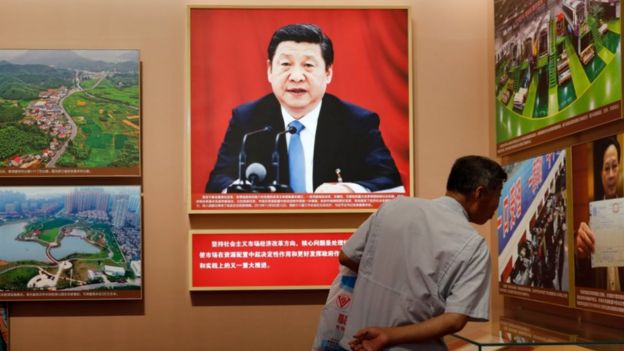
Image copyright EPAImage caption Exhibitions are highlighting the achievements of the Communist Party
The date is marked every year, but celebrations for this 70th anniversary are expected to eclipse previous events.
It’s the first big anniversary since China has emerged as a global power. While 10 years ago China was a superpower in the making, it is now the world’s second largest economy, almost eye-to-eye with the United States.
What to expect?
The main celebrations will take place in the capital, Beijing, where there will be a grand military parade with “advanced weapons” on display, followed by a “mass pageant”.
President Xi Jinping – considered the most powerful Chinese leader since Mao – will address the Chinese people. His speech is expected to celebrate China’s rapid growth and which will be closely watched for any indication of the country’s direction in the coming years.
The president will also hand out honours for contributions to the country and in the evening there will be a grand gala and fireworks show.
All official Chinese celebrations are carefully choreographed and the success of this one is particularly important to the government.
The Dos and Don’ts
The parade – open to invited guests only – will take place around Tiananmen Square in central Beijing. The surrounding area will be practically under lockdown, and in fact has been so several times already.
During rehearsals leading up to the big day, hotels near Tiananmen Square told guests that for several hours each day, no-one would be able to leave the hotel or return to it should they be out, leading to much travel chaos and rebookings.
Many shops and restaurants in the centre are also closed or have shortened hours and some subway stations are temporarily shut.
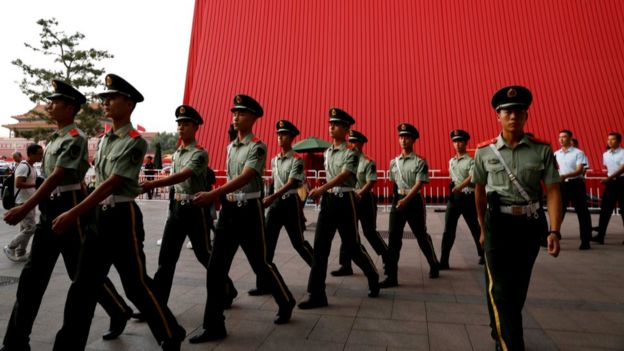
Image copyright EPAImage caption Security is tight ensure the party goes to plan
Trains to Beijing are running numerous safety checks on their passengers and vehicles going into the city are also being tightly watched.
On the big day itself, areas around Tiananmen Square will be blocked and guarded. Local residents will need to identify themselves if they want to pass.
To ensure the sun will shine brightly on the celebration in notoriously polluted Beijing, several coal plants and construction sites in and around the city have been ordered to stop work for the duration.
There’s also a ban on any low-flying aerial vehicles in place. That means anything from light aircraft to drones, balloons and even racing pigeons.
Censorship galore
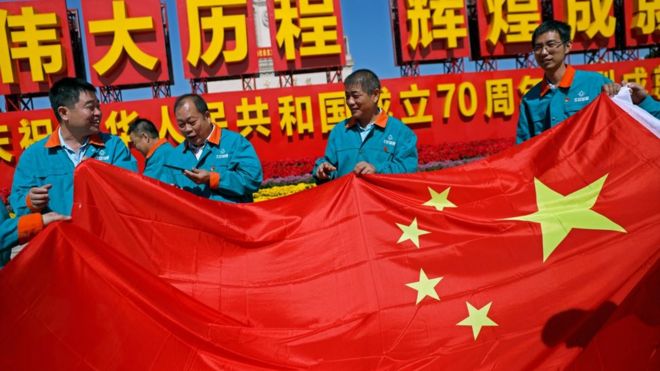
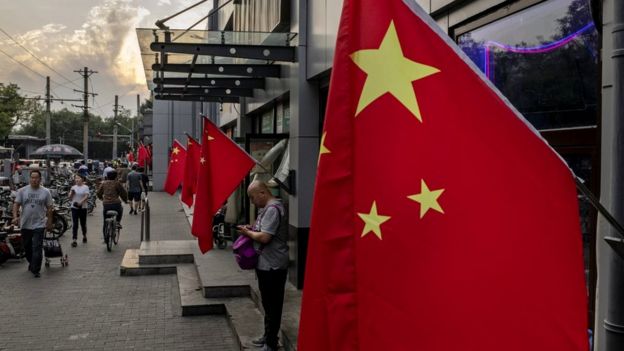
Across much of the city centre, there are national flags set up at every door. Voluntary inspectors are monitoring the streets and locals have told the BBC they’re being questioned after having even brief conversations with foreigners
One person said she was asked by an inspector: “Who were those foreigners? Why were they here?”
The tight control naturally extends online as well. Popular social media platform Weibo said it was deleting content that “distorts” or “insults” the country’s history ahead of the anniversary.
Image copyright GETTY IMAGESImage caption Every house and every shop is sporting a national flag
Chinese journalists are always expected to toe the party line anyway, but starting in October they will have to pass an extra test to prove they are versed particularly in Xi Jinping’s teachings, officially called Xi Jinping Thought on Socialism with Chinese Characteristics, which has been written into the constitution.
Whether or not they pass the exam will then determine whether they’ll be accredited as journalists.
“The fundamental point with this ‘training’ and indoctrination process isn’t so much about the content,” David Bandurski of China Media Watch told the BBC.
“It is about reinforcing the message and understanding among journalists that they work, first and foremost, for the Chinese Communist Party, and serve its agenda.”
So not only will the events be choreographed – the domestic coverage of them will also be tightly guarded.
What about Hong Kong?
Despite Beijing’s determination to let its achievements shine on 1 October, there’s a good chance Hong Kong will pull focus.
Anti-Beijing protests always take place in Hong Kong on China’s National Day, but this time, the activists know that the world is watching.
Anti-government protests have rocked the city for months and the situation shows no sign of dying down.
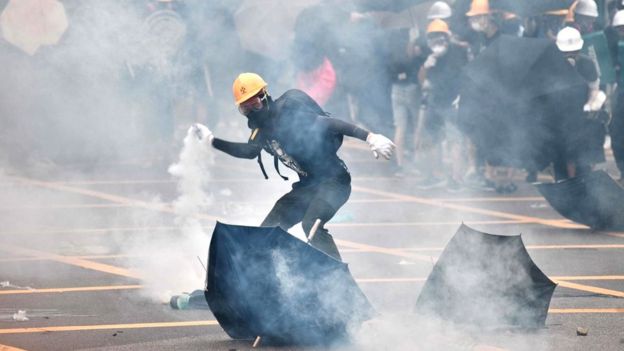
Clashes between police and activists have been becoming increasingly violent, with police using tear gas and activists storming parliament.
Image copyright AFPImage caption The protests have often escalated into violent clashes
That means two things for 1 October: official celebrations in the territory are being toned down to avoid clashes – the annual fireworks display has been cancelled – while at the same time, activists are planning to step up their protests.
On Sunday 29 September, a “Global Anti Totalitarianism March” is scheduled to take place at various locations around the world in support of Hong Kong.
On 1 October itself, a march in central Hong Kong is planned with everyone asked to wear black.
If the past weeks’ demonstrations are anything to go by, the smiles and celebrations in Beijing will be competing for media space with pictures of tear gas and angry young protesters in Hong Kong.



 CHINDIA ALERT: You'll be living in their world, very soon