Archive for ‘Shanghai’

02/03/2019

East China Fair opens in Shanghai

SHANGHAI, March 1 (Xinhua) — The 29th East China Fair, the largest regional trade fair in China, opened in Shanghai Friday.

More than 3,500 Chinese companies and over 450 overseas companies are taking part in the four-day event.

Over 5,800 booths, arranged under five categories from garments to modern lifestyle, cover an exhibition area of 126,500 square meters.

Customs data showed China’s foreign trade grew 9.7 percent year on year to a historic high of 30.51 trillion yuan (4.55 trillion U.S. dollars) in 2018.

The annual fair, established in 1991, is jointly held by nine provinces and cities in east China. It is regarded as an important barometer of China’s foreign trade.

Source: Xinhua

25/02/2019

Smog continues in north and east China, snow to hit west

BEIJING, Feb. 24 (Xinhua) — China’s national observatory on Sunday forecast that some northern and eastern parts of the country would be shrouded in smog in the coming days while snow will hit western regions.

Thick smog will envelop northern and eastern areas including Hebei and Shandong provinces until Thursday, according to the National Meteorological Center (NMC).

From Sunday night to Monday morning, thick fog will be seen in the provinces of Henan, Anhui, Jiangsu, Shanghai and Hubei, reducing visibility in some areas to less than 200 meters, the NMC said.

From Sunday night to Tuesday, snow will hit west China’s Tibet, Qinghai and Gansu, while rain will soak the south from Tuesday to Wednesday.

Bad weather could disrupt traffic after the Spring Festival holiday when many people are returning to work after the break.

China’s Spring Festival travel rush started from Jan. 21 and will last till March 1.

Source: Xinhua

23/02/2019

China Airlines pilot punished after he’s filmed sleeping in cockpit

  • Middle-aged man seen taking a nap mid-flight said to be senior pilot with the Taiwanese carrier
  • His co-pilot who took the video has also been reprimanded

China Airlines pilot punished after he’s filmed sleeping in cockpit

23 Feb 2019

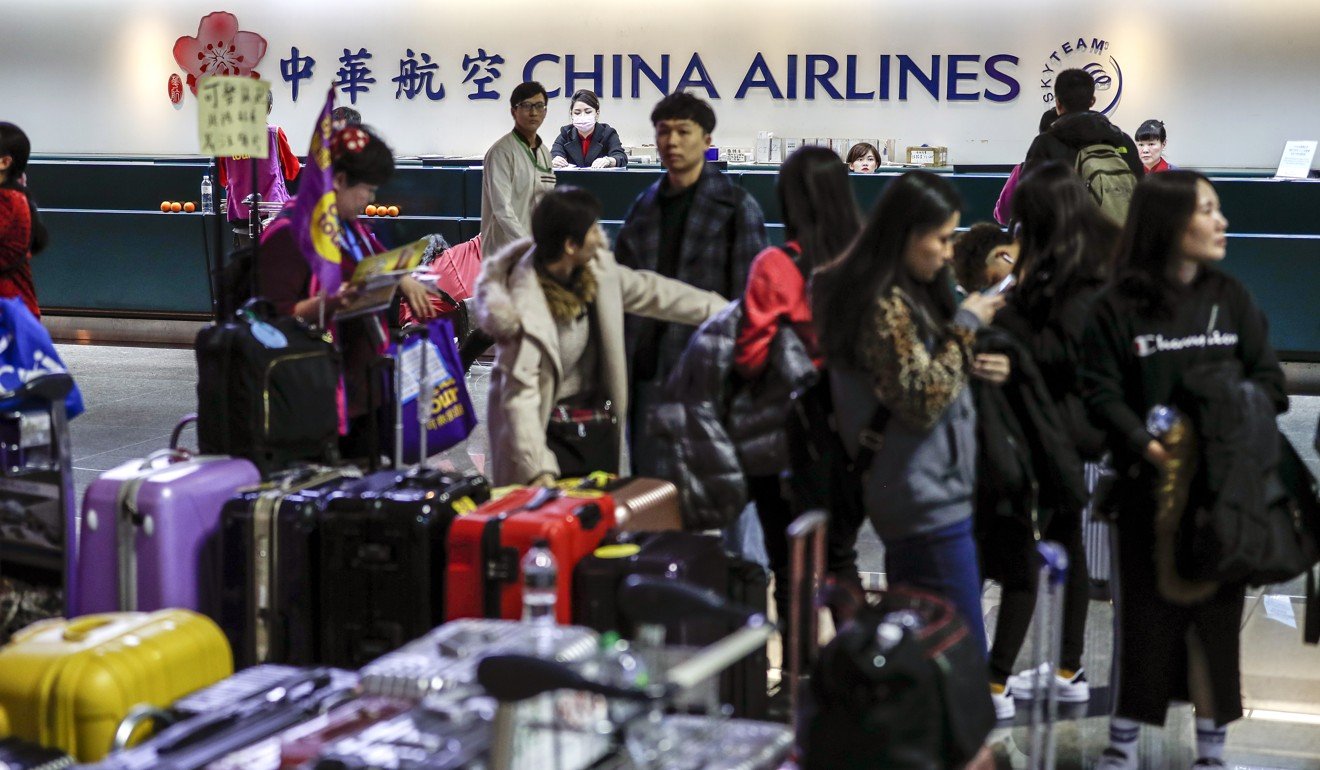
The video shows the pilot in the cockpit with his head down and eyes closed. Photo: setn.com

China Airlines, Taiwan’s biggest carrier, says it has punished a pilot after a video of him taking a nap in the cockpit mid-flight was posted online.

His co-pilot, who filmed the incident, has also been reprimanded, local television station SETN reported.

In the video, a middle-aged man in a pilot uniform and headphones appears to be asleep with his head down and eyes closed while in the cockpit of a Boeing 747.

The footage drew attention after it was shown in a report on Taiwanese TV network EBC on Wednesday. The man was identified as Weng Jiaqi, a senior pilot with almost 20 years of experience who was promoted to chief pilot last year.

Chinese airline Donghai suspends and fines pilot for allowing wife in cockpit

It was unclear when or on which flight the video was filmed, but the airline confirmed that Weng had reported his behaviour and been punished while his co-pilot had been reprimanded for “improper behaviour”, SETN reported.

Weng, who also supervises training, is a short-haul pilot to cities including Hong Kong, Shanghai, Beijing, Guangzhou, Tokyo, Okinawa and Seoul, according to the EBC report.

The China Airlines pilots went on strike on February 8, during the Lunar New Year holiday season. Photo: EPA-EFE
The incident comes after the airline last week reached a deal with the pilots’ union to

end a seven-day strike

over working conditions and benefits that forced the cancellation of more than 200 flights.

But China Airlines told EBC that the video was filmed before the pilots walked off the job.

The Taoyuan Union of Pilots began the industrial action on February 8, stranding close to 50,000 passengers and inflicting over NT$500 million (US$16.2 million) in losses on the carrier.

Under a deal signed on February 14, the union agreed not to strike again in the next 3½ years. In return, China Airlines agreed to the union’s main demand to increase the number of pilots on various flights to combat fatigue and improve safety.

Chinese pilots, cabin crew told no more smoking in cockpits on domestic flights

The carrier will roster three pilots on flights of more than eight hours – up from the present two – and will have four pilots on flights over 12 hours, up from three.

China Airlines president Hsieh Shih-chien said the staffing increases were expected to sharply add to the cost of the company’s operations, but the carrier agreed to the terms in the interest of safety.

Source: SCMP

22/02/2019

China’s social credit system report shows that richest provinces are home to the most dodgy firms

  • Firms in Jiangsu and Guangdong provinces top the list of new additions to blacklist in 2018
  • Bogus advertising, illegal activities in property industry, substandard health care products and P2P lending fraud are typical cases

Social credit system: China’s richest regions are also home to the most blacklisted firms

22 Feb 2019

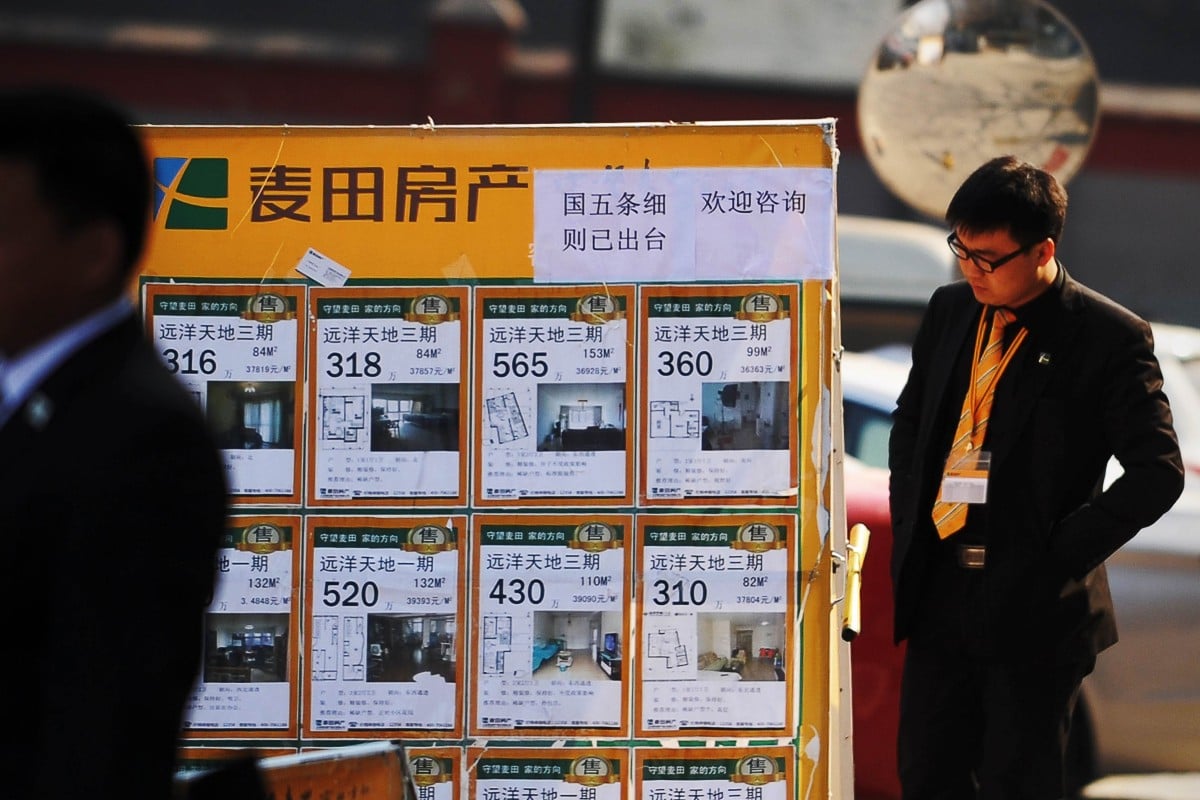
A real property agent checks a property advertising board in Beijing. According to a report by the Chinese government, property brokerages are among the country’s least scrupulous group of firms. Photo: Agence France-Presse

A real property agent checks a property advertising board in Beijing. According to a report by the Chinese government, property brokerages are among the country’s least scrupulous group of firms. Photo: Agence France-Presse

China’s wealthiest regions also have the largest number of untrustworthy businesses, according to the government’s social credit system, which rates citizens and companies based on their behaviour.

Jiangsu, the country’s second largest provincial economy – 9.26 trillion yuan (US$1.37 trillion) – accounted for 16.7 per cent of the discredited businesses that were added to the national blacklist last year, more than any other region.

According to a report compiled by the National Public Credit Information Centre that is backed by China’s state planner, the National Development and Reform Commission, Guangdong is next in line.

Guangdong is China’s most prosperous province, Guangdong, but is also home to 12.77 per cent of the total 3.59 million blacklisted firms. The southern province had a gross domestic product of 9.73 trillion yuan last year.

In third spot was Zhejiang, the prosperous province just south of Shanghai, while the capital city of Beijing was ranked fifth. These places together contributed slightly more than 30 per cent of China’s gross domestic product (GDP) last year.

By naming and shaming the millions of Chinese businesses and individuals on the annual blacklist, Beijing hopes to boost “trustworthiness” in Chinese society. Under the system, each of its 1.4 billion citizens is expected to receive a personal trustworthiness score.

“In more developed coastal provinces, businesses have long operated in the grey area between emerging China and established Hong Kong,” said Brock Silvers, managing director of Kaiyuan Capital, a Shanghai-based financial advisory firm.

Silvers said the situation evoked the Chinese saying: “Heaven is high and the Emperor is far away”, which alludes to local officials’ tendency to disregard central government’s directives.

While it was previously not such a faux pas to engage in “untrustworthy” behaviour in attaining economic development, things are now different.

China’s social credit system shows its teeth, banning millions from taking flights, trains

“The ability to cut corners in search of profit isn’t as prized in China’s modern economy, and many of those old traits can now lead companies to be added to Beijing’s blacklist,” Silvers said.

Among the firms named in the hall of shame is Chuangyue Energy Group, from northwest Xinjiang, which topped the list of new cases involving at least 500 million yuan in fraudulent activity.

Chuangyue and its legal representative Qin Yong were reprimanded by the Shenzhen Stock Exchange in 2016 for failing to disclose transactions on time. The transaction involved changes to the shareholding structure of a listed firm in which Chuangyue held interest in, state media reported.

Also on the list was property developer Zhonghong Holding, which was delisted from the Shenzhen exchange late-last year after its shares fell below the par value of 1 yuan for 20 consecutive days.

Zhonghong had posted massive losses, failed to repay loans and halted development projects during 2018.

A typical area of fraud cited in the report was bogus advertising, with the biggest number of discredited companies located Shanghai, China’s most commercial city.

Property brokerage was a hotbed industry for fraudsters. The report named and shamed two agents in Wuhan, An Yi Real Estate Brokerage and Hong Run De Real Estate Brokerage, which Chinese netizens described as “black brokers”.

In one case, Hong Run De subdivided one flat to lease without the owner’s knowledge and consent. To terminate the contract, the owner had to pay “compensation” of 30,000 yuan before they could reclaim the flat.

Other dodgy sectors were health care product makers and peer-to-peer (P2P) lending platforms.

Quanjian Group, a maker of herbal medicines, was accused of making false marketing claims about the benefits of a product that a four-year-old cancer patient drank.

Health care companies are among the worst performing in China, according to a report on the country’s social credit index. Photo: Agence France-Presse

Changsheng Bio-Technology, the major Chinese manufacturer of rabies vaccines, was fined US$1.3 billion in October after it was found to have fabricated records.

A total of 1,282 P2P operators, more than half located in Zhejiang, Guangdong and Shanghai, were placed on the blacklist because they could not repay investors, or were involved in illegal fundraising.

While more individuals and companies were added to the blacklist, others were also removed – 2.17 million. Those removed had paid taxes owed or fines imposed.

Source: SCMP

22/02/2019

Saudi Arabia strikes $10 billion China deal, talks de-radicalisation with Xi

BEIJING (Reuters) – Saudi Crown Prince Mohammed bin Salman cemented a $10 billion (7.7 billion pounds) deal for a refining and petrochemical complex in China on Friday, meeting Chinese President Xi Jinping who urged joint efforts to counter extremism and terror.

The Saudi delegation, including top executives from state-owned oil company Saudi Aramco, arrived on Thursday on an Asia tour that has already seen the kingdom pledge investment of $20 billion in Pakistan and seek to make additional investments in India’s refining industry.

Saudi Arabia signed 35 economic cooperation agreements with China worth a total of $28 billion at a joint investment forum during the visit, Saudi state news agency SPA said.

“China is a good friend and partner to Saudi Arabia,” President Xi Jinping told the crown prince in front of reporters.

“The special nature of our bilateral relationship reflects the efforts you have made,” added Xi, who has made stepping up China’s presence in the Middle East a key foreign policy objective, despite its traditional low-key role there.

The crown prince said Saudi Arabia’s relations with China dated back “a very long time in the past”.

“In the hundreds, even thousands, of years, the interactions between the sides have been friendly. Over such a long period of exchanges with China, we have never experienced any problems with China,” he said.

Crown Prince Mohammed, who has come under fire in the West following the murder of Saudi journalist Jamal Khashoggi at the kingdom’s Istanbul consulate in October, said Saudi Arabia saw great opportunities with China.

“The Silk Road initiative and China’s strategic orientation are very much in line with the kingdom’s Vision 2030,” he said according to SPA, referring to Saudi Arabia’s sweeping economic reform programme.


Trade between the countries increased by 32 percent last year, he said.

China has had to step carefully in relations with Riyadh, since Beijing also has close ties with Saudi Arabia’s regional foe, Iran.

China is also wary of criticism from Muslim countries about its camps in the heavily Muslim far western region of Xinjiang, which the government says are for de-radicalisation purposes and rights groups call internment camps.

Xi told the crown prince the two countries must strengthen international cooperation on de-radicalisation to “prevent the infiltration and spread of extremist thinking”, Chinese state television said.

Saudi Arabia respected and supported China’s right to protect its own security and take counter-terror and de-radicalisation steps, the crown prince told Xi, according to the same report, and was willing to increase cooperation.

Meeting the crown prince earlier on Friday, Chinese Vice Premier Han Zheng said the two countries should enhance exchanges on their experiences in de-radicalisation, China’s official Xinhua news agency said in a separate report.

Chinese state media made no direct mention of Xinjiang in their stories on the crown prince’s meetings.

DEALS SIGNED

Aramco agreed to form a joint venture with Chinese defence conglomerate Norinco to develop a refining and petrochemical complex in the northeastern Chinese city of Panjin, saying the project was worth more than $10 billion.

The partners would form a company called Huajin Aramco Petrochemical Co as part of a project that would include a 300,000-barrels per day (bpd) refinery with a 1.5-million-metric tonnes per year ethylene cracker, Aramco said.

Aramco will supply up to 70 percent of the crude feedstock for the complex, which is expected to start operations in 2024.

The investments could help Saudi Arabia regain its place as the top oil exporter to China, a position Russia has held for the last three years. Saudi Aramco is set to boost market share by signing supply deals with non-state Chinese refiners.

Aramco also signed an agreement to buy a 9 percent stake in Zhejiang Petrochemical, Saudi state news agency SPA said. This formalised a previously announced plan to gain a stake in a 400,000-bpd refinery and petrochemicals complex in Zhoushan, south of Shanghai.

China sees “enormous potential” in Saudi Arabia’s economy and wants more high-tech cooperation, State Councillor Wang Yi, the Chinese government’s top diplomat, said on Thursday.

But China was not seeking to play politics in the Middle East, the widely read state-run tabloid, the Global Times, said in an editorial.

“China won’t be a geopolitical player in the Middle East. It has no enemies and can cooperate with all countries in the region,” said the paper, published by the ruling Communist Party’s official People’s Daily.

“China’s increasing influence in the Middle East comes from pure friendly cooperation. Such a partnership will be welcomed by more countries in the Middle East.”

Source: Reuters

08/02/2019

China Focus: Festival shopping goes smart in China

SHANGHAI, Feb. 7 (Xinhua) — Making a big purchase ahead of the Lunar New Year can be a lot of fuss. But as markets go smart, shopping has become a pleasure, even during the busiest time of the year.

At a Carrefour supermarket “Le Marche” in Shanghai’s Changning District, customers can choose from several payment measures instead of queuing in a long line at the checkout counter.

There are smart machines where customers can scan barcodes on groceries in front of a screen and pay through a WeChat mini-app on their smartphones.

Smart payment has improved shopping efficiency, especially during shopping seasons, according to the supermarket manager.

“The penetration rate of mobile payment in Carrefour stores in China has surpassed 50 percent, and the rate of smart cashiers has reached 38 percent,” said Nathalie Yu, vice president of Carrefour China.

Carrefour has worked with China’s Internet companies such as Meituan, JD and Ele.me on its digitalization of retail service and logistics. Customers can also go to the Carrefour online supermarket and receive orders at home within hours.

The U.S. retail giant Walmart has also sped up its “smart revolution” in the Chinese market, with over 400 outlets supporting “Scan and Go.” It has also introduced an online search map of groceries to improve shopping efficiency.

As of June 2018, there were 802 million Internet users in China, 788 million of whom were mobile users. Over 569 million Chinese shopped online at least once and 557 million used their mobile phones for shopping.

In a Sam’s club outlet under Walmart in Shanghai’s Pudong District, an interactive area showcasing daily products gets a “facelift” every week. Just before the Lunar New Year, the area was transformed into a children’s bedroom, which attracted children and their parents to take a rest.

According to Chen Zhiyu, a senior vice president of Walmart China, it is a trend that many groceries are going online, yet people still go to supermarkets to enjoy family get-together time and explore new products.

In “Le Marche,” 78 percent of the display area is food, with imported food taking a considerable part of the shelves. Customers can have their fresh seafood cooked to dine in the supermarket.

“We will promote more ‘Le Marche’ in other Chinese cities,” said Thierry Garnier, executive director of Carrefour Asia, adding that industry peers and partners from more than 10 countries had come to Shanghai to learn from such innovation.

Source: Xinhua

01/02/2019

Shanghai adopts law on household garbage sorting

SHANGHAI, Jan. 31 (Xinhua) — Shanghai’s municipal legislature on Thursday adopted a set of regulations on household garbage sorting and recycling, which will become effective on July 1.

In 2018, nearly 26,000 tonnes of house refuse needed to be disposed every day, with the total volume of household garbage surpassing 9 million tonnes.

“The growing demand of garbage disposal has imposed mounting pressure on Shanghai’s sustainable development,” Xiao Guiyu, deputy director of the Standing Committee of the Shanghai Municipal People’s Congress, told the lawmakers.

Shanghai will complete a sophisticated garbage disposal system including efforts in garbage sorting, collecting, transportation and recycling. Efforts will also be carried out in reducing the city’s total volume of house refuse.

The regulations also specify the legal responsibilities of individuals and units concerned, who shall take the responsibilities of sorting garbage according to the categories of recyclable, hazardous, wet, and dry waste.

According to the regulations, units will face fines up to 500,000 yuan (nearly 75,000 U.S. dollars) for violating the waste disposal rules, and individual will be fined 50 to 200 yuan for illegal activities.

In order to reduce the total waste volume, the city will introduce more environmentally-friendly packing materials and promote economical packaging standards against over-packaging.

The regulations also encourage going paperless at work especially in Party and government offices, as well as public institutions. Disposable dishware and chopsticks will also be discouraged in restaurants and during catering services.

Business players who disobey the rules will face fines ranging from 500 yuan to 5,000 yuan, said Ding Wei, a lawmaker in Shanghai.

Over 40 Chinese cities have set up pilot zones to promote garbage sorting and recycling, said Zhang Zhao’an, vice president of Shanghai Academy of Social Science.

Shanghai will also carry out stronger supervision and punishment of illegal activities, said Mayor Ying Yong at a press conference Thursday.

“Everyone should be a part of the campaign of garbage sorting,” Ying said.

Source: Xinhua

28/01/2019

China Focus: A healthier Shanghai economy a bliss to the world

SHANGHAI, Jan. 27 (Xinhua) — China’s eastern metropolis of Shanghai pledges to further open up its door to let the world share the benefits of its high-quality growth.

While delivering the government work report at the annual session of the municipal legislature, Shanghai mayor Ying Yong promised that the city will strengthen its efforts in reform and opening up, while pursuing high-quality growth in the year 2019.

Shanghai recorded an overall economic growth of 6.6 percent last year, with its GDP per capita exceeding 20,000 U.S. dollars. The city expects to attain a growth rate of 6 percent to 6.5 percent this year.

HEALTHIER ECONOMY

Experts said the GDP per capita is an important indicator of a region’s economic wellbeing. The fact that it has exceeded 20,000 U.S. dollars means that Shanghai’s growth has reached a higher level.

Quan Heng, deputy head of the Shanghai Academy of Social Sciences, said as China aims to build itself into a moderately prosperous society by 2020, the growth of GDP per capita is a key measurement.

Quan added that besides per capita GDP, other factors such as economic structure, efficiency and technological innovation are also important indicators of development.

According to the government work report, Shanghai has seen the structure, quality and efficiency of its economy continuing to improve last year. The added value of the tertiary sector accounted for 69.9 percent of the GDP. Total research and development expenditures accounted for 4 percent of the city’s GDP.

The city has been boosting its real economy, with the industrial investment increasing by 17.7 percent in 2018, the greatest growth rate the city has seen during the past decade. It recorded around a 10 percent growth rate in the output of emerging industries including new energy cars, high-end medical equipment, integrated circuits and biomedicine.

The city vows to further promote high-quality growth this year. It will deepen supply-side structural reform and advance the construction of a modern industrial system featuring modern services, strategic emerging industries and advanced manufacturing.

The city will further boost its science and innovation sector and fortify its function as an international financial, trade and shipping center.

Meanwhile, Shanghai will further upgrade the real economy and come up with supporting policies for industries including integrated circuits, artificial intelligence and biomedicine.

The city will push ahead with industrial innovation projects such as intelligent connected vehicles, and it expects to see the mass production of 14 nanometer-integrated circuits this year.

OPENING-UP MEASURES

Development of the Shanghai free trade zone (FTZ) is expecting new momentum, as a new section will be built this year. Policies and systems will also be adopted in alignment with international norms to upgrade the FTZ, said Mayor Ying.

A science and technology innovation board will be set up with a pilot registration system for listed companies in the Shanghai Stock Exchange, said the report.

The city will further improve the private investment environment. In an effort to ease enterprises’ access to market and financing, the city vows to put into good use the bailout fund worth 10 billion yuan (1.48 billion U.S. dollars) for listed companies.

It will channel 10 billion yuan of credit and secured loans to high-quality small and medium private companies.

It will also gradually increase the size of policy-based financing guarantee funds for medium, small and micro enterprises to 10 billion yuan.

At the same time, Shanghai is actively participating in the integrated development of the Yangtze River Delta region.

This year, the city will cooperate with its partners in constructing programs in infrastructure, scientific innovation, industrial collaboration, environment and market systems, the mayor said.

Cooperation mechanisms will be further improved in public services such as pension service, medical and health services, human resources and social welfare.

THE SECOND IMPORT EXPO

Shanghai is determined to successfully host the second China International Import Expo (CIIE) this year, according to the mayor.

The city will normalize the expo’s pilot mode of bonded display and trade, having it occur on a regular basis.

As the world’s first import-themed national-level expo, the first CIIE was held in Shanghai from Nov. 5-10 in 2018 and concluded with deals worth about 57.83 billion U.S. dollars. The expo attracted 3,617 foreign exhibitors and more than 400,000 buyers from home and abroad.

Ying said the city plans to open wider for foreign investment and foreign firms, amplifying the expo’s spillover effects.

According to the CIIE bureau, more than 500 companies from more than 40 countries and regions have confirmed participation in the 2019 CIIE. Among them, there are over 70 Fortune Global 500 firms and leading enterprises in various industries.

Source: Xinhua

13/01/2019

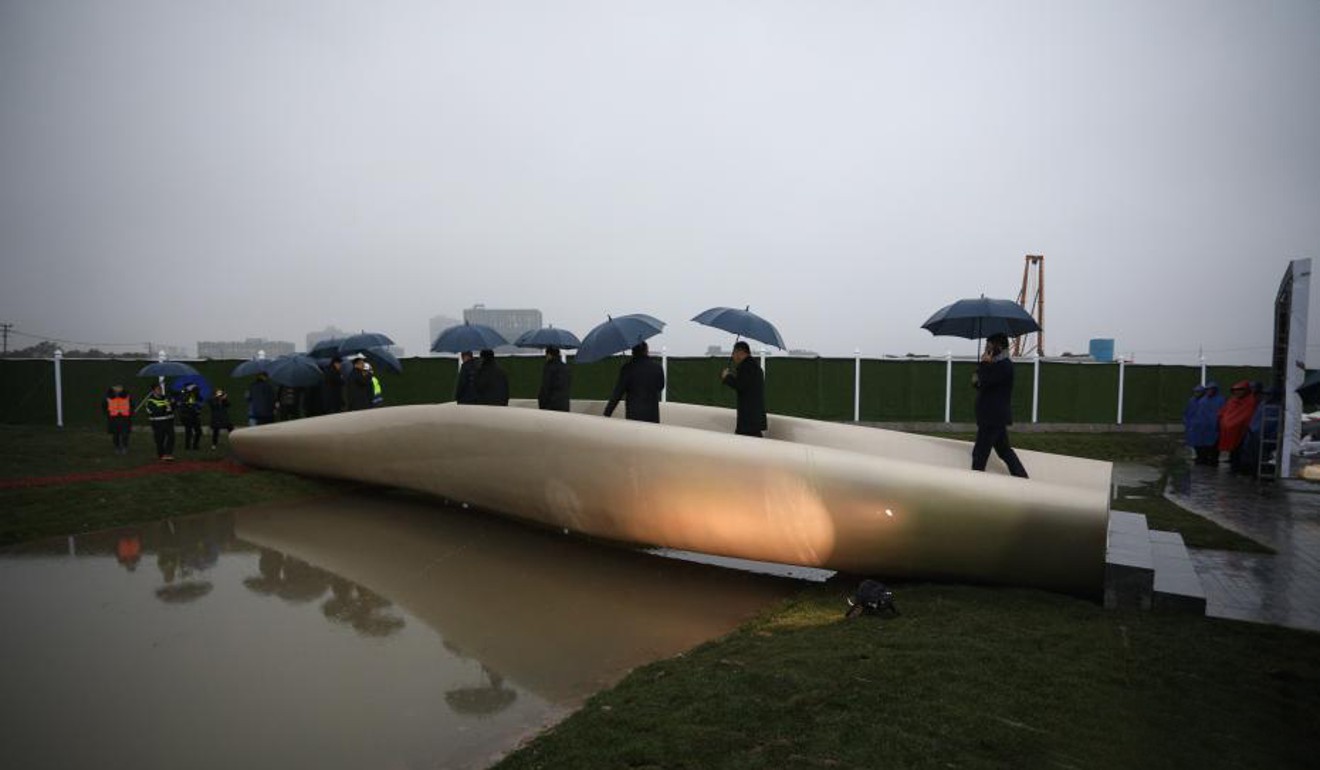
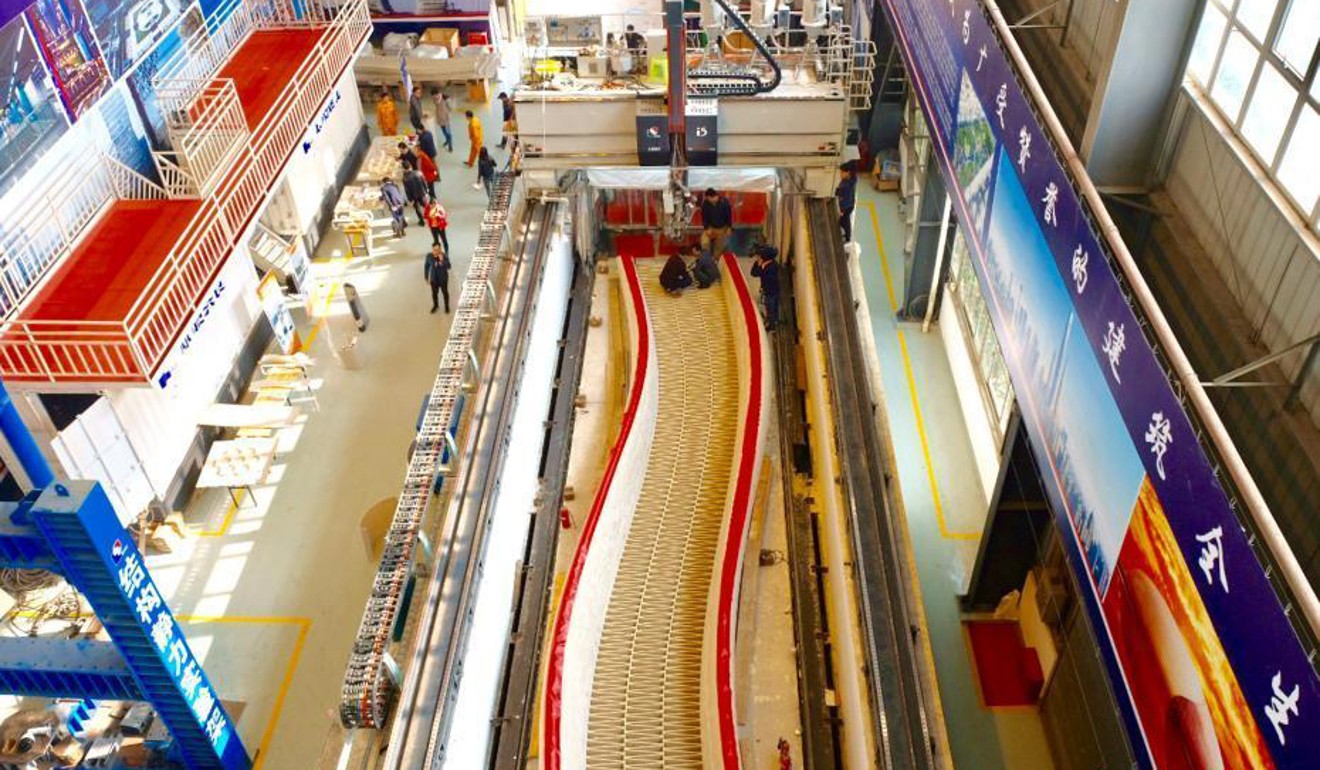
China’s first 3D-printed footbridge opens in Shanghai

  • Developer says 15-metre span is an example of the many possibilities of the new technology
  • Sturdy design means bridge is strong enough to support four adults per square metre, engineer says
PUBLISHED : Sunday, 13 January, 2019, 7:03pm
UPDATED : Sunday, 13 January, 2019, 7:03pm

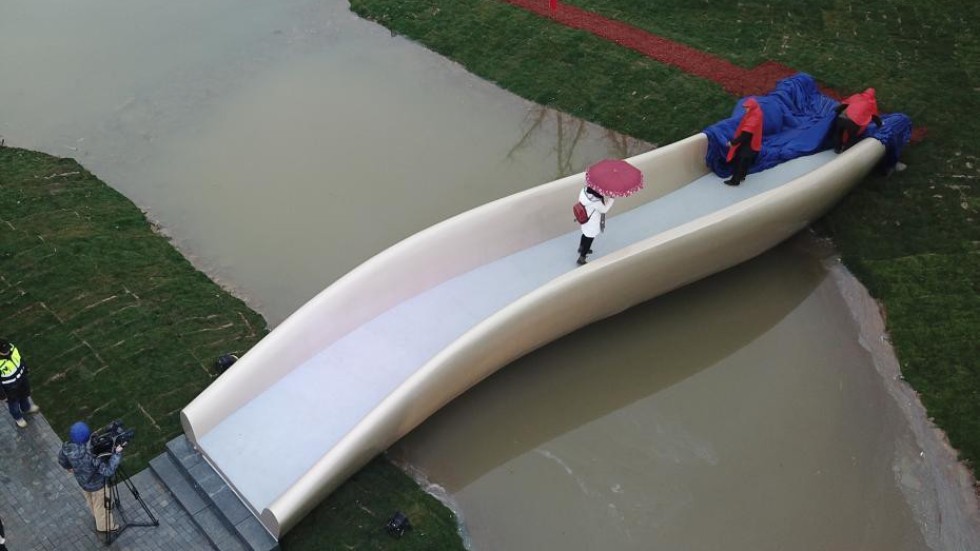
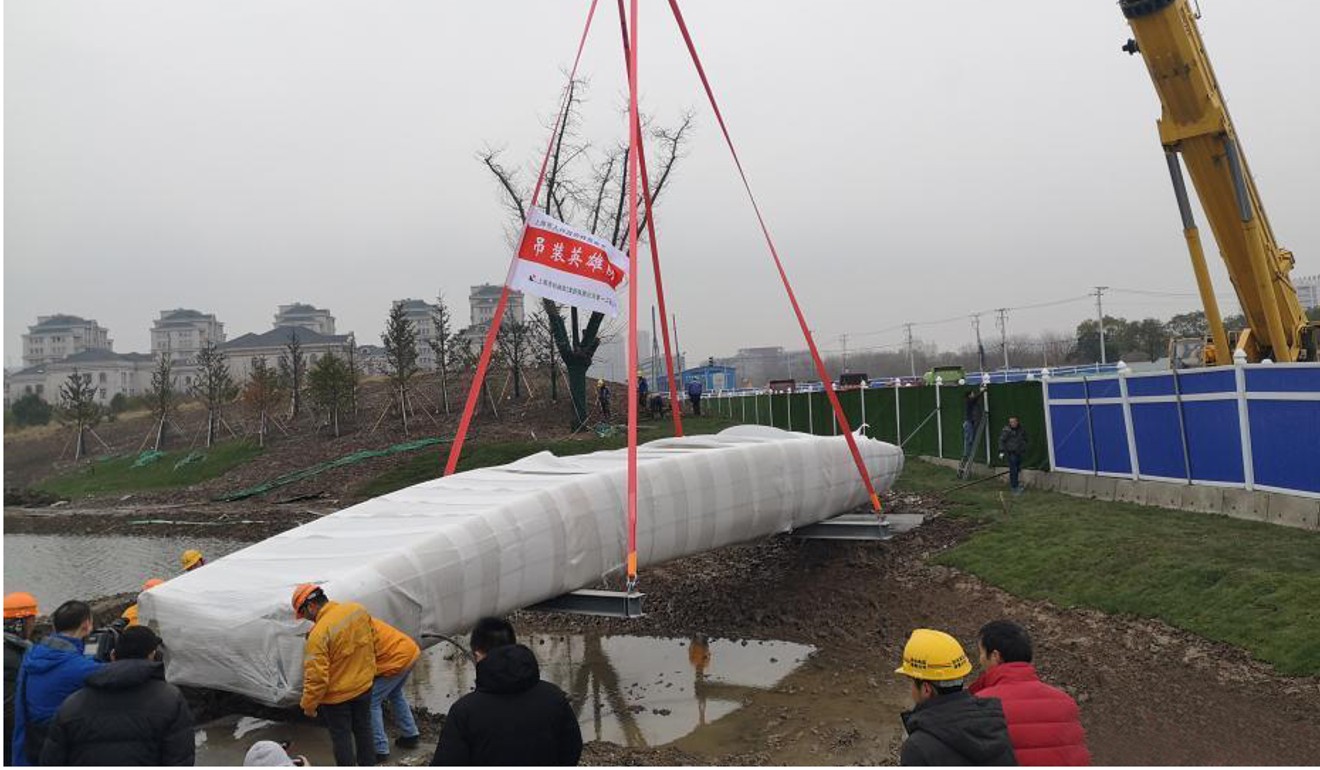
The span, which opened for business on Friday, was created by Shanghai Machinery Construction Group using materials made by Polymaker, the state-run China News Service reported.

“It’s both an everyday, practical application and an interactive one that involves people touching and even relying upon … a 3D printed thing,” Polymaker said on its website.

“Many people have never touched a 3D printed object and they still think of it as part fantasy and part future tech, so projects like this do a lot of good in terms of exposing the public to the reality and the possibilities of 3D printing,” it said.

The footbridge, which engineers said should last about 30 years, was installed over a narrow creek at the Taopu Smart City complex in Shanghai’s Putuo district, the news report said.

On its website the Shanghai government described the new bridge as an “innovative way to promote 3D printing technology and popularise it in urban construction”.

Polymaker said the machine used to print the bridge, which is 3.8 metres wide, 1.2 metres deep and about 5,800kg (12,800lbs) in weight, cost US$2.8 million.

The span was made as a single piece from a combination of glass fibre and a printable plastic filament known as acrylonitrile styrene acrylate, it said.

A separate report by Xinming Evening News quoted an engineer as saying the bridge was capable of bearing a load of 250kg per square metre, or about the weight of four adults.

Before starting the printing process, the build team spent 18 months in research and planning, it said.

While the Shanghai bridge is the first of its kind in China, it is not a world first in terms of 3D printing.

That honour goes to a 12-metre walkway installed at a park in Madrid in 2017, while a 3D-printed steel bridge was unveiled in the Netherlands in October.

Law of Unintended Consequences

continuously updated blog about China & India

ChiaHou's Book Reviews

continuously updated blog about China & India

What's wrong with the world; and its economy

continuously updated blog about China & India