22/08/2019
- State media says presence is part of preparations for major drill, but analyst calls it a ‘psychological warfare tactic’
- Fears that the armed presence was a show of power to Hong Kong
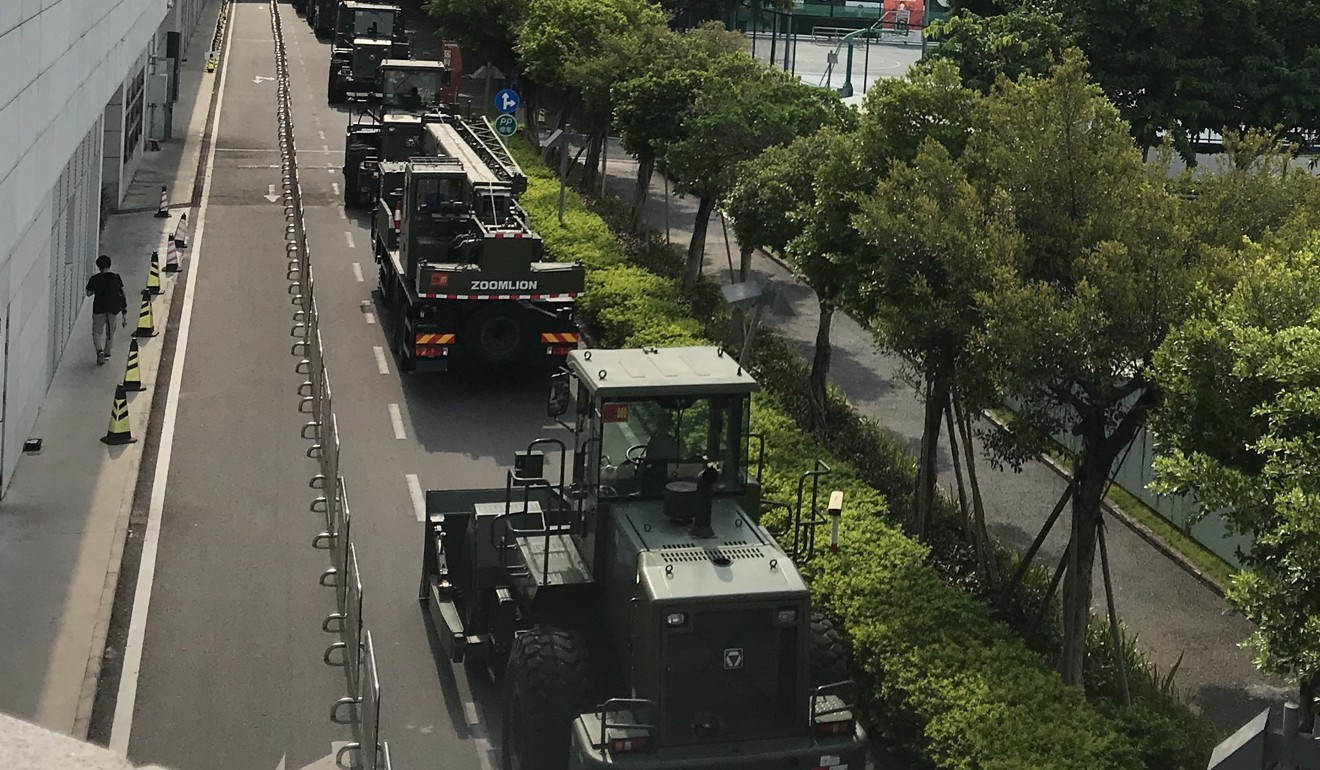
Dozens of trucks line a street next to the entrance of the Shenzhen Bay Sports Centre in Shenzhen on Monday. Photo: SCMP
A convoy of armed police trucks has been stationed at a sports centre in a mainland Chinese city bordering Hong Kong, adding to speculation online that Beijing could be preparing to intervene directly in the protests roiling the special administrative region.
But a Beijing-based military expert said the movements were part of regular exercises and not cause for concern.
Footage of the trucks rolling into Shenzhen in the southern province of Guangdong began circulating online on Saturday.
On Monday, Communist Party mouthpiece People’s Daily and Global Times posted videos of the convoy in the city, saying the police were there to prepare for large-scale drills.
Dozens of the trucks as well as excavators lined a pavement next to the entrance of the Shenzhen Bay Sports Centre in Nanshan district on Monday, across the harbour from Hong Kong.
Personnel in camouflage uniforms stood at the entrances of the sports centre, but did not block access to civilians.
Asked whether they were in Shenzhen for a drill and what time they had arrived, the personnel shook their heads and said nothing.
Also on Monday, the Hong Kong and Macau Affairs Office released a stern statement, calling attacks on police “signs of terrorism”.
Online, internet users speculated that the armed presence was a show of power to Hong Kong.
Excavators are among the heavy equipment stationed near the entrance of the Shenzhen Bay Sports Centre on Monday. Photo: SCMP
“They are just waiting for an order before they’ll drive to Hong Kong to calm the riots. We hope the armed forces can enter Hong Kong and beat the hell out of these idiotic youth,” one commenter said on Weibo, China’s Twitter-like social media platform.
Beijing-based military specialist Zhou Chenming said that the armed police were taking part in regular drills and that people should not feel nervous.
“The central government has repeatedly stated it will only interfere if there are large-scale riots and the Hong Kong government has applied voluntarily for support,” Zhou said.
Hong Kong policeman filmed aiming gun at protesters hailed as a hero by Chinese state media
“If the situation does not reach that point, then this is only a deterrence measure, to deter these [small group of people] from stepping over the line.”
Dixon Sing Ming, a political-science professor at the Hong Kong University of Science and Technology, said the move was a “psychological warfare tactic”.
“The drill is part and parcel of a well-coordinated attempt by Beijing to pressure the protesters and the general public to give up their five demands, including the one for universal suffrage immediately,” Sing said.
Hong Kong has been engulfed in protests since early June, at first to oppose the now-shelved extradition bill that would have allowed Hong Kong to send suspects to other jurisdictions, including mainland China.
Chinese police mass 12,000 anti-riot officers in Shenzhen for drill
But protesters now have five demands, including a complete withdrawal of the extradition bill and an independent investigation into the police’s use of force in handling the protests.
As the confrontations have escalated, public opinion in the mainland has grown steadily tougher, with many calling for more stern measures to restore order.
On August 6, 12,000 police officers gathered in Shenzhen for a drill, which included anti-riot measures similar to those seen on the streets of Hong Kong.
Although the police said the drill was part of security preparations for the 70th anniversary of the People’s Republic on October 1, internet users saw it as a show of power and warning to Hong Kong.
Source: SCMP
Posted in 70th anniversary, anti-riot officers, armed police, Beijing, camouflage uniforms, Central government, Chinese armed police, excavators, Global Times, guangdong province, harbour, Hong Kong, Hong Kong and Macau Affairs Office, Hong Kong University of Science and Technology, large-scale drills, mainland Chinese city, Nanshan district, October 1 1949, People’s Daily, People’s Republic, Police, protests, psychological warfare tactic, regular drills, Shenzhen, Shenzhen Bay Sports Centre, signs of terrorism, Special administrative region, truck convoy, Uncategorized, videos, Weibo |
Leave a Comment »
17/08/2019
- Chinese government advisers say Beijing has not reached direct intervention point but that could change if the violence continues
- Military action would trigger international backlash, observers say, as US expresses concern over reported paramilitary movements and ‘erosion of Hong Kong’s autonomy’
Footage of trucks from the paramilitary People’s Armed Police in Shenzhen has circulated online. Photo: Handout
The unrest in Hong Kong does not yet warrant direct intervention by Beijing despite hardening public sentiment and calls for tougher action in mainland China, according to Chinese government advisers.
Shi Yinhong, an international relations expert at Renmin University and an adviser to the State Council – China’s cabinet – said China would risk damaging its ties with the United States and other major foreign powers, upsetting its own development and losing Hong Kong’s special status if it took the matter directly into its hands.
“I don’t think we need to use troops. Hong Kong police will gradually escalate their action and they haven’t exhausted their means,” Shi said, expressing a view shared by other mainland government advisers and academics.
But he warned that if the violence and chaos continued, it “won’t be too far away from reaching that point”.
A US State Department spokeswoman said the United States was “deeply concerned” about reports of paramilitary movements along the Hong Kong border and reiterated a US call for all sides to refrain from violence.
She said it was important for the Hong Kong government to respect “freedoms of speech and peaceful assembly” and for Beijing to adhere to its commitments to allow a high degree of autonomy for Hong Kong.
She said the protests reflected “broad and legitimate concerns about the erosion of Hong Kong’s autonomy”.
brought the city’s air traffic to a halt and triggered
a huge backlash on the mainland
, where the public feel they have been wrongly targeted by the increasingly violent protesters. Many demanded the central government take action to end the chaos.
The tension deepened after US President Donald Trump, citing intelligence sources,
to the border with Hong Kong. Trump described the situation in the city as “tricky” and called on all sides to remain “calm and safe”.
Footage of trucks from the paramilitary People’s Armed Police rolling into Shenzhen began circulating online on Saturday.
Beijing ‘unlikely to intervene’ in Hong Kong as pressure mounts on police
But Shi and others said direct intervention would be too costly to China and would only be used when all other methods had been exhausted.
“As the trade war with the US goes on, Hong Kong’s importance to our financial system is getting bigger,” Shi said. “If Beijing intervenes with too much assertiveness, the US might revoke the preferential status of Hong Kong.”
He was referring to the US’ 1992 Hong Kong Policy Act which gives the city a special status. In June, American lawmakers introduced a bipartisan bill requiring the US government to examine Hong Kong’s autonomy annually to decide whether to extend the arrangement.
Losing that status could cripple the operations of many businesses based in Hong Kong, said Shen Dingli, a Shanghai-based international affairs expert.
A satellite image appears to show a close-up of Chinese military vehicles at Shenzhen Bay Sports Centre in Shenzhen. Photo: Maxar Technologies
Wang Yong, another specialist on international political economy with Peking University, agreed.
“There would be a lot of opposition from interest groups in the US. Hong Kong is the bridgehead for many multinational corporations and investors from Wall Street to get into the Chinese market,” said Wang, who also teaches at an academy affiliated with China’s Ministry of Foreign Affairs.
“Hong Kong and the Chinese government will need to handle this with extra care, so as not to give any ammunition to hawks in the United States.
“If Hong Kong is not handled properly, it could add tensions to the bilateral ties and ruin any prospect of a trade deal.”
China rejects requests for US warships to visit Hong Kong amid protests Pang Zhongying, an international relations specialist at Ocean University of China in Qingdao, said direct intervention could also damage China’s ties with other countries.
“The whole world is watching. Beijing has exercised restraint for two months and still hasn’t taken any clear action because this is not an easy choice,” said Pang, who is also a member of the Beijing-based Pangoal Institution, a think tank that advises several ministerial offices.
While some observers said Beijing was under political pressure to end the protests in Hong Kong before October 1 – the 70th anniversary of the founding of the People’s Republic, Shi said the central government would not lose patience so easily.
“National Day [on October 1] is an important time, but the Chinese government is not naive to believe there has to be peace under all heaven then,” he said.
“It’s only a bit more than a month from now, we can almost say for sure the trade war will still be on by then and a major turning point in Hong Kong is not likely to happen. But the celebration must go on.”
Source: SCMP
Posted in 70th anniversary, American, autonomy, backlash, Beijing, bipartisan bill, celebration, China alert, China's cabinet, China-US trade war, China’s State Council, concern, direct intervention, financial system, foreign powers, Hong Kong, international, lawmakers, Mainland China, military action, Ministry of Foreign Affairs, Ministry of Foreign Affairs (MFA), National Day, Ocean University of China, Pangoal Institution, paramilitary, peace under all heaven, People's Armed Police, People’s Republic, preferential status, Qingdao, quell, Renmin University, Risks, Risks still too big, send in troops, Shenzhen, Shenzhen Bay Sports Centre, trade war, trigger, Uncategorized, United States, unrest, US, US President Donald Trump, US warships, US’ 1992 Hong Kong Policy Act |
Leave a Comment »


 People’s Daily, China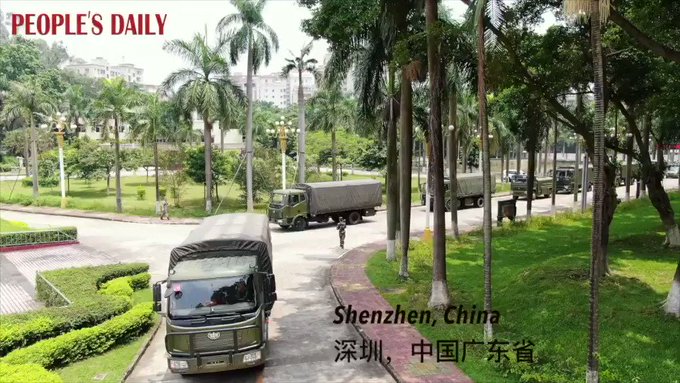


 CHINDIA ALERT: You'll be living in their world, very soon