Chindia Alert: You’ll be Living in their World Very Soon
aims to alert you to the threats and opportunities that China and India present. China and India require serious attention; case of ‘hidden dragon and crouching tiger’.
Without this attention, governments, businesses and, indeed, individuals may find themselves at a great disadvantage sooner rather than later.
The POSTs (front webpages) are mainly 'cuttings' from reliable sources, updated continuously.
The PAGEs (see Tabs, above) attempt to make the information more meaningful by putting some structure to the information we have researched and assembled since 2006.
Big shoals of acetes, which are just a few centimetres long, crippled the water pumping stations and caused a unit to go into automatic safe shutdown
The same thing happened the next day with all units powered down, but the safety regulator says they are now in a ‘safe and controllable condition’
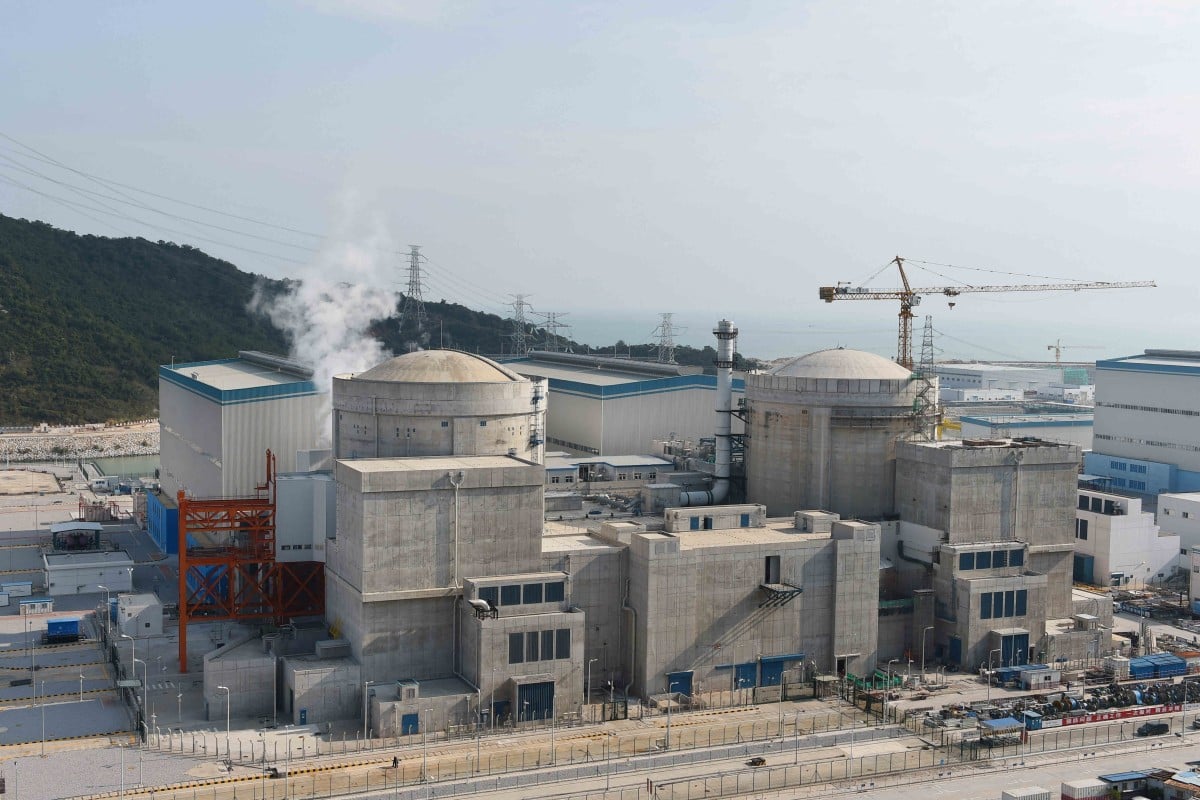
The Yangjiang Nuclear Power Station in Guangdong province is about 235km from Hong Kong. Photo: Handout
The power-generating units of a nuclear plant in southern China were shut down twice last week after its water filters were blocked by masses of small shrimp, the safety regulator said.
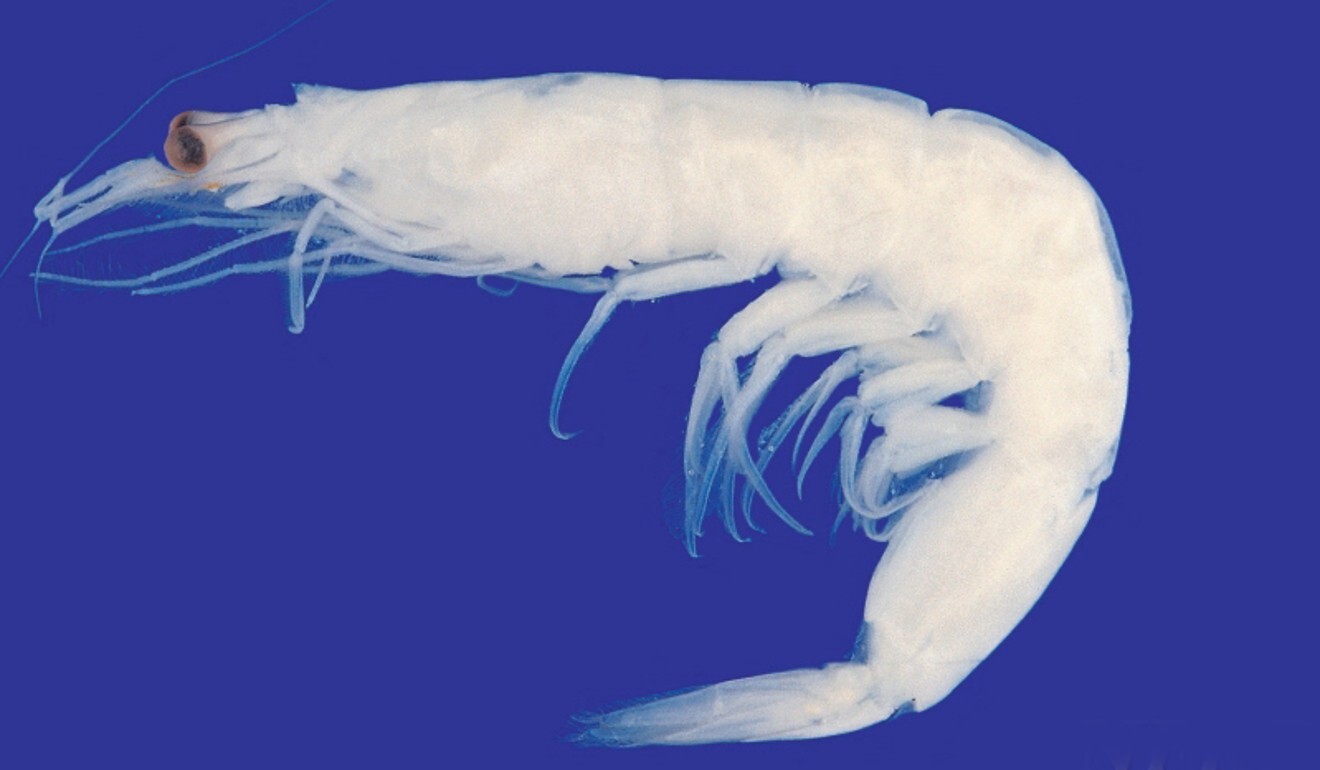
Big shoals of the tiny acetes – krill-like shrimp that are just a few centimetres long – flooded the seawater diversion channel and circulating water pumping stations of the Yangjiang Nuclear Power Station in Guangdong on March 24, the National Nuclear Safety Administration said in a statement.
They crippled the water pumping stations and caused one of the nuclear plant’s six power-generating units to go into automatic safe shutdown, while the other five units ran at 80 per cent of capacity.
The unit that shut down was powered up again the next day after station staff cleared the acetes and cleaned the filters.
But soon after on March 25, the same thing happened, with large shoals of acetes again finding their way into the pumping stations and causing four power-generating units to shut down automatically. The station shut off the other two units for safety reasons.
Big shoals of acetes found their way into the nuclear plant’s pumping stations. Photo: Handout
The incident on March 25 was rated a Level 1 on the International Nuclear and Radiological Event Scale, meaning it was an “anomaly” that had no safety or health consequences. Only two nuclear events have been rated at the top of the scale as Level 7 “major accidents” – the Chernobyl disaster in 1986 and Fukushima in 2011.
China’s nuclear safety regulator said the situation at the Yangjiang plant was under control.
“At present, all six units … are in a safe and controllable condition,” the statement said. “Staff at the scene are taking measures such as fishing out the acetes and cleaning the filters, before reactivating the units and bringing them back to normal operation in accordance with the relevant procedures.”
Nearly a decade after tsunami, clean-up continues at Japan’s Fukushima nuclear plant
Pan Chin, head and chair professor of nuclear engineering at City University of Hong Kong, said the two incidents were “operational events with no radiation leak”.
“The shutdown … is also an indication that the protection system of the power plant is functioning as designed,” he said.
“This incident is not unexpected,” Pan said. “The power plant uses seawater as a coolant for the condenser and occasionally aquatic animals may get close to the intake and cause such incidents.”
The Hong Kong Nuclear Society also noted that similar incidents had happened before.
“Similar events have occurred at nuclear power plants using seawater as a coolant for their power-generating units [including non-nuclear ones] throughout the world, including China,” said Luk Bing-lam, chairman of the society.
New Wufengshan power line across China’s Yangtze River completed
In 2016, a generating unit at the Lingao Nuclear Power Plant in Shenzhen was guided to a safe shutdown by an automatic reactor protection signal after its seawater intake was inundated with tiny marine crustaceans, according to Hong Kong’s Security Bureau. They blocked the filtering screen drum at the intake and tripped two seawater intake pumps.
China tech giants wake up to renewable energy, but fossil fuels still dominate as electricity source
17 Feb 2020
China’s nuclear safety regulator said it had asked all nuclear power station operators to use marine life detection systems in light of incidents such as those at Yangjiang last week.
But Pan from CityU said the acetes could be too small to be detected by a marine life warning system.
“If a system can detect the approach of marine life, large or small, early enough, leaving enough time to take some action to prevent them from approaching further … there will be no such incident,” he said, adding that the systems needed to be improved.
The Yangjiang nuclear plant in Guangdong is about 235km from Hong Kong. It is owned by the China General Nuclear Power Corporation, which operates over 20 nuclear power stations in China. CLP, one of Hong Kong’s two power companies, acquired a 17 per cent stake in the plant in 2017.
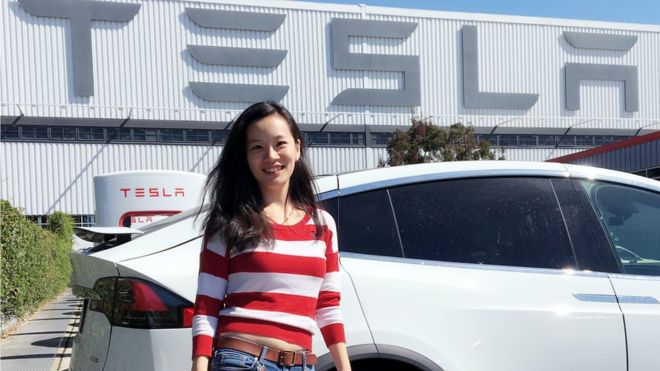
Image copyright HAN ZHUImage caption Choosing an electric car was an easy decision for Shenzhen resident Han Zhu
Han Zhu is on a mission to go green. The 29-year-old data analyst wants her next car to be electric. But her reasons for buying an electric vehicle are in part practical.
In the southern Chinese city of Shenzhen, government restrictions on the number of petrol cars sold each year mean she would have to enter a lottery or auction to be able to buy a petrol vehicle.
“There is a possibility you may never get it. With the electric vehicle green licence, you don’t have to wait in line,” she says.
Shenzhen has become the showpiece capital for the Chinese electric dream. In 2017 it became the first city in the world to introduce a fleet of electric buses. A year later, the government rolled out a plan to replace city taxis with electric cars.
“In Shenzhen, in almost every residential building there are two charging units. One out of 10 cars on the street are Teslas,” she says. “In China if the policy leads in one direction, technology and money goes in that direction too,” she says.
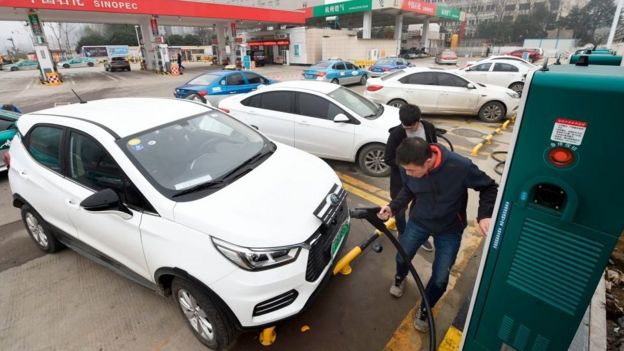
Image copyright GETTY IMAGESImage caption China has the world’s biggest market for electric vehicles
In less than a decade China’s new electric vehicle market has become the largest in the world. In 2018 more than a million electric vehicles were sold in China, more than three times the number sold in the US.
Beijing invested an estimated $50bn (£43bn) in the industry, hoping that today’s dominance of the electric vehicle market would lead to global automobile supremacy tomorrow.
And thus far the policy has been working. Over the last three years the number of Chinese electric vehicle manufacturers has tripled, with more than 400 registered nationwide.
But that breakneck expansion alarmed the government. Last year it decided to put the brakes on by withdrawing approximately half of its financial incentives for buyers.
A slump in sales quickly followed, in the last quarter of 2019 sales for electric vehicles plummeted.
Now the coronavirus has supplied a second punch.
Manufacturers have been forced to halt production lines and close dealerships in a bid to stop the spread of virus.
Overall auto sales in plunged 79% in February compared with the same month in 2019, according to figures from the China Association of Automobile Manufacturers. Sales of new energy vehicles (NEVs) fell for the eighth month in a row.
“China’s auto market was already reeling from a large drop in demand in 2019. In 2020 no carmaker has been immune to the effects of the coronavirus. That includes everyone from the oldest joint ventures producing internal combustion engine SUVs to the most innovative upstarts making connected electric vehicles,” says Scott Kennedy from the Center for Strategic and International Studies.
“The vast majority [of electric car makers] will not survive. But how long they survive and whether industry consolidation occurs through lots of mergers or bankruptcies will depend on the willingness of the government.”
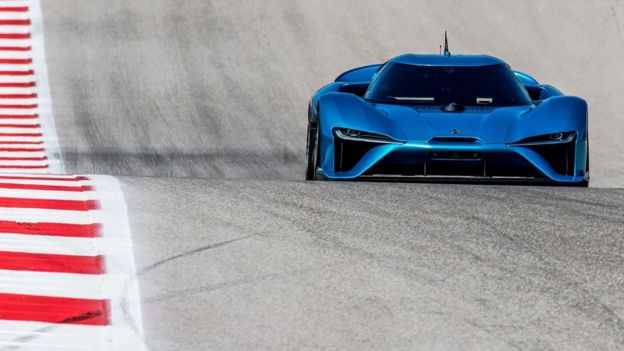
Image copyright NIOImage caption The NIO EP9 is one of the fastest electric cars in the world
After listing on the New York Stock Exchange in 2018 and raising billions of dollars, NIO is perhaps the highest-profile Chinese maker of electric cars.
But in the five years since it was founded it has been beset by problems and has burned through hundreds of millions of dollars. In 2019 the company cut 2,000 jobs on the back of falling revenues. In February it announced it had signed a tentative agreement with a local government that has pledged to fund the company.
“China is a huge market growing at an immense pace. We will adjust and adapt to the market condition,” said an NIO spokesperson.
And it’s not just the car makers. China has some giant makers of components, such as batteries.
In 2018 CATL, a Chinese electric battery maker, became the official supplier of BMW’s electric cars.
Last month Tesla announced it would enter into an agreement with the company to supply batteries for Tesla’s newly built Shanghai mega-plant, capable of producing 500,000 vehicles a year.
Image copyright GETTY IMAGESImage caption China’s BYD is the one of the world’s biggest makers of electric vehicles
But despite that apparent success, analysts have their doubts.
“Chinese auto and battery technology is still not world-class. CATL and BYD are strong battery makers, but they are still somewhat behind technologically from their South Korean and Japanese counterparts. And Chinese automakers are still second-class producers even in their own country and they have barely any sales outside China,” says Mr Kennedy.
For car buyers, that question of quality hangs over China’s electric car makers.
Yi Zhi Yong, a middle-aged entrepreneur, drives a hybrid car made by Chinese manufacturer BYD. Backed by US billionaire Warren Buffett, the company was the third-largest battery-only electric car producer in the world in 2019, according to research by EV-volumes.com. Tesla sold the most, followed by another Chinese firm, BAIC.
He didn’t buy a pure electric vehicle because he is not confident about the quality.
“The quality of domestic pure electric vehicles is not good at the moment,” he says. “No domestic pure electric vehicle is worth buying yet.”
But he feels the progress made by China is a source of national pride. “In the 1990s we couldn’t imagine that China could build cars that can compete with the Japanese,” he says.
Back in Shenzhen, Han Zhu says the rolling back of government subsidies won’t put her off buying an electric vehicle. But rather than buying a Chinese marque, she has her eye on a Tesla.
“I think that they are totally different. I was super excited about Tesla but not other electric cars,” she says.
BEIJING (Reuters) – China’s Hubei province where the coronavirus pandemic originated will lift travel restrictions on people leaving the region as the epidemic there eases, but other regions will tighten controls as new cases double due to imported infections.
The Hubei Health Commission announced it would lift curbs on outgoing travellers starting March 25, provided they had a health clearance code.
The provincial capital Wuhan, where the virus first appeared and which has been in total lockdown since since Jan. 23, will see its travel restrictions lifted on April 8.
RELATED COVERAGE
China health commission says virus transmission risks remain
China’s Hubei province to remove travel bans starting March 25
However, the risk from overseas infections appears to be on the rise, prompting tougher screening and quarantine measures in major cities such as the capital Beijing.
China had 78 new cases on Monday, the National Health Commission said, a two-fold increase from Sunday. Of the new cases, 74 were imported infections, up from 39 imported cases a day earlier.
The Chinese capital Beijing was the hardest-hit, with a record 31 new imported cases, followed by southern Guangdong province with 14 and the financial hub of Shanghai with nine. The total number of imported cases stood at 427 as of Monday.
Only four new cases were local transmissions. One was in Wuhan which had not reported a new infection in five days.
Wuhan residents will soon be allowed to leave with a health tracking code, a QR code, which will have an individual’s health status linked to it.
In other parts of the country, authorities have continued to impose tougher screening and quarantine and have diverted international flights from Beijing to other Chinese cities, but that has not stemmed the influx of Chinese nationals, many of whom are students returning home from virus-hit countries.
Beijing’s city government tightened quarantine rules for individuals arriving from overseas, saying on Tuesday that everyone entering the city will be subject to centralised quarantine and health checks.
The southern city of Shenzhen said on Tuesday it will test all arrivals and the Chinese territory of Macau will ban visitors from the mainland, Hong Kong and Taiwan.
The number of local infections from overseas arrivals – the first of which was reported in the southern travel hub of Guangzhou on Saturday – remains very small.
On Monday, Beijing saw its first case of a local person being infected by an international traveller arriving in China. Shanghai reported a similar case, bringing the total number of such infections to three so far.
CONCERNS ABOUT NEW WAVE OF INFECTIONS
The rise in imported cases and the lifting of restrictions in some cities to allow people to return to work and kickstart the battered Chinese economy has raised concerns of a second wave of infections.
A private survey on Tuesday suggested that a 10-11% contraction in first-quarter gross domestic product in the world’s second largest economy “is not unreasonable”.
The epidemic has hammered all sectors of the economy – from manufacturing to tourism. To persuade businesses to reopen, policymakers have promised loans, aids and subsidies.
In the impoverished province of Gansu, government officials are each required to spend at least 200 yuan (24.31 pounds) a week to spur the recovery of the local catering industry.
The official China Daily warned in an editorial on Tuesday that maintaining stringent restrictions on people’s movements would “now do more harm than good”.
Around two thirds of the total number of flights scheduled every day in February were cancelled, placing huge financial pressure on airlines and airports
China’s aviation industry has also been affected by a series of restrictions by other countries and airlines, with British Airways extending its suspension until mid-April
The cancellation of around 10,000 flights a day, or around two thirds of the total number of flights scheduled every day in February, has placed huge financial pressure on airlines and airports. Photo: Kyodo
A one-way air ticket from the coastal economic hub of Shanghai to the inland municipality of Chongqing, a journey of over 1,400km (870 miles), now costs less than a cup of coffee, with Chinese airlines slashing prices in a bid to boost weak domestic demand amid the coronavirus outbreak.
The cancellation of around 10,000 flights a day, or around two thirds of the total number of flights scheduled every day in February, has placed huge financial pressure on airlines and airports.
The Civil Aviation Administration of China said in a notice on Tuesday that flights should resume gradually as part of the country’s efforts to return economic and social life back to normal, but passengers are still reluctant to fly with the deadly outbreak still not fully under control.
The one-way flight from Shanghai to Chongqing is being offered for just 29 yuan (US$4.10) by China’s biggest low-cost carrier, Spring Airlines, as a special offer for its frequent flyer club members, while a tall caffe latte at Starbucks in China costs 32 yuan (US$4.5).
Many Chinese carriers do receive subsidies for operating key domestic routes, so this also skews the economics as well Luya You
A one-way ticket from Shanghai to Harbin, the capital of the northern Heilongjiang province, a distance of over 1,600km (994 miles), costs just 69 yuan (US$9.80).
Shenzhen Airlines, a division of state-owned carrier Air China, is also running special offers to Chongqing, with a one-way ticket for the 1000km (621 miles) journey from Shenzhen costing just 100 yuan (US$14), around 5 per cent of the standard price of 1,940 yuan (US$276).
Chengdu Airlines, a unit of Sichuan Airlines, which counts China Southern Airlines as a shareholder, is also offering cheap one-way flights from Shenzhen to Chengdu, a distance of over 1,300km (808 miles), for just 100 yuan.
“Considering lower average costs of operating in mainland China, carriers could potentially offer deeper discounts while making slim profits or just breaking even,” said Luya You, an aviation analyst with Bank of Communication International. “As outbreak numbers stabilise or even decline, carriers will likely adjust their fares as well, so these low fares will not last if the situation quickly turns for the better.
“Many Chinese carriers do receive subsidies for operating key domestic routes, so this also skews the economics as well. If it is a key route, for example, the carrier may choose to continue operating regardless of fares or loads as the route constitutes a major link in the domestic network infrastructure.”
China’s aviation authority confirmed earlier this month that between January 25 and February 14, which included the Lunar New Year holiday, the average daily passenger traffic in China was just 470,000, representing a 75 per cent drop from the same period last year.
China’s aviation industry has also been affected by a series of restrictions by other countries and airlines, with British Airways last week extending its suspension of flights to China until after the Easter holiday in mid-April following travel advice from the British government.
The novel coronavirus, which causes the disease officially named Covid-19, has infected more than 78,000 people and killed 2,700 in China. In recent days, South Korea, Italy and Iran have all reported a surge in new cases, raising fears over the spread of the coronavirus.
“The flight suspensions will track the outbreaks, but not likely lead them. If there are more outbreaks, expect more flight suspensions,” said Andrew Charlton, managing director of Aviation Advocacy.
(Reuters) – Airlines have been suspending flights to China or modifying service in response to the coronavirus outbreak.
Below are details (in alphabetical order):
AIRLINES THAT HAVE CANCELLED ALL FLIGHTS TO MAINLAND CHINA
** American Airlines – Extends suspension of China and Hong Kong flights through April 24
** Air France – Said on Feb.6 it would suspend flights to and from mainland China for much of March
** Air India – Suspends flights to Shanghai, Hong Kong until June 30
** Air Seoul – The South Korean budget carrier suspended China flights from Jan. 28 until further notice.
** Air Tanzania – Tanzania’s state-owned carrier, which had planned to begin charter flights to China in February, postponed its maiden flights.
** Air Mauritius – Suspended all flights to China and Hong Kong
** Austrian Airlines – until end-February.
** British Airways – Jan. 29-March 31.
** Delta Airlines – Feb. 2-April 30
** Egyptair suspended flights on Feb, 1, but on Feb. 20 said it would resume some flights to and from China starting next week.
** El Al Israel Airlines – Said on Feb. 12 it would suspend its Hong Kong flights until March 20 and reduce its daily flights to Bangkok. It suspended flights to Beijing from Jan. 30 to March 25 following a health ministry directive.
** Iberia Airlines – The Spanish carrier extended its suspension of flights from Madrid to Shanghai, its only route, from Feb. 29 until the end of April.
** JejuAir Co Ltd – Korean airline to suspend all China routes starting March 1
** Kenya Airways – Jan. 31 until further notice.
** KLM – Will extend its ban up to March 28
** Lion Air – All of February.
** LOT – Extends flight suspension until March 28
** Oman and Saudia, Saudi Arabia’s state airline, both suspended flights on Feb. 2 until further notice.
** Qatar Airways – Feb. 1 until further notice.
** Rwandair – Jan. 31 until further notice.
** Scoot, Singapore Airlines’ low-cost carrier – Feb. 8 until further notice.
** United Airlines – Feb. 5-April 23. Service to Hong Kong suspended Feb. 8-April 23.
** Vietjet and Vietnam Airlines – Suspended flights to the mainland as well as Hong Kong and Macau Feb. 1-April 30, in line with its aviation authority’s directive.
AIRLINES THAT HAVE CANCELLED SOME CHINA FLIGHTS/ROUTES OR MODIFIED SERVICE
** Air Canada – Extended the suspension of its flights to Beijing and Shanghai until March 27. It also suspended its Toronto to Hong Kong flights from March 1 to March 27, but its Vancouver to Hong Kong route remains active. [bit.ly/39zgmI0]
** Air China – Said on Feb. 12 it will cancel flights to Athens, Greece, from Feb. 17 to March 18
** Air China – State carrier said on Feb. 9 it will “adjust” flights between China and the United States.
** Air New Zealand – Suspended Auckland-Shanghai service Feb. 9-March 29. Reduced capacity on Shanghai route throughout April and Hong Kong route throughout April and May.
** ANA Holdings – Suspended routes including Shanghai and Hong Kong from Feb. 10 until further notice.
** Cathay Pacific Airways – Plans to cut a third of its capacity over the next two months, including 90% of flights to mainland China. It has encouraged its 27,000 employees to take three weeks of unpaid leave in a bid to preserve cash.
** Emirates and Etihad – The United Arab Emirates, a major international transit hub, suspended flights to and from China, except for Beijing.
** Finnair – Cancelled all flights to mainland China and decreased the number of flights to Hong Kong until March 28.
** Hainan Airlines – Suspended flights between Budapest, Hungary, and Chongqing Feb. 7-March 27.
** Korean Air Lines Co. – The national flag carrier suspended eight routes to China and reduced services on nine Chinese routes between Feb. 7 and 22.
** Philippine Airlines – Cut the number of flights between Manila and China by over half.
** Qantas Airways – Suspended direct flights to China from Feb. 1. The Australian national carrier halted flights from Sydney to Beijing and Sydney to Shanghai between Feb. 9-March 29.
** Royal Air Maroc – The Moroccan airline suspended direct flights to China Jan. 31-Feb. 29. On Jan. 16, it had launched a direct air route with three flights weekly between its Casablanca hub and Beijing.
** Russia – All Russian airlines, with the exception of national airline Aeroflot, stopped flying to China from Jan. 31. Small airline Ikar will also continue flights between Moscow and China. All planes arriving from China will be sent to a separate terminal in the Moscow Sheremetyevo airport. Aeroflot reduced the frequency of flights to Beijing, Shanghai and Guangzhou until Feb. 29.
** Nordic airline SAS – Extended its suspension of flights to Shanghai and Beijing until March 29.
** Singapore Airlines – Suspended or cut capacity on flights to Beijing, Shanghai, Guangzhou, Shenzhen, Chengdu, Xiamen and Chongqing, some of which are flown by regional arm SilkAir.
** UPS – Cancelled 22 flights to China because of the virus and normal manufacturing closures due to the Lunar New Year holiday.
** Virgin Atlantic – Extended its suspension of daily operations to Shanghai until March 28.
** Virgin Australia – Said it will withdraw from the Sydney-Hong Kong route from March 2 because it was “no longer a viable commercial route” due to growing concerns over the virus and civil unrest in Hong Kong.
Elderly resident says he can’t recall this happening in his city before, not even during the Cultural Revolution
Outbreak is expected to deal a heavy blow to businesses, especially smaller eateries, with some already forced to close
Like many elderly Chinese in Guangzhou, He Zhijian was shocked when he heard there was a ban on eating in restaurants, as authorities try to curb the spread of the coronavirus.
The 73-year-old has spent his entire life in the southern city, where gathering for dim sum is an important weekly family ritual.
“My wife and I … are used to having dim sum, tea and Cantonese dishes at the local restaurants every week. From memory, this [type of ban] has never happened in Guangzhou before – not even during the Cultural Revolution,” He said, referring to the decade of social and political upheaval from 1966, when food was in short supply.
The ban took effect at 9pm on Wednesday and is part of measures to contain the outbreak of the virus, which causes a disease officially known as Covid-19, and is believed to have started in Wuhan in December. The pneumonia-like illness has so far
Residents can still get takeaway meals in Guangzhou, but they have been encouraged to order online and have them delivered. Photo: He Huifeng
Guangzhou is home to more than 15 million people and a busy trading port, and has been known as China’s most open city since the 1600s. For locals, going to restaurants for yum cha, or “drinking tea”, and dining on dim sum is an important part of the city’s history and culture – a tradition that has been carried through many generations.
“Even in the ‘three years of natural disasters’ [from 1959 to 1961, when China was in the grip of a famine] I remember there were still restaurants open,” He said. “I was really shocked [by the ban]. I guess the epidemic situation must be severe, otherwise Guangzhou definitely wouldn’t introduce this measure.”
China’s Hubei province reports huge spike in coronavirus cases, rising 10-fold from previous day
Many people in Guangzhou and across the country went back to work on Monday after an extended Lunar New Year break – another measure to try to stop the virus from spreading – with the government keen for businesses to return to normal operations.
The ban on dining in applies to restaurants, but employees can continue to have meals at their company canteens. And while residents can still get takeaways from restaurants, they have been encouraged to do this online, and have their meals delivered, rather than collecting their orders.
Group gatherings have also been banned in the city, and according to Nanfang Daily, some 126 banquets that would have involved more than 90,000 people have been cancelled by authorities already. The authorities did not say how long the measures would be in place.
Guangzhou is not the only city in Guangdong province to bring in a ban on dining in restaurants – Futian district in Shenzhen, Xiangzhou in Zhuhai, Foshan and Zhongshan have all taken the same step.
Beijingers gradually return to work as China’s fight against deadly coronavirus continues
In Guangzhou, while residents try to adapt, businesses are expecting to take a hit. One of the city’s top hotels said the virus outbreak could have a severe impact on the industry.
“Now we will focus on promoting takeaways for local customers. They can order our meals through apps providing online takeaway ordering services,” said Fion Liang, director of sales and marketing at The Garden Hotel. “As for guests staying in the hotel we will deliver meals to their rooms.”
To work or not to work: the difficult coronavirus question facing China
13 Feb 2020
She said the outbreak did not have a big impact on the hotel’s business in January, because the situation only became severe at the end of the month.
“The impact was definitely much bigger in February. If the epidemic continues to be severe throughout February, the occupancy rate of our rooms will be in the single digits this month,” Liang said. “[Most] hotels in Guangzhou are in the same situation.”
The outbreak is expected to deal a heavy blow to restaurants in the city, especially smaller eateries, and some have already been forced to close. June Zhao, the owner of dumpling restaurant Xi Xi, decided to shut down on Wednesday – the day the eat-in ban was announced.
Prospects had been good for the restaurant – it also sold books and alcohol in the evenings, and its trendy decor drew a young crowd.
“We had just started making money last winter and we were looking forward to earning more over the Lunar New Year holiday. But then the coronavirus came, our turnover fell to several hundred yuan a day, and we lost hope,” she said. “The new ban makes this situation worse – takeaway is not a good choice for dumplings, especially in winter. The losses will continue if we stay open.”
Coronavirus: major cities given power to seize private property
13 Feb 2020
The ban has also interrupted daily routines. Freelance cameraman Cony Yu, 28, usually spends some of his working day at cafes, but that is no longer possible. “[Now] I don’t have a comfortable place to sit aside from my home – even the parks have all been closed,” Yu said.
China disinfects entire cities to fight coronavirus outbreak, some twice a day
In the southern tech hub of Shenzhen, dining in has also been banned in central Futian district. Zhu Hao, a financial analyst based in the district, has been working from home for a week and ordering takeaway food every day. But he has to collect it from the gate at his residential compound, where security staff check the temperature of anyone entering or leaving.
He is losing patience with the restrictions. “I want to eat out. I want beef hotpot, coconut chicken, Korean barbecue and seafood,” he said.
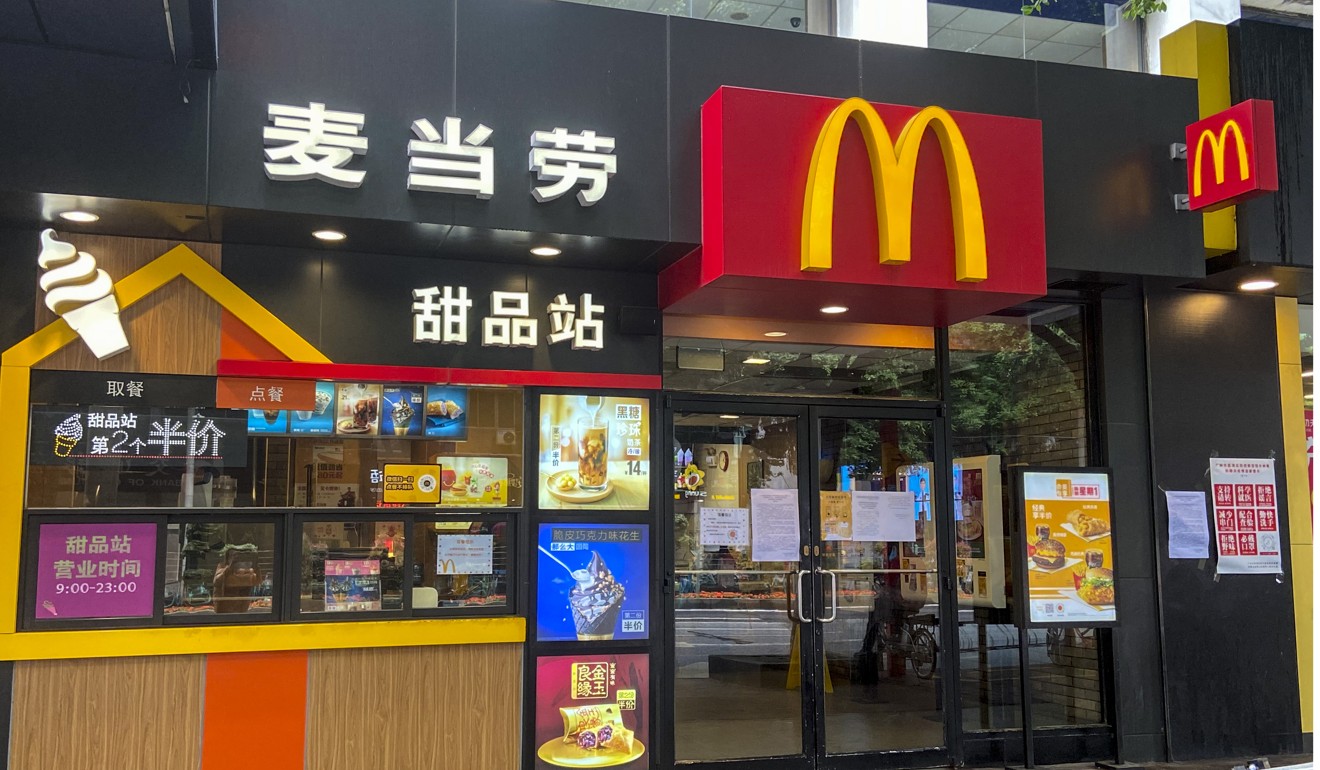
In other Shenzhen districts, many restaurants and shopping centres have been temporarily closed or can only provide takeaway meals – including fast food chains such as McDonald’s and Starbucks.
Other places have strict rules for customers. At a bread shop, customers must register their ID and phone numbers and have their temperatures checked before they can enter. And for now, all hotpot restaurants have been closed.
SHANGHAI (Reuters) – China’s smartphone sales may plunge by as much as 50% in the first quarter, as many retail shops have closed for an extended period and production has yet to fully resume due to the fast spread of a new coronavirus, according to research reports.
The virus outbreak, which has killed more than 900 people and roiled China’s manufacturing industry, comes as top smartphone vendors such as Huawei had hoped China’s 5G rollout plans this year would help the world’s biggest smartphone market rebound after years of falling sales.
“Vendors’ planned product launches will be canceled or delayed, given that large public events are not allowed in China,” research firm Canalys said in a note last week.
“It will take time for vendors to change their product launch roadmaps in China, which is likely to dampen 5G shipments.”
Canalys expects China’s smartphone shipments to halve in the first quarter from a year ago, while IDC, another research firm that tracks the tech sector, forecasts a 30% drop.
Apple Inc said last week it is extending its retail store closures in China and has yet to finalise opening dates, as Foxconn, which assembles iPhones, struggles to fully resume factories.
Foxconn received government approval on Monday to resume production at a plant in the city of Zhenghzou, but its major plant in Shenzhen remain unopened.
Huawei, China’s biggest smartphone vendor, said its manufacturing capacity is “running normally” without specifying further. But like many other local peers, Huawei relies heavily on third-party manufacturers for production.
If factories cannot resume production to full capacity on time, this could delay brands’ ability to bring their newest products to market, analysts said.
Xiaomi Corp, Huawei, and Oppo, three of China’s top Android brands, are all expected to announce flagship devices in the first half.
Oppo told Reuters that while the impact of the virus will affect operations at some local factories, “manufacturing capacity can be guaranteed effectively” thanks to its plants overseas.
Xiaomi did not respond to requests for comment.
“The delays in reopening factories and the labour return time will not only affect shipments to stores, it will also affect the product launch times in the mid- and long-term,” Will Wong, an IDC analyst, said.
Globally, smartphone production will decrease by 12% in the March quarter to a five-year low of 275 million units, research firm TrendForce said on Monday. It revised down iPhone production by 10% to 41 million units, while Huawei’s output forecast was cut by 15% to 42.5 million phones.
Samsung Electronics Co, the world’s top smartphone maker, is seen the least affected by the virus outbreak as its main production base is in Vietnam, the report said, lowering its production forecasts by just 3% to 71.5 million units.
BEIJING (Reuters) – An outbreak of a new coronavirus in China has spread to more cities, Chinese authorities said on Monday, as the number of patients tripled and a third person died, stoking concerns about containment of the illness.
The Daxing health commission in the capital Beijing said it had confirmed two cases of coronavirus, while the southern Guangdong province’s health commission confirmed one case in Shenzhen. They mark the first cases in China beyond the central city of Wuhan where the virus first emerged.
The Wuhan Municipal Health Commission said 136 new cases of pneumonia caused by the coronavirus strain had been found in the city over the weekend, adding to 62 already known cases. A third death occurred on Saturday, the authority said in a statement.
RELATED COVERAGE
Masks on, Chinese start holiday travels as alarm mounts over mystery virus
South Korea confirms first case of new coronavirus in Chinese visitor
This brings the total number of known cases worldwide to more than 200, underscoring the challenge for health authorities seeking to contain the outbreak. South Korea on Monday reported its first confirmed case of the coronavirus, a 35-year-old female Chinese national who had travelled from Wuhan, the fourth patient to be reported outside China.
Hundreds of millions of Chinese tourists will be traveling domestically and abroad during the Lunar New Year holiday period that starts later this week.
A report by London Imperial College’s MRC Centre for Global Infectious Disease Analysis estimated that by Jan. 12 there were 1,723 cases in Wuhan City with onset of related symptoms. Chinese health authorities have not commented directly on the report.
CONTAINMENT EFFORTS
Authorities around the globe, including in the United States and many Asian countries, have stepped up screening of travellers from Wuhan. Last week, two cases were reported in Thailand and one in Japan. All three involved people from Wuhan or who recently visited the city.
The virus belongs to the same family of coronaviruses as Severe Acute Respiratory Syndrome (SARS), which killed nearly 800 people globally during a 2002/03 outbreak that also started in China.
Its symptoms include fever and difficulty in breathing, which are similar to many other respiratory diseases and pose complications for screening efforts.
China’s National Health Commission said on Sunday it will step up prevention efforts, but acknowledged it still doesn’t know the source of the virus.
Shares in pharmaceutical firms and mask makers in China surged Monday because of the outbreak.
The outbreak was one of the top trending topics on Chinese social media platform Weibo, where many users expressed concerns about their safety.
“Who knows how many people who have been to Wuhan may be unaware that they have already been infected?,” one user said.
China’s Global Times, published by the ruling Communist Party’s official People’s Daily newspaper, said in an editorial the government needs to disclose all information and not repeat the mistakes made with SARS. Chinese officials covered up the SARS outbreak for weeks before a growing death toll and rumours forced it to reveal the epidemic.
“Concealment would be a serious blow to the government’s credibility and might trigger greater social panic,” the editorial said.
This is the third instalment in a four-part series examining the brewing US-China tech war over the development and deployment of artificial intelligence tech
The US is home to five of the world’s top 10 universities in the AI field, which includes computer vision and machine learning, while China has three
For those Chinese with long-term plans to stay in the US, a major obstacle lies in getting work visas, especially in the current trade war environment. Illustration: Perry Tse
After working in the United States for more than a decade, Zheng Yefeng felt he had hit a glass ceiling. He also saw that the gap in artificial intelligence between China and the US was narrowing.
Last year Zheng, who worked as a researcher at Siemens Healthcare in New Jersey, made a decision that addressed both problems. He accepted an offer to head up the medical research and development team at Tencent’s YouTu artificial intelligence lab in Shenzhen, known as China’s Silicon Valley.
“There was almost no room for promotion if I stayed in the US,” he said, expressing a common dilemma faced by experienced Chinese tech workers in America.
With the US-China trade war leading to tighter scrutiny of Chinese nationals working in the US tech industry, people like Zheng are moving back to China to work in the burgeoning AI sector, especially after Beijing designated AI a national priority. The technology’s varied applications have attracted billions of dollars of venture capital investment, created highly valued start-ups like SenseTime and ByteDance, and sparked a talent war among companies.
That has created an odd symbiotic relationship between the two countries vying for AI supremacy. The US, with its superior higher education system, is the training ground for Chinese AI scientists like Zheng, who obtained a PhD from the University of Maryland after earning bachelor’s and master’s degrees at China’s premier Tsinghua University.
“Many professors in China have great academic ability, but in terms of the number [of top professors], the US is ahead,” said Luo Guojie, who himself accepted an offer from Peking University to become an assistant professor after studying computer science in the US.
Among international students majoring in computer science and maths in US universities, Chinese nationals were the third largest group behind Indians and Nepalese in the 2018-2019 academic year, representing 19.9 per cent, according to the Institute of International Education.
[To build] the best universities is not easy. The university is a free speech space, whereas in China, this is not the case Gunther Marten, a senior official with the European Union delegation to China
The South China Morning Post spoke with several Chinese AI engineers who decided to stay and work in the US after their studies. They only agreed to give their surnames because of the sensitivity of the issues being discussed.
A 25-year-old Beijinger surnamed Lin graduated from one of China’s best engineering schools in the capital before heading to a US university for a master’s degree in computer science in 2017. Like some of his peers, he found the teaching methods in China to be outdated.
“It’s hard to imagine that a final exam of a coding course still asked you to hand write code, instead of running and testing it on a computer,” said Lin, who now works as a software engineer for Google in Silicon Valley.
“Although we still had to take writing tests [in the US], we had many practical opportunities in the lab and could do our own projects,” he added.
A Facebook software engineer surnamed Zhuang had a similar experience at his university in Shanghai.
“Many engineering students [in China] still get old-school textbooks and insufficient laboratory training,” he said. “Engineering practices for AI have been through a fast iteration over the past few decades, which means many Chinese students are not exposed to the most updated knowledge in the field, at least not in the classroom.”
Zhuang also noted out that many classes in China are taught in Chinese, meaning engineering graduates are not fluent in English, the preferred language of the global AI research community.
The US is home to five of the world’s top 10 universities in the AI field, which includes computer vision and machine learning, while China has three. Carnegie Mellon University (CMU) in Pennsylvania ranks No 1 while China’s Tsinghua University is No 2, according to CSrankings, which bases the list on papers published since 2009.
US tech chief: China is threatening US’ lead in global AI race
With its top institutions and an open culture that encourages freedom of speech, including unfettered internet access, the US has become a magnet for the brightest AI students the world over.
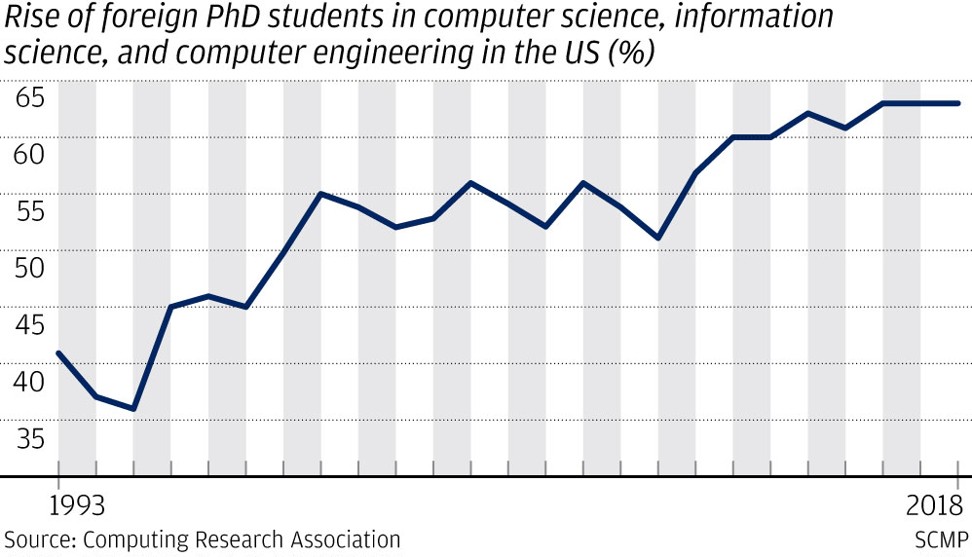
In 2018, 62.8 per cent of PhD degrees and 65.4 per cent of master’s degrees in computer science, information science and computer engineering programmes in the US were granted to “non-resident aliens”, according to a survey by the Computing Research Association.
“[To build] the best universities is not easy,” Gunther Marten, a senior official with the European Union delegation to China, said on the sidelines of the World Internet Conference in Wuzhen in October. “The university is a free speech space, whereas in China, this is not the case.”
When these US-educated AI scientists finish studying, most take advantage of a rule allowing them to stay in the country for three years to gain work experience.
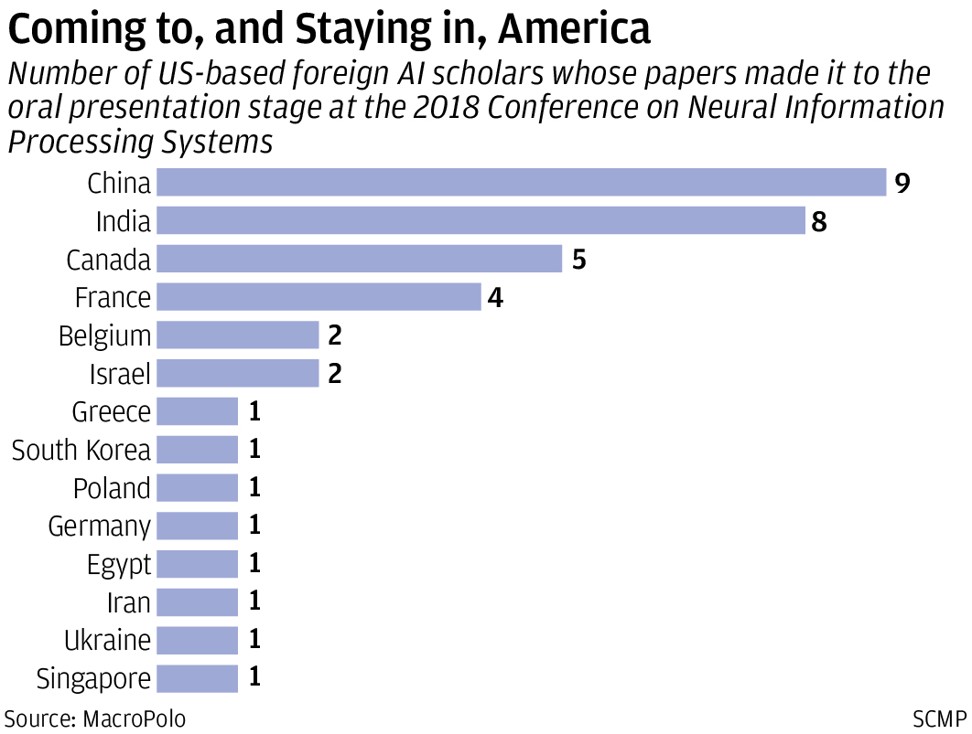
Of the foreign nationals taking part in last year’s Conference on Neural Information Processing Systems (NIPS), a major machine learning event for AI professionals, 87 per cent of those whose papers made it to the oral presentation stage went to work for American universities or research institutes after earning their PhD, according to MacroPolo, a think tank under the Paulson Institute.
“China has many great universities and companies, especially in certain subfields of AI such as computer vision, but many people remain hesitant to move to China due to the political environment, quality of life concerns and workplace issues,” said Remco Zwetsloot, a research fellow at Georgetown University’s Center for Security and Emerging Technology (CSET).
China’s PhD students miserable, yet hopeful: survey
Some of the US-trained Chinese AI engineers told the Post they were scared off by China’s “996” working culture: 9am to 9pm, six days a week. Tech firms in China typically expect their employees to work long hours to prove their dedication.
Lin, the Beijinger who now works for Google, used to be an intern at one of China’s largest internet giants. “I worked from the time I woke up until going to bed,” he said, “At Google, I’ve been confused because many people here only work till 5pm but Google is still a global leader.” Lin said he would be happy to return to China if the 996 work culture eases.
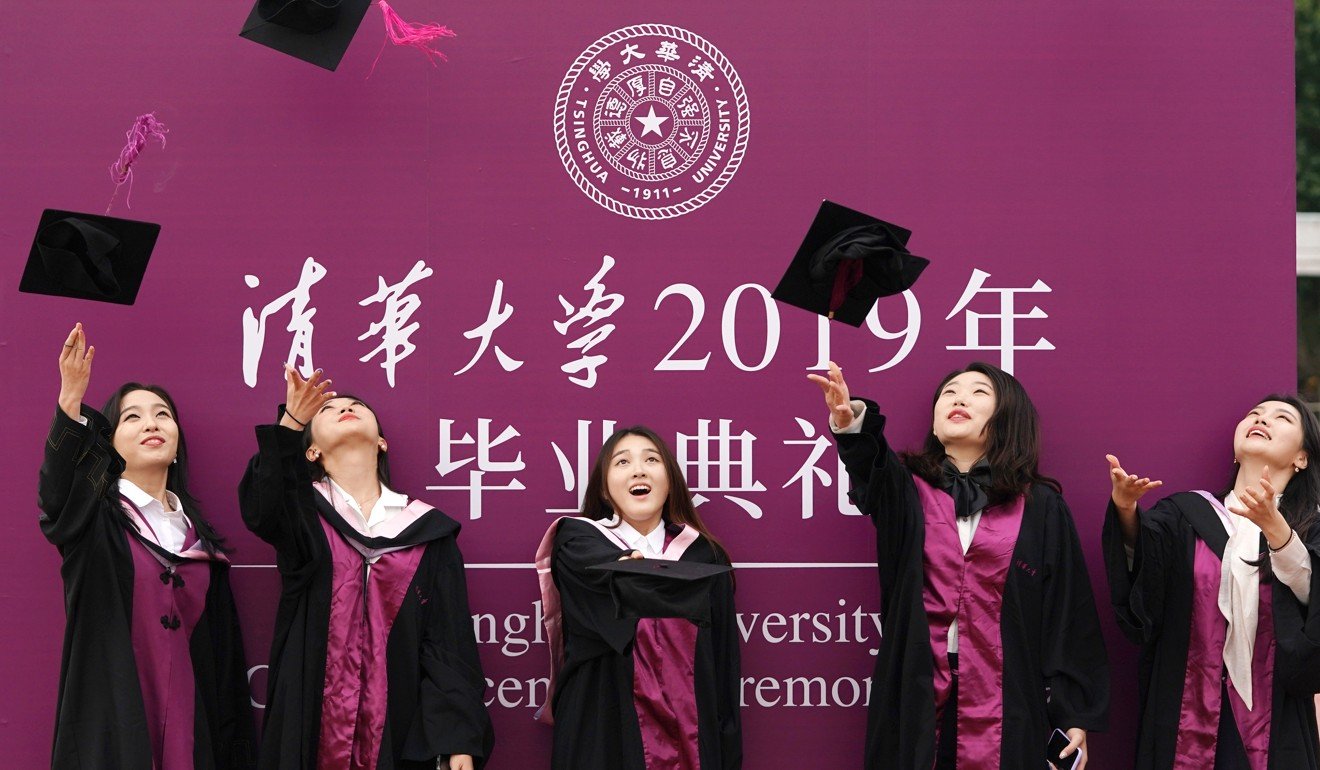
Graduates throw their caps in the air as they pose for a group photo during the 2019 commencement ceremony of Tsinghua University in Beijing. Tsinghua ranks as China’s top university for AI. Photo: Xinhua
Chen, a female postgraduate student at Carnegie Mellon, who recently accepted a job offer from Google, once interned at Beijing-based AI unicorn SenseTime, where she worked from 10am to between 8pm and 10pm most days.
A SenseTime spokesperson said the company has adopted flexible working hours for its employees.
Besides a better work-life balance, Chinese graduates look for jobs in Silicon Valley because of the higher pay.
“If you include pre-tax income, many of us get offers that pay more than 1 million yuan (US$142,000) a year but in China the salaries offered to the best batch of fresh undergraduates are about 200,000 to 300,000 yuan (US$28,000 to US$43,000),” Chen said.
Still, for those Chinese with long-term plans to stay in the US, a major obstacle lies in getting work visas, especially in the current trade war environment. Most AI-related workers are on H-1B visas that allow US companies to employ non-US nationals with expertise in specialised fields such as IT, finance and engineering.
However, the number of non-immigrant H-1B visas granted has started to fall since 2016, when it peaked at 180,000, according to the US Department of State, and US tech companies have complained that a policy shift by the Trump administration has made the approval process longer and more complicated.
In 2017, President Donald Trump requested an overhaul of the H-1B visa programme, saying he did not want it to enable US tech companies to hire cheaper foreign workers at the expense of American jobs. He also wants to give priority to highly skilled people and restrict those wanting to move to the US because of family connections.
Science graduates from overseas countries can stay in the US with their student visas for up to three years while competing for the hard to get work visas, which are granted based on undisclosed mechanisms. Overseas students already working in the US can apply for so-called green cards, which offer permanent residency.
After working for a major US tech company for almost three years on a student visa, one Chinese software engineer, who spoke to the Post on condition of anonymity, said she was relocated to the US firm’s Beijing office last year after failing to obtain a H-1B work visa.
“While there might be individual cases, it seems like the current tensions have not – at least as of a few months ago – led to noticeable changes in the overall number of Chinese students staying in the US after graduating,” said CSET’s Zwetsloot.
Some Chinese AI scientists use Twitter to announce their decision to stay. Chen Tianqi, who just obtained a PhD at the University of Washington in Seattle, and Jun-Yan Zhu, a CMU and UC Berkeley alumnus currently working at Adobe, each tweeted that they would join Carnegie Mellon as assistant professors next year.
To achieve the goal of turning China into “the world’s primary AI innovation centre” by 2030, according to a 2017 blueprint issued the State Council, the central government has stepped up efforts to attract US-educated talent.
The Thousand Talents Plan has seen more than 6,000 overseas Chinese students and academics return since its was established in 2008, but because of escalating tensions with the US, Beijing has played down the initiative.
Longer term, Beijing’s willingness to invest significant sums into the AI sector could see more Chinese return for the better employment opportunities. Between 2013 and the first quarter of 2018, China attracted 60 per cent of global investment in AI, according to a Tsinghua University report.
China’s spending on AI may be far lower than people think
Chinese authorities are investing heavily in the sector, with the city of Shanghai setting up a 10 billion yuan (US$142 million) AI fund in August and Beijing city government announcing in April it would provide a 340 million yuan (US$48 million) grant to the Beijing Academy of Artificial Intelligence.
“More and more senior people like me have come back, and some start their own businesses,” said Zheng, the Siemens Healthcare researcher who joined Tencent. “It’s easier for Chinese to seek venture capital in China than in other countries.”
URUMQI, Dec. 8 (Xinhua) — Rich in resources but remote, Xinjiang in China’s far west has become a magnet for investors for its unique position on the Silk Road.
In a workshop of the Amer International Group in Urumqi, capital of Xinjiang Uygur Autonomous Region, workers are busy adjusting and packing laptops.
Recently, Amer sent the first batch of 2,000 laptops it produced for the German company TrekStor to the European market via China-Europe freight trains.
Headquartered in the southern Chinese city of Shenzhen, Amer invested 20 billion yuan (around 2.8 billion U.S. dollars) to build an industrial park in Xinjiang in 2018. So far, the industrial park has produced and exported around 1.5 million mobile phones, according to Wang Wenyin, the founder and chairman of Amer International Group.
“We saw Xinjiang’s geographical advantages, so we established the industrial park and cooperated with our counterparts in South and Central Asia in the fields of smartphones and IT high-end manufacturing,” Wang said.
Amer International Group is among a growing number of enterprises that have been attracted by Xinjiang in recent years, as trains and planes have made Xinjiang better connected than ever before.
As China’s key trade gateway to Central and West Asia, the remote region’s position as the heart of the Belt and Road Initiative is unmistakable. In 2013, China proposed the BRI, which opened up new space for the world economy, spurring trade and economic growth and stimulating investment and creating jobs worldwide.
Urumqi Customs saw the number of China-Europe freight trains skyrocket to 5,743 in the first 10 months this year, up 53.68 percent year on year, outnumbering the total of 2018.
To attract more investors, the local government has gone to great lengths creating a more friendly business environment, such as cutting the time required for starting a business and lowering the entry threshold for products.
Up to now, Xinjiang has had more than 1.8 million market entities including 359,000 enterprises, up 18 percent year on year.
Foreign and domestic business giants including German chemical giant BASF and China’s real estate conglomerates Wanda Group have also invested in the region.
Lai Naixiang, head of Kashgar Oumeisheng Energy Technology, a home appliance manufacturer, moved his business from Shenzhen to Kashgar in southern Xinjiang in 2017.
“We chose to settle in Kashgar because of the great market potential in adjacent Central Asian countries as well as Xinjiang’s lower electricity prices and preferential tax policy,” he said.
Last year, the company exported electric kettles worth more than 16 million yuan to Kyrgyzstan and Tajikistan.
Foreign trade in Xinjiang has seen booming growth. The region recorded around 131.5 billion yuan in imports and exports in the first 10 months of this year, up 28 percent year on year.
In the first 10 months, Kazakhstan topped the list of Xinjiang’s major trade partners, with trade volume between the two growing by 28.2 percent to 60.2 billion yuan.
Xinjiang’s trade with Kyrgyzstan, Australia, Pakistan, Britain, Argentina and Vietnam also showed fast growth, according to the local customs authorities.
“With further Belt and Road construction, Xinjiang will get more impetus in economic and social development. I see great potential in the region,” Wang said.








 CHINDIA ALERT: You'll be living in their world, very soon