Archive for ‘similar to’

09/04/2020

Coronavirus vaccine trials: Chinese volunteer in Wuhan tells his story

  • ‘I felt excited and proud of myself,’ says restaurant owner and former volunteer ambulance driver Xiang Yafei
  • ‘I didn’t feel afraid at all. In my mind, it’s already a successful vaccine,’ he says
Wuhan restaurant owner Xiang Yafei says he wasn’t afraid to be a coronavirus vaccine guinea pig. Photo: Handout
With more than 1.5 million confirmed cases around the world and over 88,000 deaths, the race to develop a vaccine for the coronavirus is hotting up.
According to the World Health Organisation, about 35 companies and academic institutions are currently working on candidate products. Among the front-runners are China’s CanSino Biologics and Moderna Therapeutics in the United States, both of which have begun phase one clinical trials.
In China, those tests, which started on March 19, involve 108 volunteers from Wuhan, the city in which the virus that causes Covid-19 was first detected.
Among them is 30-year-old restaurant owner Xiang Yafei, who spoke to the South China Morning Post about his experiences so far.

Why did you apply to be a vaccine trial volunteer?
I had been doing various voluntary jobs since the end of January when Wuhan was put under lockdown. In the middle of March, one of my friends who knew about the vaccine study asked if I would be interested in joining.
At first I was afraid because there was uncertainty [about the vaccine]. I asked around and some of my friends said there was some risk to being a candidate as I’d be injected with some kinds of virus, but I felt better after I did some research about it online.
Before joining the clinical trials, Xiang worked as a volunteer ambulance driver. Photo: Handout
Also, because the vaccine was developed by the Academy of Military Medical Sciences [a research unit of the People’s Liberation Army] and CanSino, I thought its safety should be guaranteed, as I have confidence in the PLA because several of my relatives are former soldiers. So I agreed to join the trial but didn’t tell my parents because I didn’t want to worry them.

I went to the research team’s office on March 16 and filed my application – that was before they officially announced they were recruiting volunteers on the internet. While I was at the office, I was lucky to meet Major General Chen Wei, the team leader, who explained about the development of the vaccine and assured me that it wouldn’t damage my body. That boosted my confidence.

China ‘leads world in coronavirus research’, followed by US

8 Apr 2020

When did you receive your injection and how did you feel at that time?

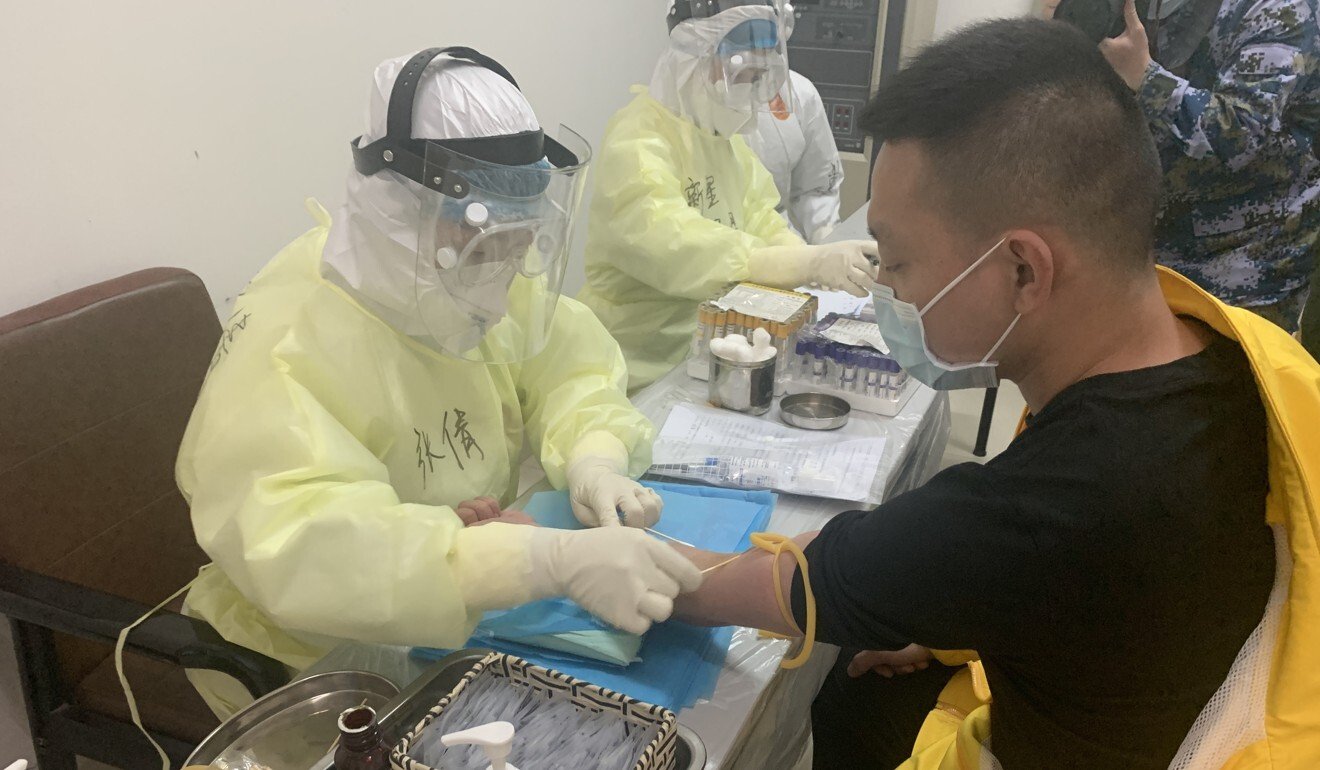
I was given mine on the morning of March 19 and immediately put into quarantine for 14 days at a PLA facility. My number in the volunteer group is 006, meaning I was the sixth person to get the vaccine. Before the injection, I underwent a strict physical check-up. I later learned that more than 5,200 people had applied to be volunteers.

Receiving the vaccine was no different to any other injection I’d had before in my life. I didn’t feel any pain and it only lasted about 10 seconds.

But in my heart, I felt excited and proud of myself. I understand that the vaccine will be an important part in battling this coronavirus and testing it is part of the preparations before it can be put on the market.
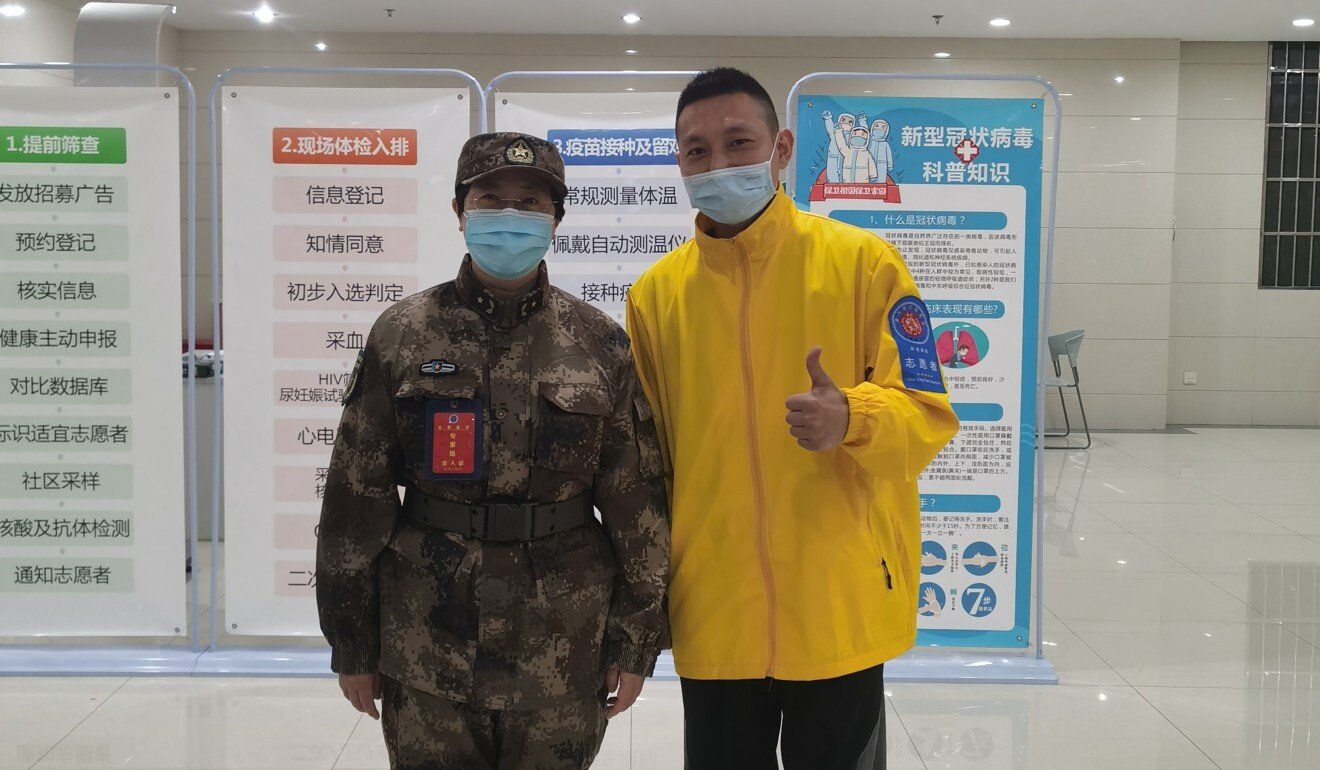
Xiang (right) said team leader Chen Wei (left) told him about the development of the vaccine and assured him he would come to no harm. Photo: Handout
As volunteers, our job is to work together with the scientists. After all, academician Chen [the major general is also a member of the Chinese Academy of Engineering] and six members of her team have also been injected with the vaccine, and she was the first person to receive it.

They didn’t show any bad symptoms, so at that moment, I didn’t feel afraid at all. In my mind, it’s already a successful vaccine.

And how has your health been since receiving the vaccine?

I had a fever, 37.6 degrees, for the first two days. It was like catching a normal cold, with symptoms of fatigue and drowsiness. But from the third day, my condition improved and I was basically in good health.

The 108 volunteers are divided into three streams, with each receiving either a low, medium or high dose of the drug. I was in the low group so only got one dose. Volunteers in the medium group also got one and the high group were given two shots. As far as I know, everyone was fine after receiving their injections.

When will your trial result be available?

After my quarantine period ended on April 2, I was given a CAT scan and the researchers took a sample of my blood for testing. They said it would be two weeks before they could tell if there were coronavirus antibodies in my bloodstream.

I am not sure if they will tell me the result, but over the next five months I have to do four more blood tests to see if I have antibodies and how long they might remain in my blood.

What did you do to keep yourself entertained during the quarantine period?

It was just rest for me. Before then I’d been a volunteer ambulance driver in Wuhan, working every day taking coronavirus patients to hospital. I’d been really busy for more than a month, so the 14-day quarantine period gave me a chance to relax and catch up on some sleep.

I really enjoyed my time there thanks to the meals I was given, which were nutritious and varied.

The volunteers had to stay in their rooms and we were not allowed to visit each other. We were also told to check our temperature every day and to report any symptoms. I read books and exercised in my room. Some of the volunteers practised calligraphy, some played football with their toilet paper rolls, some jogged, some composed songs, and some made videos about their life in quarantine and uploaded the clips to social media. We did everything just in our own rooms.
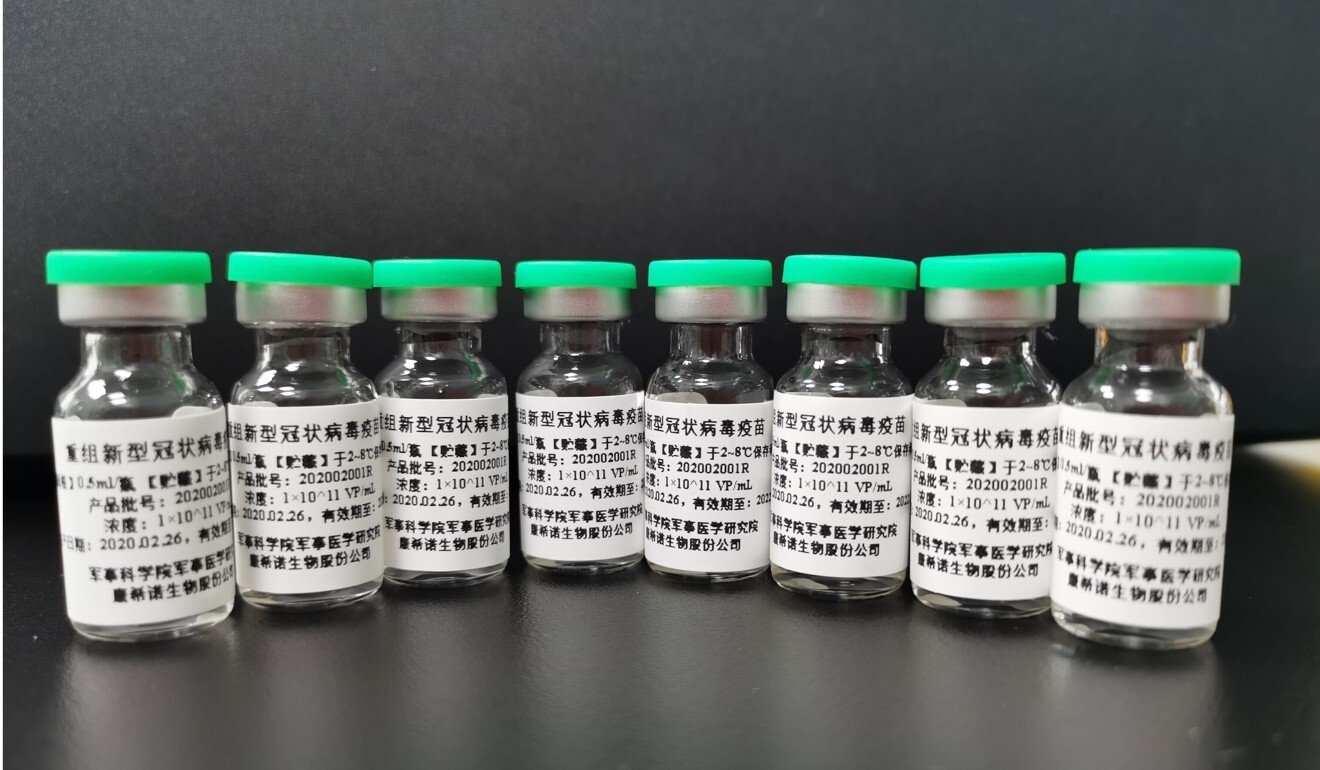
Chinese firm CanSino Biologics is one of the front-runners in the race to develop a vaccine for the coronavirus. Photo: Handout

So what was it like working as an ambulance driver?

It was a race against time trying to get people to hospital as quickly as I could. But I felt a real sense of purpose.

At first, I didn’t want to do such work. I was scared because all the patients had been confirmed or were suspected of being infected, and they were contagious.

I was told that no one wanted to be an ambulance driver, but I had a licence to drive a minivan so I decided to do it. I think we young people should make a contribution to society, especially during this difficult time and in our home city and home province, so I applied.

Also, [each day at work] I took a gourd with me. It is called hulu in Mandarin and has auspicious implications in Chinese, as hu sounds similar to fu, which means good luck.

How was your restaurant business affected by the epidemic?

I lost about half a million yuan (US$70,000) because of it. I decided to shut my restaurant down on January 21, two days before the official lockdown, because there had been rumours it was coming and I wanted my workers to be able to leave Wuhan and return to their hometowns.

Right now I’m making preparations to reopen my restaurant, which means a lot of cleaning and disinfecting, and thinking about serving all my customers again.

So how did you feel when the lockdown was lifted on Wednesday?

The situation in Wuhan is getting better. We are proud of what we did for this city. We hope the coronavirus cases can drop to zero soon and our lives can get back to normal.

Source: SCMP
29/05/2019

China showing signs similar to Japanese housing bubble that led to its ‘lost decades’, expert warns

  • China’s housing market showing signs of bubble similar to that seen in Japan in 1980s, says Asian Development Bank Institute dean and CEO Naoyuki Yoshino
  • China’s loose policy following 2008 global financial crisis laid foundations for current housing bubble, with US-China trade war adding to concerns
The average price of a home in Beijing has soared from around 380 yuan (US$55) per square feet in the early 2000s to the current level of well above 5,610 yuan (US$813) per square foot, according to property data provider creprice.cn. Photo: Bloomberg
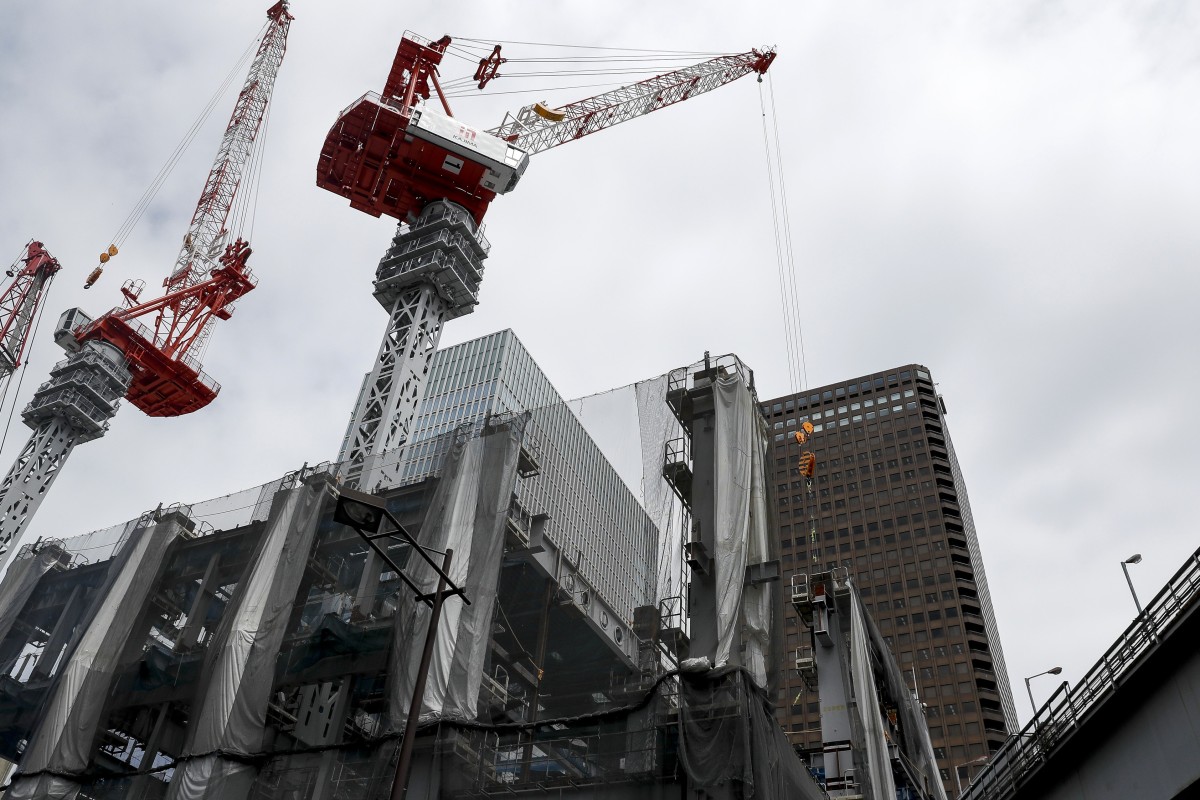
China must exercise extreme caution in handling its housing sector because it is showing signs similar to those witnessed during Japan’s bubble period of the 1980s that contributed to the collapse of Japanese asset prices and its subsequent “lost decades” of weak economic growth and deflation, a Japanese financial system expert warned.
The parallels between China’s current landscape and Japan’s three decades ago are readily apparent, stemming from a loose monetary policy that laid the foundation for the expansion of a housing bubble, said Naoyuki Yoshino, dean and CEO of the Asian Development Bank Institute.
China flooded its economy with credit in response to the 2008 global financial crisis, fuelling rapid growth in mortgages, real estate borrowings and investments over the past decade.
In the same vein, the Japanese government’s relaxed monetary policy in the 1980s triggered an economic bubble that eventually burst and sank the economy into a recession that 
lasted almost 25 years,

with the Bank of Japan continuing to still keep interest rates at or below zero per cent to this day in an attempt to spur inflation.

The Japanese government’s relaxed monetary policy in the 1980s triggered an economic bubble that eventually burst and sank the economy into a recession that lasted almost 25 years. Photo: Bloomberg

Japan’s experience could serve as a lesson on how to avoid a housing market collapse that would be especially detrimental to China’s financial sector and real economy, according to Yoshino.

“I’m very much concerned that if land prices keep on rising and if the population starts to shrink along with aggregate demand, then China will experience a similar situation to that of Japan,” Yoshino said.

There are already several strong signs of a housing bubble in China, according to Yoshino, firstly the astronomical surge in property prices in recent years.

I’m very much concerned that if land prices keep on rising and if the population starts to shrink along with aggregate demand, then China will experience a similar situation to that of Japan Naoyuki Yoshino
Home ownership is one of the few ways for Chinese families to generate wealth because of limited investment opportunities. The average price of a home in Beijing has soared from around 4,000 yuan (US$578) per square metre, or 380 yuan (US$55) per square feet, in the early 2000s to the current level of well above 60,000 yuan (US$8,677) per square metre, or 5,610 yuan (US$813) per square foot, according to property data provider creprice.cn.

The increase has also lifted the housing price to income ratio sharply from 5.6 in 1996 to 7.6 in 2013, well above the Japanese rate of 3.0 at its peak in 1988. The price to income ratio is the basic affordability measure for housing.

According to the Global Times, a reasonable home price should be three to six times the median household income. That means a family with an average income can buy a house with three to six years’ annual income. The house price to income ratio in China is above 50 in the first-tier cities and 30 to 40 in the third- and fourth-tier cities, the newspaper said in October. There are four levels of cities in China, defined by a number of factors including gross domestic product (GDP) and population, with Beijing, Shanghai and Shenzhen considered tier-one cities.

Another worrying sign, according to Yoshino, is that China’s financial sector has lent more heavily to the real estate sector than did Japanese banks during their bubble period.

Thirdly, the ratio of Chinese housing loans to the nation’s GDP has consistently been higher than Japan’s by about three times more.

Ever since US President Donald Trump started imposing tariffs on Chinese imports in July, worries have been mounting that China’s property bubble and its record debt level would make the economy vulnerable to the impact of rising trade tensions, leading to a sharper-than-expected economic slowdown.

Despite a government crackdown on debt and risky lending over the last several years, housing prices and bank lending to the sector have continued to rise, pushing homes beyond what the vast majority of people can afford, as well as putting many property developers deeply into debt.

The Chinese Academy of Social Sciences, a top government think tank, said in a report last week that the growth in housing prices in China’s bigger cities, caused by a relatively short supply of new homes, is likely to push up costs across the country.

“The government should closely monitor these cities to avoid overheating,” said Wang Yeqiang, a researcher at the Chinese Academy of Social Sciences who co-authored the report.

Property developers have begun a debt-fuelled land-buying spree just as urban housing demand is entering a long-running structural decline, said Julian Evans-Pritchard, senior China economist at Capital Economics. The potential supply of property that could be built on developers’ land reserves jumped last year to a record high, meaning the risk of a glut of new housing is real, Evans-Pritchard added, if developers were to convert all their land reserves into housing tracts.

“Since real estate drives around a fifth of GDP, a sharp downturn in this sector would be contagious, resulting in a jump in defaults across a wide swathe of the economy that could quickly erode bank capital buffers,” he warned.

China’s corporate debt stood at 155 per cent of GDP in the second quarter of 2018, much higher than other major economies, according to data from the Organisation for Economic Cooperation and Development. In comparison, Japan’s corporate debt level is 100 per cent of GDP and is 74 per cent in the US. China’s corporate debt includes issuances by its 

local government

vehicles which by extension is mostly credit with an implicit guarantee from the central government.

Since real estate drives around a fifth of GDP, a sharp downturn in this sector would be contagious, resulting in a jump in defaults across a wide swathe of the economy that could quickly erode bank capital buffersJulian Evans-Pritchard

China’s imbalance between housing supply and demand may worsen because it faces a similar economic transition that is already well underway in Japan – a

rapidly ageing population

and

shrinking workforce

that led to Japan’s long-term deflation problem, said Yoshino, who is also the chief adviser to the Japan Financial Services Agency’s Financial Research Centre.

Even if rising housing demand due to urbanisation were to push China’s housing prices higher over the near term, the country faces risks from an oversupply of housing in the longer term due to its increasingly unbalanced demographic structure, he said.
The government has proposed that China’s retirement ages of 45 to 50 years for females and 55 to 60 years for males introduced in the 1980s be gradually increased to 65 years for both by 2045 due to a rapidly ageing population.
The rising population of retirees will consume fewer goods and services compared to younger families with children, and in turn, could dampen business investment given lower expected rates of return.
At the same time, more retirees means a bigger burden on the younger generation of taxpayers, which would reduce their wealth and change patterns of consumption. This is especially worrying on the back of China’s high debt level and pension funding gap, similar to the situation in Japan, Yoshino said.
In Japan, benefits from government pension schemes account for an increasing share of the country’s accumulated debt as spending on social protection programmes now represents more than a third of the government’s total budget.
China’s national pension fund is forecast to peak at 6.99 trillion yuan (US$1 trillion) in 2027 before it gradually runs out by 2035, according to the Chinese Academy of Social Sciences. Photo: AFP
The strain is also evident in China with the

national pension fund

forecast to peak at 6.99 trillion yuan (US$1 trillion) in 2027 before it gradually runs out by 2035, according to the Chinese Academy of Social Sciences, forcing the government to start to transfer assets from state-owned companies to fill the funding gap.

Against the broader economic slowdown, compounded by the trade war with the US, policymakers are also expected to carve out a highly expansionary fiscal budget for this year, with the broad deficit surging to 6.6 per cent of China’s GDP, up from 4.7 per cent last year, according to Larry Hu, head of China economics at Macquarie Capital.

Alicia Garcia Herrero, Asia-Pacific chief economist at Natixis, noted that the US criticisms of China’s unfair trade practises and currency manipulation were reminiscent of the US-Japan disputes in the 1980s and 1990s.

Because Japan was politically and economically dependent on the US at that time, it inevitably implemented economic policies to reduce its current account surplus. Subsequently, Japan suffered from the bursting of its asset price bubble, which led to deflation and the lost decades.

However, Herrero said that the modern China is less dependent on the US and so is in a better position to resist pressure to adjust its economic policies to create demand for American products.

Wang Yang, one of the seven members of China’s elite Politburo Standing Committee, said the US-China trade war could slash one percentage point off Beijing’s economic growth this year. Last year, growth expanded at its slowest pace since 1990, while corporate bond defaults hit a record high and banks’ non-performing loan ratio hit a 10-year high.

Source: SCMP

Law of Unintended Consequences

continuously updated blog about China & India

ChiaHou's Book Reviews

continuously updated blog about China & India

What's wrong with the world; and its economy

continuously updated blog about China & India