01/11/2019
- Rear Admiral Ma Weiming is seen as pioneer of electromagnetic aircraft launch system
- Experts say Ma’s full membership of Central Committee shows how important sea power is to China’s strategic planning
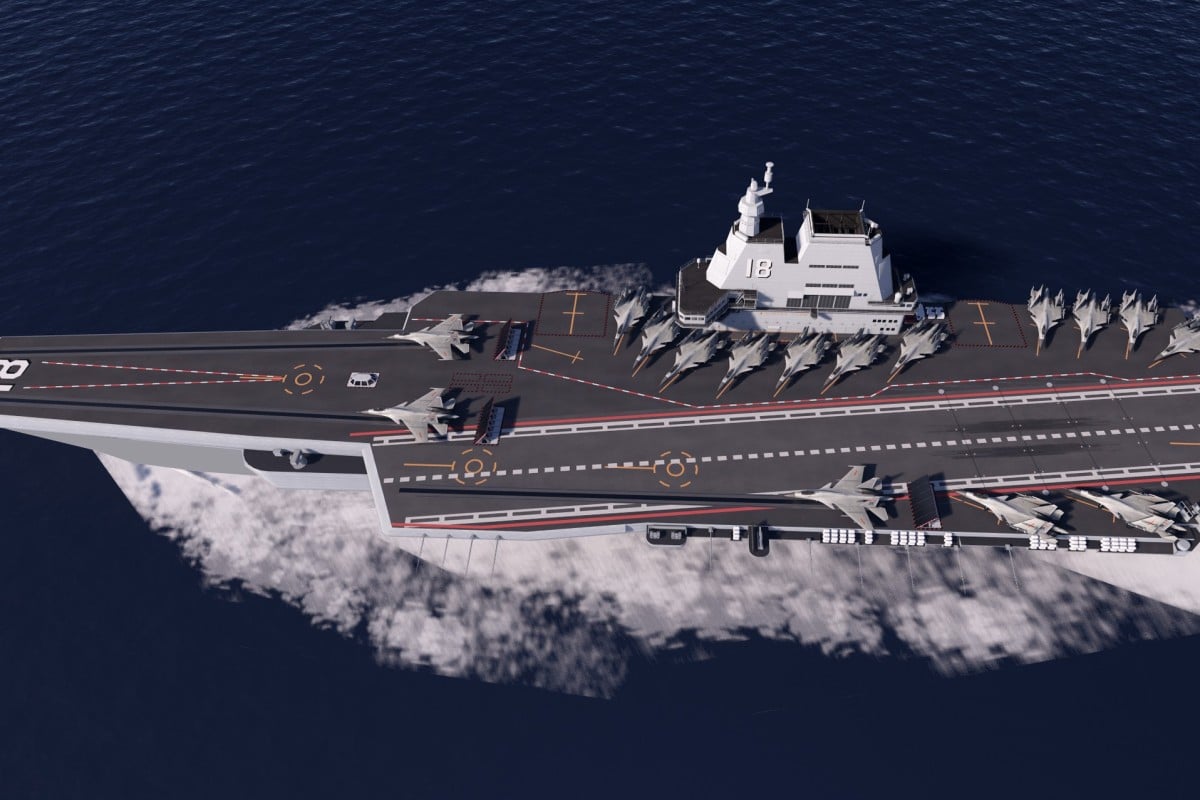
An artist’s impression of China’s third aircraft carrier, the Type 002, which will incorporate an electromagnetic aircraft launch system developed by Rear Admiral Ma Weiming and his team. source: Photo: Handout
China’s Communist Party has elevated the senior naval engineer behind the development of a hi-tech launch system for the country’s next aircraft carriers, showing China’s ambition to increase its naval power.
Rear Admiral Ma Weiming, who is seen as the pioneer of China’s electromagnetic aircraft launch system (EMALS), was named as a full member, from alternate member, of the party’s Central Committee at the party plenary meeting which ended on Thursday.
The plenum sessions – attended by more than 300 full and alternate members of the Central Committee – provide an opportunity for the party’s most senior members to discuss and forge consensus on key policy issues.
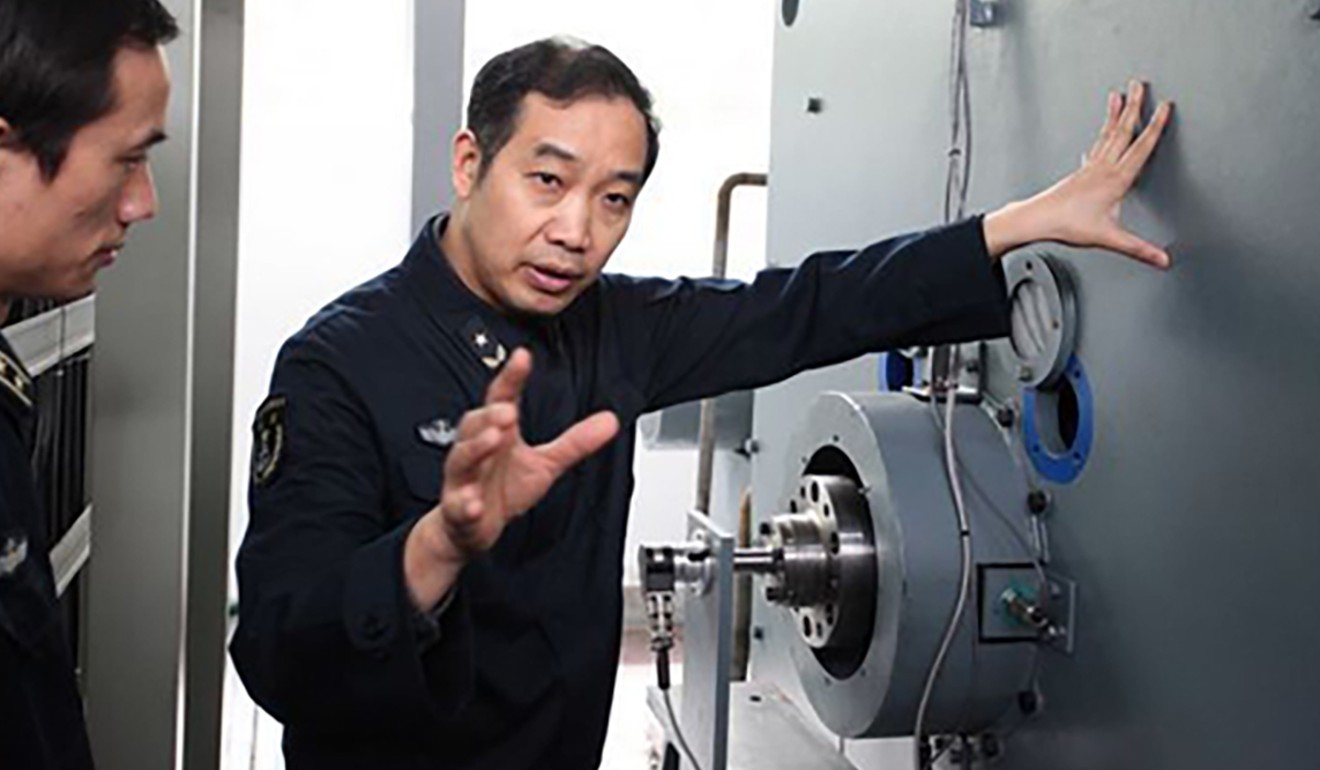
Rear Admiral Ma Weiming (right) has been elevated to full membership of the Communist Party’s Central Committee. Photo: SCMP
Li Jie, a Beijing-based military specialist, said the move showed China’s ambition to continue expanding its naval military power.
“Ma’s promotion signals that Beijing will devote more resources to developing strategic military hardware like large warships and assault landing ships,” he said.
The EMALS is regarded as a breakthrough for the People’s Liberation Army, as it will enable China’s second home-grown aircraft carrier – known as the Type 002 – to launch larger jets with bigger payloads on longer missions.
The system could result in fuel savings of up to 40 per cent. With a higher launch energy capacity, it will also be more efficient than steam catapults, allowing for improvements in ease of maintenance, increased reliability, and more accurate end-speed control and smoother acceleration.
Why Chinese submarines could soon be quieter than US ones
Ma, who comes from Yangzhou in eastern Jiangsu province, graduated from the PLA Naval University of Engineering in Wuhan in 1987 and earned a PhD in electrical engineering from Beijing’s Tsinghua University in 1996.
A specialist in maritime propulsion, electrical engineering and related fields, he has mentored more than 400 masters and doctoral students at the naval university.
He and his team have often been recognised for their work as greater emphasis has been put on research and development amid the country’s military modernisation.
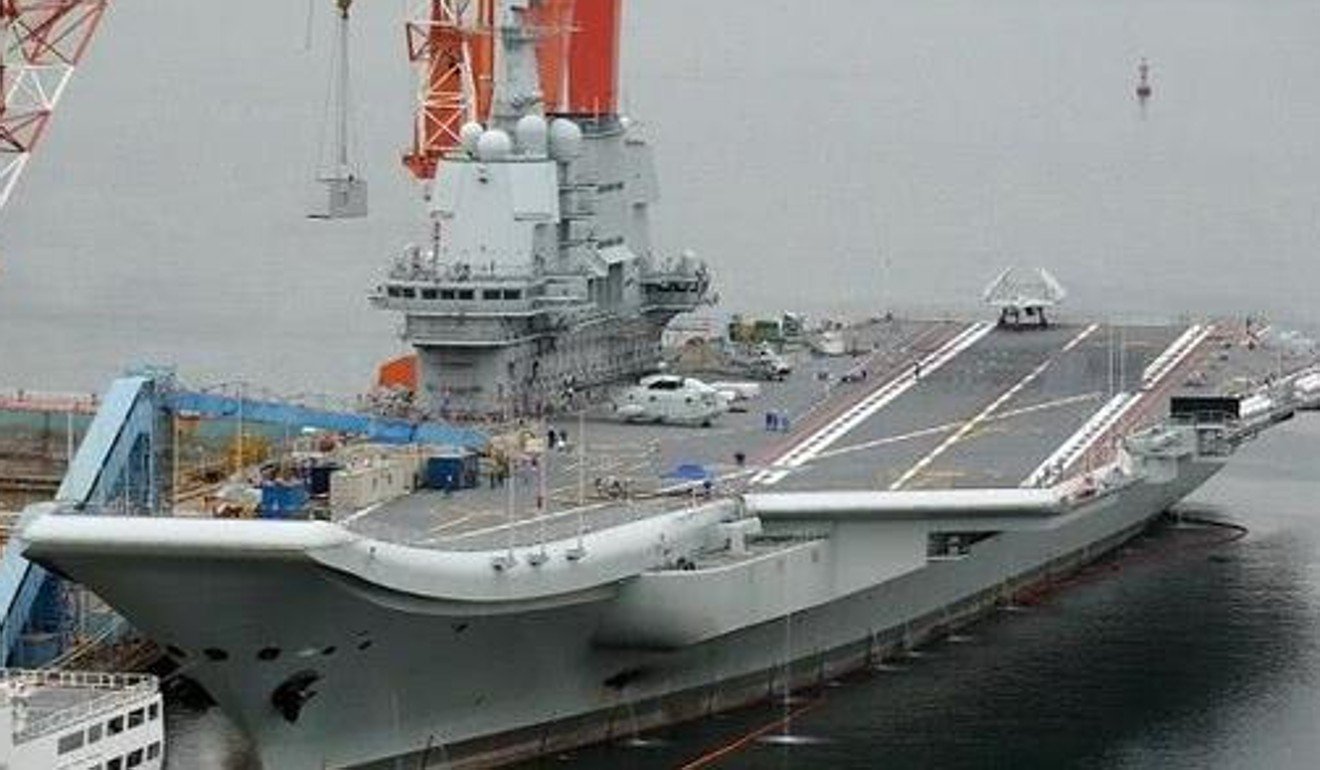
China’s first home-built carrier will use steam catapults and a ski-jump deck to launch aircraft. Photo: Handout
Ma has twice won the National Science and Technology Progress Award and in 2015 was awarded the science and technology achievement prize by the Hong Kong-based Ho Leung Ho Lee Foundation.
According to news reports, in the 1980s Ma spotted a potential flaw with an electrical component China planned to buy from overseas to use on its submarines that would have made the vessels easier to detect. Though the manufacturer denied any such problem, Ma spent five years tweaking the product so that submarines fitted with the part became harder to spot.
Three catapult launchers spotted in image of China’s new aircraft carrier
Beijing-based military expert Zhou Chenming said Ma’s promotion could be seen as a national endorsement of his work on EMALS.
“Ma was elected as a Central Committee member because the party and the country recognise the strategic importance of his work as China is expanding into a naval power with a huge maritime interest to protect,” he said.
Zhou, however, said Ma’s promotion was made two years ago, but he could not be formally made a full member until a vacancy opened up this year.
Source: SCMP
Posted in aircraft carriers, assault landing ships, Beijing, bigger payloads, China's Communist Party, China’s strategic planning, ease of maintenance, electrical engineering, electromagnetic aircraft launch system, electromagnetic aircraft launch system (EMALS), EMALS, fighting future, full membership of Central Committee, graduated, Ho Leung Ho Lee Foundation, home-grown aircraft carrier, Hong Kong, increased reliability, jiangsu province, large warships, larger jets, launch, longer missions, man, maritime propulsion, masters and doctoral students, mentored, military modernisation, more accurate end-speed control, National Science and Technology Progress Award, naval university, People’s Liberation Army, People’s Liberation Army (PLA), PhD in electrical engineering, pioneer, PLA Naval University of Engineering, pla navy, promotes, Rear Admiral Ma Weiming, research and development (R&D), science and technology achievement prize, shaped, ski-jump deck, smoother acceleration, steam catapults, Tsinghua University, Type 002, Uncategorized, Wuhan, Yangzhou |
Leave a Comment »
17/10/2019
- Country’s first home-grown carrier may soon be ready for service but observers warn a few glitches may still need to be ironed out
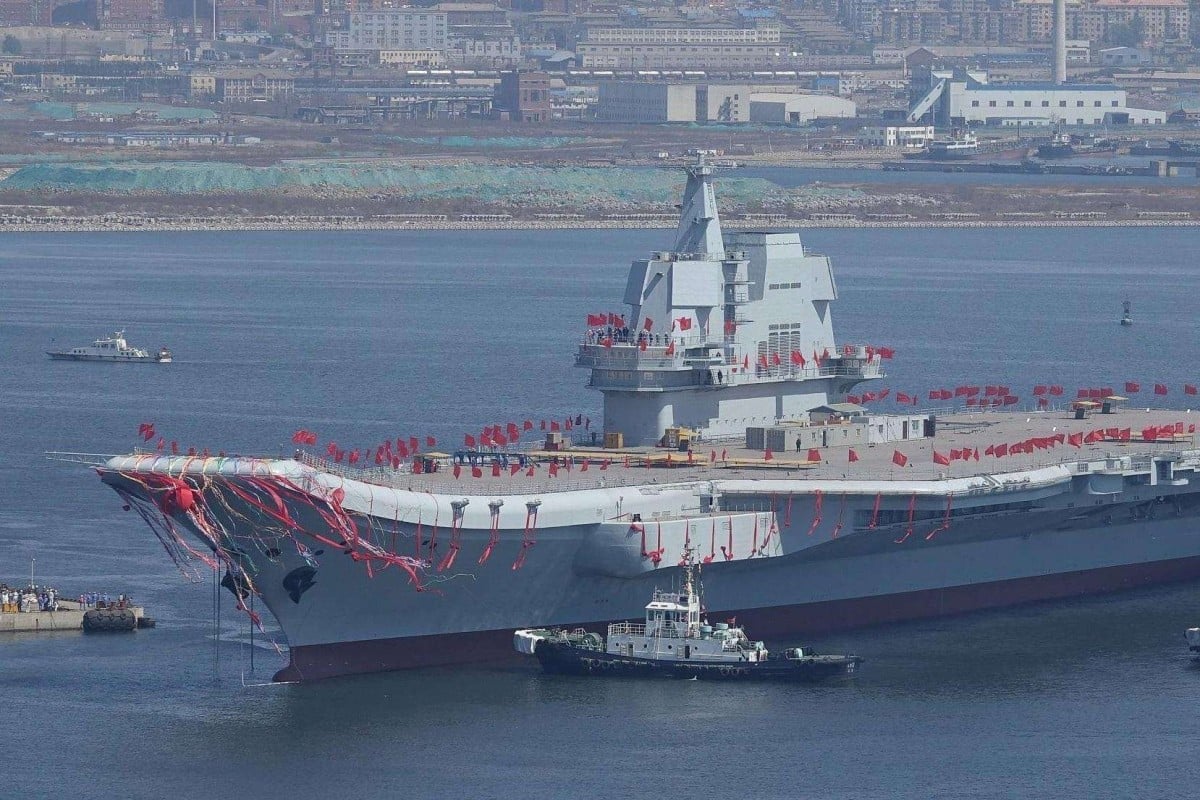
The Type 001A will be China’s second carrier and the first home-grown one. Photo:ifeng
China’s first home-grown aircraft carrier, Type 001A, will be commissioned within months, according to military observers.
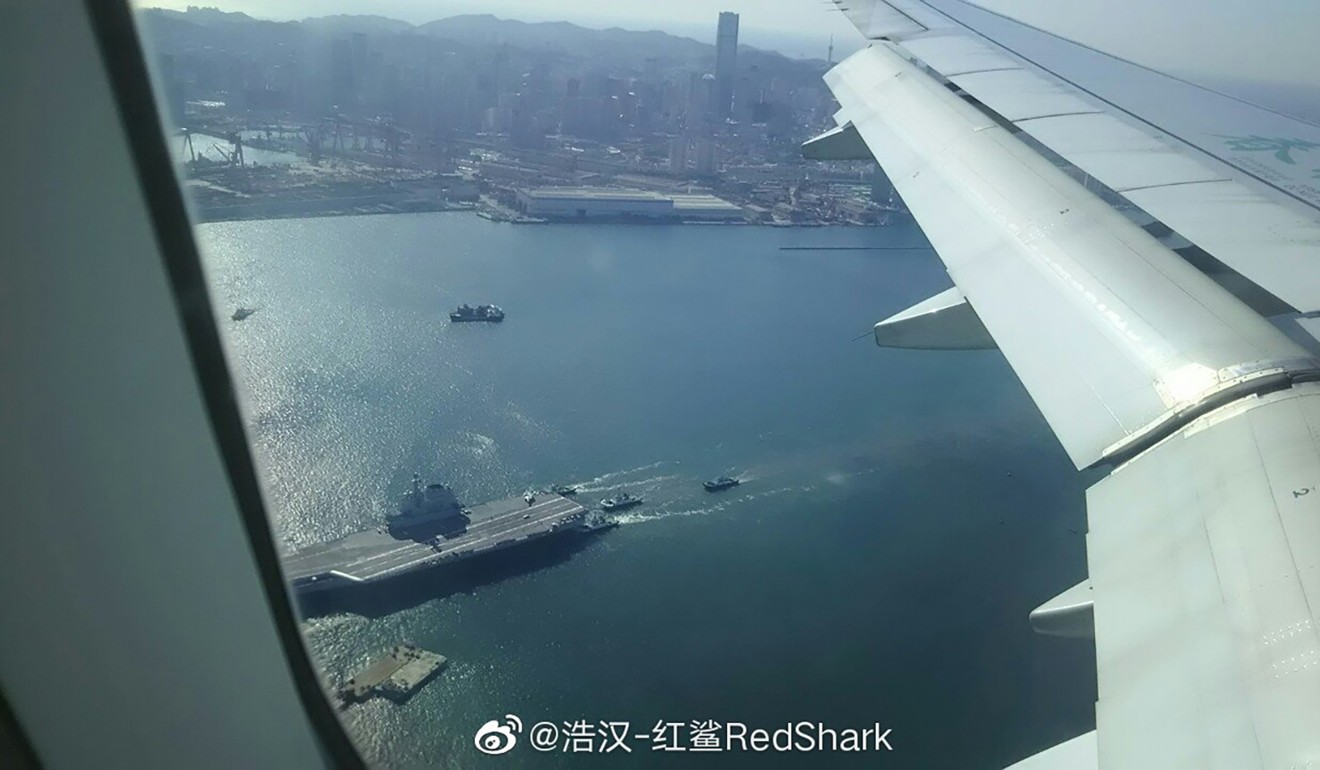
The ship appeared to have set off on its eighth sea trial on Tuesday after photographs taken by a plane flying over a restricted area showed a carrier, with a warplane on deck, leaving the Dalian Shipyard, where the carrier is being built.
The timing coincided with a notice issued by China’s Maritime Safety Administration, saying an area of the Bohai Sea, near the yard would be cordoned off for military activities.
While the commissioning would mark an advance in China’s naval capacity, some analysts noted that the trial phase was taking longer than expected.
A photo shows a carrier leaving the Dalian shipyard on Tuesday. Photo: Weibo
Global Times, a tabloid affiliated to Communist Party mouthpiece People’s Daily, quoted naval observer Li Jie as saying that the Type 001A was likely to be undertaking its eighth sea trial after solving problems discovered in the previous trials.
Zhou Chenming, a Beijing based military expert, said that the Type 001A’s commissioning had already been postponed and the major problem now was a lack of shipborne aircraft and problems with the flight control system.
Zhou said the control system worked with J-15 fighters, which will be the primary jets used on the ship, but “is not yet compatible with other aircraft, which hinders the aircraft carrier’s final commissioning”.
Once commissioned, the ship will join the country’s first carrier, the Liaoning, at sea, boosting the country’s naval capacity.
Collin Koh, a research fellow at the Institute of Defence and Strategic Studies from Singapore’s Nanyang Technological University, said: “With two aircraft carriers, the PLA Navy will have greater chances to hone its carrier capabilities – conducting more missions, training, and all of these contributing to the accumulation of expertise and know-how.
“This means qualitatively improving [its] carrier capability, including human capital.
“For long-term strategic significance, it means an expanding power projection capability of the PLAN that allows it to promote presence in regions where Beijing asserts national interests.”
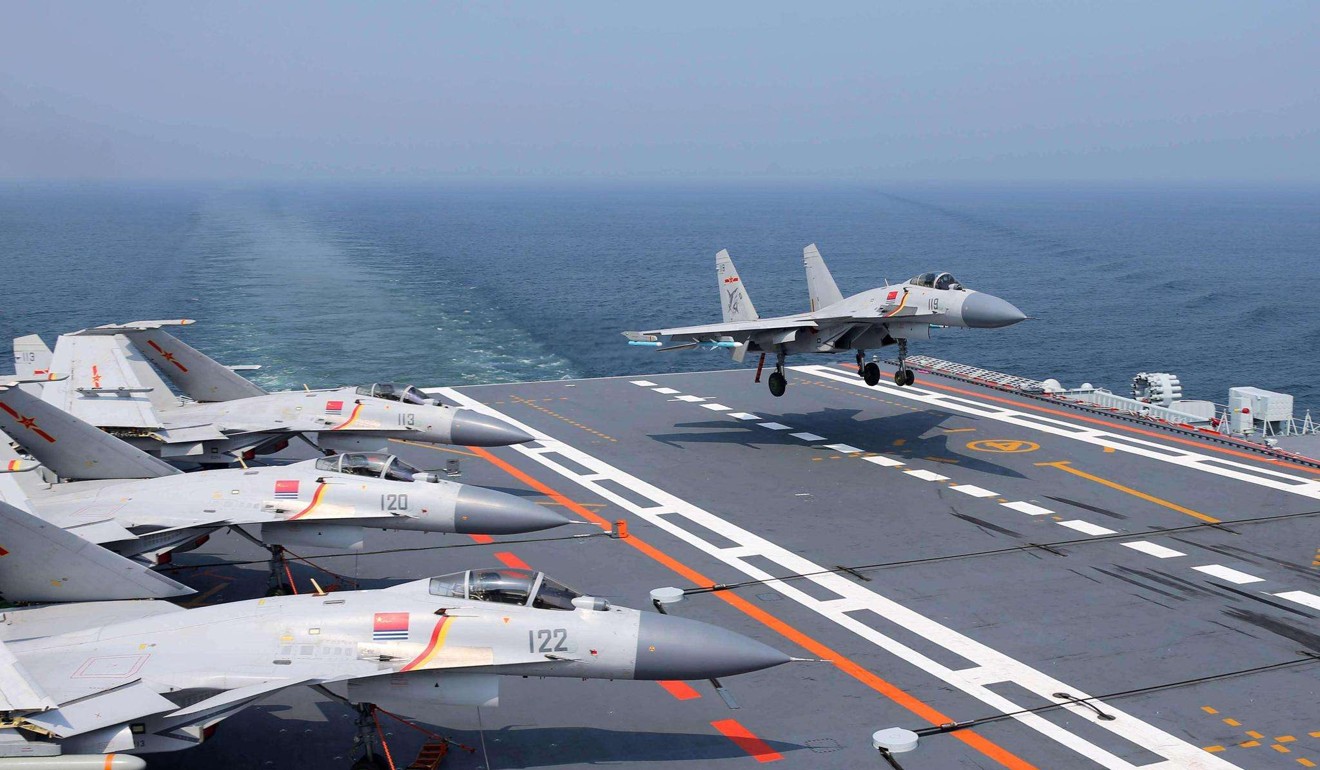
Once ready the ship will carry 32 J-15 fighters. Photo:ifeng
The Type 001A’s trial phase has taken longer than some military observers had expected. The aircraft carrier set out for its first sea trial in May 2018, some 17 months ago.
By comparison, the Liaoning, a former Soviet Kuznetsov-class vessel underwent 10 sea trials over a 13-month period before it was commissioned.
The ship also features a ski-jump deck for take-offs, has a displacement of 70,000 tonnes and will be able to carry a total of 40 aircraft.
Source: SCMP
Posted in Aircraft, Aircraft carrier, Beijing, Bohai Sea, China’s, China’s Maritime Safety Administration, commission ship, Communist Party, Dalian Shipyard, flight control system, Global Times, Institute of Defence and Strategic Studies, J-15 fighters, Kuznetsov-class vessel, Liaoning, People’s Daily, Sea trial, sets off, shipborne aircraft, Singapore’s Nanyang Technological University, ski-jump deck, Soviet, take-offs, Type 001A, Uncategorized |
Leave a Comment »



 CHINDIA ALERT: You'll be living in their world, very soon