Archive for ‘smartphones’

04/10/2019

Have scientists discovered why China is so rich in rare earth elements the world’s smartphones need?

Chinese geologists think they have formula that could help to increase control of market in the elements hi-tech industries depend upon

  • Simple combination of clay mined for porcelain production, granite bedrock and acid rain could point to lucrative sources of rare earths
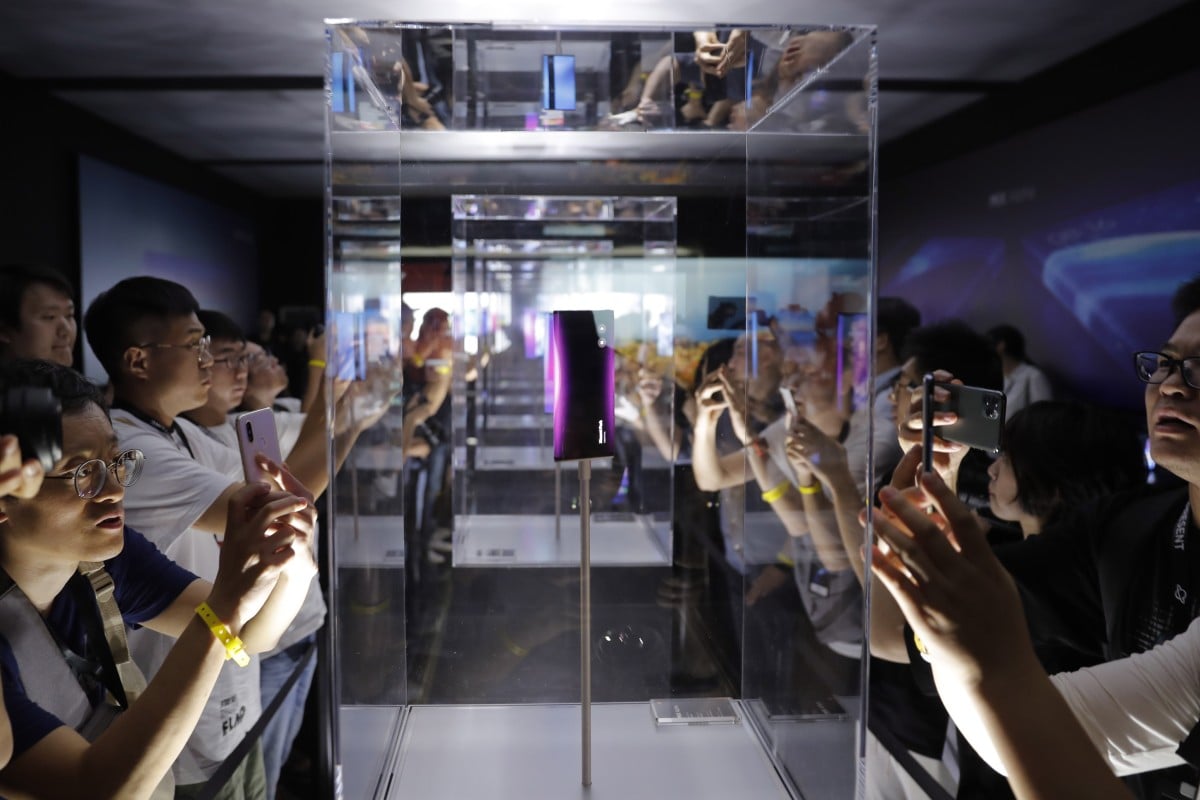
China has 80 per cent of the reserves of rare earth elements the world needs to keep talking on its smartphones, and geologists in Guangzhou think they know why. Photo: EPA
Geologists in southern China say they have isolated a series of critical factors that could make it easier to find rare earth elements used in hi-tech consumer goods such as smartphones.
China has more than 80 per cent of the world’s reserves of heavy rare earths such as terbium, dysprosium and holmium concentrated in a few provinces to the south of the country.
The reason for the concentration is one of the biggest puzzles in geology, but researchers at the Guangzhou Institute of Geochemistry in Guangdong province say the answer may be found in a combination of clay deposits, acid rain and granite that is distinctive to southern China.

Professor He Hongping and his colleagues came to the conclusion by testing the interaction between rare earths and different types of clay. Through their research they found that kaolinite – or china clay – was the best at absorbing rare earths from water.

The clay, named after Gaoling village near Jingdezhen, a centuries-old ceramic production centre in east China’s Jiangxi province, is a raw material for porcelain production.

While kaolinite is found in many countries, those places do not have rare earth deposits – probably because of the lack of acid rain, He said.

“You need the right environment.”

He said that rocks that contained tiny amounts of rare earth elements weathered faster in an acid environment, but the acidity could not be too high or the rare earth might run off before it could be captured by the clay.

Why Beijing cut tax rate on rare earths amid trade war

Rainwater with the right natural acidity often occurred in areas around 20 degrees latitude, such as southern China, he said.

The last step was to locate the source rock. Granite formed in volcanic eruptions between 100 million and 200 million years ago is considered to be the main source of rare earths.

He said that part of the Pacific tectonic plate containing rare elements might have been forced under the Eurasian Plate and was pushed to the surface as magma that formed rocks.

Other countries could learn from the Chinese experience, said He, whose team submitted their findings to the research journal Chemical Geology.

Recent discoveries in Vietnam, Australia and North Carolina in the United States conformed to the Guangzhou team’s theory, but there was still more research to do, he said.

“Rare earth deposits are quite unlike minerals such as copper. Sometimes they occur in this mountain but not in another nearby with almost the same geological features.

Sometimes they occur in one half of the mountain but not in the other.”

With China and the US engaged in a trade war, and Beijing cutting taxes on mining companies looking for these elements, the pressure was on to unlock the secrets of China’s abundant rare earth deposits, he said.

Does China’s dominance in rare earths hold leverage in trade war?

Dr Huang Fan, associate researcher with the China Geological Survey, said the Guangzhou discovery would help geologists to find more rare earths.

Most rare earth mines were located along the borders between provinces such as Guangdong and Jiangxi, but recently there were discoveries on a plateau in Yunnan province, where few geologists believed rare earths could be found, he said.

“There are many more rare earth deposits out there waiting for us.”

Source: SCMP

29/08/2019

Exclusive: India set to outlaw six single-use plastic products on October 2 – sources

NEW DELHI (Reuters) – India is set to impose a nationwide ban on plastic bags, cups and straws on Oct. 2, officials said, in its most sweeping measure yet to stamp out single-use plastics from cities and villages that rank among the world’s most polluted.

Prime Minister Narendra Modi, who is leading efforts to scrap such plastics by 2022, is set to launch the campaign with a ban on as many as six items on Oct. 2, the birth anniversary of independence leader Mahatma Gandhi, two officials said.

These include plastic bags, cups, plates, small bottles, straws and certain types of sachets, said the officials, who asked not to be identified, in line with government policy.

“The ban will be comprehensive and will cover manufacturing, usage and import of such items,” one official said.

India’s environment and housing ministries, the two main ministries leading the drive, did not respond to emails from Reuters to seek comment.

In an Independence Day speech on Aug. 15, Modi had urged people and government agencies to “take the first big step” on Oct. 2 towards freeing India of single-use plastic.

Concerns are growing worldwide about plastic pollution, with a particular focus on the oceans, where nearly 50% of single-use plastic products end up, killing marine life and entering the human food chain, studies show.

The European Union plans to ban single-use plastic items such as straws, forks, knives and cotton buds by 2021.
China’s commercial hub of Shanghai is gradually reining in use of single-use plastics in catering, and its island province of Hainan has already vowed to completely eliminate single-use plastic by 2025.
India lacks an organized system for management of plastic waste, leading to widespread littering across its towns and cities.
The ban on the first six items of single-use plastics will clip 5% to 10% from India’s annual consumption of about 14 million tonnes of plastic, the first official said.
Penalties for violations of the ban will probably take effect after an initial six-month period to allow people time to adopt alternatives, officials said.
Some Indian states have already outlawed polythene bags.
The federal government also plans tougher environmental standards for plastic products and will insist on the use of recyclable plastic only, the first source said.
It will also ask e-commerce companies to cut back on plastic packaging that makes up nearly 40% of India’s annual plastic consumption, officials say.
Cheap smartphones and a surge in the number of internet users have boosted orders for e-commerce companies, such as Amazon.com Inc (AMZN.O) and Walmart Inc’s (WMT.N) Flipkart, which wrap their wares – from books and medicines to cigarettes and cosmetics – in plastic, pushing up consumption.

Source: Reuters

22/07/2019

Air China flight uproar after business class mayhem ends with seven-hour police questioning for passengers

  • National outrage sparked when high-profile traveller Li Yaling shares details of incident on social media
  • Employee on long-term sick leave disrupts flight to Beijing but airline says she is a private traveller
Air China has flown into an internet storm after a flight attendant on long-term sick leave scolded business class passengers. Photo: Shutterstock
National flag carrier Air China has come under fire after an employee made a scene during a flight and accused three business class passengers of attacking her, leading to them being held and questioned for seven hours last Friday after their arrival in Beijing.
Playwright Li Yaling, who was travelling business class on flight CA4107 from Chengdu uploaded a video and lengthy post detailing the incident to her nearly 1.3 million followers on Weibo, China’s Twitter-like microblogging platform.
Li’s video showed a female passenger, who claimed to be an Air China supervisor, scolding passengers for using their phones while the plane was on the runway at Chengdu, capital of Sichuan province, southwest China.
The scolding lasted half an hour, according to Li, even after the passengers stopped using their phones and explained they had been switched to flight mode. Air China permits smartphones in flight mode to be used during its flights.
A screenshot of the video filmed during the Air China flight, and later posted to Weibo, of the incident in business class. Photo: Weibo

The woman paced about the cabin as the plane taxied down the runway and continued to make a scene until the flight approached Beijing. She was seen making a call, asking for the police to be notified that the passengers had “attacked” her and “endangered aviation safety” and to come and take them away.

The passengers were stopped by the crew and removed by the police, who took them to the airport police station where they were held for seven hours before being released with a warning, according to Li’s post.

“I want to ask Air China what the position of the Air China supervisor is,” Li wrote on Weibo. “Is she independent or your employee? What legal rights does she have? Has she abused her power, if any?”

Li’s post shocked internet users who reacted with sympathy. Some posted video clips or their own accounts of the same woman making similar false accusations on buses, subway trains and other flights, leading to similar problems for individual passengers, as well as travel delays.

Li later said on Weibo she was contacted by the airline on Saturday afternoon and told the woman was a former flight attendant who had been on sick leave since pouring hot water on a passenger more than 10 years before and had subsequently been diagnosed with bipolar disorder.

Unlucky coin toss lands another Chinese airline passenger in trouble
In a public statement on Monday, Air China said the dispute had involved an employee who was on leave for health reasons and had been on a private trip. The airline said three passengers and four crew members had been taken to the airport police station to help with an investigation into the incident.
Li followed up her Weibo posting on Monday, meeting several senior officials at Air China’s headquarters, where she was told the situation was a dispute between passengers and the airline had fulfilled its responsibilities.
Air China said it could not stop the employee from boarding its flights.

Li said she felt sympathy for mental health patients but not for the woman, who she said had apparently endangered public safety on flights several times. Li also demanded compensation for paying a high price to travel in business class, only to suffer two hours of verbal abuse.

Rush to emergency exit lands Chinese first-time flier in detention
The situation angered many on social media, who felt the airline had not taken enough responsibility for the incident. Some said they would not choose Air China again.
“The incident is not about passengers switching off their phones, it is about how your airline’s employee caused a row in business class,” one Weibo user wrote.
“This is a serious threat to flight order and safety, yet Air China can’t handle it. I will not consider flying with Air China again. Safety comes first after all,” said another.
Online news portal Ifeng.com ran a survey on the incident, with nearly 88 per cent of the 160,000 who took part agreeing that the airline should take responsibility for the incident. A total of 84 per cent said Air China had mishandled the incident and some 58 per cent said they would consider other carriers ahead of Air China in future.
Influential party newspaper People’s Daily also weighed in, criticising the airline for evading the crucial point in its public statement posted to Weibo on Monday night.
“The public does not question the significance of caring for patients with special diseases, but showing humane care does not mean inaction and to maintain the company image does not [mean] blindly protecting its employee,” the newspaper said.
“After all, the travel rights of all passengers and public safety are more important.”

Article 34 of China’s civil aviation rules for domestic transportation of passengers and baggage stipulates mentally ill patients or passengers whose health conditions may endanger themselves or affect the safety of other passengers shall not be carried.

However, in the eyes of the psychiatric profession mental health patients have the same right to fly as anyone else, as long as they are not posing any threat to others.

“The law on mental health protects some basic rights of mental patients and they are entitled to all rights of citizens, as long as they are not in an acute onset of mental illness,” said Ye Minjie vice-president of Kangning Hospital, which is affiliated to Wenzhou Medical University

“We can’t treat them as if they were secondary citizens or deprive them of basic rights just because they have had episodes before,” he said.

Source: SCMP

28/12/2018

Why smartphones are skewing young Indians’ ideas of sex

  • 28 December 2018
Representational imageImage copyrightGETTY IMAGES
Image captionMaking pornographic material or sharing it is illegal in India

A troubling trend of rape videos going viral in India has led many to believe that smartphones and easy access to violent porn, coupled with a lack of sex education, could fuel sexual violence. The BBC’s Divya Arya reports.

Earlier this year, a video showing a group of teenage boys trying to rip the clothes off a young woman was shared extensively on WhatsApp in India.

In it, she is urging them to stop, using the term “bhaiyya” (Hindi for brother) but they are jeering, laughing, clearly enjoying themselves.

As the video went viral, police were able to establish that it was filmed in a village in the northern state of Bihar. The accused teenagers were arrested.

The arrests caused anxiety in their village in Jehanabad, a four-hour drive from the state capital Patna, where village elders blamed the entire incident on smartphones.

Making pornographic material or sharing it is illegal in India.

But even as it becomes easier to access pornography thanks to cheap data and smartphones, there is concern that this isn’t being accompanied by any meaningful understanding of sex and relationships.

Local boys in the village freely admitted to the BBC that they watched videos of molestation and rape. One 16-year-old said he had seen more than 25 such videos, adding that his friends often shared them on their smartphones.

“Most boys in my class watch these videos together or sometimes by themselves,” another boy said. “It feels fine because everyone does it.”

Experts say this kind of introduction to sex is typical for many Indian men.

Representational image of WhatsApp logoImage copyrightGETTY IMAGES
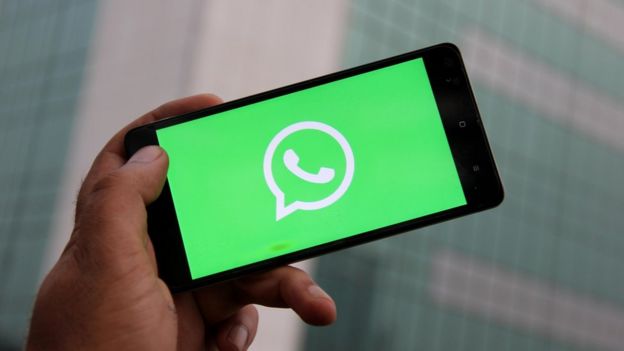
Image captionWhatsApp is the medium often used to share such videos

“We have not grown up being given sex education or having normal adult conversations about these things,” says filmmaker and writer Paromita Vohra. She runs the website Agents of Ishq (Romance), which encourages open discussions about sex.

“When people only watch violent sexual content, it is very desensitising because they start believing that violence is the only way to get pleasure and that female consent is unimportant.”

India has 400 million smartphone users, and more than half of them use WhatsApp, which is the medium often used to share such videos.

In a statement to the BBC, WhatsApp said: “These horrendous rape videos and child pornography have no place on our platform. That’s why we’ve made it easy to report problems like these so we can take appropriate action, including banning accounts. We also respond to valid legal requests from law enforcement in India to help them investigate crimes.”

Porn ban

Concerned after a case in which some young men gang-raped a schoolgirl after allegedly watching porn on their mobile phones, a court in the northern state of Uttarakhand asked the federal government to reinstate a 2015 ban imposed by the Supreme Court on websites hosting violent pornography.

It had been revoked almost instantly due to widespread protest.

The ban only applies to some 800 websites that contain violent or abusive videos. This does not seem to have had much impact though.

Within days of being blocked, one of the largest pornography websites had already set up a mirror site with a different URL for its Indian market.

But is banning porn the answer?

Many believe it is the lack of sex education that is fuelling the appetite for violent and misogynistic videos. Often, there is no deeper understanding of what a sexual relationship or experience should be for both men and women.

This is something the government tried to change in 2009, when it began its Adolescent Education Programme (AEP). It sought to address changes in adolescence and dispel myths about gender, sexuality, sexually transmitted diseases and drug abuse.

But implementing the programme remains a challenge. At an all-girls school in Jehanabad for instance, the principal had never heard of it.

Representational image - A man in Delhi watches a movie on his smartphoneImage copyrightGETTY IMAGES
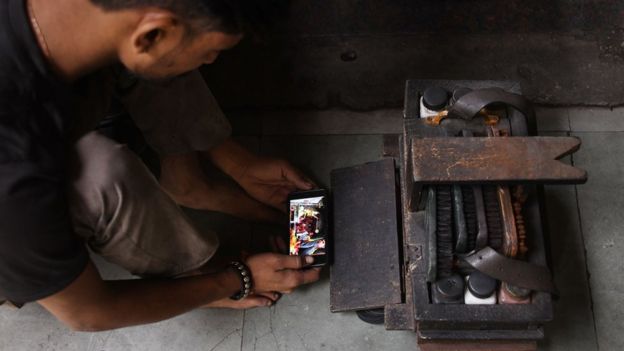
Image captionMany say it is the lack of sex education that is behind the proliferation of violent videos

Huge market

Sunita Krishnan, the founder of Prajwala, an organisation in the southern city of Hyderabad that deals with issues of sexual violence and trafficking says these violent videos reinforce the old belief that a woman’s choice is insignificant and she has no agency.

Ms Krishnan, a rape survivor herself, has also received such videos and has been campaigning to check their spread. In fact, the 2015 Supreme Court ban on porn sites was a result of her efforts.

Even though she has managed to get a few of these videos taken down, she says it can be near impossible to completely erase something from the internet.

Ranjeet Ranjan, who is one of only three women amongst Bihar’s 40 MPs, says the lack of concern about such videos is alarming.

“No-one really cares. If people had even a little respect for these girls, they would have gone to the police station instead of sharing such videos,” she said.

Ms Ranjan is also concerned by what she sees as “a competition” to make such videos.

“If these continue to circulate and we have no sex education, then it will embolden the thinking that a woman should be treated as an object, a source of entertainment.”

Law of Unintended Consequences

continuously updated blog about China & India

ChiaHou's Book Reviews

continuously updated blog about China & India

What's wrong with the world; and its economy

continuously updated blog about China & India