Archive for ‘corruption’

15/09/2012

* Coalgate: Supreme Court issues notice to Centre over coal block allocations

The Times of India: “The Supreme Court has issued notice to the Centre on coal block allocations and has asked the govt what action it proposes to take against illegal allotments and those allottees who breached the contract.

The apex court has asked the coal secretary to file affidavit answering 6 questions on a PIL seeking cancellation of all 194 coal mine blocks under controversy.

The apex court’s posers to the government includes —

Why competitive bidding process was not followed for allocation of coal blocks?

What were the guidelines for allocation of coal blocks and whether there was any deviation during actual allocation?

Why so many politicians and their relatives figure among the alleged irregular allottees?

Whether the guidelines for allocation overlooked the safety mechanism to render the allotments as largesse in favour of private parties?

Whether govt’s objective in coal block allocation has been achieved through the present mode of allocation, which was faulted by the CAG?

The apex court has asked the coal secretary to file a response in 8 weeks.

Turning down the Centre’s plea that the court should not go into the issue as it is being looked into by a Parliamentary committee, the apex court said “these are different exercises.”

A bench of justices R M Lodha and A R Dave said the petition raised serious questions and “it requires explanation from the government”.”

via Coalgate: Supreme Court issues notice to Centre over coal block allocations – The Times of India.

See also: https://chindia-alert.org/2012/09/07/india-parliament-ends-in-deadlock/

29/08/2012

* China city party chief ‘fled with money’

BBC News: “A former top official of a city in northeast China has fled the country – reportedly with millions of dollars, Chinese reports say.

A person handling Chinese yuan bills

Wang Guoqiang, who was party secretary of Fengcheng city in Liaoning province, left for the United States in April with his wife, the People’s Daily said.

Local officials said Mr Wang, who was being investigated for corruption, had been removed from his post, it said.

Several reports cited 200m yuan ($31.5m; £20m) as the amount taken.

The local officials did not elaborate on allegations that he had embezzled and transferred the funds to the US, where his family is believed to be.

But rumours surrounding the case, the latest in a series of corruption scandals, have been circulating online for some time.

According to the city’s website, Mayor Ma Yanchuan took over as Fengcheng party secretary earlier this month.

Premier Wen Jiabao has repeatedly called corruption the biggest threat to Chinese Communist Party rule.

Corruption among officials remains a huge source of anger among China’s population, says the BBC’s Martin Patience in Beijing.

While the finances of the top leaders are off limits, many other senior officials have been brought down by scandals, says our correspondent.”

via BBC News – China city party chief ‘fled with money’.

As this article says: “Premier Wen Jiabao has repeatedly called corruption the biggest threat to Chinese Communist Party rule.”

See also: Corruption by officials  is what makes Chinese citizens mad

10/08/2012

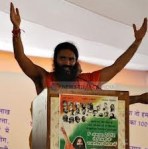
* India can win gold for corruption, Guru Ramdev says

Times of India: “If the Olympics gave a medal for corruption, India could have won a gold, yoga guru Baba Ramdev said on Friday as thousands poured into the Ramlila Grounds here for day two of his fast.

Calling on all of India to support his agitation against black money and graft, Ramdev said: “India could have won gold if there was a competition for corruption in the Olympics.

The crowds, which had started gathering since 8am, cheered and clapped enthusiastically, to which Ramdev said, “This is not a matter to applaud.””

via India can win gold for corruption, Ramdev says – The Times of India.

Both India and China are in the middling levels of Transparency International index of corruption, though amongst the top of the larger economies.  However, whereas China appears to be trying to tackle it at the national level, it is far from obvious that India is trying to do so.

See also:

05/08/2012

* China nabs 137 for organ traffick

China Daily: “Chinese police said Saturday that 137 suspects had been arrested in the latest crackdown on human organ trafficking, amid intense pressure on finding sufficient donors through official channels.

The operation was jointly conducted by 18 provincial police authorities in late July, who also rescued 127 organ suppliers, according to a statement from the Ministry of Public Security on Saturday.

Police said that the detained suspects illegally recruited suppliers over the Internet, facilitated the deals and made huge profits from the transactions, which had endangered the health of the suppliers and placed a heavy financial burden on the recipients.

Statistics from the Ministry of Health show that about 1.5 million Chinese need organ transplants, but only around 10,000 transplants are performed annually due to a lack of donors.

The huge gap has led to a thriving illegal market for human organs, though the government has repeatedly pledged to improve its regulations on organ transplants and increase organ supply.

In spring 2007, China’s central government issued its first national level regulations on human organ transplants, banning organizations and individuals from trading human organs in any form.”

via China nabs 137 for organ traffick |Society |chinadaily.com.cn.

04/08/2012

* Corruption’s Reach in India Spawns New Political Party

NY Times: “The anti-corruption activist Anna Hazare and his team said Friday that they plan to create a “political alternative” for India in the form of a new political party. While Mr. Hazare said he would not himself enter the general elections in 2014, he pledged to spend the next year and a half campaigning across the country.

Arvind Kejriwal, an activist widely believed to be the main strategist behind Mr. Hazare’s movement, said the party’s name and agenda are open to suggestions from the people.

“The movement against corruption will now take place both outside and inside Parliament,” he said in front of a crowd of thousands in New Delhi. He denounced India’s large parties, including the ruling Congress Party and the opposition Bhartiya Janata Party, calling them “corrupt.”

“It is a daring, adventurous move,” said Yogendra Yadav, a political analyst and one of the signatories of a letter encouraging Team Anna to take on the existing political establishment. But it’s not going to be easy, he said, given the scale and complexity of India’s parliamentary elections and the diversity of its electorate.

Transitioning from a single-issue movement to a political party, with positions on a broad spectrum of topics, from national security and terrorism to the economy, is likely to be a complicated process that may test the unity of the group, analysts said.

And there are few such precedents in independent India’s history. Movements in the past have successfully transformed themselves to enter the political mainstream, but they have been based on religion or ethnicity. Mayawati’s Bahujan Samaj Party, for instance, which governed India’s largest state of Uttar Pradesh for a full term of five years, started as a movement for the rights of India’s so-called “backward” classes.

It will be very tough for a non-regional, non-ethnic, non-caste group to replicate the success of Mayawati’s party with a policy issue like corruption, said E. Sridharan, a political analyst in Delhi. “Team Anna has a diffused constituency. They don’t have a ready-made, mobilizable base,” he said, attributing the movement’s rise to prominence to an urban population and a sympathetic media.”

via Corruption’s Reach in India Spawns New Political Party – NYTimes.com.

31/07/2012

This post supports my view that the Chinese authorities are trying very hard to listen to the people.

29/07/2012

* Bo wife murder charge vexes skeptical Chinese

Reuters: “China’s ruling Communist Party might insist that the murder charge against Gu Kailai, the wife of ousted Politburo member Bo Xilai, is a simple case of all being equal before the law, but winning over the jury of public opinion is proving tough.

Since China’s last big political scandal — the purge of Shanghai party chief Chen Liangyu in 2007 — its citizens have flocked to sign up to the Twitter-like microblogging site Sina Weibo, ensuring this time there will be lively public debate about the case against Bo and Gu, despite tight censorship.

In its first official statement on Gu’s case since April, state news agency Xinhua ran a brief report last week saying China will try Gu on charges of murdering a British businessman. The news spread rapidly on Weibo.

While state media generally stuck to reprinting that story, the influential tabloid the Global Times on Friday wrote an editorial warning nobody was above the law.

But that is a line the party is going to have a hard time convincing people is true, as suspicion swirls that populist politician Bo and his wife Gu are victims of a power struggle — and no more corrupt than other Chinese leaders.

People already have little faith in government statements despite repeated pledges to be transparent, after the SARS cover-up in 2003, among others, and refusal to discuss events such as the 1989 crackdown on pro-democracy demonstrators in Beijing.”

via Bo wife murder charge vexes skeptical Chinese | Reuters.

See also: 

18/06/2012

* China publishes books on officials’ morality

Xinhua: “A book series expounding the moral issues of officials, the first-ever publication on the topic in China, was released for sale Monday in Beijing as part of government-backed efforts to promote integrity among civil servants.

The four-book series embodies the results of research conducted by experts with the Beijing Academy of Social Sciences at the request of Beijing authorities two years ago, according to a report published by the Beijing Daily.

The books record the development of theories about officials’ morality through Chinese history and provide case studies, as well as highlight the importance of raising officials’ moral standards in modern society, an official with the Beijing Commission for Discipline Inspection of the Communist Party of China (CPC) was quoted as saying in the report.

The major difference between good and bad officials simply lies in whether they perform duties with a conscience, says the prologue of the series.

Nowadays, the CPC, as the ruling party, must value virtues of officials and it is a general trend for officials to abide by professional ethics, according to a passage in one of the books.

The book also points out a moral official in modern China should always serve the people as well as be loyal, pragmatic, fair-minded and incorruptible, while always improving oneself.

The series will serve as anti-graft reading material for all Communist Party cadres in Beijing, according to the report.”

via China publishes books on officials’ morality – Xinhua | English.news.cn.

Let’s hope the cadres take this book as seriously as their forebears took Mao’s Red Book.
15/06/2012

* Toilets Become a Battle Cry in India

NY Times: “You could be forgiven for thinking that safety is the top concern for travelers brave enough to venture on Indian railways. It’s not. Unclean toilets appear to be their main grouse, according to a recent survey.

Across India, toilets appear to be the new battleground on which wars are being waged, whether it’s about hygiene, austerity, gender equality or corruption.

On India Ink, we’ve previously written how sanitation is a dump in India, with more than half of all households having no toilet facilities.

Even Bill Gates, one of the world’s richest people, has made his new mission to “reinvent the toilet.” “One of my ultimate dreams now is to reinvent the toilet — find a cheaper alternative to the flush toilet that does not require running water, has smell characteristics better than the flush toilet and is cheap,” he told the Times of India newspaper.

But it’s mostly the women in India who are paying a price for toilets -– literally. On Thursday Jim Yardley wrote in The New York Times that unlike men, many women in Mumbai often have to pay to urinate –- an injustice that has started a “Right to Pee” campaign.

Toilets have also been flushed into the austerity debate last week, when India’s Planning Commission ran up a 3 million rupee, or $54,100, bill for renovating the toilets at its headquarters, a move viewed by some as lavish and a drain on public funds. That was followed by news that the western state of Goa had given 2 million rupees, or $35,700, to build a single air-conditioned toilet in the constituency of the former chief minister of the state.

Think that raises a stink? In India, where the government is reeling with corruption scandals, the innocuous toilet made a brief swirl when many reportedly went missing. According to an April report in an Indian daily, the Telegraph, the federal government says it delivered about 87.1 million toilets to households across villages over the last decade. But the census shows that only about 51.6 million had toilets in 2011. That’s a case of 35 million missing toilets.”

via Toilets Become a Battle Cry in India – NYTimes.com.

Another example of discrimination against women in India.  See: https://chindia-alert.org/2012/06/14/india-the-worst-big-country-to-be-a-woman/

See also: Will India overtake China in 25 years?

13/06/2012

* China football ex-chiefs Nan Yong and Xie Yalong jailed

BBC News: “Two ex-heads of China’s football league have been jailed for 10-and-a-half years each for corruption, making them the most senior football officials sentenced. Nan Yong and his predecessor Xie Yalong were both accused of accepting bribes. Nan was also fined 200,000 yuan ($31,400; £20,200) and Xie is set to have personal assets and illegal takings confiscated.

China has increased efforts to clean up the game, hit by a series of scandals.

Nan, charged with 17 counts of taking bribes, was sentenced by a court in Tieling in north-eastern China. Xie, who was sentenced in Dandong, denies the charges against him adding that he only confessed to the allegations under torture. More than 900,000 yuan in personal assets and illegal takings of his are set to be confiscated.

Several other verdicts have also been delivered in similar cases in other cities, Chinese media reported.

In Dandong, a former national team captain was also sentenced to 10 years and six months in jail and fined 200,000 yuan. Four former national team players were sentenced in Shenyang for to up to six years’ jail and fined 500,000 yuan for taking bribes and match fixing.

via BBC News – China football ex-chiefs Nan Yong and Xie Yalong jailed.

Law of Unintended Consequences

continuously updated blog about China & India

ChiaHou's Book Reviews

continuously updated blog about China & India

What's wrong with the world; and its economy

continuously updated blog about China & India