Archive for ‘Culture’

20/08/2016

The Chinese admiral who spread Islam across Southeast Asia | South China Morning Post

Near my childhood home in Kunming (昆明), Yunnan (雲南) province, is a park dedicated to its most famous son: Admiral Zheng He.

Our teacher would take us to pay tribute to the great eunuch of the Ming dynasty, recounting his legendary seven expeditions that brought glory to the motherland.

The marble bust of Zheng He shows the face of a typical Chinese, with a square chin, brushy eyebrows and a flat nose. My father joked it more resembled comrade Lei Feng than the admiral. Not until years later did I realise how true this was.

A statue of Zheng He in Nanjing, where his armada was built. File photo

The statue was erected in 1979 – a year after Deng Xiaoping (鄧小平) launched his open-door policy. Zheng, barely mentioned during the Cultural Revolution, was plucked from obscurity and hailed as a national hero who embodied China’s open spirit. A park near his ancestral home was dedicated to him. The same craftsmen who churned out revolutionary statues were employed to build his.

In real life, Zheng probably looked very different. My school textbook mentioned only that he was a Hui minority (Muslim Chinese). In fact, the admiral was a descendent of a powerful Persian family. Records discovered in 1913 trace his lineage to Sayyid Ajall, who was sent by Kublai Khan to conquer Yunnan and became its first governor. In 2014, Chinese scientists at Fudan University in Shanghai put the theory to test. They examined DNA samples collected from descendents of the admiral’s close kin and found they originated from Persia, modern-day Iran. In addition to Zheng He, most senior officers of the storied Ming armada were also Muslims.

Beijing follows the route well travelled by Admiral Zheng He in its belt and road initiative

Over the past decades, researchers have concluded Zhang and his armada were the key force behind Islam’s spread in Southeast Asia. The Arabs established settlements in Southeast Asia from the eighth century. But Islam did not become dominant there until the 15th century – around the time Admiral Zheng began to sail in the South China Sea. Historians found evidence of Zheng’s missionary work in documents discovered in Semarang, Indonesia, by Dutch officials in 1925. This prompted Indonesian religious leader Hamka to write in 1961: “The development of Islam in Indonesia and Malaysia is intimately related to a Chinese Muslim, Admiral Zheng He.

”A crowning moment of Zheng’s expedition was converting the King of Malacca, Parameswara, to Islam shortly after he paid homage to the Yongle Emperor in Beijing in 1411. The conversion played a crucial role in the spread of Islam in Southeast Asia, according to Professor Xiao Xian of Yunnan University.

A replica of a ship used by Ming Dynasty eunuch explorer Zheng He, in Nanjing. Photo: Reuters

Xiao was one of the scholars who presented research work on Zheng He at an international symposium in 2005. They painted a vivid picture of the Ming armada, which had all the elements of a multinational enterprise.

The 300 ships – many twice as big as the largest European vessels of the time – were constructed in dry docks in Nanjing ( 南京 ), Jiangsu ( 江蘇 ) province. Building materials were sourced from across the Ming Empire. The 27,000-strong crew included Han Chinese, Muslim Hui, Arabs, Persians, and peoples from Central and East Asia. The lingua franca was Persian or Sogdian – a language used for centuries by merchants of the ancient Silk Road, according to Professor Liu Yingsheng of Nanjing University.

Size was not the only difference between Zheng’s fleet and that of Christopher Columbus 70 years later. The Europeans aboard the Santa Maria were exclusively Catholic – the Ming fleet was culturally and religiously diverse. Zheng was a Muslim but he was fluent in the teachings of Confucius, Buddhism and classic Chinese philosophy. The fleet included many Buddhist missionaries. Many regard his expeditions as the high-water mark of Chinese civilization. The Ming armada’s true greatness lay not in its size or sophistication but in its diversity and tolerance.

A statue of famed Chinese navigator Zheng He overlooks the city of Nanjing, Jiangsu province. Photo: AFP

After the Yongle Emperor’s death, the Ming court lost its global vision. Power was in the hands of the Confucius gentry-class, who jealously guarded against other schools of thoughts. China became increasingly introspective and insulated. The court stopped further expeditions and banned seafaring. The Chinese civilization gradually lost its vigour and started a long decline.

Today as the new “Silk Road” and “soft power” become China’s new catchphrases, it is important to remember what makes the Chinese civilization unique in the first place. Its greatest strength lies in its people’s amazing ability to absorb, adopt and assimilate different cultures.

Buddhism, which originated in India, flourished in China. The Zen school – a hybrid of Indian Buddhism and Chinese Taoism – spread to East Asia by monks in the Tang dynasty and became mainstream. Islam arrived from Central Asia and the Middle East during the Yuan and Ming dynasties. It took root in western China before spreading to Southeast Asia with Zhang’s fleet. We should remember that until 100 years ago, China was not a nation state in the Westphalian sense. Narrow-minded nationalism and xenophobia are the exception rather than the norm of the world’s oldest surviving civilization.

Source: The Chinese admiral who spread Islam across Southeast Asia | South China Morning Post
19/08/2016

Why is Kite Flying a Deadly Hobby in India? – India Real Time – WSJ

India’s capital has banned killer kite string after three people died this week from injuries and accidents caused by string that has been fortified for kite fights.

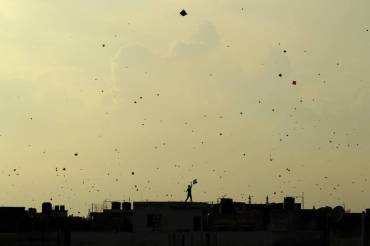
The weeks around India’s Independence Day—Aug. 15—are peak kite flying and fighting season. Kids and adults fly kites high in the air and try to maneuver them so their lines cut those of other kites as part of a traditional and usually harmless competition.

To better their chances of surviving longer and cutting competitors, many people use extra strong string and nylon lines and even lines encrusted with ground glass. When those sharp lines fall across roads they are a hazard to two-wheeler riders who can’t see them. Hitting one of the lines at high speed can knock bikers off their vehicles and slit their throats.

While there are injuries and deaths caused by kite strings every year, this year was particularly tragic as two of the victims were under the age of five.

A three-year-old girl died, while traveling in a car Monday with her head sticking out of the sun roof. She sustained a neck injury and was taken to a hospital where she died, said Vijay Singh, deputy police commissioner for northwest Delhi.

In another incident the same day in west Delhi, a four-year-old boy died also while looking out of a sun roof and becoming entangled with a string hanging from a tree. He was taken to a hospital and died, Pushpendra Kumar, deputy police commissioner for west Delhi said.

Also Monday, a man traveling in west Delhi on a motorbike became entangled with a kite string and crashed his motorbike, sustaining head injuries. He was also declared dead at hospital, Mr. Kumar said.

Chandraker Bharti, Delhi’s secretary of environment and forests, on Tuesday banned the sale, production, storage and supply of kite flying thread “that is sharp or made sharp such as being laced with glass, metal or other sharp objects.”

Source: Why is Kite Flying a Deadly Hobby in India? – India Real Time – WSJ

19/08/2016

The return of the Xia | The Economist

CHINA’S leaders are immensely proud of their country’s ancient origins. President Xi Jinping peppers his speeches with references to China’s “5,000 years of history”. The problem is that archaeological evidence of a political entity in China going back that far is scant.

There is some, including engravings on animal bones, that shows the second dynasty, the Shang, really did control an area in the Yellow river basin about 3,500 years ago. But no such confirmation exists for the legendary first ruling house, the Xia. Even inside China, some historians have long suspected that the country’s founding story—in which Emperor Yu tames flooding on the Yellow river (with the help of a magic black-shelled turtle, pictured), earns for himself the “mandate of heaven” and establishes the first dynasty—was either a Noah’s-Ark flood-myth or perhaps propaganda invented later to justify centralised state power. This month, however, state-controlled media have been crowing over newly published evidence in Science, an American journal, that at least the flooding was real. This, they say, has made it more credible that the Xia was, too. Not everyone is so convinced.

Catastrophic floods leave their mark on soil and rocks. Qinglong Wu of Peking University and others have examined the geology of the upper reaches of the Yellow river. In the journal, they conclude that a vast flood did take place in the right area and not long after the right time for the supposed founding of the Xia. Although their evidence does not prove the existence of an Emperor Yu or of the dynasty he founded, it does provide a historical context in which someone might have gained power with the help of flood-taming exploits.

According to Mr Wu, a vast landslide, probably caused by an earthquake, blocked the course of the Yellow river as it flowed through the Jishi gorge on the edge of the Tibetan plateau. For six to nine months as much as 16 cubic kilometres (3.8 cubic miles) of water built up behind the accidental dam, which, when it finally burst, produced one of the biggest floods ever. At its peak, the authors calculate, the flow was 500 times the normal discharge at Jishi Gorge. Mr Wu reckons the ancient flood could easily have been felt 2,000km downstream in the area of the Yellow river said by Chinese historians to have been the realm of the Xia.

At about this time, either coincidentally or (more probably) because of the flood, the river changed its course, carving out its vast loop across the north China plain. The significance is that, while the river was finding its new course, it would have flooded repeatedly. This is consistent with old folk tales about Emperor Yu taming the river not through one dramatic action, but by decades of dredging.

The ancient flood can be dated because the earthquake that set the catastrophic events in motion also destroyed a settlement in the Jishi gorge. Radiocarbon dating of inhabitants’ bones puts the earthquake at about 1920BC—not 5,000 years ago but close-ish. Xinhua, a state news agency, lauded the study as “important support” for the Xia’s existence. Xu Hong of the Chinese Academy of Social Sciences challenged this, saying the scholars’ findings had not proved their conclusions. The first dynasty has gone from myth to controversy.

Source: The return of the Xia | The Economist

27/06/2016

For single women in Maharashtra, owning land can be the difference between life and death | Reuters

Rajshree Gungoo, a chatty 27-year-old with a quick smile, speaks up at a gathering of about 40 women discussing the challenges facing single women in Maharashtra.”It’s very difficult. I don’t have a husband, I don’t have a son, even my father doesn’t want me,” she says, her voice breaking. “I am alone and powerless to do anything.”

She breaks off, using the end of her saree to wipe her tears. Around her, others nod and mutter.

In drought-hit Marathwada, the state’s poorest region, there is an unusually high number of single women. Some were widowed after their farmer husbands committed suicide because of debt; others were abandoned because they didn’t produce a son, while some were left behind when their husbands left to search for work.

Alone and without financial support, the women and their children are usually thrown out of home by their in-laws, denied ownership of the land they worked on and any compensation from the government.

They are also taunted and harassed by communities who believe a woman is nothing without a man.

“In this country, single women are the most vulnerable category – they are neglected by the government, by society, even their own family,” said Vishwanth Todkar, secretary at Paryay, a charity that works with marginalised communities.

“Every day, every hour is a struggle for them – to get a home, get land, even their identity cards, which are in the name of the father or the husband. They face humiliations constantly,” he said.

Source: For single women in Maharashtra, owning land can be the difference between life and death | Reuters

16/06/2016

Disney’s China fairytale begins with $5.5 billion park opening | Reuters

Walt Disney Co has opened the gates to its first theme park in China, prompting a rush from thousands of gathered Mickey Mouse enthusiasts to be the first to storm Treasure Cove, ride the Roaring Rapids or visit Disney’s tallest castle.

Disney’s largest overseas investment at $5.5 billion, the park is a bet on China’s middle class and booming domestic tourism. The U.S. firm hopes it will offset an otherwise lackluster international theme park business, better known for cash-burning sites such as Euro Disney.

“This is one of the proudest and most exciting moments in the history of the Walt Disney Company,” chief executive Bob Iger said at the official ribbon cutting ceremony on Thursday, where he was flanked by Chinese government officials.

Iger and Chinese Vice Premier Wang Yang read out letters of support from Barack Obama and President Xi Jinping.

Not everything has gone quite to plan though.The opening gala – meant to be a bonanza of fireworks, live music and dance – was rained off on Wednesday night, while at Disney’s park in Orlando, Florida, a young boy was grabbed by an alligator and killed.

Disney, though, sees China as its biggest opportunity since Walt Disney bought land in Florida in the 1960s for what is now Walt Disney World – the world’s most-visited theme park.

With that in mind, Main Street has been replaced by Mickey Avenue to reduce the feel of Americana while attractions include the Chinese-style Wandering Moon tea house, a Chinese Zodiac-themed garden and a Tarzan musical featuring Chinese acrobats.

Disney estimates 330 million people within a three-hour radius of Shanghai will be able to afford to come to the park: that includes Zhao Qiong, 36, who was one of the first visitors inside the park on Thursday with her 4-year-old daughter.”Since she was young, my little girl has always loved Disney princesses, so I wanted to bring her to the park to fulfill her dream,” she told Reuters.

Source: Disney’s China fairytale begins with $5.5 billion park opening | Reuters

09/06/2016

‘The greatest palace that ever was’: Chinese archaeologists find evidence of the fabled imperial home of Kublai Khan’s Yuan dynasty | South China Morning Post

For centuries the imperial palace of Kublai Khan’s Yuan dynasty was shrouded in mystery.

After the dynasty collapsed, there were no clues as to where it was and it lived on only in legend through writings such as those of 13th century Venetian merchant Marco Polo.

If Polo is to be believed, the walls of “the greatest palace that ever was” were covered with gold and silver and the main hall was so large that it could easily seat 6,000 people for dinner.

“The palace was made of cane supported by 200 silk cords, which could be taken to pieces and transported easily when the emperor moved,” he wrote in his travel journal.

It was a vision of grandeur but the palace disappeared, seemingly without trace.

The Yuan dynasty lasted for a less than a century, spanning the years from 1279 to 1368, and it is widely believed that the capital of the empire was Beijing.

But in the centuries since, one question has dogged historians and archaeologists in China: just where was the dynasty’s palace?

Now experts at the Palace Museum in Beijing believe that they have some answers, clues they stumbled upon during upgrades to the heritage site’s underground power and fire-extinguishing systems.

According to historical records, the Yuan palace in Beijing was abandoned by its last emperor, Toghon Temür, who was overthrown by rebel troops that established the Ming dynasty in the 14th century.

Some experts believe the palace was razed by Ming soldiers who took over the city, while others insist the buildings were removed by Ming workers on the site of what was to become the Forbidden City.

The foundations for the sprawling Forbidden City were laid in 1406 and construction continued for another 14 years. It was the imperial palace for the Ming rulers and then the Qing dynasty until 1912.

The complex has been built up, layer by layer, but researchers sifting through the sands of archaeological time said last month that they had found evidence that at least part of the Yuan palace was beneath the site.

The researchers from the museum’s Institute of Archaeology said the proof was a 3 metre thick rammed earth and rubble foundation buried beneath the layers of Ming and Qing dynasty construction.

Institute deputy director Wang Guangyao said the foundation unearthed in the central-west part of the palace was in the same style as one uncovered in Zhangjiakou, Hebei province, in the ruins of Zhongdu, one of the four capitals of the Yuan dynasty.

Some of the rubble in the newly discovered Yuan foundation dated back even further to dynasties such as the Liao (907–1125) and the Jin (1115–1234), Wang said.

Wang said a foundation of such size was rare in Yuan buildings and could have been used to support a palatial hall.

At the very least, the find proved that the Yuan palace was built on the same site as the Ming palace, though it was still too early to say these two completely overlapped.

“At least we now know that the palace was not built somewhere else but here,” Wang said.

“From a historical perspective, it gives us evidence that the architectural history runs uninterrupted from the Yuan, to the Ming and Qing dynasties.

”The discovery has also revived debate about the Central Axis of Beijing – a 7.8km strip that runs from Yongding Gate to the Drum and Bell towers and included the Forbidden City, the Temple of Heaven and Zhongnanhai, the Communist Party leadership compound.

Many Chinese believe the axis has been the city’s “sacred backbone” since the Ming dynasty but others argue that it goes back further to the mid-13th century.

Wang said it was still too early to conclude whether the Yuan, Ming and Qing were built along the same axis.

“As archaeologists, we can only define what we have found,” Wang said. “But it gives us a direction for future exploration.”

Wang said it wasn’t easy to excavate in one of the country’s most important cultural sites and more work was still to be done.

Even if we think a certain site is important for an archaeological finding, we can’t just dig the ground up because it is not allowed,” Wang said.“All we can do is to wait and collect as much evidence as we can until sometime later, probably in a generation or two, work is done in those places and we can put all the finds together to see if they are all connected.

”The new discovery would be open to the public soon, Wang said.

Source: ‘The greatest palace that ever was’: Chinese archaeologists find evidence of the fabled imperial home of Kublai Khan’s Yuan dynasty | South China Morning Post

24/11/2015

Dream of the bed chamber | The Economist

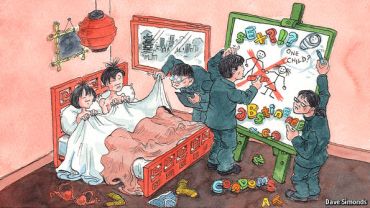
“SEX, sex, sexual intercourse, penis, penis, vagina.”

More than 150 undergraduates are sitting in a lecture hall at China Agricultural University in Beijing, shouting loudly. Many are sexually active, or soon will be. Yet for most it is the first sex education class they have attended.

Their instructor hopes that shouting such words will help youngsters talk more openly about sex. Lu Zhongbao, a 24-year-old forestry student, says he was told as a child that he “emerged from a rock”. When he started having sex with his university girlfriend he had little idea about contraception. This evening he arrived an hour early armed with another question: will masturbating damage his health?

It is not just China’s economy that has loosened up since 1979. The country is in the midst of a sexual revolution. A 2012 study found that more than 70% of Chinese people have sex before marriage. Other polls put that figure lower but consistently indicate that over the past 30 years, more young Chinese are doing it, with more partners, at a younger age. But a lack of sex education means that many are not protecting themselves, resulting in soaring abortion rates and a rise in sexually transmitted diseases.

The Communist Party has stuck its nose into people’s bedrooms for 30 years through its harsh family-planning policies. Yet taboos on sex before marriage prevailed, the result of paternalistic—not religious—values about female chastity, with a dose of Communist asceticism thrown in. Pre-marital sex fell foul of a range of laws, including the catch-all charge of “hooliganism”, only scrapped in 1997.

The social climate remains chilly. Most news items about sex involve scandals or crimes. Schools ban pupils from dating and many deploy “morality patrols” to root out flirting or frolicking couples. Sex outside wedlock is not illegal but children born to unmarried mothers face obstacles obtaining a hukou, or household residency, that entitles them to subsidised education and welfare. Yet with greater freedom from their parents, more money and increasing exposure to permissive influences from abroad, China’s youth are clearly separating sex from procreation.

Education on the subject is compulsory in Japan, South Korea and Taiwan—societies that have some cultural similarities with China. But most Chinese schools teach only basic anatomy.

This is not entirely for lack of trying. Pilot campaigns in Shanghai and Beijing schools in the 1980s were incorporated into a nationwide programme in 1988 but it was never implemented. In 2008 the Ministry of Education included sex education in the national health and hygiene curriculum. The barriers are not just prudery. Like football, fashion and other teenage pastimes, sex (and learning about it) is seen as a distraction from studies. “Sex is not an exam subject,” says Sheng Yingyi, a 21-year-old student.

Where classes happen, most students are merely given a textbook. “Happy Middle School Students”, written for 12- to 15-year-olds in 2006 and still widely used, refers to sperm meeting egg without describing the mechanics of intercourse. A more explicit volume for primary-school pupils published in 2011, which did explain how sperm were delivered, was criticised for being pornographic.

The dominant message is to abstain. A 2013 review by UNESCO and Beijing Forestry University noted the prevalence of “terror-based” sex education, with content largely focused on the horrors of pregnancy, abortion and HIV. Earlier this month a university in Xi’an in central China ran a course entitled “No Regrets Youth” where students received a “commitment card”, essentially a pledge to remain a virgin until marriage.

Source: Dream of the bed chamber | The Economist

24/11/2015

The elephants fight back | The Economist

FOR anybody who fears that China’s interest in elephants’ tusks could spell doom for the great beasts, there have been two pieces of good news.


On September 25th Xi Jinping, the Chinese president, joined Barack Obama in pledging “significant and timely steps” to halt commercial trade in ivory. Then on October 15th China announced a one-year ban on the import of ivory hunting trophies from Africa, closing a big loophole. Wildlife activists are delighted. These moves should have “a profound effect” on elephant numbers, says Peter Knights of WildAid, a charity.

The world’s elephant population has dived from 1.2m in 1980 to under 500,000 today. In 1989 the sale of ivory was banned worldwide. But in 1999 and again in 2008, the Convention on International Trade in Endangered Species (CITES), a conservation pact, allowed the sale of stockpiles of ivory from southern Africa to China. The countries vowed to use the proceeds for conservation; China claimed it had a robust registration system that would keep illegal ivory out. But conservationists rightly predicted the concession would fuel more smuggling and so more killing.

Permitted sales became a cover for illegal ones. In 2010-12 about 100,000 elephants were slain for their tusks. In the past five years, Mozambique and Tanzania have lost half their elephants to poaching.

This dire trend reflects China’s deeper engagement with Africa, combined with corruption and the presence of criminal gangs. But it seems that Chinese leaders have seen the trade’s effects on their reputation, says Dominic Dyer of the Born Free Foundation, a charity. They should now close the legal carving workshops and ban the domestic trade, too, he adds.

Despite strong demand for ivory among China’s rising middle class, attitudes may gradually be changing. As of 2012, nearly half of Chinese people saw elephant poaching as a problem, according to a survey by WildAid. The figure has been boosted by the support of celebrities. Yao Ming, a basketball player, and Jackie Chan, an actor, appear on posters everywhere with the message: “When the buying stops, the killing can too.” The government has donated $200m worth of media space every year since 2008.

Opinion on ivory has shifted fast, says Mr Knights, partly because of the success of another campaign, to protect sharks. In the markets of Guangzhou, the global centre for the trade, dried shark fins have fallen from 3,000 yuan ($470) per kilo five years ago to 1,000 yuan today, as Chinese people abjure shark-fin soup, a delicacy.

WildAid raised its voice over that issue, too, but more important was the Communist Party’s ban in 2013 of shark-fin soup at official banquets, part of a drive against corruption and excess. The Hong Kong government followed, as did airlines and hotels. A survey in 2013 found 85% of people said they had stopped eating shark-fin soup in the past three years.

One scourge is untouched by all this: the illegal trade in rhinoceros horn. More than 1,200 rhinos were killed for their horns in 2014 in South Africa alone, up from just 13 killed in 2007. This partly reflects a huge rise in demand in Vietnam, but China is also a consumer. Ground rhino horn is believed to cure fever and improve sexual performance. One kilo can cost up to $70,000.

Ominously, some African nations now want a one-off sale of rhino-horn stocks, as happened twice with ivory. To secure this, South Africa must win two-thirds of the member states at the next CITES conference, which it hosts next year. Mr Dyer hopes other countries, including China, will dissuade the Africans. “We are in exactly the same place we were with ivory nearly ten years ago,” he frets.

Source: The elephants fight back | The Economist

15/08/2015

Modi Uses Independence Day Speech to Hit Out at ‘Termite-Like’ Graft – India Real Time – WSJ

At the end of a week in which Prime Minister Narendra Modi failed to push broad measures aimed at boosting the economy through Parliament, the Indian leader sought in an Independence Day address to draw attention to his efforts to make the machinery of government more efficient and less corrupt.

In a 90-minute speech delivered from the ramparts of New Delhi’s Red Fort on Saturday, Mr. Modi didn’t focus on sweeping policy changes or big, new plans. Instead, he spoke of trying to enforce change in the Indian government bureaucracy, a system he characterized as riddled with “termite-like” graft and inertia and accustomed to inordinate delays.

“What government doesn’t make big declarations?” Mr. Modi said. “The test is whether we are able to implement the promises we make. We have stressed a new work culture.”

Under attack from political opponents who have tried to portray him as pro-business and anti-farmer, Mr. Modi didn’t once mention his “Make in India” campaign to encourage foreign and domestic investors to set up factories in India, nor did he directly address weeks of opposition protests that stalled a major tax overhaul in Parliament.

via Photos: Modi Uses Independence Day Speech to Hit Out at ‘Termite-Like’ Graft – India Real Time – WSJ.

18/06/2015

China military says two more top officers probed for graft | Reuters

China’s Defense Ministry said on Tuesday that two more former senior officers were being investigated for corruption, as part of a sweeping campaign against graft which has already felled dozens of senior people.

In a brief statement, the ministry said that Kou Tie, former commander of the Heilongjiang military region in northern China, had been put under investigation last November for suspected “serious discipline violations”. He was handed over to military prosecutors last month.

The other officer was named as Liu Zhanqi, a former communications division commander for the paramilitary People’s Armed Police, also suspected of “serious discipline violations”, common wording for corruption. He was handed to military prosecutors last month as well.

The ministry gave no further details. Neither case had been reported before.

Weeding out graft in the military is a top goal of President Xi Jinping, chairman of the Central Military Commission, which controls China’s 2.3 million-strong armed forces.

Serving and retired Chinese military officers have said military graft is so pervasive it could undermine China’s ability to wage war, and dozens of senior officers have been taken down.

The anti-graft drive in the military comes as Xi steps up efforts to modernize forces that are projecting power across the disputed waters of the East and South China Seas, though China has not fought a war in decades.

via China military says two more top officers probed for graft | Reuters.

Law of Unintended Consequences

continuously updated blog about China & India

ChiaHou's Book Reviews

continuously updated blog about China & India

What's wrong with the world; and its economy

continuously updated blog about China & India