Archive for ‘middle class’

01/10/2019

China anniversary: How the country became the world’s ‘economic miracle’

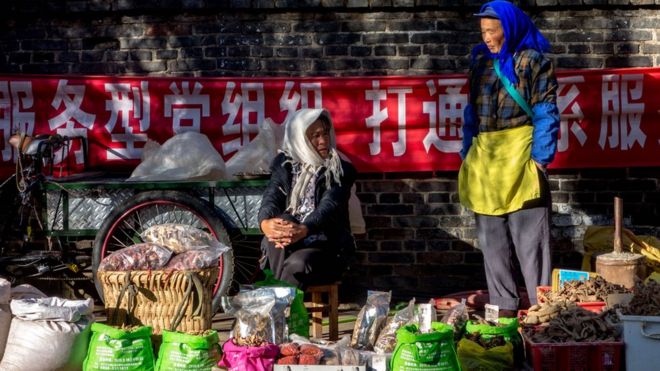
Local women sell produce in the market. Zhongyi market, located at the southern gate of Dayan ancient city, in Lijian, Yunnan Province in ChinaImage copyrightGETTY IMAGES

It took China less than 70 years to emerge from isolation and become one of the world’s greatest economic powers.

As the country celebrates the anniversary of the founding of the People’s Republic of China, we look back on how its transformation spread unprecedented wealth – and deepened inequality – across the Asian giant.

“When the Communist Party came into control of China it was very, very poor,” says DBS chief China economist Chris Leung.

“There were no trading partners, no diplomatic relationships, they were relying on self-sufficiency.”

Over the past 40 years, China has introduced a series of landmark market reforms to open up trade routes and investment flows, ultimately pulling hundreds of millions of people out of poverty.
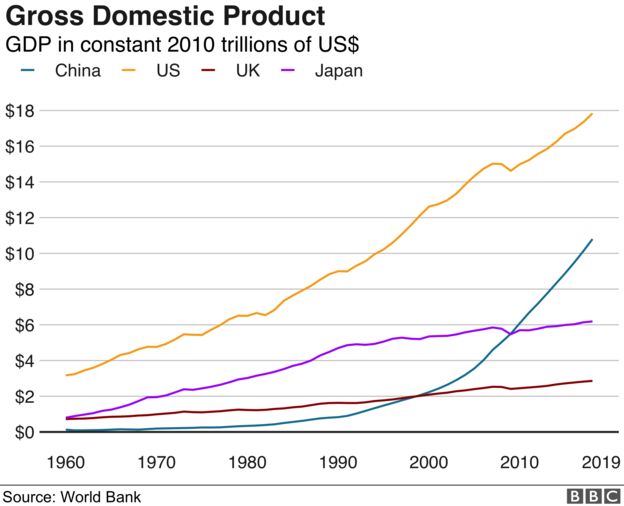
Chart showing gross domestic product of US, China, Japan and the UK

The 1950s had seen one of the biggest human disasters of the 20th Century. The Great Leap Forward was Mao Zedong’s attempt to rapidly industrialise China’s peasant economy, but it failed and 10-40 million people died between 1959-1961 – the most costly famine in human history.

This was followed by the economic disruption of the Cultural Revolution in the 1960s, a campaign which Mao launched to rid the Communist party of his rivals, but which ended up destroying much of the country’s social fabric.

‘Workshop of the world’

Yet after Mao’s death in 1976, reforms spearheaded by Deng Xiaoping began to reshape the economy. Peasants were granted rights to farm their own plots, improving living standards and easing food shortages.

The door was opened to foreign investment as the US and China re-established diplomatic ties in 1979. Eager to take advantage of cheap labour and low rent costs, money poured in.

“From the end of the 1970s onwards we’ve seen what is easily the most impressive economic miracle of any economy in history,” says David Mann, global chief economist at Standard Chartered Bank.

Through the 1990s, China began to clock rapid growth rates and joining the World Trade Organization in 2001 gave it another jolt. Trade barriers and tariffs with other countries were lowered and soon Chinese goods were everywhere.

“It became the workshop of the world,” Mr Mann says.
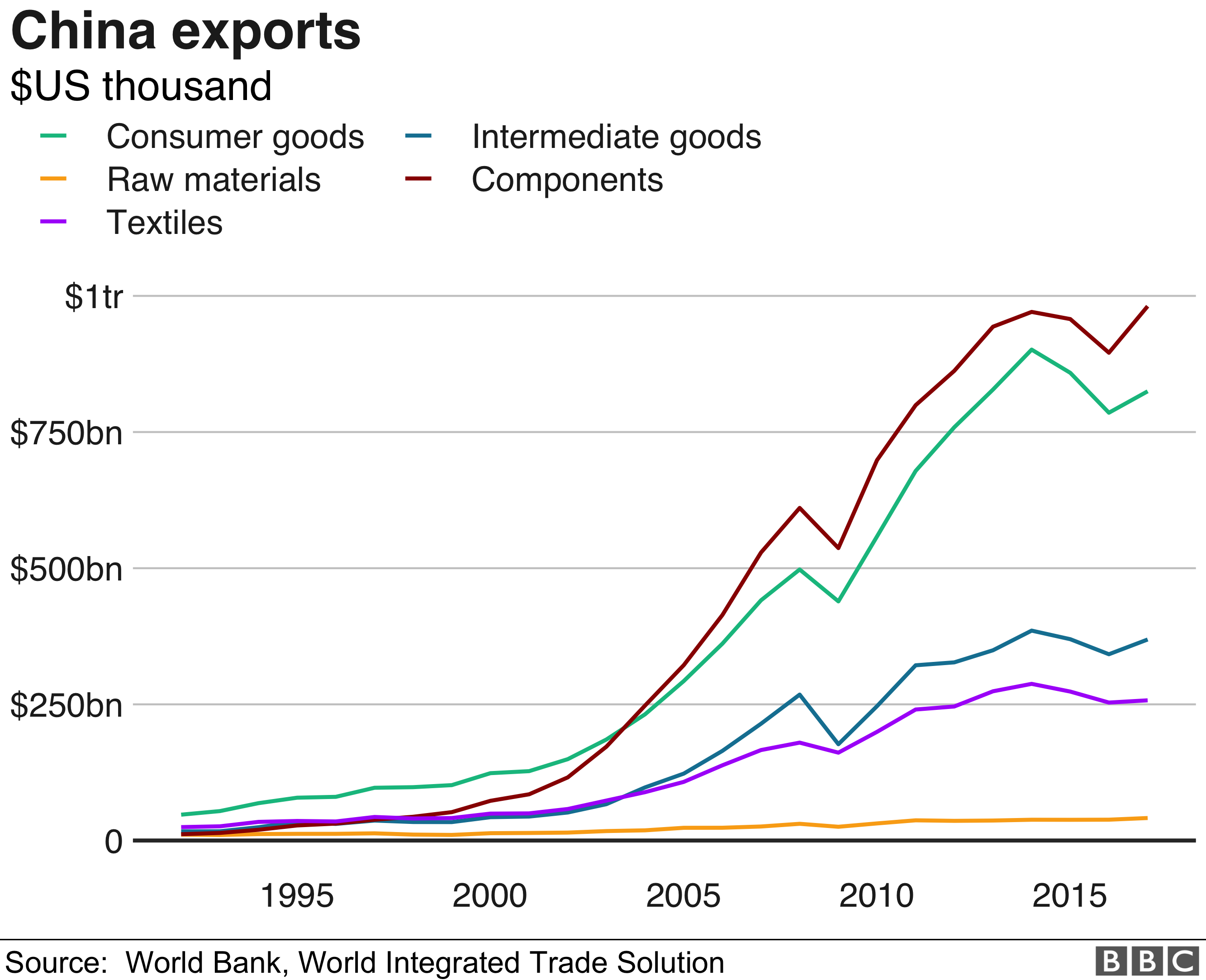
Chart showing China exports

Take these figures from the London School of Economics: in 1978, exports were $10bn (£8.1bn), less than 1% of world trade.

By 1985, they hit $25bn and a little under two decades later exports valued $4.3trn, making China the world’s largest trading nation in goods.

Poverty rates tumble

The economic reforms improved the fortunes of hundreds of millions of Chinese people.

The World Bank says more than 850 million people been lifted out of poverty, and the country is on track to eliminate absolute poverty by 2020.

At the same time, education rates have surged. Standard Chartered projects that by 2030, around 27% of China’s workforce will have a university education – that’s about the same as Germany today.
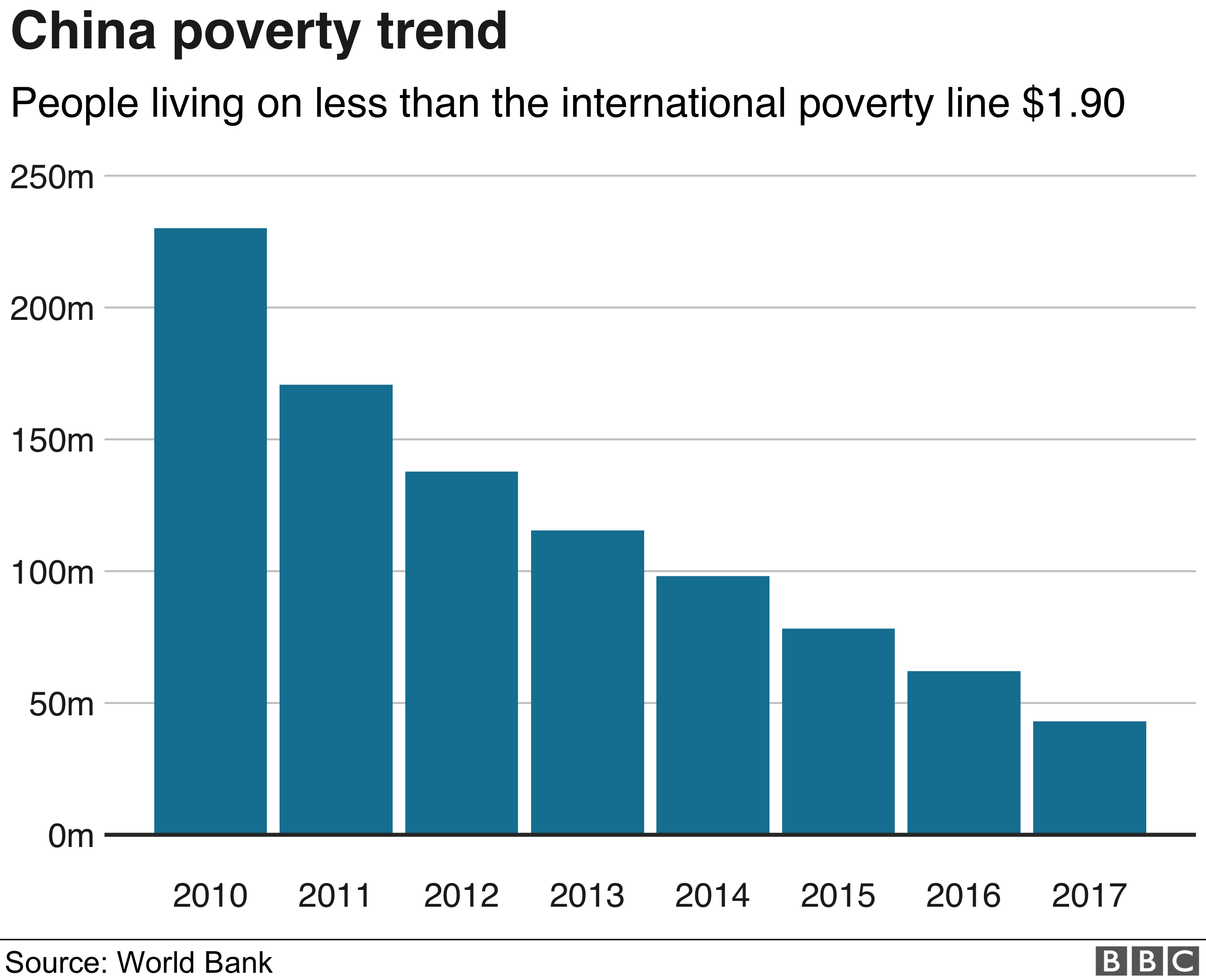
China poverty rates

Rising inequality

Still, the fruits of economic success haven’t spread evenly across China’s population of 1.3 billion people.

Examples of extreme wealth and a rising middle class exist alongside poor rural communities, and a low skilled, ageing workforce. Inequality has deepened, largely along rural and urban divides.

“The entire economy is not advanced, there’s huge divergences between the different parts,” Mr Mann says.

The World Bank says China’s income per person is still that of a developing country, and less than one quarter of the average of advanced economies.

China’s average annual income is nearly $10,000, according to DBS, compared to around $62,000 in the US.
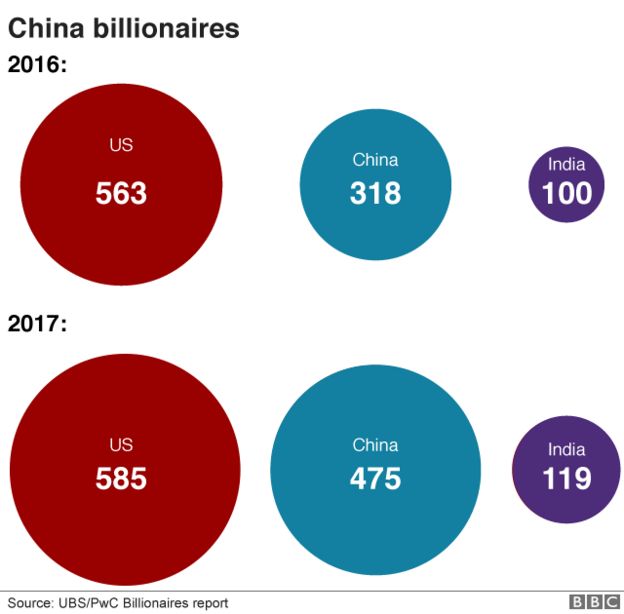
Billionaires in China, the US and India

Slower growth

Now, China is shifting to an era of slower growth.

For years it has pushed to wean its dependence off exports and toward consumption-led growth. New challenges have emerged including softer global demand for its goods and a long-running trade war with the US. The pressures of demographic shifts and an ageing population also cloud the country’s economic outlook.

Still, even if the rate of growth in China eases to between 5% and 6%, the country will still be the most powerful engine of world economic growth.

“At that pace China will still be 35% of global growth, which is the biggest single contributor of any country, three times more important to global growth than the US,” Mr Mann says.

The next economic frontier

China is also carving out a new front in global economic development. The country’s next chapter in nation-building is unfolding through a wave of funding in the massive global infrastructure project, the Belt and Road Initiative.
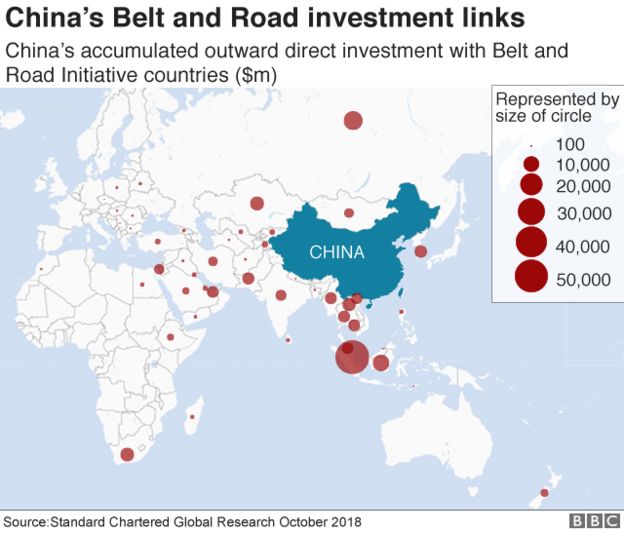
Map showing Chinese investment as part of the Belt and Road initiative

The so-called new Silk Road aims to connect almost half the world’s populations and one-fifth of global GDP, setting up trade and investment links that stretch across the world.

Source: The BBC

17/09/2013

China’s Bosses Size Up a Changing Labor Force

This post about the workforce and another posted today about houses-for-pensions show how fast China is catching up with the developed nations; not always for the good of its citizens.

BusinessWeek: “John Liu is the 31-year-old founder and owner of Harderson International, a small factory in southern China that applies paint and decals to ceramics and glass. His showroom includes samples of tinted perfume bottles made for Ralph Lauren and Kate Spade.

Chinese workers on a television set assembly line in Shenyang, Liaoning Province in 2012

A 2006 graduate of Wuhan University in central China, Liu is not much older than the 20-somethings and late teenagers who come to work on the assembly line. But generational cohorts in China are extremely compressed, and Liu sees a vast gap in expectations between himself and those a decade younger. “When I finished school, I felt I needed to find a good stable job quickly and earn money,” he says. “But living conditions in China have improved quickly. Young people now don’t have to work so hard to earn a living, and many have parents who will support them. … A lot of those born in the 1990s can’t stand this kind of repetitive work, so they choose to stay home or do very simple cashier work, even though it pays less.” The upshot is that, for a small factory, it’s “getting harder to find workers.”

Last year the total size of China’s working-age population began to decline, according to figures from China’s National Bureau of Statistics. As the Economist ominously noted, China’s moment of “peak toil” has passed. Yet it’s not only demographics that are changing. Today’s Internet-savvy young workers have different ideas and higher expectations than their predecessors, and not only regarding pay. In response to an evolving workforce, factory managers at a handful of small and midsize plants in China’s Pearl River Delta say they must now offer better conditions to attract and retain workers—or else look for opportunities to automate.”

via China’s Bosses Size Up a Changing Labor Force – Businessweek.

See also: https://chindia-alert.org/2013/01/20/chinas-workforce-peak-demographics/

09/03/2013

* Some Chinese Seek a Divorce to Avoid Real Estate Tax

NYT: “When the Chinese government announced new curbs on property prices this month, homeowners bombarded social networking sites with complaints. They formed long lines at property bureaus to register to sell their homes before the restrictions went into effect.

And some couples went even further: they filed for divorce.

Divorce filings shot up here and in other big cities across China this past week after rumors spread that one way to avoid the new 20 percent tax on profits from housing sales was to separate from a spouse, at least on paper.

The surge in divorce filings is the latest indication of how volatile an issue real estate has become in China in the past decade and how resistant people are to additional taxes.

Worried that housing prices are spiraling out of control and threatening social stability, the central government regularly rolls out measures aimed at damping demand and weeding out speculators.

Then home buyers, sellers, property developers and even local governments — which are typically heavily dependent on land sales for income — try to find ways to get around the restrictions.

“They always do this,” said Du Jinsong, a property analyst in Hong Kong for Credit Suisse. “When they implement new measures, people are always trying to circumvent the rules.”

China’s housing market has been one of the prime engines of economic growth in the past decade, and recently a sharp upturn in prices has reignited fears about inequality and a housing bubble.

On March 1, just days before the opening of China’s annual legislative session, the powerful State Council, which is led by Prime Minister Wen Jiabao, announced a series of new property measures that analysts say unsettled the housing market.

In its statement, the State Council, or cabinet, said that local governments should strictly enforce an earlier rule that ordered people selling a secondary home to pay a 20 percent tax on the profit.

Almost immediately, housing administration bureaus and real estate trading centers in big cities were flooded with people hoping to sell their apartments before the restrictions took effect. (Most local governments have not yet announced a deadline.)”

via Some Chinese Seek a Divorce to Avoid Real Estate Tax – NYTimes.com.

23/01/2013

* Middle-class Chinese snap up overseas luxury

China Daily: “An increasing number of middle-class Chinese are buying luxury goods outside the Chinese mainland, with more overseas travel driving the trend, a KPMG report said on Tuesday.

Seventy-one percent of survey respondents ― middle-class mainland residents ― traveled overseas in 2012, compared with 53 percent in 2008. And 72 percent of them said they bought luxury items during such trips, with cosmetics, watches and handbags being the most popular items.

Brand recognition continues to rise as consumers become more discerning and seek experiential luxury as well as one-of-a-kind luxury brands and products. Respondents said they recognize 59 luxury brands, from 45 in survey conducted in 2010.

The report ― The Global Reach of China Luxury ― is based on a survey of 1,200 middle-class Chinese consumers in 24 cities. Market research firm TNS conducted the study.

Respondents were 20 to 44 years old, with a minimum household income of 7,500 yuan ($1,205) a month in tier-one cities and 5,500 yuan elsewhere.

Chinese consumers associate certain countries with particular products. For example, Switzerland is recognized for its luxury watches, while France scores highest for cosmetics and perfumes.”

via Middle-class Chinese snap up overseas luxury[1]|chinadaily.com.cn.

See also: http://unintend-conseq.blogspot.co.uk/2013/01/corruption-curbs-crimp-luxury-market.html

Law of Unintended Consequences

continuously updated blog about China & India

ChiaHou's Book Reviews

continuously updated blog about China & India

What's wrong with the world; and its economy

continuously updated blog about China & India